Why Your Seattle Lawn Has Brown Spots
Brown spots are one of the most common lawn complaints in the Seattle area. Some are simple to fix; others are a sign of deeper soil or pest problems.
This guide will help you quickly narrow down what’s causing brown spots in your lawn and when it’s time to call Aerating Thatching Co for a professional Lawn Tune Up or full lawn renovation.
Once you’ve identified what’s causing your brown spots, use our step-by-step guide: How to Fix Brown Spots in Your Seattle Lawn.
Quick At-Home Checks Before You Decide
Do these simple checks first:
-
Pattern:
-
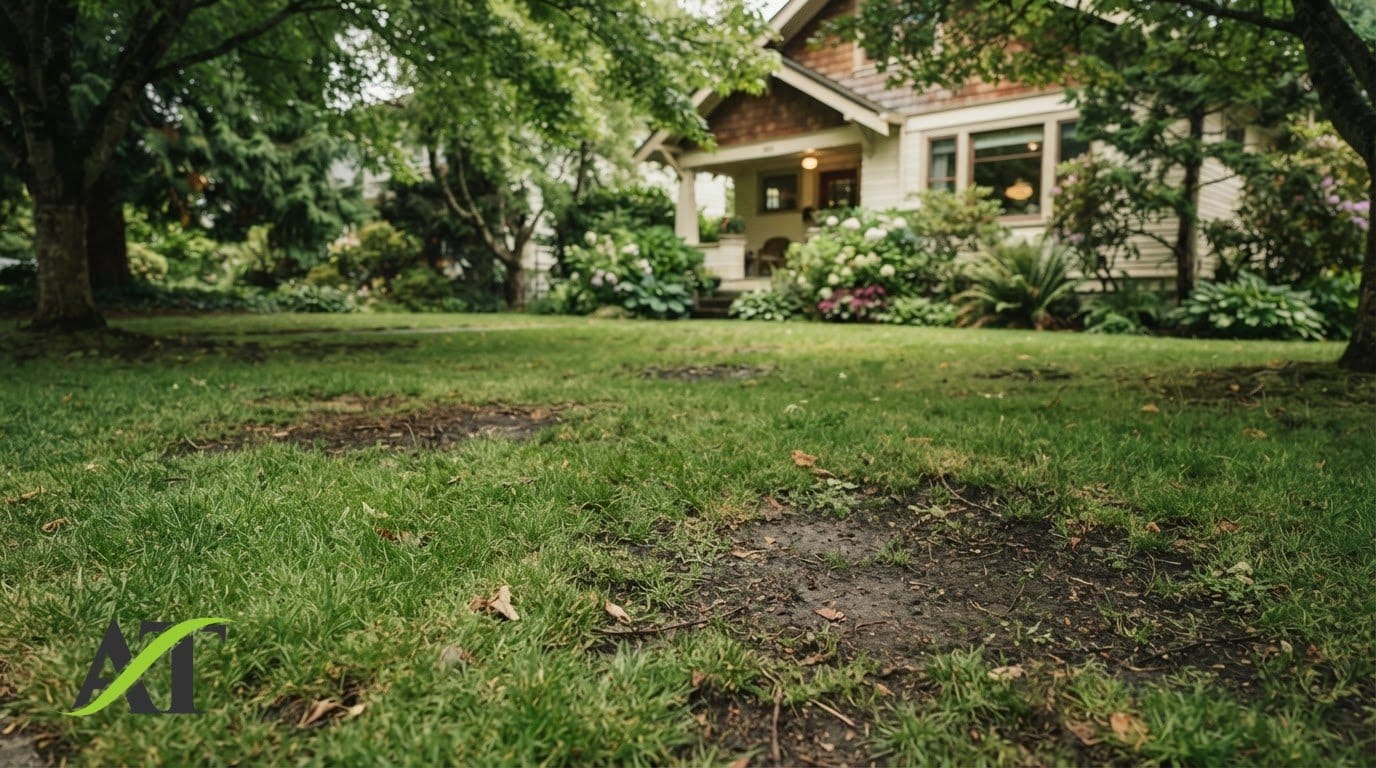
Random small spots – often pets or fungus
-
Large irregular patches – drought, compaction, fungus, or grubs
-
Streaks/lines – fertilizer or chemical issues
-
-
Tug Test:
Gently pull on the brown area.-
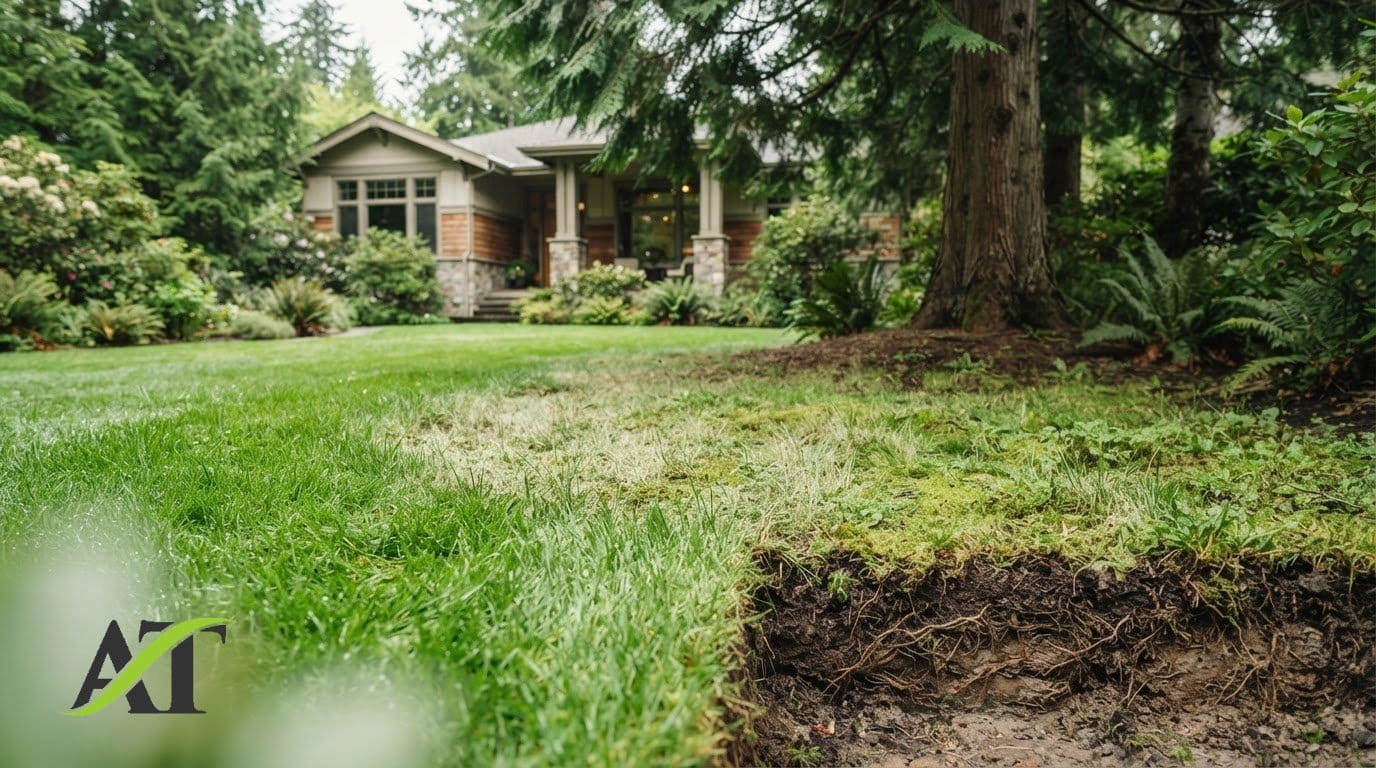
If the lawn lifts up like a carpet, you may have chafer beetle or other grub damage.
-
If the roots are still firmly attached, look at water, fungus, or fertilizer issues.
-
-
Screwdriver Test:
Push a screwdriver or soil probe into the soil.-
Hard to push in – compacted soil or very dry conditions
-
Very soft/muddy – drainage or overwatering issues
-
-
Location:
-
Along sidewalks/driveways – heat and drought stress
-
Under trees/shade – root competition and thin lawn
-
In dog “favorite spots” – urine damage
-
Now, let’s walk through the 7 most common causes of brown spots in Seattle lawns.
1. Drought & Heat Stress
What it looks like:
-
Brown or tan areas in full sun
-
Spots that follow hardscape edges (sidewalks, driveways, patios)
-
Lawn feels dry and crunchy underfoot
Why it happens:
Even in Seattle, hot spells and shallow watering can dry out the top few inches of soil, especially on compacted or south-facing lawns.
What helps:
-
Deep, infrequent watering instead of frequent shallow watering
-
Mowing a bit higher to shade the soil
-
Overseeding and fertilizing thin areas during a Lawn Tune Up
Aerating Thatching Co can combine core aeration, seeding, and fertilizer to help stressed areas recover more quickly.
2. Compacted Soil
What it looks like:
-
Brown, thin, or bare patches where people or pets walk
-
Water puddling or running off instead of soaking in
Why it happens:
Seattle’s clay-heavy soils compact easily, especially on slopes, along walkways, or in high-traffic areas. Roots can’t breathe or reach water.
What helps:
-
Core aeration to relieve compaction and open channels for air and water
-
Soil amendments (compost, lime, or other products depending on your soil)
-
Overseeding after aeration to thicken up thin areas
A Lawn Tune Up with core aeration, seeding, and fertilizer is one of the best ways to fix compaction-related brown spots.
3. Chafer Beetle & Grub Damage
What it looks like:
-
Brown patches that feel spongy
-
Lawn peels up easily with almost no roots attached
-
Raccoons, skunks, or crows tearing up the lawn to eat grubs
Why it happens:
European chafer beetle larvae (grubs) feed on lawn roots. Once enough roots are eaten, the lawn can’t take up water and quickly turns brown.
What helps:
-
Remove loose, dead lawn and thatch in damaged areas
-
Level and prepare the soil
-
Reseed or renovate affected sections
-
Improve overall lawn health with aeration and proper fertilizing
4. Lawn Fungus
What it looks like:
-
Irregular brown patches, sometimes with a ring or border
-
In some cases, reddish or white growth on blades when wet
-
Often worse after long periods of moisture or overwatering
Why it happens:
Cool, damp weather, compacted soil, shade, and evening watering can all encourage fungal diseases in Seattle lawns.
What helps:
-
Water deeply, but less often, and early in the day
-
Avoid mowing too short
-
Improve air movement and drainage
-
Core aeration, overseeding, and a balanced fertilizing program
-
In severe cases, a fungicide labeled for your lawn type may be needed
5. Dog Urine & Pet Damage
What it looks like:
-
Small, round brown or yellow spots
-
Sometimes a darker green ring around the outside
-
Often appear in the same areas over and over
Why it happens:
Dog urine contains salts and nitrogen in strong concentrations that can burn the lawn where pets repeatedly use the same spot.
What helps:
-
Encourage pets to use a designated area
-
Water the area deeply after your dog uses it
-
Rake out dead grass, lightly loosen the soil, and overseed the spot
-
Use a Lawn Tune Up to thicken the rest of the lawn so spots blend in better
6. Shade, Tree Roots & Thin Areas
What it looks like:
-
Brown or thinning spots under trees or next to fences
-
Moss taking over in the bare areas
-
Lawn never really fills in, even after seeding
Why it happens:
Shade plus hungry tree roots make it hard for lawn roots to get enough light, water, and nutrients.
What helps:
-
Raise mowing height in shady areas
-
Prune trees (when appropriate) to allow more light
-
Choose shade-tolerant seed blends when overseeding
-
Core aeration and soil amendments to support root growth
7. Fertilizer Burn & Chemical Damage
What it looks like:
-
Brown or yellow streaks or patches where fertilizer overlapped or spilled
-
Brown edges where weed control or ice melt contacted the lawn
-
Spots show up shortly after a treatment
Why it happens:
-
Applying too much fertilizer
-
Fertilizer applied to dry lawn during hot weather
-
Spills or uneven spreader settings
-
Drift or overlap from weed control products
What helps:
-
Water the area thoroughly to dilute salts
-
Rake out dead material once it’s clearly not coming back
-
Overseed damaged strips or patches
-
Use a professional fertilizing program tailored to your lawn and soil
Aerating Thatching Co can apply the right type and rate of fertilizer as part of a Lawn Tune Up or renovation so you don’t have to guess.
When Is It Time for a Lawn Tune Up or Full Lawn Renovation?
As a rule of thumb:
-
If less than 20–30% of the lawn has brown spots, targeted repairs and a Lawn Tune Up usually make sense.
-
If more than 30–40% of the lawn is thin or brown, it’s often more cost-effective to do a full lawn renovation (core aeration, detaching (power raking), seeding, and fertilizer across the entire lawn).
Aerating Thatching Co can:
-
Diagnose what’s causing your brown spots
-
Recommend spot repairs, a Lawn Tune Up, or full renovation
-
Improve soil health with aeration and soil amendments
-
Overseed with blends that fit Seattle’s climate and your yard’s sun/shade mix
If your lawn’s brown spots are getting worse—or you’re tired of guessing—request a quote from Aerating Thatching Co. We’ll take a close look at your lawn, explain what’s going on in plain language, and recommend the right repair option for your Seattle-area property.