North Seattle-area lawn care • Aerating Thatching Co.
Top 10 Signs Your Seattle Lawn May Need Core Aeration
Hard soil, worn paths and water that struggles to soak in can be clues that your lawn needs attention. This checklist helps you decide when core aeration fits and when another problem needs a closer look.
You do not need to choose the largest package to improve your lawn. Start with the soil, the grass cover and the conditions where the trouble occurs.
When does core aeration make sense?
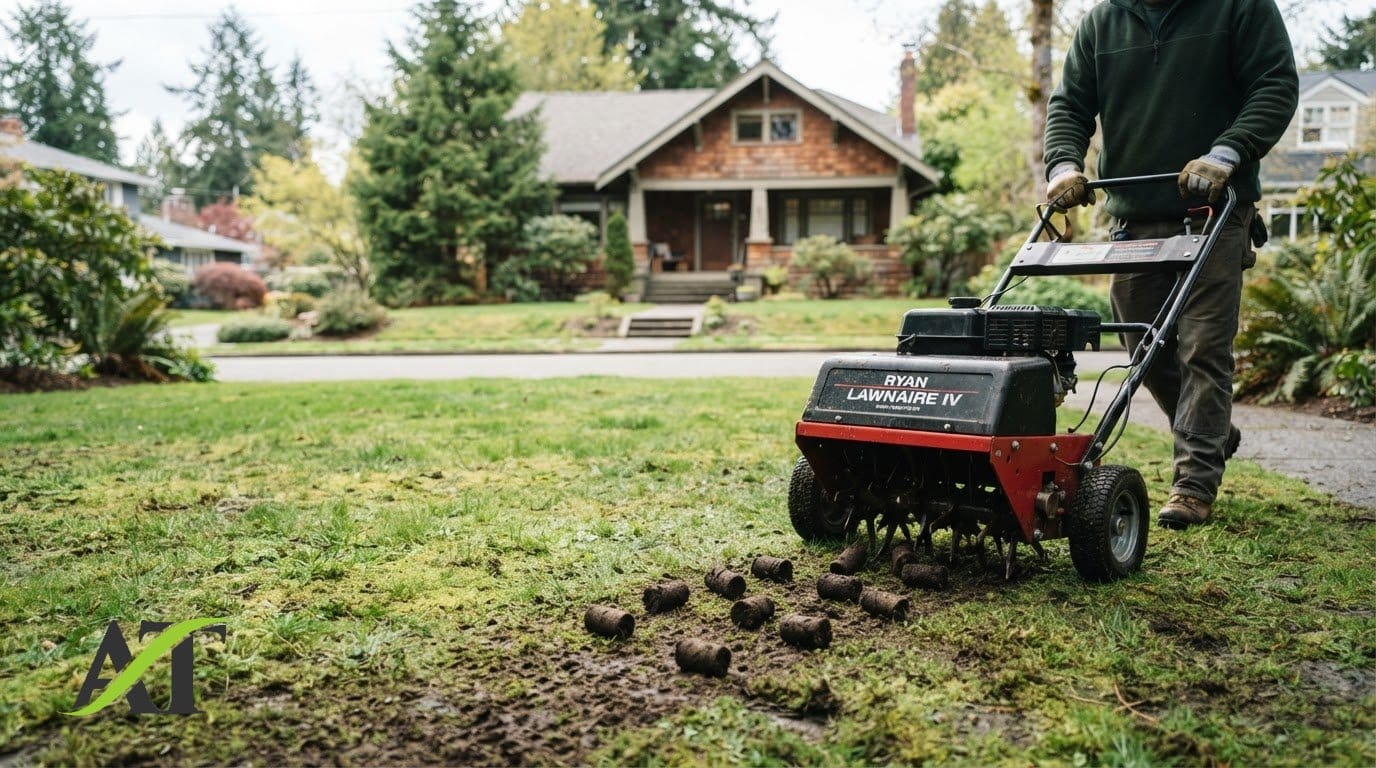
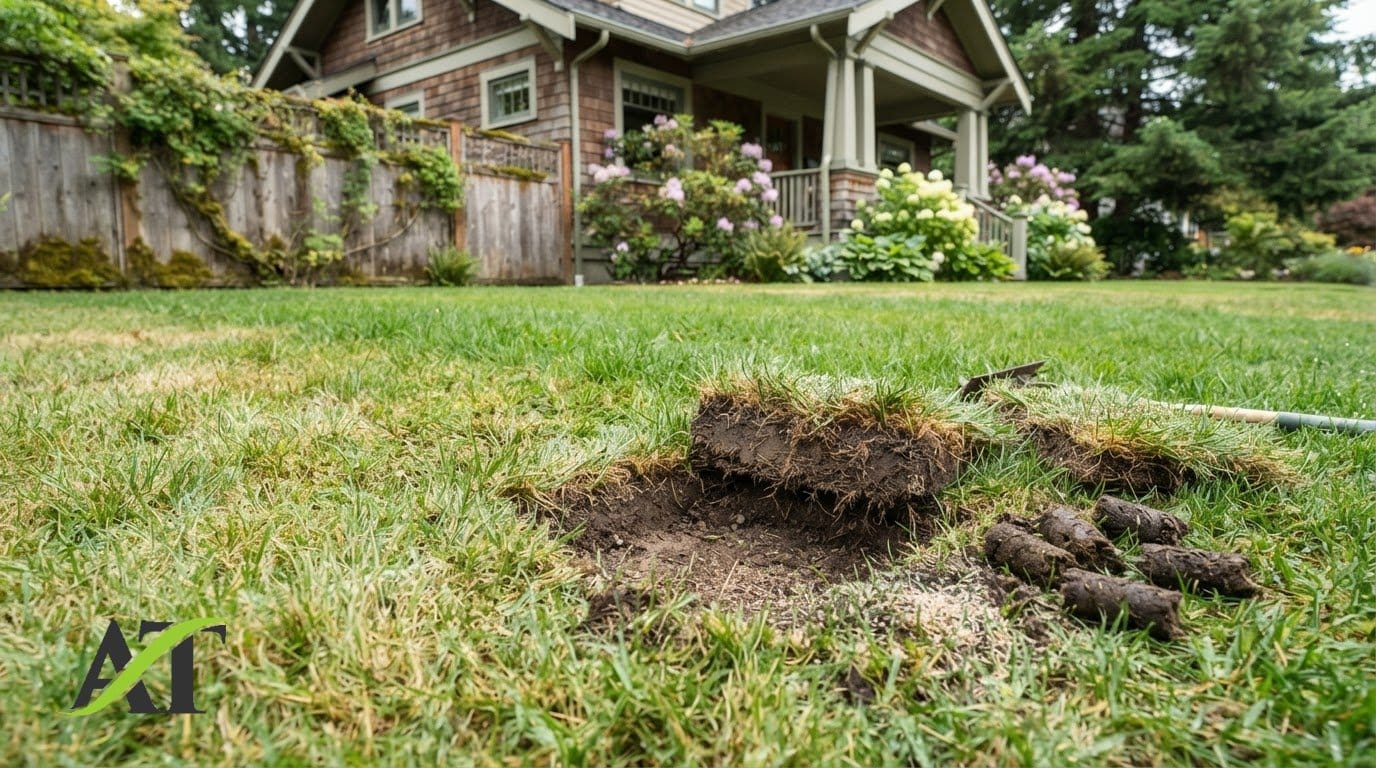
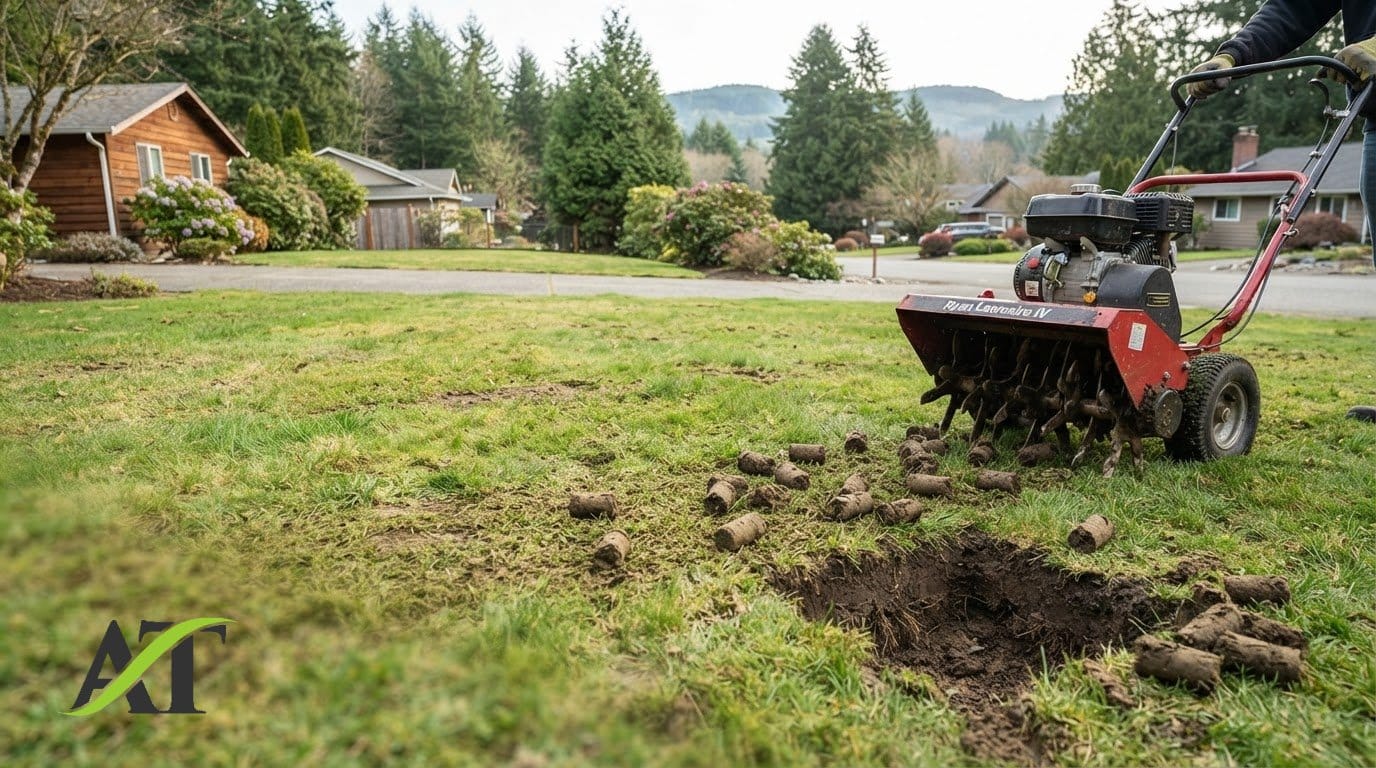
Core aeration is most useful when soil compaction is limiting an otherwise reasonably healthy lawn. It removes small plugs of soil to create openings for air and water. If grass cover is also thin, overseeding may belong in the plan.
Use the signs below as observations to discuss, rather than a diagnosis. A lawn can have puddles, moss or bare patches for reasons that aeration alone will not resolve.
See WSU Extension’s Home Lawns for guidance on soil aeration and lawn problems.
10 signs worth checking before you book aeration
Note where each symptom appears, how long it has been present and whether it changes with rainfall or watering. Compare problem areas with healthier parts of the lawn.
-
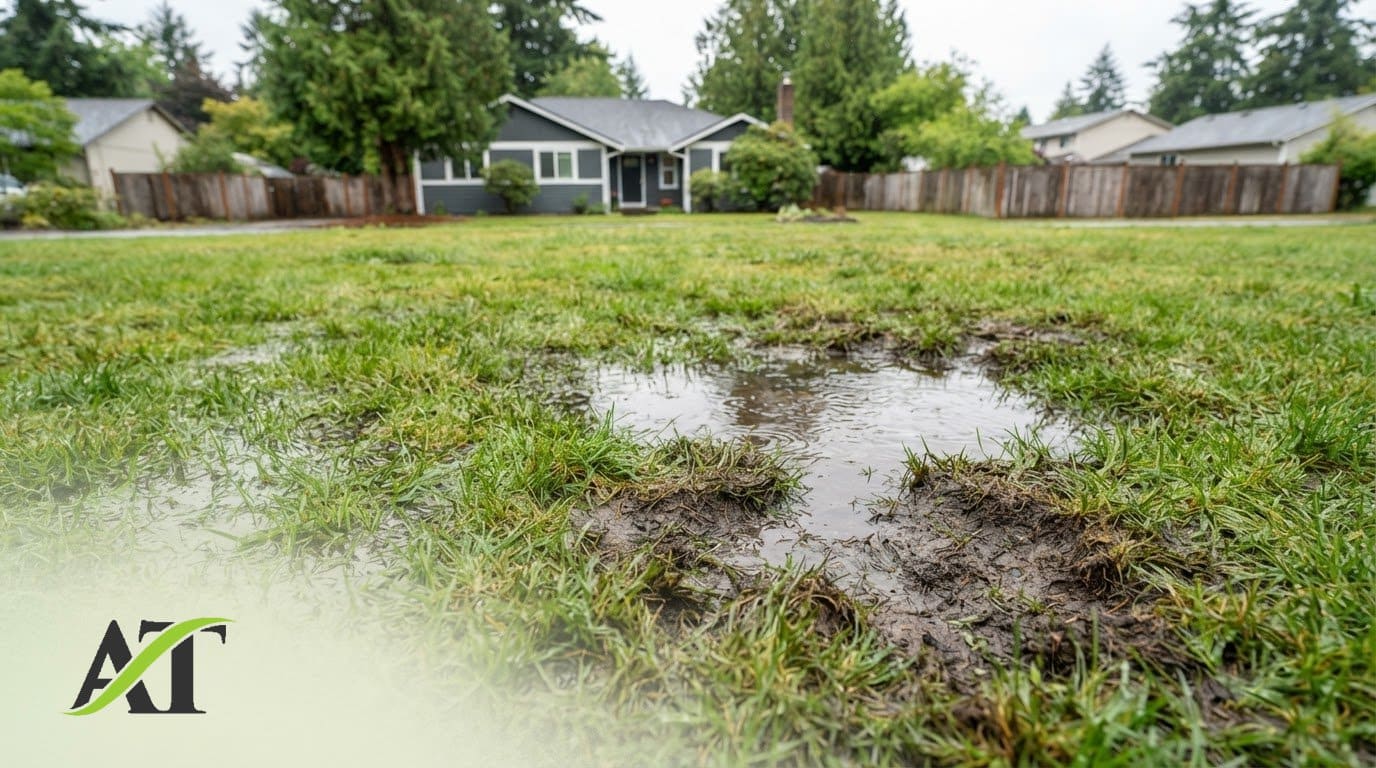
Water pools after rain
Compaction can restrict infiltration, but persistent puddles can also indicate a drainage problem.
Next step: Identify where water collects. Aeration may help compacted soil; ongoing saturation needs further assessment.
-
The lawn feels spongy or has heavy thatch
Excess thatch can interfere with movement of water and air into the soil.
Next step: Check the buildup before selecting a service. Core aeration and dethatching address different parts of lawn care.
-
Soil is difficult to penetrate
A soil probe or screwdriver can help you compare resistance between areas, but resistance alone is not a complete diagnosis.
Next step: Consider soil moisture and site conditions as well as the result. Ask for an assessment if the cause is unclear.
-
Grass is thin or patchy
Record whether thinning is widespread or confined to particular locations.
Next step: Review soil conditions, light, watering and wear. Discuss overseeding if rebuilding grass density is part of the goal.
-
Paths and play areas receive repeated traffic
Frequent foot traffic and equipment use can compact soil.
Next step: Consider aeration where compaction is present, and plan ways to reduce repeated wear while the lawn recovers.
-
Construction or heavy equipment has disturbed the lawn
Building work can leave compacted soil or a damaged growing area.
Next step: Assess the soil and remaining grass before choosing repair work. For recently laid sod, check establishment and installation guidance before disturbing it.
-
The same patches dry out quickly
Dry patches deserve a check of water distribution and soil conditions.
Next step: Observe whether water reaches and soaks into those areas. Do not assume that aeration is the answer before identifying the cause.
-
Growth stays weak despite your usual care
Make a note of mowing, watering and other care you have already tried.
Next step: Review what is limiting growth before repeating the same treatment. Soil testing or a lawn assessment may help guide the next decision.
-
Moss or weeds occupy areas where grass struggles
Moss can accompany shade, excess moisture and other conditions unfavorable to grass.
Next step: Address the growing conditions as well as the visible problem. Aeration is not a weed-control or moss-removal treatment.
-
Compaction has returned since earlier aeration
Review the lawn’s current condition and how it has been used since the last service.
Next step: Base repeat work on the lawn’s needs. Time since the last visit is useful history, but should not be the only reason to book.
Assessment references: WSU’s urban soil management guide, OSU’s practical lawn-care guide, and WSU Hortsense on lawn moss.
What aeration does—and what needs a separate plan
Core aeration physically removes soil cores. It can help relieve compaction, but it does not add grass seed, remove every surface obstruction or correct all causes of poor growth.
Persistent standing water, deep shade, unresolved damage or heavy surface buildup deserves its own assessment. Tell Stewart about those conditions when asking which service fits.
Aeration alone, a Lawn Tune-Up, or renovation?
Core aeration alone
A focused option when the lawn is reasonably dense and compaction is the main concern.
Learn about our core aeration service.
Lawn Tune-Up
Combines core aeration, premium overseeding and starter fertilizer when greater grass density is also part of the goal.
Explore the Lawn Tune-Up package.
Full Meal Deal Lawn Renovation
Adds dethatching (power raking) and optional raking, with core aeration, overseeding and starter fertilizer when more preparation is appropriate.
See the Full Meal Deal.
Choose suitable timing and soil conditions
For cool-season lawns around North Seattle, plan aeration during active growth so the grass has an opportunity to recover. Spring and early fall are common planning windows; the lawn and weather still matter.
Soil should be moist enough for the equipment to pull cores, without being saturated. Coordinate watering, access and any overseeding with the service instructions.
See OSU’s lawn-care guidance and its advice on aeration soil conditions.
Use our lawn-care calendar to plan ahead. If seed is included, review the after-care guide before scheduling.
A DIY option for small areas
A manual coring tool can be worth considering for a small patch. A larger lawn means many more insertions and more physical work, so compare the effort with a powered service.
As an Amazon Associate, we earn from qualifying purchases.

Yard Butler Manual Lawn Coring Aerator
A manual tool for removing soil cores in suitable small areas. Follow the tool’s instructions and identify shallow irrigation or other buried features before use.
View Manual Aerator on AmazonCommon lawn aeration questions
Does water pooling mean my lawn definitely needs aeration?
No. Compaction can restrict infiltration, but persistent pooling can have other drainage causes. Have those conditions assessed before assuming aeration will resolve them.
Will core aeration fill bare spots?
Core aeration does not add seed. If rebuilding grass cover is part of your goal, discuss overseeding and the cause of the bare areas as well.
Is core aeration the same as dethatching?
No. Core aeration removes plugs of soil. Dethatching/power raking addresses surface buildup. Choose the work according to the lawn’s condition.
Should I automatically aerate because a year has passed?
Review the current lawn condition, traffic and service history. Time since the last aeration is useful background, but it should not be the only deciding factor.
Ask Stewart which next step fits your lawn
Describe the symptoms, where they appear and what you have already tried. Stewart personally reviews quote requests and can recommend work suited to the lawn.
Aerating Thatching Co. has been owner-operated since 2004, with Stewart on every job.