Seattle Lawn Tune-Up
Core Aeration + Premium Overseeding + Starter Fertilizer in one coordinated service for lawns that need relief from compaction and a meaningful boost in grass density.
A Lawn Tune-Up is a strong fit for many thin, tired or patchy Seattle-area lawns. If heavy thatch or moss buildup also needs to be removed, the Full Meal Deal Lawn Renovation may be the better choice.
Quick Answer
A Lawn Tune-Up combines Core Aeration, Premium Overseeding and Starter Fertilizer. It is designed for lawns that need both soil compaction relief and greater grass density.
Aeration opens the soil, overseeding introduces new grass into thin areas, and starter fertilizer supports new seedlings during establishment.
What's Included in a Lawn Tune-Up?
The three services are performed as one coordinated lawn-improvement visit. Each step addresses a different part of rebuilding a thinner lawn.
Core Aeration
Small plugs of soil are removed from the lawn to relieve compaction and create openings for air, water and nutrients to move into the root zone.
Premium Overseeding
Fresh grass seed is applied to help rebuild density, strengthen thin areas and introduce vigorous new grass into the existing lawn.
See our Premium 60/40 Grass Seed →Starter Fertilizer
Starter fertilizer is applied with the overseeding to support establishment and promote strong root development in the new seedlings.
Learn about Starter Fertilizer →Important: A Lawn Tune-Up does not include Dethatching (Power Raking). If your lawn has a significant layer of thatch, moss or dead surface material that needs to be removed first, compare the Lawn Tune-Up with our Full Meal Deal Lawn Renovation .
See the Lawn Tune-Up Process and Results
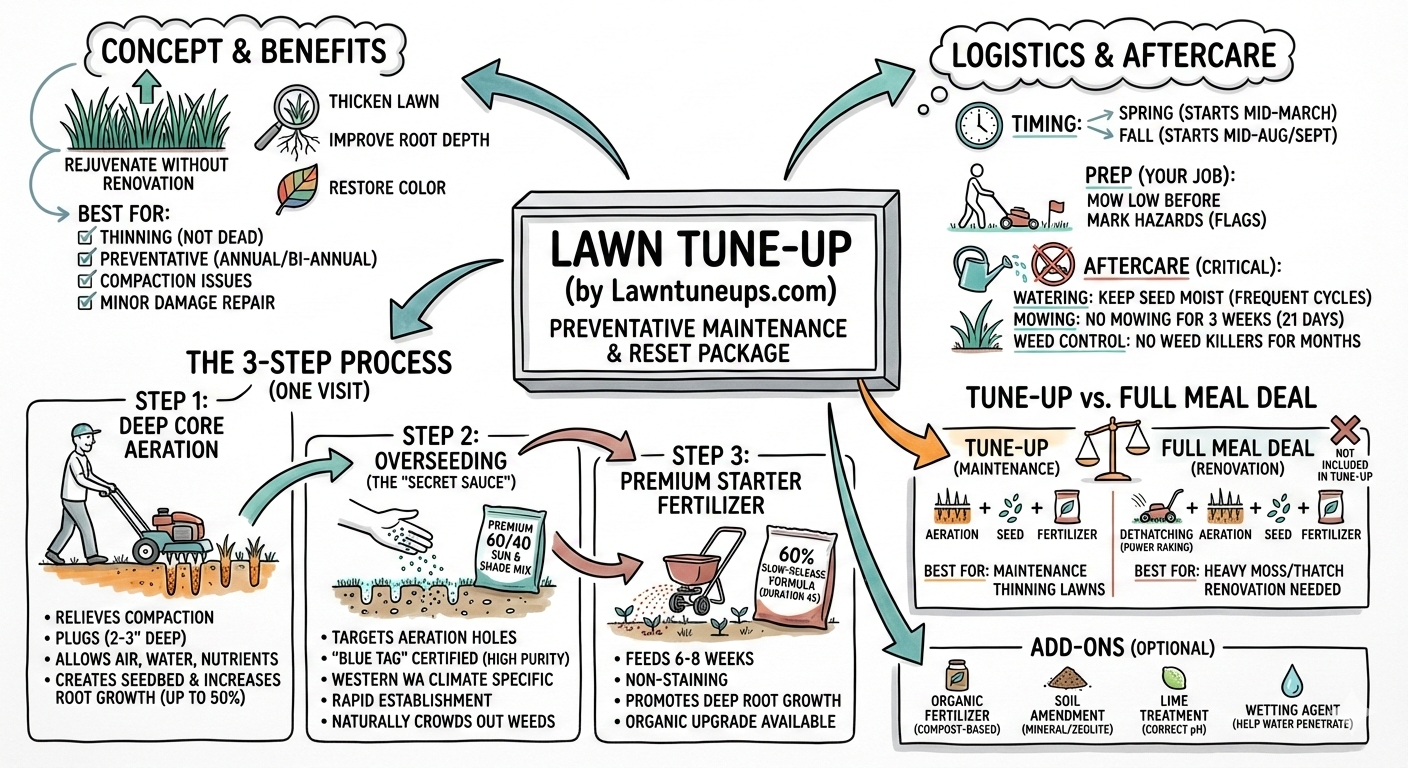
Lawn Tune-Up Process
Core Aeration → Premium Overseeding → Starter Fertilizer.
View the full-size graphic →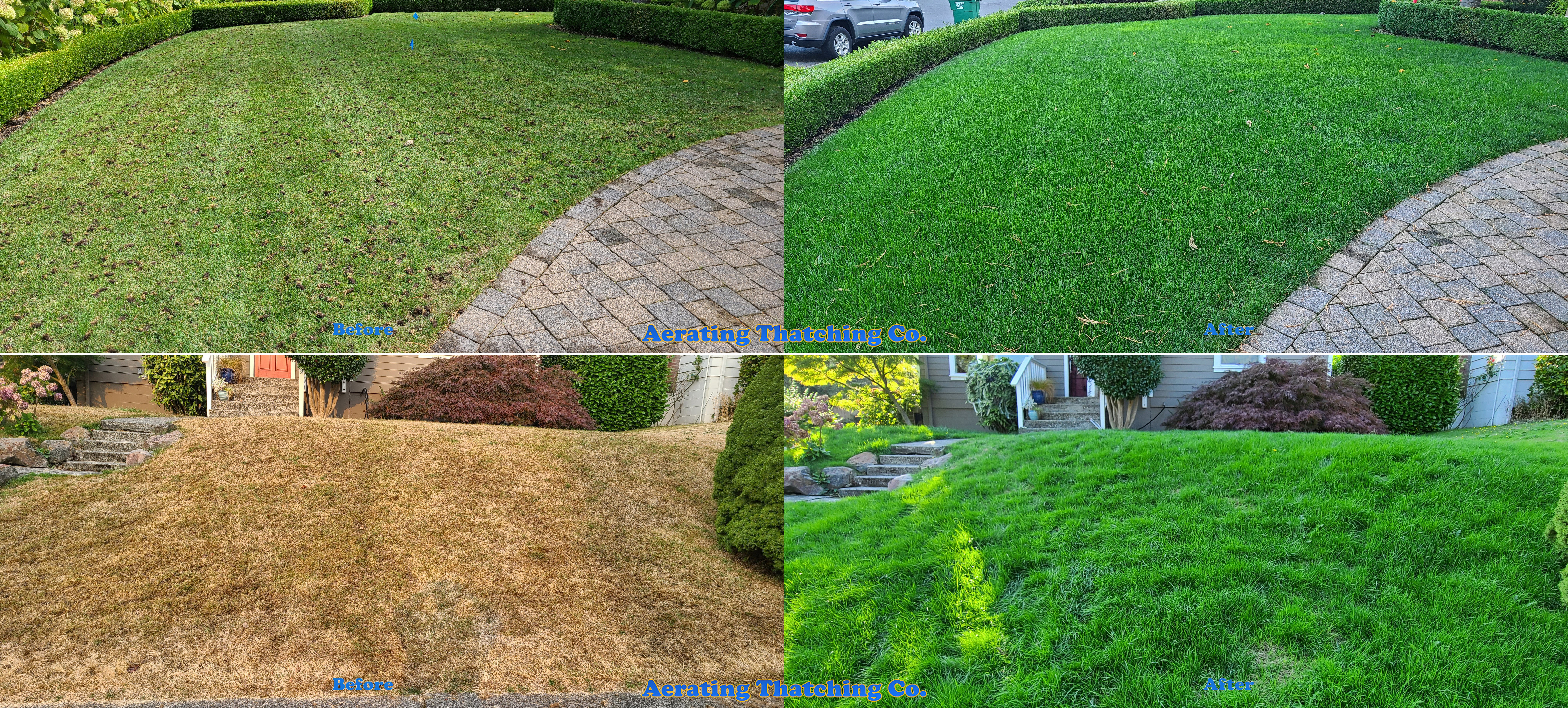
Real Before & After Results
Browse Lawn Tune-Up examples from Seattle-area lawns rather than relying on generic stock photography.
View the Lawn Tune-Up gallery →Does My Lawn Actually Need a Lawn Tune-Up?
Not every lawn needs the same level of work. The goal is to match the service to what the lawn is actually telling you.
A Lawn Tune-Up may make sense when:
- The lawn is thinner than you want it to be.
- There are weak, worn or bare areas that need new grass.
- The soil is compacted and the lawn would benefit from Core Aeration.
- You want to combine aeration and overseeding in one visit.
- The lawn needs improvement, but heavy surface buildup does not need to be removed first.
A different service may make more sense when:
- The grass is already dense: Core Aeration alone may be enough if compaction is the main concern.
- Heavy thatch or moss covers the surface: Dethatching (Power Raking) may need to happen before rebuilding.
- The lawn has a significant soil, drainage or watering problem: seed alone will not correct the underlying condition.
Lawn Tune-Up or Full Meal Deal?
Both services rebuild lawn density. The main difference is whether Dethatching (Power Raking) is needed before aeration and overseeding.
Lawn Tune-Up
- Core Aeration
- Premium Overseeding
- Starter Fertilizer
Best fit: thin or tired lawns that need greater density and compaction relief without requiring significant surface removal first.
See Lawn Tune-Up PricingFull Meal Deal Lawn Renovation
- Dethatching (Power Raking)
- Core Aeration
- Premium Overseeding
- Starter Fertilizer
Best fit: lawns with thatch, moss or accumulated surface material that needs to be removed as part of a stronger renovation approach.
Explore the Full Meal DealYou do not automatically need the larger package. If the lawn does not need Dethatching (Power Raking), the Lawn Tune-Up keeps the work focused on aeration, new seed and establishment.
What a Lawn Tune-Up Is Designed to Improve
Relieve Compaction
Core Aeration removes small soil plugs and creates openings through compacted lawn soil.
Rebuild Density
Overseeding adds new grass plants to lawns that have become thin, patchy or worn.
Support New Seedlings
Starter Fertilizer accompanies the seed to encourage early establishment and stronger new root development.
Watch Lawn Tune-Up Results
Before & After Lawn Tune-Up
Customer Testimonial
Optional Lawn Tune-Up Upgrades
Some lawns have additional soil, fertility or watering issues. These options are available when they fit the lawn rather than being automatically added to every Tune-Up.
Organic Fertilizer Upgrade
An organic-based fertilizer option for homeowners who prefer that feeding approach with their lawn service.
Organic fertilizer details →Soil Amendments
For lawns where improving the condition of the soil underneath the grass is an important part of the repair strategy.
Explore Soil Amendments →Lawn Lime Treatment
An add-on used when overly acidic soil conditions make a lime application appropriate.
Learn about Lawn Lime →Dry Lawn Buster / Wetting Agent
Helps water spread and penetrate more effectively in soil that has become difficult to wet evenly.
See the Wetting Agent option →Premium 60/40 Seed Mix
A premium sun-and-shade mix suited to many typical Seattle-area lawns and overseeding projects.
See Premium Grass Seed →Drought-Tolerant Seed Option
A specialized overseeding option for homeowners placing greater emphasis on summer resilience.
Explore Drought-Tolerant Seed →When Is the Best Time for a Lawn Tune-Up?
Because a Lawn Tune-Up includes overseeding, timing should give new grass a reasonable establishment window and a dependable watering plan.
Spring
Spring is a useful window for rebuilding density after winter and giving new grass time to establish before the driest part of summer.
Late Summer & Fall
Late summer into fall can provide another strong overseeding window as extreme summer stress eases and lawns move toward fall growth.
Summer overseeding needs extra care. New seed requires dependable moisture while it establishes. For month-by-month Seattle-area guidance, see the Seattle Lawn Care Calendar .
After-Care Is Part of the Result
Once new seed is down, what happens afterward matters. The goal is to maintain appropriate moisture, protect the newly seeded areas and avoid mowing practices that damage young grass.
Owner on Every Job
Aerating Thatching Co. is owner-operated. Stewart is the person reviewing your quote request and the person performing the lawn service.
That means the recommendation and the work stay connected. If a lawn only needs the lighter option, there is no reason to turn every property into the largest renovation package.
What that means for homeowners
- Direct communication with the person doing the work.
- No mystery crew arriving after the recommendation.
- A service approach focused on lawn restoration rather than weekly mowing.
- Clear next-step and after-care information.
- Pricing available before you submit a quote request.
Lawn Tune-Up FAQ
What exactly is included in a Lawn Tune-Up?
Does a Lawn Tune-Up include Dethatching (Power Raking)?
How do I know whether I need Core Aeration alone or a Lawn Tune-Up?
How much does a Lawn Tune-Up cost?
Can I upgrade the fertilizer?
What grass seed do you use?
What does Starter Fertilizer do?
Can I add Soil Amendments, Lime or a Wetting Agent?
When will I see new grass?
Do I need to be home during the service?
What should I do after the Lawn Tune-Up?
Helpful Next Steps
Compare Service Costs
See current pricing for Lawn Tune-Ups and other lawn-improvement services.
View Pricing →Seattle Lawn Care Resources
Browse lawn-care guides, service explanations, galleries and seasonal information.
Browse Resources →See All Lawn Services
Compare maintenance, improvement, renovation and targeted lawn options.
See All Services →Ready to Improve a Thin Seattle-Area Lawn?
Tell Stewart about your lawn and he can recommend whether a Lawn Tune-Up, Core Aeration, Full Meal Deal Lawn Renovation or another option makes the most sense for the conditions.