What Are Chafer Beetles (Lawn Grubs) and How They Damage Seattle Lawns
Chafer Beetle Grubs Damage the Lawn From Below
European chafer beetles are an invasive turf pest whose larvae, commonly called lawn grubs, feed on grass roots. When grub feeding becomes significant, the lawn can turn brown, weaken and become poorly anchored to the soil. Raccoons, crows, skunks and other animals may then cause additional physical damage while digging for the grubs.
Brown lawn, animal digging or even finding a grub is a clue, not proof by itself. The useful sequence is: confirm the problem, address grub control if needed, allow active animal disturbance to subside, then assess and repair the lawn.
Aerating Thatching Co. repairs damaged lawns. I do not apply pesticides or insecticides.
If you have found brown patches, loose lawn that lifts unusually easily, or raccoons and crows pulling sections apart, chafer beetle grubs may be part of the problem. The important step is figuring out whether the evidence really points to grubs before deciding what to do next.
In Western Washington, one important turf-damaging grub is the European chafer, Amphimallon majale. The adult beetle is not the damaging stage. The larval grub lives in the soil and feeds on grass roots and root crowns. That root loss can weaken the lawn enough that it yellows, browns or becomes easy to lift.
This guide focuses on identifying chafer beetle damage and understanding what happens to the lawn. For detailed treatment options, use our separate guide on how to get rid of chafer beetles and lawn grubs in a Seattle lawn.
Chafer Beetles 101: Beetles Above, Grubs Below
Adult European Chafer Beetles
Adults are small brown to brick-red scarab beetles. They emerge around early summer and may swarm at dusk while mating. Their primary role in the lawn-damage cycle is reproduction and egg laying.
The adult beetle is not the stage chewing up your lawn roots.
Chafer Beetle Grubs
The larvae are whitish, C-shaped grubs with a darker head capsule and noticeable legs. They live in the soil and feed on turf roots and root crowns.
As root loss becomes more extensive, the lawn may become thin, brown and poorly anchored.
Watch: What Chafer Beetles & Lawn Grubs Do to Seattle Lawns
Watch this short video to see what European chafer beetles and their grubs look like and how root damage can show up in a lawn.
The European Chafer Lifecycle
The exact timing varies with weather, but the seasonal pattern helps explain why the insects can be active before the homeowner fully understands what is happening above ground.
Adults Emerge
Adult beetles emerge and may form mating swarms around dusk.
Eggs Are Laid
Females lay eggs in soil. WSU describes egg laying from June into early August.
Grubs Feed
Larvae feed on turf roots and root crowns and continue developing through the cooler months.
Feeding, Then Pupation
Grubs can continue feeding before pupating in spring, completing the one-generation-per-year cycle.
Signs of Chafer Beetle Grub Damage
These signs can strengthen the case for chafer beetles, but none should be treated as proof on its own.
Brown or Yellowing Areas
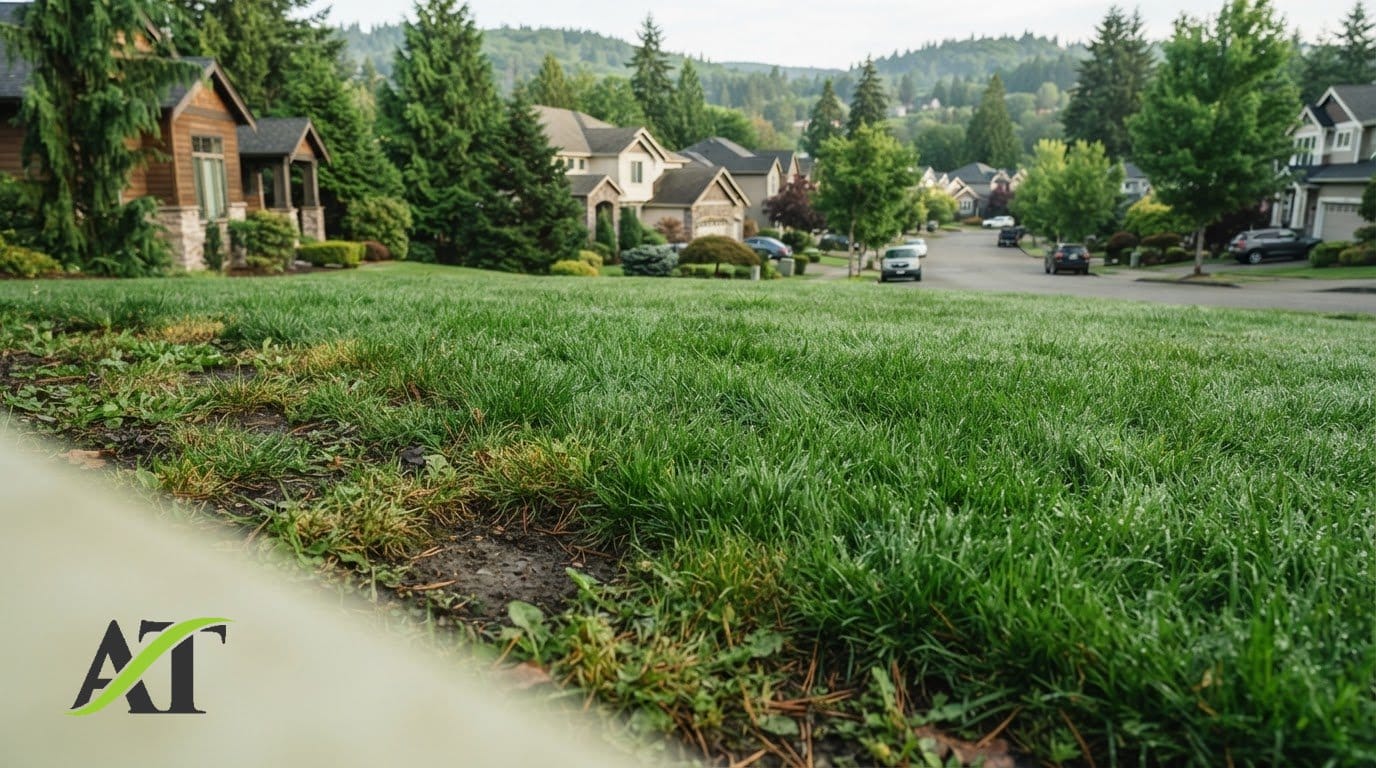
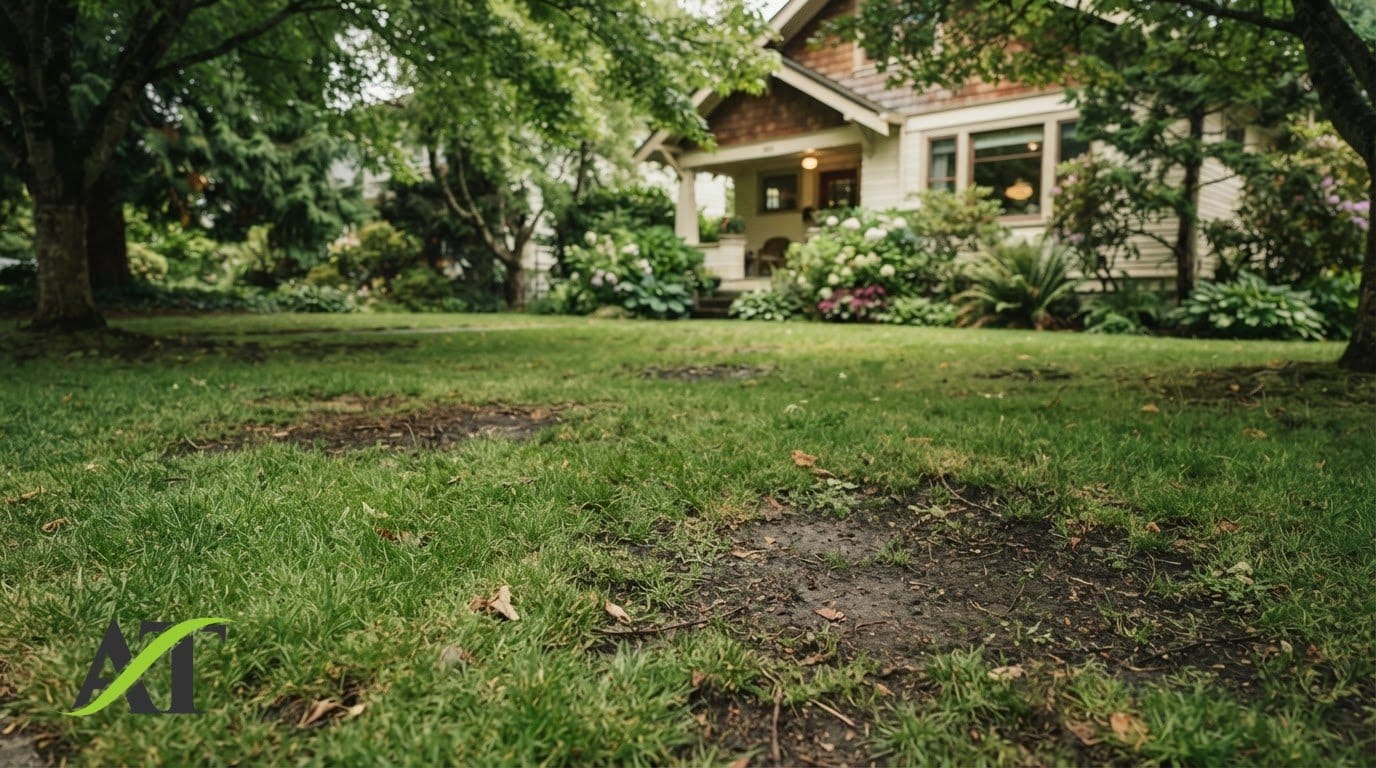
Root feeding can cause irregular areas of stressed, yellow or brown lawn.
Weak Root Attachment
Severely damaged lawn may lift more easily because the root system has been reduced.
C-Shaped Grubs
White or cream C-shaped larvae with a brown head and visible legs are an important clue.
Animal Digging
Raccoons, crows and skunks may tear up lawn while searching for grubs.
“Raccoons or Crows Mean I Definitely Have Lawn Grubs.”
Animal Activity Is a Clue, Not Proof
European chafer grubs are a food source for raccoons, crows and skunks, and those animals can cause major secondary damage while foraging. But animal activity alone does not identify the cause.
Look underneath the lawn and consider the complete pattern before deciding you have a damaging grub problem.
How to Check a Damaged Lawn for Grubs
If you suspect chafer beetles, check where relatively intact lawn meets a damaged area rather than relying only on the most destroyed patch.
Choose the Edge of the Damage
Look for lawn that is still intact but directly adjacent to a brown, loose or disturbed area.
Lift a Small Section Carefully
Cut three sides of a square section so the lawn can be rolled back like a flap without unnecessarily destroying a larger area.
Inspect the Root Zone and Soil
Look for the condition of the roots and for C-shaped grubs with visible legs and a darker head.
Check More Than One Location
One spot does not necessarily represent the entire lawn. WSU recommends sampling several areas before deciding that the lawn has a treatment-level grub problem.
Is It Really Chafer Beetles?
Not every Seattle-area brown patch or root problem is caused by chafer beetles. A few common look-alikes are worth separating before making a treatment decision.
C-Shaped Grubs + Root Feeding
Look for C-shaped grubs with legs and a brown head, weakened roots, poorly anchored lawn and possibly secondary animal damage.
Gray-Brown Leatherjacket Larvae
European crane fly larvae are gray-brown, worm-like and leathery rather than white C-shaped scarab grubs. They can also damage Western Washington lawns.
Drought or Heat Damage
A dry lawn may brown during summer without having its roots chewed off. Check soil moisture, root attachment and the overall pattern rather than diagnosing from color alone.
Disease, Dog Injury, Shade & More
Many different conditions create brown or thin lawn. Use our Seattle brown-spot guide if the symptoms do not clearly point to grubs.
If you already know the cause and need help rebuilding the affected area, see the step-by-step Seattle lawn brown-spot repair guide.
Why Lawn Condition Matters
Existing lawn conditions do not mean they caused the chafer beetle infestation. They can, however, affect how much stress the lawn can tolerate and how well it recovers after damage.
Root Strength Matters
A lawn with a stronger root system has more capacity to withstand stress than a lawn already struggling with weak growth.
Compaction Adds Stress
Compacted soil can already limit root development, air movement and water movement before grub feeding is added to the picture.
Thin Lawn Has Less Margin
A lawn that is already sparse or stressed has less healthy turf to lose when another problem occurs.
Grub Damage and Animal Damage Are Two Different Things
Grubs Damage the Roots
Chafer beetle larvae feed on turf roots and root crowns. Enough feeding can weaken the lawn, reduce root mass and leave sections poorly anchored.
Animals Can Physically Tear It Apart
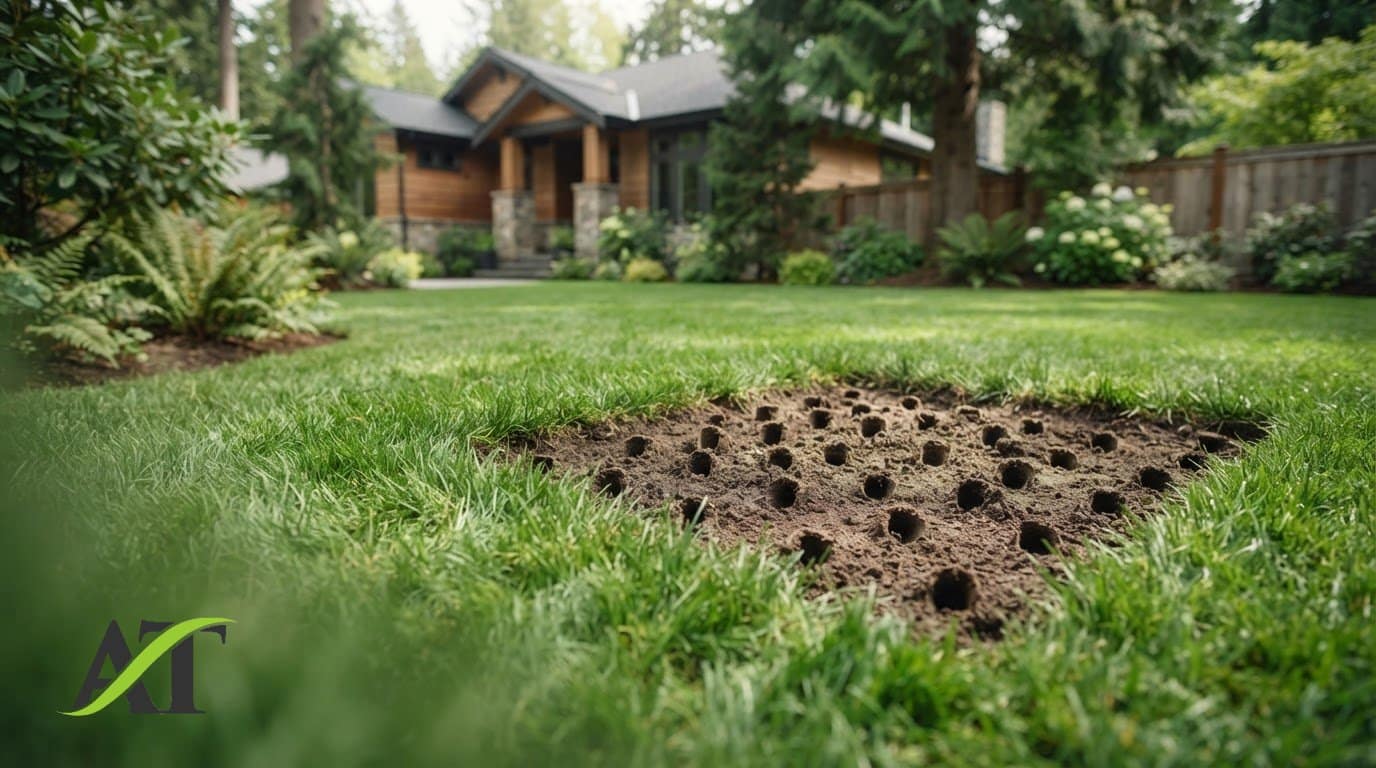
Raccoons, crows and skunks may then pull, roll, scratch or shred the weakened lawn while looking for grubs. The visible mess can become much worse than the root damage alone.
If active digging is continuing, repairing immediately may not make sense. A practical sequence is to confirm the cause, address the grub problem if needed, allow the repeated disturbance to settle down, and then determine what lawn is actually left to repair.

THE GROUNDSKEEPER II Rake (55" fiberglass handle, 21" head)
Useful for gently removing small amounts of already-loose dead lawn and surface debris after grub or animal damage. Avoid aggressive raking where healthy or weakly rooted lawn remains.
Light hand-raking is not the same as professional dethatching (power raking).
Lawn Grub Control vs. Lawn Repair
Homeowners often discover these as one problem, but controlling the insect and rebuilding the damaged lawn are separate jobs.
Control the Grub Problem, If Needed
First confirm that the evidence actually supports a damaging grub problem. If control is warranted, homeowners can research labeled DIY products or consult an appropriately qualified pest-control professional.
I do not apply pesticides or insecticides.
Application timing matters, and pesticide decisions should follow the current product label rather than a generic calendar.
Assess and Repair the Lawn
After the underlying pest problem and repeated animal disturbance have been addressed, the next question is how much viable lawn remains.
That condition determines whether the lawn needs a lighter rebuilding approach, more substantial cleanup and renovation, or something beyond a normal Lawn Tune-Up.

Scotts GrubEx1 Season Long Grub Killer
A commonly available grub-control product homeowners may consider after confirming a grub problem. Application timing matters, so read and follow the current product label before use.
Aerating Thatching Co. does not apply pesticides or insecticides.
Need the Detailed Grub-Control Guide?
This article is intentionally focused on identification, damage and repair decisions. For treatment approaches and additional grub-control information, read How to Get Rid of Chafer Beetles & Lawn Grubs in Your Seattle Lawn.
How Much Lawn Is Actually Left?
Once the active grub issue and repeated animal digging have been addressed, the condition of the remaining lawn matters more than the fact that chafer beetles were present.
Thin, Weak Lawn With Viable Grass Remaining
If much of the lawn is still viable but density and rooting have suffered, a Lawn Tune-Up may be an appropriate rebuilding option.
A Lawn Tune-Up combines Core Aeration + Premium Overseeding + Starter Fertilizer.
Dead Material and Broader Renovation Needs
If enough dead surface material needs to be removed before rebuilding, the Full Meal Deal Lawn Renovation may be the stronger fit.
It adds dethatching (power raking) before Core Aeration, Premium Overseeding and Starter Fertilizer.
Very Little Viable Lawn Remains
If large areas have been physically destroyed or conditions go beyond what these services are designed to address, a standard Lawn Tune-Up or Full Meal Deal may not be the right recommendation.
I would rather match the repair to the lawn than automatically recommend the largest package.
Light Cleanup vs. Dethatching (Power Raking)
Picking up or gently raking a small amount of already-loose dead lawn is simple surface cleanup. Dethatching (power raking) is a more substantial mechanical process and should only be used when the lawn condition actually calls for it.
Do not assume that every lawn with chafer beetle damage needs dethatching (power raking).
When Should Chafer-Damaged Lawn Be Repaired?
The first requirement is not a calendar date. It is making sure the underlying grub issue and repeated animal disturbance have been addressed enough that new repair work is not immediately disrupted.
Weather and lawn condition can move those windows. The calendar helps with planning, but it is not the only factor in deciding when a damaged lawn is ready for restoration.
Repair Still Depends on Establishment and After-Care
Overseeding is part of the Lawn Tune-Up and Full Meal Deal, not a standalone service. Grass seed is a living product, and successful establishment depends heavily on moisture, temperature, existing lawn conditions and homeowner after-care.
Watering Matters
Freshly seeded areas need dependable moisture while new grass establishes. Avoid treating newly seeded lawn exactly like established turf, and use herbicides only in accordance with their current labels and the requirements for newly seeded areas.
Can a Healthier Lawn Prevent Chafer Beetle Damage?
A healthy lawn is not a guarantee against chafer beetles. However, current WSU guidance notes that healthy, properly maintained turf can tolerate some grub pressure better than stressed turf.
The useful goal is resilience rather than claiming that aeration, fertilizer, watering or overseeding makes the lawn immune to another infestation.
Support a Strong Root System
Good mowing, reasonable fertility, appropriate watering and reducing unnecessary lawn stress help support normal turf health.
Rebuild Thin Areas
Damaged sections may benefit from overseeding when conditions and timing are appropriate.
Keep Watching the Lawn
If the property has had a serious chafer problem before, stay alert for recurring symptoms rather than waiting until animal damage becomes severe.

The Lawn Bible: How to Keep It Green, Groomed, and Growing Every Season of the Year
A practical reference for homeowners who want to learn more about mowing, watering, soil and year-round lawn care beyond chafer beetle damage.
How Aerating Thatching Co. Helps After Chafer Damage
My role starts with the lawn, not pesticide application. Once the chafer beetle problem has been addressed and the lawn is ready for repair, I look at what is still viable and recommend the level of restoration that fits the condition.
Condition-Based Recommendations
A lawn that remains mostly intact may need a different approach than one with heavy dead material or extensive physical damage. The presence of grubs does not automatically determine the service package.
Owner on Every Job
Aerating Thatching Co. is owner-operated and has served Seattle-area homeowners since 2004. The person reviewing the lawn and recommending the work is also the person performing the lawn service.
The business focuses on North Seattle and surrounding North King County and South Snohomish County service areas. For current service availability, send the property information through the quote form.
Authoritative Chafer Beetle Information
Chafer Beetle & Lawn Grub FAQ
What are lawn grubs?
“Lawn grubs” is a general homeowner term for beetle larvae living in turf and soil. In the Seattle and Puget Sound area, European chafer larvae are one important turf-damaging grub. They are C-shaped, have a darker head and visible legs, and can feed on grass roots.
Does finding a grub mean I need to treat my lawn?
No. Finding one or a few grubs does not by itself prove that grubs are causing damaging pressure. Look at the number and distribution of grubs, root condition, lawn symptoms and animal activity together. WSU recommends sampling several areas before deciding whether control is warranted.
Do raccoons and crows prove I have chafer beetles?
No. Raccoons, crows and skunks commonly forage for chafer beetle larvae and can cause significant secondary lawn damage, but their presence alone does not identify what is under the lawn. Inspect the soil and root zone before reaching a conclusion.
Do you apply GrubEx, pesticides or insecticides?
No. I do not apply pesticides or insecticides. Aerating Thatching Co. focuses on assessing and repairing the lawn after the underlying grub problem has been addressed. Homeowners can research labeled DIY products or consult an appropriately qualified pest-control provider when treatment is needed.
Will aeration or dethatching kill chafer beetle grubs?
No. Core Aeration and dethatching (power raking) are lawn-improvement and restoration processes. They should not be presented as chafer beetle control.
Should I repair the lawn immediately after treating grubs?
Not necessarily. If raccoons, crows or other animals are still actively tearing at the lawn, it can make sense to allow that disturbance to subside before investing in repair. Then assess how much viable lawn remains and choose the repair approach accordingly.
Does every chafer-damaged lawn need a Full Meal Deal?
No. A mostly viable lawn that needs more density may be a better candidate for a Lawn Tune-Up. If enough dead surface material needs removal first, the Full Meal Deal Lawn Renovation may make more sense. Very severely damaged lawns may require a different level of renovation altogether.
Need Help Repairing Chafer Beetle Lawn Damage?
Once the grub problem and any ongoing animal disturbance have been addressed, I can look at how much viable lawn remains and recommend the level of repair that makes sense.
Some lawns may be good candidates for a Lawn Tune-Up. More heavily damaged lawns may need additional cleanup and a Full Meal Deal Lawn Renovation. In some cases, neither service may be the right answer.
Aerating Thatching Co. has been owner-operated since 2004, and I personally perform the lawn work.