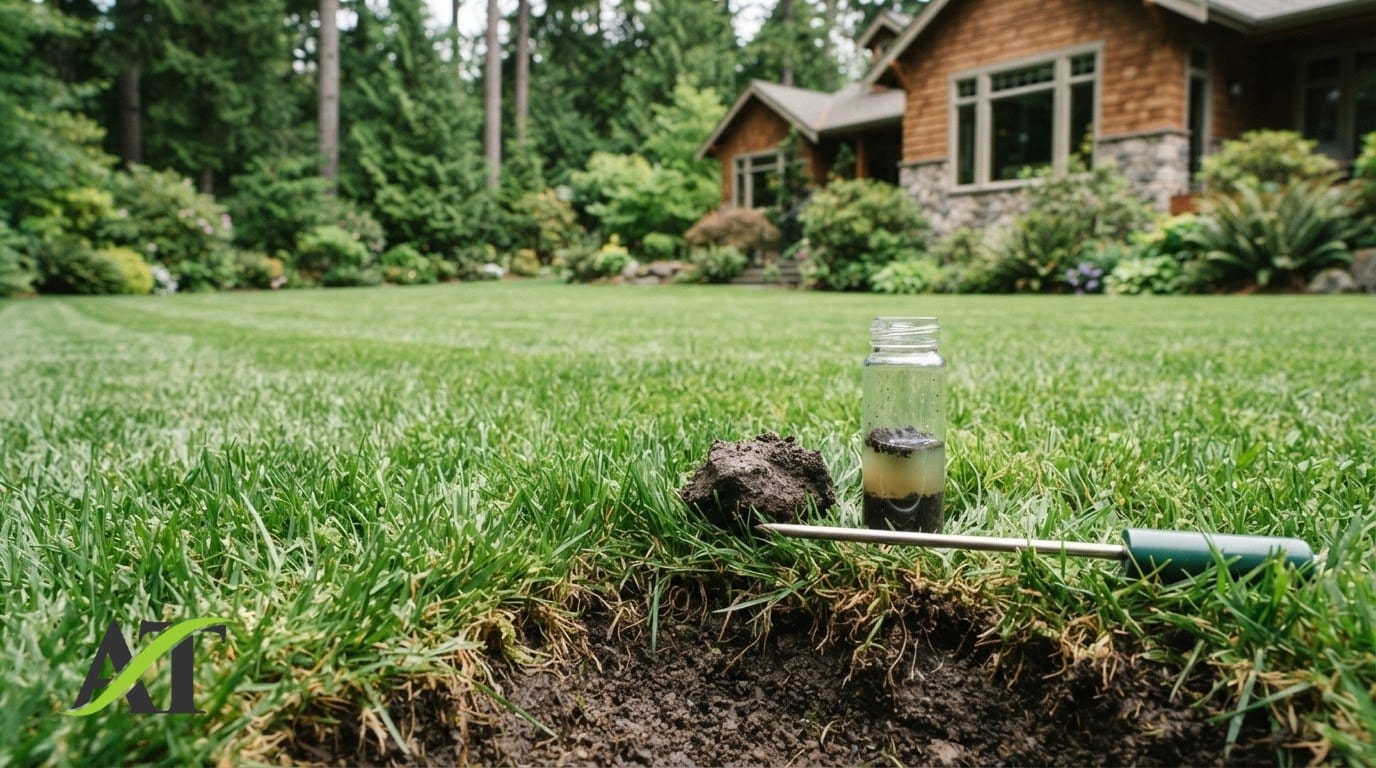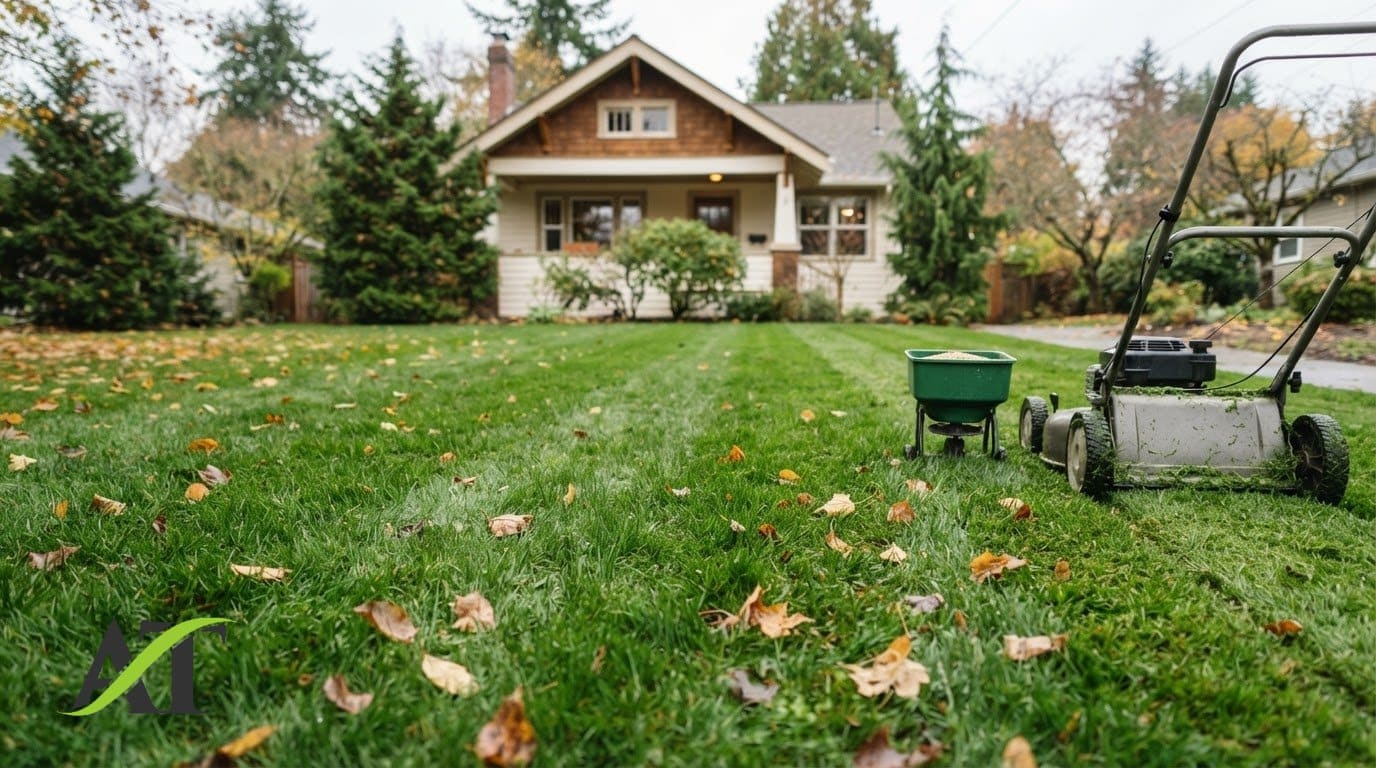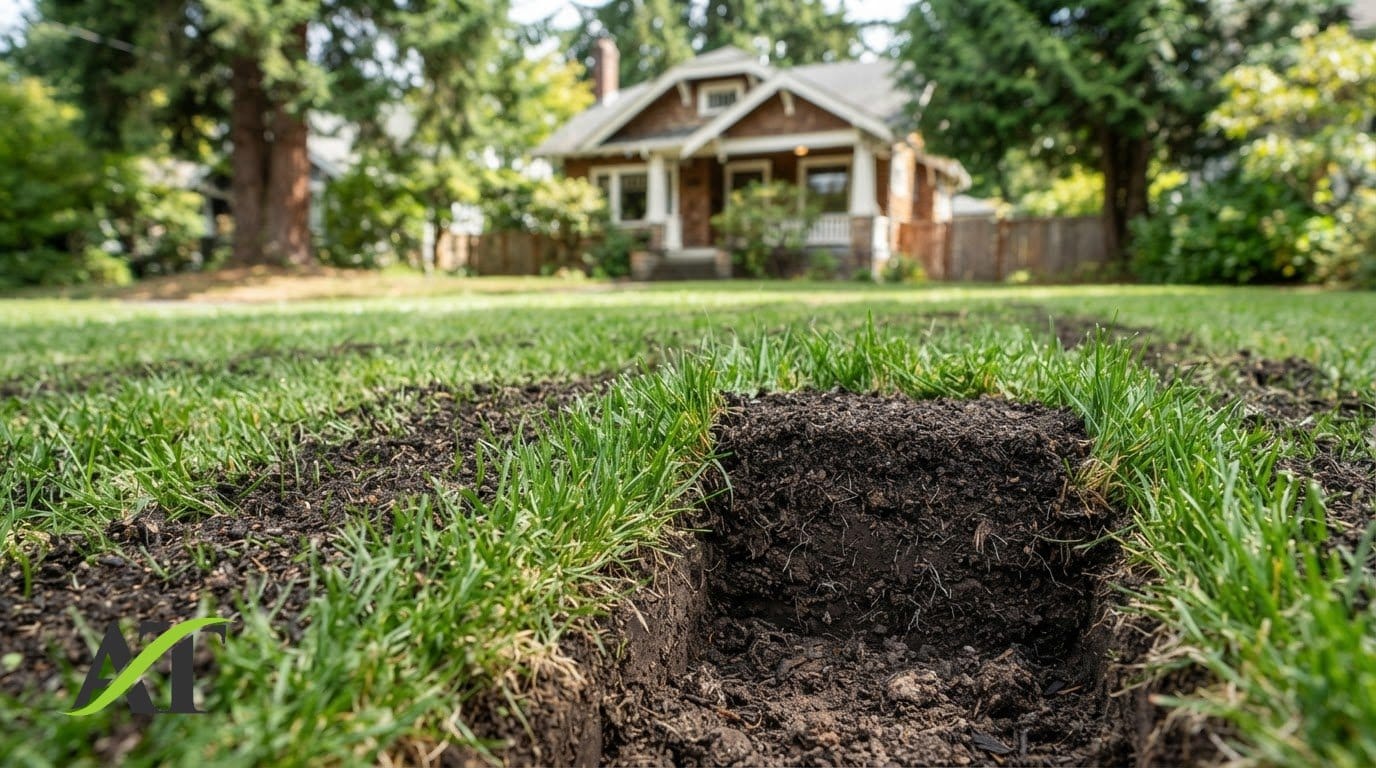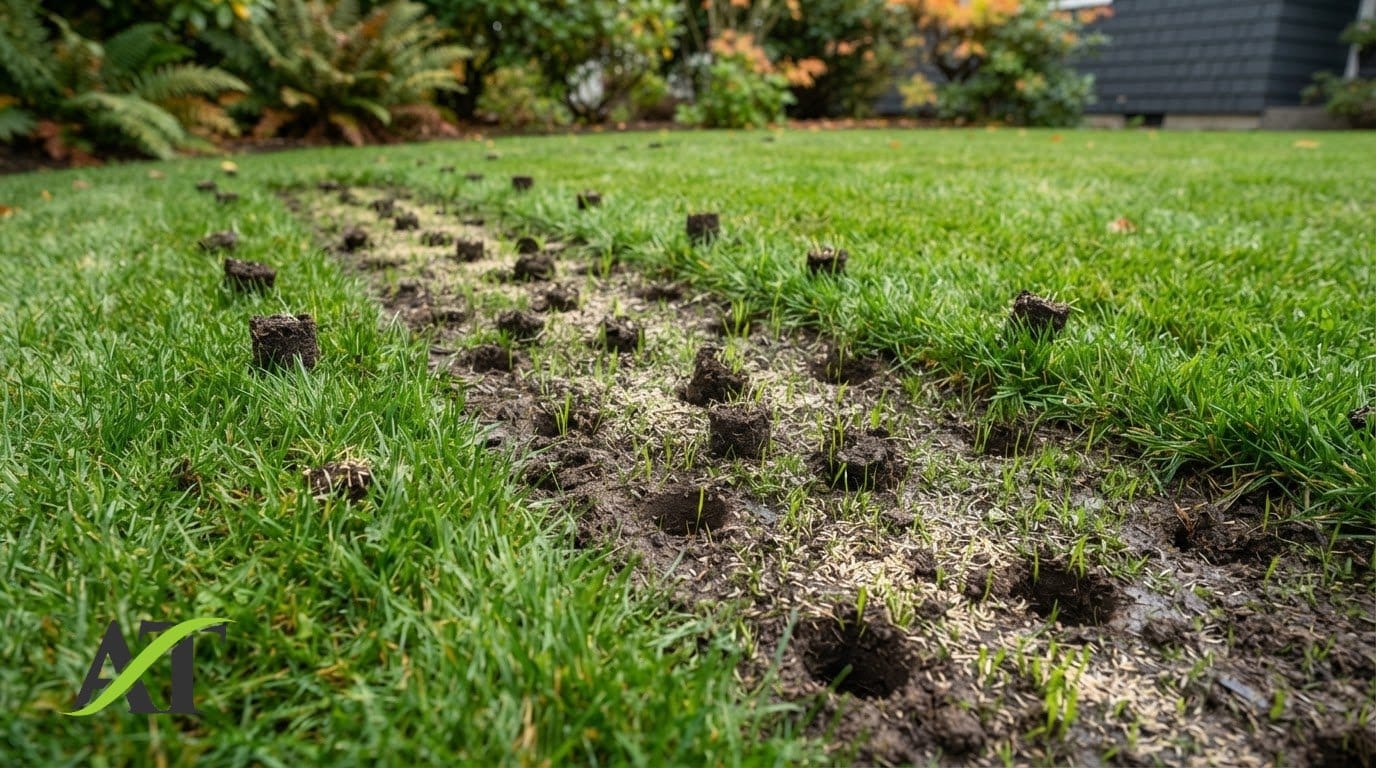
The calendar alone isn’t the best guide for fall lawn work. For aeration and overseeding in Shoreline, soil temperature is a useful signal: 55-80°F is our preferred practical service window for the Premium 60/40 Sun & Shade Mix, not a strict cutoff or a universal rule for every seed type. Aeration and seeding can be timed together when conditions suit new grass.
A thin or patchy lawn can make it tempting to add seed and hope for the best. But compacted soil can limit the air, water, and seed-to-soil contact grass needs. Core aeration removes small soil plugs to relieve compaction in the shallow turf root zone. It does not remove thatch, replace missing grass, or correct deep hardpan or an underlying drainage problem.
This guide explains how aeration works, when to pair it with overseeding in Shoreline, and how to tell compaction apart from thatch and other lawn concerns. You’ll also learn what conditions help new seed establish, so you can choose a sensible next step for your lawn.
Key Takeaways
- Use soil temperature and the remaining growing season to judge when fall seeding has a good chance to establish.
- Core Aeration opens the shallow turf root zone, helping relieve surface compaction and create openings for seed.
- Keep seeded areas consistently moist as new grass establishes, and avoid treating aeration as a fix for every thin-lawn problem.
- Learn when a Lawn Tune-Up, with Core Aeration, Overseeding, and Fertilizing, fits the condition of your lawn.
When is the best time to aerate and overseed in Shoreline?
For Shoreline lawns, use soil temperature and lawn conditions rather than a calendar date alone. For Overseeding with the Premium 60/40 Sun & Shade Mix, our preferred practical service window is 55-80°F soil temperature.
Aeration Timing by Grass Type
Grass type and growth conditions affect how well new seed establishes after aeration. Match seed to the lawn’s sun exposure and existing turf, since shaded areas and sunny areas may need different seed choices. The stated temperature window is a preference for this local service, not a strict cutoff or a universal rule for every grass seed.
Established lawns may benefit from aeration from time to time, while high-traffic areas can need it more often. Overseeding frequency depends on thin coverage, not automatically on the aeration schedule. Dense turf, for example, may need aeration without added seed.
Shoreline Seed and Lawn Preparation
Choose seed suited to the lawn’s light conditions and use soil temperature, not just afternoon air temperature, to guide timing. Before treatment, water dry ground ahead of time. Mow short and bag clippings to expose soil for seed contact.
After Overseeding, keep seeded areas consistently moist while the seed establishes. The Seattle aeration and Overseeding aftercare guide covers care after treatment.
When a service includes starter fertilizer, follow its product label and avoid adding extra fertilizer immediately afterward. Delay herbicides on newly seeded turf unless the product label explicitly allows their use. This helps protect seedlings during early growth.
For Shoreline lawns, consider soil temperature, moisture, seed-to-soil contact, and growing conditions together when choosing timing.
What is lawn aeration, and how does it work?
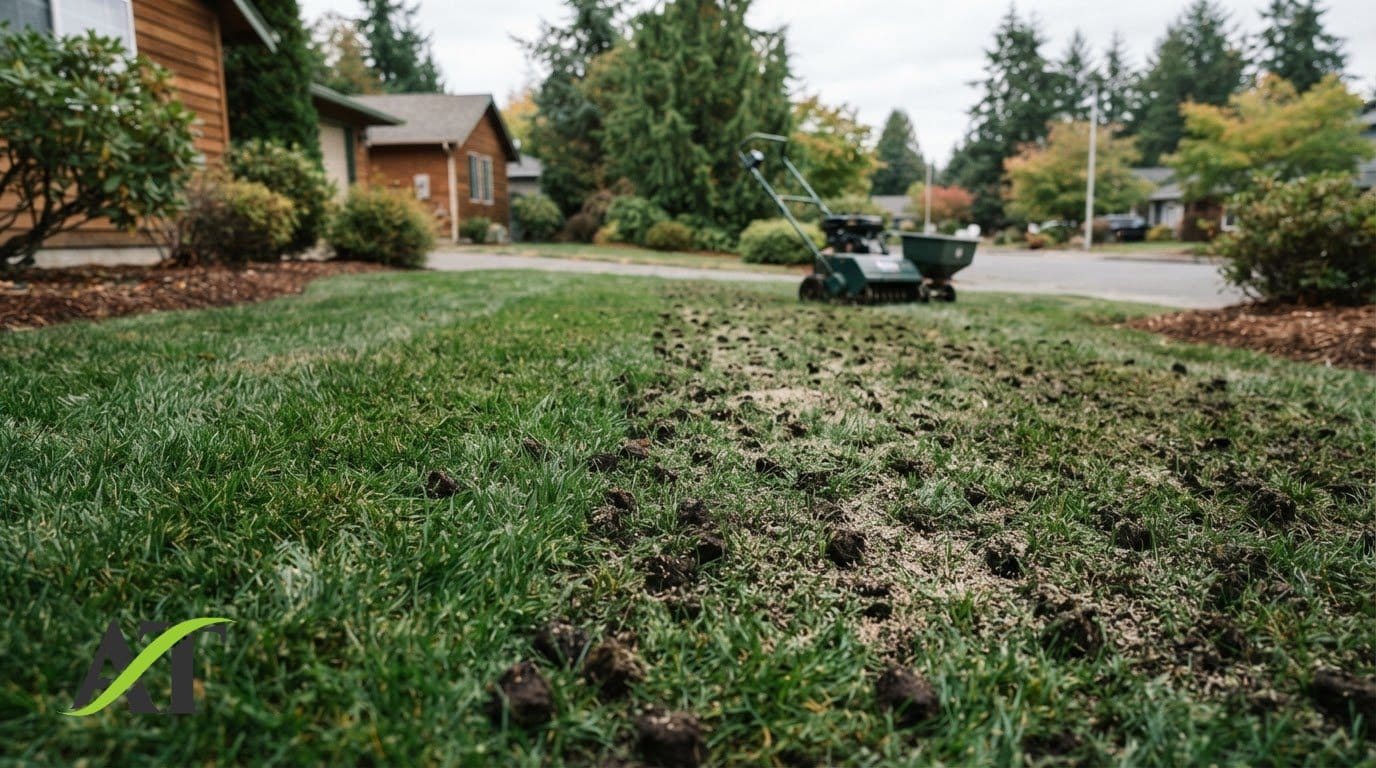
Core aeration uses hollow tines to remove small soil plugs from the turf’s shallow root zone. Those openings help relieve surface compaction and give water, air, and seed better access to soil.
Aeration doesn’t remove thatch, break deep hardpan, or repair a subsurface drainage problem. It also can’t correct thin grass caused mainly by shade or unsuitable watering. Identifying the cause matters before choosing a treatment. Plugs left on the surface break down over time.
Watering and seed establishment
Water gently so seeds stay in place and the soil surface doesn’t dry out between watering. Avoid creating puddles or runoff, which can move seed away from bare patches and collect it in low spots.
Germination speed varies by seed type and conditions, including soil warmth and moisture. Continue tending the seedbed while it establishes, rather than treating the first green shoots as a finished lawn.
Watering after aeration and Overseeding
Aeration alone does not require the same watering attention as newly seeded soil. If you combine aeration with overseeding, keep the seedbed moist without washing seed from the aeration openings. Check sunny and shaded areas separately, since they can dry at different rates. Watering, mowing, and managing foot traffic are all important aftercare.
There is no watering schedule that fits every Shoreline lawn. Adjust for rainfall, sun exposure, soil moisture, and the seedbed’s condition. Follow fertilizer product directions, and avoid herbicides on newly seeded turf unless the label explicitly permits their use.
If you’re unsure how to manage watering after treatment, ask about your lawn’s aftercare needs.
Aeration as a stand-alone service or plan treatment
Choose aeration alone when compaction is the main problem and the existing grass still provides adequate coverage. Pair aeration with overseeding when thin areas need new grass. The right scope depends on the lawn’s condition, not on choosing the most extensive treatment by default.
Aerating Thatching Co.’s Lawn Tune-Up combines core aeration, premium overseeding, and starter fertilizer. Dethatching, also called power raking, is a separate service, as are soil amendments and other add-ons. Aeration relieves soil compaction; it does not automatically remove thatch or solve every cause of poor growth.
As a general rhythm, established lawns may benefit from aeration from time to time. High-traffic areas can need it more often even when the rest of the lawn can wait longer. For example, if repeated foot traffic leaves one route compacted while other areas remain healthy, targeted aeration may address that area without treating the entire lawn as equally stressed.
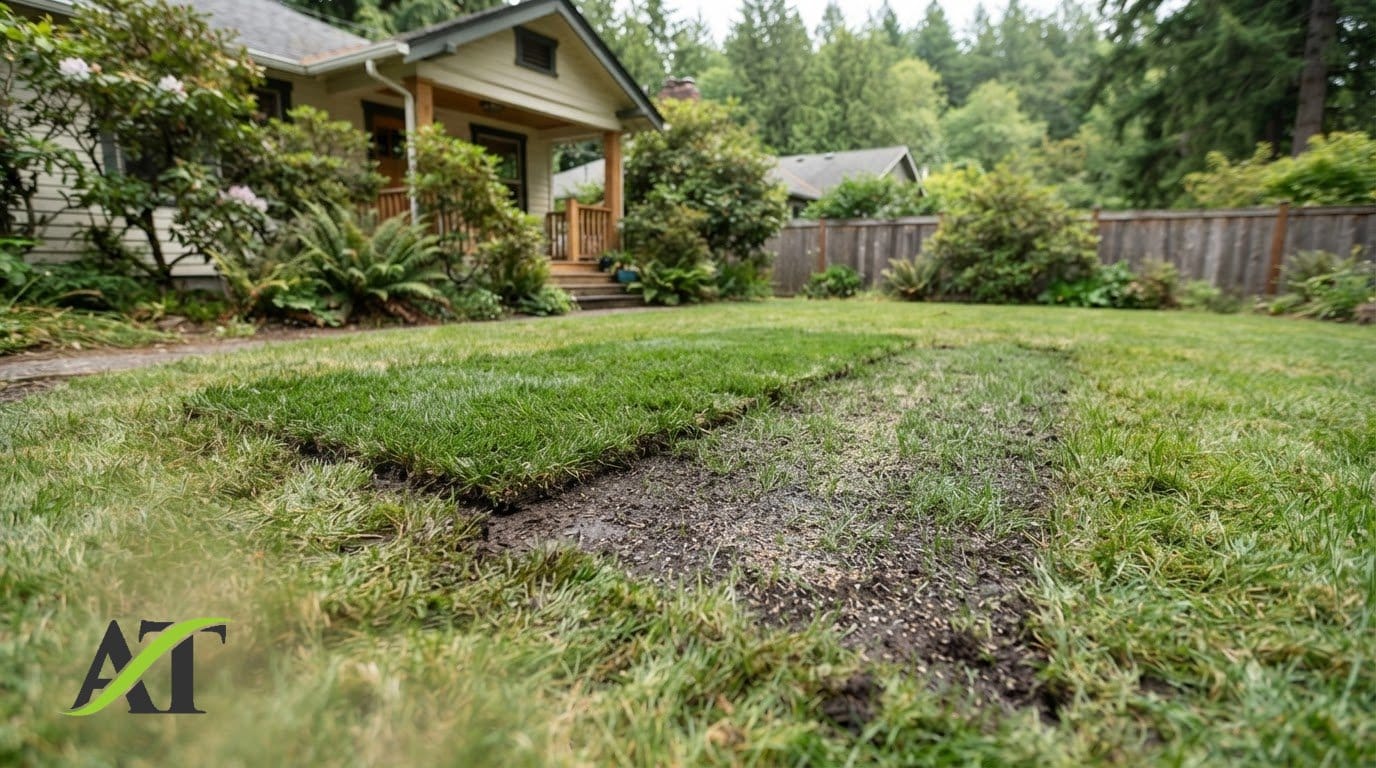
Consider overseeding when bare or thinning patches need added grass, but first identify why they developed. Persistent shade, uneven irrigation, and drainage problems call for different responses than surface compaction. Core aeration works in the shallow turf root zone; it will not break deep hardpan or correct a subsurface drainage defect. If water repeatedly pools or bare spots return, the cause needs attention before choosing a treatment.
For a lawn with both compaction and thin coverage, coordinating aeration and seed placement can address those needs in one treatment plan. The seed still needs suitable soil conditions, contact with soil, and consistent moisture to establish. If you’re weighing aeration alone against adding seed, ask Stewart about your lawn and describe the areas that look different.
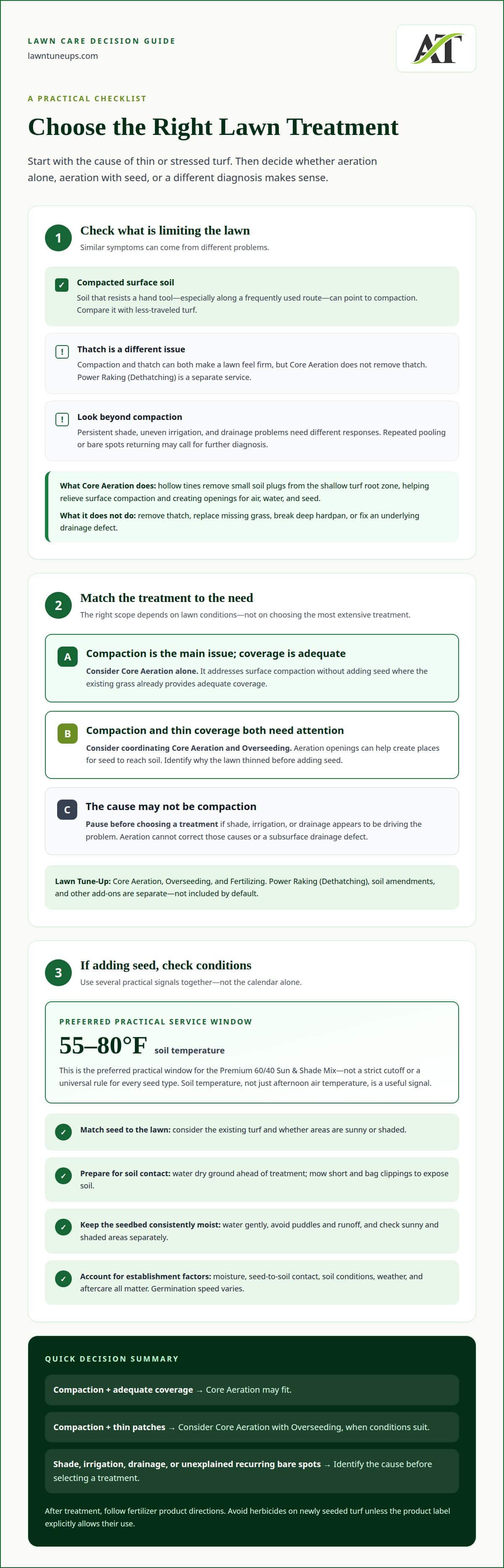
Aeration benefits for compacted soil and thatch
Compaction and thatch can both make a lawn feel firm underfoot, but they’re different problems. Compaction presses soil particles together, restricting movement through the shallow root zone. Core aeration removes small soil plugs. The openings can help air and water enter compacted surface soil.
Look for clues across the lawn before choosing a treatment. Soil that resists a hand tool, especially along a frequently used route, can point to compaction. Compare it with less-traveled turf. If the soil is compacted, aeration may help relieve that condition, but it will not repair deep hardpan or a subsurface drainage defect.
Thatch is a layer of dead and living stems between green grass and soil. Part the grass and check the layer beneath it. A thick buildup is a common sign that the lawn may need attention, but aeration does not remove thatch. A thatch problem calls for a separate treatment decision, such as Power Raking (Dethatching).
Thin growth can also come from shade, inconsistent irrigation, or drainage trouble. Recurring bare spots in a shaded area, for example, may persist after aeration because soil openings do not change the available sunlight. Water that repeatedly pools in the same place also points beyond surface compaction. Diagnose the pattern first, then match treatment to the cause.
After aeration, leave the soil plugs on the lawn to break down naturally. If you’re considering aeration for compacted areas or need help distinguishing thatch from compaction, describe the symptoms and affected spots when you ask Stewart about your lawn.
Aerating Thatching: Lawn Tune Up
Aerating Thatching Co.’s Lawn Tune-Up is a practical option when your lawn needs Core Aeration and Overseeding to address compaction and thin coverage. It combines those treatments with Fertilizing, helping you tackle several related lawn needs in one visit. Organic Fertilizing is also among the company’s lawn-care offerings.
Aeration and overseeding are not the answer to every problem. If the main issue is deep drainage trouble, heavy shade, or a thick thatch layer, they may not address the cause. First identify what you see: compacted soil, bare patches, or a condition that needs a different response. A focused plan starts with the actual state of your lawn, not the largest treatment.
For a lawn with surface compaction and thinning grass, learn more about the Lawn Tune-Up and decide whether it fits your needs. You can ask Stewart about your lawn through Aerating Thatching Co.’s request form.
Choose a Clear Next Step for Your Lawn
Before scheduling work, walk across the lawn and note where growth looks different. Mark areas that feel firm underfoot, bare patches, places with standing water, and spots shaded by trees or buildings. These observations help distinguish a surface problem from a pattern that needs further diagnosis. Match the treatment to the cause, not just the visible symptom.
For aeration and overseeding in Shoreline, let your lawn’s condition guide the timing and scope. Describe any problem areas, and mention whether thinning affects the whole lawn or just certain spots. Clear observations make it easier to discuss a practical approach and the aftercare your yard will need.
Ask Stewart About Your Lawn
A healthier lawn begins with a clear next step. You can move forward when you’re ready.
Frequently Asked Questions
DIY or Hire a Pro?
DIY can work when you can cover the lawn evenly and maintain consistent aftercare. Professional help can be useful if the lawn has mixed symptoms, difficult access, or areas that need different treatment decisions. Before starting, identify thin patches, compacted paths, and persistent wet spots. A clear map of those areas helps prevent treating the whole yard as if it has one uniform problem.
How long does it take for overseeded grass to grow?
New grass fills in over several weeks, and the pace depends on seed type, weather, moisture, and soil. Perennial ryegrass tends to sprout faster than Kentucky bluegrass. Look for steady coverage, not just the first shoots, when judging progress.
What does overseeding a lawn mean?
Overseeding adds grass seed to an existing lawn rather than removing the turf and starting over. It can help fill thin sections while preserving healthy grass nearby. For example, seed can be worked into gaps between established blades. Before choosing it, consider why the area thinned; ongoing shade or standing water can limit new growth even when seed is added.
How much does core aeration improve compacted lawns in Shoreline?
There is no fixed percentage that describes the change core aeration makes in every Shoreline lawn. The outcome depends on how compacted the soil is, how much of the lawn is affected, and whether compaction is driving the problem. A practical check is whether the treated soil becomes easier to probe and the turf grows more evenly over time.
How long does it take new grass seed to germinate in Shoreline?
Temperature, moisture, seed-to-soil contact, and seed type all affect emergence. If areas appear at different times, compare their sun exposure and moisture before assuming a slower patch has failed. Keep checking the seedbed without disturbing it.
What watering and mowing schedule is needed after overseeding?
Use the soil surface as your watering guide: keep it damp without making it soggy or causing runoff. If water pools, shorten each watering pass and let it soak in before continuing. After overseeding, wait to mow until new grass is rooted well enough to resist being pulled up. Avoid mowing when the ground is soft, since wheels can disturb young turf.
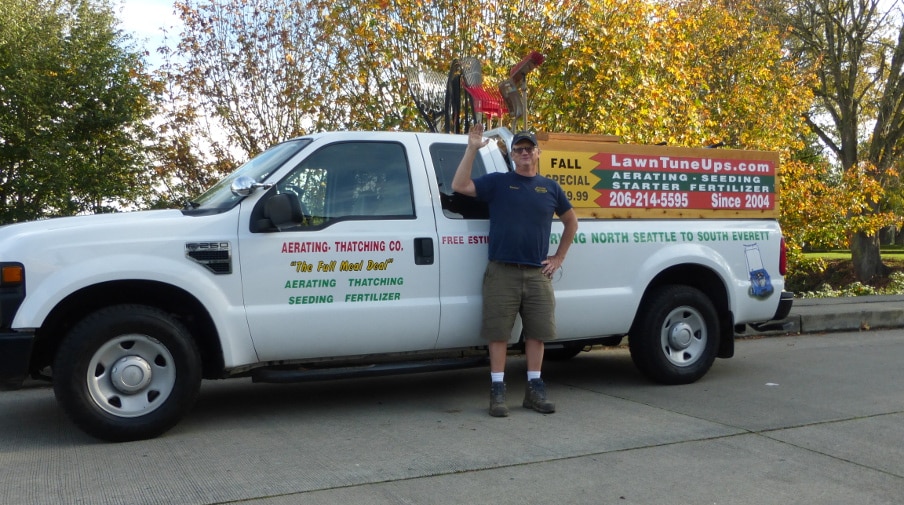
Article by
Stewart Armour
Stewart Armour is the owner of Aerating Thatching Co., an owner-operated Seattle-area lawn restoration business established in 2004. He helps homeowners understand Core Aeration, Power Raking (Dethatching), Overseeding, soil conditions, and the aftercare needed for stronger lawns. His background includes turf management study, advanced golf course turf training, and continuing education through Wilbur-Ellis University, State Turf Facilities, Soil First Academy, and Golf Course Applied Turf Physiology. Stewart has personally evaluated thousands of residential lawns throughout the Seattle area and focuses on recommending the work that fits each lawn’s condition.