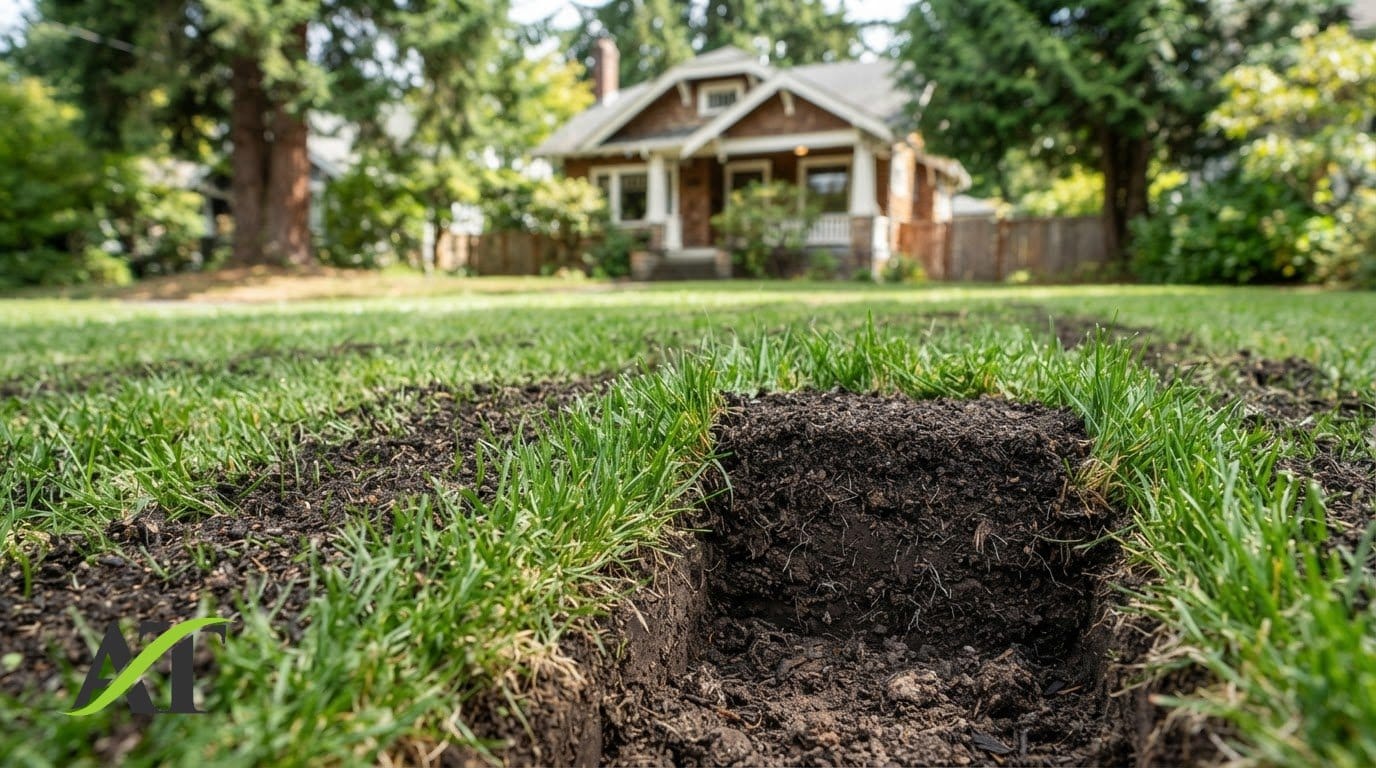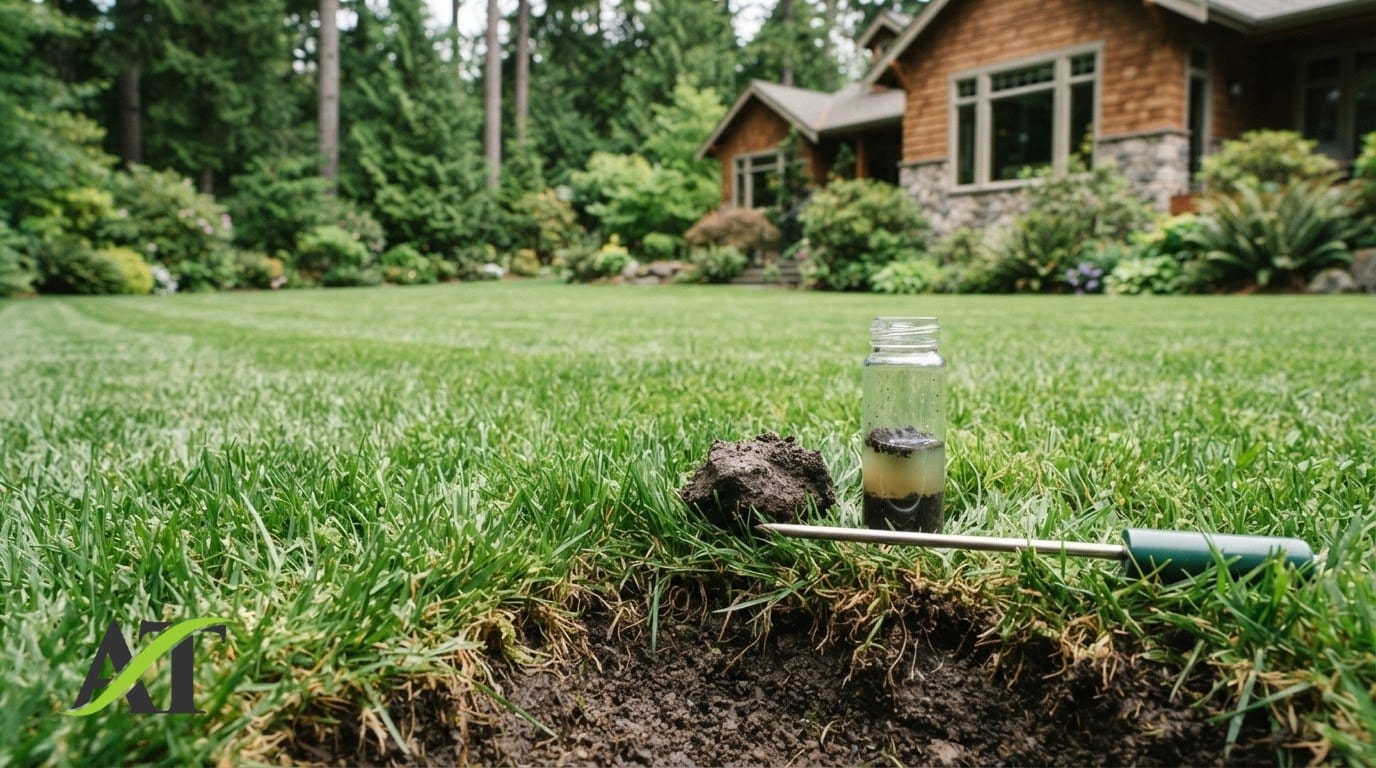
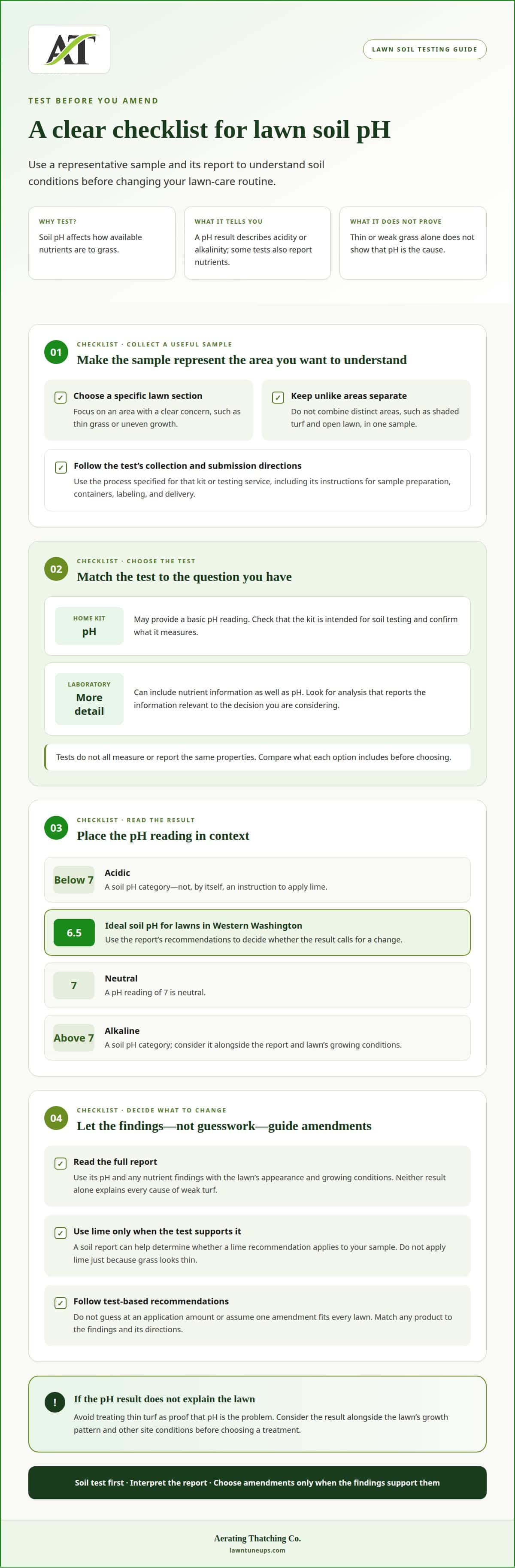
A lawn can struggle even when you’re feeding it. A pH reading of 7 is neutral, and 6.5 is the ideal soil pH for lawns in Western Washington. Below 7 is acidic, and above 7 is alkaline. Soil testing for lawn pH in Woodway starts with collecting a representative sample and using a soil test kit or submitting the sample for analysis, following the test’s directions.
Thin or weak grass does not automatically need more fertilizer. Soil pH affects how available nutrients are to grass, so testing can clarify growing conditions before you decide what to change. A soil test may also identify nutrients that are low.
This guide covers collecting a useful sample, interpreting the result, and understanding what acidic, neutral, or alkaline soil can mean for your lawn. It also explains why lime and other soil amendments should be guided by test results, not guesswork.
Key Takeaways
- Test a representative soil sample before changing your lawn care routine, so decisions are based on the soil rather than guesswork.
- Use the pH result to understand whether soil is acidic, neutral, or alkaline and how that may affect nutrient availability.
- Choose any soil amendment based on the test findings; lime and other amendments are not one-size-fits-all fixes.
- Once you understand the soil conditions, consider whether a Lawn Tune-Up with Core Aeration, Overseeding, and Fertilizing addresses the turf needs you’ve identified.
How soil pH affects lawn growth
Soil pH influences how available nutrients are to grass. Soil testing for lawn pH in Woodway can help you decide whether soil conditions need attention before changing your lawn-care routine.
- Choose the lawn area to assess. Focus on a section with a clear concern, such as thin grass or uneven growth. Keep distinct areas separate rather than combining shaded turf and open lawn. Soil testing for lawn pH in Woodway is most useful when the sample represents the specific area you want to understand.
- Choose a test that answers your question. A home kit may provide a pH reading, while laboratory analysis can include nutrient information. Consider whether you need only an acidity check or more detail before choosing an amendment. Test costs depend on the provider and analysis, so compare what each test measures and reports.
- Use the report to interpret growing conditions. A pH reading provides information about soil acidity or alkalinity, while nutrient findings can point to other soil concerns. Neither result alone explains every cause of weak turf. Use the findings alongside the lawn’s appearance and growing conditions before deciding what to change.
- Read all recommendations before applying amendments. Lime can increase the availability of iron, calcium, magnesium, and potassium in acidic soil. A report can help determine whether that information applies to your sample. Don’t apply lime just because grass looks thin; the pH result should inform that decision.
- Test before planning a soil treatment. There isn’t a single season that fits every lawn-testing decision. Arrange testing early enough to review the findings before you choose an amendment. Result timing depends on the testing method and provider, so include their stated processing schedule in your plan.
Neutral, acidic, and alkaline soil pH
Classify the soil test result before deciding whether an amendment is appropriate. Use the reading as guidance for your Woodway, Washington lawn, not as a treatment instruction on its own.
-
Classify Soil pH Levels
Read the pH value on the report. A reading of 7 is neutral, below 7 is acidic, and above 7 is alkaline. These categories describe the soil’s pH, not every condition affecting grass. Avoid treating thin turf as proof that pH is the cause; consider the test result with the lawn’s growth pattern and other site conditions.
-
Find the Ideal pH for Lawn Grasses
Use pH 6.5 as the ideal soil pH for lawns in Western Washington. A result away from 6.5 helps describe conditions, but doesn’t automatically mean an amendment is needed. Check the recommendations included with your soil report before changing the soil.
-
Correct Acidic Soil with Lime
Consider lime only when the soil test indicates acidity and supports that treatment. Lime can increase the availability of iron, calcium, magnesium, and potassium in acidic soil. Regular lime applications, or pelletized limestone, can correct overly acidic soil. Don’t guess at an application amount or use lime simply because grass looks weak; follow the test-based recommendation for the soil sample.
-
Check Local Amendment Recommendations
Use your soil report to guide amendment and fertilizer choices for a Woodway, Washington lawn. Don’t assume a local rule calls for routine lime or fertilizer, or that a recommendation from another region applies to your property. Match any product to the test findings and its directions. For help interpreting soil concerns, ask Stewart about soil amendments.
Where can I get a lawn soil test near Woodway, Washington?
For a Woodway, Washington lawn, choose between a home pH kit and a laboratory soil test. Compare what each option measures and how it handles lawn samples. A home kit may suit a basic pH reading, while laboratory testing can provide broader information for assessing soil conditions. Homeowners looking for a no-cost option can review the King Conservation District’s 2025 information about free soil testing in King County.
- Start with the question you need answered. If you want an initial pH reading, look for a kit intended for soil testing. If you’re considering an amendment, look for laboratory analysis that reports pH and relevant nutrient information. Check the test description so you know what the result can tell you.
- Find a suitable testing option. Search for soil-testing services that accept residential lawn samples in the Woodway area, or choose a home kit from a local retailer. Confirm that the test is designed for soil and provides the measurements you need. Don’t assume every kit or laboratory analyzes the same properties.
- Read the instructions before collecting soil. Each kit or testing service may have its own sample preparation and submission process. Follow those directions carefully, including any guidance about containers, labeling, and delivery. Using the correct process helps ensure the sample is handled as the testing service expects.
- Represent the lawn area accurately. Collect soil only from the section you want to understand. If one area grows differently from another, keep those areas separate rather than combining them. For example, a patch with weak growth and a healthier section may need separate samples to make the results useful for each area.
- Use the findings to decide what to do next. Check which measurements the report includes and read any recommendations for lawn use. Avoid choosing lime or fertilizer based only on grass appearance. If the result doesn’t explain the problem, consider other growing conditions before selecting a treatment.
Does the Texas A&M AgriLife Extension office in McLennan County test lawn soil?
Texas A&M AgriLife operates a Soil, Water and Forage Testing Laboratory for soil analysis. The McLennan County Extension office and the laboratory are separate, so don’t assume the county office performs tests or accepts samples.
- Separate local guidance from laboratory testing. Contacting the McLennan County Extension office can help clarify where to direct a soil-testing question. The laboratory performs analysis; an Extension office is a local information resource. Confirm the current sample-submission process before visiting or mailing anything.
- Choose a lawn soil test. Identify that the sample is for turf or a home lawn, not forage or another use. Texas A&M AgriLife’s Soil, Water and Forage Testing Laboratory provides the relevant laboratory route. Review its current instructions to select the appropriate test and prepare the sample correctly.
- Follow the laboratory’s collection directions. Take soil from the lawn area you want assessed. Keep visibly different sections separate, such as a struggling patch and healthier turf. Avoid combining unrelated areas into one sample, because that can blur differences in soil conditions.
- Read the report before making changes. Look for the reported pH and any nutrient findings. Use the recommendations for the sample and intended lawn use. Don’t treat the name “Texas A&M” as a substitute for reading the actual results; different soil findings can call for different decisions.
- Use McLennan County as your local point of contact. If you’re unsure how to submit a Woodway lawn sample, ask the county Extension office which current instructions apply. The office’s role is not the same as the laboratory’s analysis, so check the submission route before delivering a sample locally.
Aerating Thatching: Lawn Tune Up
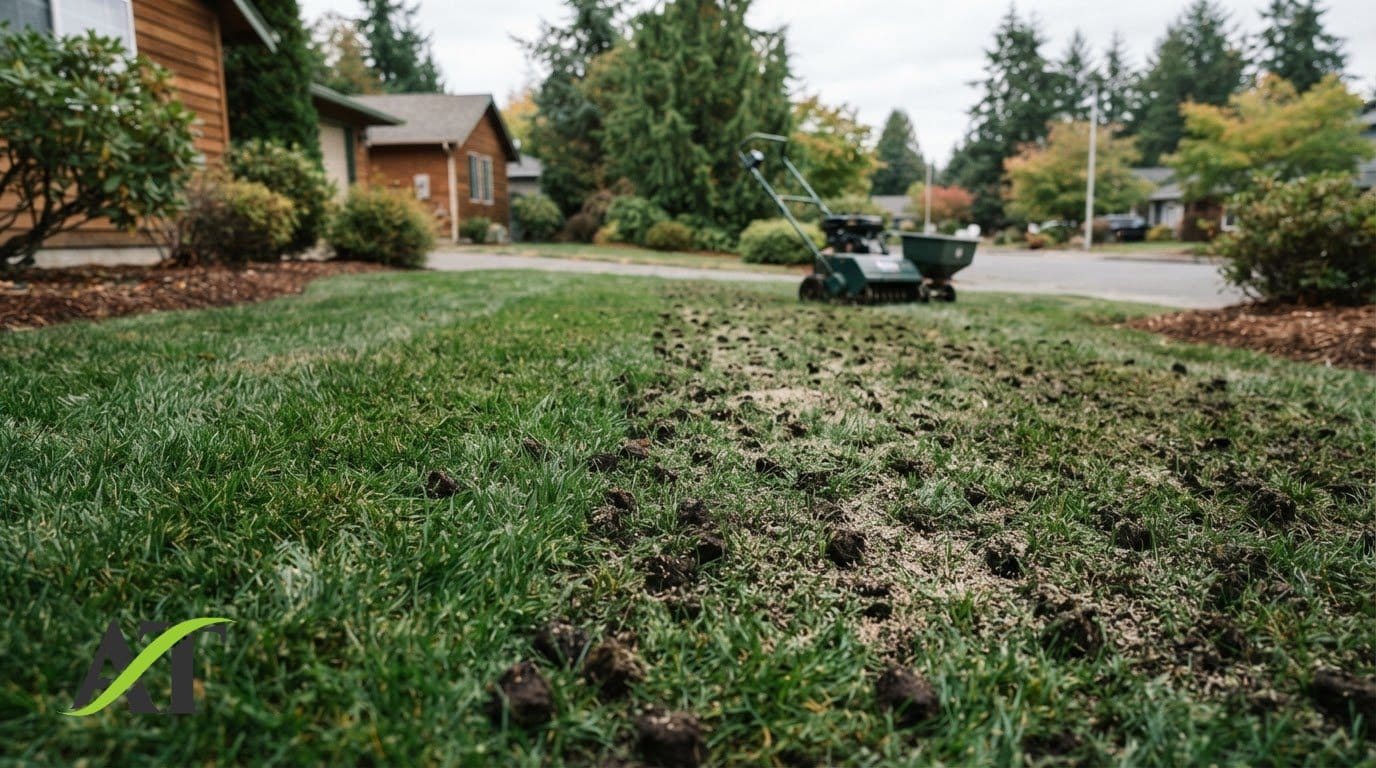
Aerating Thatching Co.’s Lawn Tune-Up combines Core Aeration, Premium Overseeding, and Starter Fertilizer. It may suit a lawn that needs relief from soil compaction and thicker turf. Lime and other soil amendments are separate, so base those decisions on your soil test findings.
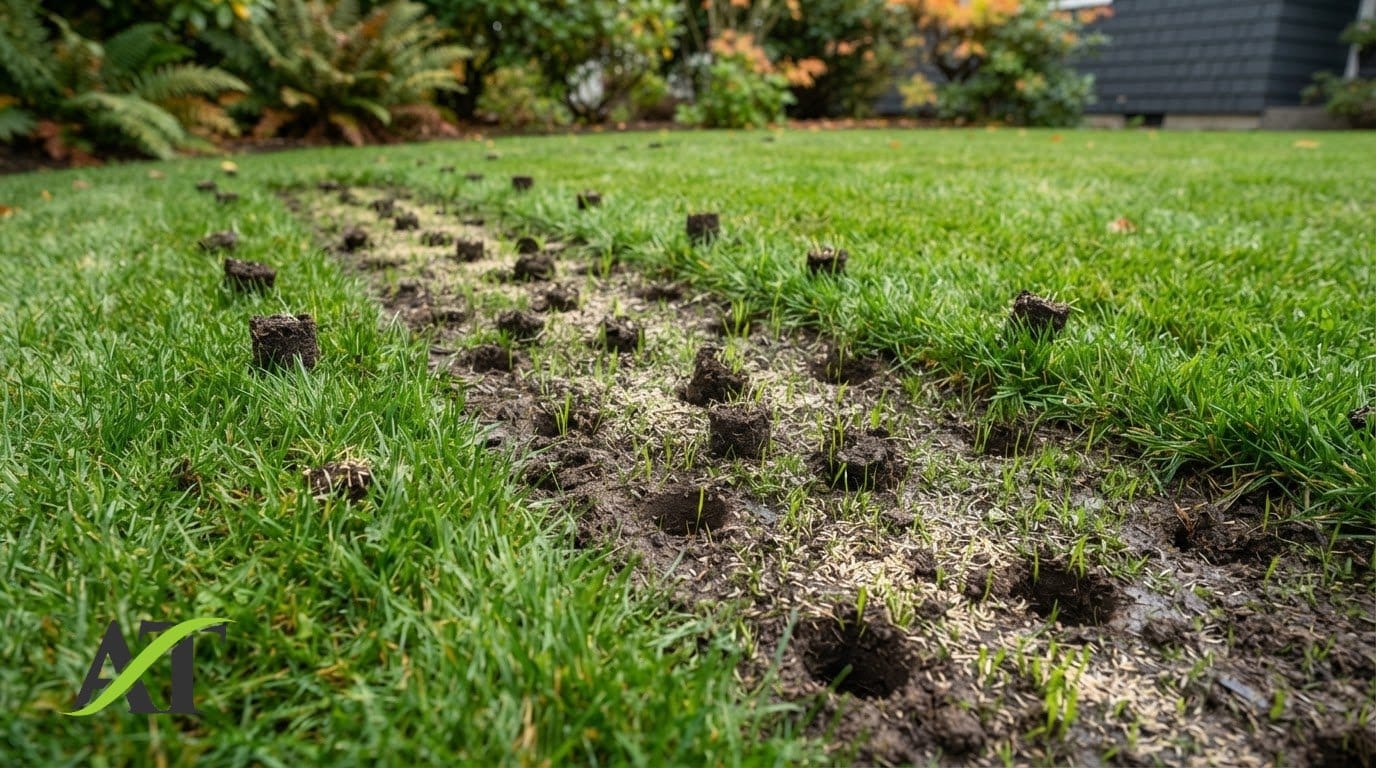
Core Aeration relieves soil compaction in the lawn’s root zone, but it does not address every cause of poor growth, such as shade, irrigation, thatch, or drainage. Overseeding adds grass seed where turf is thin.
Woodway, Washington, is within Aerating Thatching Co.’s service area. Ask Stewart About Your Lawn to discuss a suitable next step.
Turn Your Soil Findings Into a Practical Next Step
A soil report is useful when it helps you decide what to do next. Consider the findings alongside your lawn’s condition, then determine whether they point to a soil treatment or whether other growing conditions need attention. This keeps your plan focused on the problem you want to solve.
For homeowners in Woodway, Washington, Aerating Thatching Co. offers Core Aeration and Overseeding. If your soil results raise questions about turf care, share what you’re seeing and discuss whether these services suit your lawn’s needs.
A clear next step helps you make a practical plan for your lawn.
Frequently Asked Questions
How can you test the pH of soil?
Use a soil pH test kit or submit a sample to a laboratory. With a home kit, follow the instructions for preparing the soil and reading the result. Choose laboratory testing if you also need nutrient information to guide an amendment decision. Keep samples from visibly different lawn areas separate so one patch does not skew the results for another.
How do I collect and submit a soil sample for lawn pH testing in Texas?
Collect soil from the area you want assessed, and keep samples from areas that grow differently separate. Use a clean container and follow the laboratory’s directions for preparing, labeling, and submitting the sample. For a Woodway, Texas lawn, Texas A&M AgriLife’s Soil, Water and Forage Testing Laboratory is one option to research. Follow its instructions to prepare the sample.
How can I adjust acidic or alkaline lawn soil in Woodway, and what products should I use?
Use soil test results to choose an amendment rather than treating pH by guesswork. Lime can help correct overly acidic soil. For alkaline soil, elemental sulfur, compost, or carefully used aluminum sulfate may be options, but these products are not interchangeable. If you live in Woodway, Washington, Texas-specific recommendations may not apply to your lawn, so rely on findings relevant to your soil.
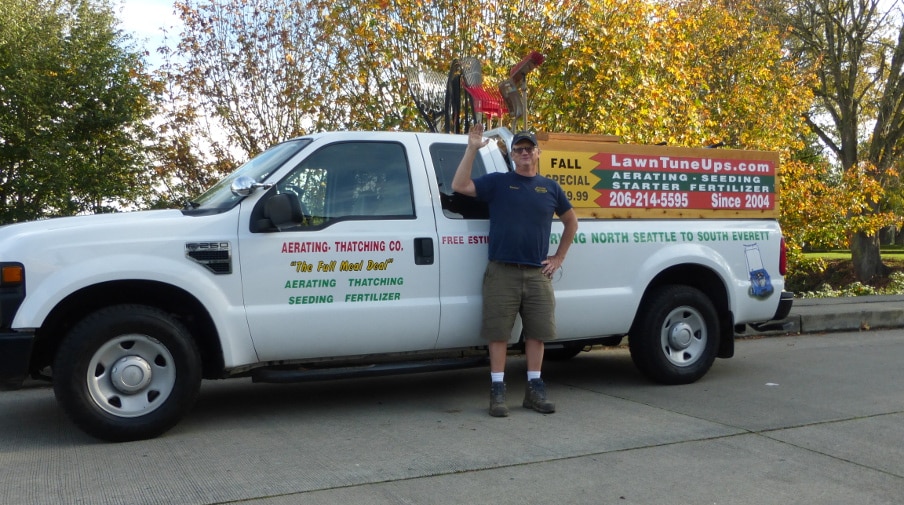
Article by
Stewart Armour
Stewart Armour is the owner of Aerating Thatching Co., an owner-operated Seattle-area lawn restoration business established in 2004. He helps homeowners understand Core Aeration, Power Raking (Dethatching), Overseeding, soil conditions, and the aftercare needed for stronger lawns. His background includes turf management study, advanced golf course turf training, and continuing education through Wilbur-Ellis University, State Turf Facilities, Soil First Academy, and Golf Course Applied Turf Physiology. Stewart has personally evaluated thousands of residential lawns throughout the Seattle area and focuses on recommending the work that fits each lawn’s condition.