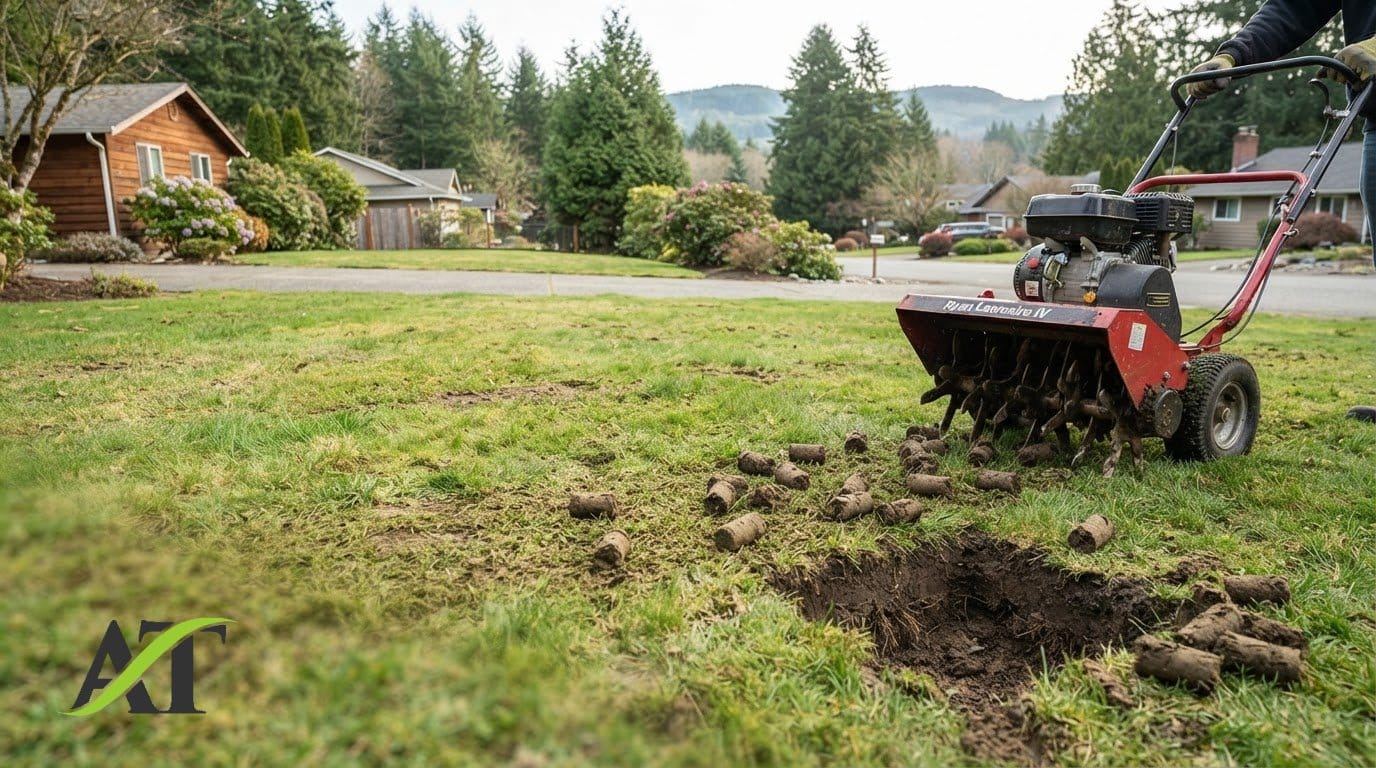
Do I Need Dethatching or Aeration? How to Tell With the Screwdriver Test
Core Aeration and Dethatching (Power Raking) address two different lawn conditions. One works below the surface to relieve compacted soil. The other removes excessive buildup at the lawn surface. A screwdriver and a quick look at the base of the grass can give you useful clues about which condition you may have.
Aeration Is About the Soil. Dethatching Is About the Surface.
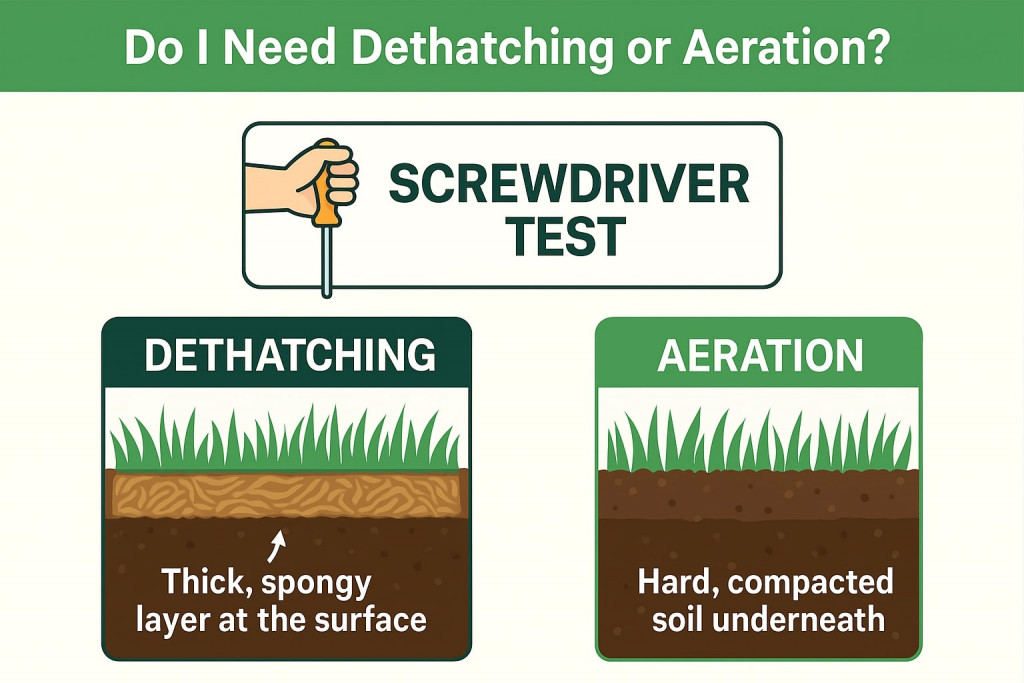
If a screwdriver is unusually difficult to push into reasonably moist soil, soil compaction may be present and Core Aeration may be worth considering. If you find a dense, springy layer of organic material between the green grass and the soil, Dethatching (Power Raking) may be the more relevant service. Some lawns can have both conditions, and some have neither.
Try the Screwdriver Test for Possible Compaction
The screwdriver test is a simple way to get a feel for how resistant the soil is. It is best performed when the soil is reasonably moist rather than extremely dry or saturated.
- Choose several representative areas of the lawn.
- After rainfall or watering, push a long screwdriver straight into the soil.
- Notice whether it enters reasonably easily or requires unusually strong pressure.
- Repeat the test in several places rather than judging the entire lawn from one spot.
Inspect the Lawn Surface for Excessive Thatch
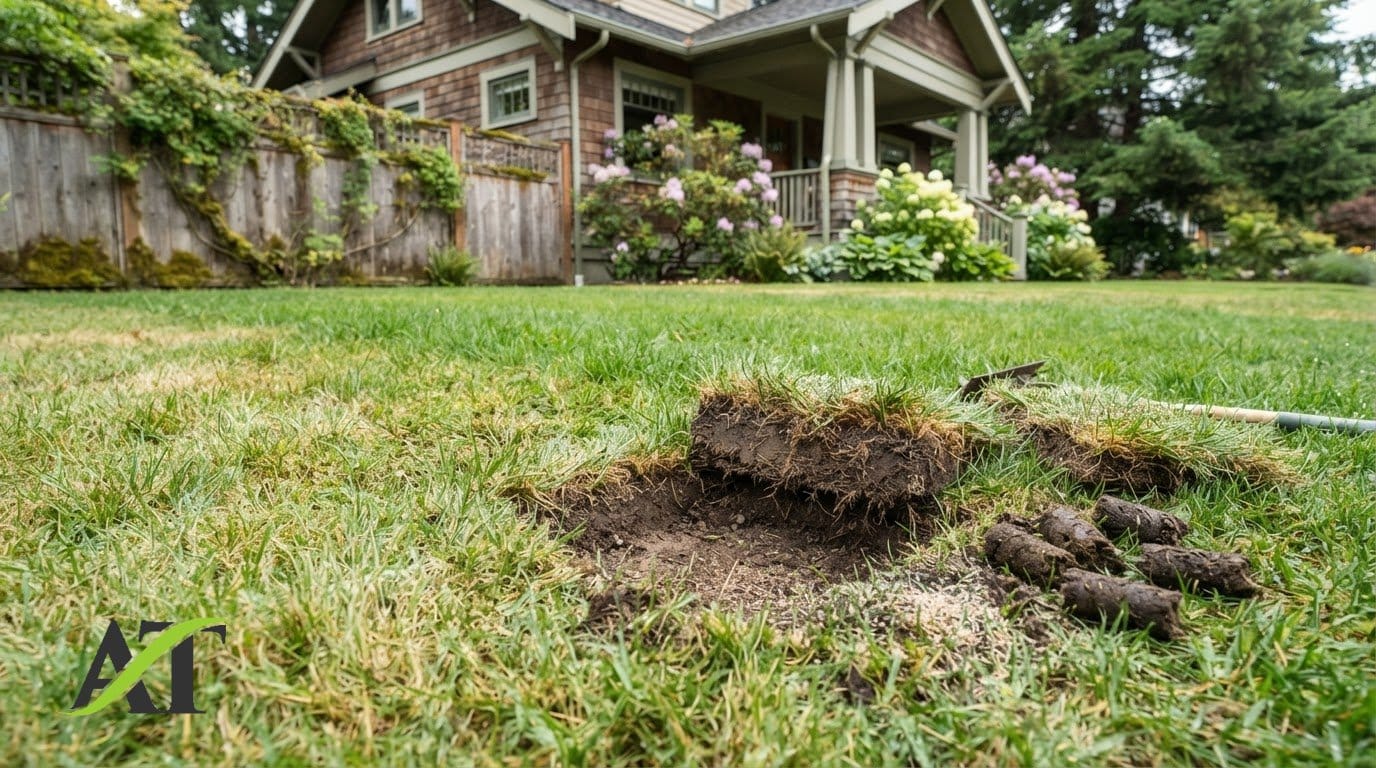
Thatch is found between the green grass and the soil surface. To inspect it, part the grass at soil level or remove a small plug or wedge so you can see the layers clearly.
- Look beneath the green blades rather than judging only from above.
- Find the transition between the grass growth and the actual soil.
- Look for a noticeably dense, matted or springy organic layer.
- Check more than one part of the lawn before drawing a conclusion.
What Did Your Lawn Checks Show?
These observations are meant to point you in the right direction, not turn a quick homeowner test into a guaranteed diagnosis.
When Compacted Soil Is the Main Concern
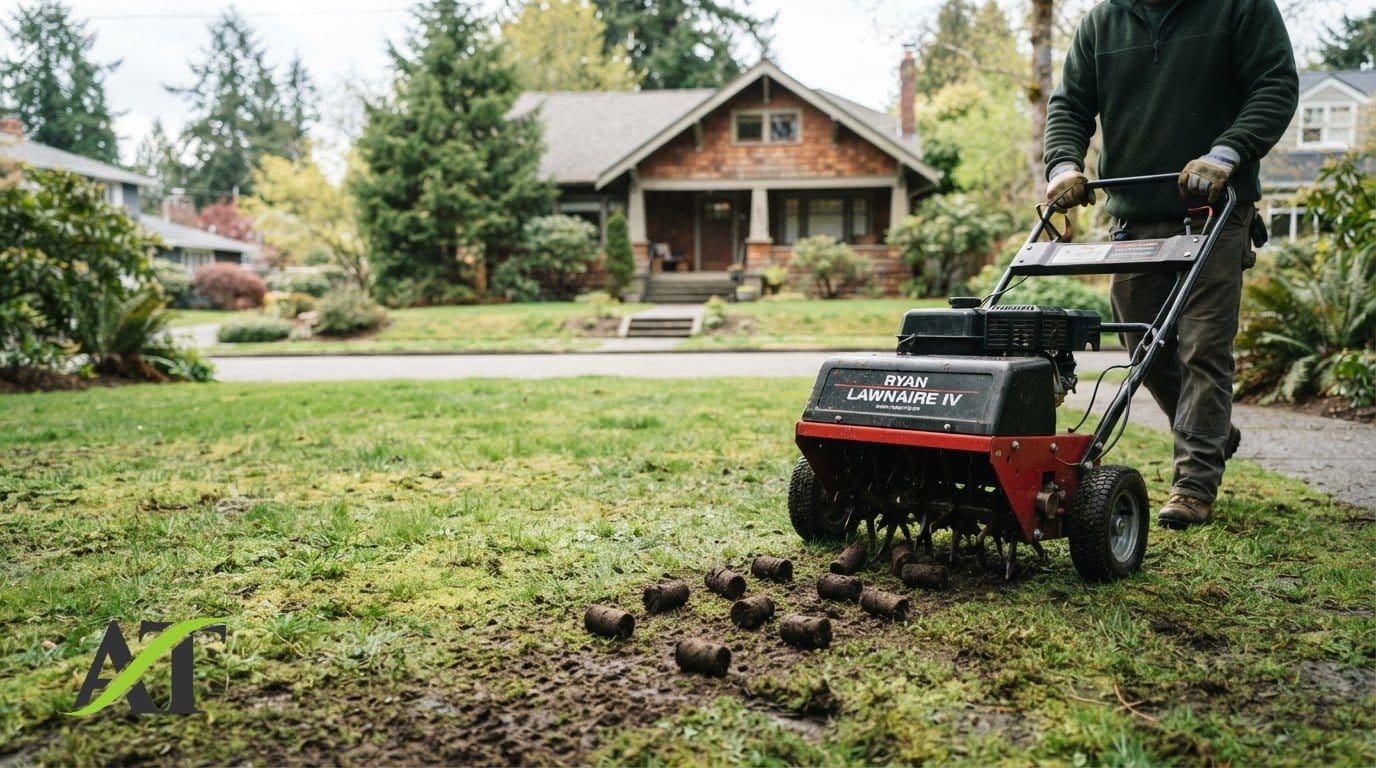
Core Aeration removes small plugs of soil to physically open a compacted root zone. If the lawn surface looks reasonably clear but the soil itself is consistently hard and resistant, aeration is the service that most directly addresses that condition.
Aeration is not the same as Dethatching (Power Raking), and it should not be treated as the primary method for removing a significant layer of surface buildup.
When Surface Buildup Is the Main Concern
Dethatching (Power Raking) works at the lawn surface. Its purpose is to remove excessive thatch, moss and accumulated matted material when that buildup is actually present.
A lawn should not be dethatched simply because it looks thin, stressed or unhealthy. Those symptoms can have other causes.
Why the Difference Matters Here
Seattle-area lawns go through long wet stretches as well as comparatively dry summer periods. Regular foot traffic, mowing and working on wet soil can contribute to soil compaction, while damp lawn conditions can also make surface moss and accumulated material more noticeable.
That does not mean every Seattle lawn needs aeration, dethatching or both. The goal is to identify the condition that is actually present before choosing a service.
A Lawn Can Have Compaction and Surface Buildup
These conditions are not mutually exclusive. A lawn can have compacted soil below while also having a dense layer of thatch or matted material at the surface.
In that situation, both Core Aeration and Dethatching (Power Raking) may be appropriate because each service addresses a different physical problem.
The presence of one condition does not automatically prove that the other is present.
Do Not Dethatch a Lawn Just Because You Can
Stewart Armour has worked on Seattle-area lawns since 2004 and personally performs the lawn services for Aerating Thatching Co. His approach is to match the work to the lawn condition rather than automatically recommending Dethatching (Power Raking), Core Aeration or a larger service simply because a homeowner is unsure what the lawn needs.
If compaction is the real issue, Core Aeration is the more direct answer. If excessive surface buildup is the problem, Dethatching (Power Raking) is designed for that. If neither condition is apparent, another lawn issue may be responsible.
Aeration vs. Dethatching FAQ
Does every lawn need Dethatching (Power Raking)?
No. Dethatching (Power Raking) makes sense when excessive thatch, moss or matted surface material actually needs to be removed. A lawn should not be dethatched automatically just because it is thin, stressed or growing poorly.
Does the screwdriver test prove that my soil is compacted?
No. Difficulty pushing a screwdriver into reasonably moist soil is a useful indicator of possible compaction, especially when the same resistance appears in several areas. Dry soil, rocks, roots and other conditions can also cause resistance.
Does Core Aeration remove thatch?
Core Aeration is primarily used to relieve compacted soil by removing small soil plugs. It is not a substitute for Dethatching (Power Raking) when a significant layer of surface buildup actually needs to be removed.
Can my lawn need both aeration and dethatching?
Yes. Some lawns have both compacted soil and excessive surface buildup. When both conditions are genuinely present, Core Aeration and Dethatching (Power Raking) may each have a role because they address different parts of the lawn.
What if neither test shows an obvious problem?
Do not assume that the lawn needs either service. If the soil does not appear unusually resistant and there is no dense, springy surface layer, compaction and excessive thatch are not obvious from these simple checks. Thin, weak or stressed grass can have other causes.
Read About the Service That Matches the Condition
Core Aeration
Learn how Core Aeration works, when compacted soil may benefit from it and what the service does and does not address.
Explore Core AerationDethatching (Power Raking)
Learn when excessive thatch, moss or matted surface buildup may call for Dethatching (Power Raking).
Explore Dethatching (Power Raking)