The right choice starts with the thatch layer, not the machine. Dethatch when thatch exceeds 1/2 inch; most lawns need it every 1-3 years, not automatically each season. In the DIY dethatching versus a professional service decision, lawn size, thatch depth, equipment, and cleanup all matter.
When weighing DIY dethatching vs professional service, consider the lawn’s condition, the equipment and cleanup involved, and how much physical work you can take on. This guide explains how to assess thatch and choose an approach. It also clarifies when professional core aeration may help with compaction, a different problem from thatch.
Key Takeaways
- Measure the thatch layer and consider your lawn’s size before choosing a manual or powered approach.
- Account for equipment handling, physical work, and debris cleanup when comparing DIY dethatching with hired help.
- Match the treatment to the problem: dethatching removes thatch, while Core Aeration addresses compaction in the shallow turf root zone.
- If the lawn needs support beyond thatch removal, a Lawn Tune-Up combines Core Aeration, Overseeding, and Fertilizing.
How Often Should You Dethatch Your Lawn?
Thatch is a layer of stems and roots between grass blades and soil. A thin layer supports a healthy lawn, but more than 1/2 inch can restrict water movement and stress turf. Most lawns need dethatching every 1-3 years, not every year. Check the layer before choosing a tool or setting a schedule.
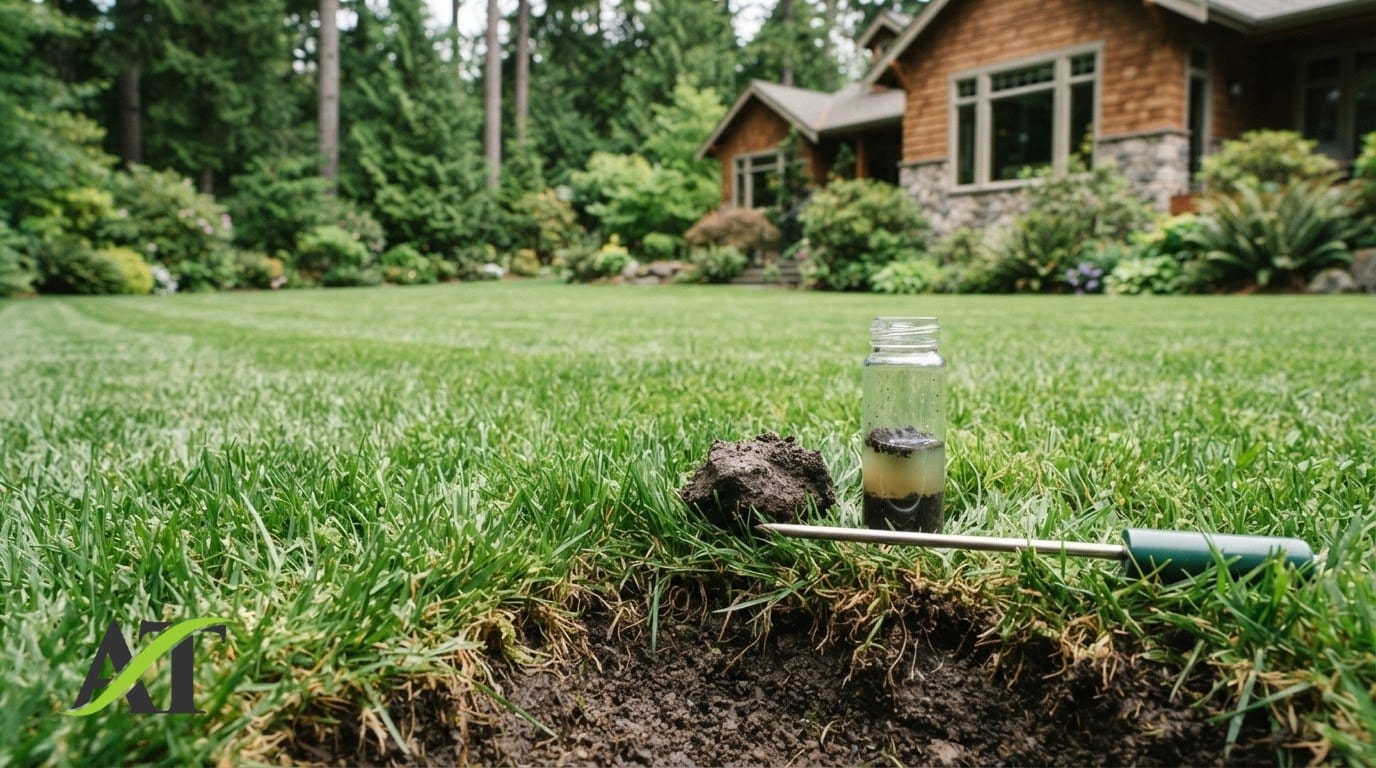
Cut a small wedge of turf and measure the brown, spongy layer between the grass and soil. Some grasses, including Kentucky bluegrass, bermudagrass, and zoysiagrass, can build thatch as stems accumulate. A spongy feel or a patch that stays wet after nearby grass dries can be a clue, but measure before deciding to dethatch.
Match timing to grass type, soil moisture, and thickness. Late summer to early fall suits cool-season grasses. Avoid working saturated soil, and don’t treat dry, stressed turf as if it were ready for aggressive raking.
Choose a method that fits both the lawn’s size and the measured layer:
| Option | Lawn size | Thatch or effort |
|---|---|---|
| Manual rake | Under 500 square feet or isolated patches | About 1 hour per 250 square feet |
| DIY powered dethatcher | Under 5,000 square feet | Useful for accessible lawns; plan for debris removal |
| Verticutting | Any size requiring deeper thatch work | Consider when thatch exceeds 1 inch |
| Professional service | Over 5,000 square feet | More area and cleanup; crew size and thickness affect time |
Choose by measured thatch first, then lawn area and the physical work you can manage.
The thicker the thatch, the more work removal and cleanup can involve. Extra passes and collected debris add time, and manual raking takes more effort than operating a machine. Don’t rake deeply just to work faster: incorrect depth can damage healthy turf.
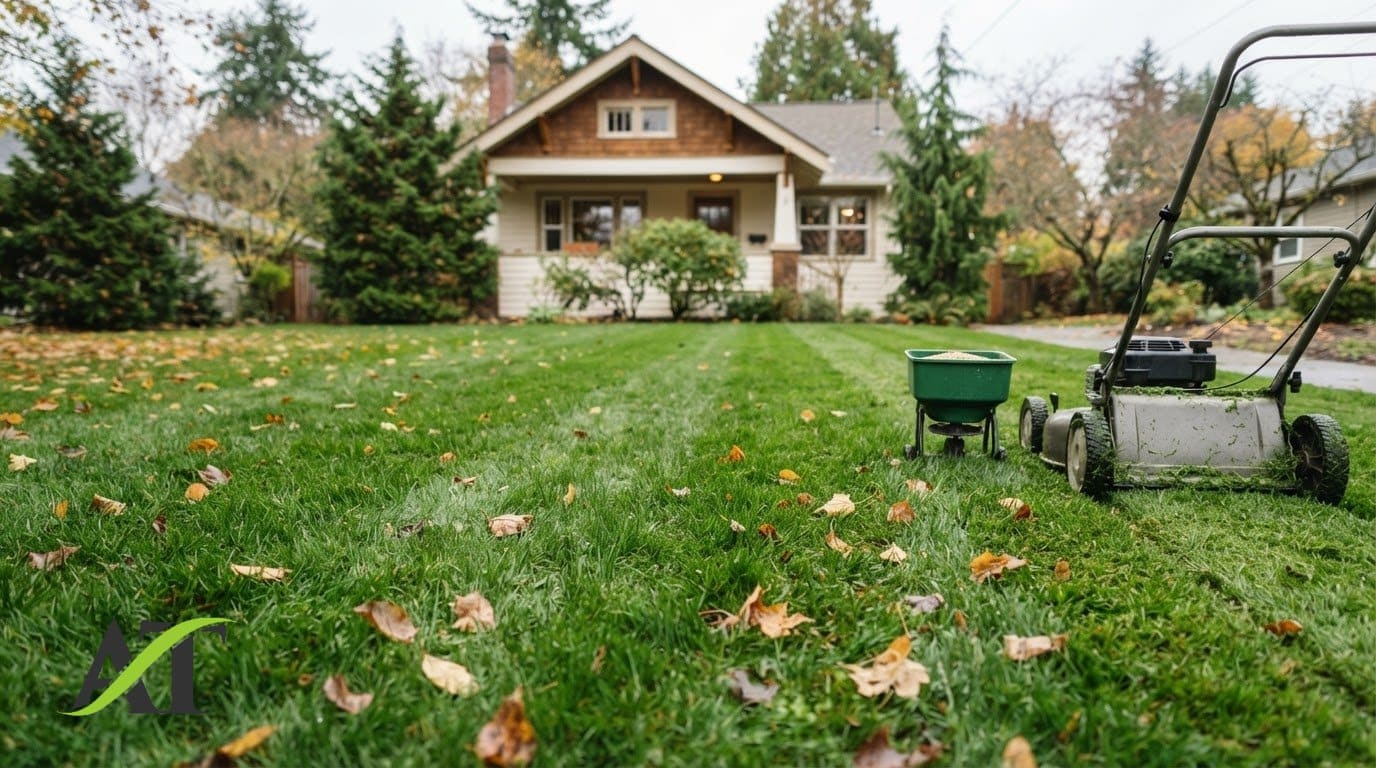
After dethatching, remove loosened debris, then consider Overseeding on thin or bare areas and Organic Fertilizing to support recovery. Choose seed and fertilizer suited to the grass and season. Follow lawn aftercare guidance for practical next steps.
Comparing DIY and professional dethatching costs
The practical choice comes down to labor, equipment handling, and cleanup. When comparing DIY dethatching vs professional service, account for access and what happens after the machine passes, not just the dethatching itself.
DIY Equipment and Rental Costs
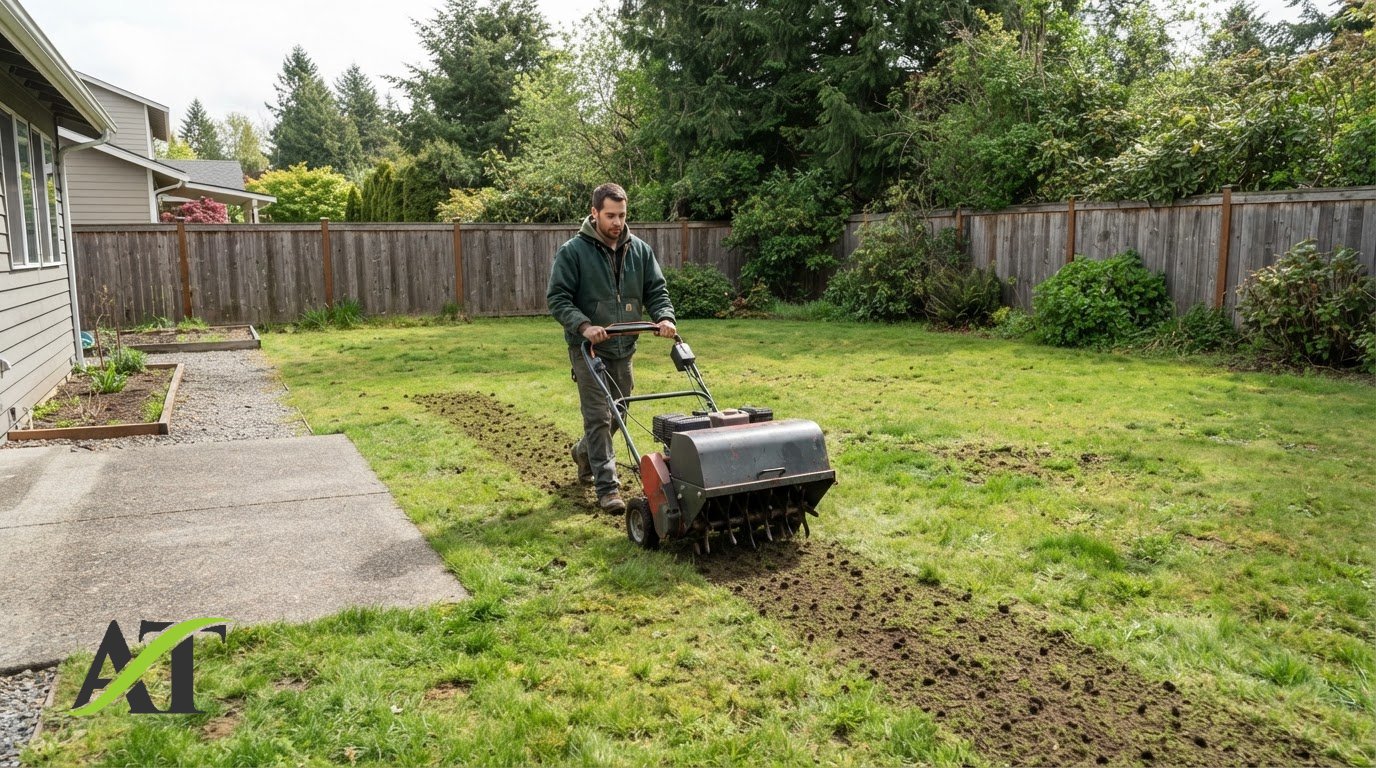
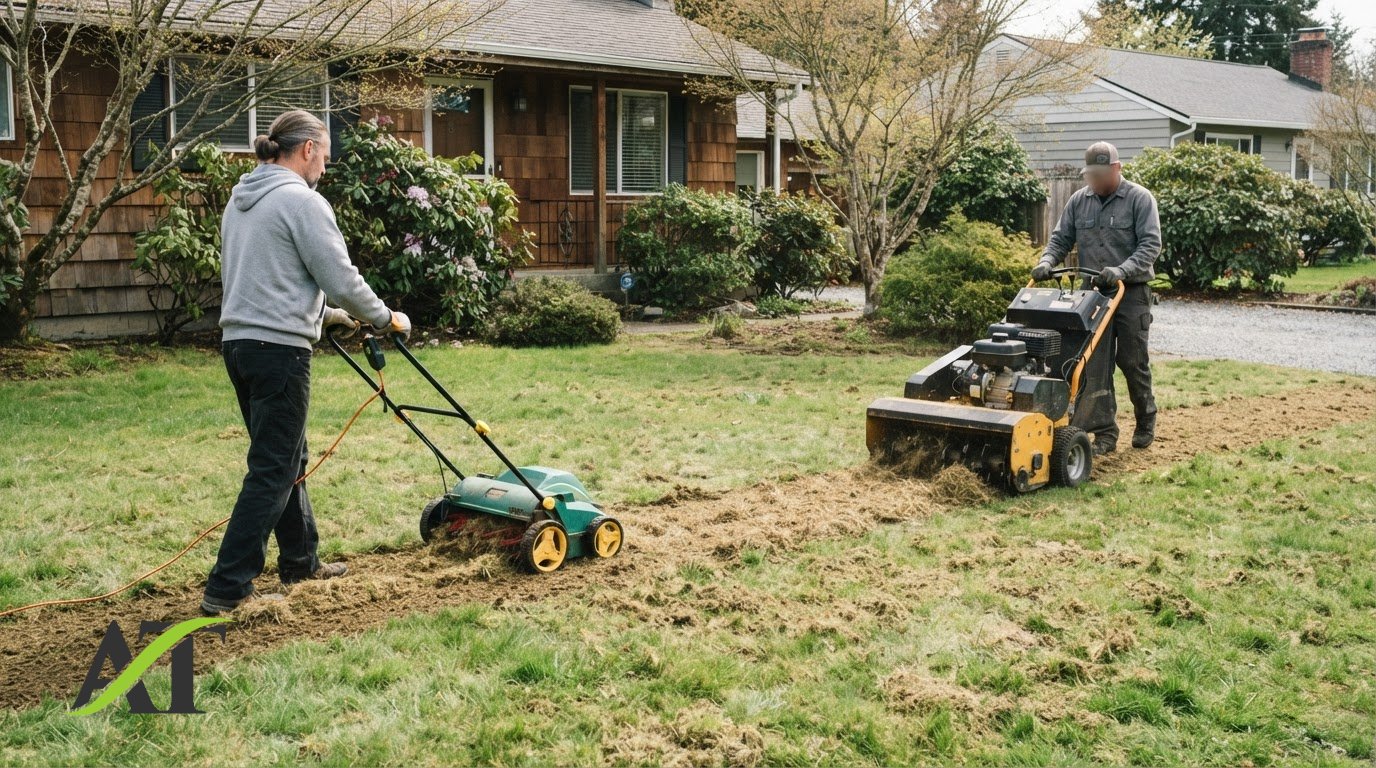
DIY dethatching means operating a rake or powered machine, making controlled passes, and collecting loosened material. You’ll also handle setup, transport, and storage if you own the machine. Tight corners beside fences or planting beds may need hand work. Choose this approach if you’re comfortable managing each stage.
Professional Service Costs
Professional dethatching shifts equipment operation and debris handling to a crew. The work can include raking, placing yard waste, and clearing the treated surface. This approach reduces the physical tasks the homeowner handles, while allowing the crew to work across sections that need different attention. It can be useful when equipment operation feels difficult.
Access affects the job. A level, clear route allows equipment to move steadily; slopes, narrow gates, trees, and garden borders may require slower passes or hand work. Walk the lawn first and identify where equipment can travel. Note tight turns and areas where roots or edging could interrupt a pass.
Plan the cleanup separately. Dethatching pulls material onto the grass, and a heavy layer left behind can block light and airflow at the surface. Decide where to collect debris and how to move it off the lawn before starting. In spring and fall, leaves and other loose material may add to the cleanup.
In the DIY dethatching versus professional service decision, choose the approach that matches your time, access, and comfort with equipment. For help discussing the work involved, Ask Stewart About Your Lawn.
Electric homeowner dethatchers versus commercial equipment
Electric homeowner dethatchers can suit light work on smaller areas, while more powerful equipment is used for heavier thatch. Choose based on the turf’s condition, your ability to control the machine, the time available, and how you’ll remove debris.
First inspect the lawn and clear loose debris. Set the machine for light contact with the turf, make a pass, then collect the loosened thatch. Check the surface before deciding whether another pass is necessary.
Electric Homeowner Dethatchers
Electric homeowner-grade machines have limited power and shallower tines than commercial machines. They suit light maintenance on small lawns, but can tear turf or scalp grass if used too aggressively. A powered dethatcher can cover 2,000 square feet in about 40-45 minutes, leaving time for debris collection. For thick thatch, a shallow homeowner machine may remove less material than needed.
Commercial-Grade and Rental Equipment
Commercial-grade dethatchers are built for heavier work and can be adjusted to lawn conditions. Rental machines give homeowners access to powered equipment without ownership, but the operator still handles transport, setup, passes, and cleanup. A four-hour rental period makes area and debris planning important. Powered dethatching is described as suitable for residential lawns up to 1/2 acre.
Manual dethatching takes about 1 hour per 250 square feet, so even a modest area can demand substantial effort. Use a dethatching rake on isolated patches or small turf sections, pull through the grass, and gather loosened thatch as you work. This slower method offers direct control but becomes laborious across larger lawns.
After powered or manual dethatching, rake up removed material before it mats over the lawn. A leaf rake, debris collection, and lawn-waste bags can help move thatch for disposal. Plan cleanup before you start: machine passes may take less time than clearing the debris. Dethatching isn’t an annual task for every lawn, so base equipment choice on measured thatch and the work needed.

Benefits of professional aeration and dethatching
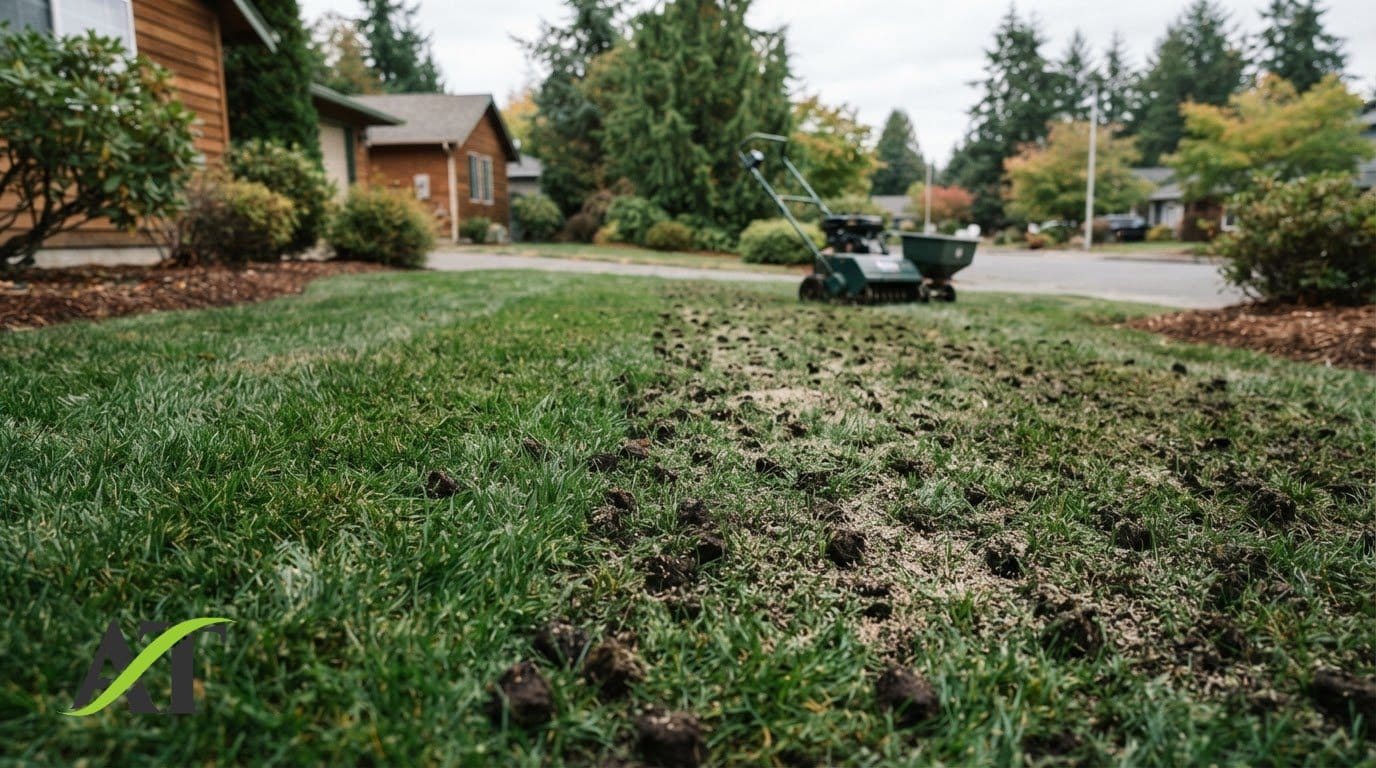
Dethatching and core aeration address different problems. Dethatching removes accumulated thatch; Core Aeration removes small soil plugs to relieve compaction. A lawn may need one treatment, both, or neither. Match the work to what is limiting grass growth.
Professional dethatching can remove heavy thatch and help water reach the soil. Use equipment carefully and adjust it to the lawn to avoid damaging the turf or reducing the treatment’s benefit. A professional can adjust equipment to lawn conditions, which matters on larger or uneven areas where a single pass may not suit every section.
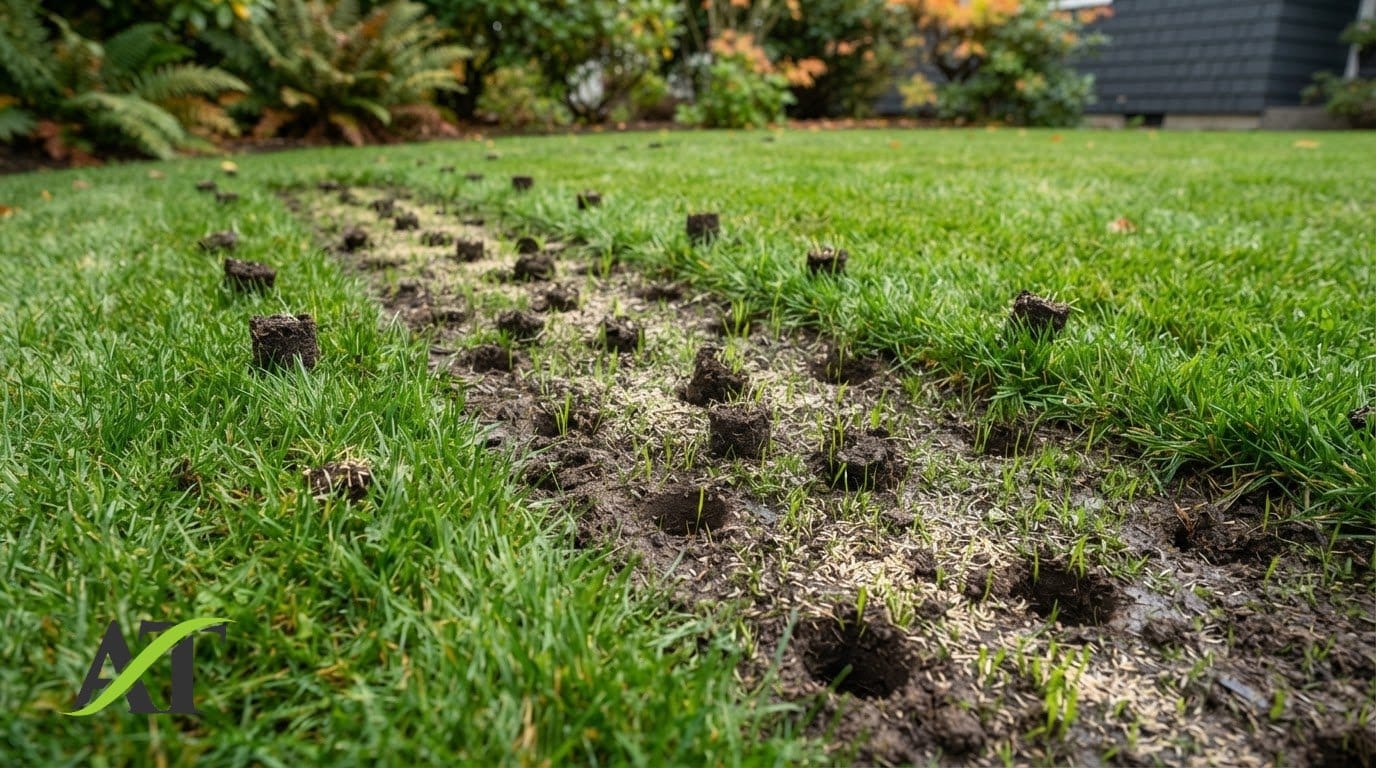
Core Aeration targets soil compaction, not a thick surface layer. It removes small soil cores from the turf, which are left to break down naturally. Aeration does not remove moss, replace missing grass, remove a significant thatch layer, or fix drainage. It also does not break deep glacial hardpan or correct a subsurface drainage defect.
Look at the symptoms before choosing. A spongy surface may indicate excess thatch; hard, compacted ground may point to a need for aeration. Shade, irrigation problems, or poor drainage can also thin grass, and dethatching won’t correct those causes. If water stays pooled or turf declines despite suitable surface treatments, the underlying issue needs further diagnosis.
After dethatching, overseeding can help fill bare areas; aeration may also be appropriate if compaction is present. These treatments address different needs, so choose them based on the lawn’s condition. Core Aeration alone relieves compaction; it does not remove thatch or replace missing grass. Overseeding and fertilizer are not automatically included with Core Aeration.
For help matching the treatment to your lawn, Ask Stewart About Your Lawn.
Aerating Thatching: Lawn Tune Up
Aerating Thatching Co.’s Lawn Tune-Up is a next step when compaction or thin turf needs attention, rather than thatch removal alone. It combines Core Aeration, Overseeding, and Organic Fertilizing. Core Aeration works in the shallow turf root zone; Overseeding adds grass seed, and Organic Fertilizing supports the lawn as it grows.
Choose based on the problem you find. A thick thatch layer calls for dethatching; compacted soil may call for Core Aeration, and sparse grass may call for overseeding. If the lawn stays wet or declines after addressing those issues, shade, irrigation, or drainage may need further diagnosis. A Lawn Tune-Up does not include Power Raking (Dethatching).
Ask Stewart About Your Lawn
Choose the Next Step for Your Lawn
The DIY dethatching vs professional service decision is only one part of the job. First decide whether the lawn needs thatch removed, thin areas filled, or compacted soil treated. Matching the work to the problem helps avoid repeating a treatment that doesn’t address the cause.
If the lawn needs support beyond dethatching, Aerating Thatching’s Lawn Tune Up combines Core Aeration, Overseeding, and Fertilizing. Core Aeration is relevant when compaction is the concern; Overseeding can help renew sparse turf. A Lawn Tune Up does not include Power Raking (Dethatching), so keep the treatments distinct when planning the work.
Inspect the lawn’s surface and growing conditions before choosing. If the cause of thinning or persistent wetness isn’t clear, a more specific assessment can help guide the next step. A sound plan starts with identifying the problem, not choosing the equipment first.
Ask Stewart About Your Lawn
Match the treatment to the lawn’s actual needs, and you’ll have a clearer plan for healthier turf.
Frequently Asked Questions
What Are the Benefits of Dethatching?
Dethatching removes accumulated material that may interfere with water reaching the soil. It also clears dead stems that can hinder new grass growth. After removing a thick mat, check whether water reaches the soil or still runs off. Persistent runoff can indicate compaction or drainage concerns, which dethatching alone won’t address.
What Is Thatch?
Thatch is a layer of organic material, including grass stems and roots, that builds between green blades and the soil. It develops when plant material accumulates faster than it breaks down. Some thatch is part of a lawn’s structure; the concern is excessive buildup, not simply brown material near the grass base.
What Is Lawn Dethatching, and When Is It Needed?
Lawn dethatching uses a rake or powered machine to remove accumulated organic material from turf. It may be needed when a measured layer interferes with water reaching the soil or with grass growth. Don’t schedule it just because of the season. Check the lawn’s condition and choose a time when the grass can recover actively.
How Can I Tell If My Lawn Needs Dethatching?
Cut a small turf sample and examine the material between the green blades and soil. A dense, springy layer is more telling than loose clippings on top. Compare a thin, healthy patch with a struggling area. If symptoms are isolated, treat them as local clues rather than assuming the whole lawn needs the same work.
What Should I Clear Before Dethatching?
Move hoses, toys, and pet gear off the lawn before equipment passes. Mark sprinkler heads, oil tank caps, shallow utilities, and pet fencing so they’re visible. Check gates, edging, and garden borders for access issues. Clearing and marking these areas helps define where equipment can travel safely.
What Equipment Do Lawn Care Professionals Use for Dethatching?
Professionals use powered dethatchers or specialized rakes to lift thatch from turf. Choosing an appropriate tine depth and spacing can help limit turf damage. After loosening the material, the crew collects debris for removal. Equipment choice depends on turf condition, access, and whether the work is for a small patch or a broad lawn area.
Article by
Stewart Armour
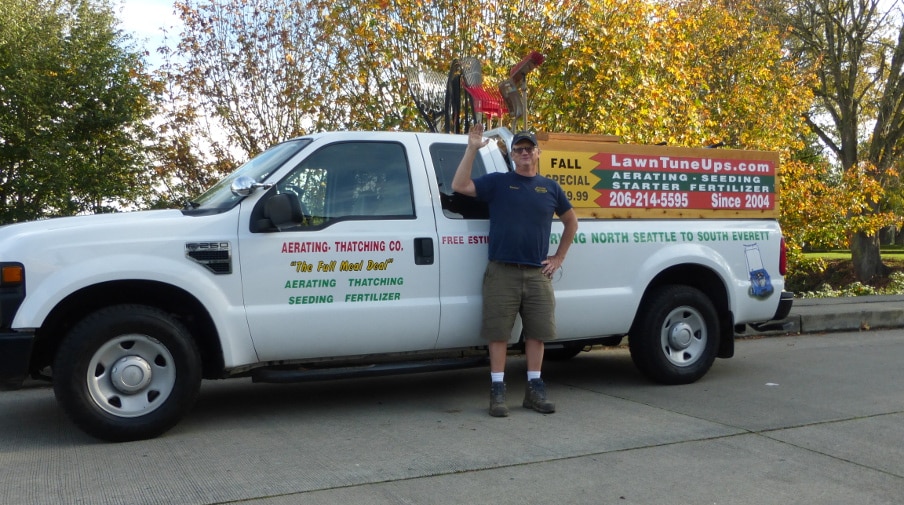
Stewart Armour is the owner of Aerating Thatching Co., an owner-operated Seattle-area lawn restoration business established in 2004. He helps homeowners understand Core Aeration, Power Raking (Dethatching), Overseeding, soil conditions, and the aftercare needed for stronger lawns. His background includes turf management study, advanced golf course turf training, and continuing education through Wilbur-Ellis University, State Turf Facilities, Soil First Academy, and Golf Course Applied Turf Physiology. Stewart has personally evaluated thousands of residential lawns throughout the Seattle area and focuses on recommending the work that fits each lawn’s condition.