Core Aeration for Healthier Seattle Lawns
If your lawn is reasonably healthy but the soil has become hard or compacted, Core Aeration may be exactly what it needs. Aeration removes small plugs of soil to relieve compaction and create openings into the root zone for air, water and nutrients.
For a lawn that already has good grass density, Core Aeration can be a focused maintenance service without automatically adding seed, fertilizer or a larger renovation package.
- Professional Core Aeration
- Best suited to lawns already in reasonably good condition
- Designed primarily to relieve soil compaction
- Larger lawns priced by estimate
What Is Core Aeration?
Core Aeration is a mechanical lawn service that removes small plugs of soil from the lawn. Those openings help relieve compaction and give the root zone more room for air, moisture and nutrients to move through the soil.
Relieve Compaction
Repeated foot traffic, mowing and naturally dense soils can compress the root zone. Core Aeration physically opens that compacted soil.
Maintain a Dense Lawn
If the grass is already reasonably full but the soil is compacted, Core Aeration alone may be an appropriate maintenance service.
Thin Lawn? You May Need More
If the lawn also needs more grass density, the Seattle Lawn Tune-Up adds Premium Overseeding and Starter Fertilizer.
Core Aeration Makes the Most Sense When Compaction Is the Main Problem
Aeration should solve a specific problem. It does not need to be automatically bundled with other lawn work when the grass is already reasonably dense.
Core Aeration may be a good fit if:
- The lawn is already reasonably dense.
- The soil feels hard or compacted underfoot.
- Water has difficulty soaking into compacted areas.
- The lawn receives regular foot traffic or equipment traffic.
- You want to maintain the root zone without automatically overseeding.
Another service may make more sense if:
- The lawn is noticeably thin, bare or patchy.
- Heavy thatch or moss covers the soil surface.
- The lawn needs both compaction relief and new grass density.
- There is a major drainage, grading or irrigation problem.
- The lawn needs broader renovation rather than maintenance.
What Core Aeration Does — and Doesn't Fix
Aeration is excellent at addressing compaction, but it should not be presented as a cure for every lawn problem.
What Core Aeration Does
- Removes small soil cores to physically relieve compaction.
- Creates openings into the lawn's root zone.
- Supports movement of air, water and nutrients into compacted soil.
- Creates an excellent opportunity for overseeding when greater density is also needed.
- Supports root-zone conditions in an otherwise healthy lawn.
What Core Aeration Does Not Do
- It does not remove moss from the lawn.
- It does not correct major drainage or grading problems.
- It does not replace missing grass in a substantially thin lawn.
- It does not remove a significant layer of surface thatch.
- It does not replace Dethatching (Power Raking) when surface buildup is the actual problem.
Core Aeration, Lawn Tune-Up or Full Meal Deal?
The right service depends on what the lawn actually needs. Core Aeration is the focused maintenance option when compaction is the primary concern.
Core Aeration
Best fit: a reasonably dense lawn where soil compaction is the main issue.
- Core Aeration
- No automatic overseeding
- No automatic fertilizer
Starting at $80 up to 2,000 sq. ft.
See Core Aeration pricing →Lawn Tune-Up
Best fit: thin or tired grass that needs both compaction relief and additional density.
- Core Aeration
- Premium Overseeding
- Starter Fertilizer
Full Meal Deal
Best fit: lawns where thatch, moss or accumulated surface material also needs to be removed before rebuilding.
- Dethatching (Power Raking)
- Core Aeration
- Premium Overseeding
- Starter Fertilizer
How Core Aeration Works
A core aerator removes plugs of soil rather than simply punching narrow holes. The physical removal of soil creates space in the compacted root zone.
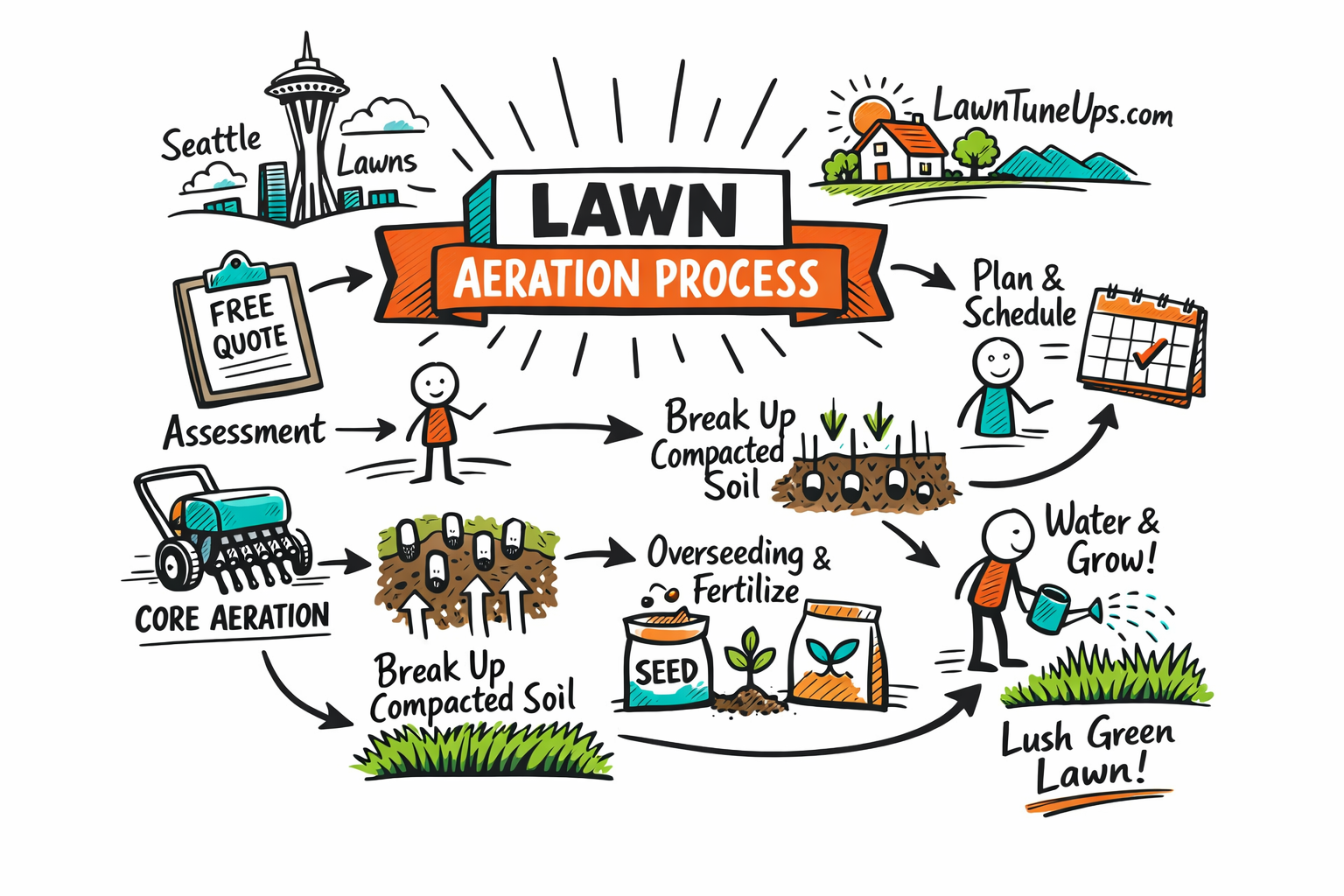
Core Aeration physically opens compacted soil. Click the image to enlarge.
Compaction Builds
Foot traffic, mowing and normal use gradually compress the soil around lawn roots.
Soil Cores Are Removed
The aerator pulls small plugs from the lawn to create physical openings in the compacted soil.
The Root Zone Opens
Those openings give air, moisture and nutrients more pathways into the soil surrounding the roots.
The Plugs Break Down
The soil cores are normally left on the lawn where they gradually break apart and return to the turf.
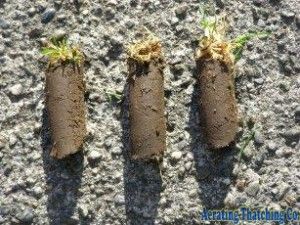
Real aeration plugs removed from compacted soil during lawn service.
Should You Overseed After Core Aeration?
Sometimes. Aeration creates a useful opportunity for seed-to-soil contact, but that does not mean every lawn needs to be overseeded.
If your lawn is already reasonably dense
Core Aeration alone may be enough when compaction is the main concern. There is no reason to automatically rebuild grass density that is already there.
If your lawn is thin or weak
Aeration creates an excellent opportunity to add new grass. In that situation, the Lawn Tune-Up combines Core Aeration, Premium Overseeding and Starter Fertilizer in one coordinated service.
When Is the Best Time to Core Aerate?
Spring and fall are common Core Aeration windows because lawns are generally in active growth and soil moisture is often more favorable for effective coring.
Spring can be a good time to relieve compaction as lawns return to active growth after winter. Soil should be moist enough for effective coring without being saturated.
Fall is another strong aeration window and is especially useful when Core Aeration is being paired with overseeding as part of a Lawn Tune-Up.
Soil condition matters more than the calendar alone.
Very dry, saturated or otherwise unsuitable soil can affect whether aeration should be performed. Summer dryness is not, by itself, a reason to aerate a drought-stressed lawn.
Your Lawn Is Aerated by the Owner
Aerating Thatching Co. is owner-operated, and Stewart personally performs the lawn service. The person you are communicating with about what your lawn needs is also the person doing the work.
That makes it easier to keep the recommendation focused. If Core Aeration is enough, there is no need to automatically turn a maintenance visit into a larger lawn renovation.
Core Aeration Videos & Customer Experiences
See actual lawn work and hear directly from customers rather than relying only on descriptions of the service.
Only Have a Tiny Lawn Area?
A professional aerator makes sense for full lawns and meaningful compaction. But if you only need to work on a very small patch, a manual coring aerator may be enough to handle the job yourself.
Stewart's recommended manual option is the Yard Butler Manual Lawn Coring Aerator. It is best suited to small areas where using full-size professional equipment would be unnecessary.

Seattle Core Aeration FAQ
How much does Core Aeration cost?
Core Aeration currently starts at $80 for lawns up to 2,000 sq. ft. Larger lawns are priced by estimate. Current pricing and service notes are available on the Seattle lawn-service pricing page.
How do I know if my lawn needs Core Aeration?
Core Aeration is most appropriate when soil compaction is the primary issue. Signs can include hard soil, areas that receive repeated foot traffic or difficulty getting moisture into compacted ground. If the lawn is also noticeably thin or patchy, a Lawn Tune-Up may be a better fit because it adds overseeding and starter fertilizer.
When is the best time to aerate a lawn in Seattle?
Spring and fall are common aeration periods because grass is generally actively growing and soil moisture is often favorable for coring. The lawn should not be excessively dry, saturated or otherwise unsuitable for the equipment.
Does Core Aeration remove moss?
No. Core Aeration relieves soil compaction; it does not physically remove moss. If moss, thatch or other accumulated surface material needs to be removed, Dethatching (Power Raking) may be the more relevant service.
Does Core Aeration fix lawn drainage problems?
Aeration can improve movement of water into soil where compaction is limiting infiltration, but it is not a repair for major drainage, grading, irrigation or site-water problems. Those underlying issues need to be addressed separately.
Should I overseed after Core Aeration?
Not automatically. If your lawn is already reasonably dense, Core Aeration alone may be appropriate. If your lawn is thin, weak or patchy, aeration creates an excellent opportunity for overseeding. In that situation, the Lawn Tune-Up combines Core Aeration, Premium Overseeding and Starter Fertilizer.
What is the difference between Core Aeration and Dethatching (Power Raking)?
Core Aeration works primarily below the surface by removing soil plugs to relieve compaction. Dethatching (Power Raking) works primarily at the surface by removing excess thatch, moss and accumulated material. Some lawns need one service; lawns needing broader renovation may need both.
What are the soil plugs left on my lawn?
Those plugs are the small soil cores removed by the aerator. They are normally left on the lawn to dry, break apart and return naturally to the turf rather than being collected immediately after aeration.
How should I prepare before Core Aeration?
Please mark sprinkler heads, oil tank caps, shallow utility lines and anything else hidden in the lawn that could be damaged by aeration equipment. Include relevant gate, step or access information when requesting service.
What should I do after Core Aeration?
Leave the aeration plugs in place so they can break down naturally. Normal lawn care can continue after standalone Core Aeration. If your service also included overseeding, follow the more specific watering, traffic and mowing instructions for new grass establishment.
Continue Based on What Your Lawn Needs
Give Compacted Soil More Room to Breathe
If your lawn is already reasonably healthy and compaction is the main concern, Core Aeration may be all it needs. If the lawn is thin, mossy or needs more extensive work, Stewart can help point you toward the more appropriate service instead.