Many Seattle homeowners reach for a bag of “weed and feed” when the lawn turns thin and mossy. Often the problem runs deeper than a bag can reach. Heavy rain, shade, compacted soil, thatch, and acidic conditions can all play a part. Before you pick a fix, you need to know what is actually going on in your yard. That is the starting point for any seattle lawn restoration plan.
This guide explains the common causes of a struggling Pacific Northwest lawn. It covers what Core Aeration and Power Raking (Dethatching) do, where soil pH and fertilizer fit, and how to match the service to your lawn. Sometimes that is a smaller service. Sometimes it is homeowner care or a closer look at drainage or light first.
Key Takeaways
- Moss, yellow grass, and sponginess are clues, not a full diagnosis. Compaction, thatch, shade, irrigation, and drainage can look alike.
- Core Aeration relieves compaction in the shallow root zone. It does not remove moss, fix drainage, replace missing grass, or replace Power Raking (Dethatching).
- 6.5 is the ideal soil pH for lawns in Western Washington. Use a soil test and the product directions to decide whether lime is needed.
- A Lawn Tune-Up and a Full Meal Deal are different packages. Choose based on what your lawn needs, not the biggest option.
- Aftercare matters as much as the service itself.
Why Seattle Lawns Struggle: Compaction, Moss, and Acidity
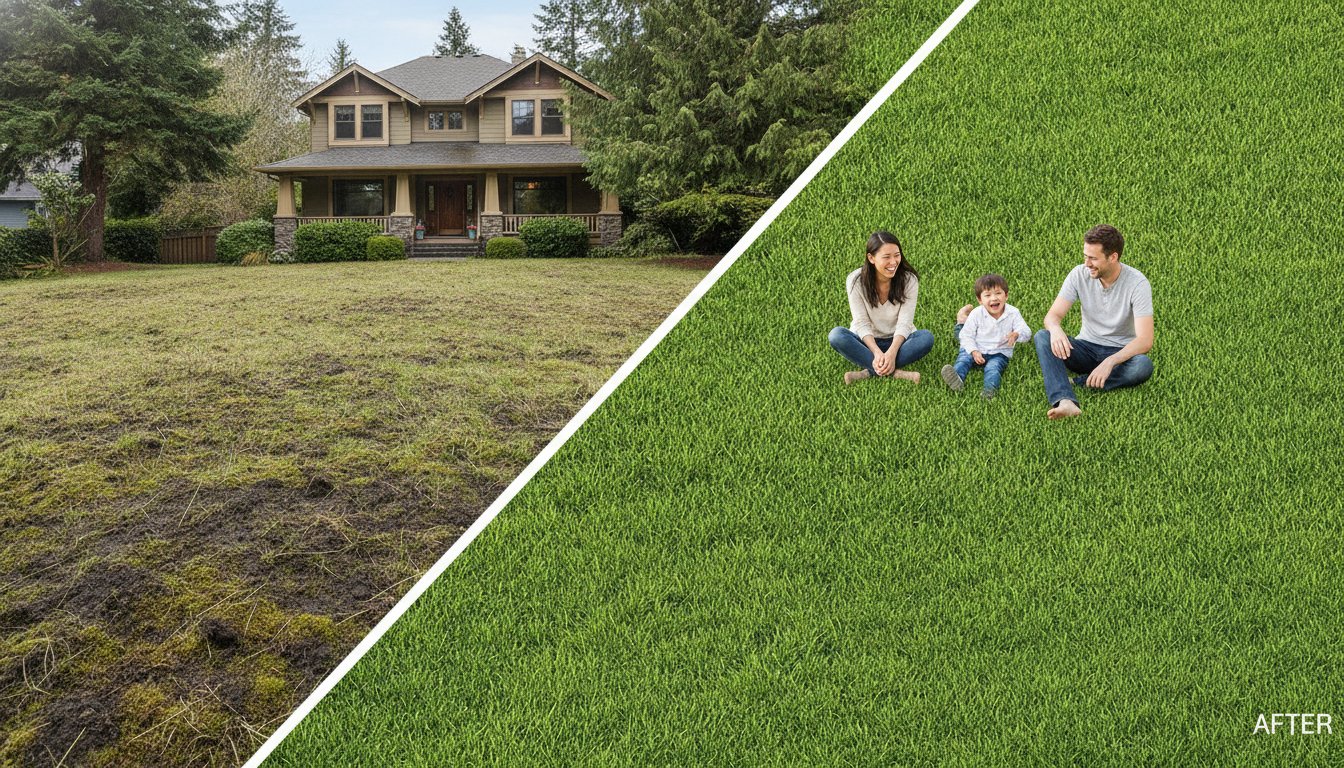
Our wet winters are hard on turf. Clay-heavy soil can pack down under rain and foot traffic, leaving less room for air and water to move. Shade adds another layer, since grass needs light to stay dense. When grass thins, moss and weeds move into the gaps. Good seattle lawn restoration starts by working out which of these causes applies to your lawn.
The Reality of Compacted Soil
Compaction squeezes the air spaces roots rely on. Roots may stay shallow, and water can sit on the surface or run off. Core Aeration removes small soil plugs to relieve compaction in the shallow turf root zone. It is not a cure for every lawn problem. It does not fix a subsurface drainage defect, and it does not replace missing grass. If you want to check your own lawn first, our guide to signs of compacted soil walks through what to look for. Wikipedia also has a good overview of lawn aeration and how core and spike tools differ.
The Moss Cycle in Puget Sound
Moss is usually a symptom. It tends to show up where grass is weak, whether from shade, wet conditions, compaction, or low fertility. Pulling or killing moss without changing those conditions often means it comes back. Lime raises overly acidic soil pH, but it is not a direct moss killer. Lawn restoration, in short, means correcting the conditions that let the lawn thin out in the first place. For a deeper look, see fixing the cause, not just the moss.
Fertilizer supplies nutrients. It does not replace missing grass or solve problems with light, thatch, irrigation, or drainage. A quick chemical green-up will not change the conditions underneath. These clues point toward a problem worth investigating:
- Water pooling on the surface after rain.
- Soil that resists a screwdriver or feels hard underfoot.
- A spongy feel, which can point to thatch.
- Thin patches where moss fills in.
- Yellow or pale grass.
None of these alone gives a diagnosis. Consider moisture, shade, and how the yard is watered and used. If you cannot tell the cause, further diagnosis comes before any treatment.
Mechanical Restoration: Core Aeration and Power Raking (Dethatching)
Core Aeration and Power Raking (Dethatching) are different jobs. Neither one is a cure-all, and a lawn may need one, both, or neither.
Core Aeration vs. Spike Aeration
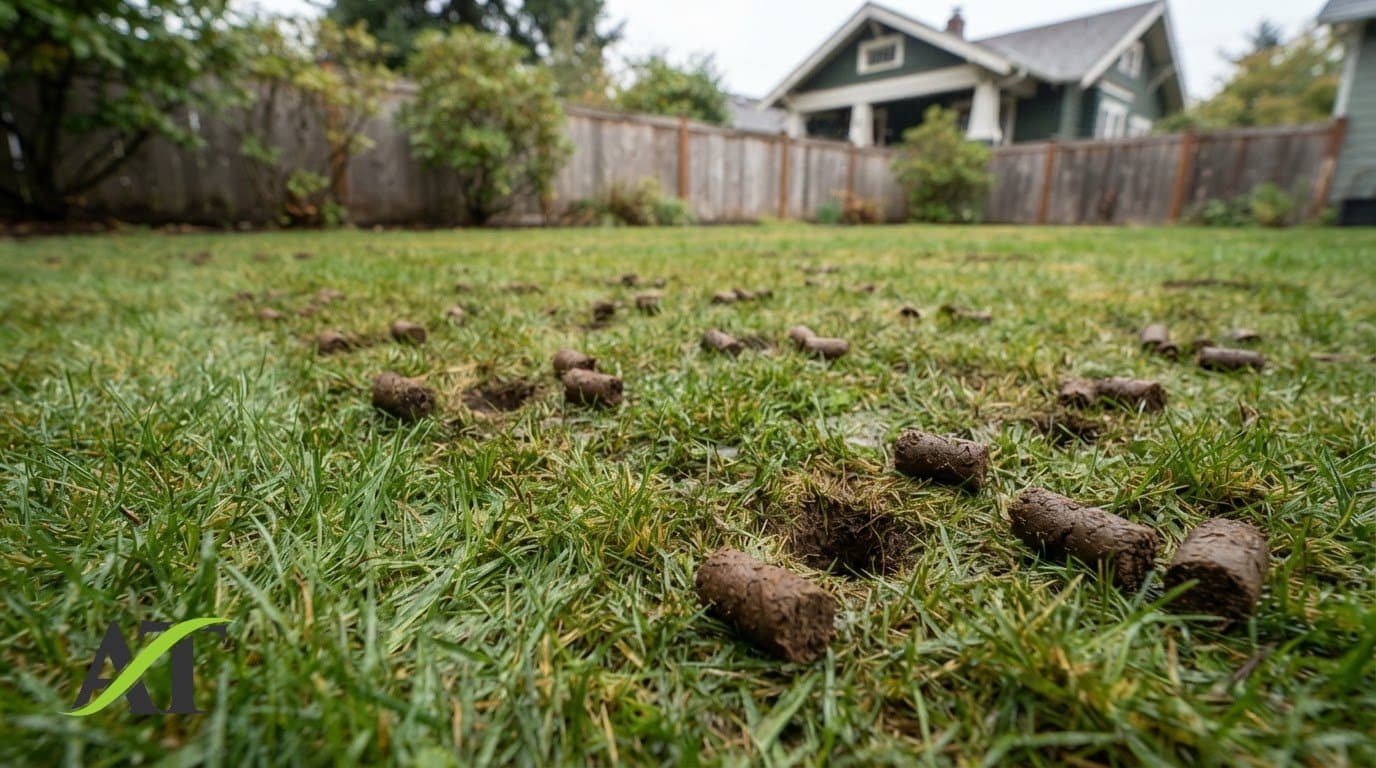
Core Aeration uses hollow tines to pull small plugs of soil from the lawn. That opens space in the root zone and lets air, water, and nutrients move in. Spike tools push holes without removing soil, so they do less to relieve compaction. The plugs break down on the surface. Core Aeration is commonly done in spring and fall, when soil is moist but not saturated. Summer dryness alone is not a reason to aerate. Core Aeration does not include Overseeding or fertilizer unless you choose a package that adds them. Our post on when core aeration helps, and when it doesn’t goes further.
Power Raking (Dethatching)
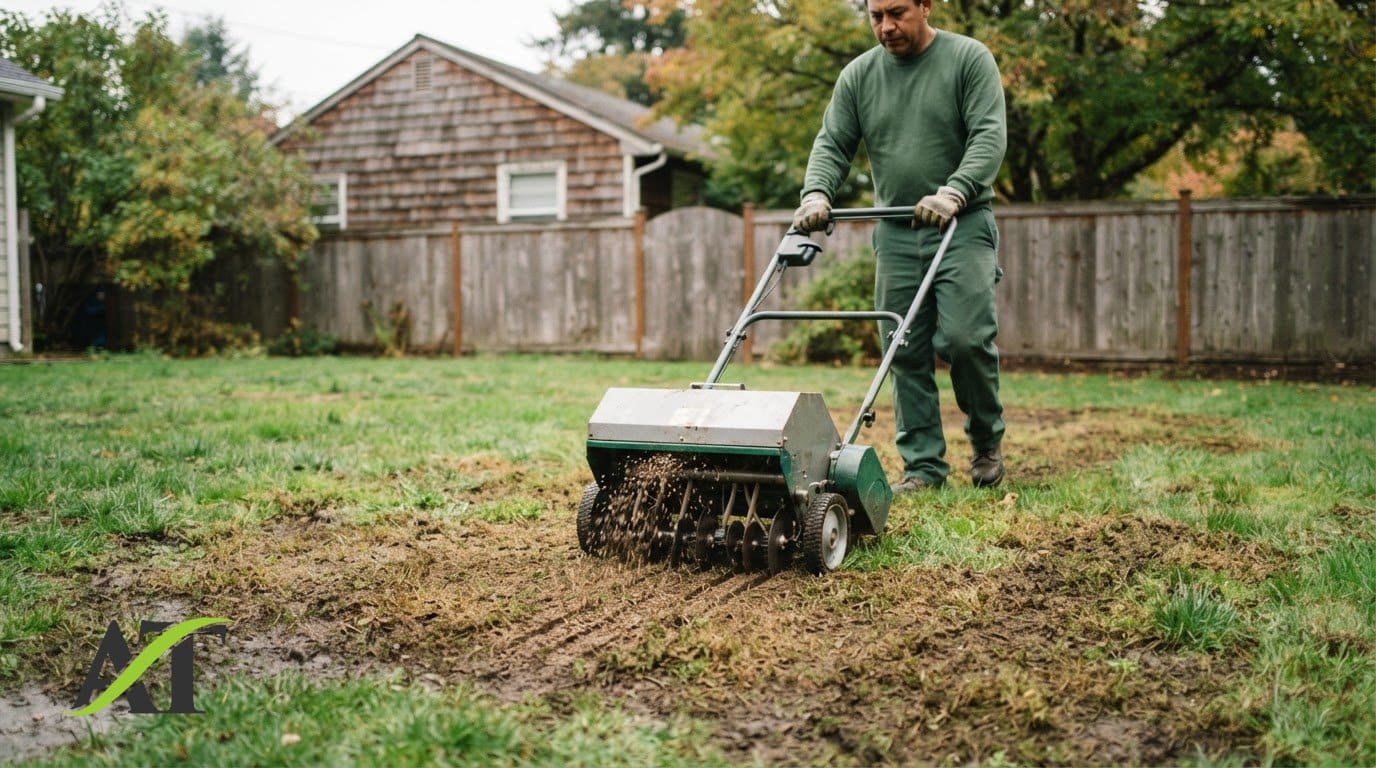
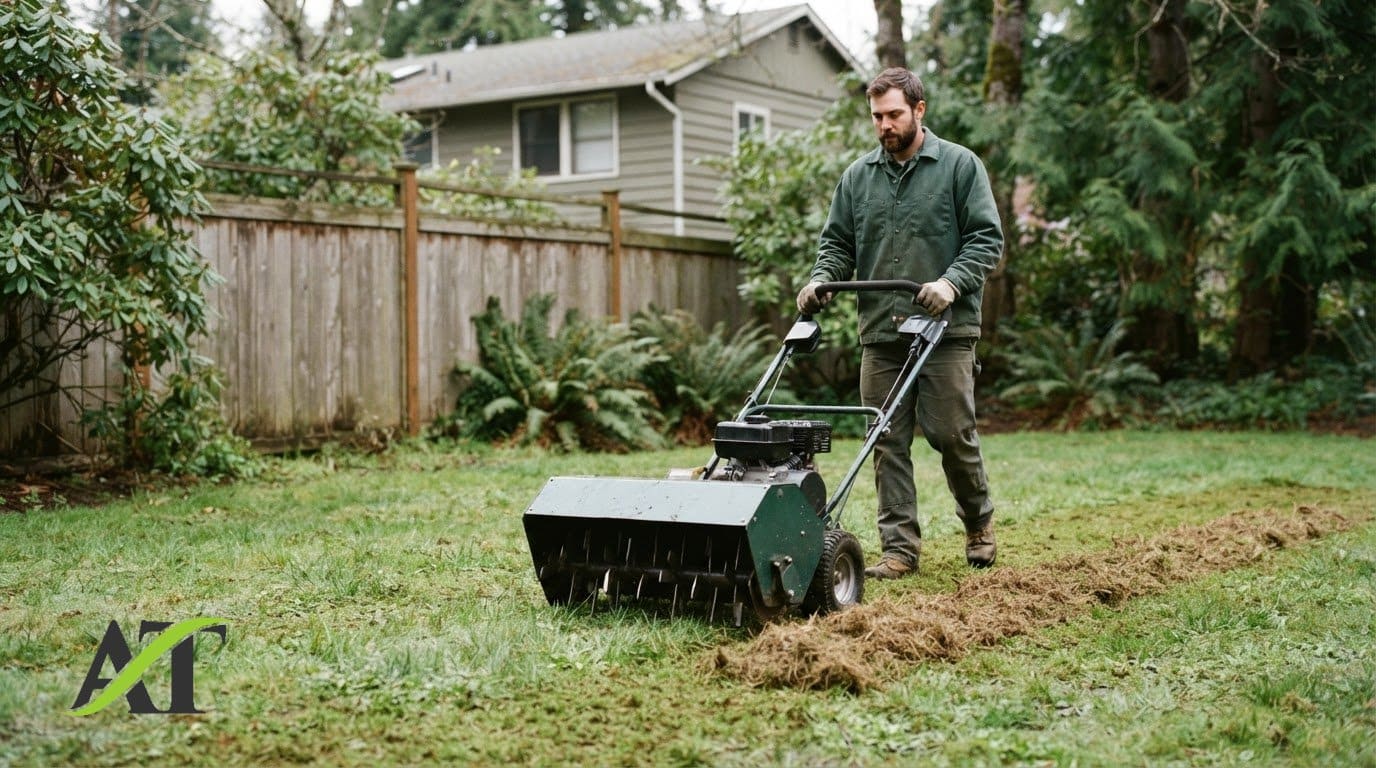
Thatch is a layer of dead grass stems and roots between the green blades and the soil. Power Raking (Dethatching) uses a machine with spinning tines to pull that layer out. Inspect the thatch before deciding on removal. Core Aeration does not remove a thick thatch layer, and it cannot stand in for Power Raking (Dethatching). Our guide on when to power rake a lawn in Seattle helps you decide if it fits.
DIY or Professional?
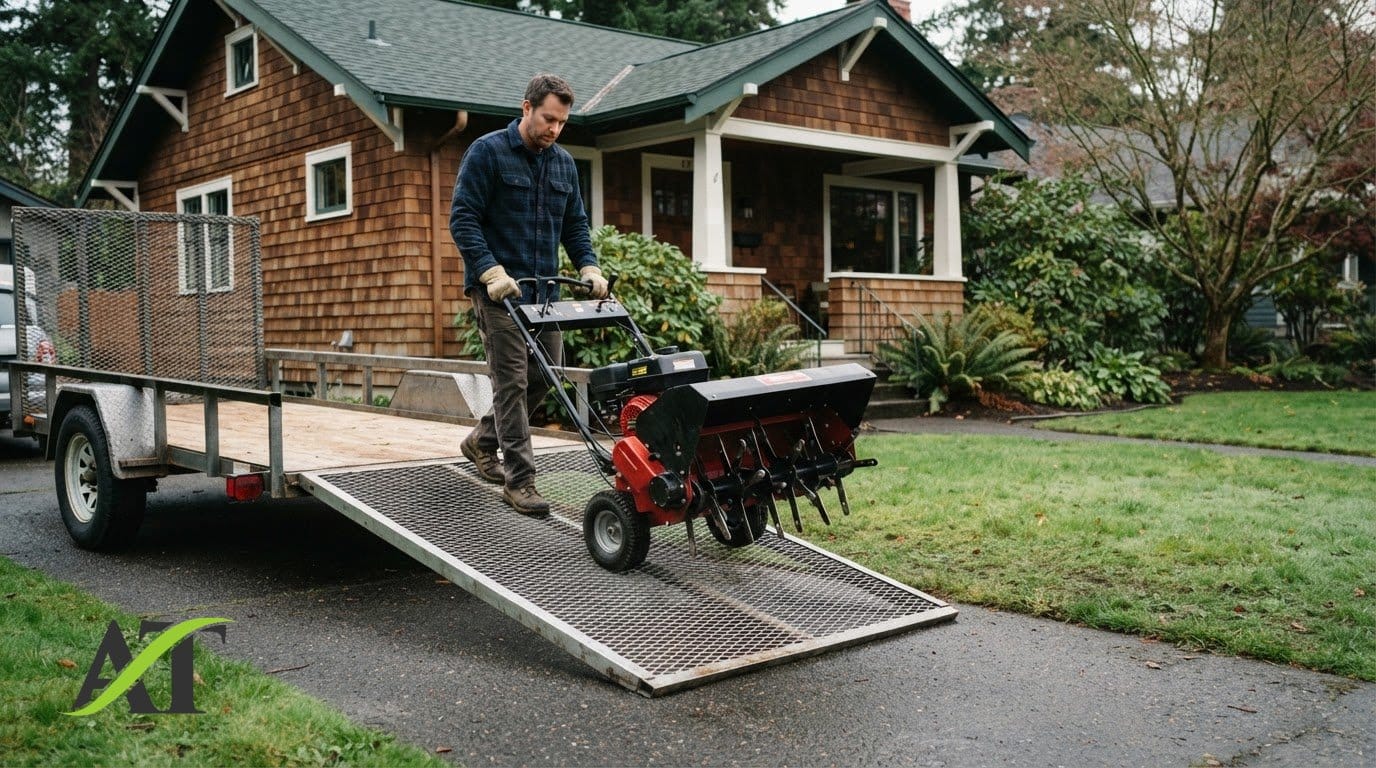
A manual hollow-tine corer or a dethatching rake can suit a small, appropriate area. For larger lawns, the work is heavy. If you rent a machine, you must learn to operate and maneuver a heavy, unfamiliar piece of equipment. Transport, loading, and handling the loosened material are part of the job too. See DIY vs. professional lawn aeration to weigh your options.
Soil Health: Soil pH, Lime, and Fertilizer
The ideal soil pH for lawns in Western Washington is 6.5. A soil test tells you where you stand. It does not automatically tell you to add lime.
Balancing pH with Lime
Lime raises overly acidic soil pH. Use your soil-test recommendations and the actual product directions to decide whether lime is needed and how much to apply. A result away from 6.5 is not an automatic instruction to add lime. Follow your chosen testing provider’s guidance on sampling and interpretation. Lime is not a cure for compaction or drainage problems. It is an optional add-on, not automatically included in any package. Our guide to testing lawn soil pH explains the basics.
Organic-Based vs. Synthetic Fertilizer
Both types can work. Synthetic fertilizers deliver nutrients quickly. Organic-based fertilizers release nutrients more gradually and add organic matter. Which fits depends on the actual product and what your lawn needs. Organic-based fertilizer is available as an upgrade, but it is not the standard fertilizer in every service. If you have pet questions, our pet-friendly lawn care guide may help, and diet questions belong with your veterinarian.
The Restoration Timeline: When to Act
Timing follows the weather, soil conditions, and active grass growth. Early spring through late spring and early fall are common windows for Core Aeration and Overseeding. Exact timing varies from year to year. The Seattle lawn care calendar gives broader seasonal guidance. Summer is usually a time for care rather than major renovation.
A Sensible Order of Work
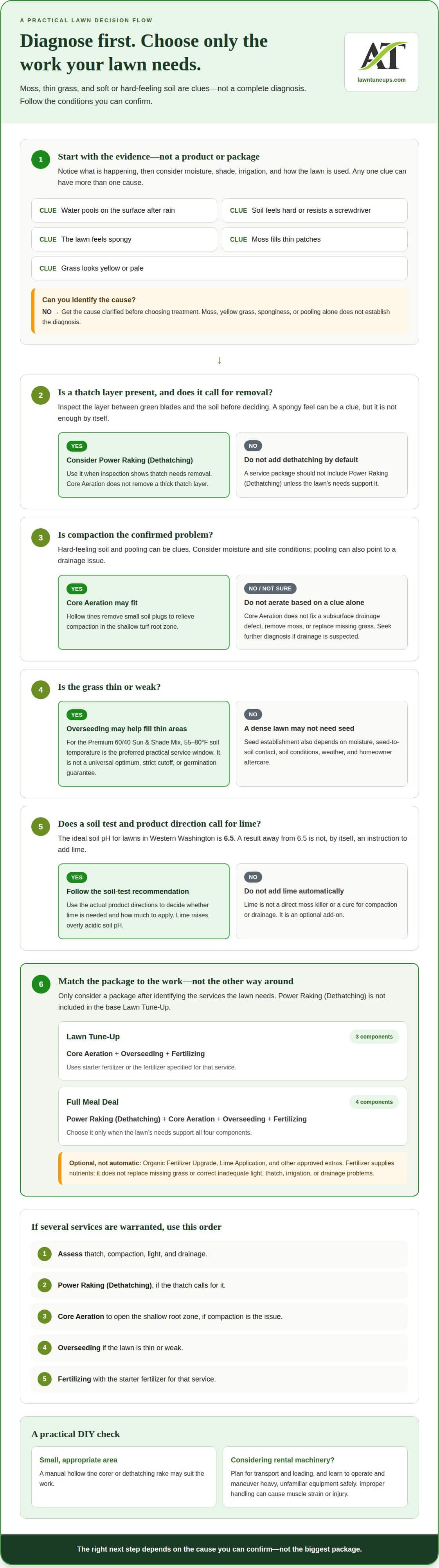
When several services are needed, this order makes sense:
- Assess thatch, compaction, light, and drainage.
- Power Raking (Dethatching), if the thatch calls for it.
- Core Aeration to open the root zone.
- Overseeding if the lawn is thin or weak.
- Fertilizing, using the starter fertilizer for that service.
Overseeding for Thickness and Density
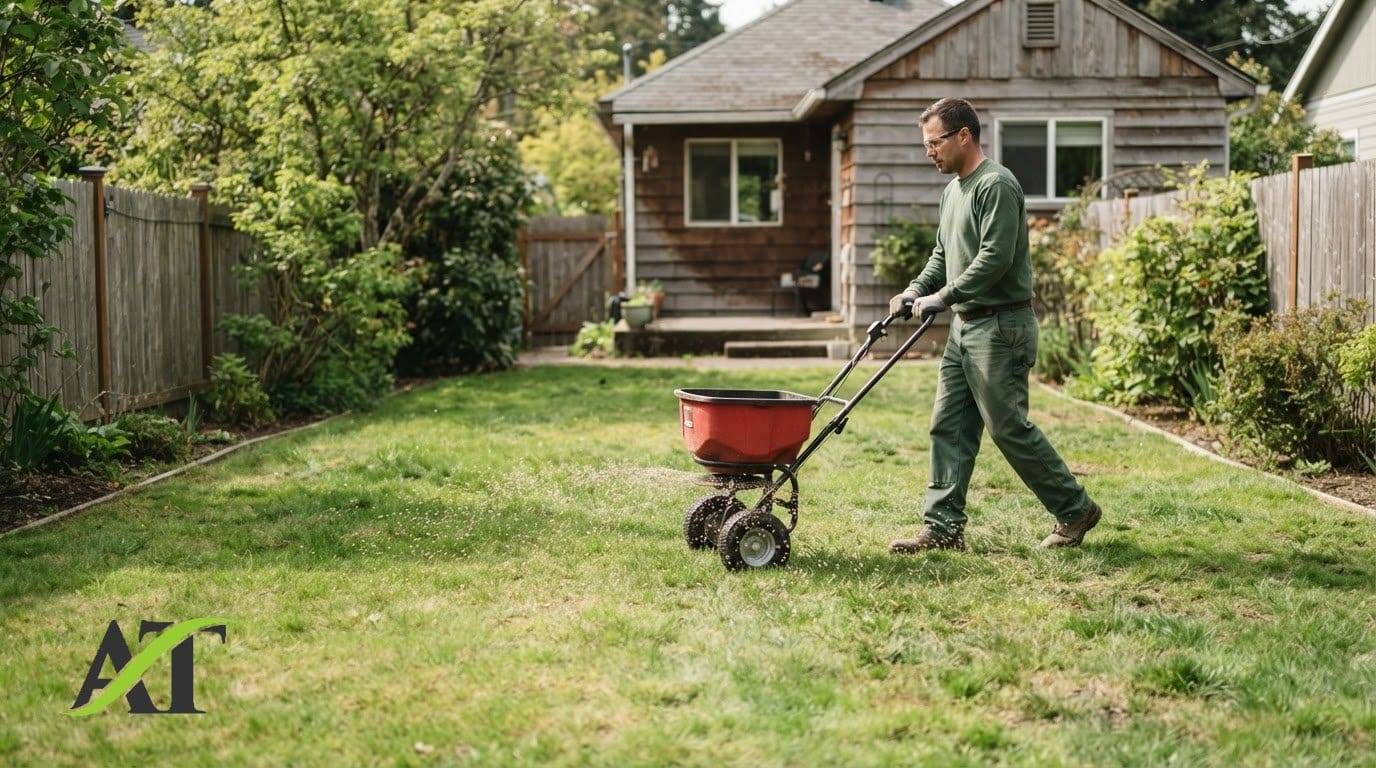
Overseeding only helps if the lawn is thin or weak. A reasonably dense lawn may not need it. For Overseeding, 55–80°F soil temperature is our preferred practical service window for the Premium 60/40 Sun & Shade Mix. It is not a universal optimum, strict cutoff, or germination guarantee. Moisture, seed-to-soil contact, soil conditions, weather, and your aftercare all affect establishment. Read more about the Premium 60/40 seed mix. Do not add extra fertilizer right after a service that already included starter fertilizer, and do not apply herbicides to newly seeded turf unless the product label explicitly permits it. Follow our aftercare guide for watering, mowing, and traffic.
Lawn Tune-Up or Full Meal Deal: Choosing the Right Service
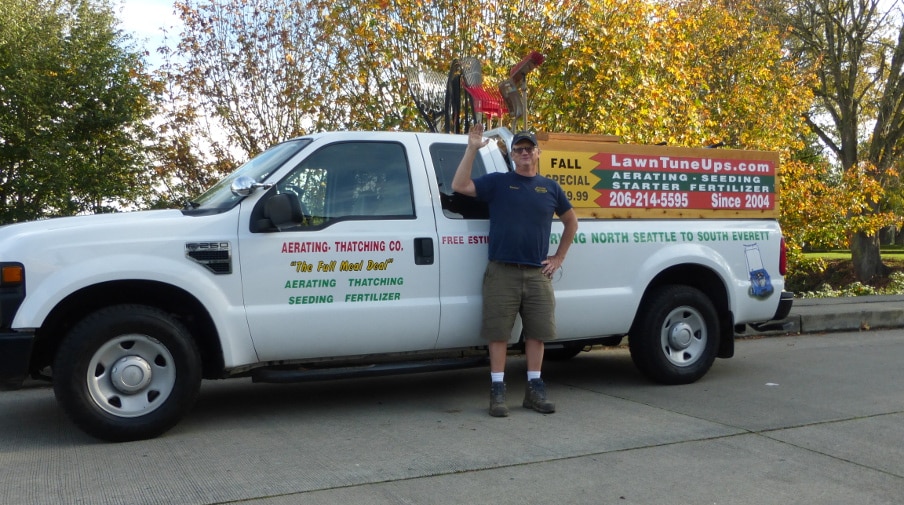
Aerating Thatching Co. (lawntuneups.com) is owner-operated, and Stewart personally performs the lawn work. We have worked on Seattle-area lawns since 2004.
What Each Package Includes
- Lawn Tune-Up: Core Aeration, Overseeding, and Fertilizing.
- Full Meal Deal: Power Raking (Dethatching), Core Aeration, Overseeding, and Fertilizing.
Power Raking (Dethatching) is not part of the base Lawn Tune-Up. Organic Fertilizer Upgrade, Lime Application, soil amendments, wetting agents, and other extras are optional. Larger lawns are priced by estimate. Results are not guaranteed and depend on watering, weather, and soil.
Getting Started
Before service, mark sprinkler heads, oil tank caps, shallow utilities, and pet fencing. Hidden or unmarked items are the homeowner’s responsibility to identify. Weed management is also up to the homeowner. Not sure what your lawn needs? Stewart will give honest, no-pressure advice, and sometimes the answer is a smaller service or none at all. Ask Stewart About Your Lawn.
Match the Fix to the Lawn
Lasting seattle lawn restoration comes from finding the real cause and choosing the work that fits. Compaction, thatch, shade, drainage, and soil pH each need a different answer. Start with a close look at your yard, then decide.
Frequently Asked Questions
When is the best time for lawn restoration in Seattle?
Early spring through late spring and early fall are common windows, when soil is moist but not saturated. Actual timing varies with weather and the work selected.
Can I fix a mossy lawn without heavy chemicals?
Start by finding why moss took hold. Shade, compaction, thatch, drainage, and low fertility are all possible causes. Core Aeration does not remove moss, and lime is not a direct moss killer, so match the fix to the cause.
What is the difference between power raking and dethatching?
Here they are the same service, named Power Raking (Dethatching). It pulls thatch out of the lawn with a machine.
Do I need to be home during the service?
Mark sprinkler heads, oil tank caps, shallow utilities, and pet fencing beforehand. Ask Stewart about access and arrangements for your property.
Is organic fertilizer as effective as synthetic?
Both can work. The right choice depends on the actual product and your lawn’s needs. Organic-based fertilizer is an upgrade, and with either type you should follow the label.
Does core aeration help with drainage issues?
It relieves compaction in the shallow root zone, which may help water enter the soil. It does not fix a subsurface drainage defect.
Questions about your own lawn? Ask Stewart About Your Lawn.
Article by
Stewart Armour
Stewart Armour is the owner of Aerating Thatching Co., an owner-operated Seattle-area lawn restoration business established in 2004. He helps homeowners understand Core Aeration, Power Raking (Dethatching), Overseeding, soil conditions, and the aftercare needed for stronger lawns. His background includes turf management study, advanced golf course turf training, and continuing education through Wilbur-Ellis University, State Turf Facilities, Soil First Academy, and Golf Course Applied Turf Physiology. Stewart has personally evaluated thousands of residential lawns throughout the Seattle area and focuses on recommending the work that fits each lawn’s condition.