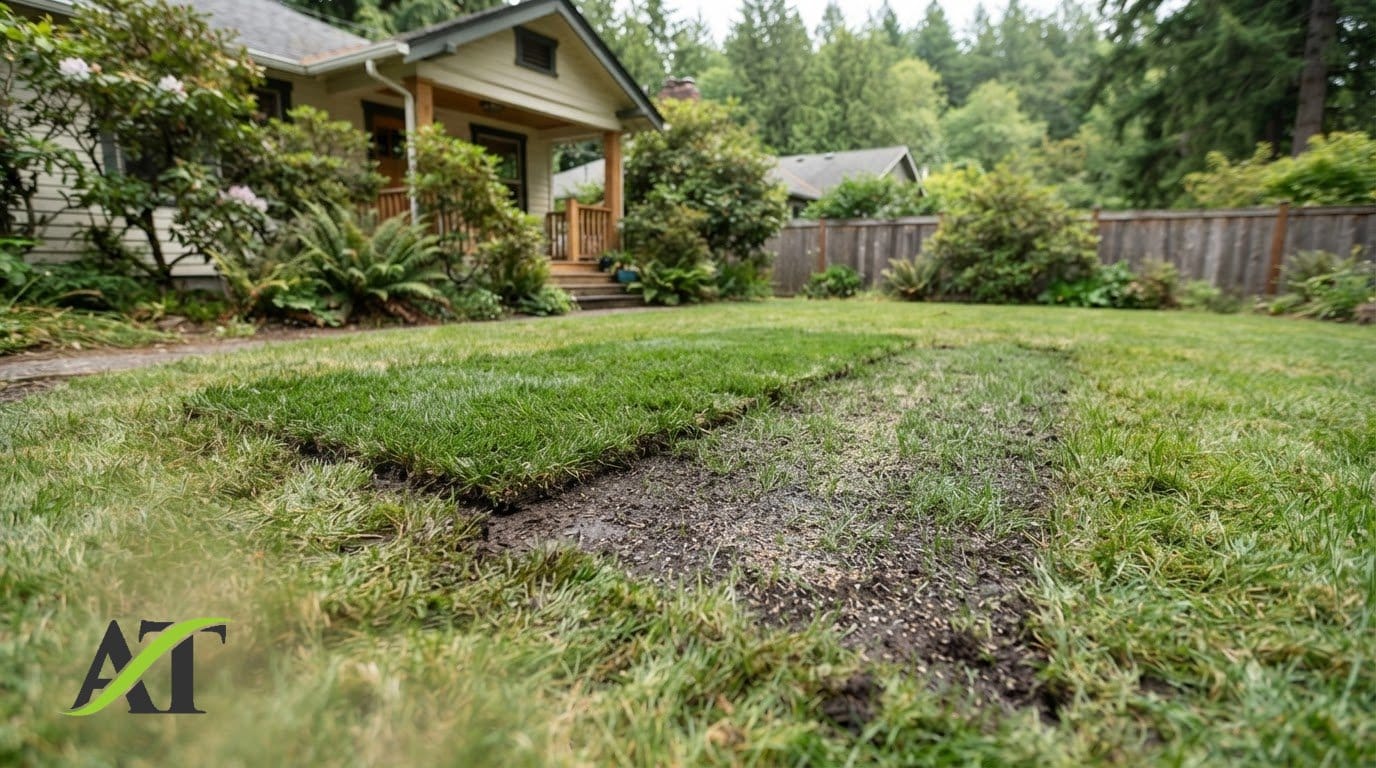
What if the soggy, thinning parts of your lawn aren’t a compaction problem at all? It’s easy to assume that lawn aeration Bothell homeowners consider will fix any struggling grass, especially when water lingers or the turf looks sparse. But those signs can also point to drainage, shade, or thatch issues, and each calls for a different response.
Core Aeration can help when compacted soil is restricting air, water, and root growth in the shallow turf root zone. It won’t break through deep hardpan or correct a subsurface drainage defect. The key is matching the treatment to the problem, not adding services your lawn doesn’t need.
This guide explains what to look for, what Core Aeration can and can’t do, and when another issue may need attention. You’ll also learn what the Lawn Tune-Up and Full Meal Deal include, and what to consider after aeration. That way, you can choose a practical next step for your Bothell lawn with a clearer picture of what the work involves.
Key Takeaways
- Hard ground, thin grass, and lingering water can be clues to compaction, but they don’t prove it’s the cause.
- For lawn aeration Bothell homeowners should consider whether symptoms occur alongside shade, thatch, irrigation, or drainage concerns.
- Core Aeration removes small soil cores from the shallow turf root zone; it won’t correct deep hardpan or subsurface drainage defects.
- Note which areas are affected and any known site concerns to make your next step more focused.
Lawn Aeration in Bothell: Which Lawn Symptoms Point to Compaction?
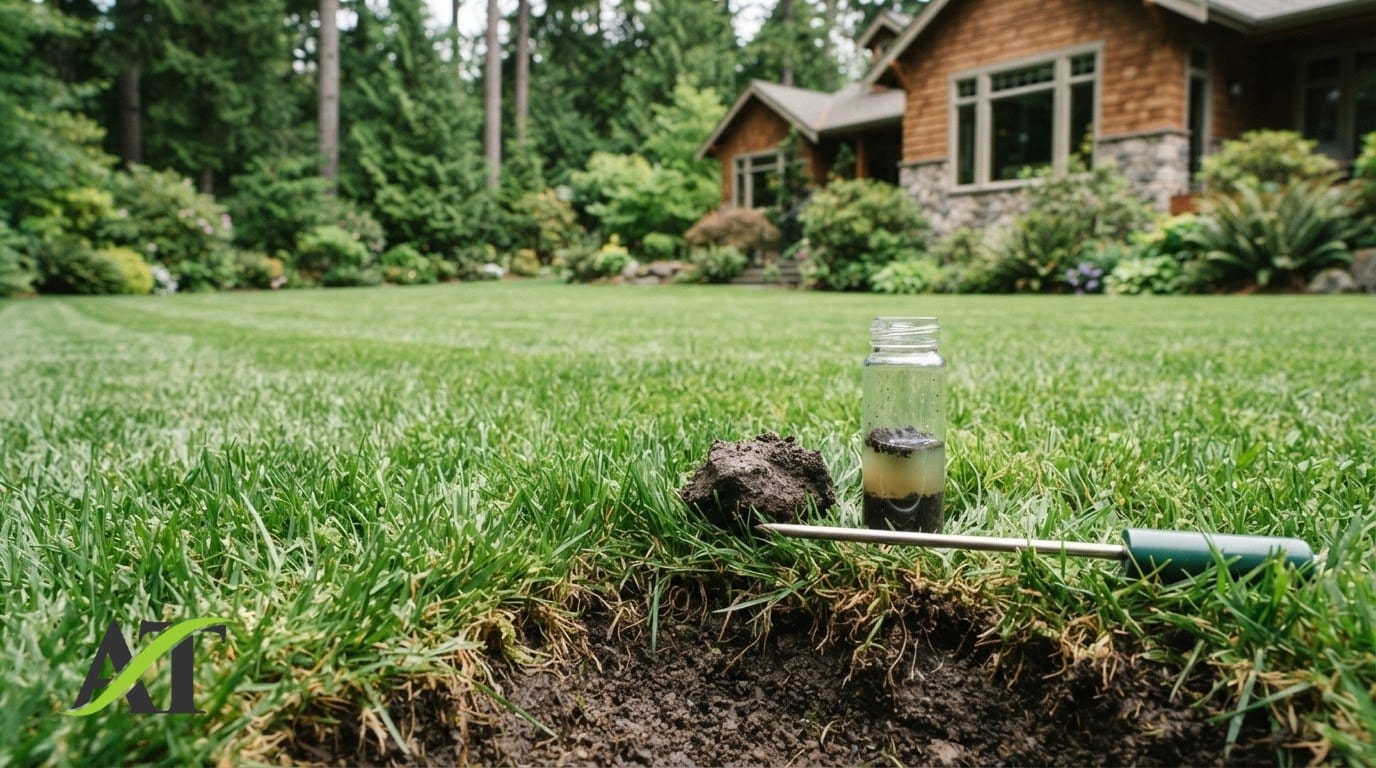
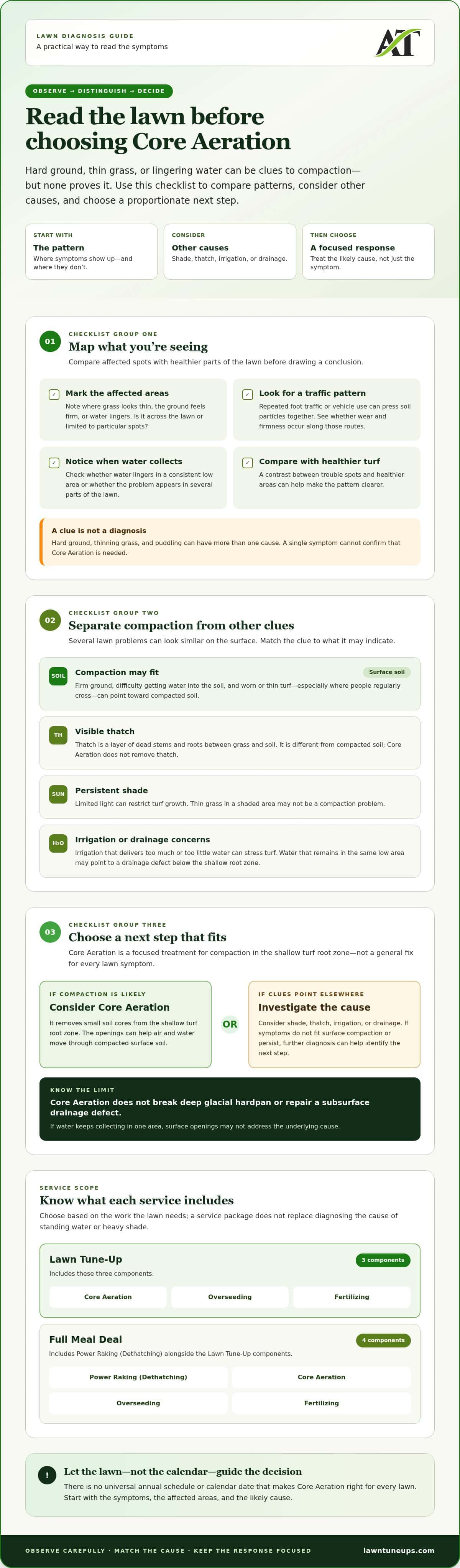
Hard ground, thinning grass, or water lingering after rain can make compaction seem like the obvious culprit. These are clues, not proof. Notice whether the symptoms show up across the lawn or mainly in certain spots, such as a route people walk often. Repeated foot traffic or vehicle use can press soil particles together, but that pattern won’t explain every struggling lawn.
Compaction happens when soil particles are pressed closer together, restricting the movement of air and water through the soil. For lawn aeration Bothell homeowners are considering, the useful question is whether compacted soil fits the pattern better than another cause. A general overview of a lawn aerator explains the tool’s purpose, but symptoms still need to be read in context.
What lawn symptoms can suggest compacted soil?
Firm ground and difficulty getting water into the soil may point toward compaction, especially where turf also looks worn or thin. Compare a problem area with healthier parts of the yard. Is the ground harder where people regularly cross it, or where vehicles have driven? A single symptom, including puddling, can’t confirm compaction or show on its own that Core Aeration is needed.
When puddles or thin grass may point elsewhere
Standing water can result from more than compacted surface soil. A visible layer of thatch, the dead stems and roots between grass and soil, is different from compaction. Persistent shade can limit turf growth, while irrigation that delivers too much or too little water can leave grass stressed.
Water that remains in the same low area may also reflect a drainage defect below the turf’s shallow root zone. Core Aeration won’t repair subsurface drainage problems or break deep hardpan. If the symptoms don’t fit surface compaction, or persist despite addressing likely turf-level causes, further diagnosis can help identify the right next step.
How Core Aeration Works, and What It Cannot Fix
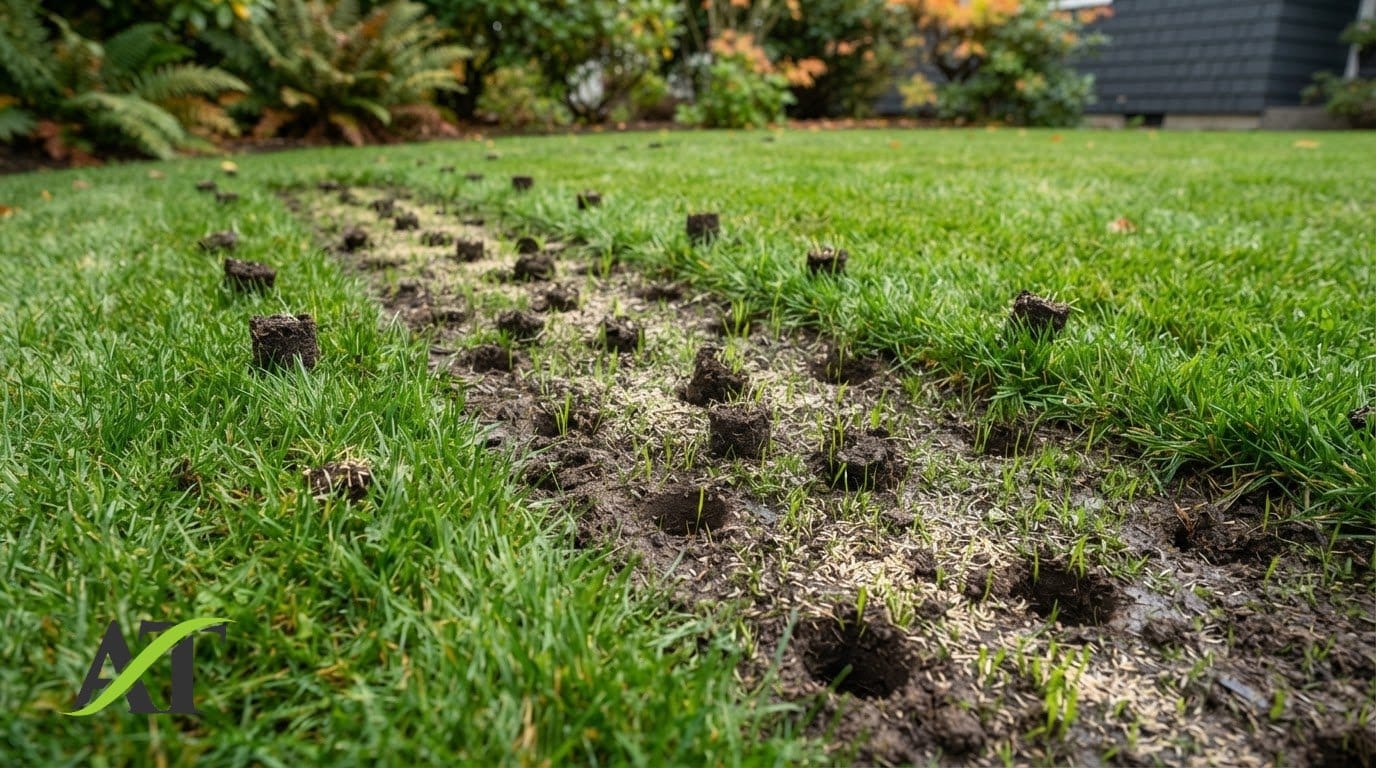
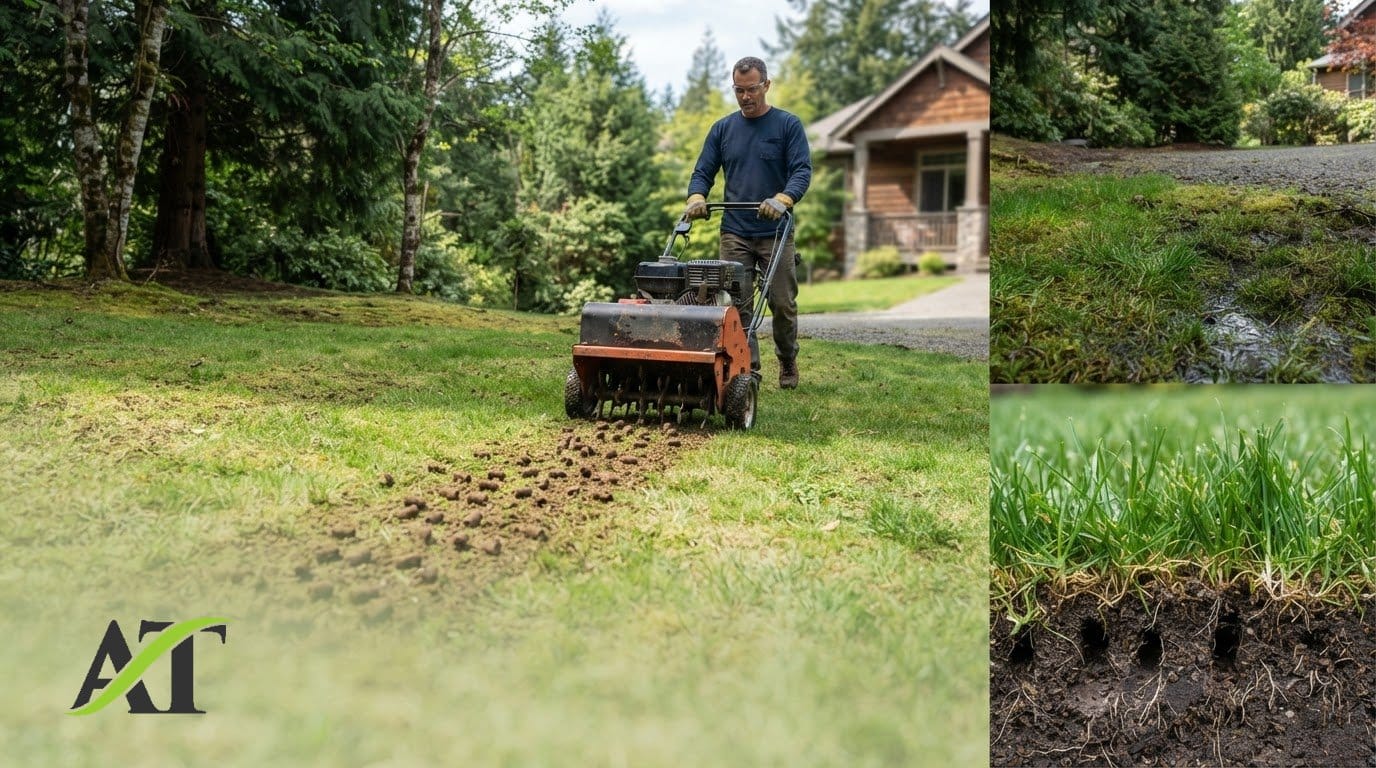
Core Aeration is a focused treatment, not a general cure for every lawn problem. It removes small soil cores from the shallow turf root zone. The openings can help air and water move through compacted surface soil, supporting conditions for roots where compaction is part of the problem. That distinction matters: a lawn can look thin or wet for reasons Core Aeration won’t address.
What happens during Core Aeration?
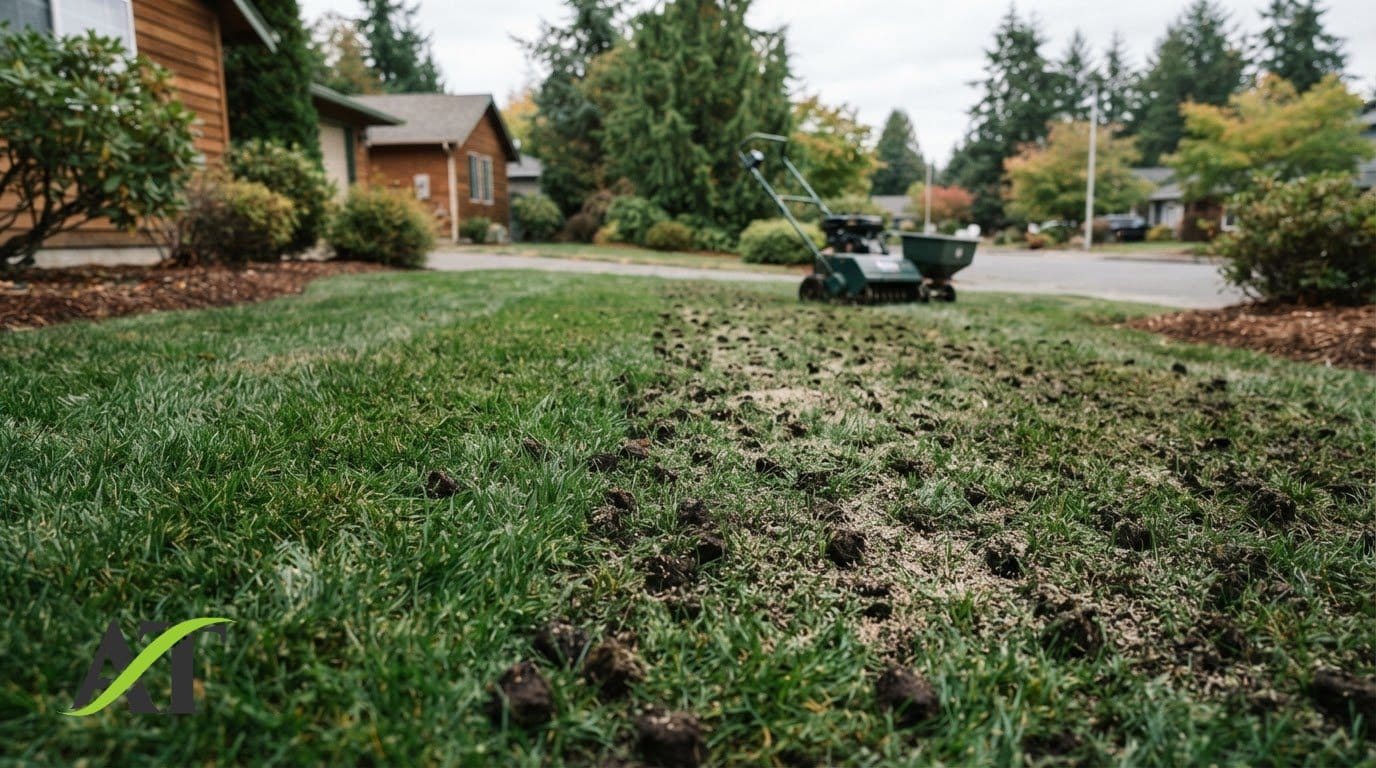
During Core Aeration, the treatment removes plugs of soil from the lawn rather than simply poking narrow holes in it. Those openings create routes through the compacted soil near the grass roots. The work targets this shallow root-zone layer, where it may help relieve compaction and improve movement of air and water. It doesn’t reach far below the turf.
Core Aeration opens compacted soil in the shallow turf root zone; it does not break deep glacial hardpan or repair subsurface drainage. So if a lawn’s puddling comes from a deeper defect, surface openings won’t correct its cause. A realistic expectation starts with identifying which layer is creating the problem.
When aeration is not enough
Persistent water in one area may point to a subsurface drainage defect or deep hardpan. Thin grass under heavy shade may struggle because of limited light, while irrigation problems can leave turf stressed or overly wet. These conditions need their own diagnosis. Core Aeration alone can’t be expected to eliminate puddling, moss, or thin grass when compaction isn’t driving the symptoms.
The practical choice is to match the next step to the cause. If compaction is likely, Core Aeration may be appropriate; if symptoms suggest a deeper drainage issue, shade, or irrigation concern, investigate that first rather than adding treatments by default. If you’re weighing lawn aeration Bothell for your yard, Ask Stewart About Your Lawn with the affected areas and symptoms in mind.
How to Decide Whether Your Bothell Lawn Needs Core Aeration
Use a simple sequence: observe the pattern, consider likely causes, then choose a next step that fits what you see. There’s no universal annual schedule or calendar date that makes Core Aeration right for every lawn. The decision should start with the condition of your turf, not the season alone.
- Map the symptoms. Note which areas look thin, feel firm, or hold water, and whether the problem continues or appears only after particular conditions. A small trouble spot may need a different response from symptoms spread across a frequently used lawn.
- Look for contributing factors. Consider foot traffic, shade, visible thatch, irrigation patterns, and where water collects. More than one factor can be involved. Surface clues help frame the diagnosis, but they can’t reveal every soil condition or confirm a subsurface drainage issue.
- Choose a proportionate next step. If compaction is a likely cause, Core Aeration may fit. It doesn’t remove thatch or correct a drainage defect. If symptoms point elsewhere, identify that concern before selecting a treatment.
Match the service to the lawn’s needs
If the lawn needs compaction relief along with Overseeding and Fertilizing, a Lawn Tune-Up consists of those three components: Core Aeration, Overseeding, and Fertilizing. It isn’t a substitute for diagnosing standing water or heavy shade. The phrase lawn aeration Bothell homeowners consider should lead to a lawn-specific decision, not an automatic package or routine schedule.
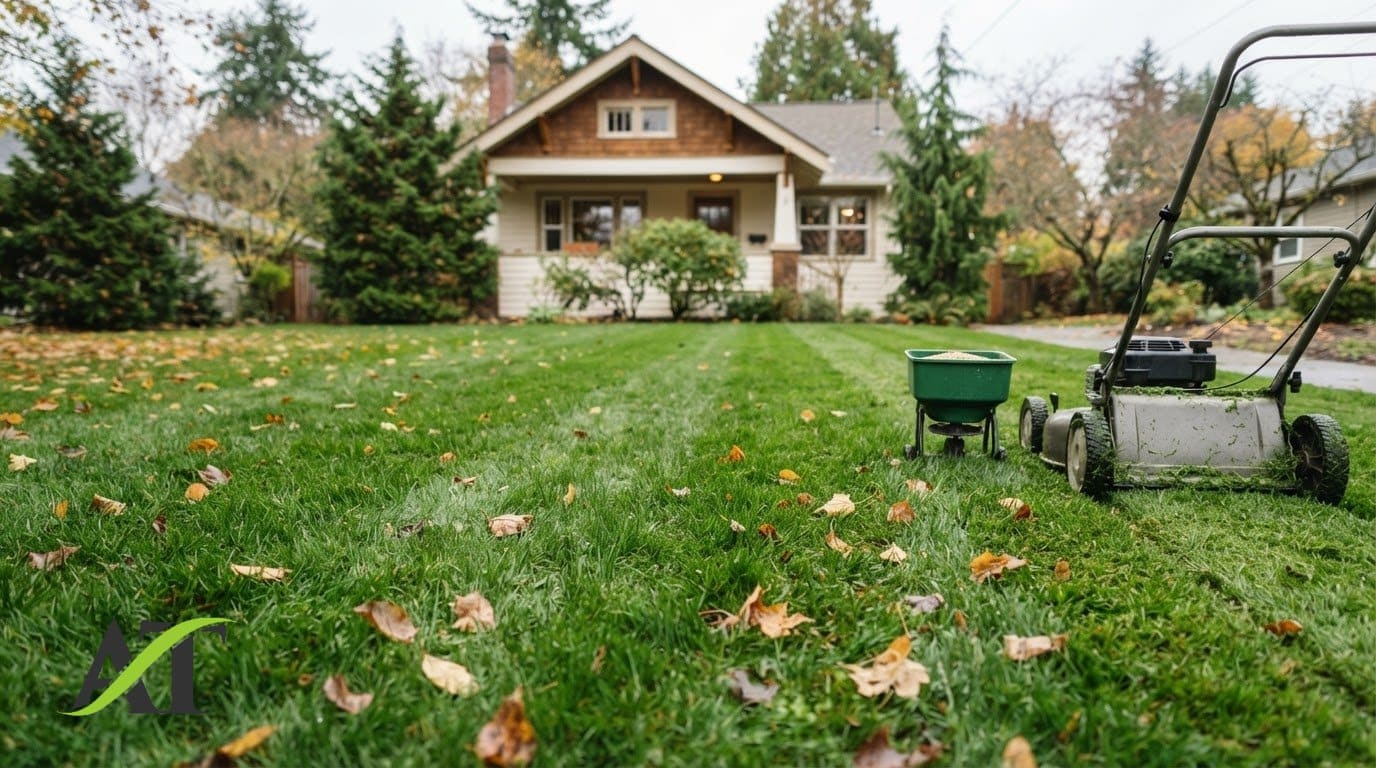
After treatment, follow care instructions suited to the work completed. The lawn aftercare guidance can help you understand what to do after Core Aeration and related restoration work.
Getting Core Aeration for a Bothell Lawn: Service and Next Steps
A useful lawn-specific discussion starts with clear details. Note what you’re seeing, which parts of the lawn are affected, and whether symptoms change after rain or regular use. Mention any known shade, drainage, irrigation, or thatch concerns. Those details help connect the next step to the actual problem instead of defaulting to the largest treatment.
Match the service to the diagnosis
Aerating Thatching Co. serves Bothell and provides Core Aeration as a lawn restoration service. It may suit a lawn where compaction is part of the problem. Thatch buildup, shade, irrigation issues, and drainage defects are different concerns, so they shouldn’t be treated as though aeration resolves them all.
Choose a Lawn Tune-Up when that service’s combined treatments fit the lawn’s needs. If Power Raking (Dethatching) is also needed, the Full Meal Deal includes Power Raking (Dethatching), Core Aeration, Overseeding, and Fertilizing. Other treatments, such as lime or soil amendments, are separate. The right choice depends on the lawn’s condition, not on selecting the most extensive option by default.
Plan for aftercare
Aftercare affects how you manage the lawn following service, particularly if Overseeding is part of the work. Use the lawn aftercare steps for treatment-specific guidance. For homeowners considering lawn aeration Bothell lawns may need, that follow-through is part of making a practical plan, not a promise of a particular result.
Bring your observations and questions together before deciding. A focused conversation can help clarify whether Core Aeration fits the symptoms or whether another concern needs attention first.
Choose the Next Step That Fits Your Lawn
You don’t need to settle on a broad treatment plan before deciding what your lawn needs. Start with the area that concerns you most. Note when the symptoms appear and what changes them. Those observations can make a conversation about lawn aeration Bothell homeowners are considering more focused and help shape a practical next step.
If you’re still unsure, bring your notes and questions to Stewart at Aerating Thatching Co. The aim is to choose work that fits the lawn, not to add treatments without a clear reason.
Ask Stewart About Your Lawn
A clear starting point can make lawn care decisions feel more manageable. You can move forward one step at a time.
Frequently Asked Questions
What are the soil plugs left behind after lawn aeration?
They’re small cores of soil brought to the surface during Core Aeration. Leaving them in place is usually fine; as they dry, weather and normal lawn activity help them crumble back into the turf. If wet plugs form clumps, avoid smearing them across soft grass. Once they’re dry enough to break apart, you can gently scatter them so they don’t interfere with walking or mowing.
Can lawn aeration be done when the soil is very wet?
It’s better to wait if the ground is saturated. Very wet soil can smear under equipment and may be more vulnerable to compaction from traffic, which works against the purpose of the treatment. A practical check is to notice whether your footsteps leave deep impressions or the surface squishes underfoot. For lawn aeration Bothell homeowners are planning, soil condition matters more than picking a date in advance.
Can I mow right after core aeration?
It’s sensible to avoid mowing immediately if the lawn is soft or the soil cores are still wet and clumped. Tires and foot traffic can leave marks, and mower blades may scatter wet plugs unevenly. If Overseeding was also done, mowing too soon can disturb seed. Follow the treatment-specific aftercare instructions, and resume mowing when the lawn can handle it without rutting or disrupting seed.
Is lawn aeration useful for a small Bothell yard?
Yes, a small lawn can benefit if compacted soil is affecting the turf. Yard size alone doesn’t establish whether Core Aeration is needed. Focus on the affected patch: a narrow path used often, for example, may show a different pattern from grass shaded by a structure. A lawn-specific assessment helps determine whether treating the affected area makes sense or another issue needs attention.
Article by
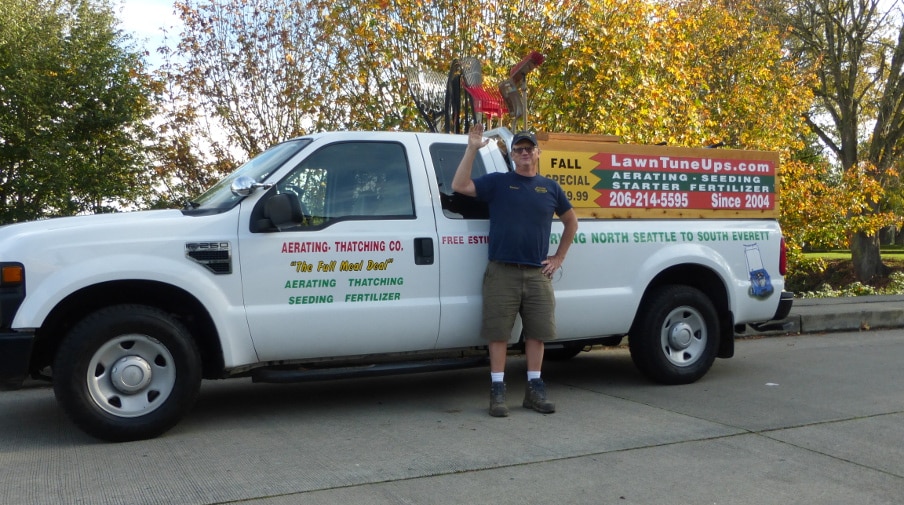
Stewart Armour
Stewart Armour is the owner of Aerating Thatching Co., an owner-operated Seattle-area lawn restoration business established in 2004. He helps homeowners understand Core Aeration, Power Raking (Dethatching), Overseeding, soil conditions, and the aftercare needed for stronger lawns. His background includes turf management study, advanced golf course turf training, and continuing education through Wilbur-Ellis University, State Turf Facilities, Soil First Academy, and Golf Course Applied Turf Physiology. Stewart has personally evaluated thousands of residential lawns throughout the Seattle area and focuses on recommending the work that fits each lawn’s condition.