Why does your Everett yard feel like a sponge in spring and a thin, hard patch by summer? Many homeowners in our corner of the Pacific Northwest see the same pattern. Mowing alone doesn’t change it. Moss, thin grass, and tight soil each have different causes, and the right fix depends on which one you actually have.
This guide helps you decide whether a lawn restoration service in Everett is the right move, and which service fits. Sometimes a smaller service is enough. Sometimes your lawn needs further diagnosis first. We’ll walk through what each treatment does, what it doesn’t do, and how to match the work to your lawn.
Key Takeaways
- Moss, thinning, sponginess, and yellow grass are clues, not a complete diagnosis. Check thatch, compaction, shade, irrigation, and drainage.
- Core Aeration relieves compaction in the shallow root zone. It does not break deep glacial hardpan, remove moss, fix drainage, replace missing grass, or substitute for Power Raking (Dethatching).
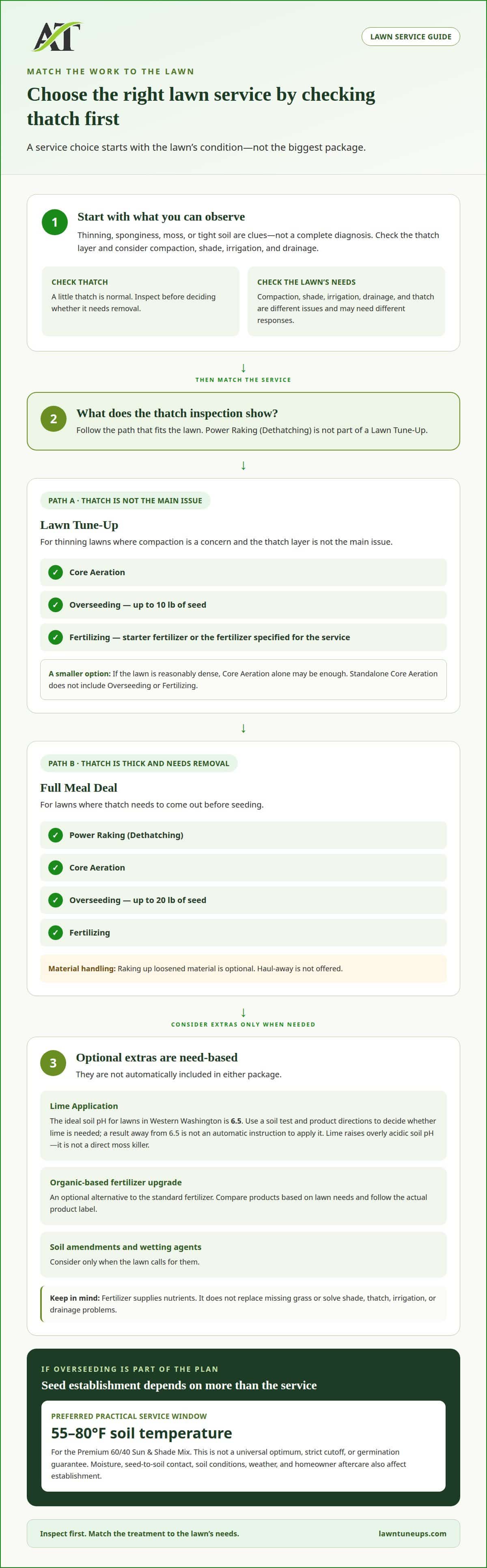
- A Lawn Tune-Up consists of Core Aeration, Overseeding, and Fertilizing. Power Raking (Dethatching) is not part of the Lawn Tune-Up; it is included only in the Full Meal Deal.
- Lime, soil amendments, and the organic-based fertilizer upgrade are optional extras, chosen by need.
- Spring and fall are common service windows, and aftercare matters as much as the service.
Why Everett Lawns Struggle: Moss, Compaction, and the PNW Climate
Mowing is a haircut. It doesn’t change the soil, the thatch layer, or the light and moisture your grass gets. When a lawn keeps thinning despite regular mowing, the cause is usually underneath or around the grass. Common culprits include compacted soil, a thick thatch layer, shade, uneven watering, and poor drainage. A good lawn restoration service starts by working out which of these is in play. If you want the mechanical background, see this overview of mechanical dethatching and scarification.
The ‘Everett Clay’ Challenge
Many Everett yards sit on heavy clay. Clay holds water in wet months and can turn hard when it dries. Tight soil makes it harder for air, water, and nutrients to reach grass roots. Soil compaction is a leading cause of lawn thinning in clay-heavy yards.
Compaction is only one possible cause, though. Puddling can point to a drainage problem, and a spongy feel can come from thatch. Resistance to a screwdriver is a clue, not a verdict. Our guide to signs of compacted soil shows what to look for.
Moss vs. Grass: A Local Battle
Wet winters, shade, and thin turf give moss room to spread. Moss often fills in where grass has already struggled. Raking it out is only a first step if the conditions that favored it stay the same. Check shade, moisture, thatch, and soil pH before you pick a treatment. Our article on fixing the cause of moss goes deeper.
Core Aeration does not remove moss. Power Raking (Dethatching) can pull up moss and thatch where that is the real problem. Lime raises overly acidic soil pH. It is not a direct moss killer.
The Science of Restoration: How Aeration and Power Raking Work
These are two different tools for two different problems. Fertilizer alone can’t change a hard soil surface or a thick thatch layer. Mechanical work opens the surface so water, air, and seed can do their jobs.
Core Aeration: Relieving the Pressure
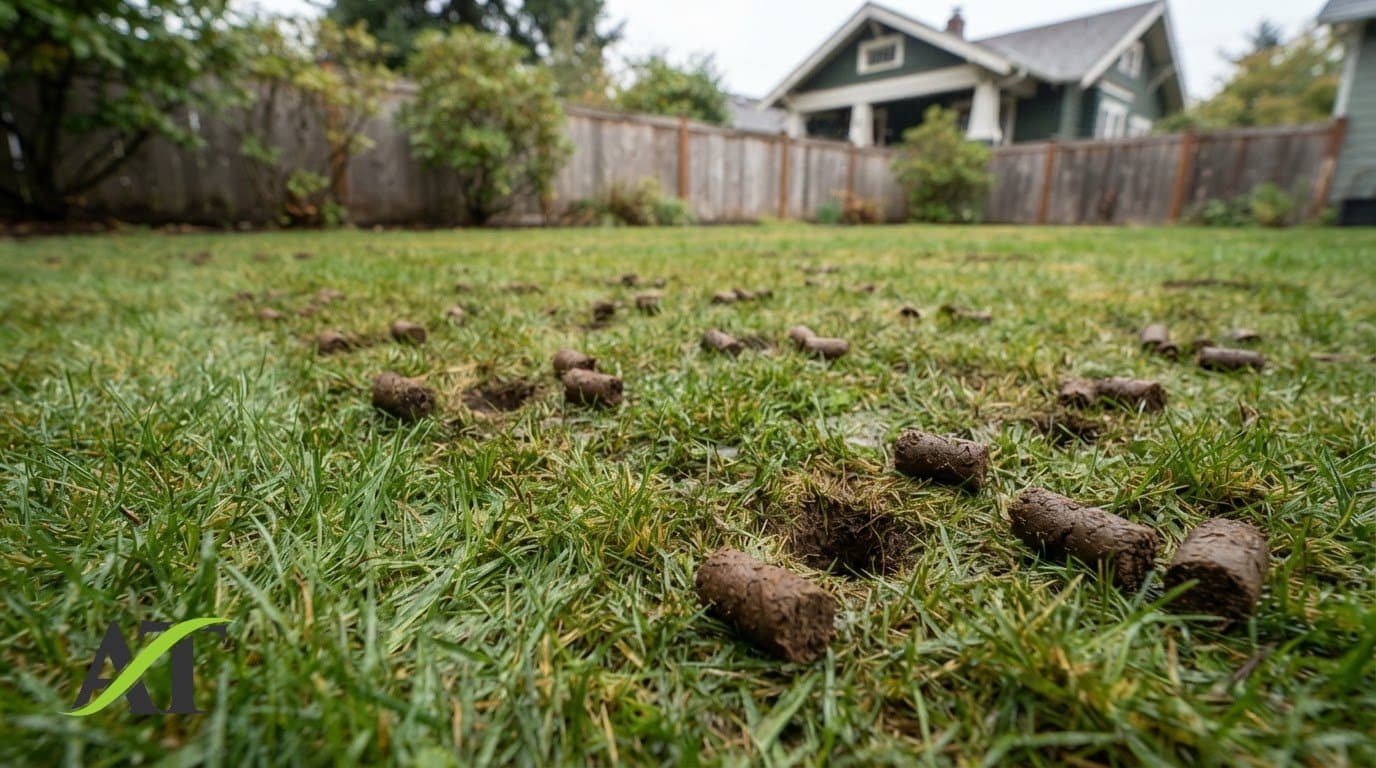
Core Aeration pulls small plugs of soil from the lawn. That relieves compaction in the shallow turf root zone and lets air and water move in. It is far more effective than spiking, which pokes holes without removing soil.
Know its limits. Core Aeration does not break up deep glacial hardpan, reshape the ground, or fix a subsurface drainage defect. It doesn’t replace missing grass and it doesn’t take the place of dethatching. Overseeding and fertilizer are not part of standalone Core Aeration. If your lawn is reasonably dense, aeration alone may be all you need. Our piece on how to tell if your yard needs aeration can help you decide.
Power Raking (Dethatching): Clearing the Path
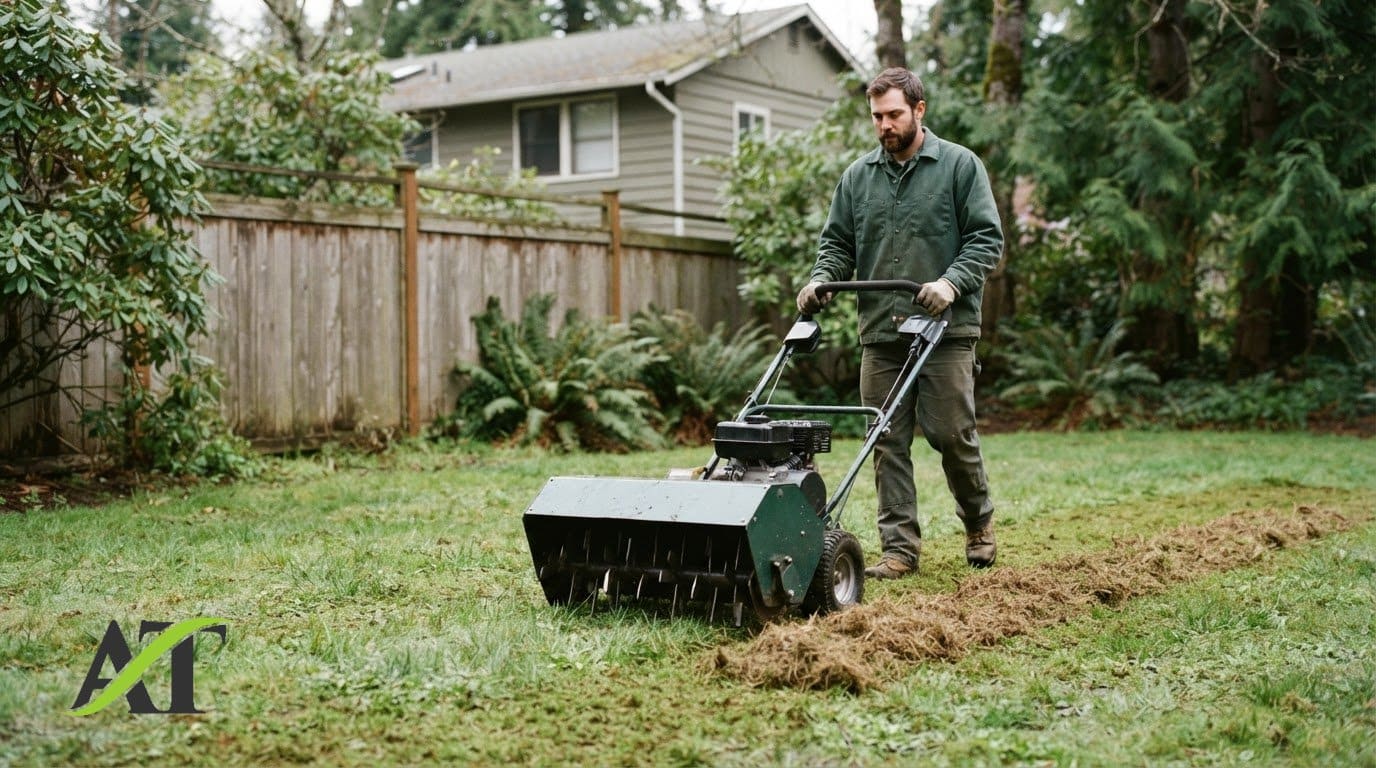
Thatch is a layer of dead and living organic matter between the green grass and the soil. A little is normal. A thick layer can hold the surface away from water and seed. Inspect the thatch before deciding on removal. If it is thin, you may not need Power Raking (Dethatching) at all.
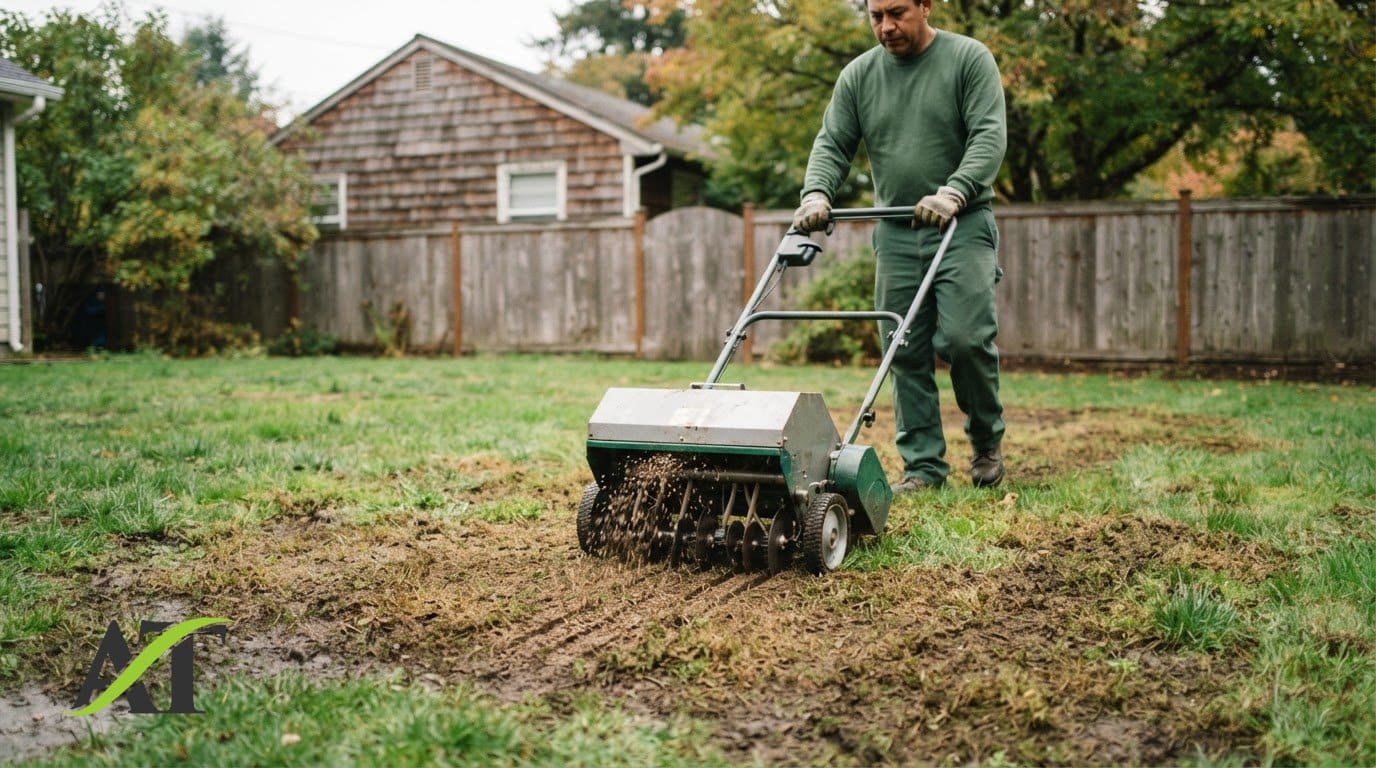
When thatch is thick, Power Raking (Dethatching) lifts it so seed can reach the soil. Raking up the loosened material is optional, and we do not offer haul-away. See when to power rake for timing.
Choosing Your Service: Lawn Tune-Up or Full Meal Deal
Match the service to what your lawn shows. Don’t buy the biggest package by default.
The Lawn Tune-Up
The Lawn Tune-Up consists of Core Aeration, Overseeding, and Fertilizing with starter fertilizer or the fertilizer specified for that service. Power Raking (Dethatching) is not part of the Lawn Tune-Up process. It suits lawns with compaction and thinning where the thatch layer is not the main issue. Overseeding uses up to 10 lb of seed.
The Full Meal Deal
The Full Meal Deal consists of Power Raking (Dethatching), Core Aeration, Overseeding, and Fertilizing. Overseeding uses up to 20 lb of seed. It fits lawns where thatch needs to come out before seeding.
Optional Extras
- Organic-based fertilizer upgrade: an organic-based option instead of the standard starter fertilizer. Compare it fairly with the standard product based on your lawn’s needs. Organic does not mean harmless, so follow the product label.
- Lime Application: for overly acidic soil. The ideal soil pH for lawns in Western Washington is 6.5. Use a soil test and product directions to decide whether lime is needed. A result away from 6.5 is not an automatic instruction to add lime. Our guide on testing lawn soil pH explains the process.
- Soil amendments and wetting agents: chosen only when your lawn calls for them.
Fertilizer supplies nutrients. It does not replace missing grass or solve shade, thatch, irrigation, or drainage problems.
Overseeding for a Thicker Yard
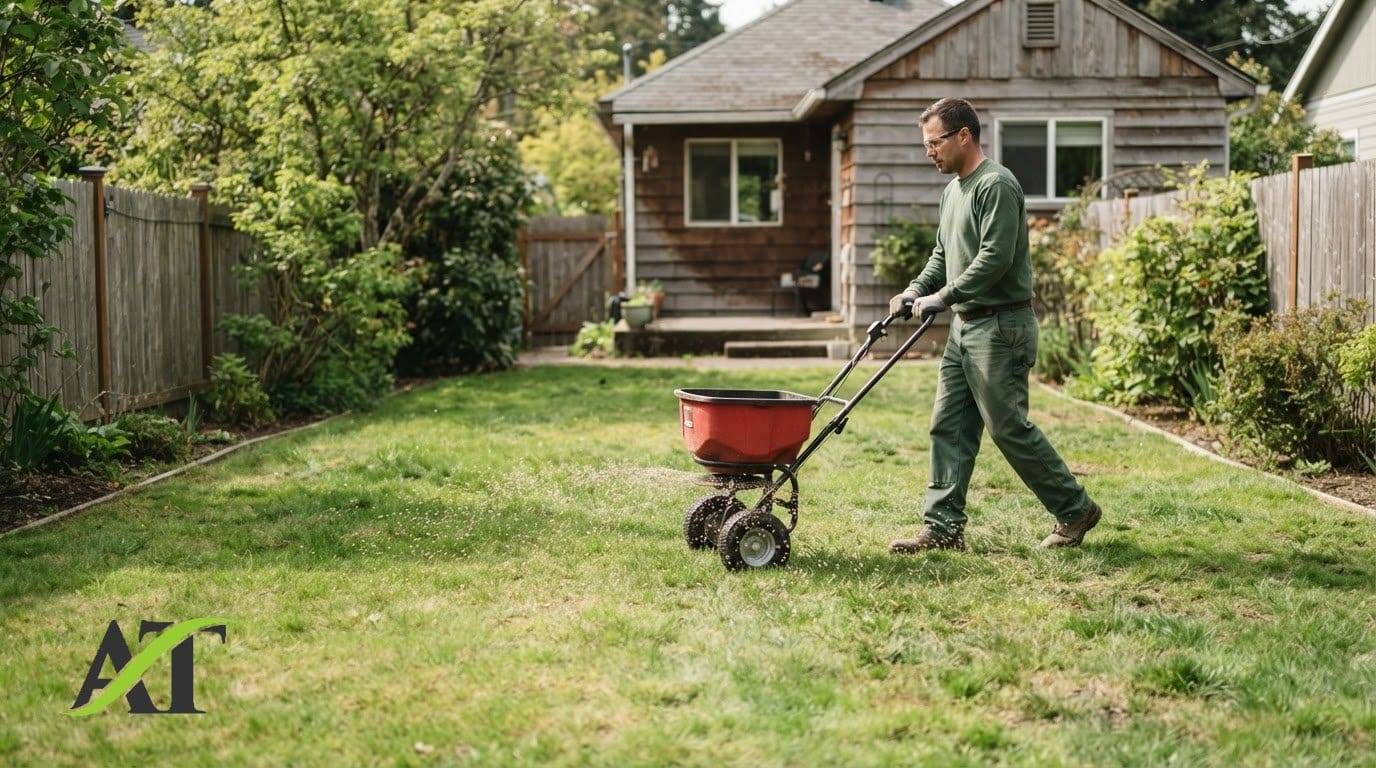
Overseeding fills thin areas when the grass has room and light to grow. Our preferred practical service window for the Premium 60/40 Sun & Shade Mix is 55–80°F soil temperature. That is not a universal optimum, a strict cutoff, or a germination guarantee. Moisture, seed-to-soil contact, soil conditions, weather, and your aftercare also affect how seed establishes. Weed control is the homeowner’s responsibility.
When to Schedule Your Everett Lawn Restoration Service
Spring and fall are the common service windows. Aeration works best when soil is moist but not saturated. Summer dryness alone is not a reason to aerate.
Spring vs. Fall Restoration
- Early to mid-spring: a good time to deal with winter thatch and moss debris through Power Raking (Dethatching), if inspection shows you need it.
- Early fall: a common window for Overseeding, since conditions favor new grass establishment.
- Summer and winter: usually not the time for major restoration.
Actual timing varies with weather, soil conditions, active growth, and the work you choose. Our Seattle lawn care calendar gives broad seasonal guidance.
Preparing for Your Service
- Mark sprinkler heads, oil tank caps, shallow utilities, and pet fencing. Hidden or unmarked items are the homeowner’s responsibility to flag.
- Make sure we have clear access to the yard.
Aftercare
Aftercare is part of the job. Watering, mowing, and traffic management all affect results, and needs differ between standalone Core Aeration, established grass, and new seed. Follow our aftercare guide. Don’t add extra fertilizer right after a service that included starter fertilizer. Don’t apply herbicide to newly seeded turf unless the product label explicitly permits it.
Why Choose a Specialist Like Aerating Thatching Co.?
Aerating Thatching Co. is owner-operated and has been serving the area since 2004. Stewart personally performs the lawn work. We focus on lawn restoration, not routine mowing or other general services. Our advice is honest and no-pressure. If a smaller service, homeowner care, or further diagnosis fits better, we’ll say so.
Specialized Equipment vs. DIY
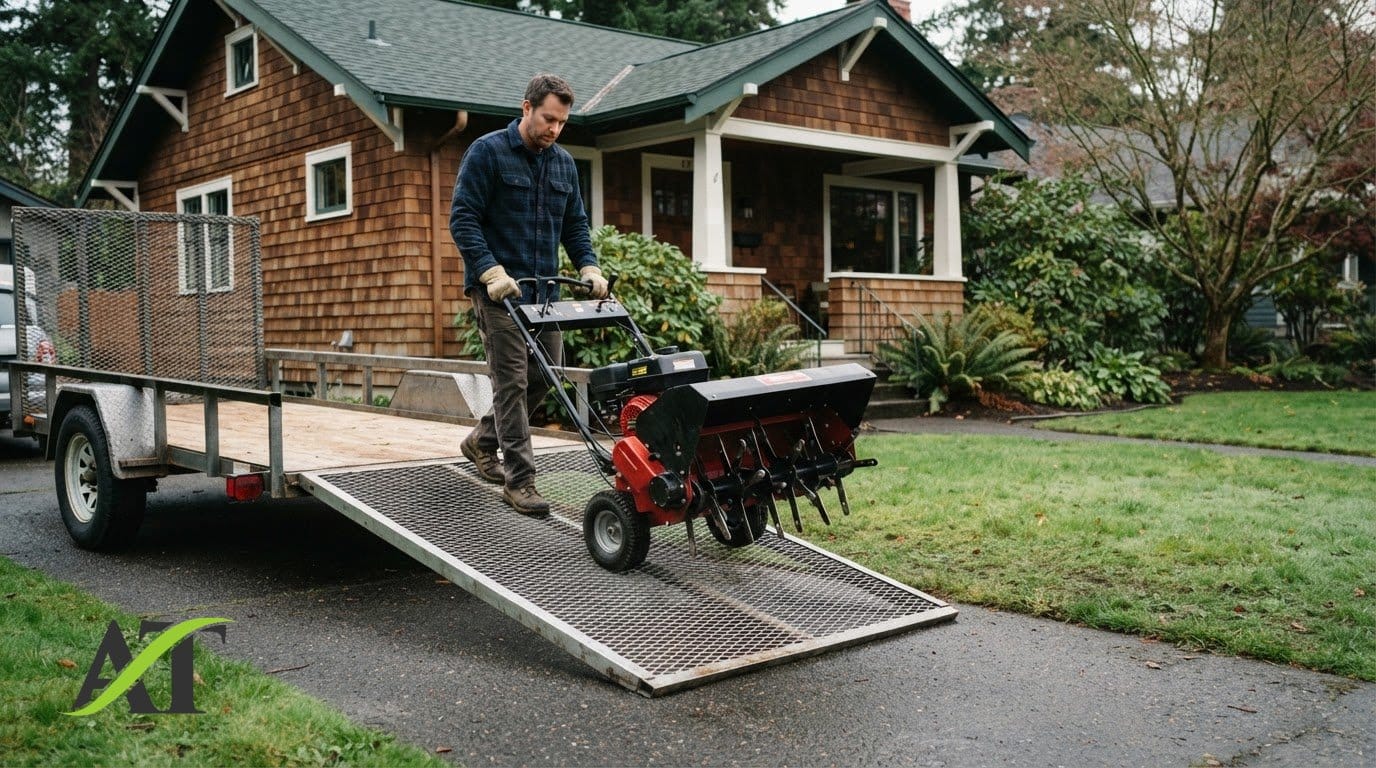
DIY can be a fair choice. A manual hollow-tine corer or dethatching rake can suit a small, appropriate area. Larger lawns, firm soil, and limited time shift the balance toward a professional. If you rent a machine, you’ll also need to plan transport, loading, and debris handling. Renting a machine also means learning to operate and maneuver heavy, unfamiliar equipment, which can cause muscle strain or injury. Compare options in our guides on DIY vs. professional aeration. Results are not guaranteed and depend on watering, weather, and soil.
The Value of a Local Partner
You deal directly with the person doing the work. We serve North Seattle, North King County, and South Snohomish County, including Everett. If you’re unsure what your lawn needs, Ask Stewart About Your Lawn, and we’ll point you to the right service.
Build a More Resilient Everett Lawn
A thick lawn starts with the right diagnosis. Core Aeration relieves compaction, Power Raking (Dethatching) clears heavy thatch, Overseeding fills thin areas, and Fertilizing feeds new growth. Pick only what your lawn needs, then follow the aftercare. Ask Stewart About Your Lawn.
Frequently Asked Questions
What is the best time of year for lawn restoration in Everett?
Spring and fall are the common windows. Early fall suits Overseeding, and spring suits dealing with thatch and moss debris. Timing depends on weather, soil conditions, and the work selected.
How long does it take for a lawn to recover after Power Raking (Dethatching)?
Expect the lawn to look rough at first. Recovery depends on weather, watering, and how thick the thatch was, so we don’t promise an exact timeline. Follow the aftercare guide.
Is Core Aeration really necessary every year?
Not automatically. Aerate when the lawn shows signs of compaction and inspection supports it, not simply because of the season or one symptom.
Can you do a service if it’s raining?
If conditions are too wet, we’ll talk with you about rescheduling.
Will Overseeding work if I have a lot of moss?
Seed needs contact with soil. If moss or thick thatch covers the surface, it may need to be addressed first, and the underlying cause, such as shade or moisture, should be checked too. Results are not guaranteed.
How much should I water after a service?
It depends on whether you had standalone Core Aeration, work on established grass, or new seed. Follow our aftercare guide for the services performed.
Do I need to be home when the work is done?
Not necessarily, as long as we have clear access and you’ve marked sprinkler heads, oil tank caps, shallow utilities, and pet fencing beforehand.
Is the organic-based fertilizer safe for my pets?
Organic does not establish safety. Follow the actual product label and the service-specific instructions we give you for re-entry. For questions about pet health, talk to your veterinarian.
Article by
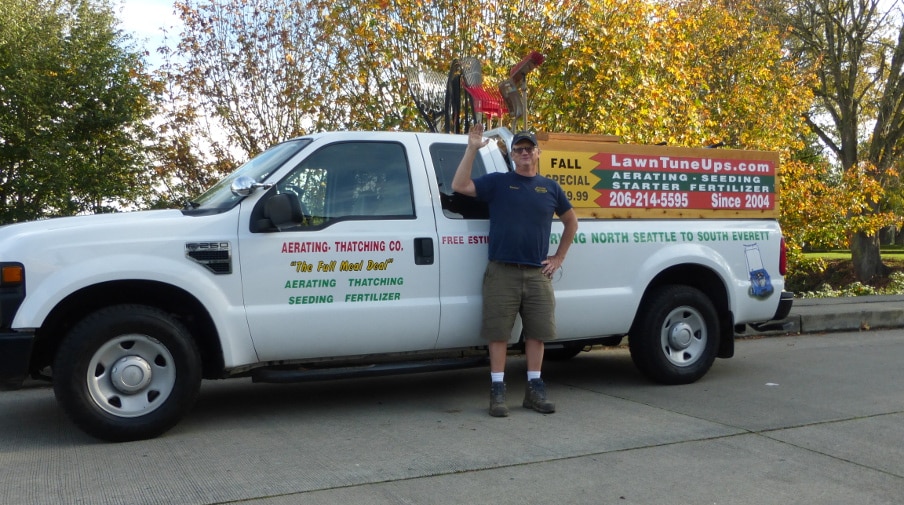
Stewart Armour
Stewart Armour is the owner of Aerating Thatching Co., an owner-operated Seattle-area lawn restoration business established in 2004. He helps homeowners understand Core Aeration, Power Raking (Dethatching), Overseeding, soil conditions, and the aftercare needed for stronger lawns. His background includes turf management study, advanced golf course turf training, and continuing education through Wilbur-Ellis University, State Turf Facilities, Soil First Academy, and Golf Course Applied Turf Physiology. Stewart has personally evaluated thousands of residential lawns throughout the Seattle area and focuses on recommending the work that fits each lawn’s condition.