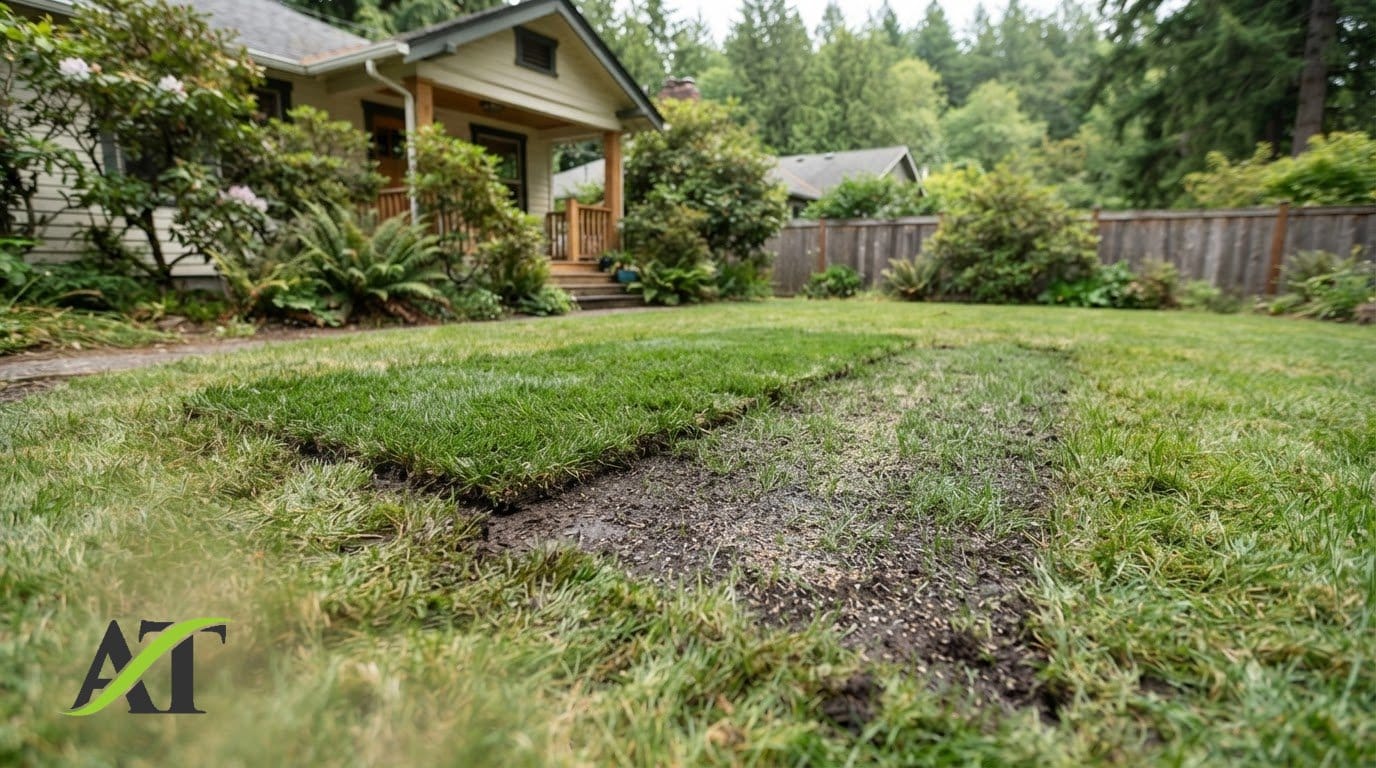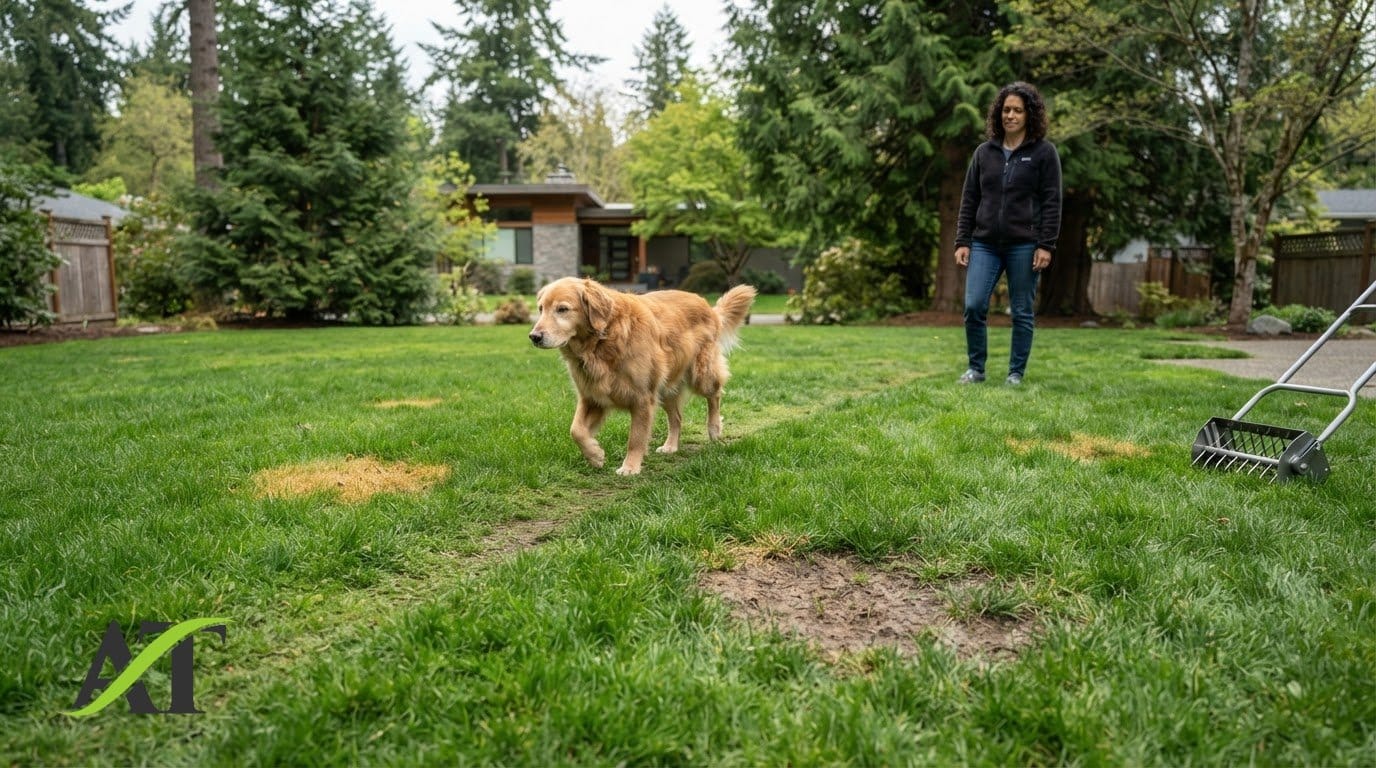
What if the worn path across your lawn isn’t caused by your pet alone? Running can thin grass, but urine spots, compacted soil, shade, and drainage problems call for different responses. Lawn care for homes with pets Brier homeowners can use starts with identifying the cause rather than guessing at a treatment.
It’s frustrating to watch a yard wear down when your pets need room to play. It’s also reasonable to wonder when they can return after seeding or lawn work. This guide explains how to distinguish common types of damage, reduce avoidable wear while keeping the yard usable, and choose a restoration approach that fits the lawn’s condition.
You’ll learn what signs to look for before deciding whether Core Aeration and Overseeding may help, or whether Power Raking (Dethatching) may also be appropriate. You’ll also find practical ways to manage pet access during recovery, following the treatment and seed aftercare instructions rather than relying on a one-size-fits-all timeline.
Key Takeaways
- Track where the lawn is thinning and whether damage follows pet routes or appears in isolated spots before choosing a repair.
- For pet-used lawns in Brier, adjust repeated play routes where practical and monitor whether the turf changes.
- Match restoration to the lawn’s condition: a Lawn Tune-Up includes Core Aeration, Overseeding, and Fertilizing.
- Choose the Full Meal Deal when Power Raking (Dethatching) is also part of the needed work, and follow aftercare instructions before pets return.
Pet-friendly lawn care in Brier: what causes worn or bare patches?
Pets use the yard for running, play, and daily routines, while homeowners want healthy turf that stays usable. Repeated foot traffic often wears a route between a door, play area, or favorite spot. Urine-related discoloration may appear as separate patches, but appearance alone can’t confirm the cause. A practical approach to lawn care for homes with pets in Brier starts with observing the pattern before choosing a repair. No lawn treatment can guarantee pet-proof turf, especially where use is frequent.
How can you tell pet wear from a broader lawn problem?
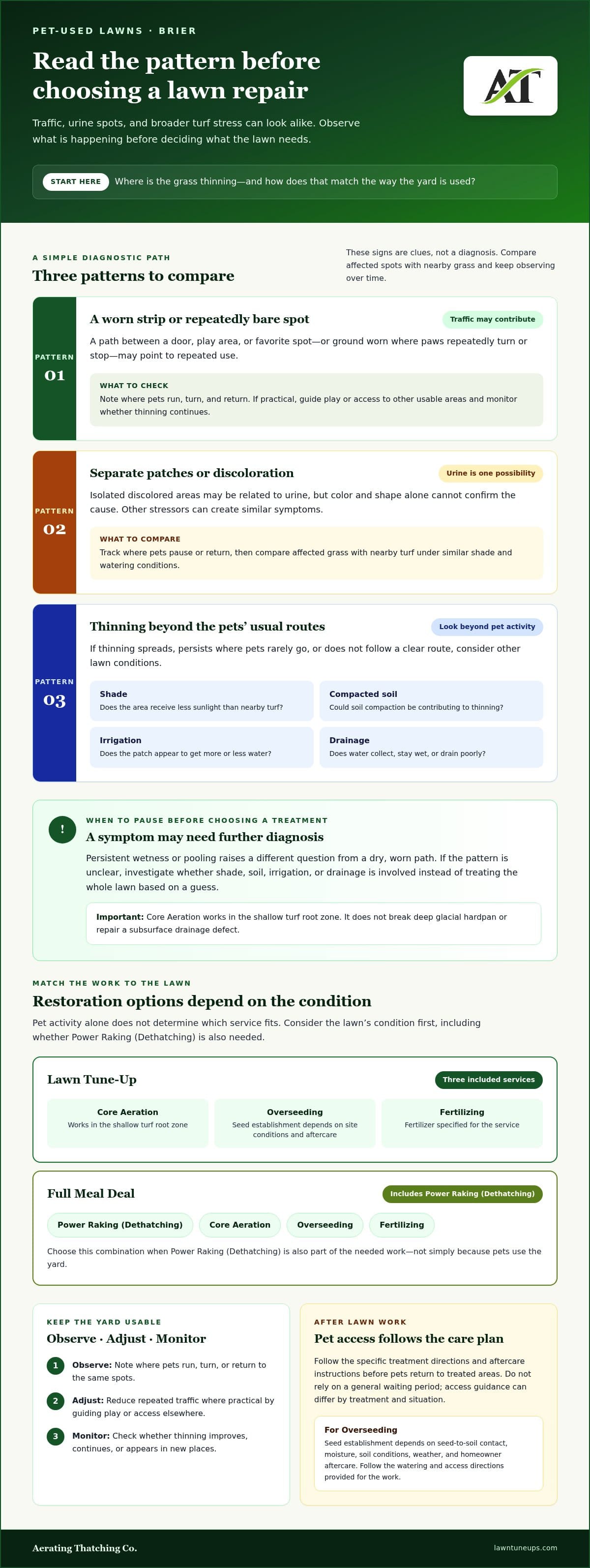
Look at where the grass has thinned and how the bare areas are arranged. A worn strip along a regular route may point to repeated traffic. Isolated discoloration may have another cause, including urine. These are clues, not a diagnosis. For several days, note where pets run, pause, or return to the same spot, then compare those areas with the condition of nearby grass.
Why should Brier homeowners avoid assuming every patch is caused by pets?
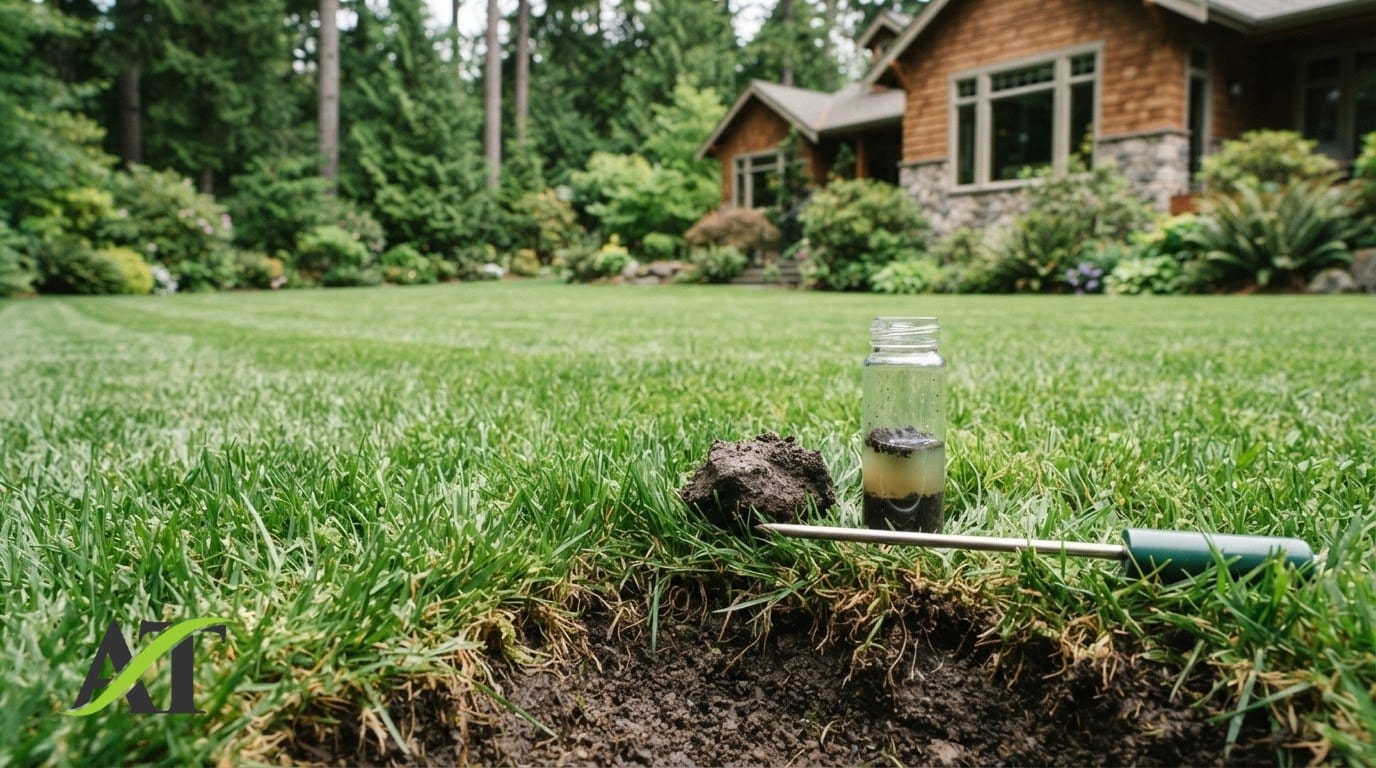
Similar thinning can result from limited sunlight, compacted soil, uneven irrigation, or drainage issues. The distinction matters because each calls for a different response. Core Aeration works in the shallow turf root zone, for example, but it won’t correct a subsurface drainage defect. General lawn care practices also depend on growing conditions, not just how a lawn is used.
- Check whether the patch follows a pet’s regular route or appears elsewhere.
- Notice whether affected areas receive different amounts of shade or irrigation than nearby turf.
- Look for signs that water collects or drains poorly in the affected spot.
If the pattern doesn’t point clearly to one cause, avoid treating the whole lawn based on a guess. Further diagnosis can help distinguish pet wear from shade, soil, irrigation, or drainage problems before you choose a restoration approach.
Pet-related lawn damage: distinguish traffic, urine spots, and turf stress
Repeated running and play can thin grass along a route or leave bare ground where paws repeatedly turn or stop. Urine-related discoloration may show up in isolated patches, but color and shape alone don’t prove urine is the cause. Similar symptoms can come from other stressors, and more than one cause can affect the same lawn. To narrow down what’s happening, compare the damage with how the yard is used and maintained.
What observations help narrow down the cause?
Look for patterns over time rather than relying on a single inspection. Note whether damage follows a regular path, appears in separate spots, or covers a wider area. Track where pets spend time, and note which patches receive shade or seem to get less or more water. If you can, compare affected grass with nearby turf under similar conditions. These observations help narrow the possibilities, but they aren’t a substitute for diagnosis.
When does a lawn need further diagnosis?
Look beyond pet activity if thinning continues in areas pets rarely use, spreads across the lawn, or doesn’t match a clear traffic route. Compaction, shade, irrigation patterns, and drainage concerns need different responses from surface wear. Persistent wetness or pooling, for instance, raises a different question from a dry, worn path. Don’t assume one treatment will address every cause.
Core Aeration addresses the shallow turf root zone; it doesn’t break deep glacial hardpan or repair a subsurface drainage defect. If visible symptoms don’t fit a straightforward pattern, investigate the underlying condition before selecting restoration work. That can help avoid treating the wrong problem. If you’d like help thinking through the lawn’s condition and next steps, Ask Stewart About Your Lawn.
A practical pet-owner routine for protecting a Brier lawn
Keeping a yard usable for pets while giving grass a chance to recover takes steady observation, not a promise of pet-proof turf. A simple routine helps you spot recurring wear, make practical adjustments, and judge whether the lawn is responding. Start with actions that fit the way your household actually uses the yard.
- Observe. Note where pets run, turn, or return to the same spots, and watch for changes in the grass.
- Reduce repeated traffic where practical. If one route is taking the most wear, guide play or access to other usable areas when you can.
- Monitor. Check whether thinning continues, improves, or appears in new places. Recovery depends on the cause and site conditions, so don’t expect the same response everywhere.
How should you plan pet access around lawn work?
Plan access around the work being done and the condition of the treated area. Follow the specific treatment directions and aftercare instructions before letting pets back onto it. Don’t rely on a general waiting period: access guidance can differ by treatment and situation. Keeping pets away from newly worked areas as directed also helps you follow the care plan.
What should you expect after overseeding?
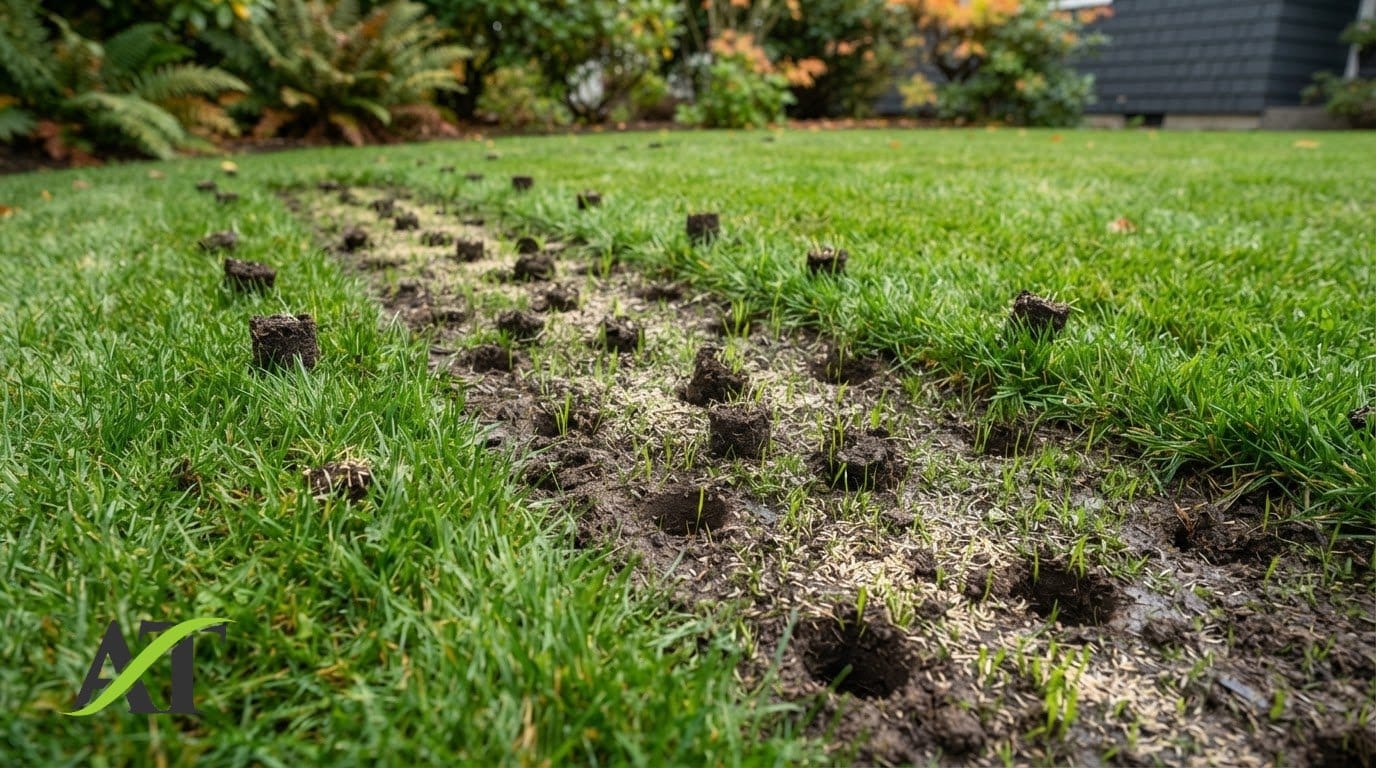
Seed establishment depends on seed-to-soil contact, moisture, soil conditions, weather, and homeowner aftercare. Follow the watering and access directions provided for the work, and understand that results depend on how those factors come together. If you’re planning work around the seasons, the Seattle lawn care calendar can help with timing. Use the lawn aftercare guide for practical post-service steps.
Choose the right lawn restoration for a pet-used yard in Brier
Once you’ve considered what is causing the damage, match restoration work to the lawn’s actual condition. Pet activity alone doesn’t determine which service fits. Compaction, thatch, shade, or drainage concerns may change what the lawn needs, and some problems call for further diagnosis before restoration.
| Option | Included services | How to think about it |
|---|---|---|
| Lawn Tune-Up | Core Aeration, Overseeding, and Fertilizing | Consider it when this combination fits the lawn’s needs. |
| Full Meal Deal | Power Raking (Dethatching), Core Aeration, Overseeding, and Fertilizing | Compare it when Power Raking (Dethatching) is also appropriate. |
When might a Lawn Tune-Up fit the problem?
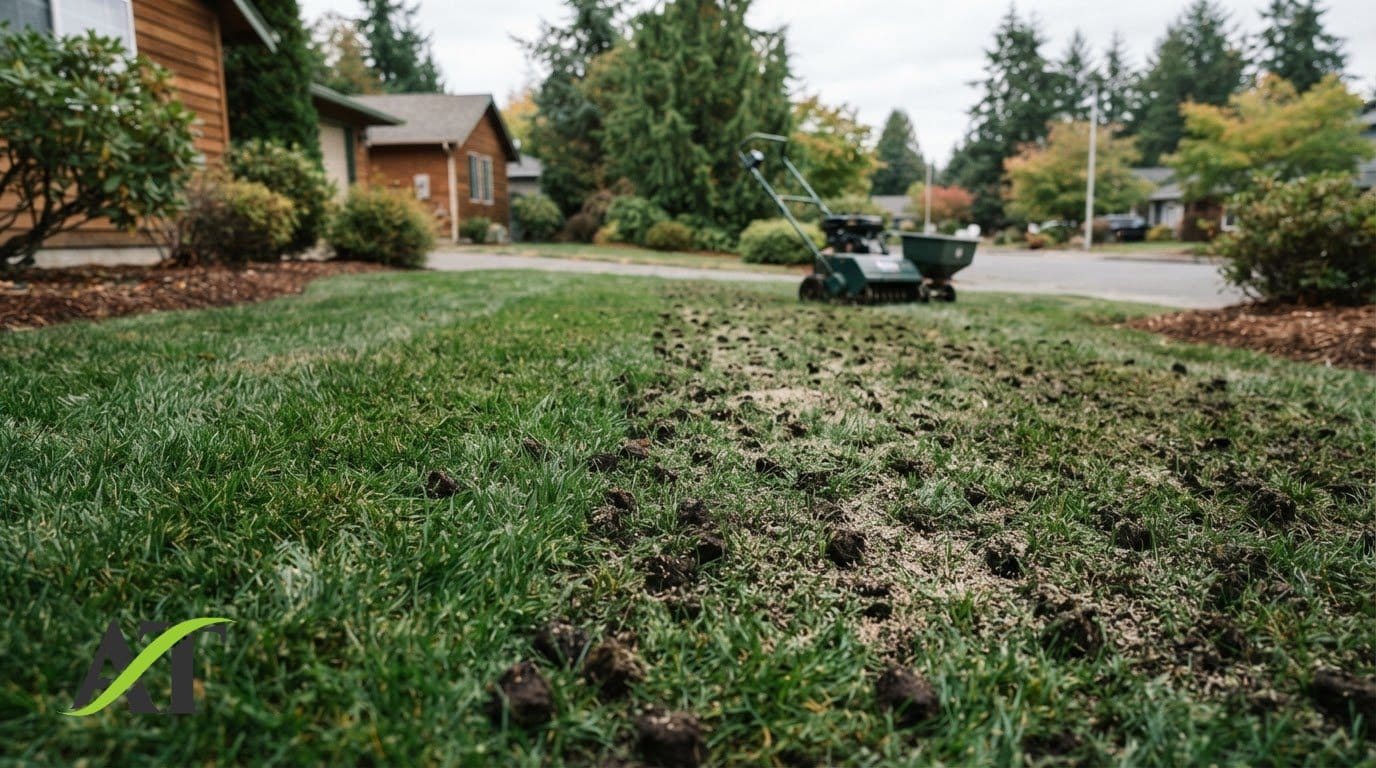
A Lawn Tune-Up brings together Core Aeration, Overseeding, and Fertilizing. It may fit when the lawn’s condition calls for those services, but it isn’t a guaranteed fix for pet damage. If bare areas stem from shade or a drainage defect, for example, those underlying conditions still matter. Review the Lawn Tune-Up service details as you consider the work.
When might the Full Meal Deal be the relevant comparison?
The Full Meal Deal includes Power Raking (Dethatching) alongside Core Aeration, Overseeding, and Fertilizing. It’s relevant when dethatching is part of the lawn’s needs, not simply because pets use the yard. The right choice should respond to the identified problem rather than defaulting to more work.
After restoration, follow treatment and seed aftercare instructions before allowing pets back onto the worked areas. Start by understanding the lawn’s condition, then match the service to it.
Make a lawn plan that fits your household
A yard shared with pets doesn’t need to stay untouched to be worth caring for. Set a realistic goal for how you want to use the space, then make lawn decisions that support both healthy turf and everyday play. Choosing lawn care for homes with pets in Brier means finding a workable balance, not expecting grass to withstand unlimited traffic without showing wear.
Aerating Thatching Co. provides lawn restoration services for homeowners in Brier and nearby communities, including North Seattle, Shoreline, Edmonds, Lynnwood, Mill Creek, Bothell, Kenmore, Lake Forest Park, Mountlake Terrace, Snohomish, Everett, Woodway, Green Lake, Ballard, and Greenwood.
If you’re unsure what the next step should be, describe what you’re seeing and how your pets use the yard. A clear starting point makes it easier to discuss an approach that fits the lawn rather than choosing more work by default.
With a practical plan and realistic expectations, you can keep working toward a yard that feels welcoming for the whole household.
Frequently Asked Questions
Can pets use the lawn after overseeding?
Follow the aftercare instructions for your specific lawn work before allowing pets onto seeded areas. There isn’t one universal waiting period that applies to every situation. Seed establishment depends on seed-to-soil contact, moisture, soil conditions, weather, and homeowner care. The lawn aftercare guide can help you understand the care instructions to follow after Overseeding.
Does dog urine always cause yellow or bare patches in a lawn?
No. Yellowing or bare turf alone doesn’t confirm urine damage. Repeated traffic, shade, compaction, uneven irrigation, and drainage problems can also affect grass. Before choosing a response, note whether symptoms appear along a regular route, in isolated spots, or across a larger area. Use the pattern as a clue, not a diagnosis.
Is Core Aeration enough to repair a lawn damaged by pets?
It depends on the cause of the damage. Core Aeration can be relevant when compaction in the shallow turf root zone is part of the problem, but it won’t break deep glacial hardpan or repair a subsurface drainage defect. If water pools or thinning occurs beyond heavily used areas, investigate those conditions too. Don’t assume aeration alone will resolve every pet-related lawn issue.
What is included in a Lawn Tune-Up?
A Lawn Tune-Up includes Core Aeration, Overseeding, and Fertilizing. It does not include Power Raking (Dethatching), lime, soil amendments, or other treatments unless they’re identified as optional add-ons. That distinction helps you compare the work with the lawn’s actual needs. A lawn that needs dethatching, for example, requires a different service combination than one needing only the Lawn Tune-Up components.
Is the Full Meal Deal the same as a Lawn Tune-Up?
No. A Lawn Tune-Up consists of Core Aeration, Overseeding, and Fertilizing. The Full Meal Deal includes those services plus Power Raking (Dethatching). Choose based on whether dethatching is appropriate for the lawn, rather than assuming more work is always better. If the cause of thinning is unclear, identify it before settling on either restoration option.
Article by
Stewart Armour
Stewart Armour is the owner of Aerating Thatching Co., an owner-operated Seattle-area lawn restoration business established in 2004. He helps homeowners understand Core Aeration, Power Raking (Dethatching), Overseeding, soil conditions, and the aftercare needed for stronger lawns. His background includes turf management study, advanced golf course turf training, and continuing education through Wilbur-Ellis University, State Turf Facilities, Soil First Academy, and Golf Course Applied Turf Physiology. Stewart has personally evaluated thousands of residential lawns throughout the Seattle area and focuses on recommending the work that fits each lawn’s condition.