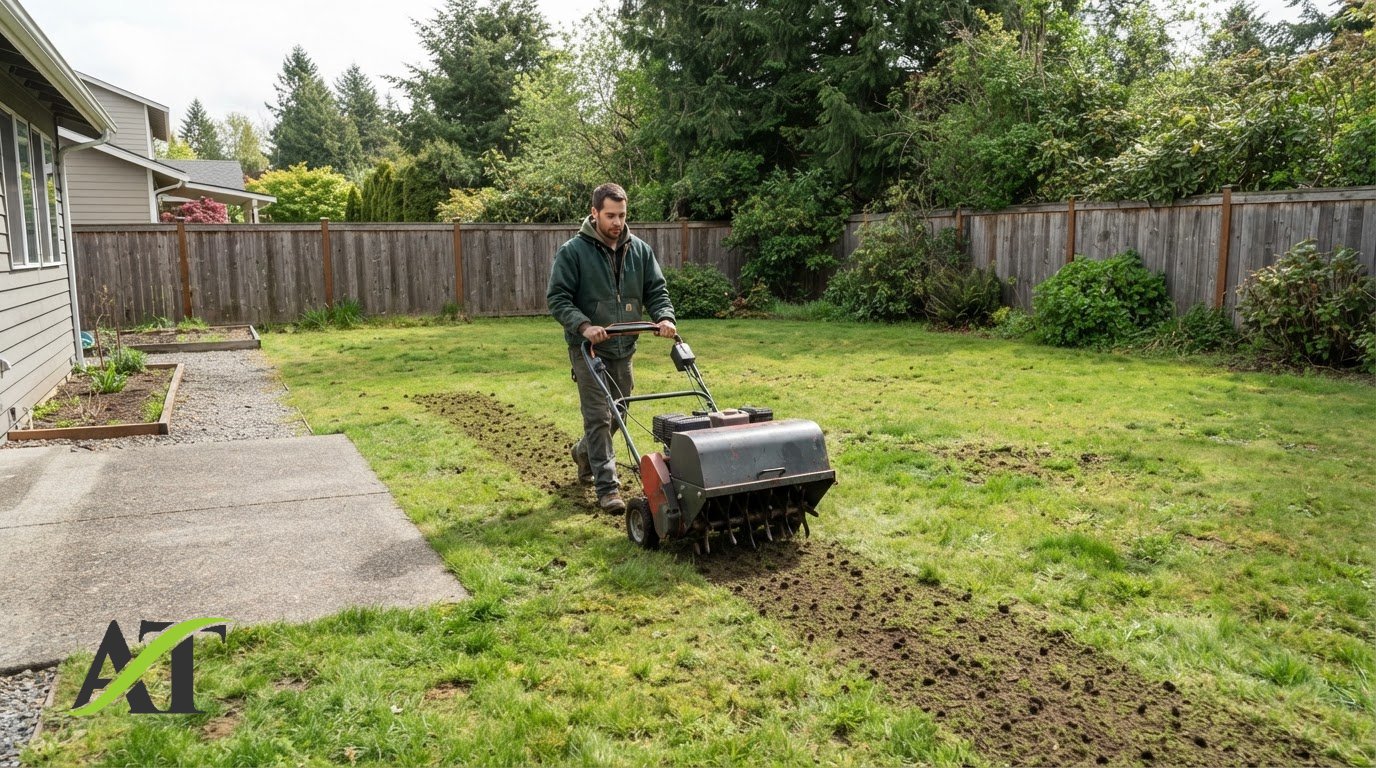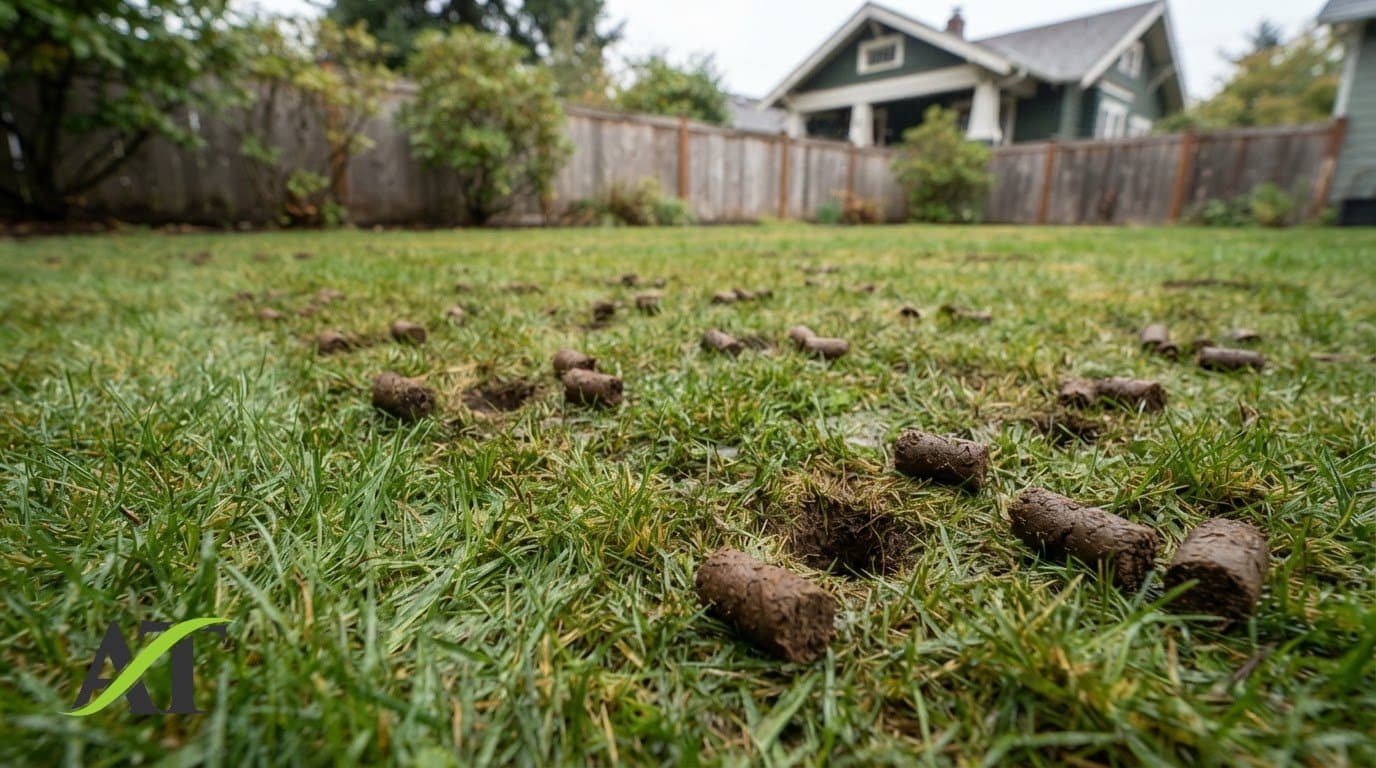
For compacted clay lawns, the main lawn aeration benefits for clay soil in Ballard are better movement of water, air, and nutrients into the root zone. Core Aeration removes small plugs of soil to relieve compaction. It can help when the ground feels hard or water runs off after rain. It does not fix a deeper drainage problem.
If water runs off instead of soaking in, the cause may be below the grass. Dense soil can limit root growth and leave thin patches, though not every puddle points to compaction. This guide covers what aeration does for clay, what it does not do, and how to tell when another issue is involved. The lawn’s condition, its thatch, and the source of any drainage trouble all matter when choosing a treatment.
Key Takeaways
- Foot traffic makes compaction more likely, so weigh how the lawn is used alongside what you see on the surface.
- Pairing Core Aeration with Overseeding helps when a lawn is both compacted and thin. Establishment still depends on moisture and seed-to-soil contact.
- Thatch and compaction are different problems. Identify which one is limiting the lawn before choosing a treatment.
- If runoff or pooling continues, the cause may lie below the shallow turf root zone and need further diagnosis.
Do You Really Need Lawn Aeration in Clay Soil?
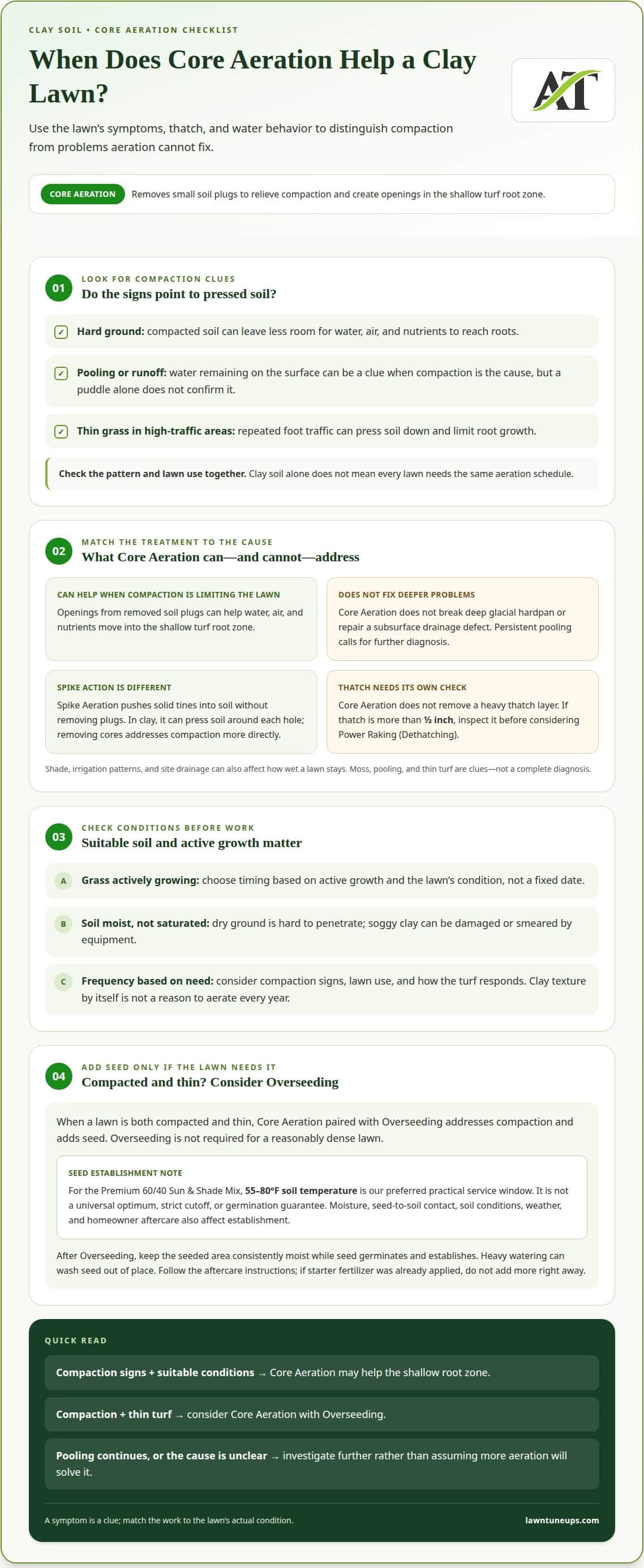
Clay soil alone does not mean every lawn needs the same schedule. Look for signs of compaction: hard ground, pooling water, or thin grass where people walk often.
Compaction Effects on Turf
Compaction is soil pressed tightly together, leaving less room for water, air, and nutrients to reach roots. Clay’s fine particles pack closely, so the effect can be more noticeable. Roots struggle to spread, and turf thins. You may see sparse patches or water sitting on the surface after rain. In dry spells, roots with limited access to deeper moisture are under more stress.
Aeration Frequency for Clay Lawns
Frequency depends on compaction and lawn use, not clay texture alone. Annual aeration may suit compacted, high-traffic lawns, where repeated foot traffic presses the soil down. A lightly used lawn without hard ground or pooling may not need it that often. Read the symptoms and how the turf responds. Yearly aeration is not a requirement for every clay lawn. The signs of compacted soil are worth checking first.
Core Versus Spike Aeration
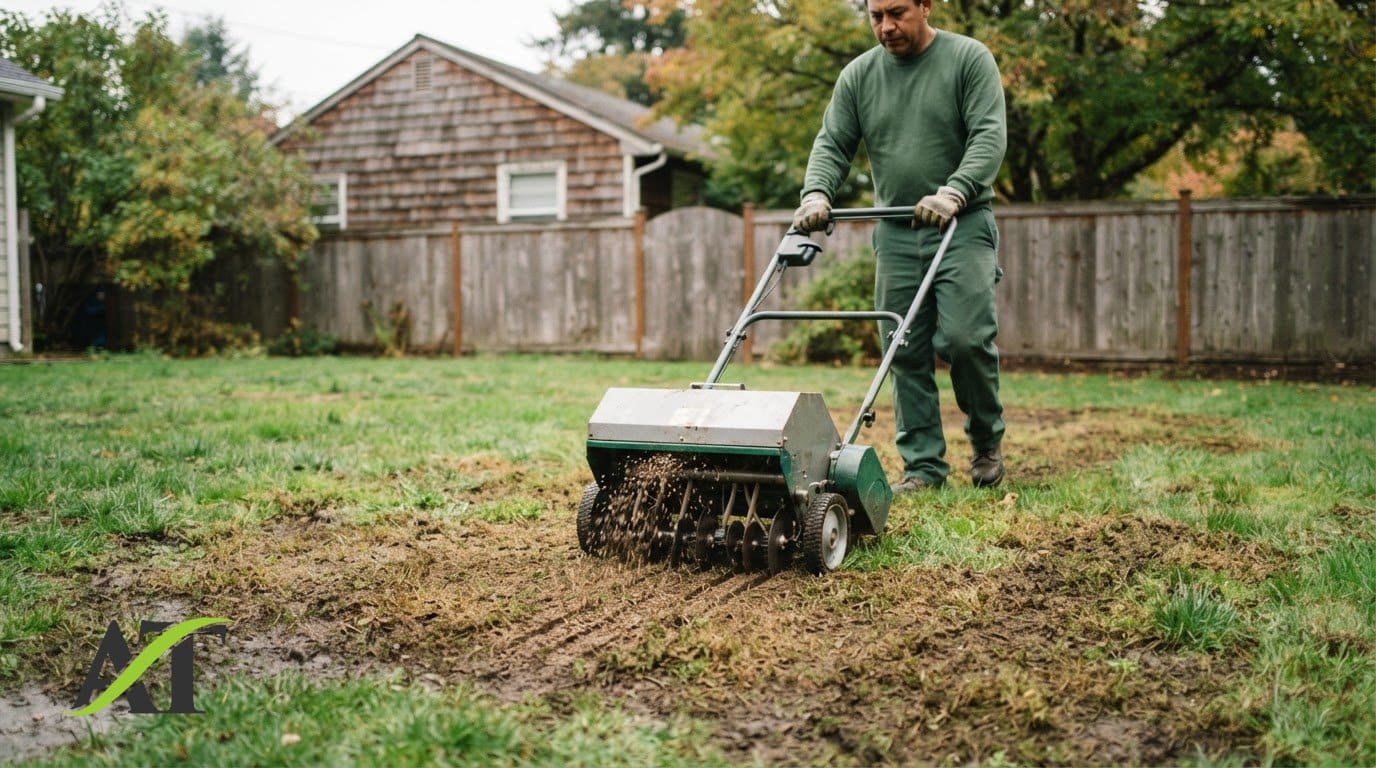
Core aeration removes small soil plugs. Spike aeration pushes solid tines into the ground without removing soil. These terms describe the tine action. Ride-on and tow-behind describe the machine format, and the categories overlap. In clay, solid tines can press soil around each hole and add to compaction. For hard ground, removing cores addresses compaction more directly. A manual hollow-tine corer can suit a small area. Learn more about core lawn aeration and how it differs from spiking.
Aeration Timing and Soil Moisture
The best time to aerate a clay lawn in Ballard is spring or early fall, while grass is actively growing. Aerate when the soil is moist but not saturated. Dry ground is hard to penetrate, and soggy clay can be damaged by equipment and smeared. Conditions matter more than a fixed date, and Ballard lawns vary in grass type and soil. Summer dryness alone is not a reason to aerate. See the Seattle lawn care calendar for seasonal context.
Can lawn aeration improve water absorption?
Yes, when compaction is the cause. Core Aeration creates openings that help water, oxygen, and nutrients penetrate the shallow turf root zone. Pairing it with Overseeding brings seed into closer contact with soil. That addresses two needs: access through compacted ground and new grass in thin areas.
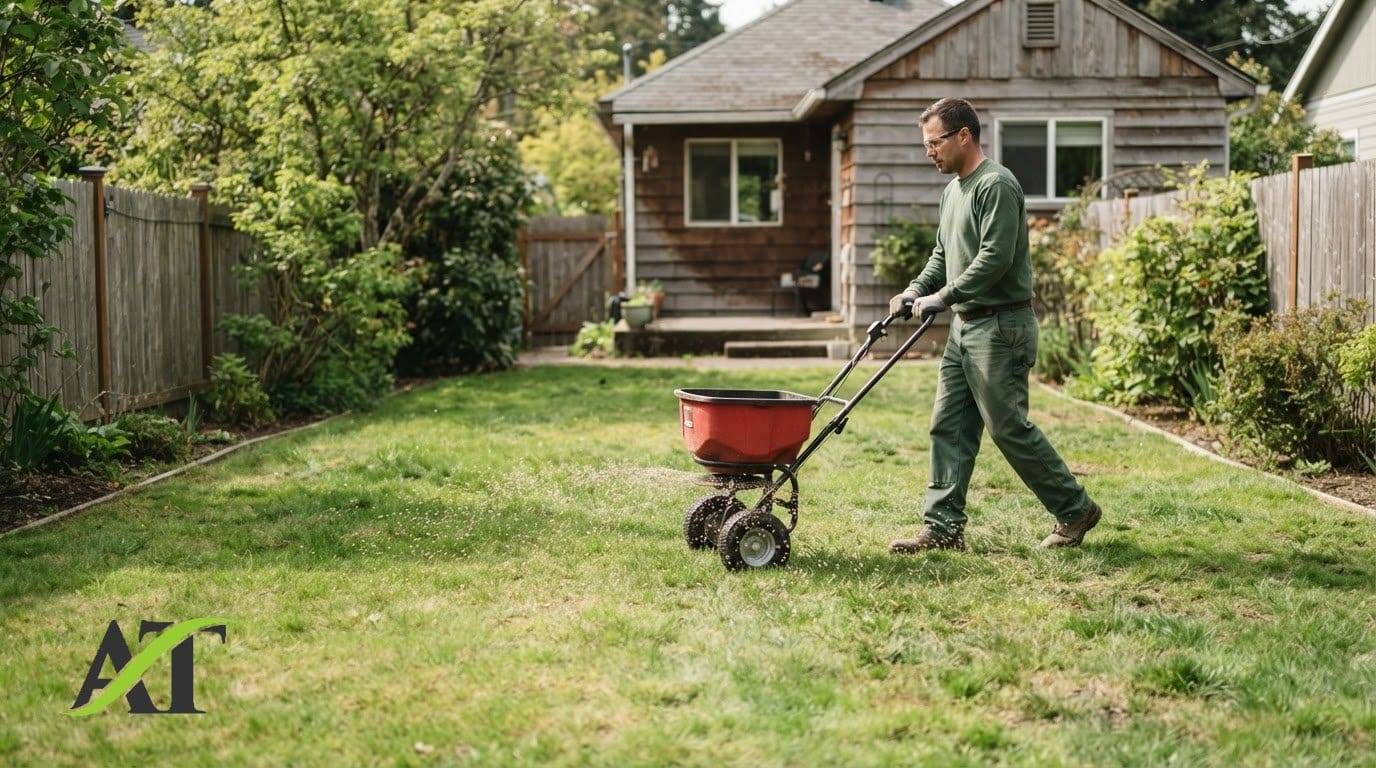
Combining treatments makes sense when a lawn has both bare patches and compaction. Aeration opens the soil, and Overseeding adds seed. Overseeding is not required for a reasonably dense lawn. Fertilizer supplies nutrients, but it does not replace water, suitable soil, or seed-to-soil contact. The right mix depends on whether the problem is thin turf, compacted soil, or both.
After Overseeding, keep the seeded area consistently moist while seed germinates and establishes. Don’t let the surface dry out. Light, frequent watering keeps moisture near the seed, while heavy watering can wash it out of place. Follow the after-care instructions, especially when aeration, seed, and fertilizer are applied together. Our after-care guide covers the steps. If starter fertilizer was already applied, don’t add more right away.
Expect gradual growth, not instant density. Establishment depends on moisture, soil, weather, and seed-to-soil contact, and results are not guaranteed. If water still pools after Core Aeration, the cause may be deeper than the turf root zone, and aeration cannot repair it. For more on the pairing, read about aeration and overseeding timing.
Better water absorption and reduced runoff
Core aeration removes small soil plugs and leaves openings through compacted turf. Those openings let water move into the shallow root zone instead of running across the surface. That can reduce runoff when compaction is the main cause. The University of California IPM program notes that clay lawns are often aerated for this reason.
Core aeration improves drainage in clay lawns by relieving the compaction that keeps water at the surface. In clay, better infiltration means more water reaches grass roots before flowing toward paths or low spots. A lawn that puddles after rain may benefit if the ground is compacted. Persistent pooling is not proof that aeration alone will solve it.
Core Aeration works in the shallow turf root zone. It does not break deep glacial hardpan or repair a subsurface drainage defect. If water stays in the same spot after aerating, the cause needs further diagnosis. Shade, irrigation patterns, and site drainage also affect how wet a lawn stays.
After aeration, keep moisture suited to the lawn’s condition and the season. Avoid saturating clay, since wet soil can be damaged by equipment and may compact again under traffic. In summer, account for heat and dry conditions rather than following a fixed watering routine.
Water absorption improves only while the openings stay useful and grass can grow around them. A professional lawn assessment should separate surface compaction from drainage trouble before repeat treatments are considered. If runoff continues, investigate the cause rather than assuming more aeration is the answer.
Aeration benefits for heavy clay soil
Heavy clay restricts grass roots when its particles are tightly packed. Core aeration removes soil plugs and leaves openings for air, water, and nutrients in the shallow turf root zone. That gives roots room to grow and can help grass use available moisture. The benefit is better root-zone conditions, not a cure for every problem beneath a lawn.
Stronger roots help turf use nutrients and handle dry spells. These benefits matter most when compaction limits root growth and the lawn struggles in drought. Aeration supports roots but does not replace suitable watering or fix shade and irrigation problems. If soil stays restrictive below the root zone, surface aeration won’t resolve it.
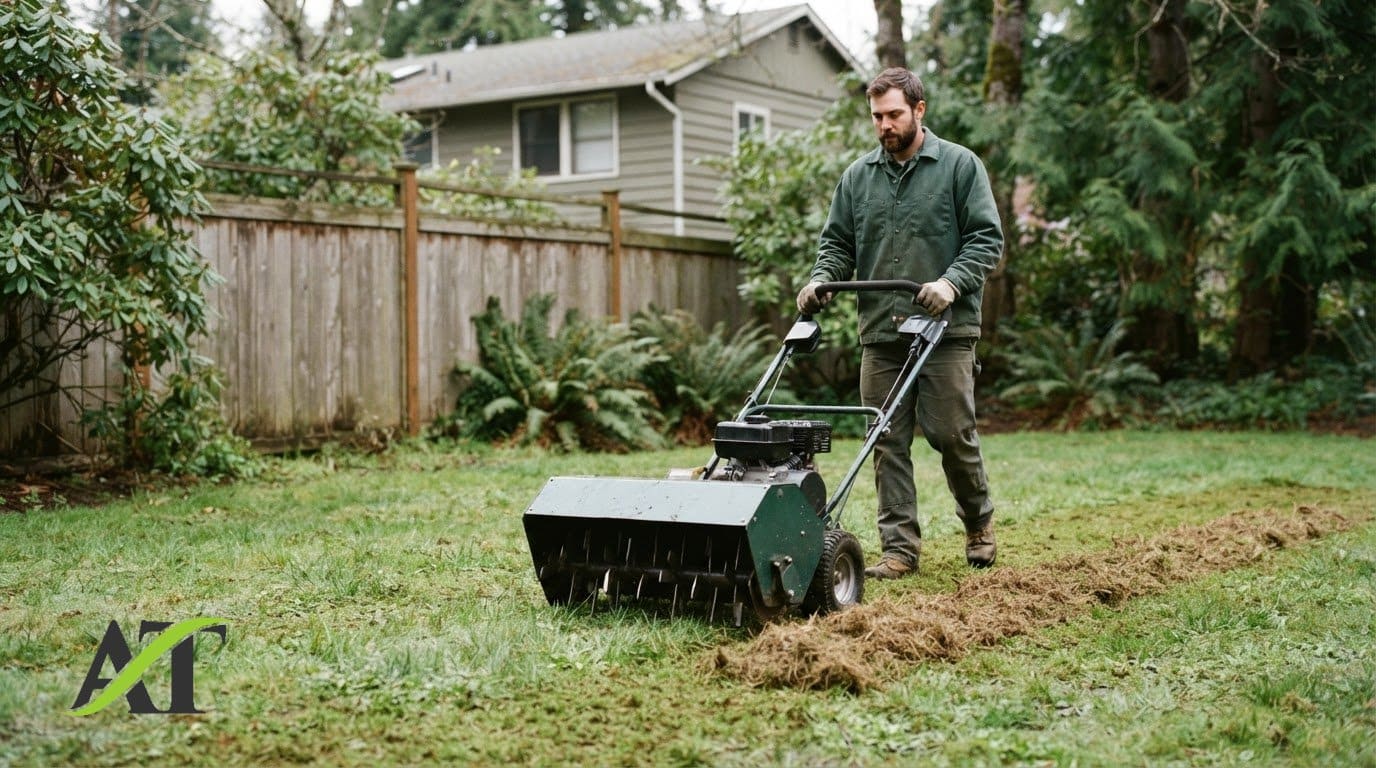
Thatch needs its own look. A thatch layer thicker than half an inch can block water, air, and nutrients from reaching soil. Core aeration will not remove a heavy thatch layer or substitute for Power Raking (Dethatching). The plugs left on the lawn crumble back into the turf over time. Inspect the thatch before deciding on removal. The Power Raking (Dethatching) page explains that service.
Timing affects recovery. Aerate while turf is actively growing and soil is moist but not saturated. Spring suits some lawns, and early fall gives cool-season grass time to recover. For homeowners weighing aeration in Ballard, growth and ground conditions decide the window, not the season’s name.
The key is to match treatment to the problem. Compacted soil calls for aeration, and excess thatch calls for dethatching. If grass stays thin after both are addressed, shade, irrigation, or deeper drainage may need diagnosis. Aeration improves the shallow root zone. It cannot break deep glacial hardpan or correct a subsurface drainage defect.
Aerating Thatching: Core Aeration
Aerating Thatching Co. provides Core Aeration to relieve compaction in the shallow turf root zone. Removing soil plugs opens the ground for water, air, and nutrients. It is a practical next step when hard ground, runoff, or thin turf points to compaction. Stewart personally performs the work.
Core Aeration has limits. It won’t break deep glacial hardpan, correct a drainage defect, or remove a heavy thatch layer. It does not include Overseeding or fertilizer unless you choose a package that adds them. The Lawn Tune-Up combines Core Aeration, Overseeding, and Fertilizing for lawns that are also thin. Soil amendments are a separate option for soil needs.
To find out whether Core Aeration fits your lawn, Ask Stewart About Your Lawn.
Frequently Asked Questions
Is lawn aeration beneficial for all grass types?
No. Aeration is most useful when compaction restricts roots, and timing should suit the grass’s active growth. A dense lawn that is growing well may not need seed after aeration. For Seattle-area lawns, check turf condition and soil moisture before choosing a window.
When to Consider Professional Lawn Aeration Services?
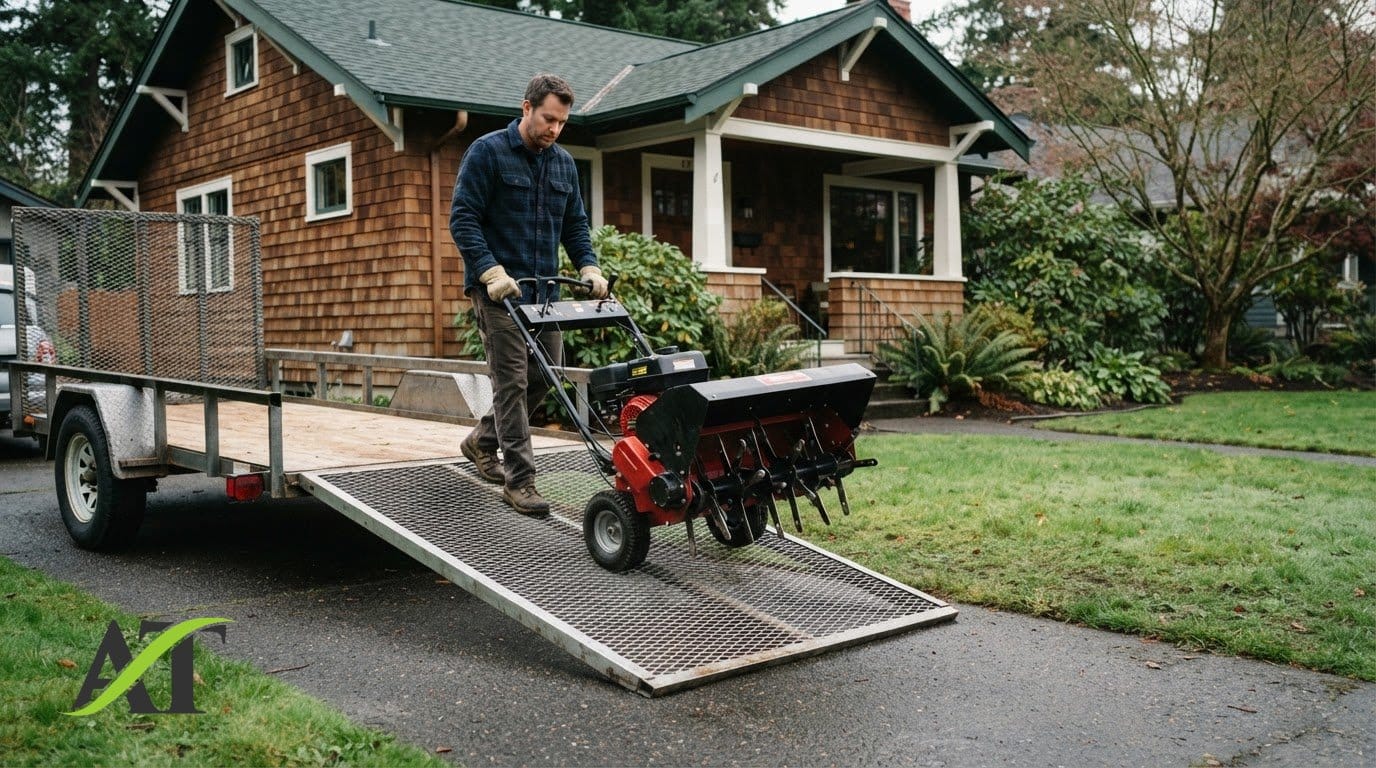
Consider Core Aeration when hard ground or recurring runoff suggests compaction across areas that are hard to treat evenly by hand. It can pair with Overseeding when the lawn has bare or weak patches. If water stays in one low spot or shade limits growth, further diagnosis matters because aeration won’t address those causes. Lawns over 2,000 square feet are priced by estimate.
Does aeration fix waterlogging on clay lawns?
No. Aeration can help water enter compacted soil, but it won’t correct a subsurface drainage defect. If one low area stays waterlogged while nearby ground drains, the site’s shape or deeper soil may be involved. Persistent pooling after aeration calls for diagnosis, not another pass.
Is hollow-tine or solid-tine aeration better for clay?
Hollow-tine Core Aeration is the practical choice for compacted clay because it removes cores instead of pushing soil aside. Solid tines displace soil and can press surrounding clay tighter. A lawn without signs of compaction may not need aeration just because its soil contains clay.
What Should You Do After Aeration?
Follow the after-care instructions for the services performed, especially if Overseeding was included. Keep seeded areas consistently moist and limit traffic on seed and young grass. If starter fertilizer was applied, don’t add more right away. Mow according to the after-care guidance and the new growth.
Why Does Lawn Soil Become Compacted?
Repeated pressure squeezes soil particles together and shrinks the open spaces roots use. Foot traffic, lawn equipment, and outdoor activity all contribute, especially along the same route. A worn path between a gate and patio, for example, may compact sooner than a lightly used area.
Article by
Stewart Armour
Stewart Armour is the owner of Aerating Thatching Co., an owner-operated Seattle-area lawn restoration business established in 2004. He helps homeowners understand Core Aeration, Power Raking (Dethatching), Overseeding, soil conditions, and the aftercare needed for stronger lawns. His background includes turf management study, advanced golf course turf training, and continuing education through Wilbur-Ellis University, State Turf Facilities, Soil First Academy, and Golf Course Applied Turf Physiology. Stewart has personally evaluated thousands of residential lawns throughout the Seattle area and focuses on recommending the work that fits each lawn’s condition.