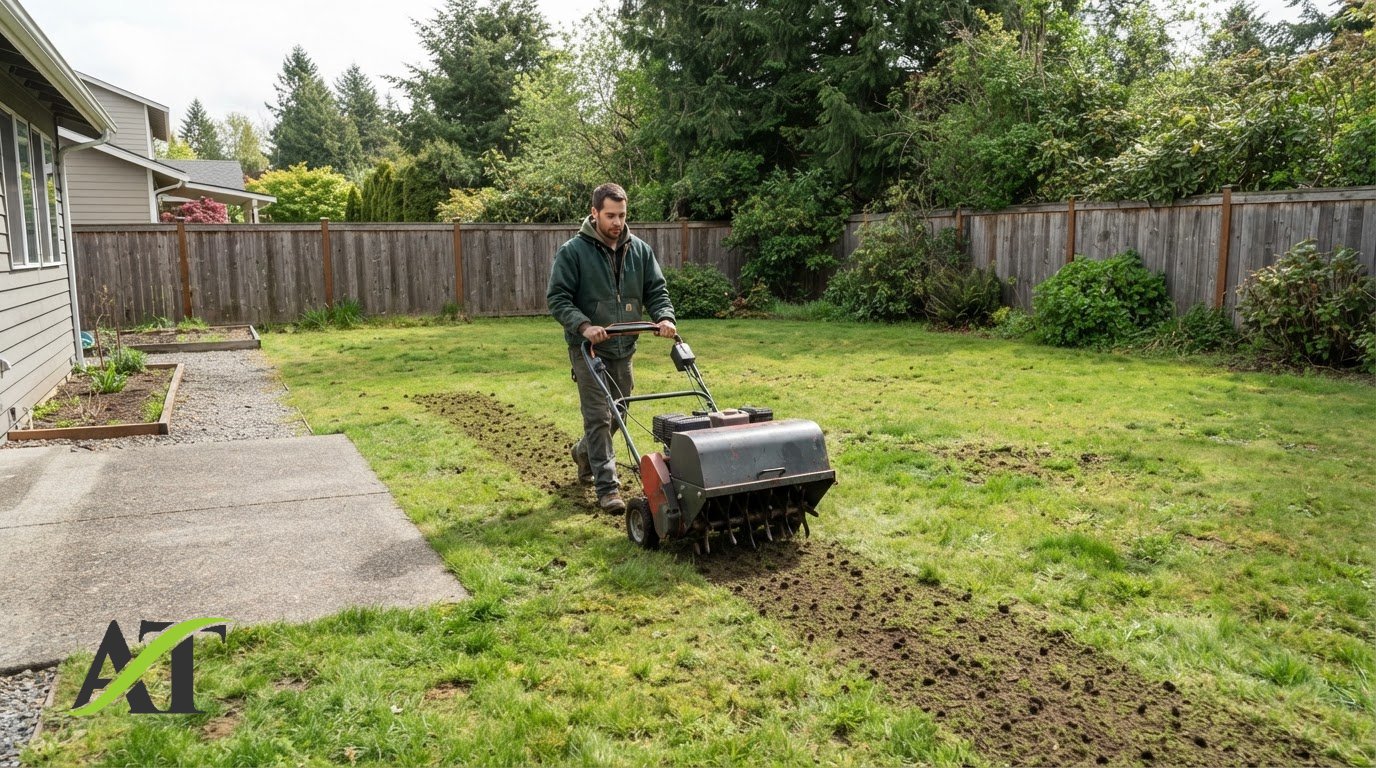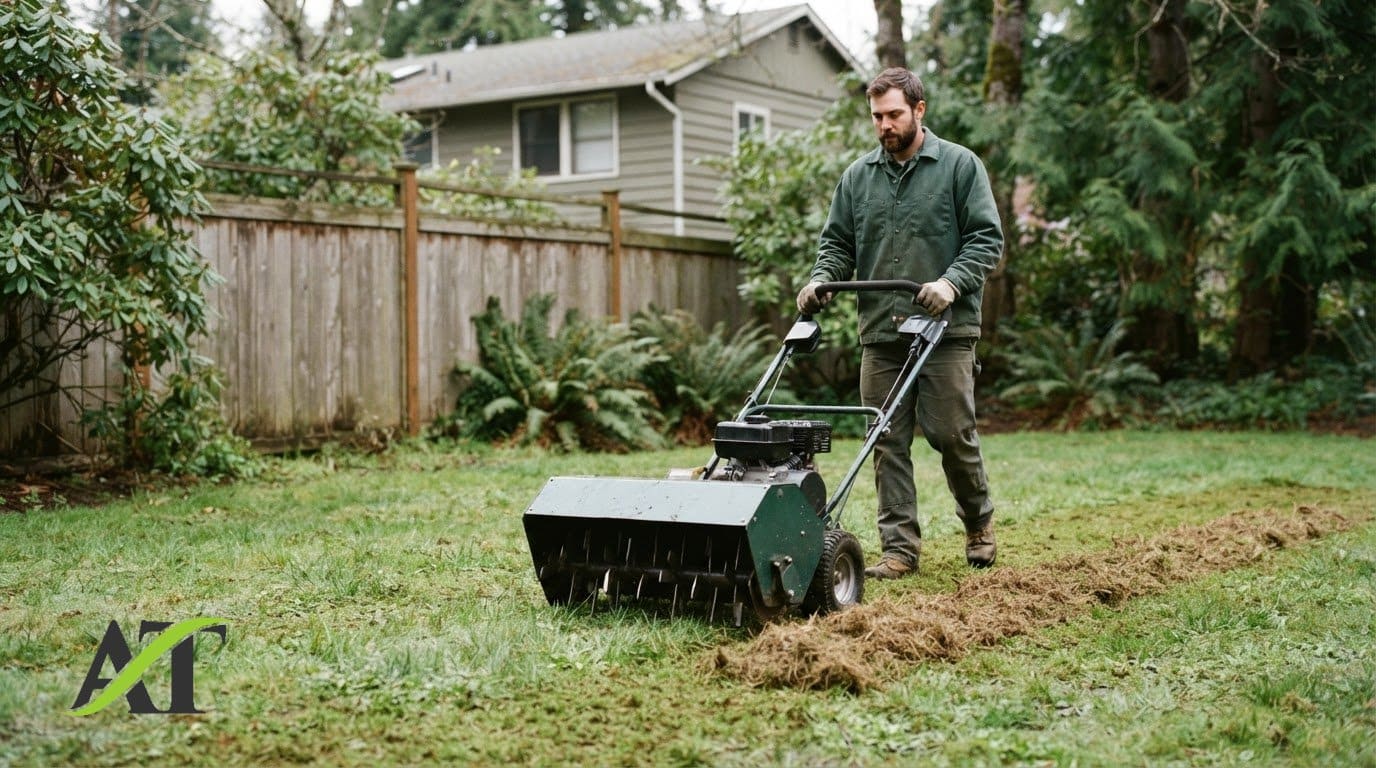
When comparing power raking vs. dethatching cost in Shoreline, start with the lawn, not the service name. Power raking and dethatching refer to the same named service here: Power Raking (Dethatching). Cost depends on lawn size, how much thatch is there, access, and cleanup.
Equipment varies in how aggressively it works. Some machines comb thatch upward lightly, while others cut in harder. The thatch layer and the health of your turf help decide the right approach.
This guide explains what the work involves, what affects it, and what dethatching can and cannot fix. You’ll also find a practical way to decide whether your lawn needs thatch removal or something else.
Key Takeaways
- Choose based on how much thatch needs removing, not on the assumption that a more aggressive treatment is better.
- Lawn size, thatch depth, access, and cleanup all shape the work involved.
- Dethatching won’t solve soil compaction, shade, or drainage problems.
- Use the decision guide to tell when Power Raking (Dethatching), Core Aeration, or Overseeding may fit your lawn.
Comparing dethatching and power-raking prices
Price follows scope. Define the area, the treatment, and the cleanup before you compare options. A clear scope keeps thatch removal separate from other lawn concerns.
Dethatching Service Costs
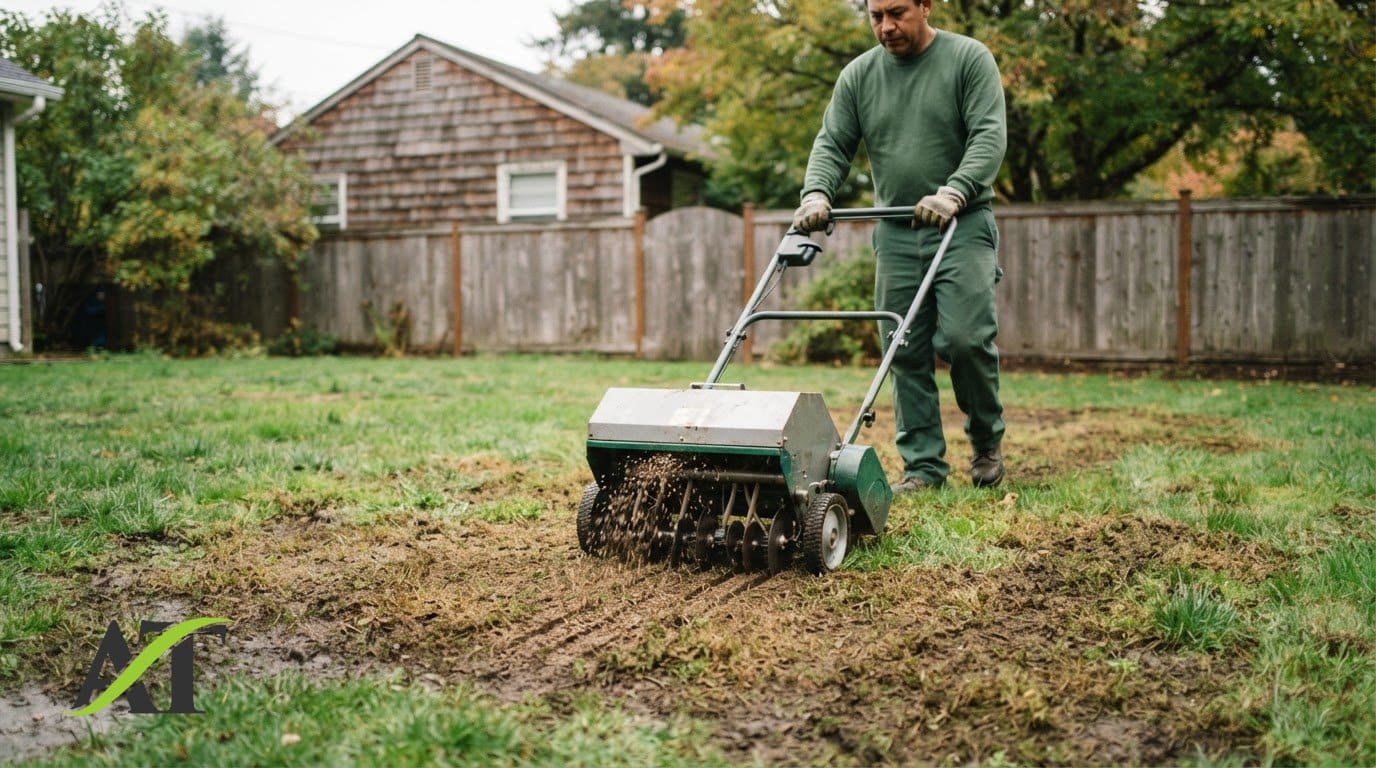
A dethatching service lifts thatch from the turf and leaves loose debris on the lawn. What you pay depends on the area treated and the buildup. Raking up the loosened material is optional, and haul-away is not offered, so plan for debris yourself. Local rules may affect how yard debris can be handled, so check them before disposal.
Grass condition matters too. Thin or stressed turf needs a more cautious pass than dense, vigorous turf. Power raking is the more intensive end of the same service, so the price difference follows the work needed, not the label.
Lawn Size and Thatch Depth
Larger lawns take more passes and produce more debris. A small matted patch is different work from buildup across the whole yard. Narrow gates and obstacles also slow equipment. Thicker thatch means more material to lift and clear, which raises the effort involved.
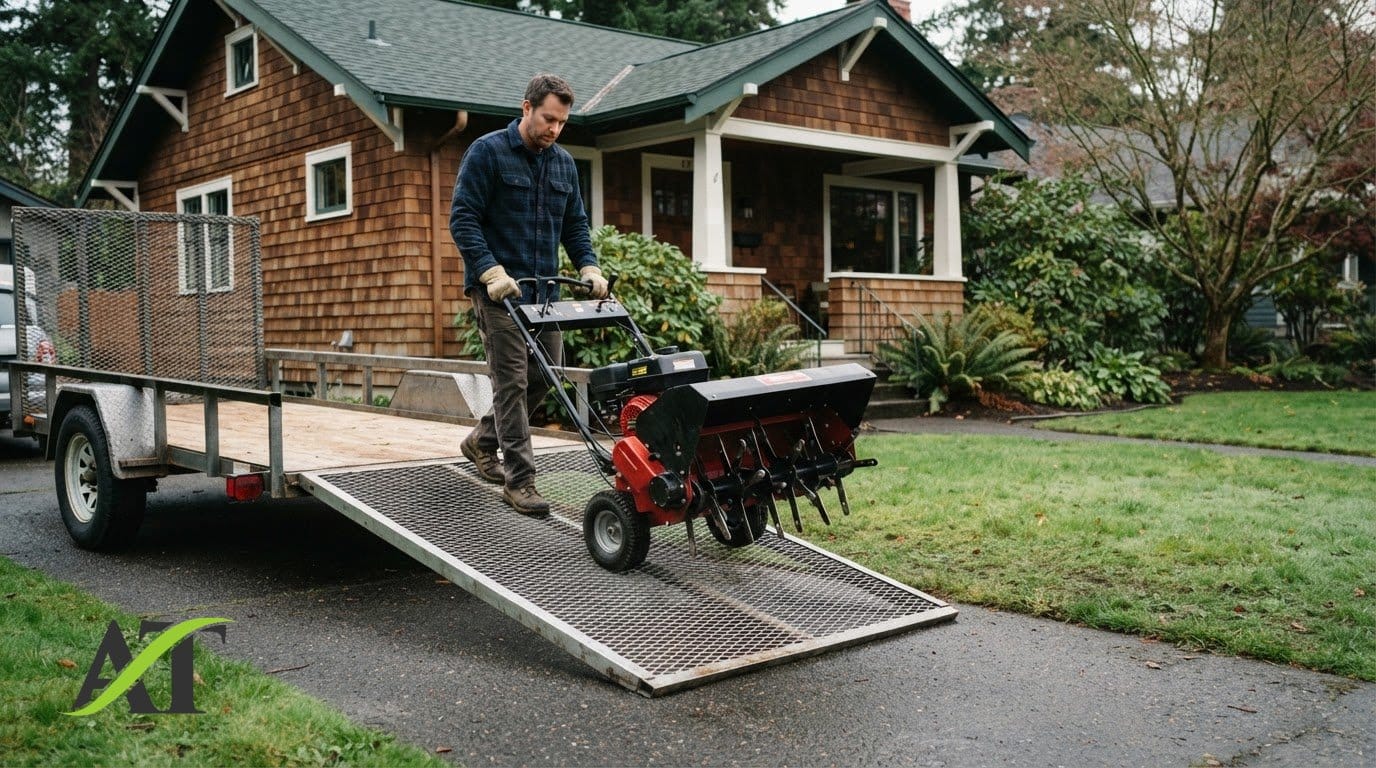
Renting means you learn to operate and maneuver a heavy, unfamiliar machine. You also handle transport, loading, and cleanup. For a small area, a manual dethatching rake can be a fair choice. A professional service handles the treatment as one job. Core Aeration addresses compaction, not thatch, so work out which problem you have first.
| Option | Equipment | Cleanup | Useful consideration |
|---|---|---|---|
| Dethatching service | Service-managed | Define in the scope | Focused thatch removal |
| Power-raking service | Service-managed | Define in the scope | More intensive treatment |
| Manual dethatching rake | Hand tool | Homeowner | Suits a small area |
| Rented machine | Homeowner-operated | Homeowner | Heavy, unfamiliar equipment |
| Core Aeration | Separate treatment | Different scope | For compacted soil |
If thatch is thick and spongy, choose power raking; if the buildup is small or the area is tiny, a lighter pass or hand rake may do.
How can you tell whether a lawn needs dethatching or aeration? Check the thatch layer first: a spongy mat over half an inch points to thatch, while hard soil that resists a screwdriver points toward compaction. These are clues, not a full diagnosis. Which grasses tolerate the work? Healthy cool-season lawns common around Seattle handle it, and thin turf needs a gentler approach. A professional service lifts the thatch; raking up the loosened material is optional. The price depends on lawn size, thatch depth, and access, and lawns larger than 2,000 sq ft are priced by estimate. For more on cost, see DIY dethatching vs professional service.
Differences between dethatching and power raking
The terms are often used interchangeably, so focus on what the machine does. A dethatcher with spring tines combs loose thatch upward. Power raking is the more aggressive end, pulling up heavier buildup. Labels vary, so working parts and intensity tell you more than the name. For background, see this overview of a mechanical dethatcher.
A vertical mower uses upright blades to slice into the thatch layer and pull material up. Other power-raking equipment uses flails to tear up thatch, and a mower pass may follow to collect debris. The methods differ in how much turf they disturb.
A gentler pass fits a small amount of loose material. A heavily matted layer calls for a stronger one. Aggressive action can also pull out healthy grass, so turf condition matters before either machine is used.
- Dethatching: Lifts loose surface material with less disruption.
- Power raking: Removes heavier buildup and may take healthy grass with it.
- Vertical mowing: Slices into the thatch layer instead of combing upward.
For a Shoreline lawn, inspect the thatch before choosing. A thick, spongy layer may call for substantial removal, while sparse or stressed turf calls for caution. Neither method relieves soil compaction, corrects shade, or fixes drainage. Identify the cause first. This comparison of power rakes and dethatchers covers the equipment differences in more detail.
Benefits and limitations of dethatching
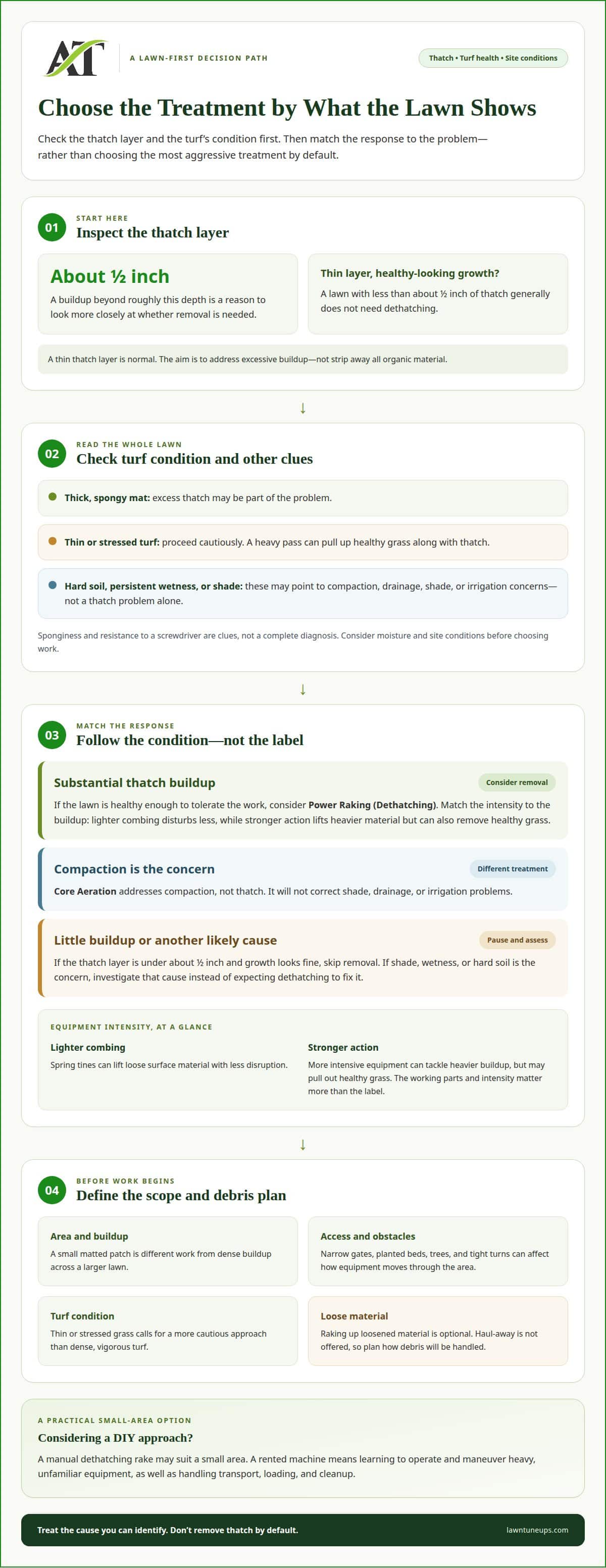
A thin thatch layer is normal. Excess thatch can keep air, water, and nutrients from reaching grass roots. Buildup beyond roughly half an inch is where it becomes a concern, as Penn State Extension’s guide on managing lawn thatch explains.
Dethatching can remove excess thatch and open the turf surface. It suits a cool-season lawn with a thick thatch mat, when the grass is healthy enough to tolerate it. A lawn with under half an inch generally doesn’t need it. The aim is to address real buildup, not strip away all organic material. Spring is a common time for matted areas, depending on weather and turf condition.
Dethatching has limits. It doesn’t relieve soil compaction or correct drainage, shade, or irrigation problems. A lawn that stays thin in shade, feels hard underfoot, or stays wet may have another cause. Removing thatch alone won’t fix those.
What are the risks of power raking or dethatching a lawn? Both can pull up living grass along with the thatch, and a pass heavier than the buildup requires can leave the lawn stressed and thin. Results are not guaranteed, and aftercare matters.
- Consider removal: The layer is thick, spongy, and blocking access to soil.
- Skip it: The layer is under half an inch and growth looks fine.
- Look beyond thatch: Hard soil, constant wetness, or shade needs diagnosis.
Dethatching is for substantial accumulation, not an automatic annual step. Match the treatment to the problem.
What factors affect power raking and dethatching prices, such as lawn size and thatch depth?
Several factors shape the work: the area treated, how densely the thatch is packed, equipment access, and the debris to manage.
Lawn area sets how many passes are needed. An open space is simpler to cover than a lawn broken up by narrow gates, planted beds, or trees. Tight turns slow equipment. Dense dead material also leaves more debris to gather than scattered surface thatch.
Thatch depth and spread affect the plan. Buildup near half an inch can be a concern, and it may be heavier in one section. A uniformly thick layer may need broad removal, while a small matted patch needs focused work. Match intensity to the area instead of using the strongest setting everywhere.
Grass condition matters as well. Thin or stressed turf tolerates aggressive removal less well than dense, healthy turf. Repeated passes add disturbance. Season and recovery needs also affect timing, and broad seasons such as early spring or early fall are the usual reference points.
- Measure the area: The full lawn and isolated patches differ in coverage.
- Assess thatch depth: Compare thin sections with buildup near half an inch.
- Account for access and cleanup: Gates, obstacles, and debris affect the work.
Before asking for a quote, note your lawn area, access points, and where thatch seems thickest. Mark sprinkler heads and shallow utilities before any service.
Aerating Thatching: Power Raking
Aerating Thatching Co. offers Power Raking (Dethatching) for lawns with substantial thatch. Stewart personally performs the work. If the soil is compacted, Core Aeration may fit better. If the lawn is thin, Overseeding may help. A Lawn Tune-Up includes Core Aeration, Overseeding, and Fertilizing, while the Full Meal Deal adds Power Raking (Dethatching) to those three. You can read more on the Seattle dethatching and power-raking page.
Describe what you’re seeing: a spongy surface, hard soil, or thinning grass. That points to the treatment that fits, and sometimes no treatment is needed. If you’re weighing Power Raking against another option, contact Aerating Thatching Co. about your lawn.
Frequently Asked Questions
What is the Difference Between Dethatching and Power Raking?
The difference is how forcefully the equipment removes material. Dethatching often means a lighter lift of surface buildup, and power raking a more aggressive pass for heavier accumulation. Labels vary, so look at the machine’s working parts and your lawn’s condition.
Dethatching: What is it?
Dethatching mechanically lifts accumulated dead material from the turf. A spring-tine tool combs through the grass, and other machines use blades. It isn’t the same as Core Aeration, which relieves soil compaction.
So, what’s thatch?
Thatch is partially decomposed grass roots and stems between the green grass and the soil surface. A small amount is normal. A dense, spongy layer woven into the turf is different from loose clippings resting on top.
What is the difference between power raking and dethatching?
Here, both names describe the same service, Power Raking (Dethatching). In general descriptions, power raking suggests stronger removal and dethatching a lighter pass. Match the intensity to the thatch and turf condition.
How much does power raking or dethatching cost in Shoreline, Washington?
It depends on lawn size, thatch depth, access, and debris.
When is the best time to power rake or dethatch lawns in Shoreline, WA?
Spring can suit matted areas. Match timing and intensity to the buildup and turf condition, and allow for recovery. See the guide to when to power rake a lawn in Seattle.
Article by
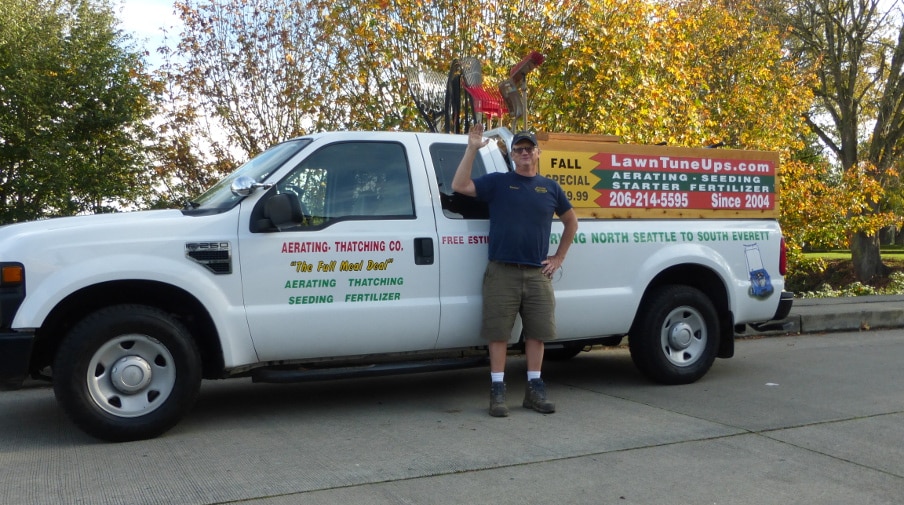
Stewart Armour
Stewart Armour is the owner of Aerating Thatching Co., an owner-operated Seattle-area lawn restoration business established in 2004. He helps homeowners understand Core Aeration, Power Raking (Dethatching), Overseeding, soil conditions, and the aftercare needed for stronger lawns. His background includes turf management study, advanced golf course turf training, and continuing education through Wilbur-Ellis University, State Turf Facilities, Soil First Academy, and Golf Course Applied Turf Physiology. Stewart has personally evaluated thousands of residential lawns throughout the Seattle area and focuses on recommending the work that fits each lawn’s condition.