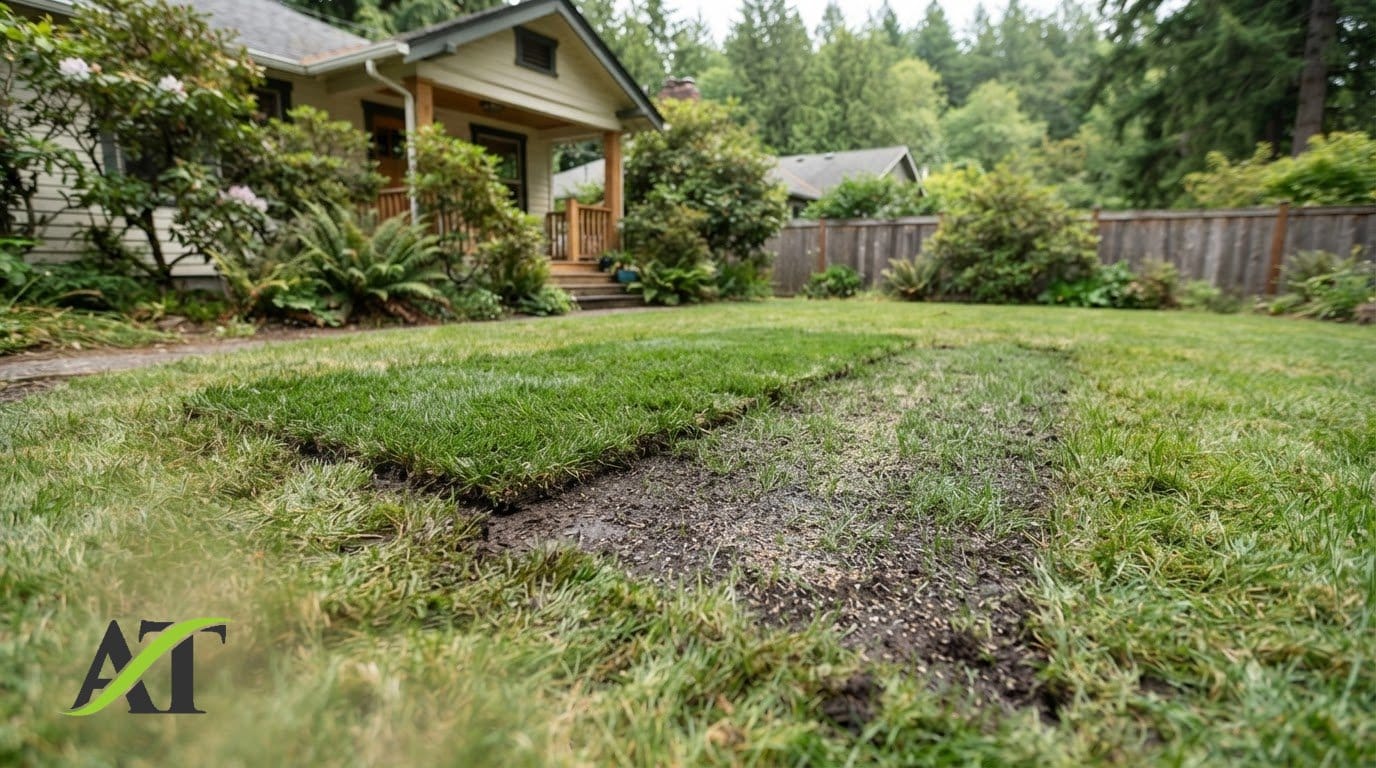
When looking for signs of compacted soil in lawn Mountlake Terrace, compare several clues rather than relying on one symptom. Firm ground and thin grass can suggest compaction, but shade, thatch, irrigation, or drainage may be behind the same problems.
Check whether symptoms appear together and whether they follow a pattern, such as repeated foot traffic. This guide explains how to distinguish compaction from common look-alike issues, what you can check at home, and when the cause may need further diagnosis. Core Aeration can relieve compaction in the shallow turf root zone, but it won’t correct every drainage or grass-growth problem. Aerating Thatching Co. serves homeowners in North Seattle, Shoreline, Edmonds, Lynnwood, Mill Creek, Bothell, Kenmore, Lake Forest Park, Mountlake Terrace, Snohomish, Everett, Brier, Woodway, Green Lake, Ballard, and Greenwood.
Key Takeaways
- Look for firm ground, thinning in trafficked areas, shallow roots, and slow growth appearing together.
- Compare the pattern with clues for thatch, shade, or irrigation problems. Persistent water may point to a drainage defect.
- Check several lawn zones when the soil is moist. A screwdriver or hand tool can offer a clue, but it can’t confirm compaction on its own.
- Consider Core Aeration when compaction is a reasonable diagnosis. It relieves shallow soil compaction, but it does not address every lawn problem.
What Are the Signs of Compacted Soil in a Mountlake Terrace Lawn?
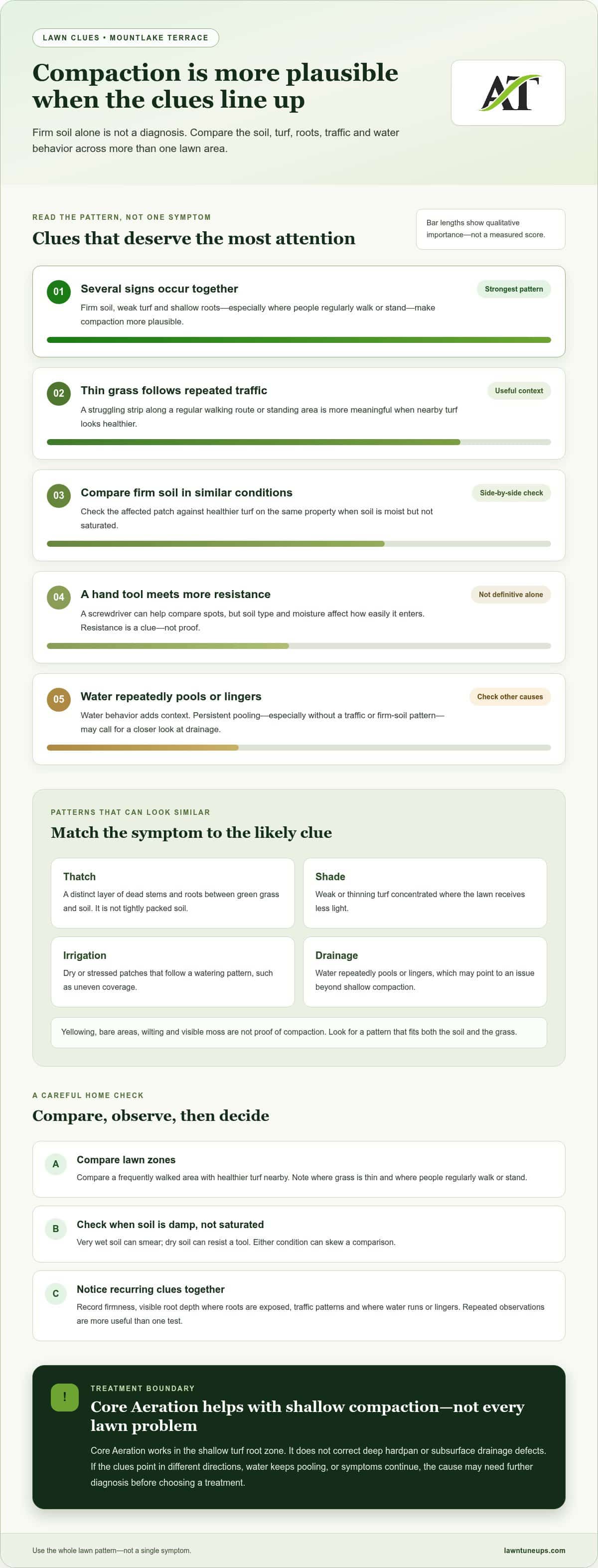
Which signs together make compaction plausible? Look for firm soil, thinning grass in areas with regular foot traffic, shallow roots, and weak growth despite suitable care. One clue alone isn’t a diagnosis. A useful pattern is turf struggling where the soil feels more resistant than it does in a healthier part of the same lawn.
Soil compaction occurs when soil particles are packed tightly, limiting pore space in the root zone. With less space in the shallow soil, roots may have more difficulty growing. For a broader explanation of how compaction affects soil and plant growth, see this overview of soil compaction in agriculture.
Visible lawn changes that may point to compaction
Watch for thinning or weak growth along a frequently walked route or where people regularly stand. Traffic can press soil down over time, so a clear difference between that strip and nearby turf is worth noting. However, yellowing, bare areas, and wilting aren’t specific to compaction. Shade, watering patterns, disease, or other lawn stresses can cause similar changes.
What the soil and roots can reveal
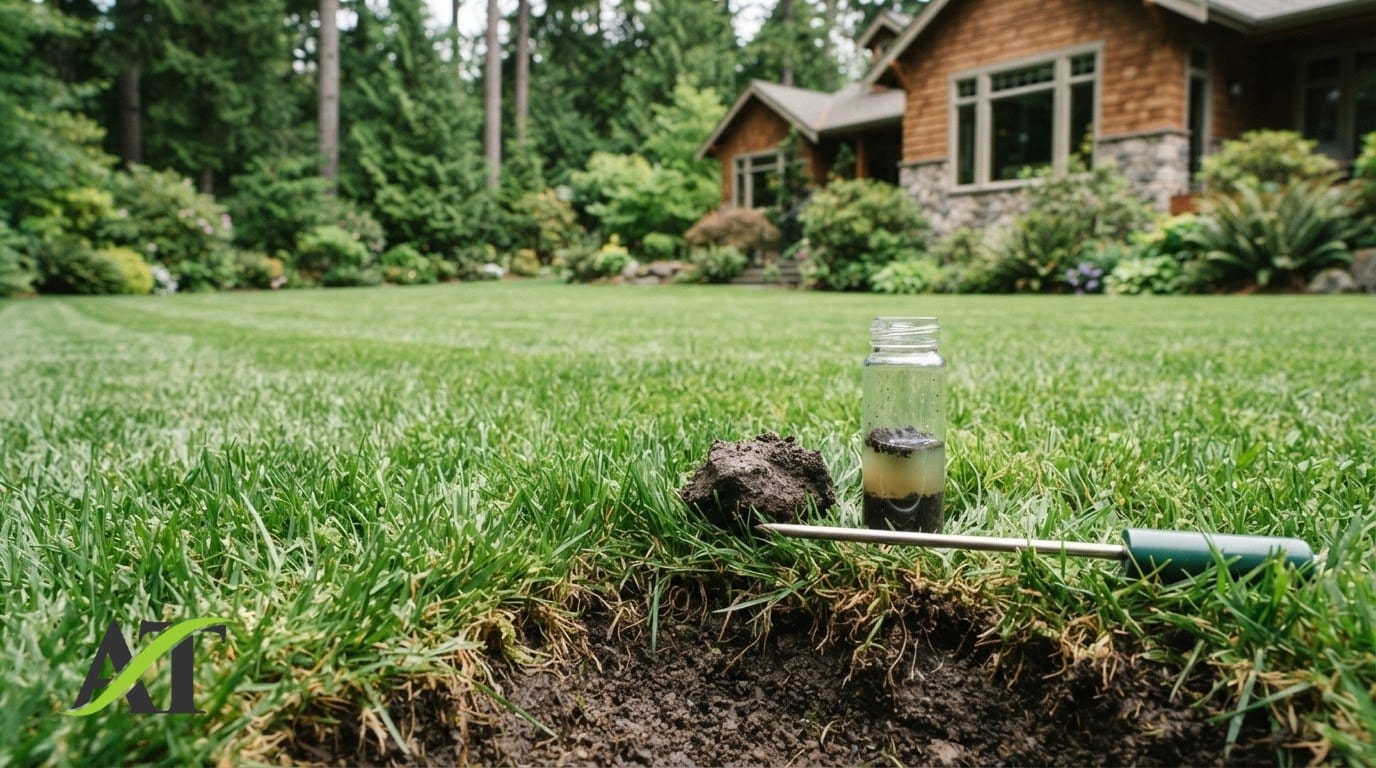
When soil is moist, resistant ground can support a compaction concern, especially if the grass also has restricted, shallow roots. Compare the affected patch with healthier turf on the same property. Differences are more useful than judging one spot in isolation. Read the clues together rather than treating hard ground alone as proof.
Runoff or lingering puddles can add context, but they don’t confirm compaction. Water that continues to collect may reflect a drainage defect rather than shallow soil compaction alone. If firm soil and weak, shallow-rooted turf occur together, compaction becomes more plausible. If persistent water is the main issue, the cause may need further diagnosis before choosing a treatment.
Compacted Soil or Another Lawn Problem? Read the Clues Carefully
Weak grass and wet spots can have more than one cause. Before settling on compaction, compare where symptoms appear and what the soil or turf looks like. This guide highlights clues that may help distinguish common causes.
| Possible cause | Clues to consider |
|---|---|
| Compaction | Firm soil and weak growth that correspond with repeated foot traffic. |
| Thatch | A distinct layer of dead stems and roots between green grass and soil. It’s not tightly packed soil. |
| Shade | Thinning or weak turf concentrated in areas with less light. |
| Irrigation | Dry or stressed patches that follow a watering pattern, such as uneven coverage. |
| Drainage | Water that repeatedly pools or lingers, especially if the pattern doesn’t match traffic or firm shallow soil. |
Compaction versus thatch, shade, and watering problems
Thatch sits above the soil surface. Its presence doesn’t prove the soil beneath is compacted, and visible moss doesn’t establish compaction either. Core Aeration is not a moss treatment. Shaded turf may thin even where the soil isn’t firm, while inadequate or uneven watering can leave grass dry or weak. Look for a pattern that fits the soil as well as the grass. The Rutgers Cooperative Extension soil compaction guide offers further background on assessing compaction.
When drainage or deeper soil layers need diagnosis
Core Aeration works in the shallow turf root zone. It cannot correct deep hardpan or subsurface drainage defects. Persistent water may signal a deeper drainage issue, not shallow compaction alone. If symptoms continue or the clues don’t fit one cause, further diagnosis is a better next step than assuming aeration will solve the problem. For a second opinion on the likely cause, Ask Stewart About Your Lawn.
How Mountlake Terrace Homeowners Can Check for Soil Compaction
A few careful comparisons can help you decide whether compaction is plausible. Check more than one spot, and note whether the soil, roots, traffic, and water behavior tell the same story.
- Compare lawn zones. Look at a frequently walked area and a healthier patch nearby. Note where grass is thin, where people regularly walk or stand, and whether the affected areas share a pattern.
- Check when the soil is moist. Choose soil that’s damp but not saturated. Very wet soil can feel soft or smear, while dry soil can resist a tool. Either condition can skew the comparison.
- Record recurring clues. Note surface firmness, visible root depth where roots are already exposed, traffic patterns, and where water runs or lingers. Repeated observations are more useful than a single test.
A careful screwdriver check without overreading the result
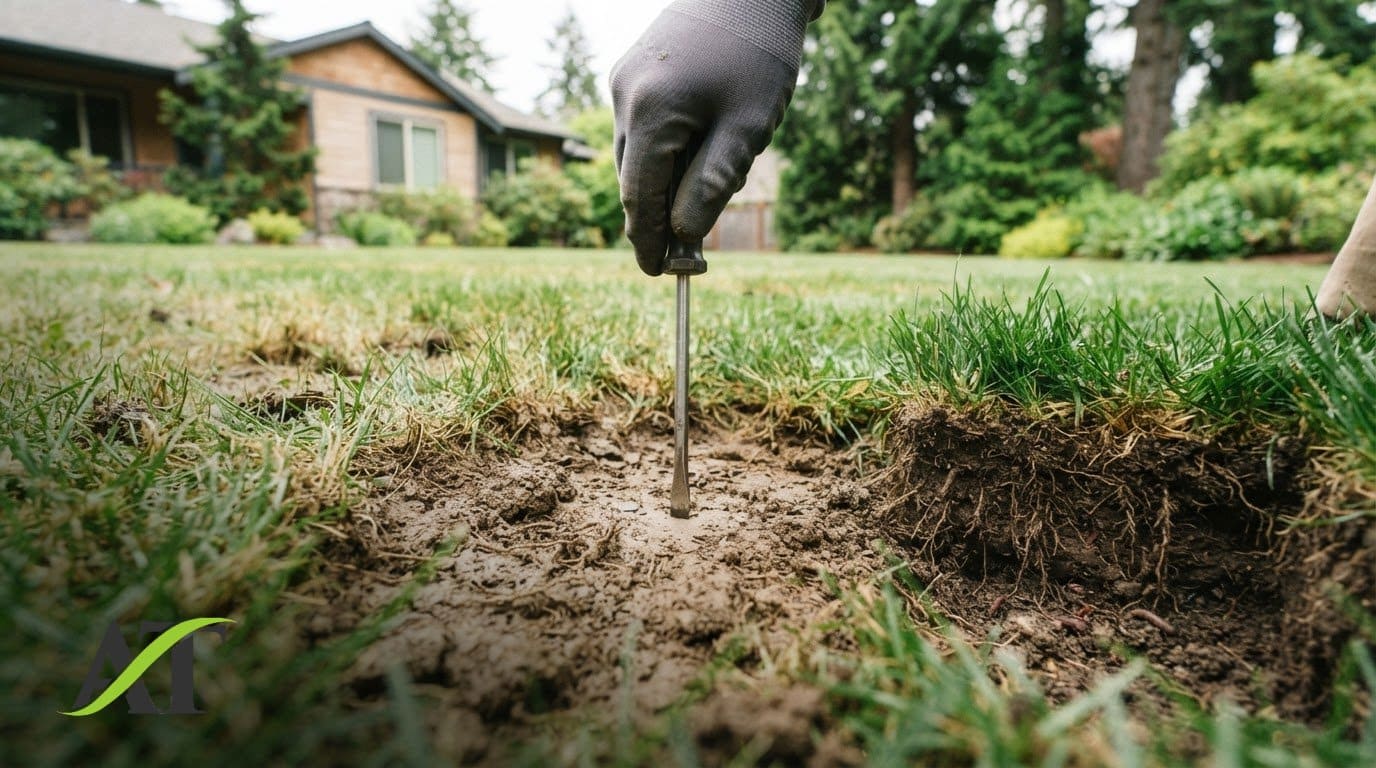
Gently push a screwdriver or similar hand tool into the affected turf, then compare the resistance with a healthier area under similar moisture conditions. If one spot feels noticeably firmer, that’s a clue to investigate, not a definitive diagnosis. Soil type and moisture affect how easily a tool enters. Don’t treat one resistant spot or a universal depth cutoff as proof of compaction.
When observations call for a closer look
Consider the full pattern: repeated traffic, shallow roots, firm surface soil, and water behavior. If those clues point in different directions, or symptoms continue despite appropriate care, further diagnosis may be needed before choosing a treatment. To understand how the treatment fits the diagnosis, see our Core Aeration and Lawn Tune-Up information. A home check can help you describe the problem, but it can’t identify every cause. These steps can help you assess signs of compacted soil in lawn Mountlake Terrace without relying on one tool test alone.
Handling Soil Compaction in Your Mountlake Terrace Lawn
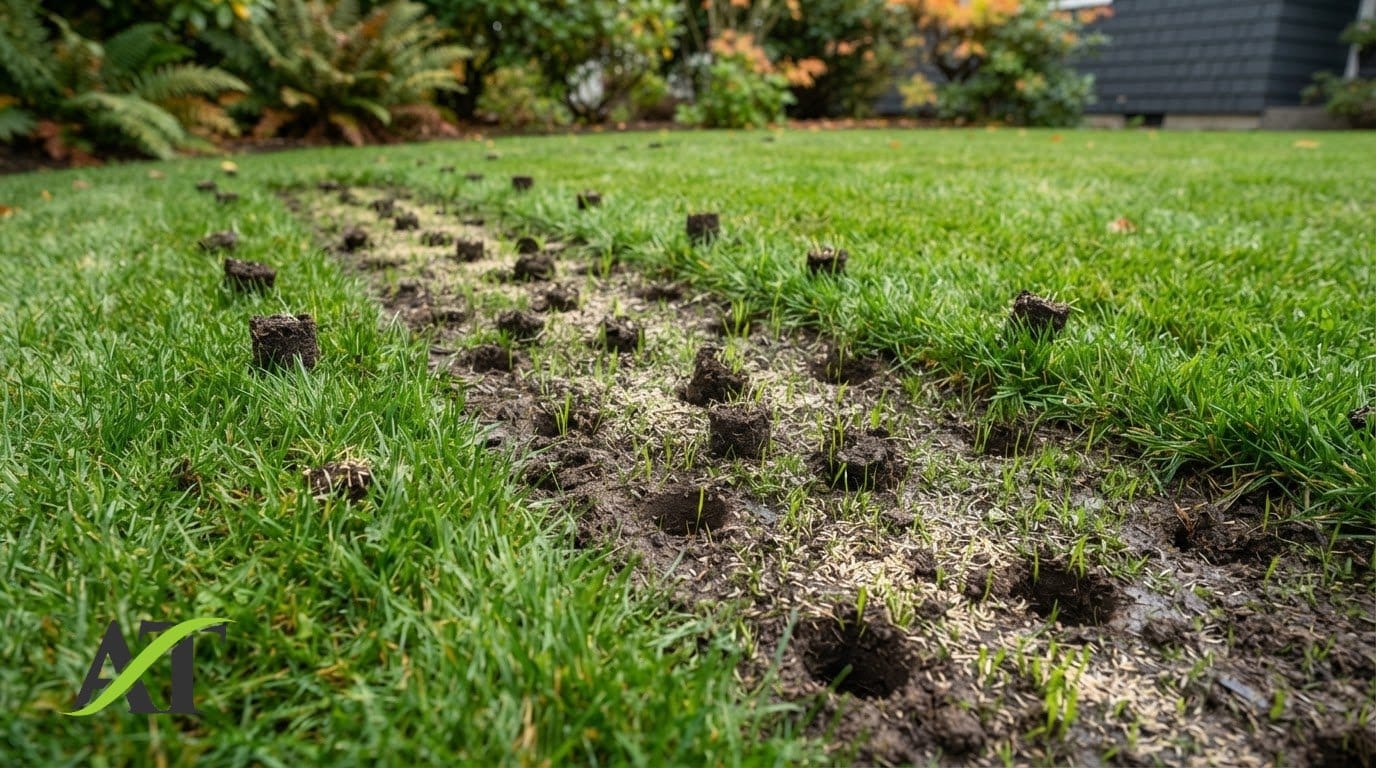
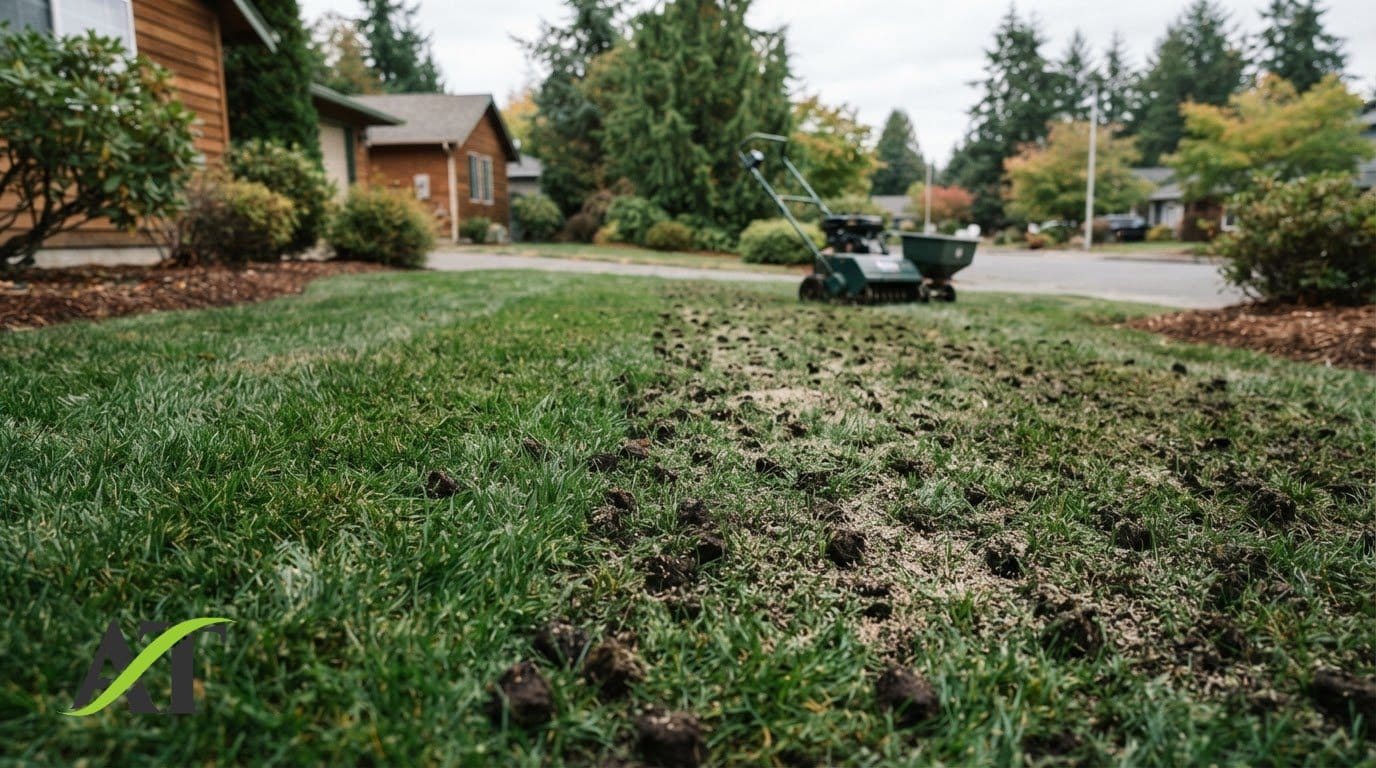
Choose a treatment based on the likely cause, not on one symptom. If firm soil, shallow roots, and weak turf line up with repeated traffic, Core Aeration may be a targeted next step. It removes small soil plugs to relieve compaction in the shallow turf root zone.
When Core Aeration may fit, and when it may not
Core Aeration addresses compaction. It doesn’t remove moss, fix drainage, replace missing grass, or remove a significant thatch layer. If puddles are the main concern, investigate drainage. If a thick layer sits above the soil, that’s a thatch issue. Shade or watering patterns can also weaken turf without compaction. Consider the combined signs of compacted soil in lawn Mountlake Terrace before deciding whether aeration fits.
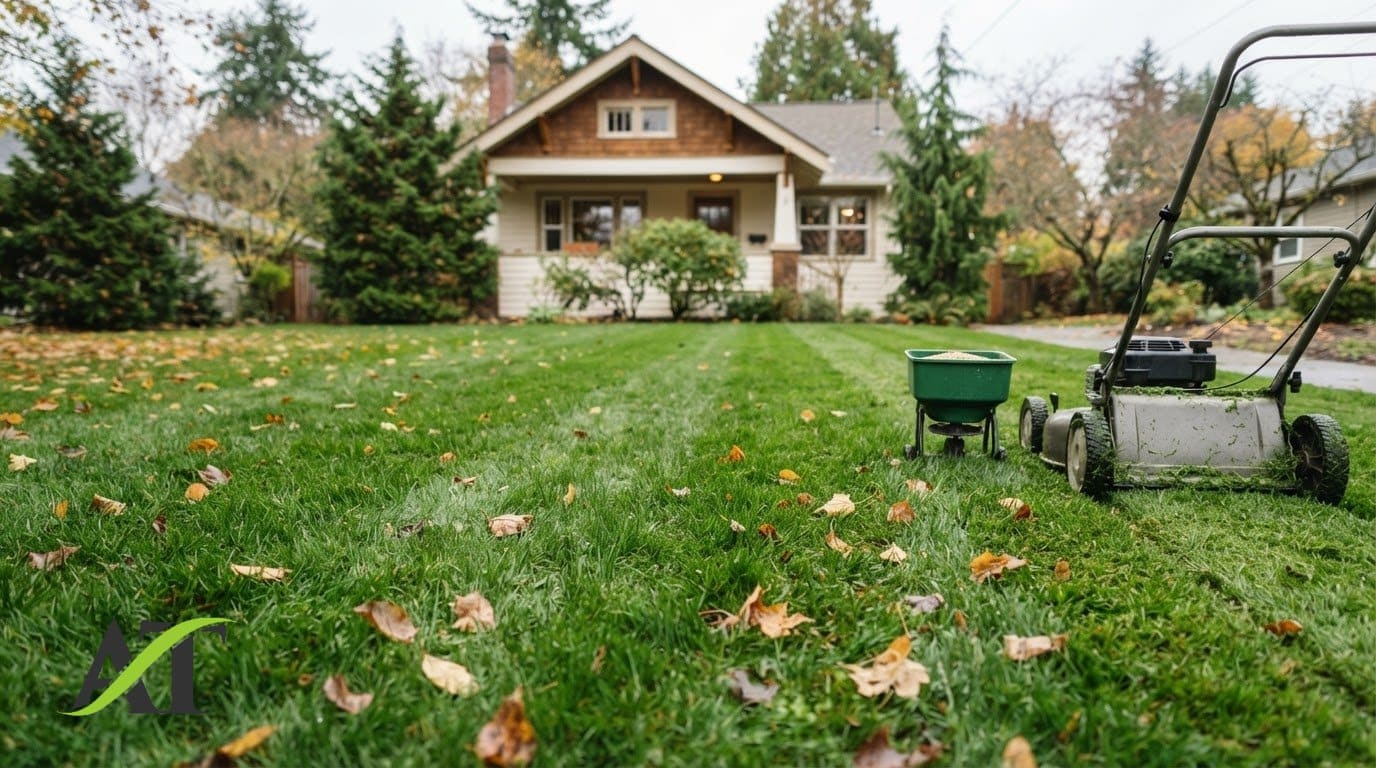
Overseeding may help when turf is thin or weak and needs more grass, but it is not automatically included with Core Aeration. The Lawn Tune-Up combines Core Aeration, Overseeding, and starter fertilizer when those steps suit the lawn’s needs. Power Raking (Dethatching) is a separate treatment for a significant thatch layer, and the Full Meal Deal combines Power Raking (Dethatching), Core Aeration, Overseeding, and starter fertilizer.
Plan for aftercare and realistic expectations
After service, follow the after-care guidance for watering and mowing, and manage foot traffic so treated or seeded areas can establish. Results depend on conditions and aftercare, so don’t expect a fixed recovery timeline. Before service, mark sprinkler heads, oil tank caps, shallow utilities, pet fencing, and other items that need to be identified.
If the clues point in different directions, match the treatment to the likely cause before moving ahead.
Choose the Next Step With Confidence
Your next step doesn’t need to be a large treatment plan. Use the pattern you’ve noticed to guide the decision: if compaction is a reasonable cause, Core Aeration may be appropriate; if the clues point elsewhere, diagnose that issue first. Core Aeration is a targeted treatment, not a cure-all for every struggling lawn.
Aerating Thatching Co. has served the Seattle area since 2004, and Stewart Armour personally performs every job. You can discuss what you’re seeing with the person doing the work, without assuming aeration is the answer before the cause is clear.
A clear diagnosis is a practical place to start. With the signs of compacted soil in lawn Mountlake Terrace understood in context, you can choose a next step that fits your lawn.
Frequently Asked Questions
Is yellow grass by itself a sign of compacted soil?
No. Yellow grass can result from several stresses, so color alone can’t identify compaction. Notice whether discoloration follows a dry strip, a shaded area, or a patch of frequent foot traffic. Compare the area with nearby turf and consider soil firmness and root growth too. If the pattern doesn’t fit, look for another cause before choosing a treatment.
Can a screwdriver test confirm compacted soil?
No. A screwdriver can help compare how resistant different spots feel, but it can’t confirm the cause. A buried stone, root, or change in soil texture may also stop the tool. Compare affected turf with a healthier area under similar moisture conditions, and treat the result as one observation among several, not a pass-or-fail test or a reason by itself to schedule Core Aeration.
Does soil compaction cause moss in a Mountlake Terrace lawn?
Moss doesn’t prove the soil is compacted. It may grow where site conditions suit it, including places that stay damp or receive limited light. Compaction and moss can occur in the same lawn, but seeing moss doesn’t show that one caused the other. Don’t choose Core Aeration as a moss treatment. Consider what conditions favor moss in that area and whether the soil shows separate compaction clues.
Should lawn soil be wet before Core Aeration?
The soil should be moist but not saturated. Moist soil is generally more suitable for Core Aeration than ground that’s extremely dry or waterlogged. If the surface is muddy, squishy, or holding standing water, wait until it is no longer saturated rather than treating that condition as ideal. Soil moisture can vary across a lawn, so judge the area to be aerated, not just the weather or surface appearance.
Can Core Aeration break up deep hardpan beneath a lawn?
No. Core Aeration works in the shallow turf root zone and won’t break deep hardpan. If roots appear to stop at a deeper layer or water keeps collecting despite appropriate surface conditions, the problem may require diagnosis beyond routine aeration. Don’t assume that a treatment aimed at shallow compaction will resolve a deeper soil or drainage defect. Matching the treatment to the depth and cause of the issue matters.
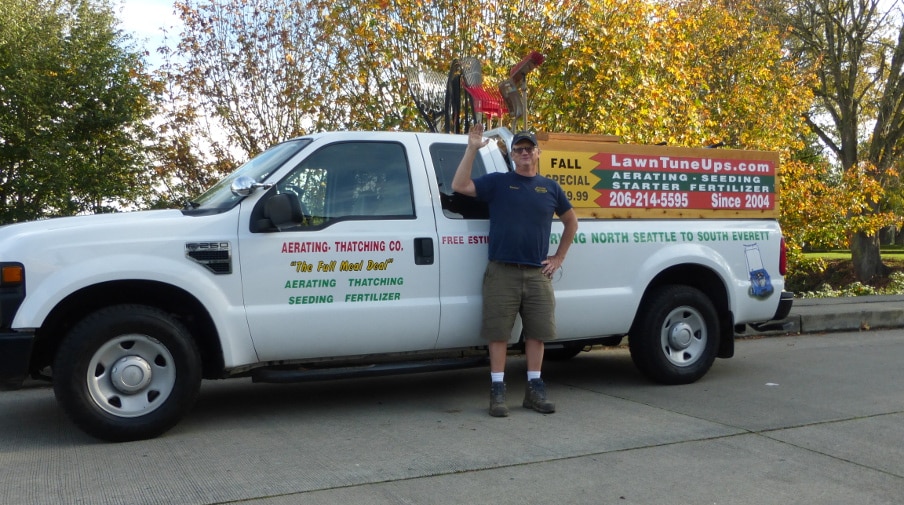
Article by
Stewart Armour
Stewart Armour is the owner of Aerating Thatching Co., an owner-operated Seattle-area lawn restoration business established in 2004. He helps homeowners understand Core Aeration, Power Raking (Dethatching), Overseeding, soil conditions, and the aftercare needed for stronger lawns. His background includes turf management study, advanced golf course turf training, and continuing education through Wilbur-Ellis University, State Turf Facilities, Soil First Academy, and Golf Course Applied Turf Physiology. Stewart has personally evaluated thousands of residential lawns throughout the Seattle area and focuses on recommending the work that fits each lawn’s condition.