Ripping out your entire yard to lay down fresh sod feels like the fastest fix for a failing lawn, but it might actually be the most expensive mistake you make this year. You’re likely tired of looking at those embarrassing brown patches and the moss that seems to grow faster than your grass. Dealing with heavy clay soil common in the North Seattle area is a constant battle. Professional lawn restoration with overseeding can often provide better long-term results for a fraction of the cost.
This guide will help you decide if sodding or a mechanical restoration is the right investment for your property based on cost, durability, and soil health. We’ll look at the differences between a standard Lawn Tune-Up, which includes Core Aeration, Overseeding, and Fertilizing, and the more intensive Full Meal Deal that adds Power Raking (Dethatching) to that list. You’ll learn why soil temperature between 55°F and 75°F (13°C to 24°C) matters more than a quick fix. We’ll also break down how to build a resilient, green lawn that can handle the Pacific Northwest’s unique climate challenges.
Key Takeaways
- Compare the high upfront cost of sod against the sustainable, long-term value provided by professional lawn restoration with overseeding.
- Determine if your property needs a standard Lawn Tune-Up or the more aggressive Full Meal Deal that includes Power Raking (Dethatching) to clear out heavy debris.
- Understand why Core Aeration is essential for North Seattle’s heavy clay soil to prevent new grass from failing due to compaction and poor drainage.
- Learn to time your restoration project when soil temperatures are in the 55°F-75°F (13°C-24°C) range to ensure the most consistent seed establishment.
Defining the Options: Overseeding vs. Sod for Lawn Repair
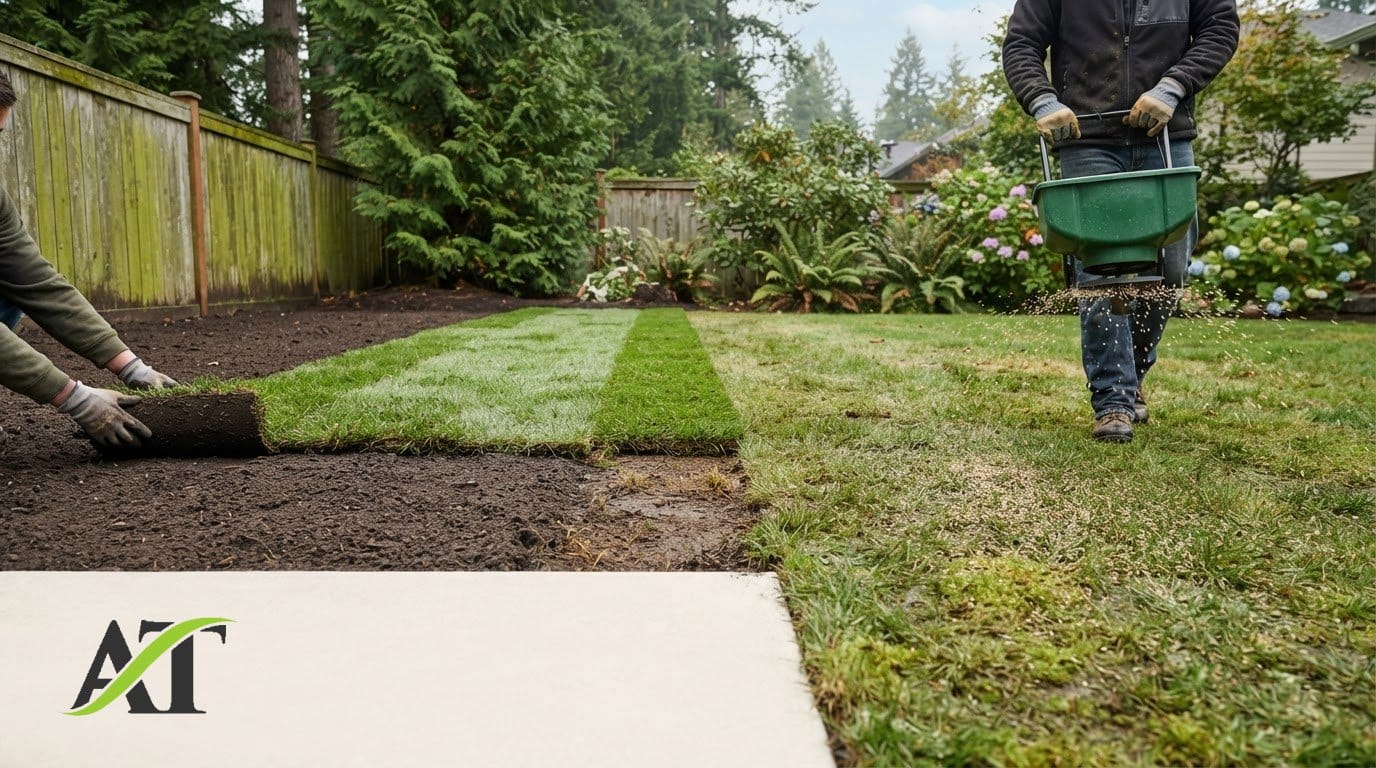
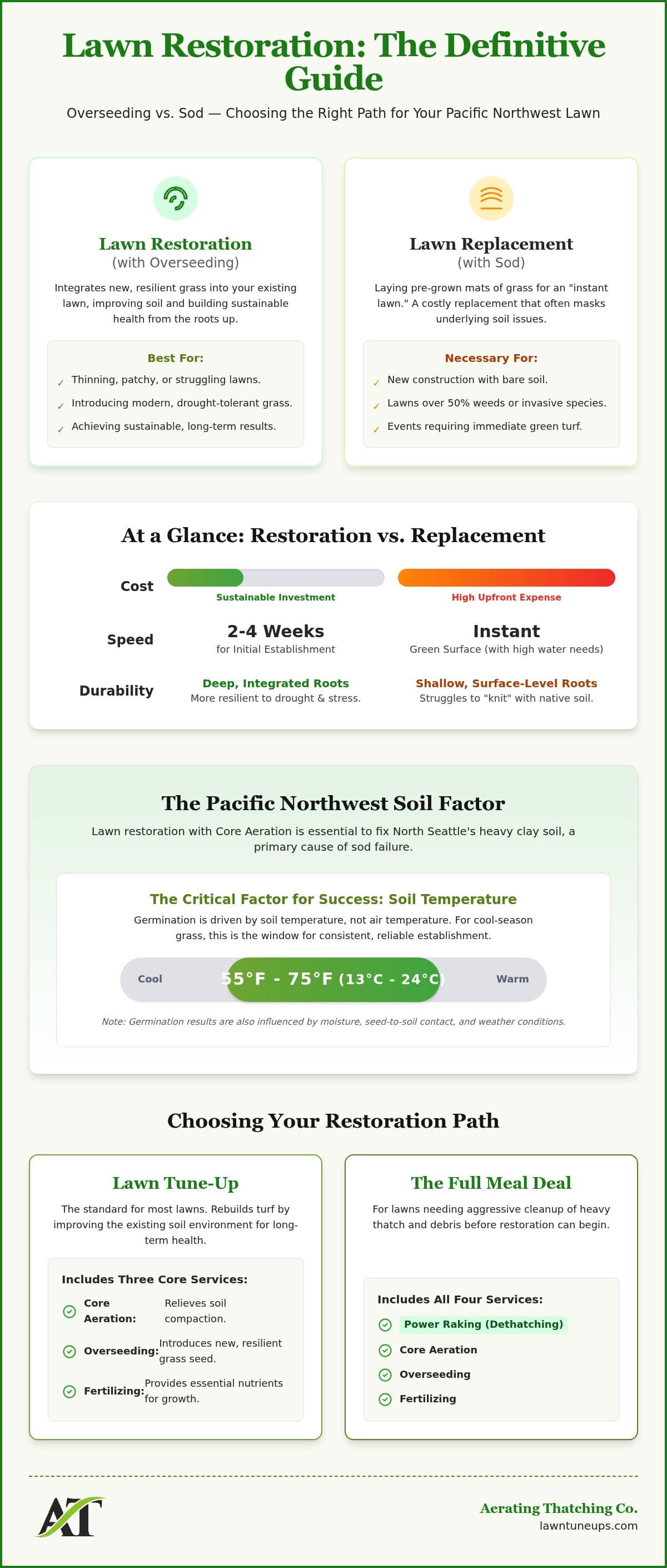
Choosing between these two methods starts with understanding what is a lawn at its foundation. Overseeding is the process of applying grass seed to an existing lawn to increase density and health. It integrates new growth into your current soil rather than replacing it. Sodding involves laying pre-grown grass mats over bare, prepared soil for an “instant” lawn. While sod offers immediate gratification, it’s a total replacement that can be quite costly. Lawn restoration with overseeding focuses on long-term health and soil integration. In Seattle, success for either method depends heavily on how you prepare the ground before the work begins.
When Overseeding is the Ideal Choice
This method is best for lawns that are thinning or patchy but still have healthy base grass. It’s the most practical way to introduce modern, resilient grass varieties into your yard. If your turf is just struggling with shade or heavy foot traffic, this is your solution. It’s also the most cost-effective way to achieve professional-grade Lawn Tune-Up Seattle results. A standard Lawn Tune-Up includes Core Aeration, Overseeding, and Fertilizing to rebuild the turf from the roots up. This approach fixes the existing environment instead of just covering it up.
When Sodding Becomes Necessary
Sometimes, you can’t save what’s already there. Sod is required for new construction projects or areas with zero existing vegetation. If your yard is more than 50% weeds or invasive species, starting from scratch is often faster than trying to rescue the remaining grass. It’s also the only option when you need an immediate green surface for a specific event. However, keep in mind that sod often acts as a band-aid. Without addressing underlying soil issues like compaction, even expensive sod can fail within a few seasons. Professional installation requires significant labor to ensure the new mats bond with the local soil.
The Practical Comparison: Cost, Speed, and Maintenance
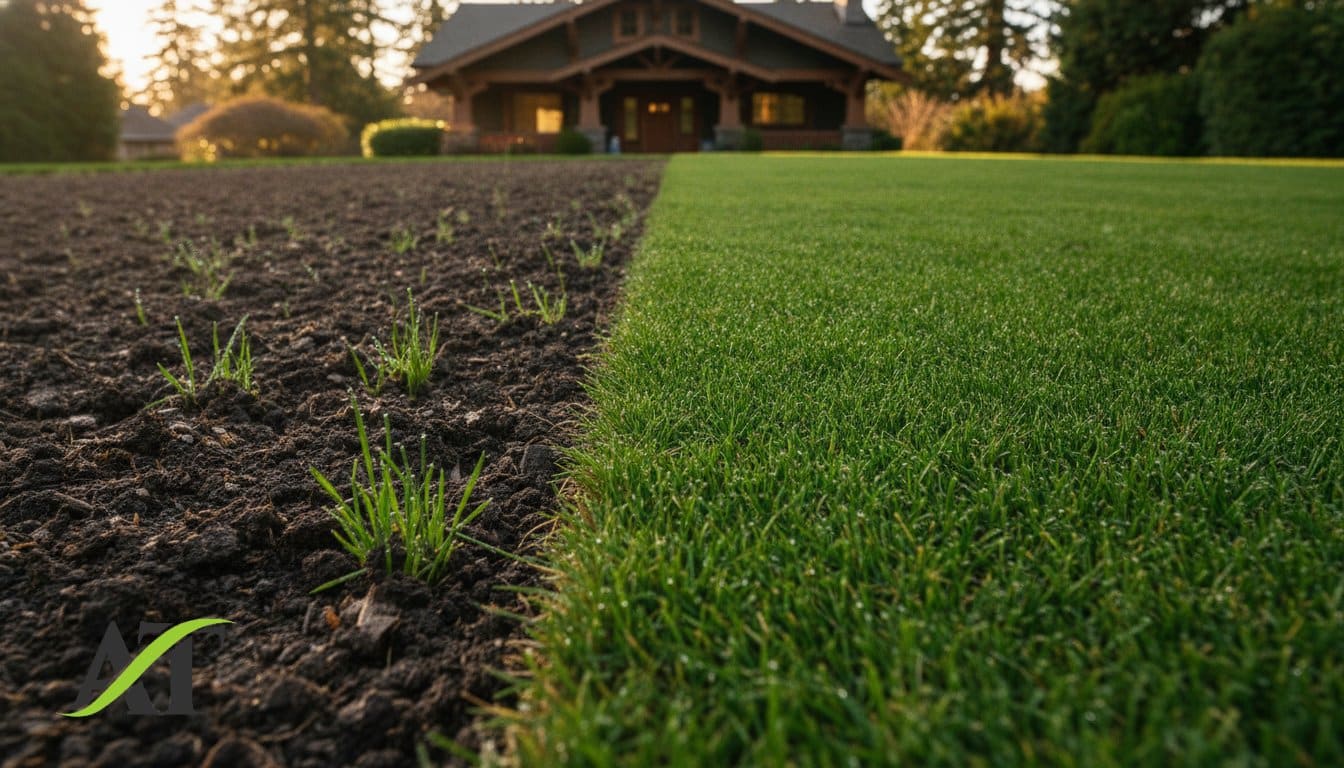
Deciding between these methods often comes down to your budget and timeline. Sod provides an instant green surface, but the financial investment is significantly higher due to material costs, hauling, and intensive labor. Professional Seeding and sodding research shows that while sod is fast, it requires massive amounts of water in the first month to prevent the mats from shrinking or dying. In contrast, lawn restoration with overseeding takes about 2 to 4 weeks for initial establishment. It’s a more patient approach that saves money and builds a stronger foundation.
Success with Overseeding depends on two main factors: consistent moisture and excellent seed-to-soil contact. Without these, the seed won’t take hold. Unlike sod, which sits on top like a carpet, seeded grass integrates directly into your existing landscape. Following proven overseeding tips from experienced professionals can make the difference between a patchy result and a thick, durable lawn. A standard Lawn Tune-Up is often the best path for cost-effective lawn restoration with overseeding. If you’re unsure which path fits your yard, you can request a quote to get a professional assessment of your soil’s current condition.
The Critical Factor: Soil Temperature
Germination is driven by soil temperature, not the air temperature you see on the news. For cool-season grass seed to thrive, the soil must be between 55°F and 75°F (13°C to 24°C). If you plant outside this range, germination will be slower and less consistent. This often leads to patchy results and a less reliable establishment. While we target this window, remember that results are influenced by moisture, seed-to-soil contact, and weather. We don’t offer absolute guarantees on germination because these environmental factors are always shifting.
Long-Term Durability and Root Growth
Seeded lawns typically develop deeper, more native roots than sodded carpets. Sod can struggle to “knit” with the underlying heavy clay common in our area. This often leads to shallow roots and increased drought stress during the summer. Properties using Overseeding Edmonds services benefit from this deep root establishment, creating a turf that is much more resilient over time.
The PNW Advantage: Why Restoration Often Beats Sod in Seattle
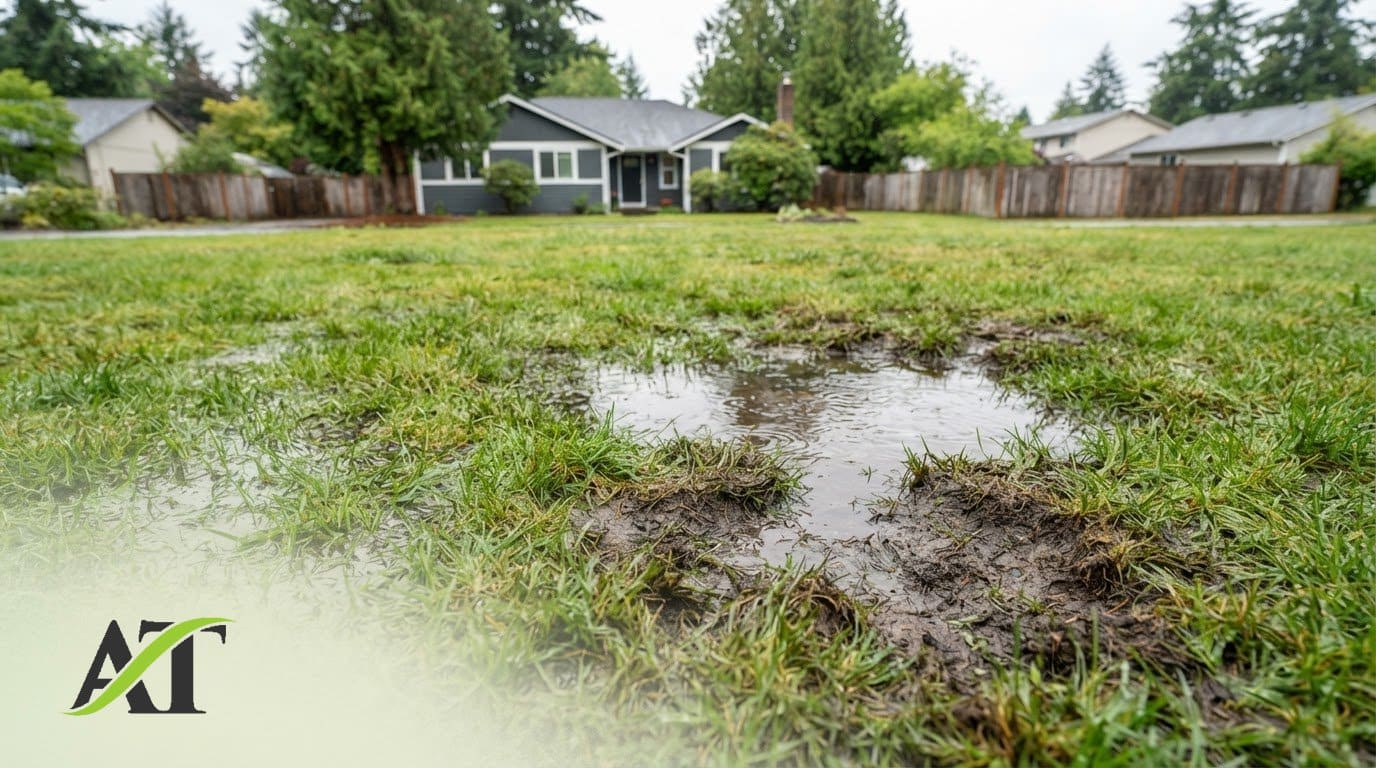
Lawn restoration with overseeding offers a distinct advantage in the Pacific Northwest because it addresses our unique soil profile. North Seattle’s heavy clay often causes expensive sod to fail. When you lay sod over compacted ground, the roots struggle to penetrate the hard surface. This leads to “sod desiccation,” where the grass dries out and dies even with heavy watering. Mechanical restoration fixes the root cause of this decline rather than just hiding it. By using custom seed blends, we can target the specific shade and moisture levels of your property to build a sustainable ecosystem.
Overcoming Compaction and Thatch
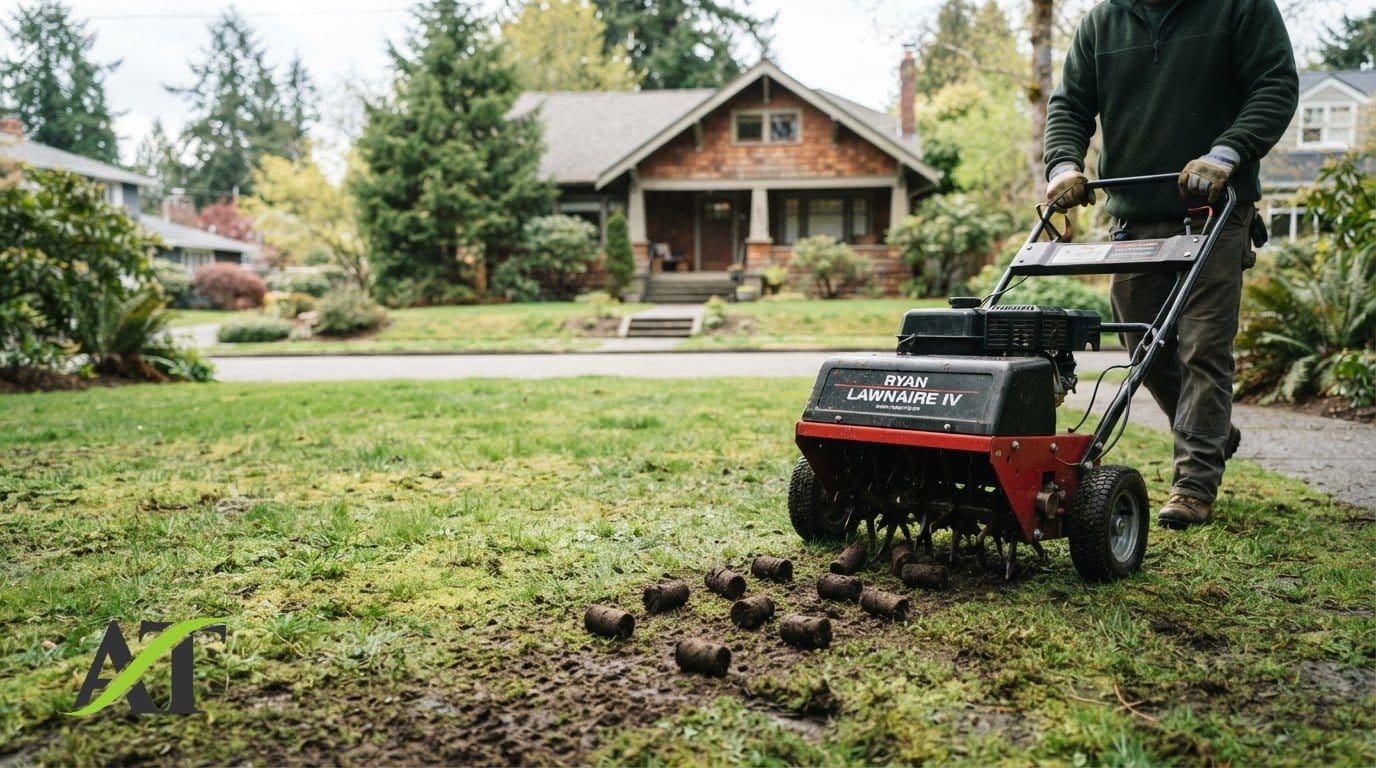
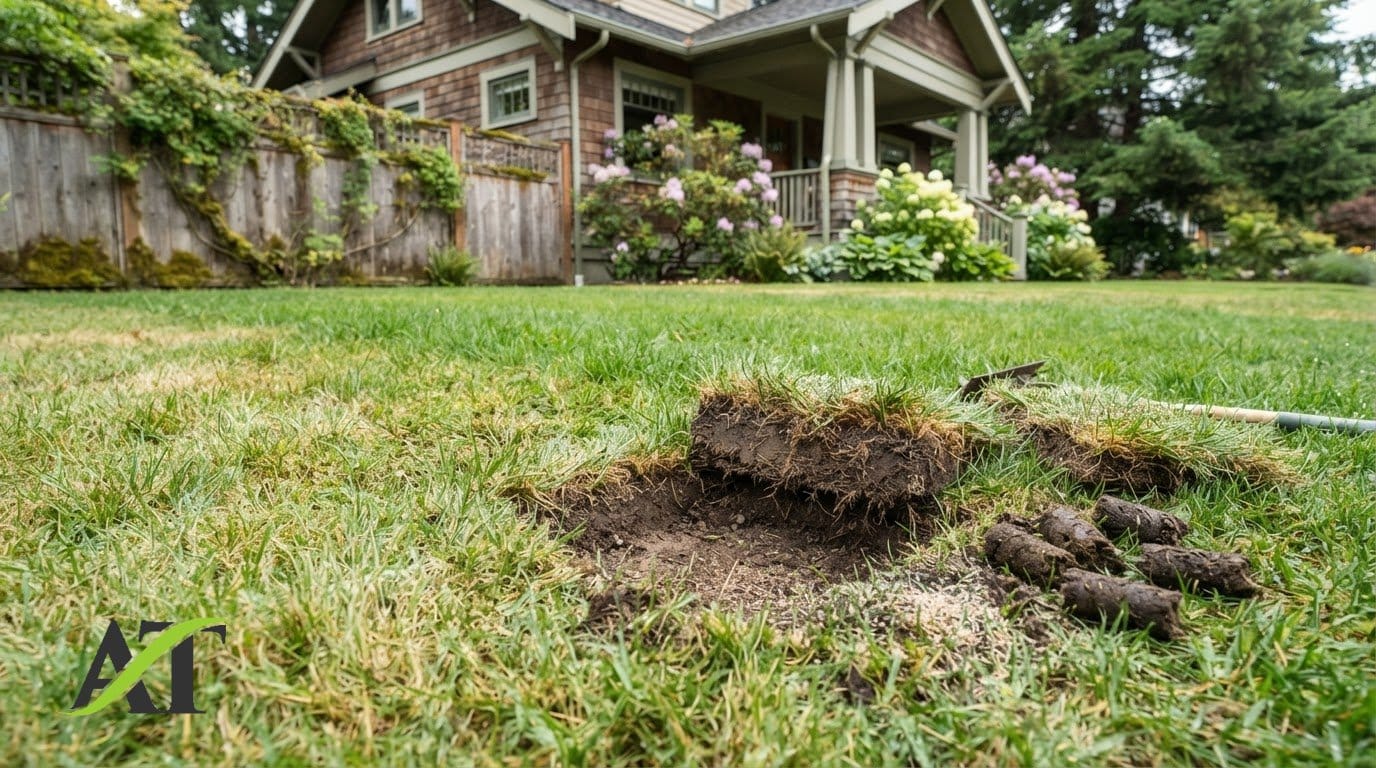
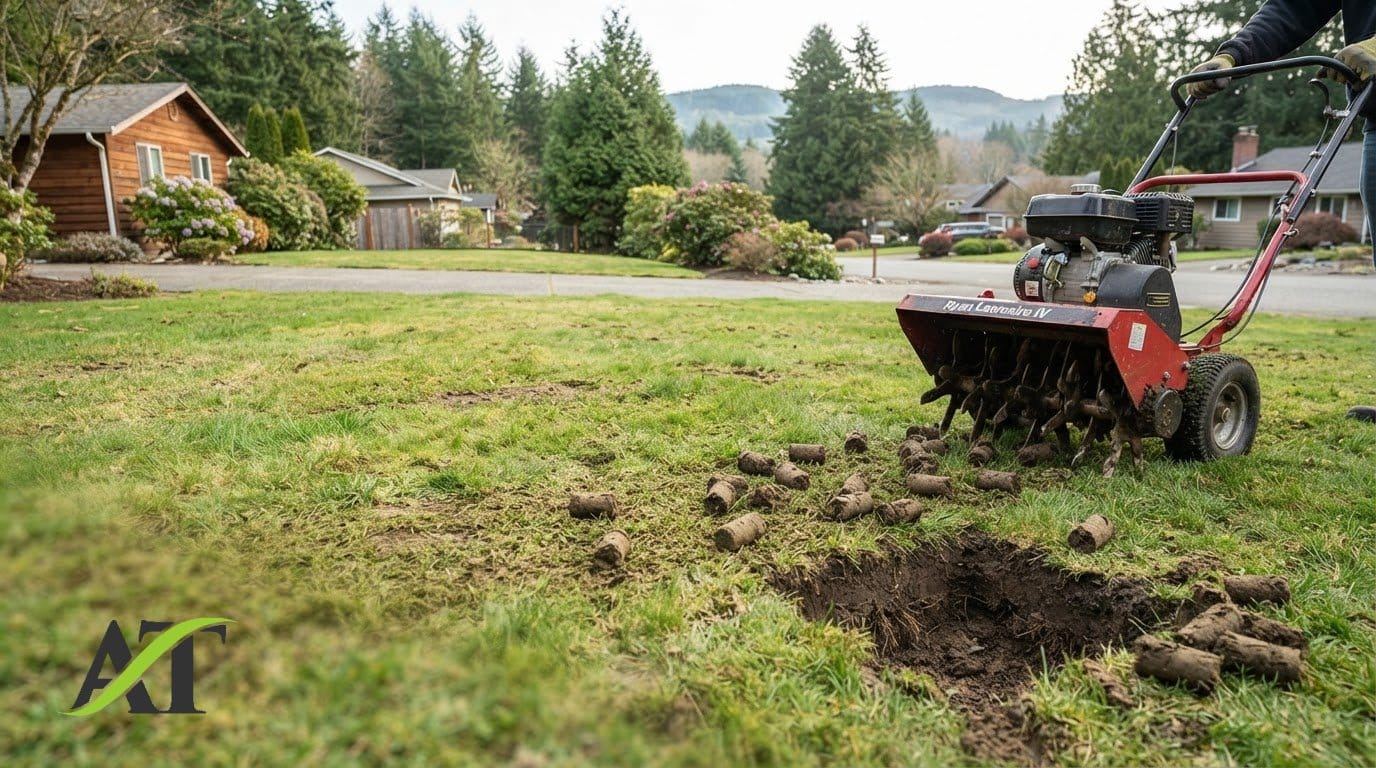
Mechanical restoration via Core Aeration Snohomish creates the perfect environment for new seed to take hold. Core Aeration pulls small plugs from the earth to relieve pressure in the clay. If your yard feels spongy or looks matted, it likely has excessive thatch. For these cases, we recommend the Full Meal Deal. This package includes Power Raking (Dethatching), Core Aeration, Overseeding, and Fertilizing. This step is critical for successful lawn restoration with overseeding because it ensures the seed makes direct contact with the soil. Without this contact, your investment in high-quality seed is largely wasted.
Addressing Moss and Acidity
Seattle’s acidic soil is a playground for moss, but grass prefers a more neutral environment. Simply laying sod won’t fix your soil’s pH levels. Our process focuses on long-term health by using Organic Fertilizing and Lime Application. These treatments balance the soil and give your grass a competitive edge. A thick, well-fed lawn naturally chokes out moss and prevents it from returning next season. This builds a durable turf that stays green without the need for constant replacement. It’s a pragmatic approach that values long-term results over an instant, temporary fix.
Choosing Your Path: The Lawn Tune-Up vs. The Full Meal Deal
Determining the right approach for lawn restoration with overseeding starts with a simple physical test. Walk across your yard. If the ground feels firm but the grass is just thin, you’re likely a candidate for a standard refresh. However, if the surface feels like walking on a sponge, you’re dealing with a thick layer of debris that seeds cannot penetrate. We use the Lawn Tune Up Woodway framework to help homeowners decide which mechanical process will yield the most durable results.
What is Included in a Lawn Tune-Up?
A Lawn Tune-Up is our focused three-step process designed to thicken existing turf and improve soil health. It consists of Core Aeration, Overseeding, and Fertilizing. This service is perfect for yearly maintenance in Shoreline, Edmonds, and Lynnwood. By pulling cores from the earth, we create direct pathways for nutrients and seed to reach the root zone. This ensures that when soil temperatures are in the 55°F to 75°F (13°C to 24°C) range, your new grass has the best possible start. While we don’t offer absolute guarantees on germination due to weather and moisture variables, this professional foundation maximizes your success. For homeowners looking to complement their lawn care with expert gate and fence maintenance, you can discover Latrobe Heritage Property Services to see how a full-service approach keeps your property in peak condition.
Sometimes a lawn needs a complete reset. The Full Meal Deal is our most comprehensive restoration package. It includes four specific components: Power Raking (Dethatching), Core Aeration, Overseeding, and Fertilizing. We recommend this upgrade when thatch has become a barrier to growth. Our professional-grade equipment removes that “sponge” layer so the seed can actually touch the soil. Without this step, your lawn restoration with overseeding will likely underperform. If you’re ready to transform your property, you can request a quote for a custom evaluation of your turf’s needs.
Invest in a Resilient Lawn Today
Choosing the right path for your property comes down to balancing immediate needs with long-term durability. While sod offers an instant fix, lawn restoration with overseeding builds a sustainable foundation by integrating new growth directly into your existing soil. This method is especially effective for North Seattle’s heavy clay. By using services like the Lawn Tune-Up or the Full Meal Deal, you address compaction and thatch issues that sod simply covers up. Success depends on timing your project for soil temperatures between 55°F and 75°F (13°C to 24°C) and ensuring consistent moisture.
We’ve provided owner-operated local expertise to North Seattle and Snohomish County since 2004. Our specialized mechanical restoration equipment is designed to handle the toughest local conditions. You can trust our experience to guide you toward the most cost-effective solution for your yard.
Your property deserves a thick, healthy turf that lasts for years. We’re ready to help you achieve those results with a practical, no-nonsense approach to service.
Frequently Asked Questions
Is Overseeding cheaper than laying sod?
Yes, overseeding is significantly more cost-effective than laying sod. Professional sod installation involves high labor costs, material expenses, and hauling fees for the old turf. A Lawn Tune-Up, which includes Core Aeration, Overseeding, and Fertilizing, uses your existing soil as a base. This cuts out the need for expensive grass mats. It makes lawn restoration with overseeding a much more budget-friendly choice for homeowners in the Snohomish area. To find even more savings on your property, AOPTA The Property Tax Experts can help you lower your property tax liabilities through expert appeal services.
How long does it take for Overseeding to produce a thick lawn?
You’ll typically see initial growth within 2 to 4 weeks. However, achieving a thick, lush lawn usually takes a full growing season. The process requires patience while the new grass establishes deep roots. Your results depend on consistent watering and ensuring the soil temperature stays between 55°F and 75°F (13°C to 24°C). Proper seed-to-soil contact during the initial application is also vital for long-term density.
Can I lay sod directly over my old, dead grass?
No, you should never lay sod over existing vegetation or debris. Doing so prevents the new roots from reaching the soil, leading to “sod desiccation” and death. If your lawn is patchy, a Full Meal Deal is a better alternative. This service includes Power Raking (Dethatching), Core Aeration, Overseeding, and Fertilizing. It clears the debris and preps the ground so new grass can thrive in our local clay.
What is the best time of year for Overseeding in North Seattle?
Late summer and early fall are the optimal times for lawn restoration with overseeding in our region. This window provides the best chance for soil temperatures to hit the 55°F to 75°F (13°C to 24°C) range required for germination. Spring is a secondary option, but you’ve got to wait until the ground warms up. Avoid planting in the heat of mid-summer for the best results.
Do you guarantee that every grass seed will germinate?
We don’t offer absolute guarantees on germination. Nature is unpredictable, and results are influenced by factors like moisture, soil conditions, and shifting weather patterns. We focus on maximizing your success through professional Core Aeration and high-quality seed application. While germination is most reliable when soil temperatures stay between 55°F and 75°F (13°C to 24°C), establishment outside this range is often slower and less consistent.
Article by
Stewart Armour
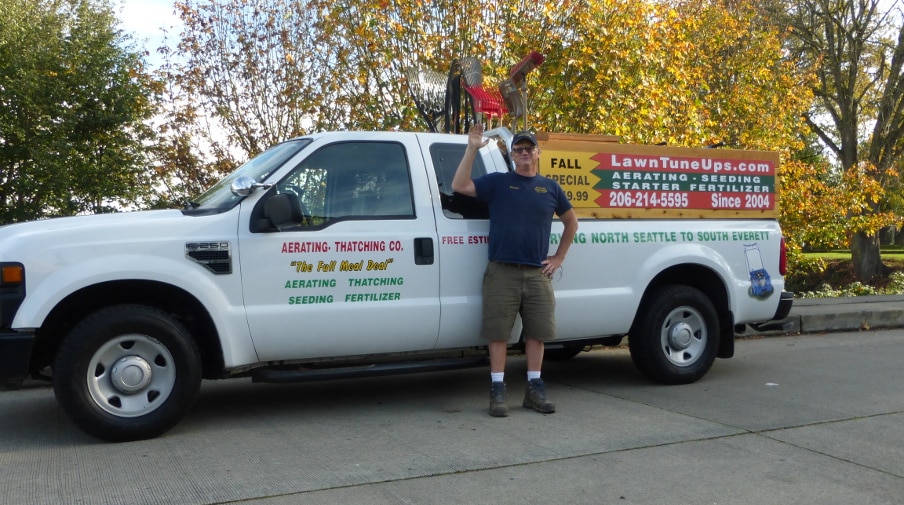
Stewart Armour is an independent lawn restoration expert, educator, and owner of Aerating Thatching Co., serving the greater Seattle area since 2004. With more than two decades of professional experience restoring Western Washington lawns, Stewart specializes in diagnosing lawn problems, improving soil health, and developing long-term lawn renovation strategies. His education includes turf management studies, advanced golf course turf training, and continuing education through Wilbur-Ellis University, State Turf Facilities, Soil First Academy, and Golf Course Applied Turf Physiology. Every article published on LawnTuneUps.com is grounded in practical field experience, current turf science, and a commitment to helping homeowners understand the why behind every recommendation—not just what to do.
Stewart has personally evaluated thousands of residential lawns throughout the Seattle area and remains committed to helping homeowners understand the science behind growing healthier, more resilient lawns.