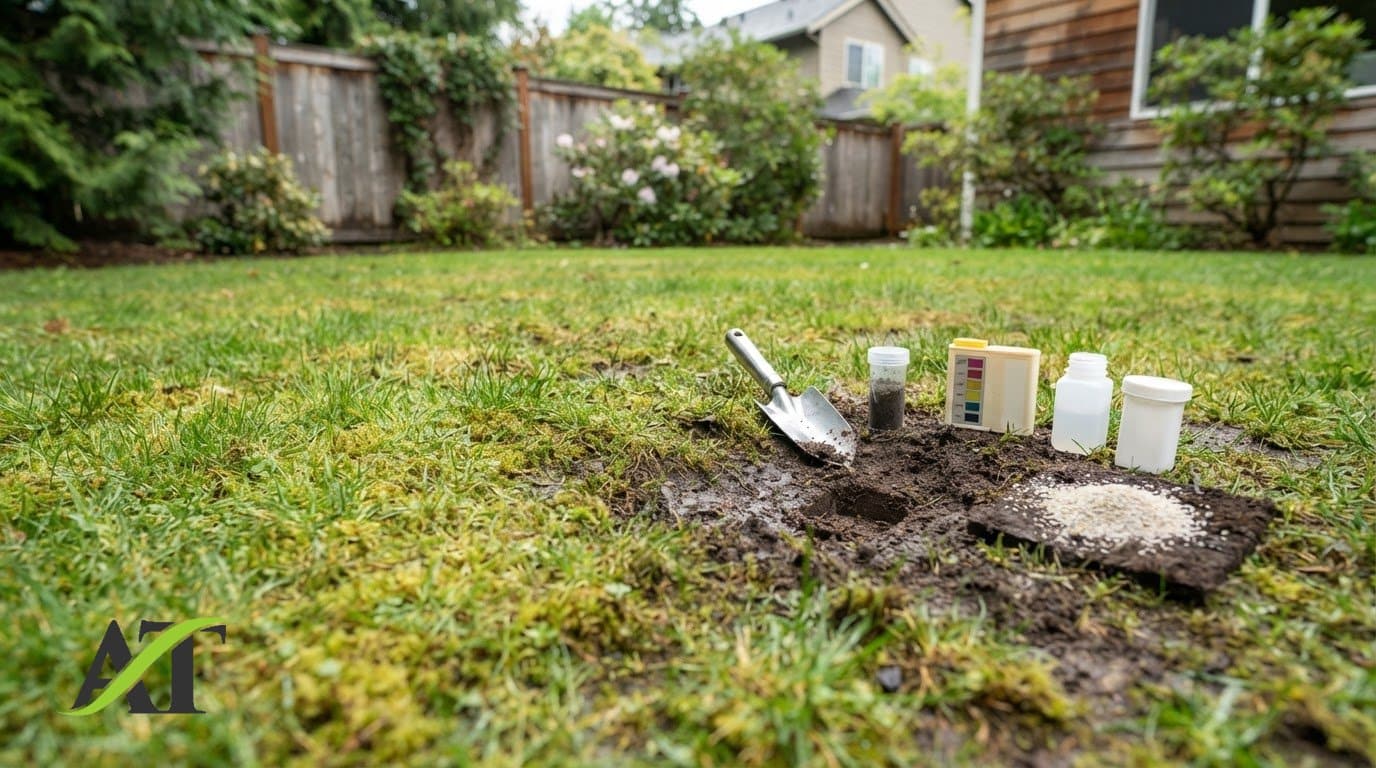
What if the thin, mossy patch in your lawn isn’t caused by compacted soil? A core aeration service can help when the turf’s shallow root zone is compacted, but it won’t solve every problem that makes grass struggle.
If your lawn feels hard underfoot or has trouble growing, it’s reasonable to wonder whether aeration is the right next step. But shade, thatch, irrigation issues, and poor drainage can create similar symptoms. Core Aeration pulls small soil plugs from the turf’s root zone. It doesn’t break deep glacial hardpan or correct a subsurface drainage defect.
This guide explains what Core Aeration may improve, what it can’t fix, and what to consider before scheduling in North Seattle. You’ll also learn how it fits with Overseeding and Fertilizing in a Lawn Tune-Up. The goal is to choose a service based on your lawn’s symptoms, not a larger package than you need.
Key Takeaways
- Hard or thinning turf can point to compaction, but note where symptoms appear before deciding what treatment fits.
- A core aeration service may help with compaction linked to repeated foot traffic, but other causes call for a closer assessment.
- Track shade, irrigation, drainage, and lawn use to help identify what may be behind the problem.
- A Lawn Tune-Up combines Core Aeration, Overseeding, and Fertilizing. Consider whether all three fit your lawn’s needs.
When Does a North Seattle Lawn Need a Core Aeration Service?
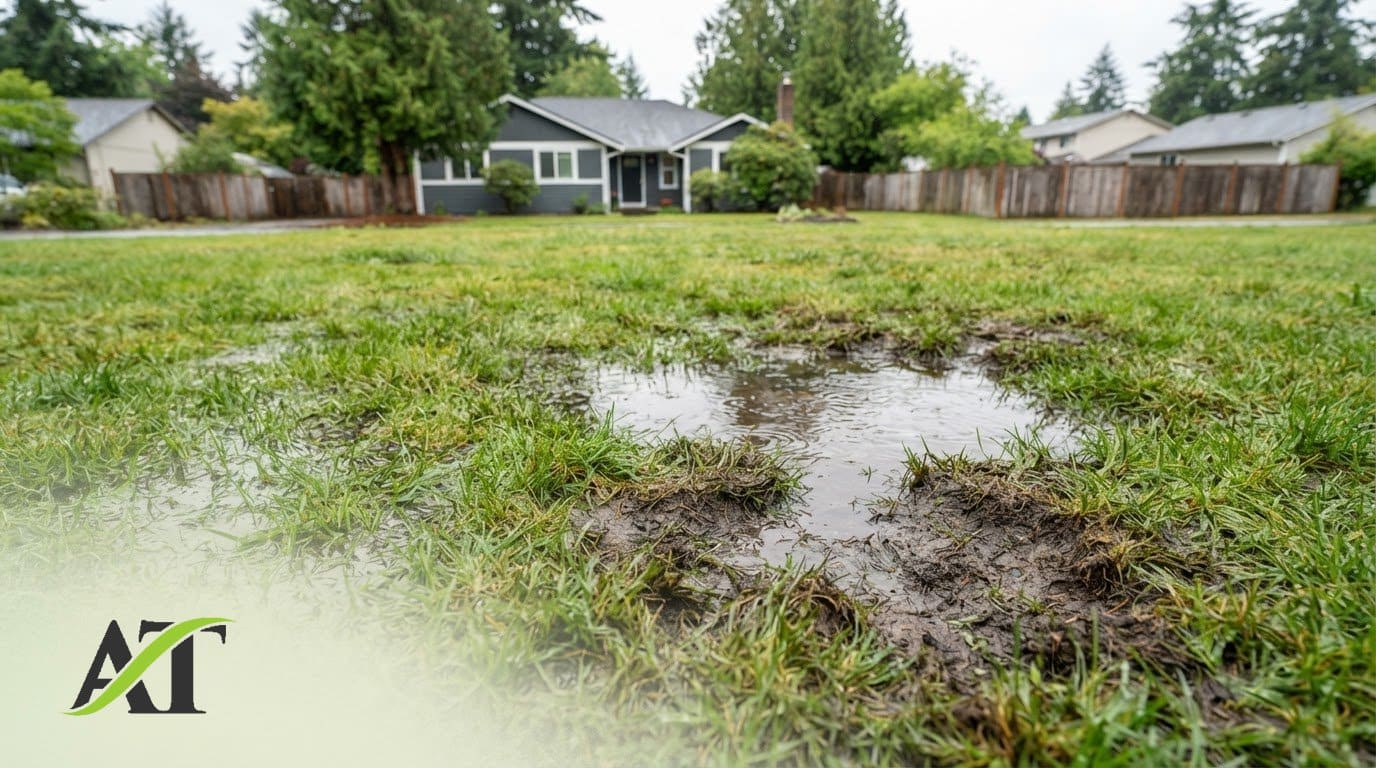
Water that lingers on the lawn’s surface, grass that struggles in areas used regularly, or soil that feels hard can raise the question of compaction. These are clues, not a diagnosis. Thin growth can also result from shade, irrigation problems, excess thatch, or drainage issues.
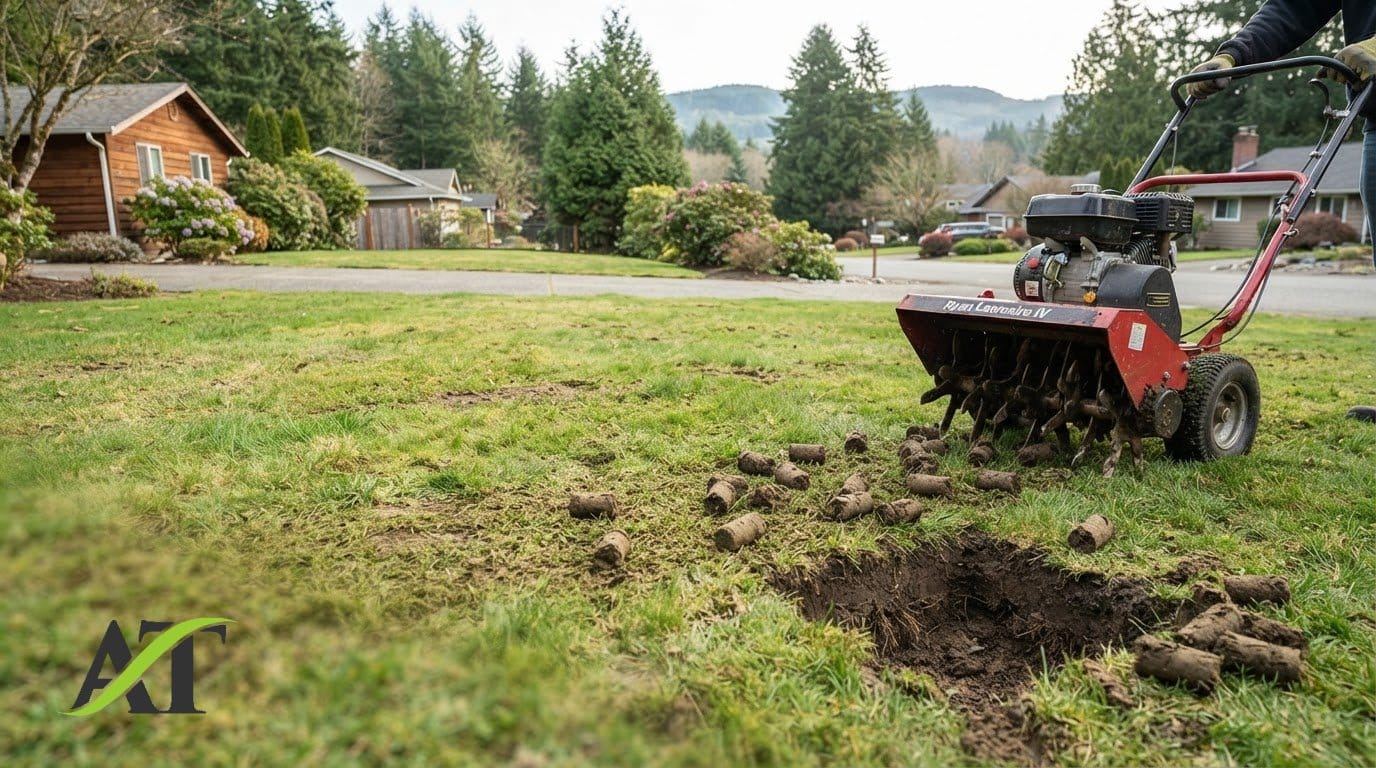
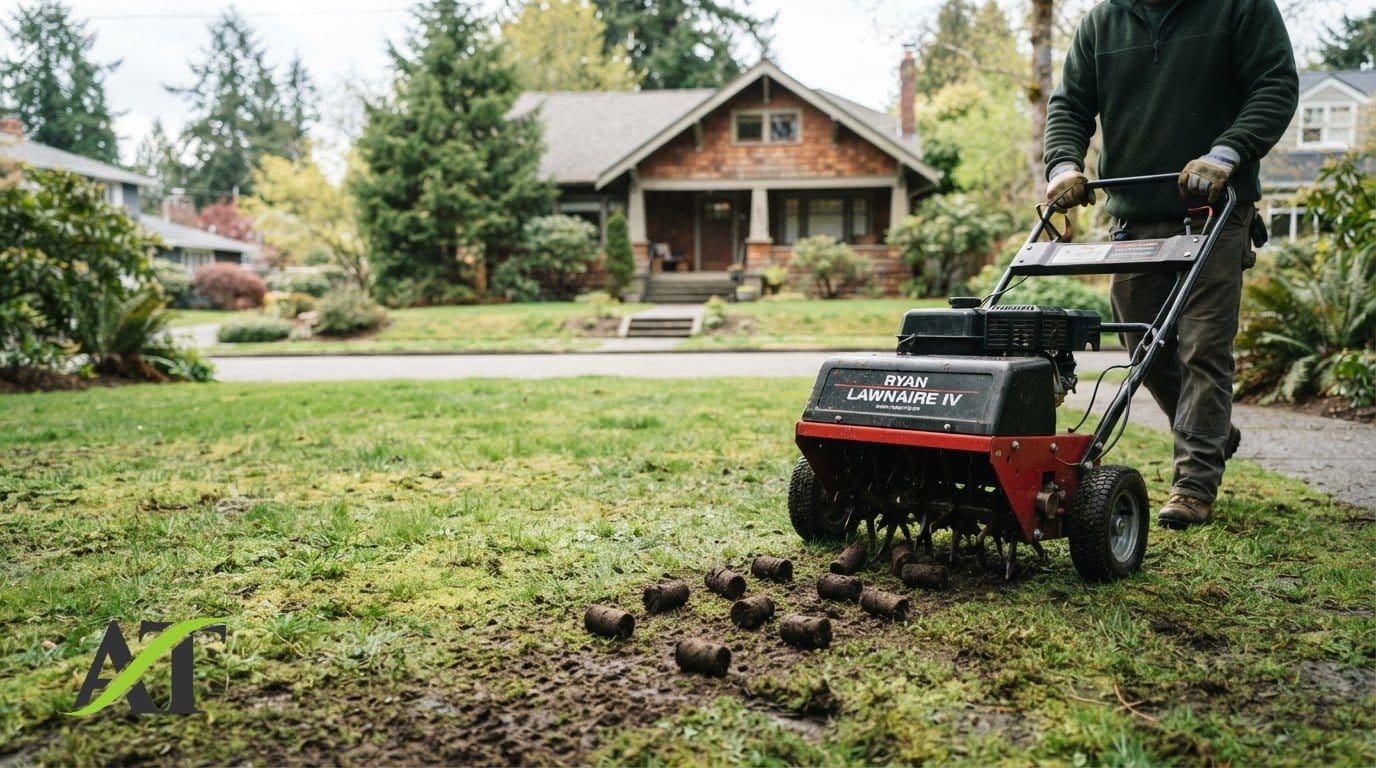
Core Aeration removes small soil cores from turf to create openings in the shallow root zone. Repeated foot traffic or other regular use can press soil particles closer together, making it harder for roots to grow through the soil. Look at where and when symptoms appear before deciding whether a core aeration service fits.
What signs might point to compacted soil?
Compaction may be worth investigating if water seems slow to soak in or grass struggles in areas that receive regular use. Look for a pattern: are symptoms concentrated along a frequently crossed route, or spread across the lawn? Compare affected areas with nearby turf. A pattern linked to repeated use can make compaction more plausible, but it doesn’t confirm the cause.
Why one symptom does not diagnose the whole lawn
Match the symptom to the conditions around it. Thin grass beneath trees may be related to limited light. Dry or unevenly growing patches may point to inconsistent irrigation. Thatch is a different issue from compacted soil, while persistent standing water may involve drainage beyond the shallow root zone. Core Aeration won’t break deep glacial hardpan or fix a subsurface drainage defect.
Before choosing a treatment, note:
- Where the lawn is thin, wet, or hard underfoot.
- Whether those areas receive more foot traffic or less light.
- Whether water soaks in slowly or stays on the surface.
- Whether the pattern changes across the lawn or persists in one area.
If the signs don’t point clearly to compaction, further assessment can help distinguish the cause before you schedule work. The goal is to address the issue affecting the turf, not assume every thin or wet patch needs aeration.
Aerating Thatching Co. provides lawn restoration services in North Seattle, Shoreline, Edmonds, Lynnwood, Mill Creek, Bothell, Kenmore, Lake Forest Park, Mountlake Terrace, Snohomish, Everett, Brier, Woodway, Green Lake, Ballard, and Greenwood.
What Core Aeration Does in the Root Zone, and What It Cannot Fix
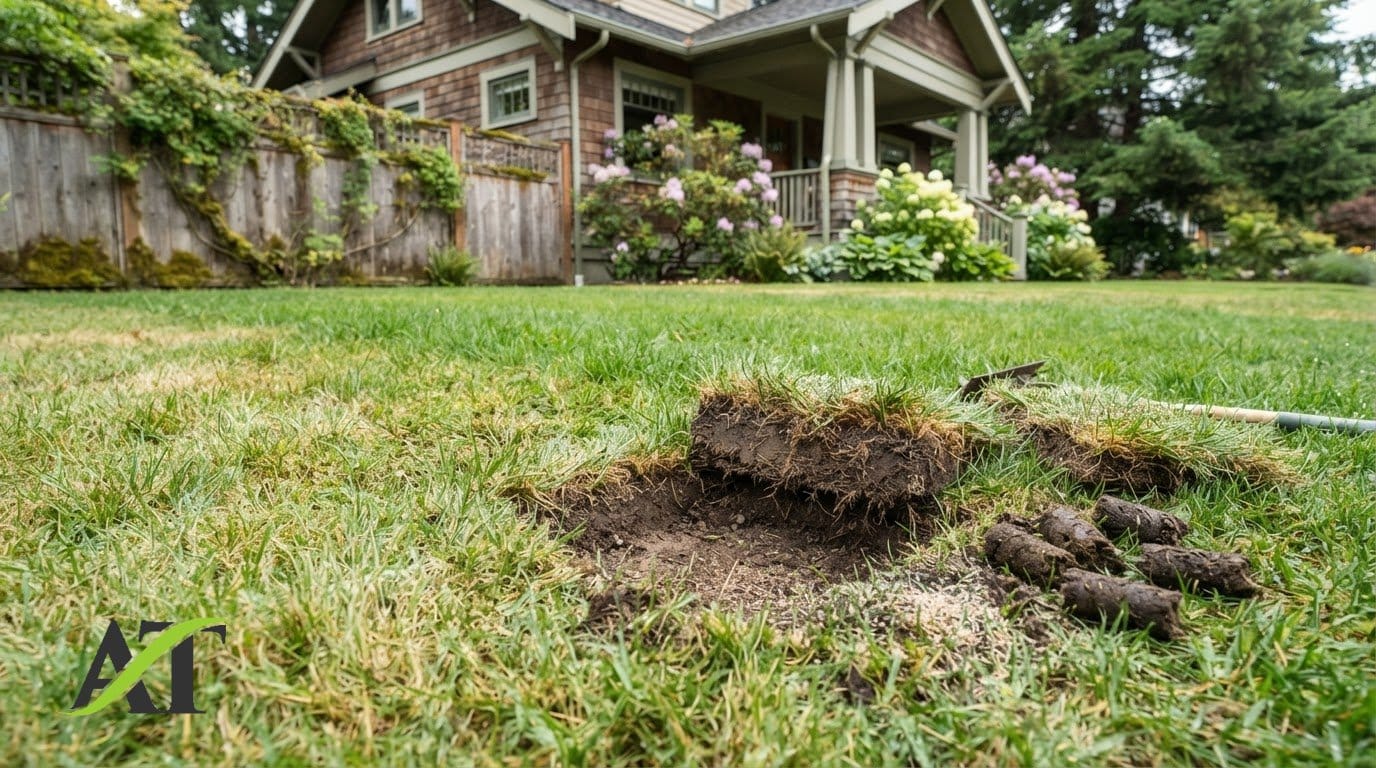
Core Aeration targets the soil directly beneath the grass, where turf roots grow. It removes small soil cores and leaves openings in the shallow root zone. Where compaction is limiting movement through that zone, the openings may give air, water, and nutrients an easier path through the soil. The result depends on the lawn’s conditions. Aeration does not guarantee thicker growth or solve a problem with a different cause.
How soil-core removal supports the turf root zone
Think of the openings as access points within the soil, not channels that reach deep underground. Where compaction is limiting movement through the root zone, Core Aeration may help improve conditions for roots. The Virginia Cooperative Extension’s guidance on aerating lawns explains the process and how to assess whether aeration may be needed. A core aeration service is most relevant when the issue is within the turf’s root zone.
When aeration is not the complete answer
Core Aeration treats compaction in the shallow turf root zone. It does not correct deeper drainage problems. It won’t break deep glacial hardpan or repair a subsurface drainage defect. These limits matter if water remains in the same place or the ground stays saturated. That pattern calls for further diagnosis, not an assumption that more aeration will solve it.
Other causes need separate consideration. Thatch is a layer of plant material, not compacted soil. Shade can limit grass growth, while irrigation problems can leave some areas too dry or too wet. Core Aeration doesn’t remove thatch, add light, or repair irrigation. If symptoms don’t fit root-zone compaction, identify the underlying issue before choosing a treatment.
If you’re unsure whether compaction is the concern, Ask Stewart About Your Lawn and describe what you’re seeing.
How to Decide Whether Core Aeration Is the Right Next Step
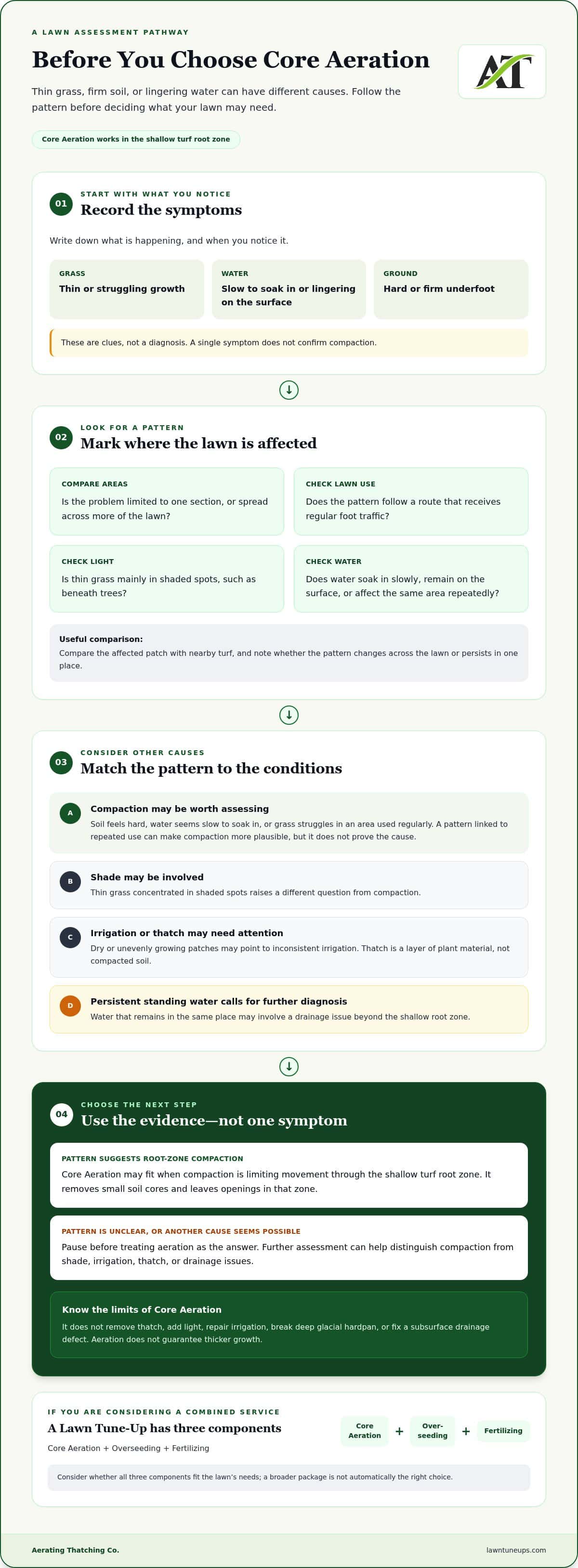
Use your observations to frame the decision, not to diagnose the soil on your own. A short record of where symptoms occur and what conditions surround them can help clarify whether Core Aeration may fit or whether the lawn needs a different assessment.
- Record the symptoms. Note whether grass is thin, water seems slow to soak in, or the ground feels firm. Include when you notice the issue, such as after regular lawn use or during watering.
- Mark the affected areas. Check whether symptoms follow a frequently used route, appear only in shaded spots, or show up across a larger part of the lawn. Compare affected areas with nearby grass.
- Consider other conditions. Note the amount of shade, how irrigation reaches the area, whether thatch is present, and whether water remains on the surface. These details help frame what may be causing the problem.
Patterns help guide the next step. Trouble limited to a repeatedly used section may make compaction worth assessing, while thin grass confined to shade raises a different question. Neither pattern proves the cause. This checklist is a useful starting point, not a substitute for assessing the lawn.
When the problem may need further diagnosis
Persistent standing water, especially in the same area, deserves further attention. So do symptoms that don’t fit a clear pattern or appear alongside several possible causes. Shade, uneven irrigation, and thatch may call for a different assessment. If your observations don’t point clearly to compaction, pause before treating aeration as the answer.
Bring your notes together before arranging service. A clear picture of where the lawn struggles, how the area is used, and what happens during watering can support a more focused assessment.
What a Local Core Aeration Service Includes, and Your Next Step
Once the lawn’s needs are clearer, choose a service scope that matches them. Aerating Thatching Co. provides Core Aeration on its own or as part of a restorative package. Core Aeration focuses on the shallow turf root zone. It doesn’t automatically include Overseeding, Fertilizing, Power Raking (Dethatching), or soil amendments.
Core Aeration, Lawn Tune-Up, and Full Meal Deal
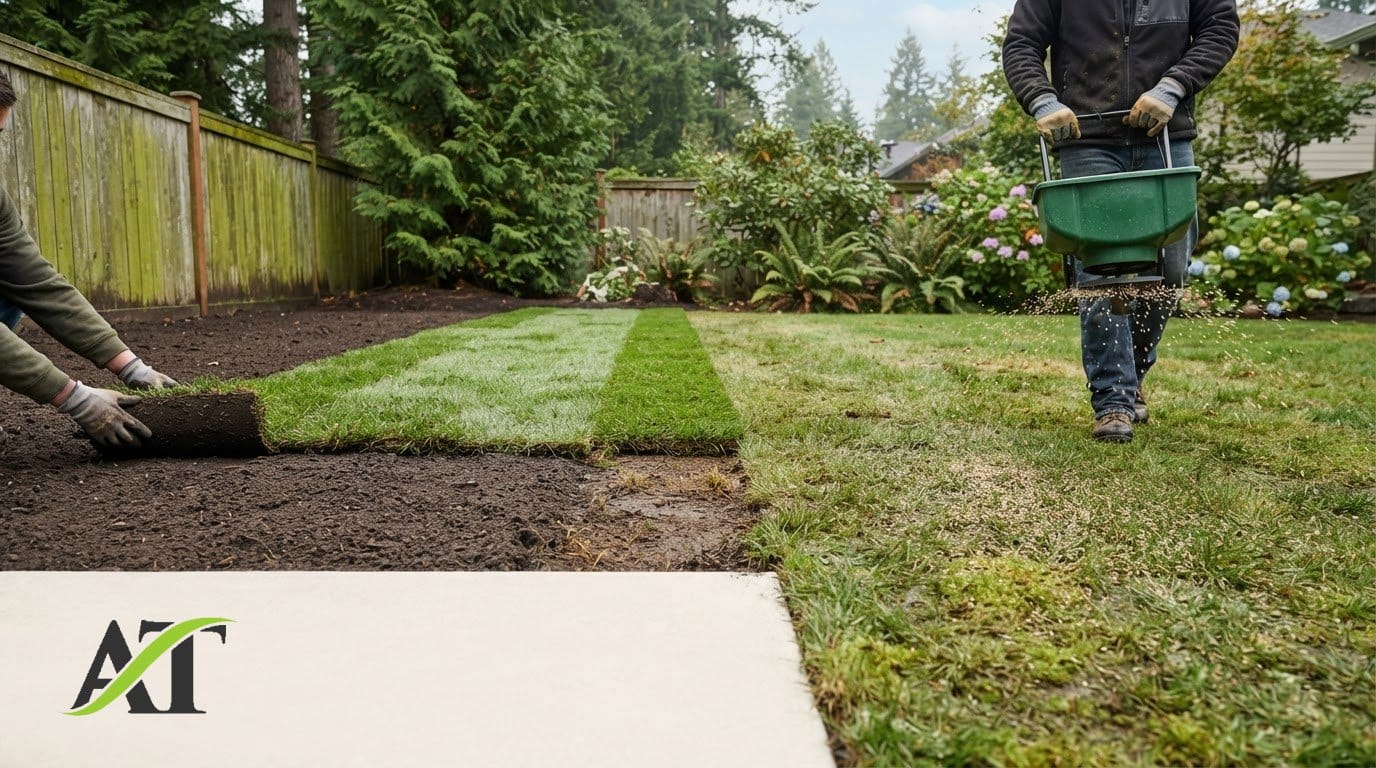
A Seattle Lawn Tune-Up combines Core Aeration, Overseeding, and Fertilizing. It does not include Power Raking (Dethatching), soil amendments, or lime. The Full Meal Deal includes Power Raking (Dethatching), Core Aeration, Overseeding, and Fertilizing. These packages have defined components, so you can compare what each covers rather than assume every treatment is bundled together.
If your main concern is compaction and your lawn doesn’t need the other package components, consider whether Core Aeration alone fits. If you also want Overseeding and Fertilizing, a Lawn Tune-Up may be a better match. The right choice depends on the work your lawn needs, not on choosing the largest package.
Set expectations for the work that follows
Core Aeration creates openings in the root zone, but it doesn’t promise a particular result or recovery schedule. If the service includes Overseeding, establishment also depends on seed-to-soil contact, moisture, soil conditions, weather, and aftercare. Follow the instructions for the work performed. The Seattle lawn aftercare guide can help you understand what to do after Core Aeration, Overseeding, or Power Raking (Dethatching).
With your symptoms and service priorities in mind, ask Stewart about the next step for your lawn.
Ask Stewart About Your Lawn
Choose the Next Step That Fits Your Lawn
A clearer diagnosis is more useful than treating every thin or wet patch the same way. Before arranging a core aeration service, use what you’ve noticed about lawn use, shade, water movement, and affected areas to describe the problem. If the signs suggest compaction in the turf’s root zone, Core Aeration may be an appropriate part of the plan. If they point elsewhere, identifying that difference helps set a more realistic direction for restoration.
You don’t need to settle on a package before asking about your lawn. Start with the symptoms and the areas that concern you. Stewart can help connect those observations to a practical next step for your property in the service area.
Ask Stewart About Your Lawn
A thoughtful first step can help you focus on the work your lawn actually needs.
Frequently Asked Questions
How often should a lawn receive Core Aeration?
There isn’t a fixed interval that suits every lawn. Decide based on the lawn’s condition and use, rather than booking Core Aeration automatically on an annual schedule. A frequently used area and a lightly used area may need different attention. Keep track of recurring concerns and reassess them before scheduling another treatment.
What happens to the soil plugs after Core Aeration?
The plugs are small pieces of soil removed during Core Aeration, and you may see them on the lawn after the work. Their presence is part of the process, not a separate material added to the turf. Follow any instructions provided for your specific service instead of assuming the plugs need a particular kind of cleanup.
How long does a core aeration service take?
The time varies with the lawn’s size, layout, access, and scope of work. An open area differs from a property divided into sections or with limited access. Those details matter more than a general time estimate. When arranging a core aeration service, describe which areas you want treated and any access constraints.
Can I mow right after Core Aeration?
There isn’t one mowing recommendation that applies to every service combination and lawn condition. Check the instructions for the work completed, especially if Core Aeration was combined with Overseeding or other treatments. If you don’t have clear aftercare directions, ask for guidance before mowing rather than guessing at the timing.
Does Core Aeration damage an established lawn?
Core Aeration is a turf treatment, but the work leaves visible signs on the lawn, including openings where soil was removed. Don’t judge damage by appearance alone immediately afterward. Consider the lawn’s condition and the reason for treatment, and follow the aftercare guidance for the service performed. If the turf’s condition concerns you, get an assessment before scheduling.
Article by
Stewart Armour
Stewart Armour is the owner of Aerating Thatching Co., an owner-operated Seattle-area lawn restoration business established in 2004. He helps homeowners understand Core Aeration, Power Raking (Dethatching), Overseeding, soil conditions, and the aftercare needed for stronger lawns. His background includes turf management study, advanced golf course turf training, and continuing education through Wilbur-Ellis University, State Turf Facilities, Soil First Academy, and Golf Course Applied Turf Physiology. Stewart has personally evaluated thousands of residential lawns throughout the Seattle area and focuses on recommending the work that fits each lawn’s condition.