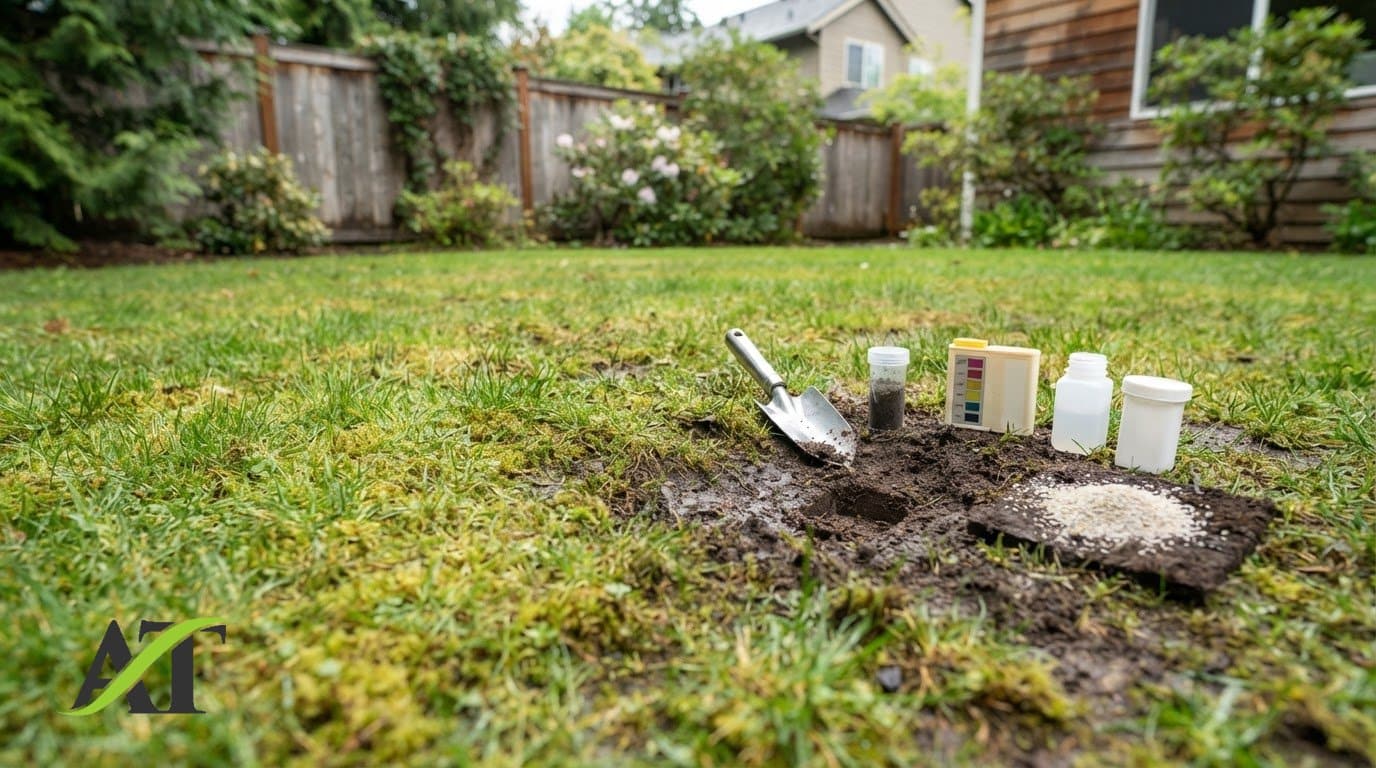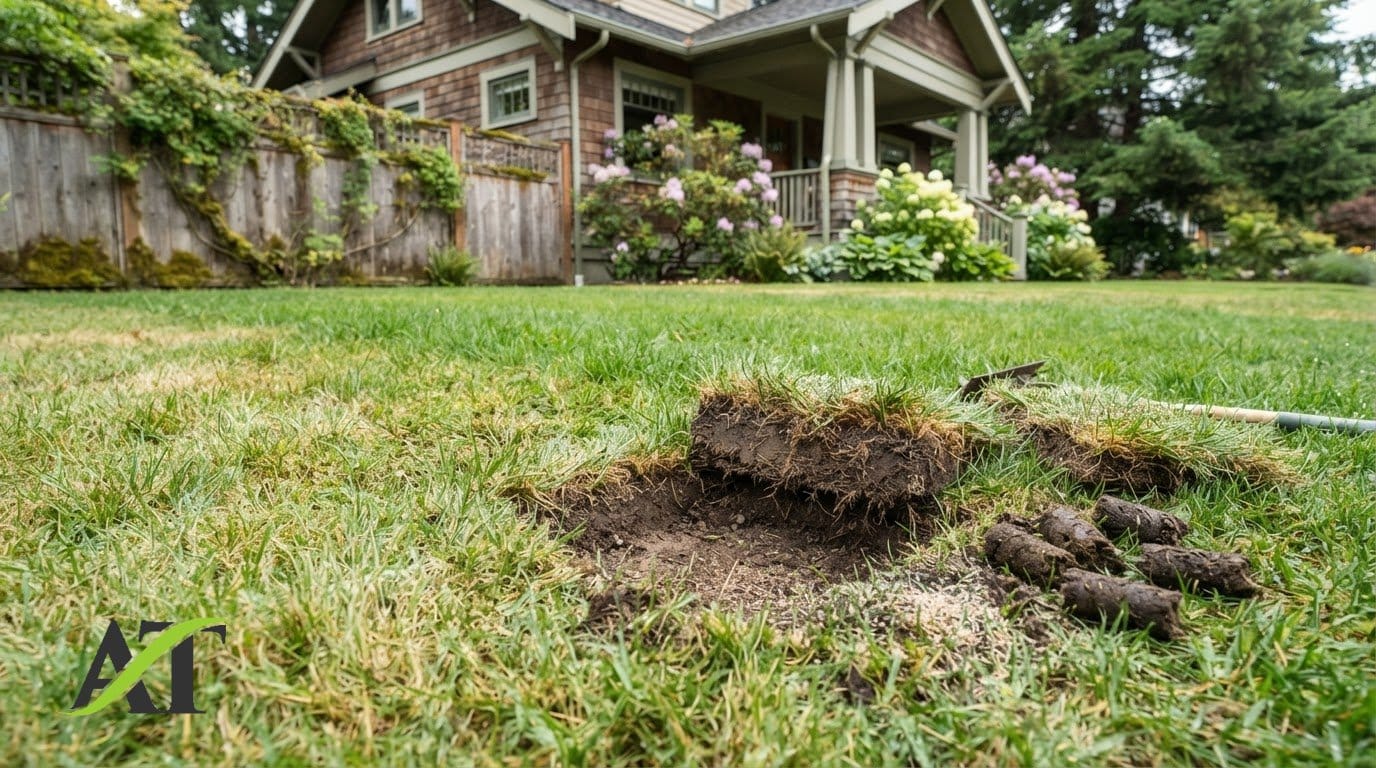
What if adding seed is the wrong first step for your thin lawn? Overseeding can help fill in turf, but it won’t correct the cause if grass is struggling with compaction, shade, excess thatch, or a drainage problem. If you’re weighing lawn overseeding, Ballard homeowners should first look at what’s happening beneath and around the sparse areas.
It’s reasonable to hope that fresh seed will bring bare spots back. The key is matching the treatment to the problem, so new grass has a fair chance to establish. This guide explains when Overseeding may help, when the lawn needs further diagnosis, and when Power Raking (Dethatching) may belong in the restoration work. You’ll also learn how the Lawn Tune-Up, with Core Aeration, Overseeding, and Fertilizing, differs from the Full Meal Deal, which adds Power Raking (Dethatching). By the end, you’ll know what details to share when asking Stewart about your lawn, including where the turf is thin and whether the pattern points to a recurring issue.
Key Takeaways
- Look for patterns in thin turf before adding seed; moss may be visible, but it doesn’t identify the underlying cause.
- Lawn overseeding in Ballard can improve turf density when conditions support establishment, but it won’t solve shade, irrigation, compaction, or drainage problems on its own.
- Compare the Lawn Tune-Up with the Full Meal Deal by whether Power Raking (Dethatching) is appropriate for your lawn.
- Assess the turf, choose a treatment, consider soil conditions, and follow aftercare to give new seed a better chance to establish.
Before Overseeding in Ballard, Identify Why the Turf Is Thin
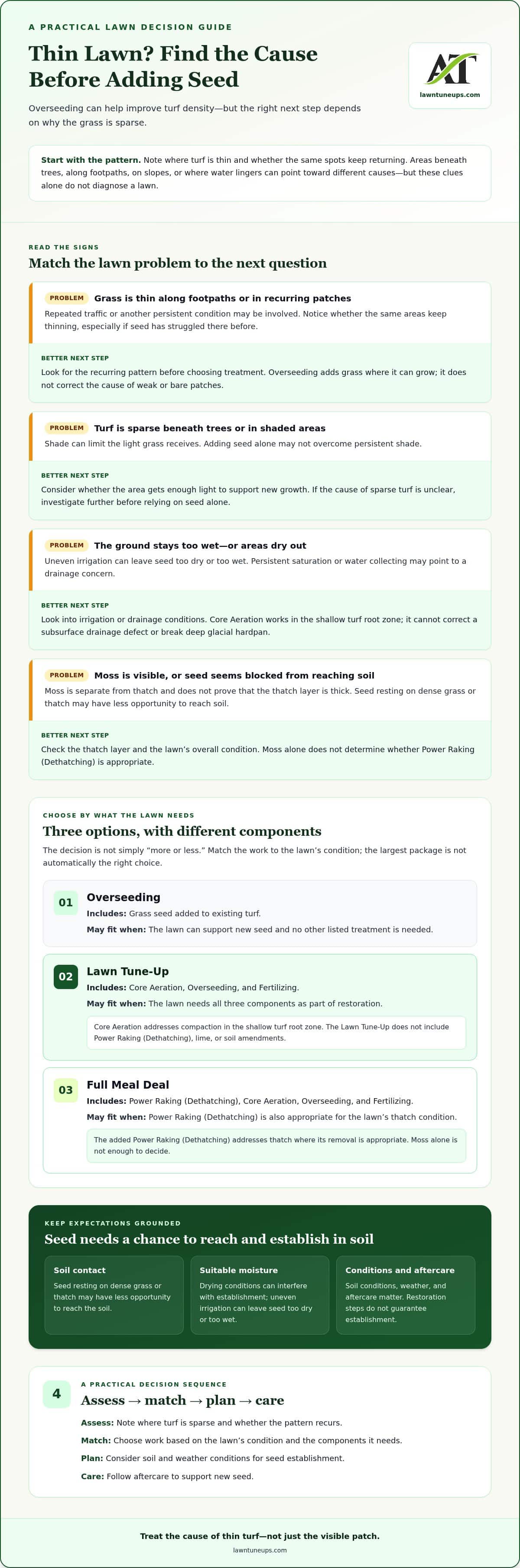
Thin or patchy grass can make fresh seed seem like the obvious fix. But before choosing overseeding for Ballard lawns, look at where the turf is sparse and whether the same spots keep returning. Note the pattern: areas under trees, along footpaths, on slopes, or where water lingers can point to different causes. These clues help guide the next decision, but they don’t diagnose a property by themselves.
What can make a Ballard lawn look thin?
Compaction in the shallow turf root zone can restrict space for roots, water, and air. Shade can limit the light grass receives. Thatch is a layer of undecomposed stems and roots between green growth and soil; moss is separate and doesn’t prove thatch is thick. Uneven irrigation may leave areas too dry or too wet, while drainage issues can cause persistent saturation. Moss presence alone does not determine whether Power Raking (Dethatching) is appropriate; check the thatch layer and consider why grass is sparse.
When does a lawn need further diagnosis?
Notice whether bare areas follow foot traffic, remain shaded, or repeatedly stay wet or dry. Recurring patches deserve more investigation before choosing a treatment, especially if seed has struggled there before. Lawn care techniques, including overseeding, are one part of turf care, but the right approach depends on the lawn’s condition. Also distinguish shallow compaction from deeper problems before choosing Core Aeration.
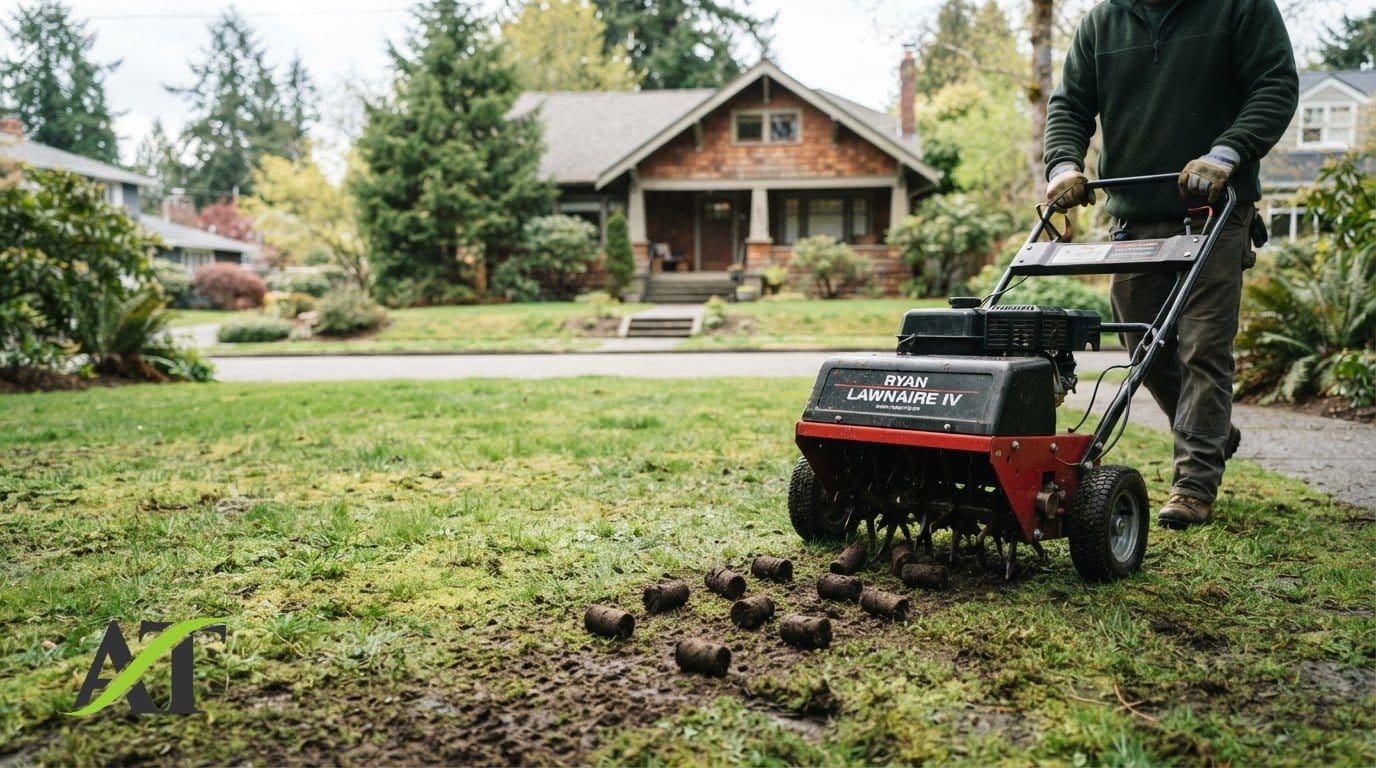
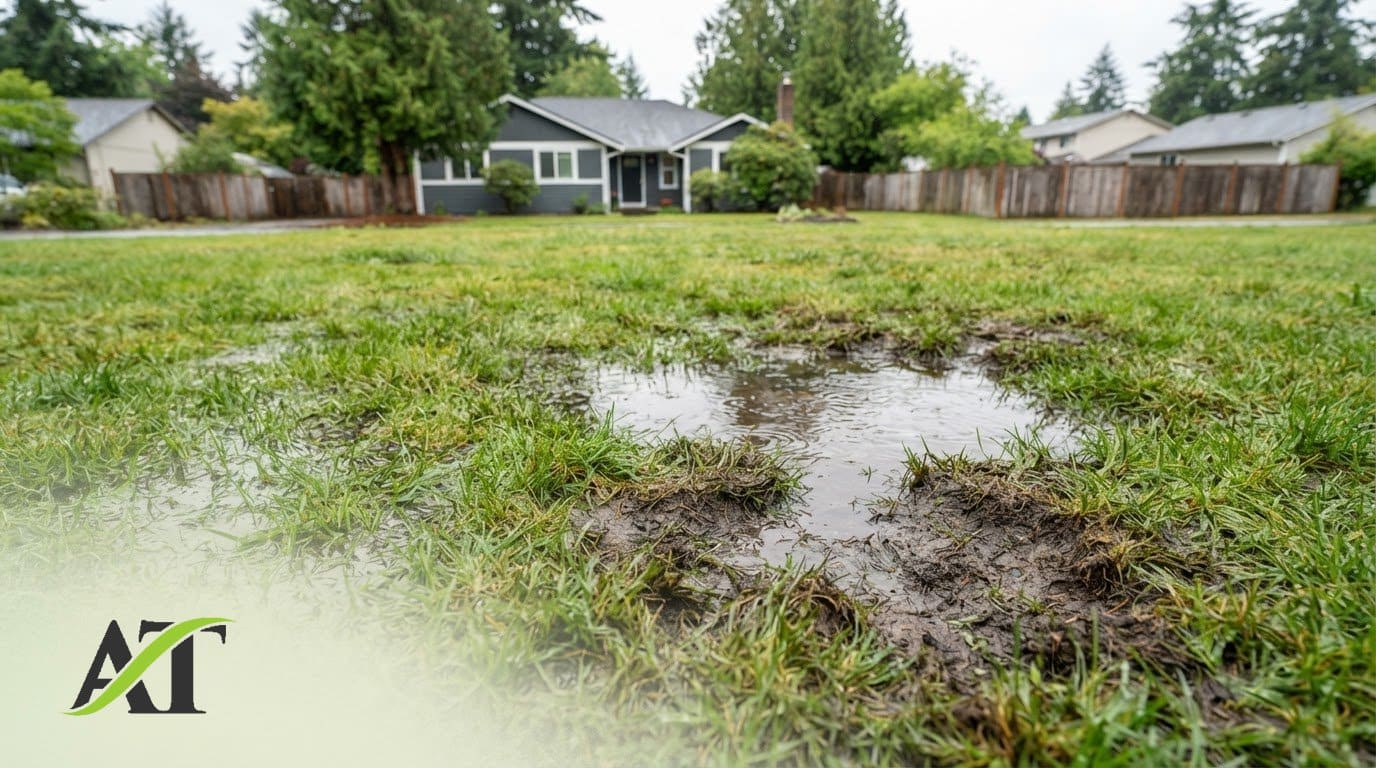
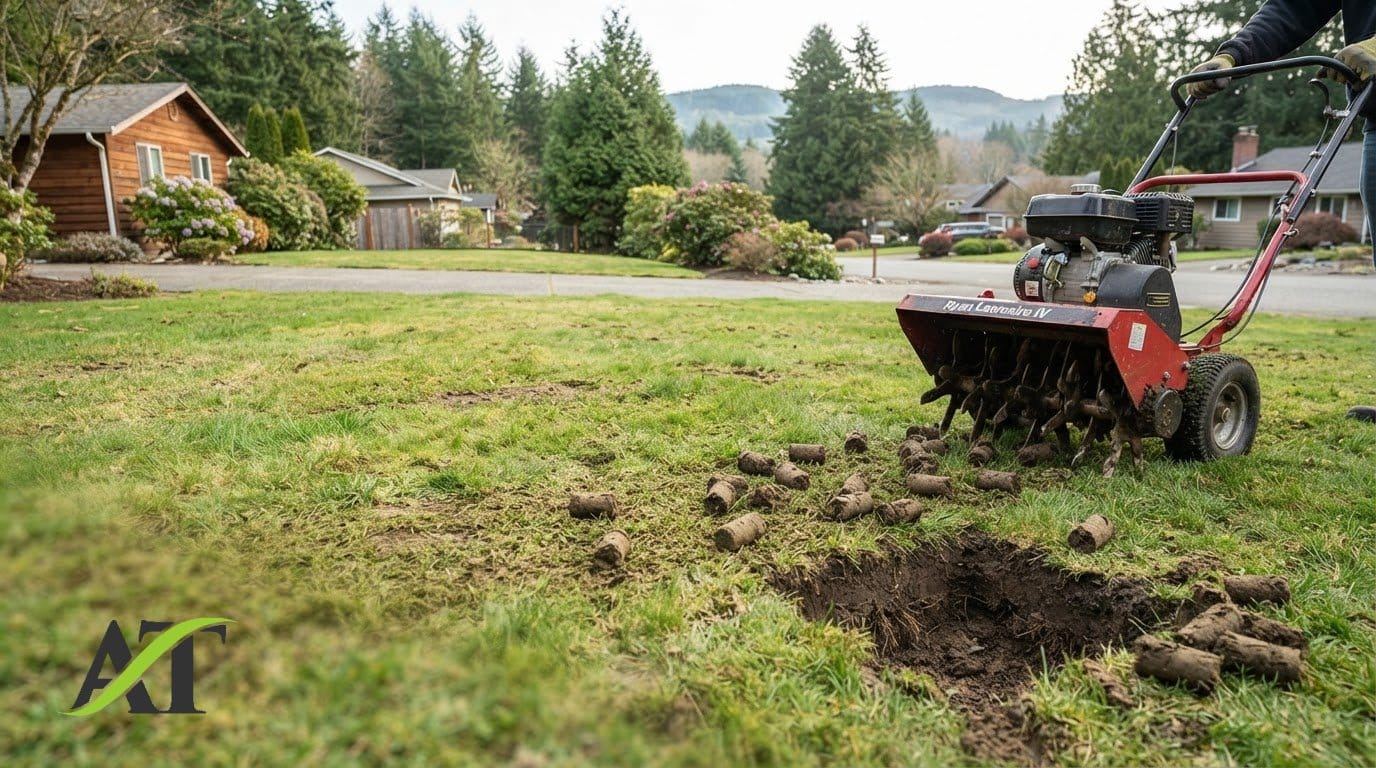
Core Aeration addresses compaction in the shallow turf root zone. It cannot break deep glacial hardpan or correct a subsurface drainage defect. If water continues to collect or the ground stays saturated, aeration and seed alone may not address the cause. Once restoration work is planned, use the lawn aftercare guidance to understand care following the work.
What Overseeding Can, and Cannot, Do for a Ballard Lawn
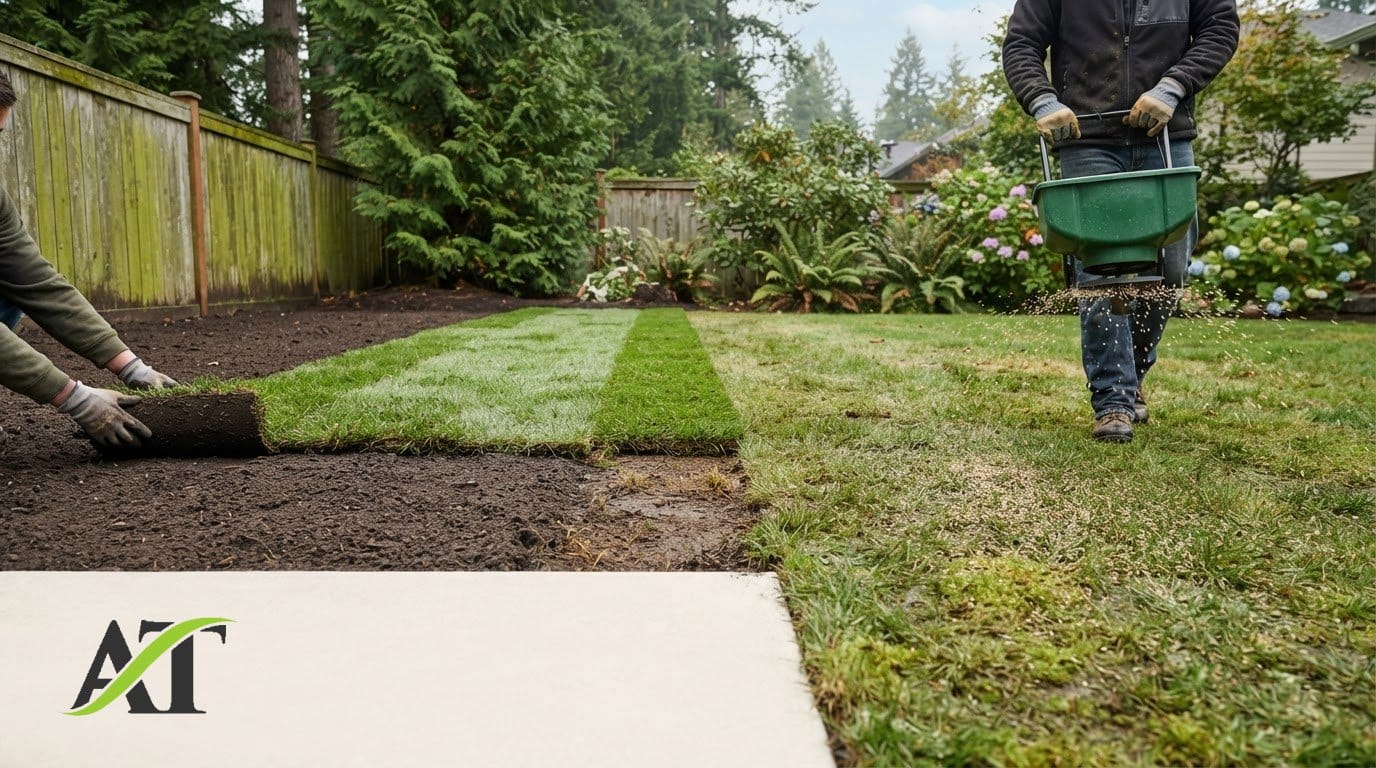
Overseeding means adding grass seed into existing turf to improve its density, rather than removing and replacing the whole lawn. For a thin lawn in Ballard, it can add seed while keeping suitable existing grass in place. It’s most useful when the lawn can support new growth and seed can reach the soil.
How does Overseeding fit into lawn restoration?
Seed needs contact with soil and suitable moisture to establish. Seed resting on dense grass or thatch may have less opportunity to reach the soil, while drying conditions can interfere with establishment. Core Aeration can help create openings in the shallow turf root zone for seed-to-soil contact. In a Lawn Tune-Up, it is paired with Overseeding and Fertilizing. These steps support restoration, but they don’t guarantee establishment; soil conditions, weather, and aftercare matter too. Purdue Extension also describes overseeding as one option within broader lawn improvement programs.
Overseeding adds grass where it can grow; it doesn’t correct the condition that made the turf thin. New seed can contribute to denser turf, but it won’t independently remove the cause of bare or weak patches.
When is seed unlikely to solve the whole problem?
If grass remains thin under persistent shade, adding seed alone may not overcome limited light. Uneven irrigation can leave seed too dry or too wet, and drainage concerns may keep soil saturated. Those conditions need separate attention and, where the cause isn’t clear, further diagnosis. Core Aeration works in the shallow root zone; it cannot break deep hardpan or correct a subsurface drainage defect.
If you’re unsure whether the lawn is ready for seed or needs another approach first, Ask Stewart About Your Lawn and describe where the turf is sparse and what you’ve noticed there.
Choose Overseeding, Lawn Tune-Up, or Full Meal Deal by Lawn Condition
Once you have a clearer picture of the lawn’s needs, compare the work each option includes. The choice is not simply between more or less service. It’s whether the lawn needs seed alone, Core Aeration and Fertilizing alongside seed, or Power Raking (Dethatching) as well.
| Option | Included components | When it may fit |
|---|---|---|
| Overseeding | Grass seed added to existing turf | When the turf can support new seed and no other listed treatment is needed |
| Lawn Tune-Up | Core Aeration, Overseeding, and Fertilizing | When the lawn needs all three components |
| Full Meal Deal | Power Raking (Dethatching), Core Aeration, Overseeding, and Fertilizing | When Power Raking (Dethatching) is also appropriate |
When does a Lawn Tune-Up fit the decision?
A Lawn Tune-Up consists only of Core Aeration, Overseeding, and Fertilizing. It can fit a lawn that needs seed to improve turf density, Core Aeration in the shallow root zone, and fertilizer as part of restoration. It does not include Power Raking (Dethatching), lime, or soil amendments. Review the Lawn Tune-Up details alongside the symptoms you’ve observed.
When might the Full Meal Deal be relevant?
The Full Meal Deal includes those same three components plus Power Raking (Dethatching). That added step addresses thatch where its removal is appropriate. Moss alone doesn’t establish that dethatching is needed; consider the thatch itself and the lawn’s overall condition before choosing this option.
The largest package isn’t automatically the right choice; match the work to the lawn’s condition. Ballard homeowners should weigh what the turf needs, not select extra work by default.
Plan Ballard Overseeding Around Conditions, Aftercare, and a Clear Next Step
A practical plan follows four steps: assess the lawn, choose a treatment that fits, plan around soil and weather, then follow aftercare. For homeowners considering lawn overseeding Ballard, this sequence helps avoid treating seed as a fix for every thin patch. Note where the turf is sparse and what may affect seed contact or moisture.
- Assess the lawn. Note thin areas, visible moss or thatch, shade, and places where water collects or the ground stays dry.
- Select the treatment. Decide whether Overseeding alone fits, or whether the lawn’s condition points to a Lawn Tune-Up or Full Meal Deal.
- Plan around conditions. For our Premium 60/40 Sun & Shade Mix, we prefer soil temperatures around 55-75°F (13-24°C) as a practical window for our Seattle-area service. This is guidance, not a universal rule, strict cutoff, or germination guarantee.
- Follow aftercare. Moisture, seed-to-soil contact, soil conditions, weather, and homeowner aftercare all affect establishment.
What should homeowners prepare for after Overseeding?
New seed needs suitable moisture to establish, so follow the aftercare instructions provided for the work rather than relying on a generic watering schedule. Conditions can vary across a lawn, and no single schedule or timeline fits every yard. The Seattle lawn after-care guidance covers care following Overseeding and related restoration work. If Core Aeration and Fertilizing are also appropriate, the Lawn Tune-Up details explain that service’s components.
How can Ballard homeowners take the next step?
For lawn overseeding Ballard, share what you see: which areas are thin, whether moss or thatch is visible, how much shade those spots receive, and whether you’ve noticed drainage concerns. Mention whether bare patches recur after seeding. Those details help focus the discussion on your lawn’s condition, not automatically on the largest package.
Ask Stewart About Your Lawn
Choose a Restoration Plan That Fits Your Lawn
A sound lawn overseeding Ballard plan starts with a clear goal: improve thin turf while giving the underlying lawn conditions a fair chance to support new growth. There’s no need to rush into a treatment just because bare areas are frustrating. A measured decision can help you focus on work that fits your lawn instead of adding steps without a clear reason.
Before moving ahead, note which areas concern you most and what you hope will change. That gives the conversation a practical starting point and helps keep the plan specific to your property. Aerating Thatching Co. serves Ballard homeowners with lawn restoration focused on the condition of the turf.
Share what you’ve noticed, and Stewart can help you consider a suitable next step for your lawn.
Ask Stewart About Your Lawn
With a thoughtful plan and attentive aftercare, you can move forward with greater confidence in your lawn’s restoration.
Frequently Asked Questions
Can overseeding get rid of moss in a Ballard lawn?
No. Overseeding adds grass seed; it doesn’t remove moss or resolve the conditions that allow it to remain. If moss is visible, consider whether grass is also limited by shade, moisture, or another factor. For example, adding seed beneath dense shade may not address why the grass is sparse there. Look at the growing conditions as well as the moss before choosing restoration work.
Should a lawn be dethatched before overseeding?
Not automatically. Power Raking (Dethatching) may be relevant if a thatch layer needs removal, but moss alone doesn’t show that dethatching is necessary. Check whether thatch is actually present and consider the lawn’s broader condition. If you’re unsure what you’re seeing, describe the areas of concern before selecting a service. The goal is to choose work that addresses the lawn, not add a step by default.
What soil temperature is preferred for overseeding in Seattle?
For Seattle-area Overseeding with our Premium 60/40 Sun & Shade Mix, we prefer soil temperatures around 55-75°F (13-24°C). Use that as a practical guide, not a universal rule or a promise that seed will germinate. Soil temperature differs from a warm afternoon air reading, and seed establishment also depends on moisture, soil conditions, weather, seed-to-soil contact, and aftercare.
What should I do after overseeding my lawn?
Follow the aftercare instructions provided for the work, especially guidance on maintaining suitable moisture. Avoid relying on a fixed watering schedule or assuming every part of the lawn will establish at the same pace. Pay attention to spots that dry out quickly or stay unusually wet, and note those conditions. If you have questions about care for your lawn, share what you’re observing so the guidance can be specific.
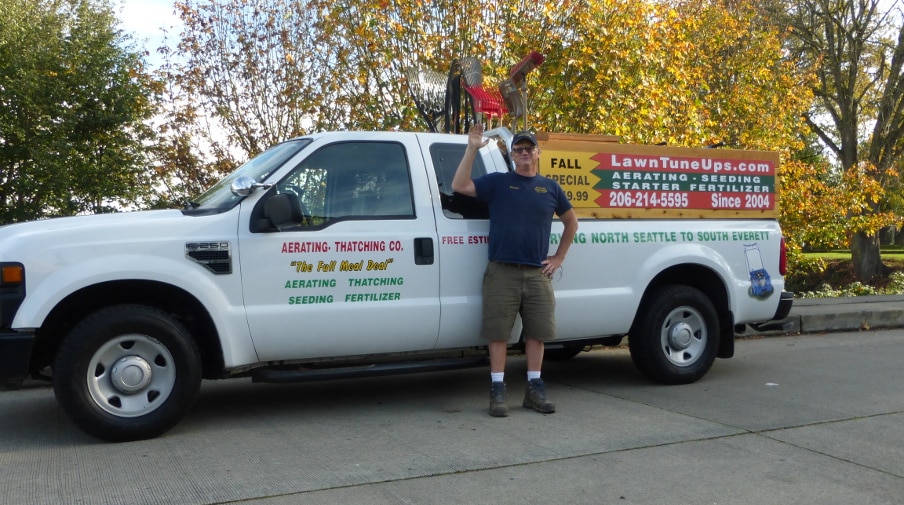
Article by
Stewart Armour
Stewart Armour is the owner of Aerating Thatching Co., an owner-operated Seattle-area lawn restoration business established in 2004. He helps homeowners understand Core Aeration, Power Raking (Dethatching), Overseeding, soil conditions, and the aftercare needed for stronger lawns. His background includes turf management study, advanced golf course turf training, and continuing education through Wilbur-Ellis University, State Turf Facilities, Soil First Academy, and Golf Course Applied Turf Physiology. Stewart has personally evaluated thousands of residential lawns throughout the Seattle area and focuses on recommending the work that fits each lawn’s condition.