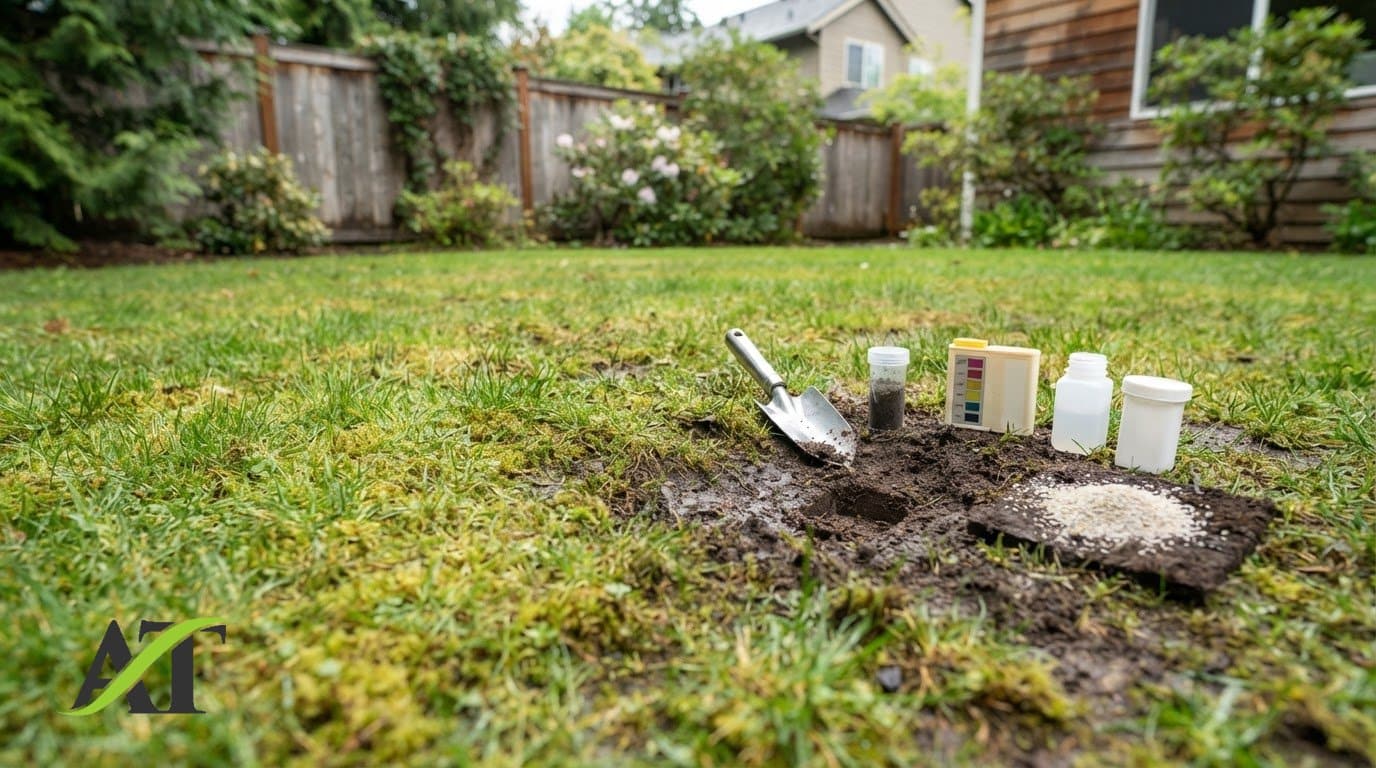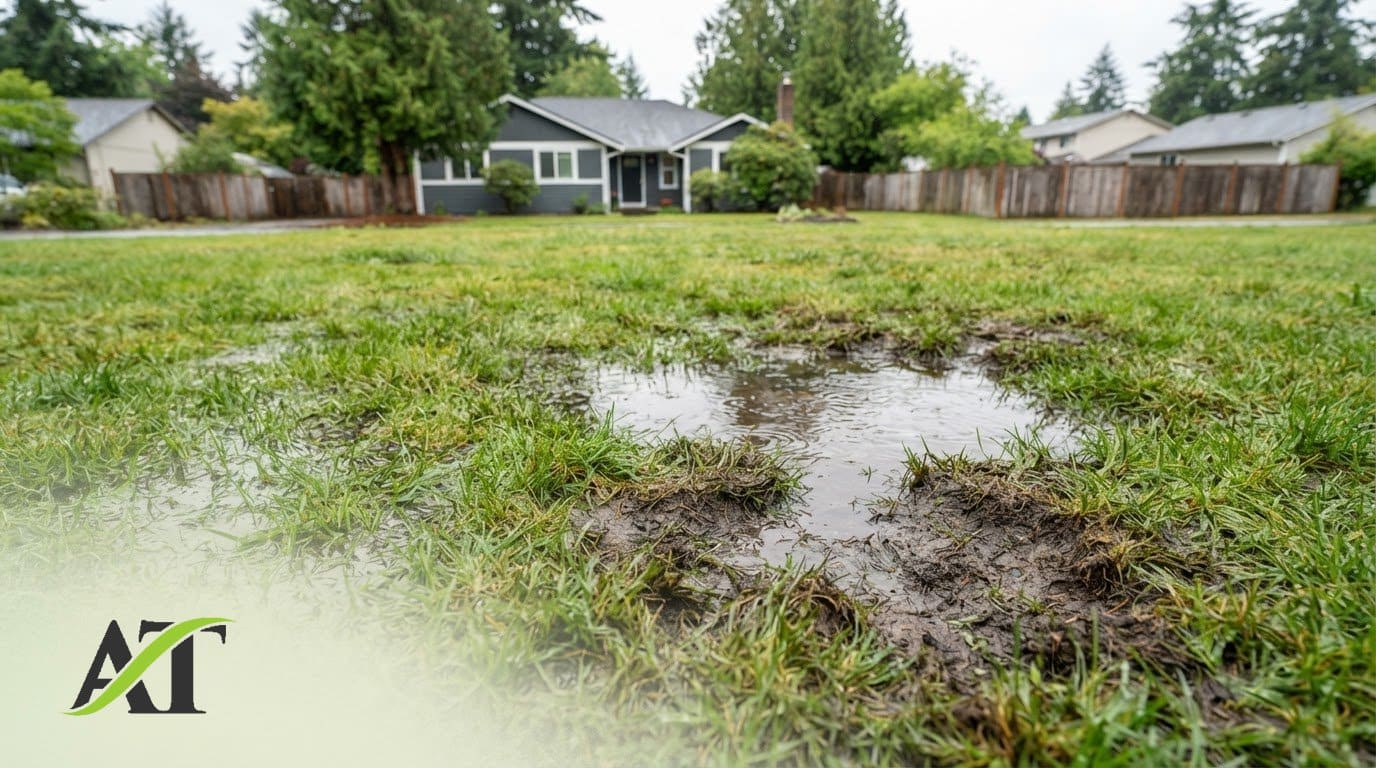
What if the soft, waterlogged patch in your Lynnwood lawn isn’t a turf problem at all? Standing water can make a yard hard to use, but adding seed or aerating won’t solve every cause. Before choosing soggy lawn solutions in Lynnwood, start by identifying where the water is coming from.
Compacted soil, thatch, shade, and overwatering can all contribute to thin grass and soft ground, but the pattern matters. Note whether water pools after rain, lingers in the same spot, or appears mainly in a shaded or heavily used area. These clues can help distinguish a turf or soil condition from a broader drainage issue. This article explains what to look for, what to address first, and when lawn restoration may help. You’ll also learn what Core Aeration and Overseeding can do for suitable turf, and why they won’t correct a subsurface drainage problem. The goal is to restore grass only when conditions give it a fair chance to recover.
Key Takeaways
- Start by mapping where water collects and noting what happened before the area became wet and how long the water stays.
- Compare wet-area patterns with signs of compaction, thatch, shade, and watering issues to narrow down what may be affecting the turf.
- Limit repeated foot traffic on saturated grass while you observe the problem, and seek further diagnosis if water continues to linger.
- Consider a Lawn Tune-Up only when the water issue is understood and the remaining concern is turf condition. It includes Core Aeration, Overseeding, and Fertilizing.
Soggy Lawn Solutions in Lynnwood Start With the Water Pattern
Recurring muddy patches, soft turf, or water that lingers after wet weather can make a lawn frustrating to use. Those signs deserve attention, but they don’t point to one automatic fix. A soggy lawn is a symptom, not a diagnosis: several different conditions can leave turf wet or soft.
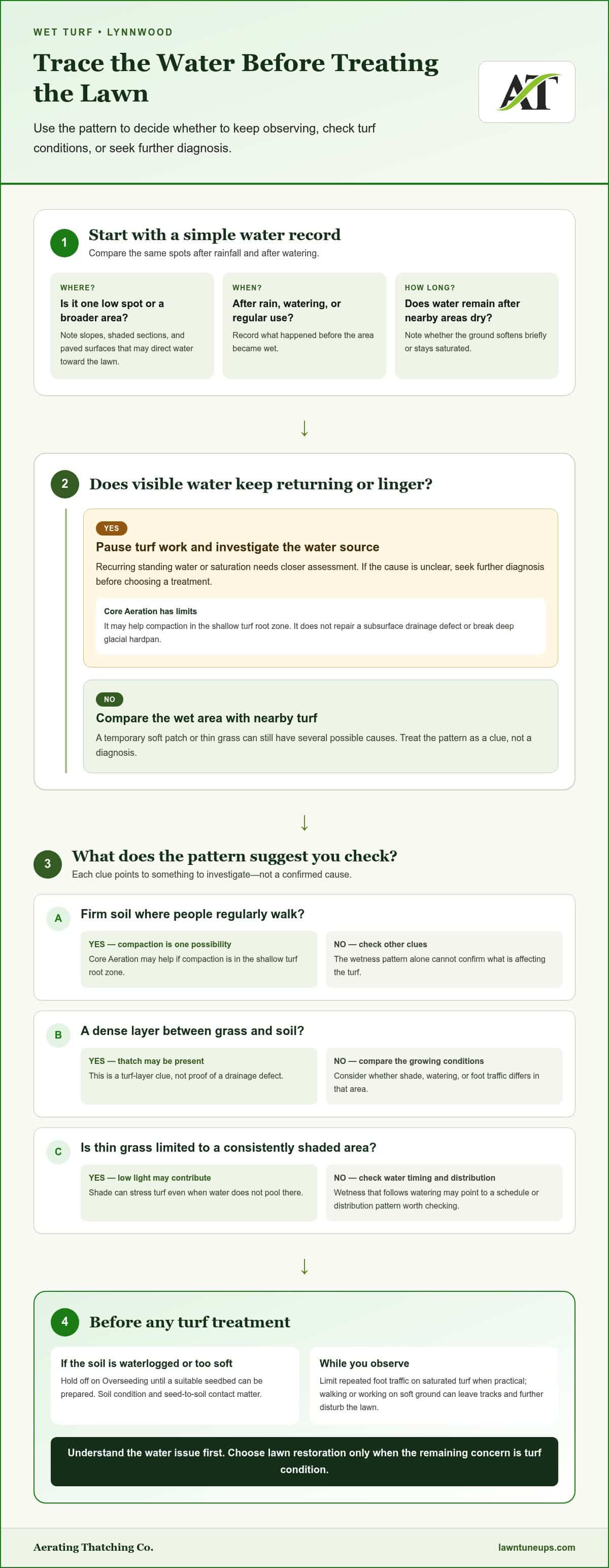
Before choosing a remedy, keep a short record. Note where water gathers, what happened before the area became wet, and whether the water drains away or remains. Compare the same spots after rainfall and after watering. This can help distinguish a pattern linked to water input from one that may relate to the lawn’s soil, surface, or growing conditions.
- Where: Is the wetness limited to a low spot, or does it cover a broad area?
- When: Does it follow rain, watering, or regular foot traffic? Does a shaded spot stay wet longer than a sunnier area?
- How long: Does the ground soften briefly, or does water remain visible after nearby areas have dried?
What to observe before choosing a Lynnwood lawn remedy
Compare isolated low spots with wider wet areas, but don’t assume either pattern proves a particular cause or reflects conditions across Lynnwood. Note nearby slopes and paved surfaces that may direct water toward the lawn. If wetness follows repeated walking, soil compaction is one possibility to investigate, though the pattern alone can’t confirm it.
Shade, watering habits, and foot traffic can help explain why one part of a yard behaves differently from another. Record what you observe rather than treating one muddy patch as proof of a drainage defect. If wet areas persist or the source remains unclear, the lawn may need further diagnosis before restoration is chosen.
Can Core Aeration Fix a Soggy Lawn? Know Its Limits
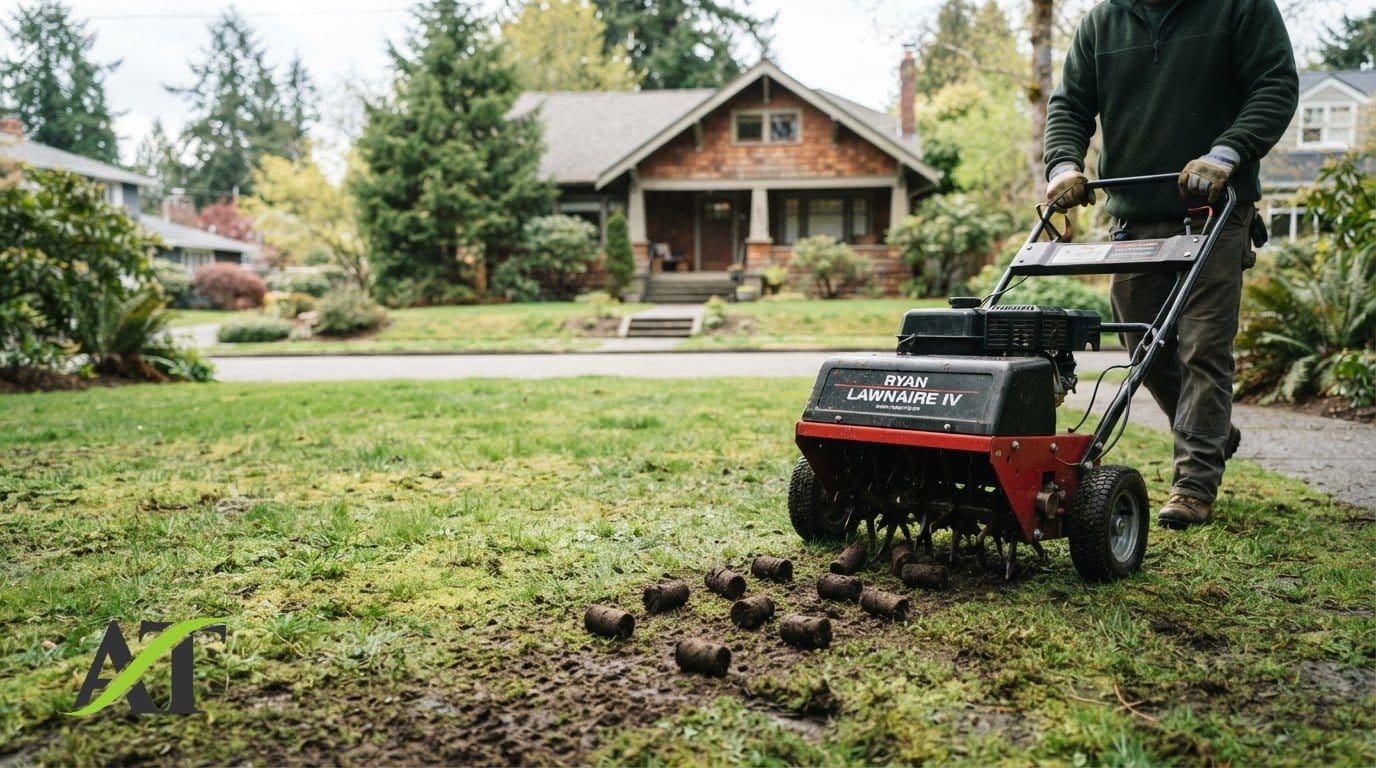
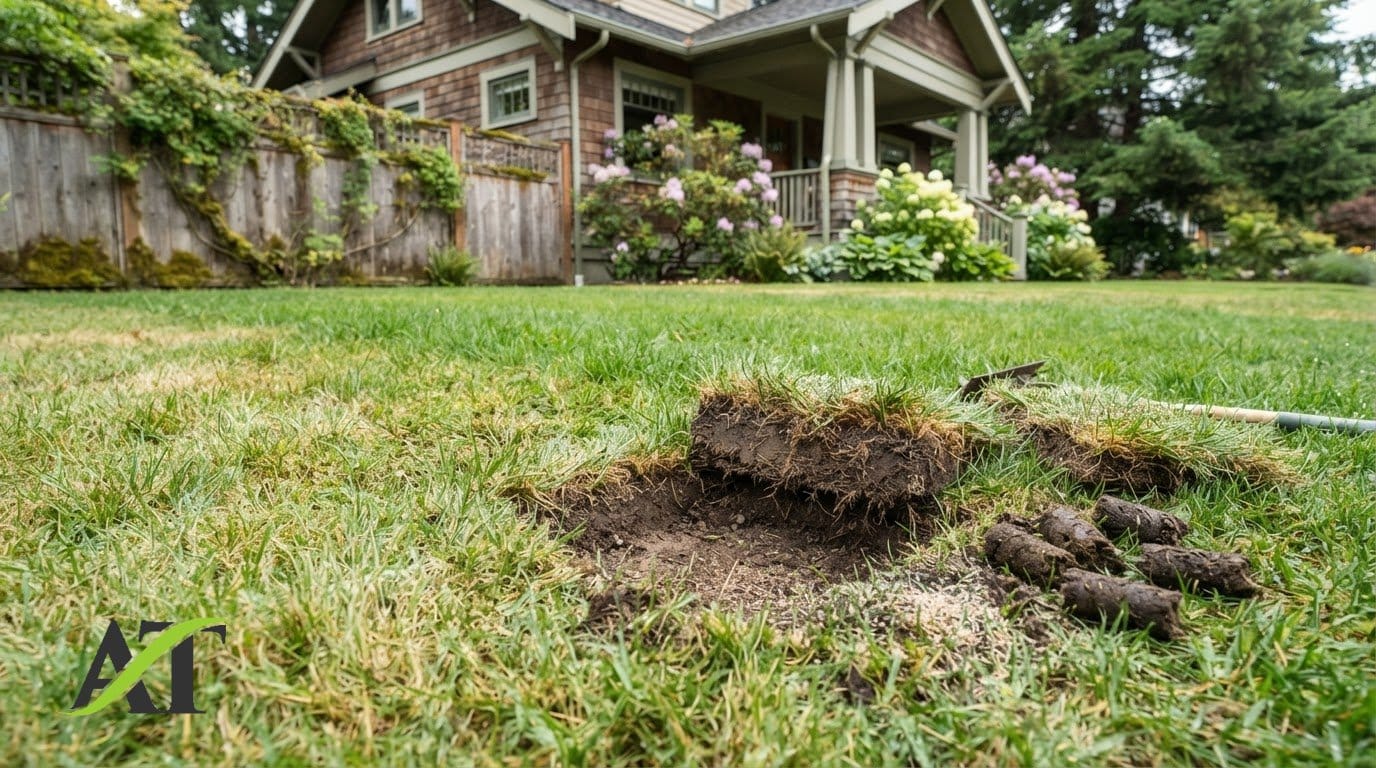
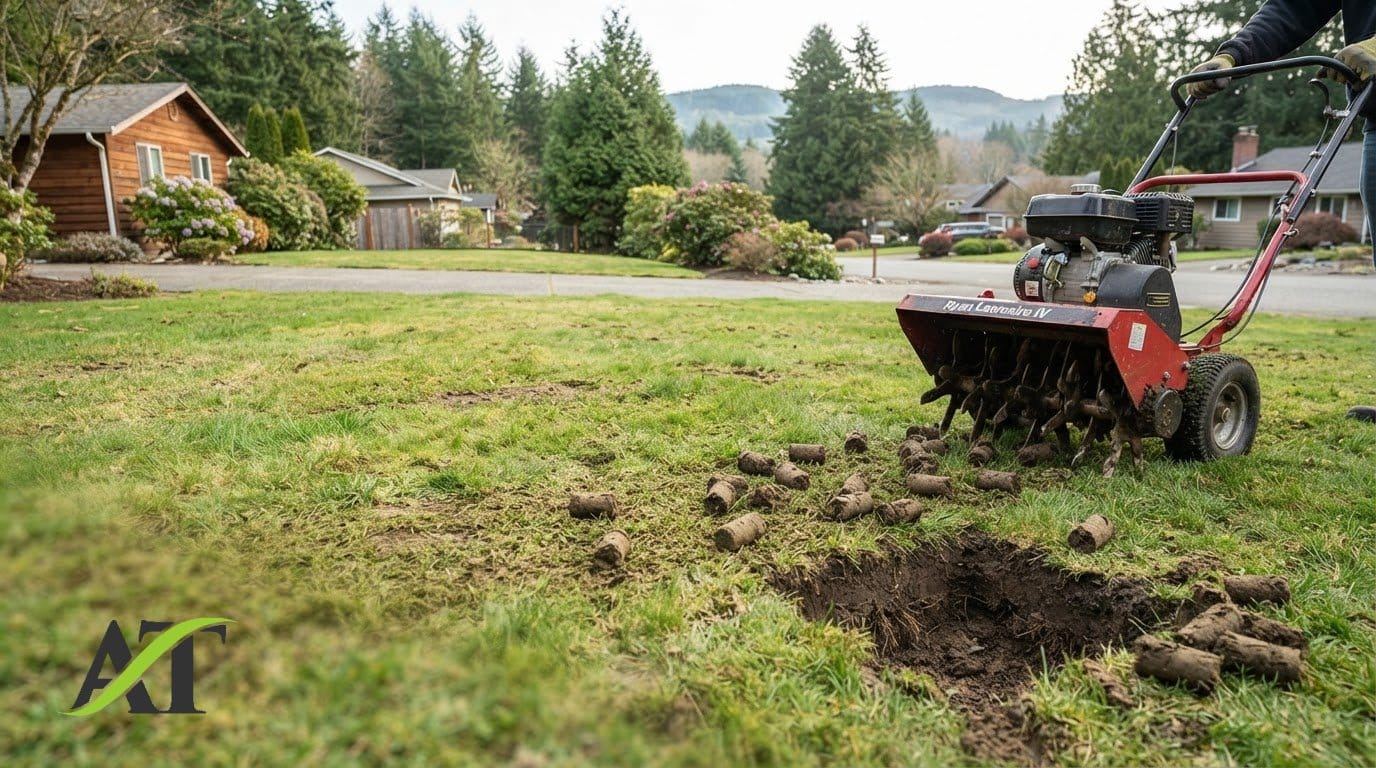
Core Aeration can help when compacted soil in the shallow turf root zone is part of the problem. It removes small soil plugs to relieve compaction in that zone. But it won’t break through deep glacial hardpan, repair a subsurface drainage defect, or remove standing water by itself. For broader site or infrastructure challenges, dedicated drainage and plumbing specialists such as CH Enviro handle underlying water management issues. A turf treatment addresses conditions in the grass and root zone; it isn’t a remedy for every source of excess water.
Use the pattern of damage as a clue, not a verdict. These conditions can look similar at first, but they call for different next steps:
- Compaction: Soil feels firm, especially in areas with regular foot traffic. Core Aeration may help if compaction is in the shallow root zone.
- Thatch: A dense layer of dead stems and roots sits between green grass and soil. This points to a turf-layer issue, not proof of a drainage defect.
- Shade: Grass struggles in a consistently shaded area, even if water doesn’t pool there. Low light may contribute to thin turf.
- Irrigation patterns: Wetness that follows watering in a particular area may point to an uneven schedule or distribution pattern worth checking.
- Drainage symptoms: Water repeatedly remains on the surface or the same area stays saturated. This needs closer assessment, not an assumption that aeration will solve it.
When wet turf needs further diagnosis
Persistent standing water or recurring saturation deserves a closer look at where excess water comes from and how it moves through the site. Moss, soft turf, or one observation after wet weather isn’t enough to diagnose a drainage defect. If the cause remains unclear, pause before choosing a treatment. The right approach for Lynnwood homeowners depends on identifying whether the problem is in the turf, soil, or water management.
If you’re unsure whether compaction is part of the issue, Ask Stewart About Your Lawn before choosing a turf treatment.
A Lynnwood Homeowner’s Practical Checklist for Wet Turf
Before choosing a treatment, build a simple record of the wet area. Consistent observations can help show whether you’re dealing with a recurring water pattern, stressed turf, or both.
- Map the wet spots. Mark isolated puddles and broader soft areas on a quick yard sketch. Note nearby slopes, shaded sections, and places where runoff may flow toward the lawn.
- Record the conditions. Write down whether the ground became wet after rainfall, watering, or regular use. Compare affected areas with nearby turf under different shade or foot-traffic conditions.
- Check watering patterns. Notice whether wetness follows watering and whether it appears in the same places each time. Adjusting an overly frequent schedule may be worth considering, but don’t assume watering explains water that persists independently.
- Watch what happens next. Check whether visible water clears and whether the soil remains soft. If standing water or saturation keeps returning, pause turf work while you investigate the cause.
Keep repeated foot traffic off saturated turf as much as practical. Walking or working on soft ground can leave tracks and further disturb the lawn. Hold off on Overseeding while the soil is waterlogged or too soft to prepare a suitable seedbed. Seed establishment depends on more than timing; soil condition and seed-to-soil contact matter, too.
Seasonal planning can help you choose when to reassess conditions, but a calendar isn’t a fixed treatment schedule. The Seattle Lawn Care Calendar offers a planning reference for lawn work without replacing an assessment of your yard’s actual conditions.
Which clues point to turf stress rather than a confirmed drainage cause?
Thin grass limited to shade, worn turf along a regular walking route, or a visible thatch layer can point to turf stress worth investigating. These clues don’t prove what’s happening below the surface or rule out a water issue. Compare areas and conditions, and treat the clues as prompts for further assessment rather than a diagnosis. This distinction helps Lynnwood homeowners choose a next step based on the lawn’s actual needs.
When Lawn Restoration Can Help a Soggy Lawn in Lynnwood
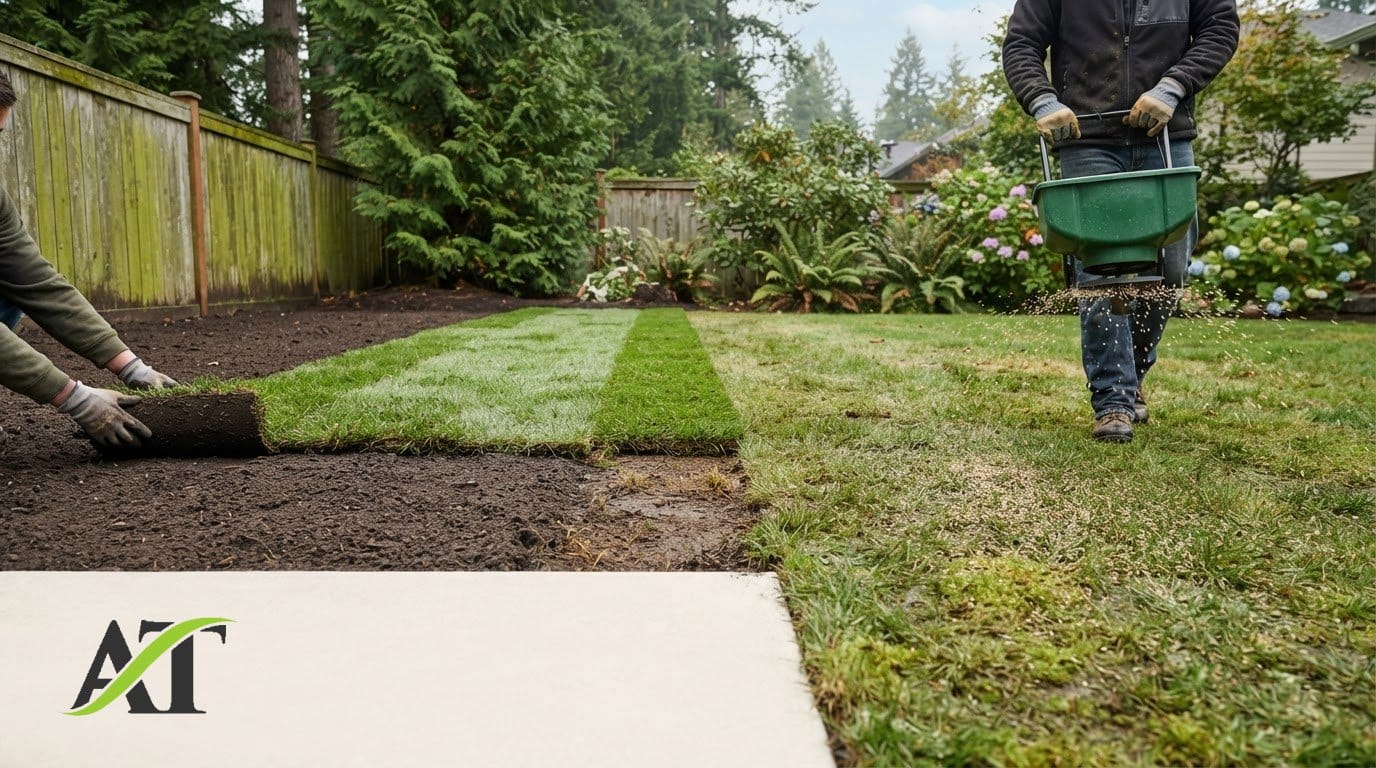
Lawn restoration makes sense after the water issue is understood and the remaining problem is thin, damaged, or struggling turf. If water continues to pool or the ground stays saturated, reseeding alone won’t address the cause. Restore the grass when site conditions can support recovery, not as a substitute for resolving persistent excess water.
Aerating Thatching Co. provides the Lawn Tune-Up, which combines Core Aeration, Overseeding, and Fertilizing. Core Aeration works in the shallow turf root zone, while Overseeding adds grass seed to suitable areas. Neither repairs a subsurface drainage defect. The Seattle Lawn Tune-Up guide explains the service components. Match a Lawn Tune-Up to turf needs, not as a catch-all fix for standing water.
Match the restoration work to the lawn’s actual condition
Look at what remains once the water pattern is understood. If the lawn is thin and compaction in the shallow root zone is part of the problem, Core Aeration and Overseeding may suit the turf. If a substantial thatch layer is the identified need, Power Raking (Dethatching) may be relevant. Aerating Thatching Co.’s Full Meal Deal combines Power Raking (Dethatching), Core Aeration, Overseeding, and Fertilizing. Thatch alone doesn’t mean every lawn needs all four components.
Seed establishment depends on suitable soil conditions, moisture, seed-to-soil contact, weather, and homeowner aftercare. If the seedbed is saturated or the source of excess water remains unresolved, pause and reassess rather than rushing into Overseeding. After restoration, follow the lawn after-care guidance so the work receives appropriate care as the turf establishes.
Choose the Next Step With Confidence
Let the lawn’s condition guide your next move. If water still lingers, track the pattern and hold off on turf work that can’t address the underlying cause. If the water issue is understood and the grass needs attention, restoration may be a sensible next step. For soggy lawn solutions in Lynnwood, resolve the cause first, then give suitable turf a chance to recover.
Aerating Thatching Co. provides lawn restoration services in Lynnwood and nearby communities, including North Seattle, Shoreline, Edmonds, Mill Creek, Bothell, Kenmore, Lake Forest Park, Mountlake Terrace, Snohomish, Everett, Brier, Woodway, Green Lake, Ballard, and Greenwood. Bring your observations to the conversation so the lawn’s needs, rather than a one-size-fits-all treatment, can guide what comes next.
A clearer read on the problem is a solid start. With the right next step, you can move toward a healthier, more usable yard.
Frequently Asked Questions
Does a soggy lawn mean the soil has poor drainage?
No. A soft patch in a Lynnwood lawn doesn’t, by itself, establish poor drainage. Similar symptoms can follow compacted soil, a thick thatch layer, shade, or watering that keeps one area wet. Also consider whether runoff reaches the spot from a nearby paved surface or slope. That clue can help frame the next assessment, but it still doesn’t confirm what lies below the turf.
Can Core Aeration fix standing water in a Lynnwood lawn?
Not by itself. Core Aeration is relevant if compaction within the shallow turf root zone is part of the lawn’s condition; it won’t redirect surface flow or correct a deeper defect. If water remains after aeration or returns in the same footprint, don’t keep treating the grass as though the water source has changed. First establish what is feeding the recurring wet area.
Should I overseed a lawn while it is still soggy?
Usually, wait until the soil is workable and the cause of persistent wetness is understood; soggy ground can make good seed-to-soil contact difficult. For Aerating Thatching Co.’s Seattle-area Overseeding with its Premium 60/40 Sun & Shade Mix, the preferred practical window is soil temperatures around 55-75°F (13-24°C). That’s a service preference, not a universal cutoff or germination guarantee. Moisture, soil conditions, weather, and aftercare also affect establishment.
Can moss alone tell me why my lawn stays wet?
No. Moss may coincide with shade or dampness, but seeing it doesn’t show whether water is trapped below the surface, arriving as runoff, or lingering at the lawn’s surface. Compare the mossy patch with nearby grass: note differences in light, use, and how each area changes after dry weather. Treat that comparison as background for diagnosis, not as a reason to choose a treatment on its own.
Article by
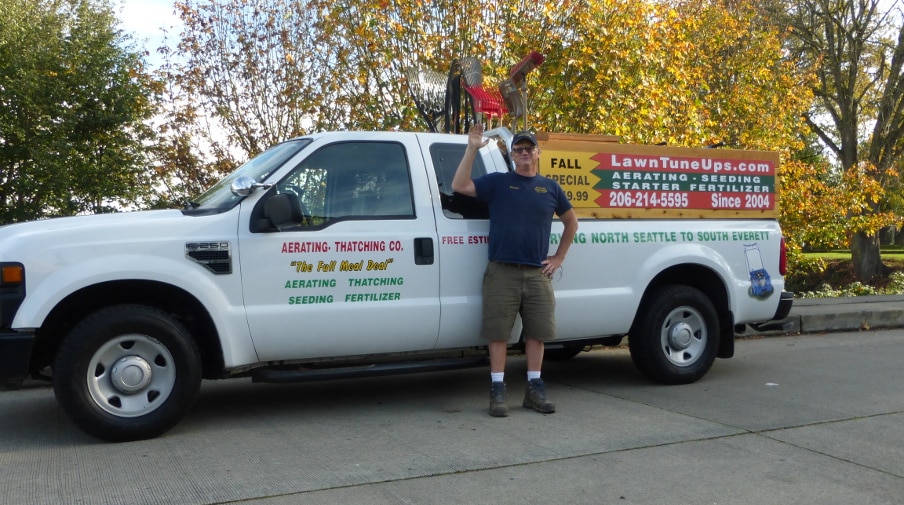
Stewart Armour
Stewart Armour is the owner of Aerating Thatching Co., an owner-operated Seattle-area lawn restoration business established in 2004. He helps homeowners understand Core Aeration, Power Raking (Dethatching), Overseeding, soil conditions, and the aftercare needed for stronger lawns. His background includes turf management study, advanced golf course turf training, and continuing education through Wilbur-Ellis University, State Turf Facilities, Soil First Academy, and Golf Course Applied Turf Physiology. Stewart has personally evaluated thousands of residential lawns throughout the Seattle area and focuses on recommending the work that fits each lawn’s condition.