Lawn Aeration Near Me: How to Choose the Right Service for Your Seattle-Area Lawn
If you are looking for lawn aeration near you, start with one question: does your lawn actually need Core Aeration? For a compacted lawn, removing small soil cores can improve air and water movement into the root zone. But aeration is not a cure-all, and a thin, heavily thatched, poorly drained, or shaded lawn may need a different approach.
This guide explains what Core Aeration does, when it makes sense in the Seattle area, what it does not fix, how to compare DIY and professional aeration, and what to look for when choosing a local lawn aeration company.
Does Your Lawn Need Core Aeration?
Compacted Soil
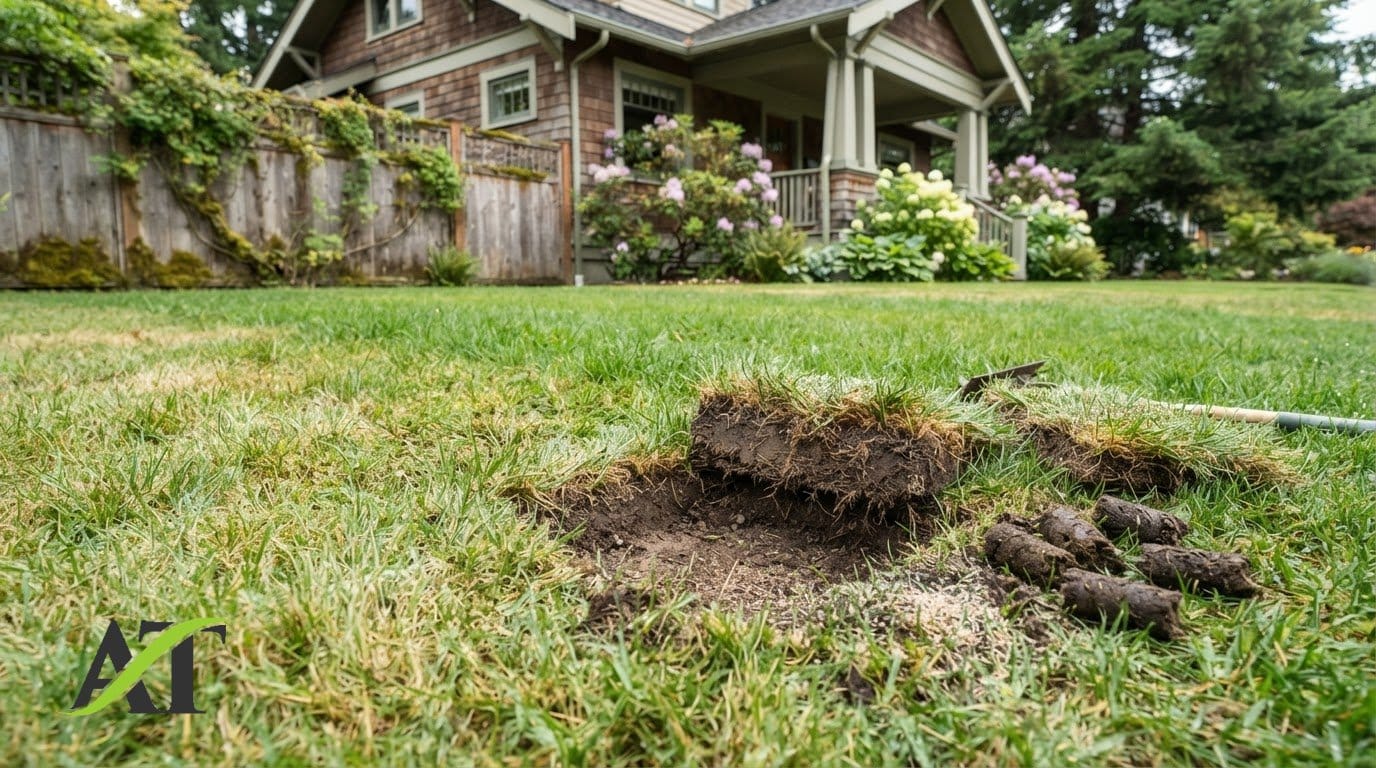
If the soil is hard, heavily traveled, or water has trouble entering the soil, Core Aeration may help relieve compaction.
Moist, Not Saturated
Core Aeration works best when the soil has enough moisture for hollow tines to penetrate and pull cores without being waterlogged.
Aeration May Not Be Enough
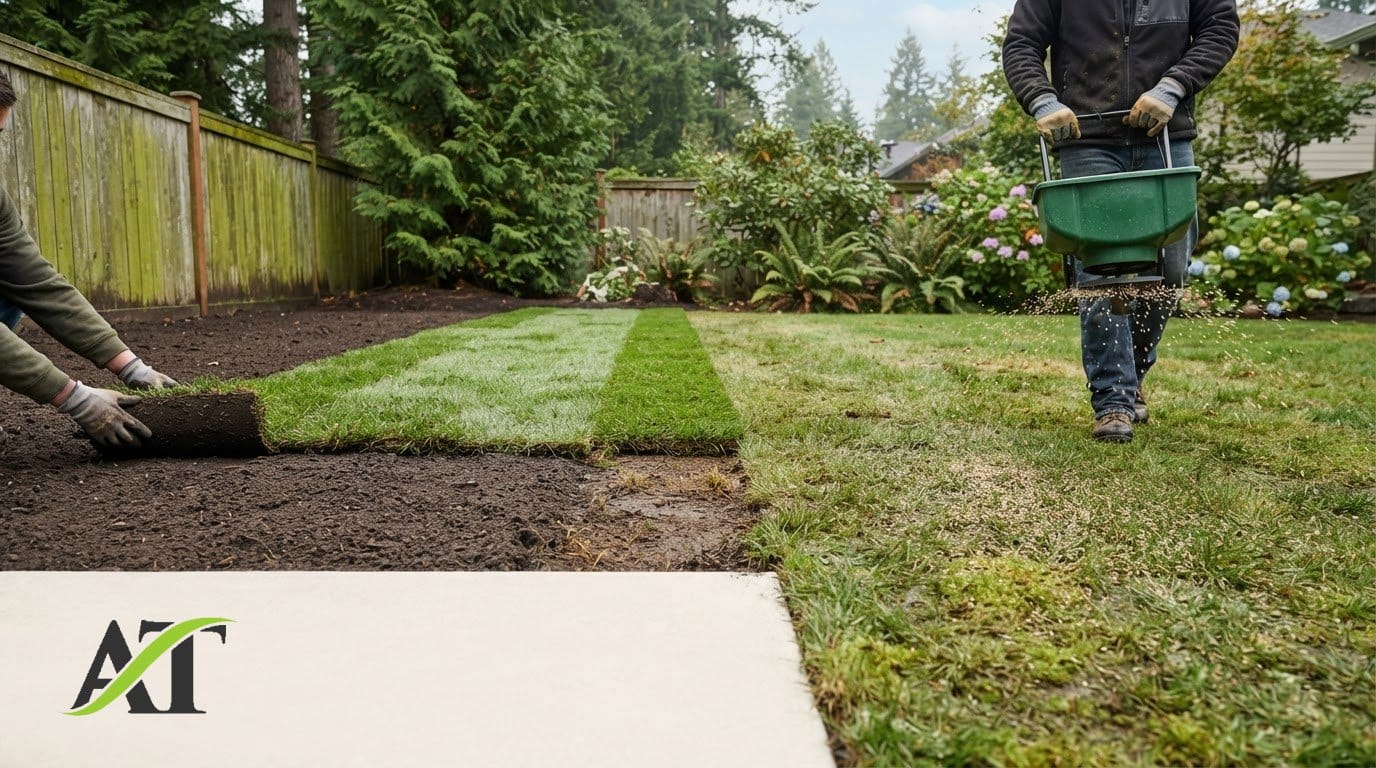
If the grass is thin, Core Aeration can be paired with Premium Overseeding and Starter Fertilizer to rebuild density.
Spring & Fall
Spring and fall are generally favorable periods because cool-season lawns are actively growing and conditions are often suitable for recovery.
What Is Core Aeration?
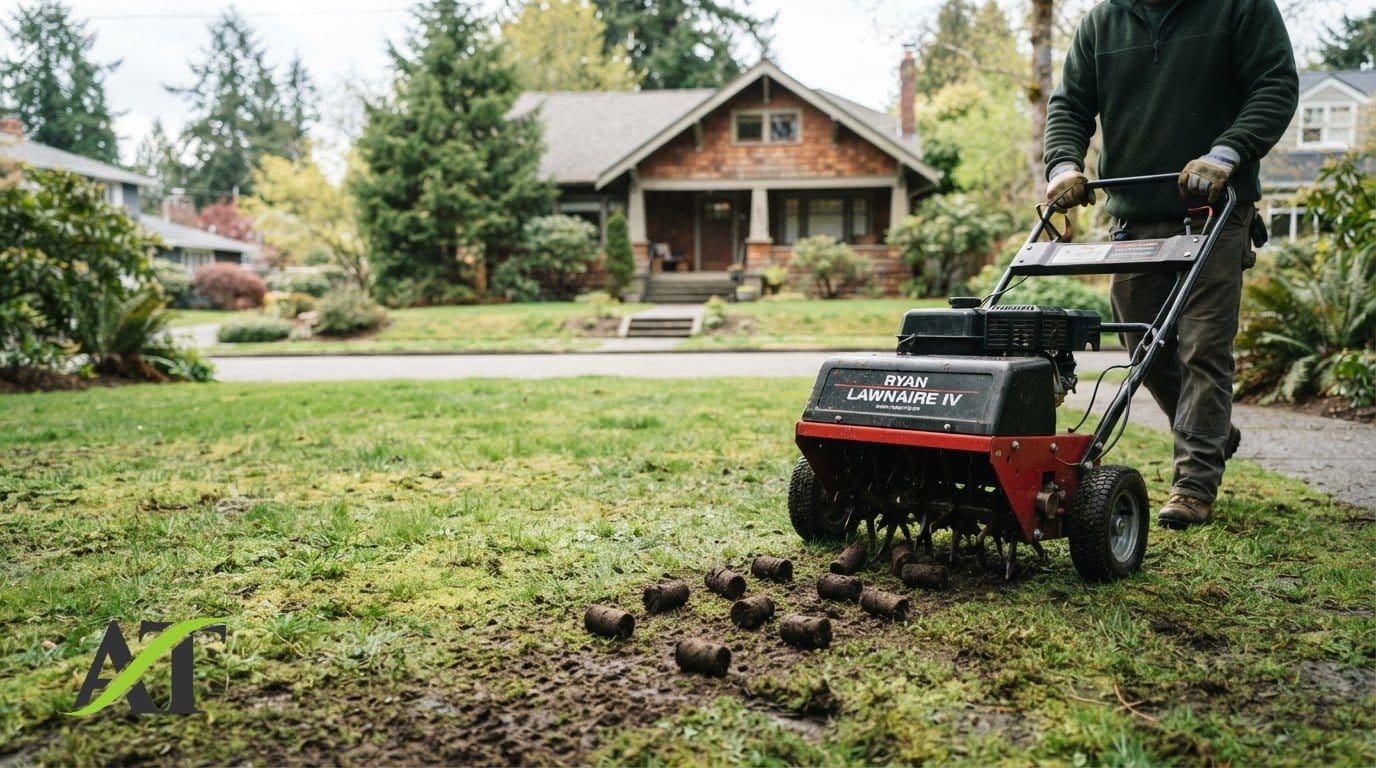
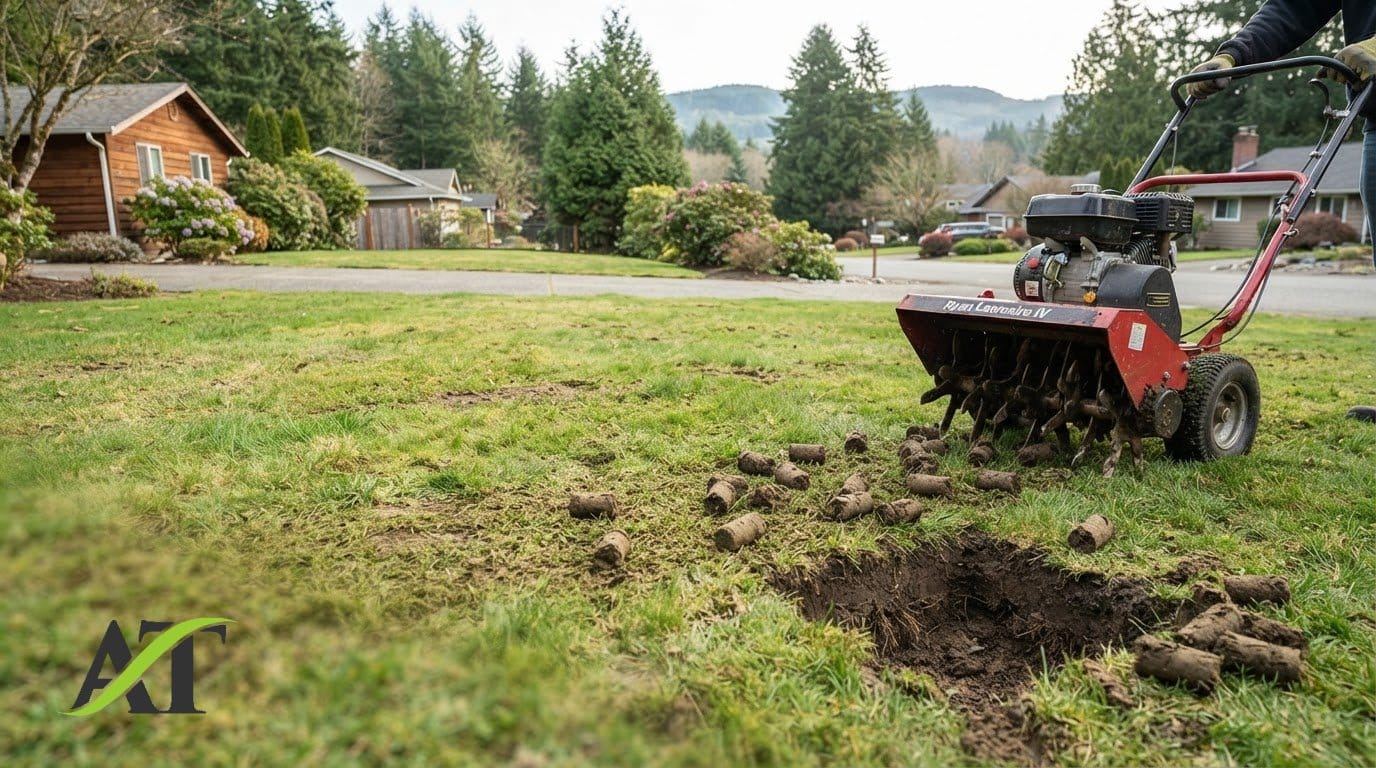
Core Aeration uses hollow tines to remove small plugs of soil from the lawn. Those openings help relieve compacted soil and create pathways for air and water to move into the root zone.
Washington State University recommends hollow-tine aeration as a way to reduce soil compaction and improve oxygen and water movement through turf soils. Core aeration can also improve conditions for overseeding because the openings create additional seed-to-soil contact.
Signs Compaction May Be Holding Your Lawn Back
No single symptom proves that a lawn needs aeration, but several conditions can point toward compacted soil.
Hard Soil
The soil feels firm and difficult to penetrate, especially in heavily traveled areas.
Heavy Foot Traffic
Paths, play areas, pet traffic and repeated use can gradually compress lawn soil.
Poor Water Infiltration
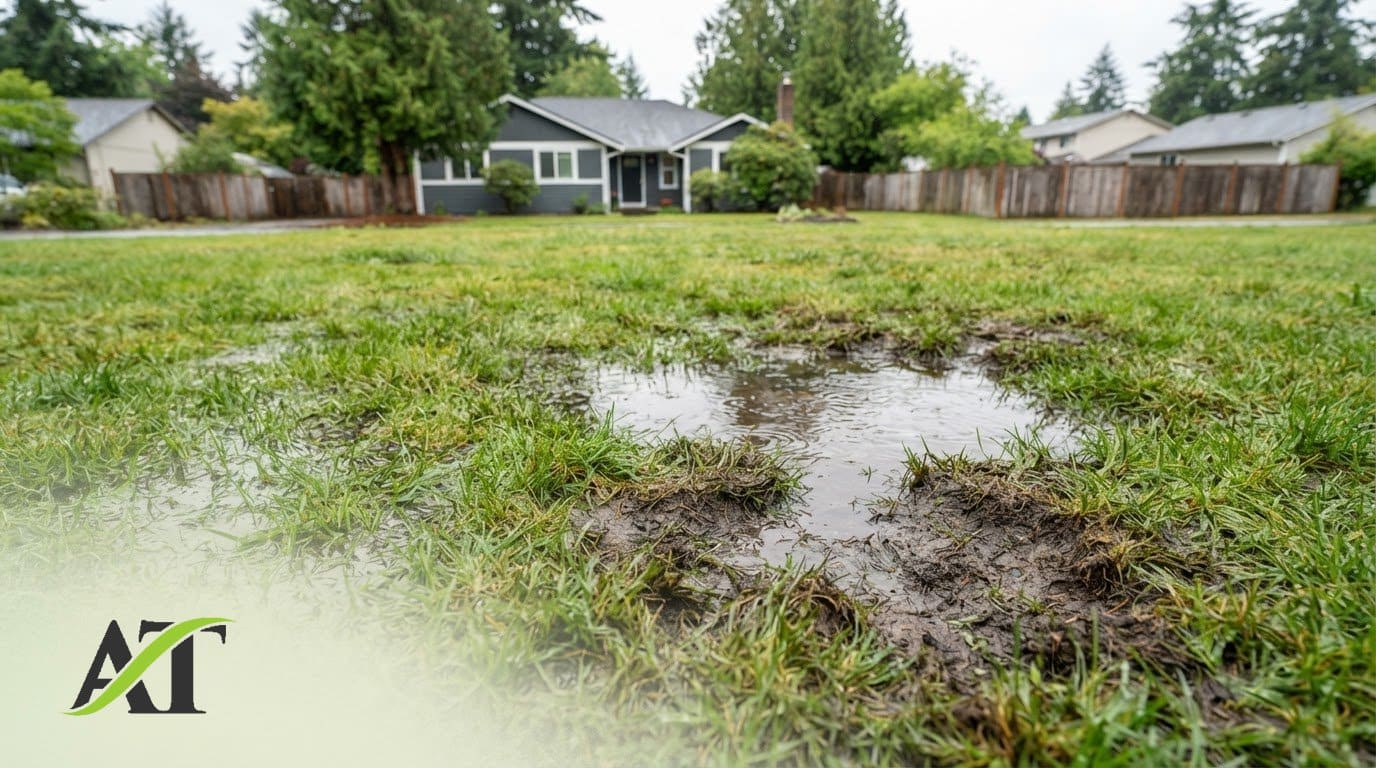
Water tends to run across the surface rather than soaking in. Compaction may contribute, although drainage problems can have other causes.
Weak Growth
Grass may struggle where compacted soil limits root development, although thinning can also result from shade, irrigation, soil or other issues.
What Core Aeration Won't Fix by Itself
Core Aeration is primarily a soil-compaction treatment. It can improve the growing environment, but it should not be sold as the answer to every struggling lawn.
Major Drainage Problems
Aeration may improve water infiltration in compacted soil, but it will not correct grading, standing groundwater, failed drainage systems or other structural drainage issues.
Heavy Thatch or Surface Buildup
If a dense layer of thatch, moss or dead material is blocking the soil surface, Dethatching (Power Raking) may be more appropriate.
Severe Shade
Aerating soil cannot create sunlight. Grass that receives inadequate light may remain thin even when compaction is improved.
Irrigation Problems
Core Aeration cannot compensate for an irrigation system that applies too little, too much or uneven water.
Very Thin or Bare Grass
Aeration opens the soil, but it does not add new grass. Thin lawns often benefit from overseeding as part of a broader improvement service.
Underlying Soil Problems
Compaction can be one part of poor soil performance. Some lawns may also benefit from targeted soil improvements depending on their condition.
When Is the Best Time to Aerate a Lawn?
Instead of choosing an aeration date solely from the calendar, pay attention to grass growth and soil condition.
Moist Enough to Pull Cores
The soil should contain enough moisture for the aerator's hollow tines to penetrate and remove plugs.
Saturated Soil
Waterlogged soil is not an ideal aeration condition. WSU guidance recommends aerating when soil is moist but not saturated.
Active Growth
Aerating while cool-season grass is actively growing gives the lawn a better opportunity to recover.
What Affects the Cost of Lawn Aeration?
When comparing lawn aeration companies, make sure you are comparing the actual scope of work rather than just the headline price.
Lawn Size
Total lawn area is one of the main factors affecting service pricing.
Property Access
Gates, steps, slopes, narrow passages and difficult equipment access can affect how a property can be serviced.
Service Combination
Core Aeration alone costs differently from services that also include overseeding, fertilizer or additional lawn improvements.
Lawn Condition
The right service depends on whether the lawn mainly needs compaction relief or needs a more complete density rebuild or renovation.
If Your Lawn Is Thin, Core Aeration Alone May Not Be Enough
A reasonably healthy lawn with compacted soil may only need Core Aeration. A lawn that has lost density may need new grass seed as well. And a lawn with significant thatch or surface buildup may require a stronger renovation approach.
Core Aeration
Best suited to a lawn that is already in reasonably good condition but needs help relieving soil compaction.
Core Aeration DetailsLawn Tune-Up
Combines Core Aeration, Premium Overseeding and Starter Fertilizer when rebuilding lawn density is also important.
Lawn Tune-Up DetailsFull Meal Deal
For lawns where significant thatch, moss or surface buildup means Dethatching (Power Raking) should also be part of the renovation.
Full Meal Deal DetailsShould You Overseed After Core Aeration?
If the lawn is thin, Core Aeration and overseeding are often paired because aeration creates openings that can improve seed-to-soil contact. Overseeding adds new grass plants; aeration alone does not.
Opens compacted soil and creates additional pathways into the root zone.
Adds new grass seed where additional lawn density is needed.
Supports the establishment period for new grass seedlings.
Proper watering becomes especially important when overseeding is included.
DIY vs. Professional Core Aeration
Renting an aerator can make sense, especially for a homeowner who has a smaller, accessible lawn and is comfortable transporting and operating heavy lawn equipment. Professional Core Aeration becomes more attractive when equipment handling, access, lawn size, soil condition or coordinating additional services makes the DIY option less practical.
| Consideration | DIY Rental | Professional Service |
|---|---|---|
| Small, simple lawn | Can be a reasonable option | Convenient but not always necessary |
| Transporting equipment | You handle pickup, loading and return | Handled by the service provider |
| Slopes or awkward access | Can make equipment handling difficult | Provider can evaluate whether access is workable |
| Soil moisture | You determine when conditions are suitable | An experienced provider can help judge service conditions |
| Overseeding at the same time | Requires coordinating seed, fertilizer and watering yourself | Can be combined into one lawn-improvement service |
For a deeper comparison, see our guide to renting vs. hiring a lawn aeration service in Seattle.
How to Choose a Lawn Aeration Company Near You
A good aeration provider should be able to explain both what the service can accomplish and when it is not enough.
A Local, Owner-Operated Approach to Core Aeration
Aerating Thatching Co. has served Seattle-area homeowners since 2004. Stewart personally performs the service, so the person evaluating the work is also the person doing it.
Owner on Every Job
There is no mystery crew. Stewart performs the lawn service and is the person you communicate with about the work.
Seattle-Area Experience
Recommendations are based on years of working with lawns in North King and South Snohomish County conditions.
Transparent Pricing
You can review current service pricing online before deciding whether to request a quote.
Right Service for the Lawn
Core Aeration, Lawn Tune-Up and Full Meal Deal address different conditions. The largest service is not automatically the right one.
Seattle Lawn Aeration FAQ
How do I know if my lawn actually needs Core Aeration?
Compacted, hard soil, heavy foot traffic and poor water infiltration can all suggest that Core Aeration may help. Thin grass or moss alone does not prove compaction because those symptoms can have several causes.
When is the best time to aerate a lawn in Seattle?
Spring and fall are generally favorable periods for Seattle-area cool-season lawns. More important than the month is having actively growing turf and soil that is moist enough to pull cores but not saturated.
How much does lawn aeration cost?
Cost depends on lawn size, access and whether Core Aeration is being performed alone or as part of a service that also includes overseeding, fertilizer or other lawn improvements. See our current pricing page for published service pricing.
How often should a lawn be aerated?
Frequency depends on compaction and use. Lawns exposed to heavy traffic or recurring compaction may benefit more frequently than lawns with loose soil and little traffic. WSU notes that heavily trafficked turf may benefit from annual aeration.
Should I aerate or Dethatch (Power Rake)?
They address different problems. Core Aeration primarily targets compacted soil. Dethatching (Power Raking) removes excessive surface buildup such as thatch and accumulated material. Some lawns need one; a more heavily affected lawn may benefit from both.
Is Core Aeration enough for a thin lawn?
Not always. Aeration improves the soil environment but does not add new grass. If lawn density is the main concern, a Lawn Tune-Up combines Core Aeration with Premium Overseeding and Starter Fertilizer.
Should I overseed after aerating?
If the lawn is thin, overseeding after Core Aeration can be a useful combination because the aeration openings improve seed-to-soil contact. A dense lawn being aerated only for compaction relief may not necessarily need overseeding.
What should I do with the soil plugs after aeration?
In most cases, leave the plugs on the lawn and allow them to break down naturally. They return soil to the surface over time.
Can I mow after Core Aeration?
If the lawn was only aerated, normal mowing can generally resume as lawn conditions allow. If overseeding was also performed, mowing and watering should follow the appropriate new-seed after-care instructions.
Can I aerate the lawn myself?
Yes. DIY rental aeration can make sense for smaller, accessible lawns when you are comfortable transporting and operating the equipment. Professional service may be more practical for larger lawns, difficult access, significant compaction or when aeration is being coordinated with overseeding and fertilizer.
Ready to Decide What Your Lawn Needs?
You do not have to jump directly into a quote. Review pricing, learn more about Core Aeration, or request service when you are ready.
See Pricing
Review current Core Aeration, Lawn Tune-Up, Full Meal Deal and add-on pricing.
See Current PricingExplore Core Aeration
See how Aerating Thatching Co. performs professional Core Aeration for Seattle-area lawns.
Core Aeration ServiceRequest a Quote
Tell us about your lawn and the service you are considering, and Stewart can recommend the appropriate next step.
Request a Quote