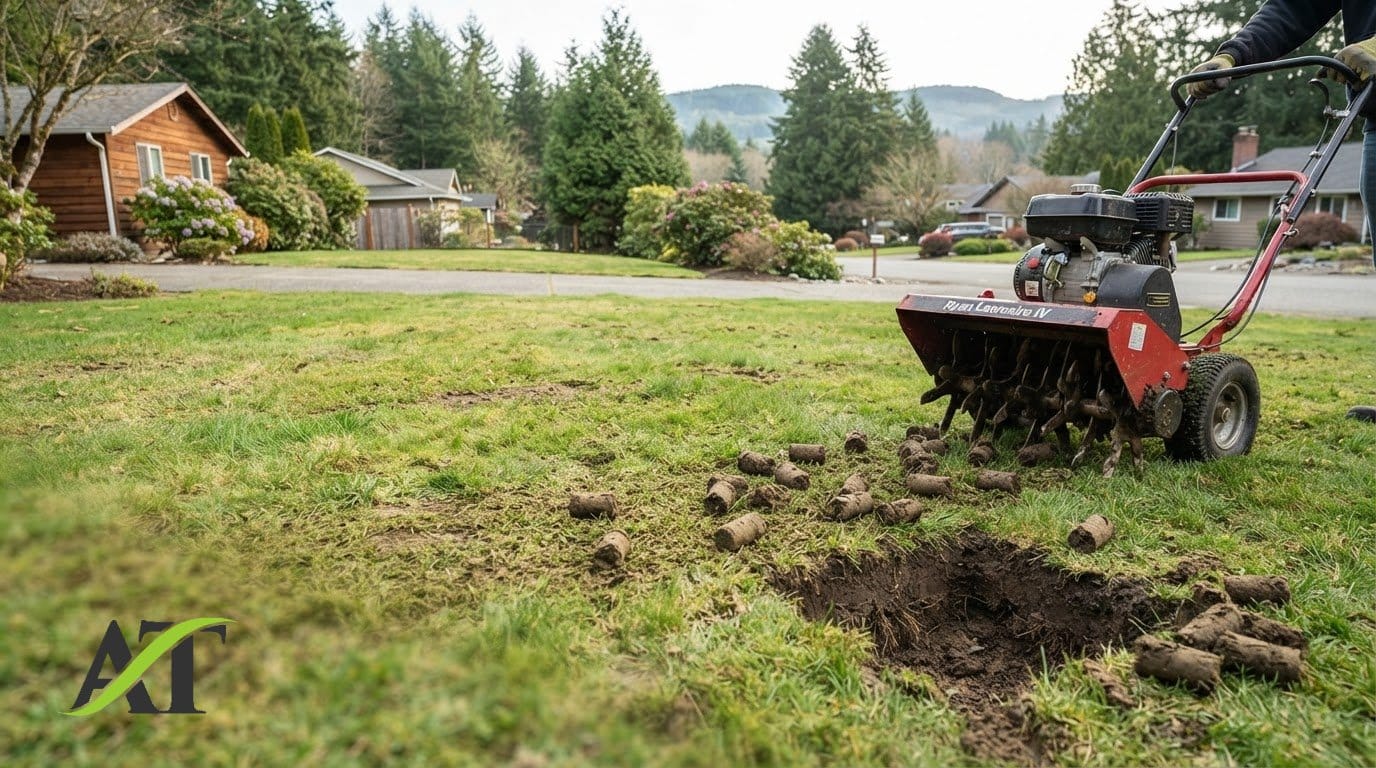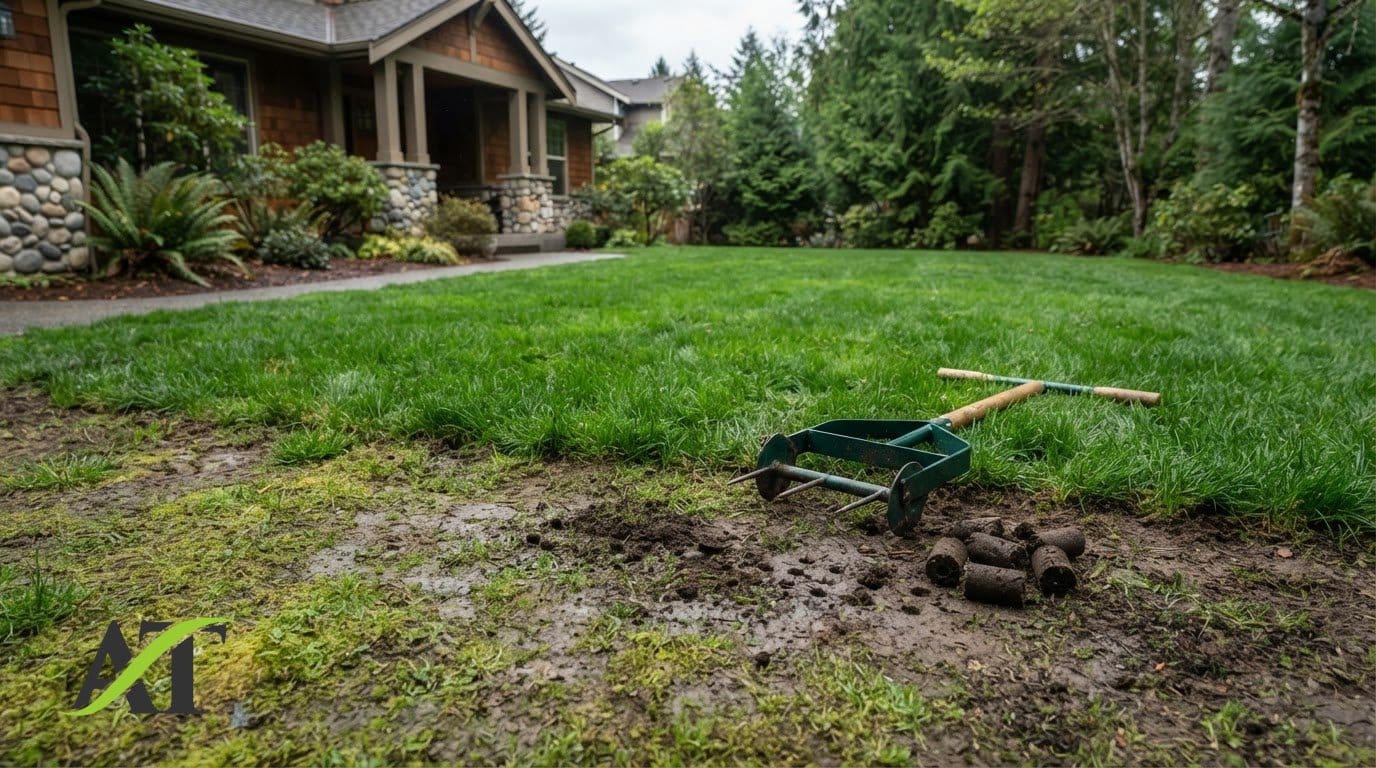
What if the best way to tackle a mossy lawn isn’t another treatment, but healthier soil? For natural turf care Mountlake Terrace homeowners can build on, the first step is understanding what’s holding the grass back. Compaction, shade, excess thatch, poor drainage, and acidic soil can all contribute to a thin, moss-prone lawn, but they don’t call for the same fix.
It’s frustrating when grass won’t thicken, especially with wet winters and uncertainty about when to seed. A soil-first plan can help you choose the right mechanical restoration and organic treatments without defaulting to harsh synthetic chemicals. This guide explains how Core Aeration, Overseeding, and organic fertilizing support a stronger lawn, when Power Raking (Dethatching) may be appropriate, and when a drainage or shade problem needs further diagnosis. For our Seattle-area Overseeding, we prefer soil temperatures around 55–75°F as a practical window. You’ll also learn how to build a resilient lawn that crowds out weeds and makes your outdoor space more comfortable for pets.
Key Takeaways
- Natural turf care Mountlake Terrace homeowners can apply starts with identifying whether compaction, thatch, shade, or drainage is limiting the lawn.
- Learn how Core Aeration creates space in the shallow root zone for air and water, and why it can’t correct every drainage problem.
- See how organic fertilizing supports soil health, rather than relying only on a short-term growth response.
- Choose between a Lawn Tune-Up and a Full Meal Deal based on turf density and thatch, not by automatically selecting the larger service.
Understanding the Mountlake Terrace Soil Challenge
Natural turf care Mountlake Terrace homeowners can use starts with diagnosing what’s weakening the grass, rather than treating every thin or mossy area the same way. Wet, shaded conditions give moss an advantage where grass struggles, but moss alone doesn’t prove the soil is acidic. Compaction, poor drainage, shade, and soil pH can each contribute, and more than one issue may be present.
Soil matters here. USDA mapping identifies Snohomish silt loam in the area as poorly drained, though soil conditions can vary from one property to another. Natural turf care combines mechanical practices, such as lawn aeration, with organic inputs to support soil structure and biological activity. The goal is to help turf grow more reliably, not to expect one treatment to correct every underlying problem.
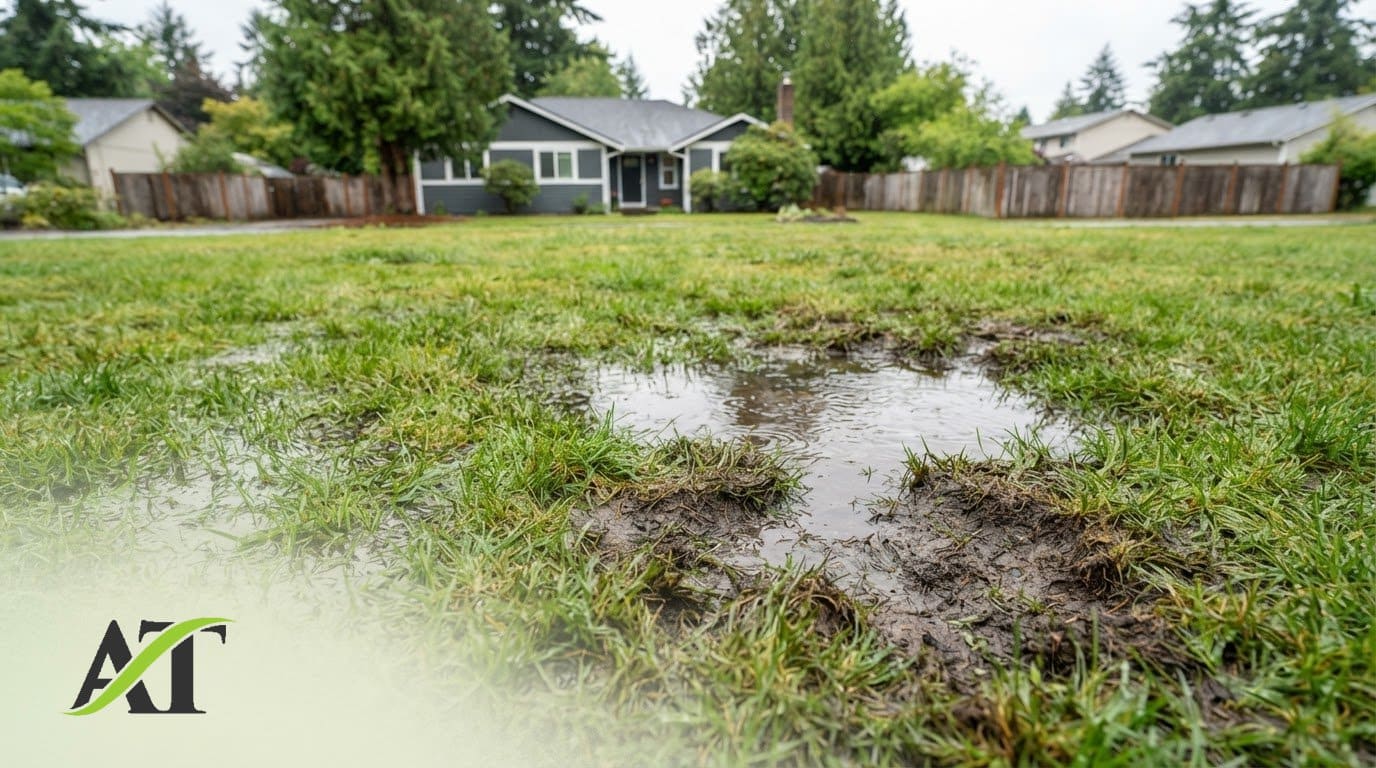
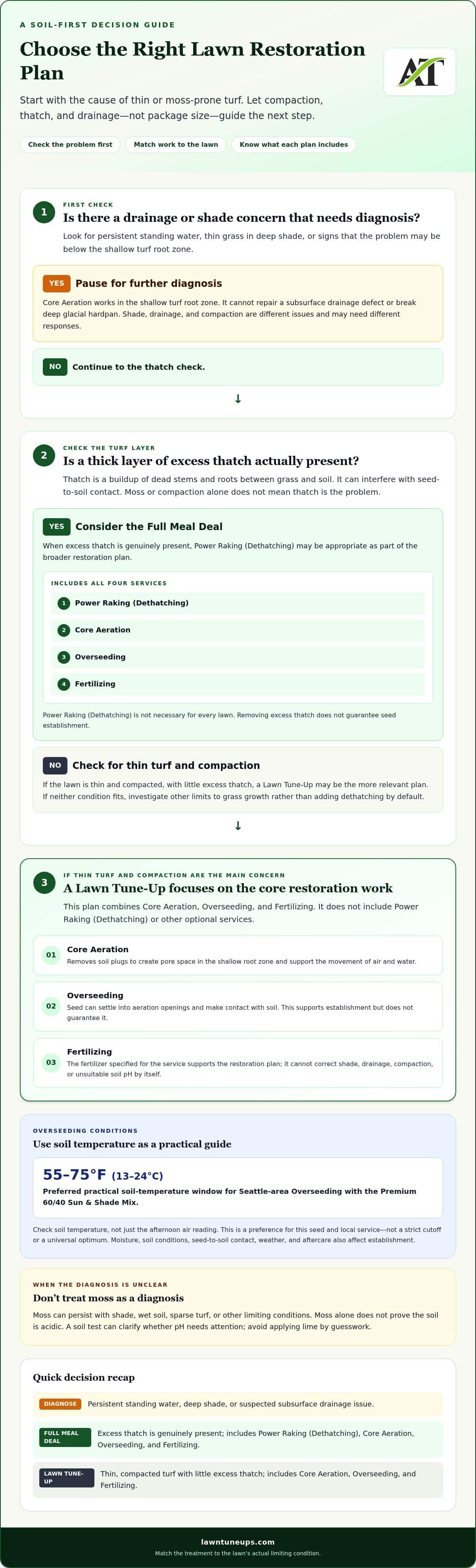
Check the cause before choosing a treatment. Persistent standing water or thin grass in deep shade may need further diagnosis; Core Aeration works in the shallow turf root zone and can’t repair a subsurface drainage defect. A soil test can clarify whether pH is out of balance. In overly acidic soil, some nutrients become less available to grass, so adding fertilizer alone may not address the limitation.
The Necessity of Lime Application
Lime Application can raise soil pH when testing shows acidity needs correcting. That can make nutrients more available to cool-season grasses, but lime isn’t a universal moss treatment: moss can persist in shade, wet soil, or sparse turf even after pH is corrected. Adjusting pH supports grass; improving light, drainage, and turf coverage may also be necessary. Avoid applying lime by guesswork. The right decision depends on soil test results, not moss presence alone.
The Science of Natural Restoration: Aeration and Temperature
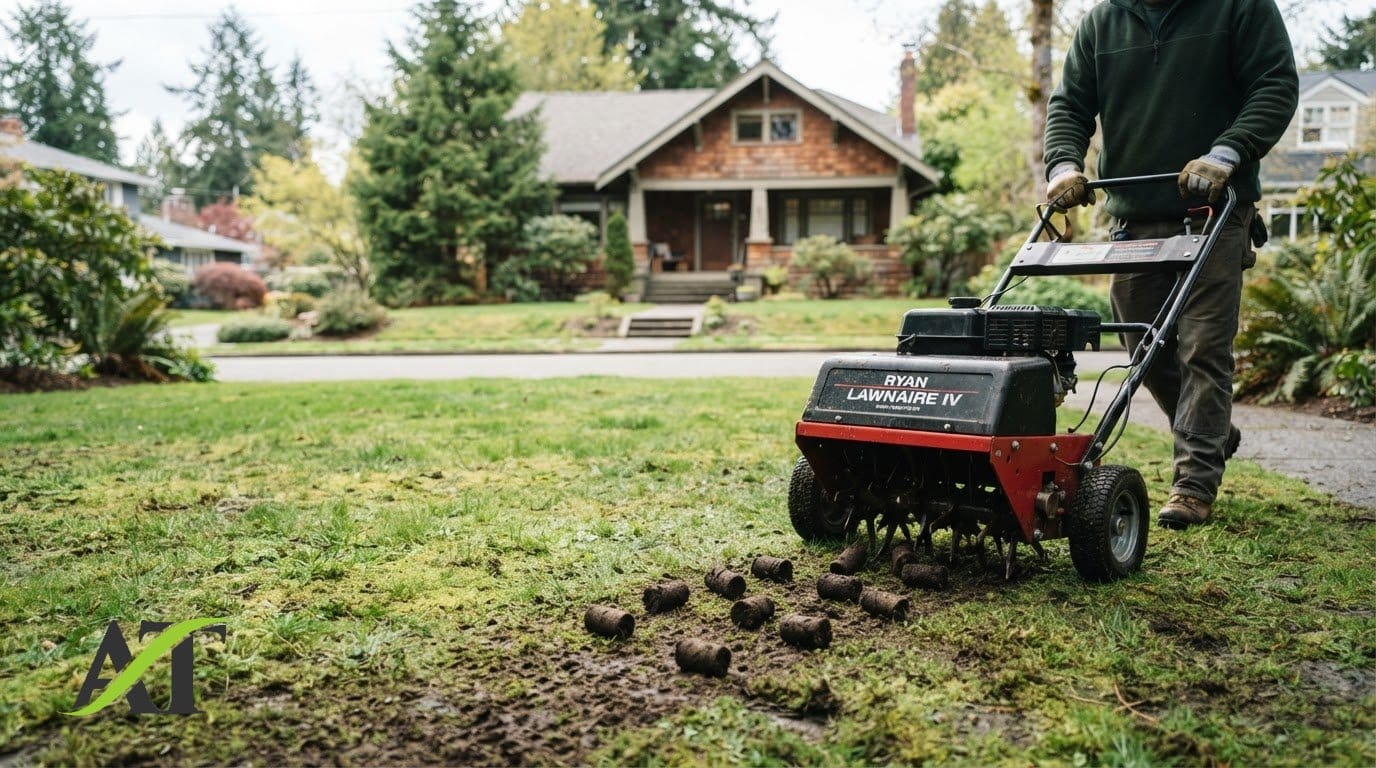
Compacted soil limits the movement of air and water around grass roots. Core Aeration is the mechanical removal of soil plugs to improve turf respiration. The openings create pore space in the shallow root zone, helping water and oxygen move through the soil and allowing nutrients to reach the roots. Core Aeration can relieve surface compaction, but it won’t break deep hardpan or correct a subsurface drainage defect.
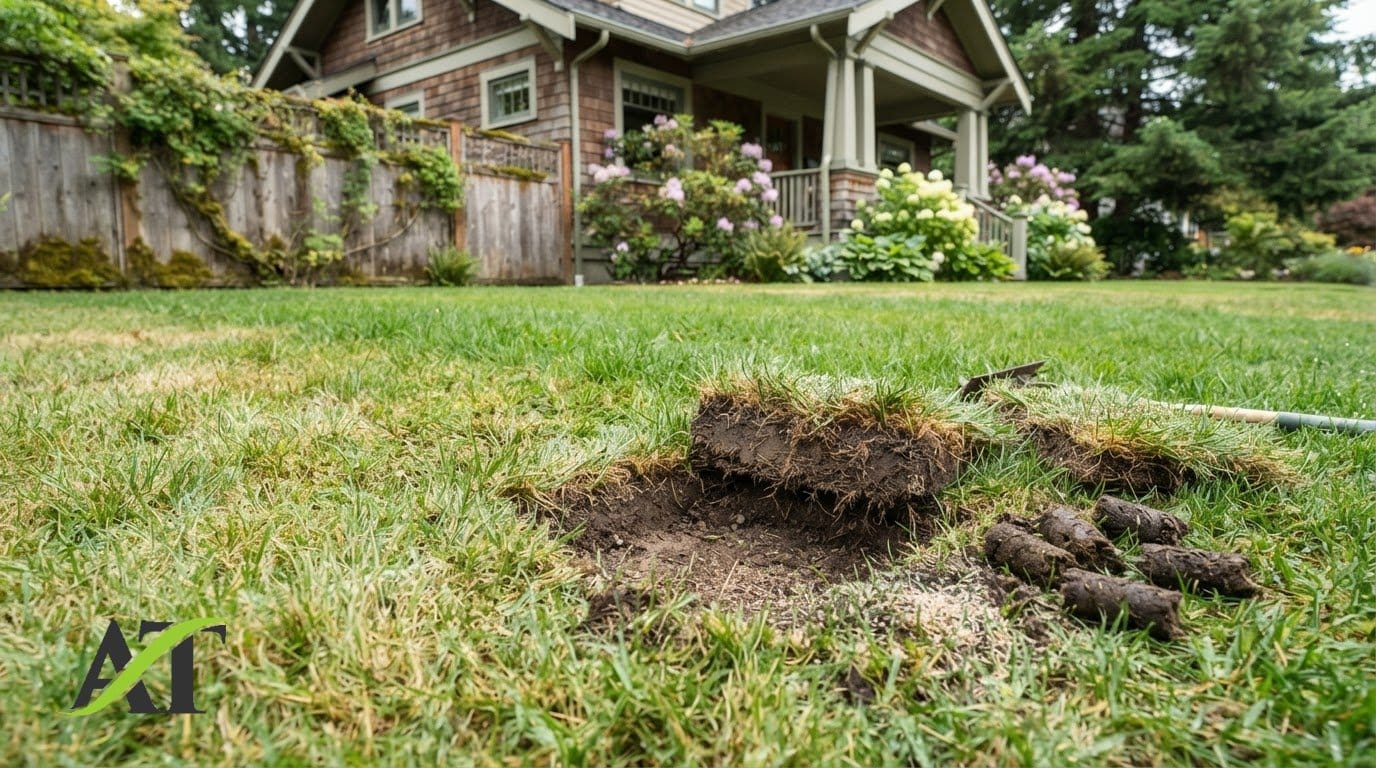
Thatch is a different problem. When a thick layer of dead stems and roots builds up between the grass and soil, it can keep seed from making good contact with soil. Power Raking (Dethatching) mechanically removes excess thatch when it’s actually present; it isn’t necessary for every lawn. Moss, compaction, and thatch are not interchangeable diagnoses.
Soil Temperature and Overseeding
For Seattle-area Overseeding with our Premium 60/40 Sun & Shade Mix, we prefer soil temperatures around 55–75°F (13–24°C) as a practical window for our service. Check soil temperature, not just the afternoon air reading. This is our preference, not a strict cutoff or universal optimum for every seed type. Temperature outside this range can affect establishment, and weather, moisture, soil conditions, seed-to-soil contact, and aftercare matter too. Germination isn’t guaranteed. Learn more about our Premium 60/40 Sun & Shade Mix.
Helping Seed Reach the Soil
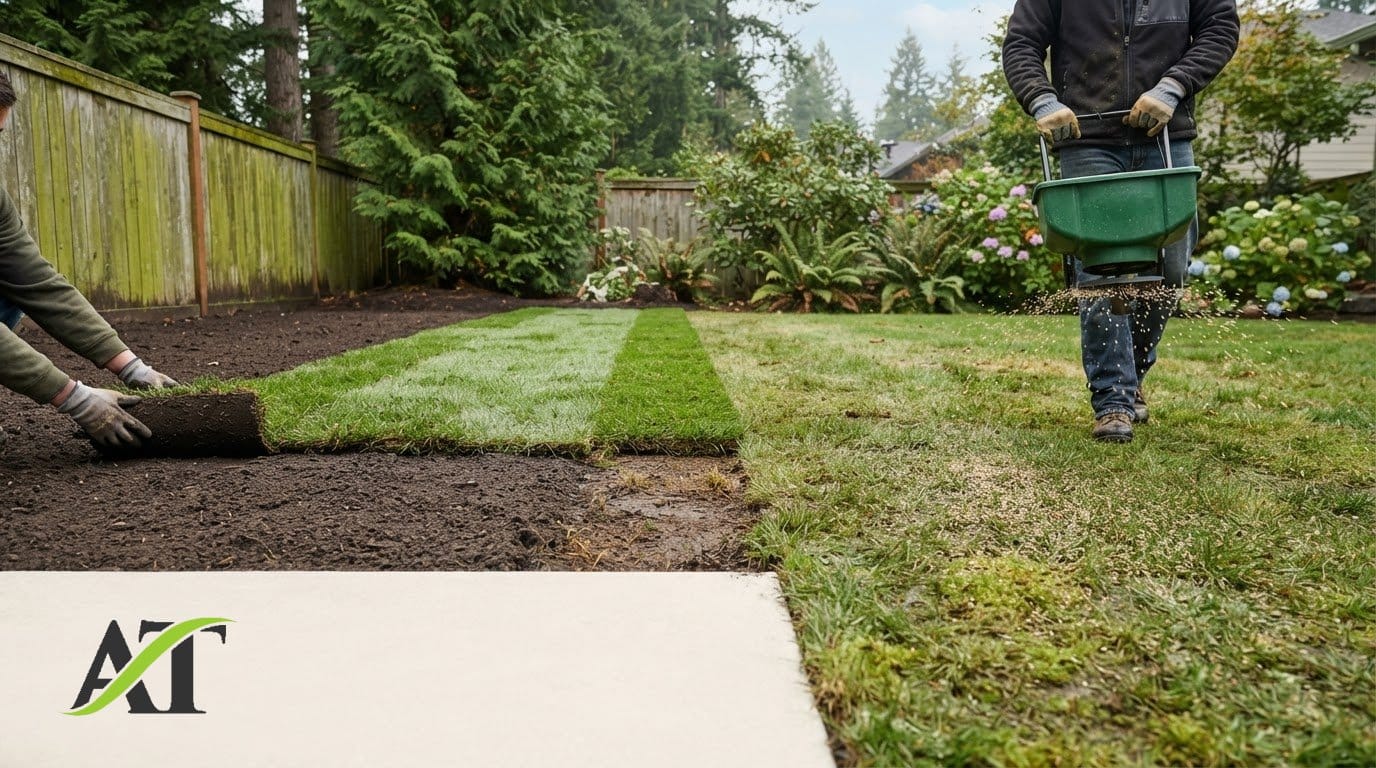
Overseeding after Core Aeration can help seed settle into openings and reach soil, supporting better contact than seed resting on dense turf or thatch. It’s a practical pairing, not a guarantee of establishment. Organic topdressing may supplement seeding when appropriate, but it’s a separate consideration, not part of a Lawn Tune-Up. Avoid covering seed so heavily that it can’t reach light or emerge. If you’re unsure whether compaction or thatch is the main obstacle, ask Stewart about your lawn before choosing the work.
Organic Fertilizing vs. Synthetic Quick-Fixes
A fast green-up can look like progress, but color alone doesn’t show whether a lawn is developing stronger roots or healthier soil. Synthetic fertilizers can deliver readily available nutrients for a quick growth response. Organic Fertilizing takes a soil-focused approach: nutrients are released as organic materials break down, supporting nutrient cycling and the organisms involved in soil processes. Results depend on the product, soil conditions, and how the lawn is cared for.
Think of soil health as a long-term investment, not a one-time fix. Organic inputs can support more resilient turf, but they won’t correct compaction, poor drainage, shade, or an unsuitable soil pH on their own. The Lawn Tune-Up combines Core Aeration, Overseeding, and Fertilizing, with fertilizer suited to that service. Fertilizing is one part of a restoration plan, not a substitute for identifying what’s limiting growth.
For households with pets or children, natural turf care can reduce reliance on synthetic inputs, but “organic” doesn’t automatically mean harmless or ready for immediate contact. Follow the fertilizer label’s application and re-entry directions, and keep pets and children off treated areas as directed.
When Power Raking (Dethatching) Makes Sense
Excess thatch can create a physical barrier between seed and soil, so Power Raking (Dethatching) may help where that layer is genuinely too thick. It isn’t needed on every lawn, and it’s not part of a Lawn Tune-Up. Removing excess thatch can expose the soil surface, but it doesn’t guarantee that fertilizer will penetrate deeper or act faster. If you’re deciding whether thatch or another issue is holding your lawn back, match the treatment to the cause.
Selecting Your Restoration Plan: Lawn Tune-Up or Full Meal Deal?
A practical natural turf care Mountlake Terrace plan starts with the lawn’s condition, not the biggest package. Look at turf density and check whether a thick thatch layer is actually present. Thin grass with compacted soil but little excess thatch may call for a different approach than a spongy lawn with a substantial organic layer blocking the soil surface.
A Lawn Tune-Up includes Core Aeration, Overseeding, and Fertilizing. It’s the targeted baseline when the lawn needs help relieving shallow compaction and filling thin areas, without Power Raking (Dethatching). Learn more about the Lawn Tune-Up process.
When to Choose the Full Meal Deal
The Full Meal Deal includes Power Raking (Dethatching), Core Aeration, Overseeding, and Fertilizing. Consider it when inspection shows excess thatch, especially if the lawn feels spongy underfoot or the thatch layer is keeping seed from reaching soil. Moss-heavy areas alone don’t prove that dethatching is needed. If shade, drainage, or soil conditions are the main obstacle, those issues need attention too.
Aftercare Helps Seed Establish
After Overseeding, follow the service aftercare instructions and keep the seedbed moist without leaving it waterlogged. Avoid letting the surface dry out, but don’t flood it or wash seed away. Establishment takes time, and results depend on seed-to-soil contact, soil conditions, weather, moisture, and aftercare. Restoration builds a stronger starting point, not an instant finished lawn. For a property-specific recommendation, share the lawn’s condition and goals when requesting a quote.
Ask Stewart About Your Lawn
Set Your Lawn Up for Lasting Progress
A healthier lawn is built through decisions that fit the ground beneath it. Use your next step to turn the condition of your yard into a practical restoration plan, rather than treating every bare or mossy patch alike. With natural turf care Mountlake Terrace homeowners can take a steady, soil-focused approach and give grass a better chance to fill in over time.
Aerating Thatching Co. is owner-operated and has focused on lawn restoration since 2004. The work centers on mechanical restoration and organic treatments, not mowing or hardscaping. That specialized focus helps keep the conversation on what your lawn needs and which steps make sense for its condition.
Start with a clear plan, give the lawn time to respond, and build from there. With the right care and patient follow-through, a stronger, more resilient yard is within reach.
Frequently Asked Questions
Does natural lawn care require eliminating all synthetic products?
Not necessarily. “Natural” lawn care doesn’t have one official statewide definition, so homeowners should focus on the practices used rather than rely on a label alone. A soil-first plan can emphasize mechanical restoration and organic inputs without assuming every lawn or situation follows the same formula. Read product directions carefully, and make choices based on your lawn’s needs and the treatment being considered.
How long does it take for Overseeding to show results in Mountlake Terrace?
There isn’t a dependable fixed timeline for visible results. Instead of judging success by a quick color change, look for new grass blades and gradually improving coverage across seeded areas. Compare the same spots over time, since growth can be uneven across a lawn. If bare patches persist, consider whether the seed established there and whether another underlying lawn condition needs attention.
Can I walk on my lawn immediately after a Lawn Tune-Up or Full Meal Deal?
Keep foot traffic light on freshly seeded areas, especially while the seedbed is moist and vulnerable to disturbance. Regular walking can shift seed or press it into wet soil. Use another route for routine access until seedlings are established enough to tolerate normal use, and follow any service aftercare instructions. If only part of the lawn was treated, keep activity on untreated areas where practical.
What is the best time of year for Core Aeration in the Pacific Northwest?
Choose a period when the grass can recover and the soil is moist enough for Core Aeration, but not waterlogged. Spring and fall can both offer workable conditions; the lawn’s actual state matters more than picking a date on the calendar. Avoid aerating drought-stressed or saturated turf. If water continues pooling after the surface has drained, the cause may need further diagnosis beyond Core Aeration.
Why is my lawn still mossy after using organic fertilizer?
Organic fertilizer feeds grass; it doesn’t remove moss that’s already established. So a lawn can remain visibly mossy even when fertilizer is part of its care. Consider whether the moss needs to be physically cleared before grass can fill those areas, then focus on the conditions that help turf recover. Fertilizer alone isn’t a moss treatment, and adding more without identifying the problem may not help.
Article by
Stewart Armour
Stewart Armour is the owner of Aerating Thatching Co., an owner-operated Seattle-area lawn restoration business established in 2004. He helps homeowners understand Core Aeration, Power Raking (Dethatching), Overseeding, soil conditions, and the aftercare needed for stronger lawns. His background includes turf management study, advanced golf course turf training, and continuing education through Wilbur-Ellis University, State Turf Facilities, Soil First Academy, and Golf Course Applied Turf Physiology. Stewart has personally evaluated thousands of residential lawns throughout the Seattle area and focuses on recommending the work that fits each lawn’s condition.