Moss on a Seattle lawn can make lime seem like the obvious fix. It isn’t proof the soil needs it. Before considering lime for your lawn, start with soil evidence, because moss and weak grass can also point to shade, compaction, thatch, or drainage problems. Lime changes soil pH; it doesn’t kill moss or correct those other conditions.
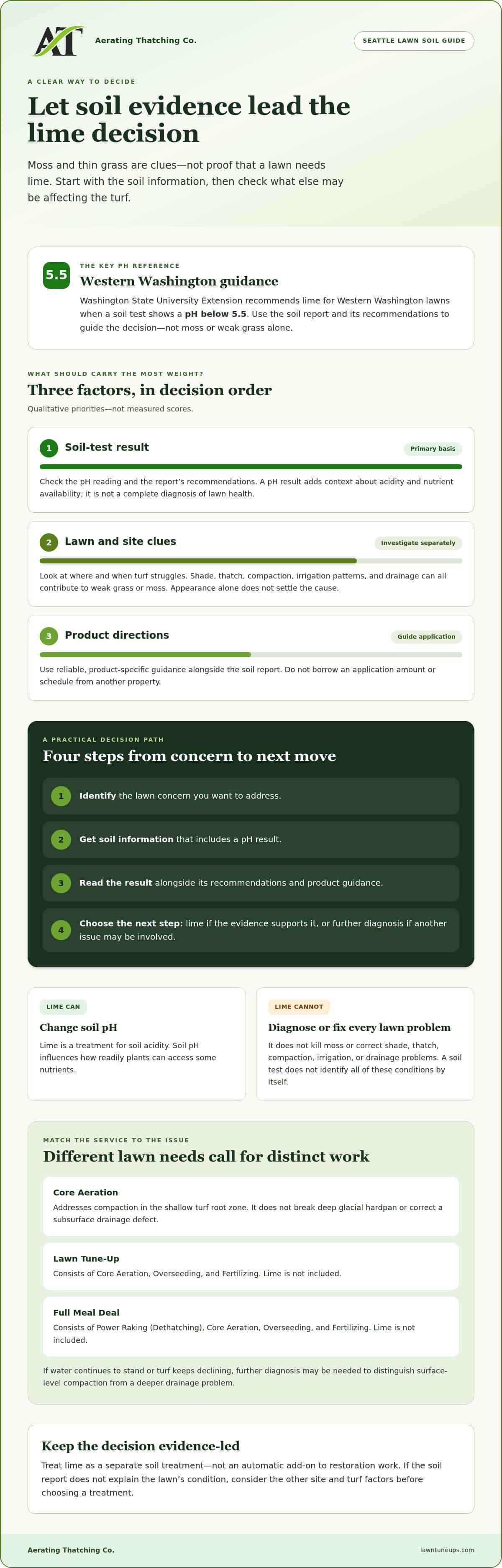
If you’re seeing thin turf or moss, it’s reasonable to want one clear treatment. This guide explains what a soil test can tell you, when lime may help, and what it can’t repair. Washington State University Extension recommends lime for Western Washington lawns when a soil test shows pH below 5.5. We’ll also cover how to distinguish a pH issue from other lawn problems and when professional help may make sense. Lime Application is a separate service, not part of a Lawn Tune-Up or Full Meal Deal, so the decision should match the evidence rather than a calendar or generic advice.
Key Takeaways
- For lawn lime application Seattle homeowners should look to soil evidence, not moss or weak grass alone, before deciding on treatment.
- Use soil information to assess whether acidity may be part of the problem; visible symptoms can have other causes.
- Plan lime treatment around the lawn’s needs and reliable product guidance, rather than assuming one calendar window fits every lawn.
- Lime Application is a targeted service separate from the Lawn Tune-Up and Full Meal Deal. Consider it when the evidence supports addressing soil acidity.
Seattle Lawn Lime Application: What Lime Can and Cannot Address
A soil’s pH is one part of its growing conditions, not a complete diagnosis of lawn health. Two lawns with similar thin patches may need different attention, so appearance alone isn’t enough to select a soil treatment. The useful question is whether the soil condition supports that treatment, or whether another factor better explains the turf’s condition.
A soil amendment should address a soil finding, not stand in for diagnosing a visible lawn problem. This keeps a treatment decision focused and helps avoid expecting one product to resolve unrelated causes of weak grass.
What lawn lime changes in the soil
Soil pH describes its acidity or alkalinity. That measure matters because it influences how readily plants can access some nutrients in the soil. A pH reading therefore adds context to questions about nutrient availability, but it doesn’t by itself explain whether grass is struggling or what treatment is appropriate. For more background on understanding soil pH, consider how pH relates to plant growing conditions.
Keep the roles of soil amendments and fertilizer distinct. A pH concern and a nutrient concern are not interchangeable, and choosing a treatment for one doesn’t automatically address the other.
When moss or thin grass points elsewhere
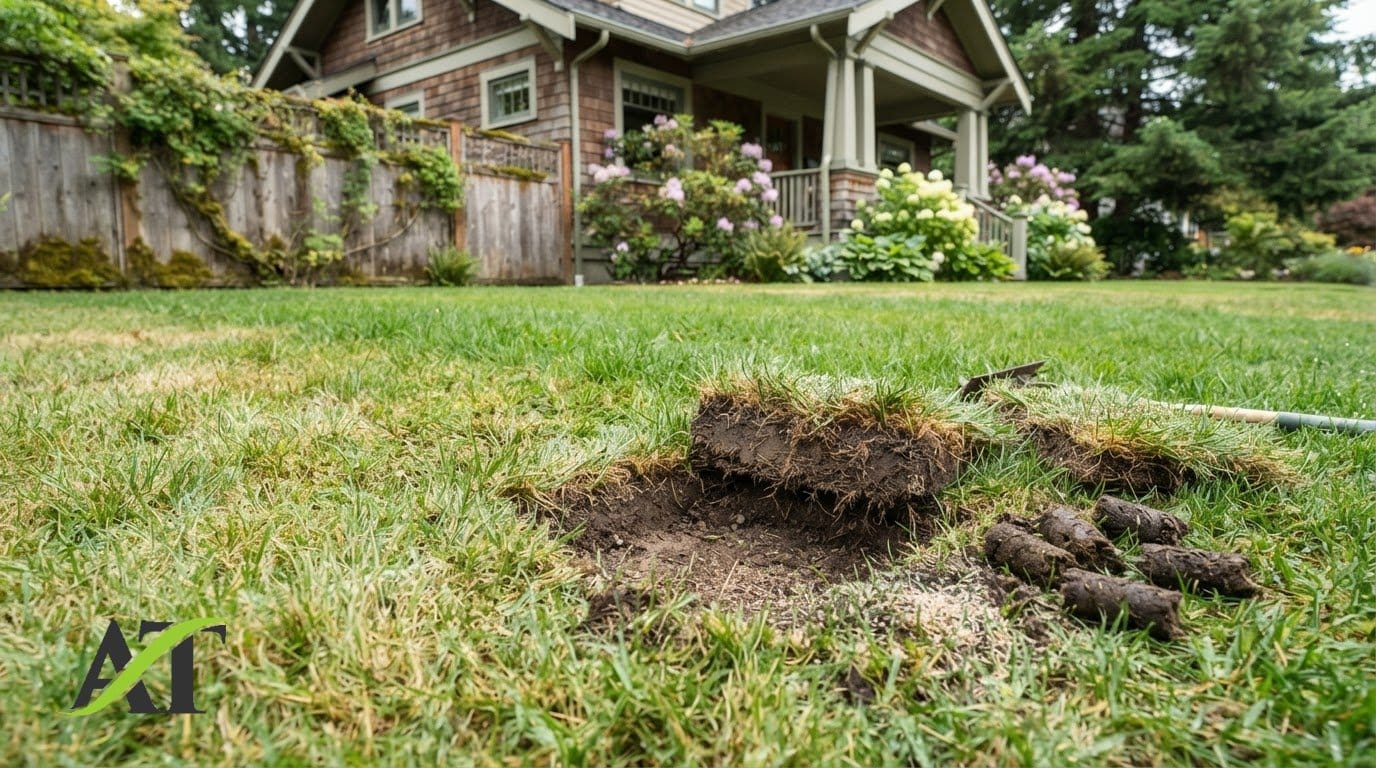
Look at where and when the turf struggles. Grass thinning beneath a tree may raise a shade question; a thick thatch layer or firm surface suggests different concerns. Soil that stays wet can point toward irrigation patterns or drainage, while compaction may restrict conditions in the turf’s shallow root zone. These clues help frame what to investigate, but no single visual sign settles the diagnosis.
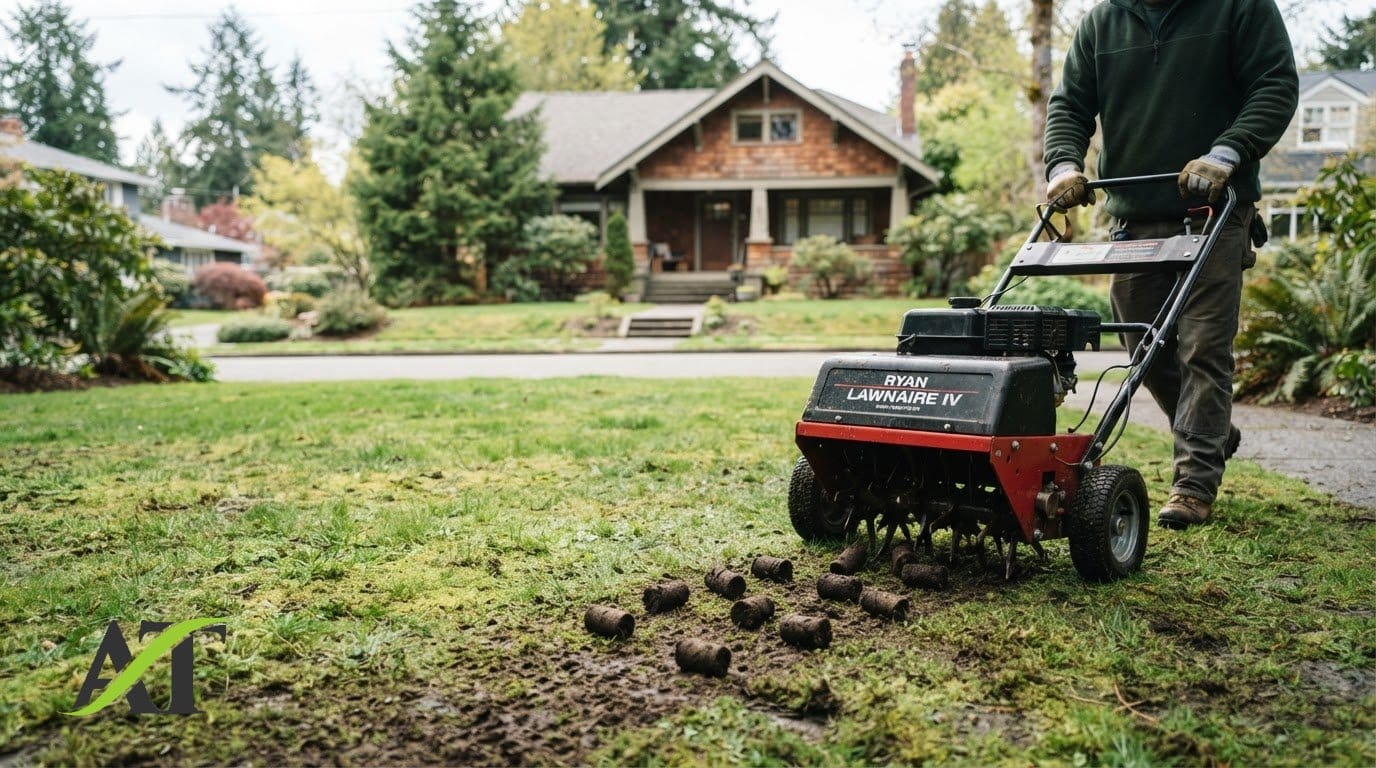
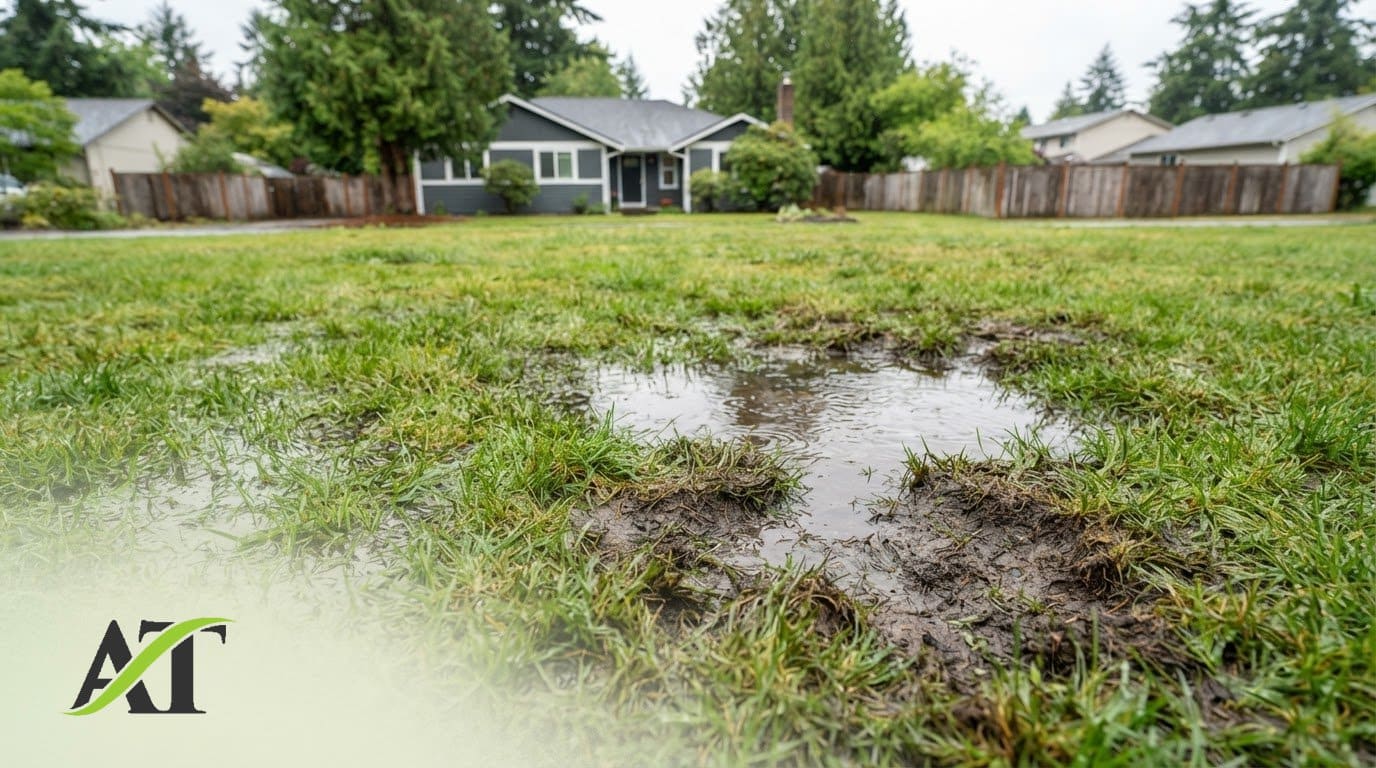
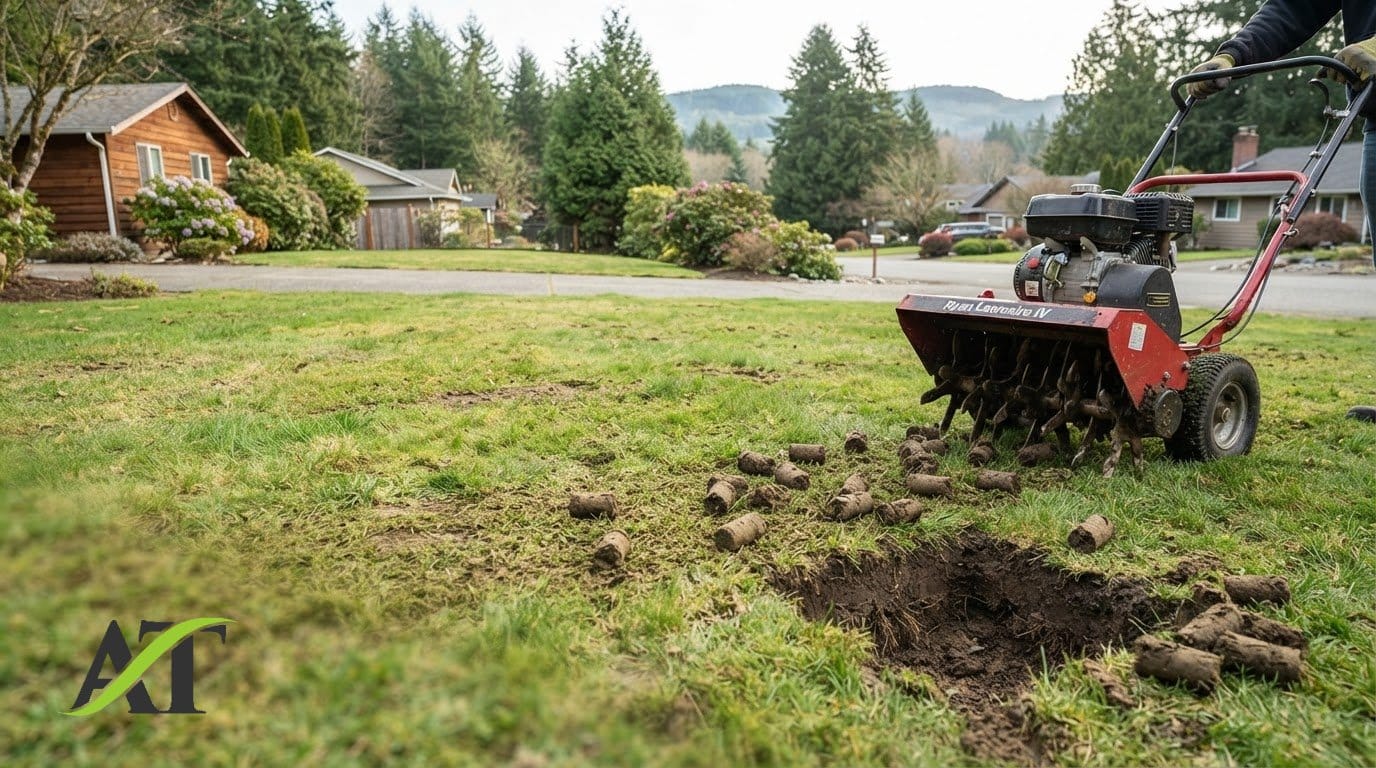
Core Aeration addresses compaction in the shallow turf root zone. It doesn’t break through deep glacial hardpan or correct a subsurface drainage defect. If water continues to stand or turf keeps declining, further diagnosis may be needed to distinguish surface-level compaction from a deeper drainage problem.
How Soil-Test Evidence Can Guide Lime Application in Seattle
A practical lime decision has four steps: name the lawn concern, obtain soil information, interpret the report, then decide whether lime belongs in the plan. This order helps keep the treatment tied to a specific finding instead of choosing it by habit. A soil report gives you a basis for deciding what to do next, not a reason to apply a set amount without considering the report’s recommendations.
What a soil-test result can tell a homeowner
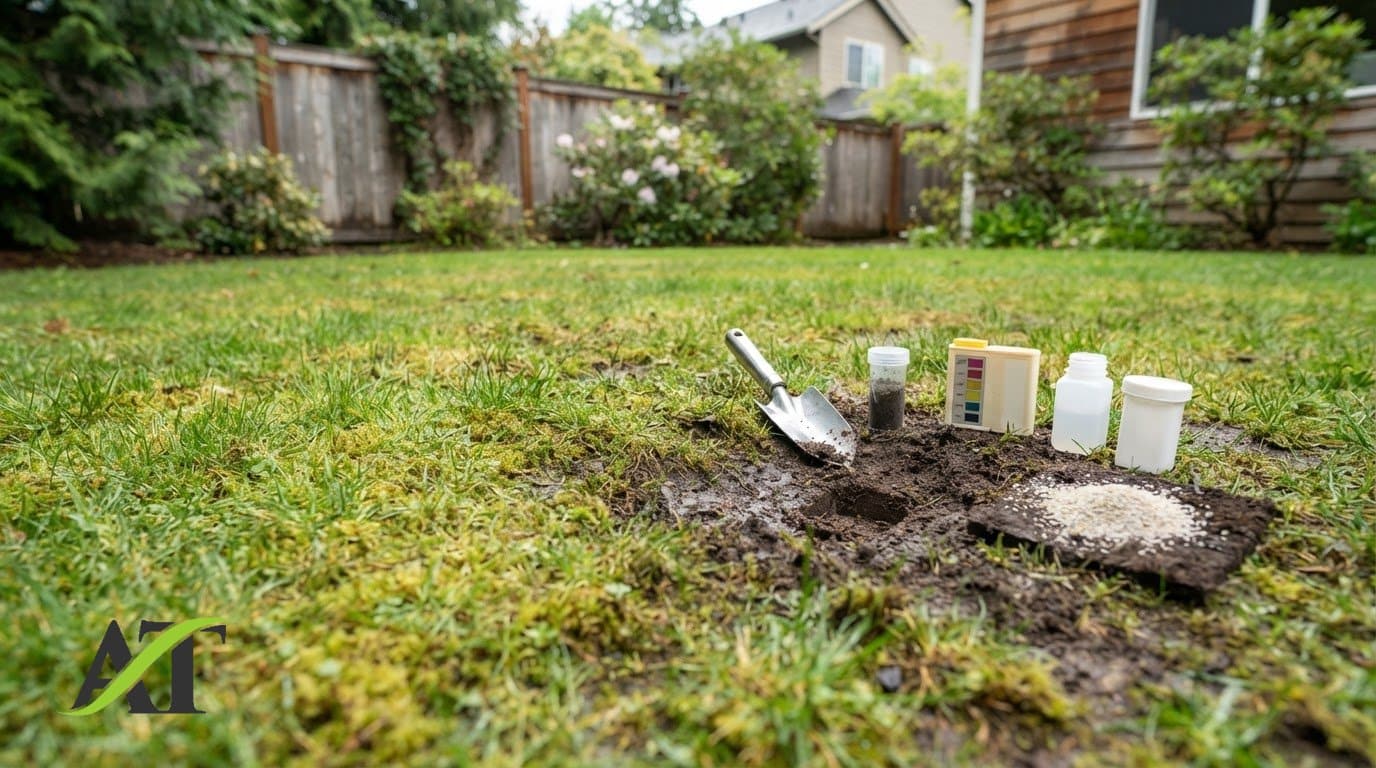
Check the report for its pH reading and any guidance about correcting the soil. If the results include other measurements, use the recommendations provided for those findings rather than treating every number as a reason to add lime. Washington State University Extension’s soil testing guidelines explain the testing process and can help you understand how results inform soil decisions.
For a lime decision, focus on what the result and its accompanying guidance say about your lawn. Avoid borrowing an application amount or schedule from a different property; recommendations depend on the information in the report and the product directions.
What a soil test does not diagnose by itself
A soil test isn’t a full inspection of the lawn. It won’t show whether tree shade limits growth, thatch has built up, the surface is compacted, irrigation is uneven, or water is draining poorly. Those conditions may need to be assessed separately, even when the report gives useful information about the soil.
If the report doesn’t account for the lawn’s condition, use it as one piece of the picture and seek further diagnosis before choosing a treatment. That can help distinguish a soil amendment decision from a separate turf or site concern.
- Identify the lawn concern you want to address.
- Obtain soil information that includes a pH result.
- Read the result alongside its recommendations and product guidance.
- Decide whether lime fits the evidence or whether another issue needs attention.
If you’d like help thinking through the soil information and your lawn’s needs, Ask Stewart About Your Lawn.
Planning Lime Application Alongside Seattle Lawn Restoration
Lime can be considered alongside lawn restoration, but only when soil evidence supports addressing acidity. Timing and coordination should fit the lawn’s needs and the product’s reliable application guidance, not a fixed calendar rule. For lawn lime application Seattle homeowners should treat lime as a separate soil treatment, not an automatic part of a renovation package.
How lime relates to Core Aeration and Overseeding
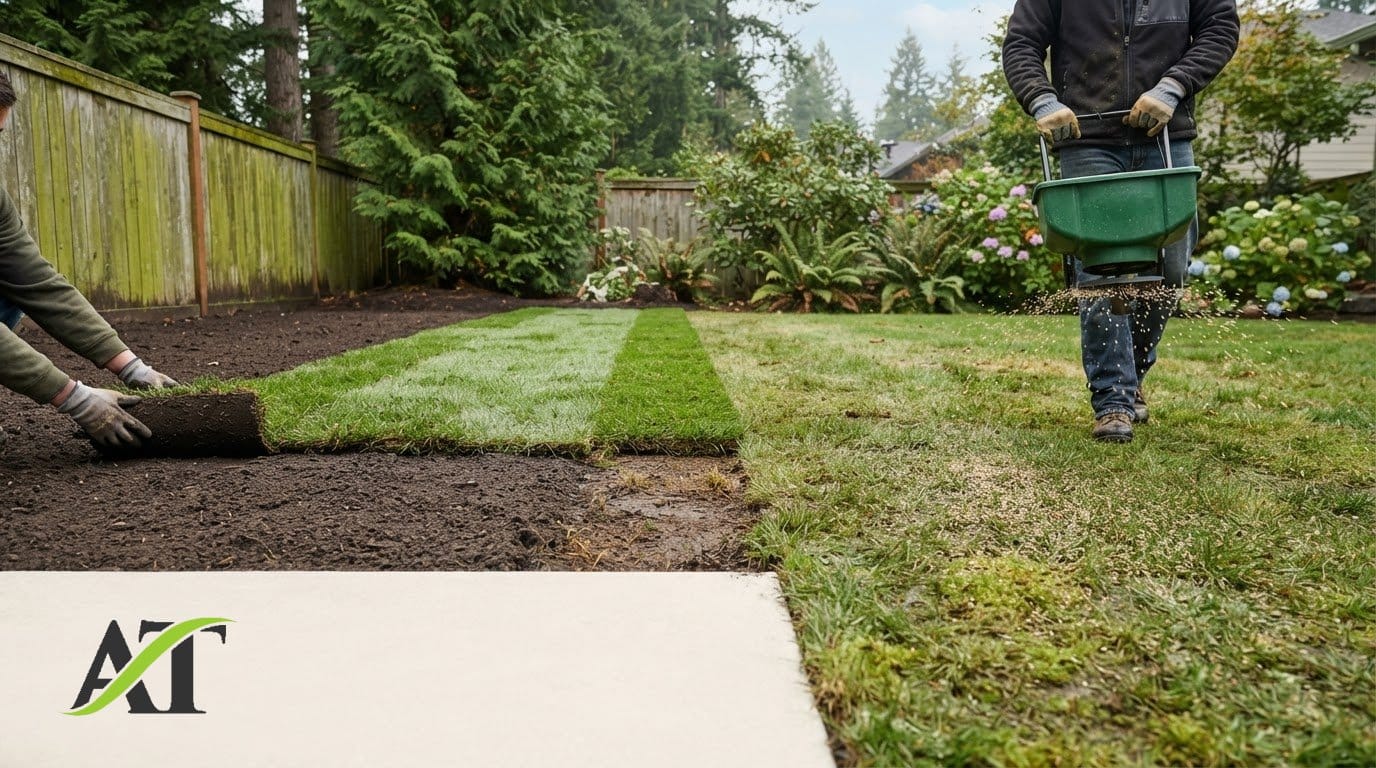
Core Aeration and Overseeding address different lawn needs from lime. Core Aeration relieves compaction in the shallow turf root zone, while Overseeding adds grass seed. Lime is a separate treatment for soil acidity. These services may be considered together when the lawn’s condition and soil information support them, but there’s no universal order that fits every lawn. Follow product guidance and the specific restoration plan.
For timing and pH considerations, consult reliable, product-specific guidance rather than assuming a season alone means lime is needed. After restoration work, follow practical Seattle lawn after-care guidance for the services performed.
Keep restoration service components clear
A Lawn Tune-Up consists of Core Aeration, Overseeding, and Fertilizing. A Full Meal Deal consists of Power Raking (Dethatching), Core Aeration, Overseeding, and Fertilizing. Lime is not included in either service. Keeping those components distinct makes it easier to decide whether the lawn needs restoration work, a targeted soil treatment, or both based on separate evidence.
If the soil information supports lime, it can be considered as its own treatment alongside a restoration plan. If it doesn’t, adding lime simply because other work is scheduled isn’t a sound reason to apply it.
Choosing Lime Application for Your Seattle-Area Lawn
The decision is straightforward: consider lime when soil evidence supports addressing acidity, not as a default response to moss or thin grass. A lawn lime application Seattle homeowners choose should match the soil information and the lawn’s actual needs. A soil finding can make lime a reasonable option, but it doesn’t mean every Seattle-area lawn needs the same treatment.
When a focused lime application may fit
If soil results indicate an acidity concern, lime may be appropriate as a targeted lawn soil treatment. Aerating Thatching Co. provides Lime Application for homeowners in North Seattle, North King County, and South Snohomish County. The purpose is to address the soil condition identified, not to promise a particular turf outcome or treat visible moss directly. Keep the decision tied to evidence and reliable product guidance.
When the lawn needs a different diagnosis
If the soil information doesn’t account for ongoing thinning or poor growth, consider other conditions before choosing lime. Shade can limit grass growth; thatch and compaction affect the turf differently, while irrigation patterns and drainage can also contribute to trouble. Persistent symptoms that don’t match the soil finding call for further lawn diagnosis, not an automatic amendment.
Aerating Thatching Co.’s lawn restoration services address distinct lawn needs through options such as Core Aeration, Overseeding, Power Raking (Dethatching), Fertilizing, and soil treatments. Lime Application is separate from both the Lawn Tune-Up and Full Meal Deal. The right fit depends on the problem you’re trying to address, rather than on choosing the broadest service by default.
For a practical conversation about whether lime fits your lawn, Ask Stewart About Your Lawn.
Make Your Next Lawn Decision With Confidence
The next step is to turn uncertainty into a practical plan for your yard. Before committing to lawn lime application Seattle homeowners can use the available soil information to guide a focused conversation about what the lawn needs. A treatment should have a clear purpose, and it’s reasonable to pause if the evidence doesn’t point to acidity.
Bring your specific concern and any soil results into the discussion. That gives Stewart a useful starting point for considering whether Lime Application fits or whether another lawn restoration approach deserves attention. There’s no need to choose extra work just because the lawn looks stressed.
Ask Stewart About Your Lawn
A measured decision can help you focus effort where it belongs. Take the next step when you’re ready, and give your lawn a plan based on what it actually needs.
Frequently Asked Questions
Does lime kill moss in a Seattle lawn?
No. Lime isn’t a moss-killing treatment, so applying it won’t make moss disappear. If moss is spreading in a shaded corner or where the lawn stays damp, consider those conditions separately rather than treating the moss as proof of acidity. For a Seattle lawn, the useful next step is to establish whether the soil needs a pH adjustment and address other limiting conditions on their own.
Can I apply lime and grass seed at the same time?
Possibly, but don’t assume every lime product can be applied alongside seed. Check the product’s directions and coordinate the application with your seeding plan. If you’re arranging lawn lime application Seattle homeowners may schedule with Overseeding, treat the lime decision and seed establishment as related but separate considerations. Seed-to-soil contact, moisture, soil conditions, weather, and aftercare all matter, so lime alone can’t promise successful establishment.
How long does lawn lime take to affect soil pH?
Lime changes soil pH gradually, and the pace depends on the product and soil conditions. Don’t judge its effect by whether the grass looks different right away; visible turf changes can have other causes. Follow the product directions for application and any guidance on checking soil again. A new soil result is more useful for assessing pH than guessing from the lawn’s color or growth.
Should I apply lime to my lawn every year?
No. Annual application shouldn’t be automatic. Use updated soil information and product guidance to decide whether another treatment is appropriate. For example, if a previous application was based on a soil result, don’t assume the same amount or schedule remains right indefinitely. Repeating lime without evidence can shift soil pH when no correction is needed. Let the current soil condition, not habit, guide the decision.
Can lime fix poor drainage or compacted soil?
No. Lime does not correct drainage problems or relieve compaction. If water pools after rain, the cause may need further diagnosis; a subsurface drainage defect requires a different solution. Core Aeration can address compaction in the shallow turf root zone, but it won’t break deep hardpan. Separate these concerns before choosing a treatment, especially if wet or thin areas persist despite appropriate lawn care.
Article by
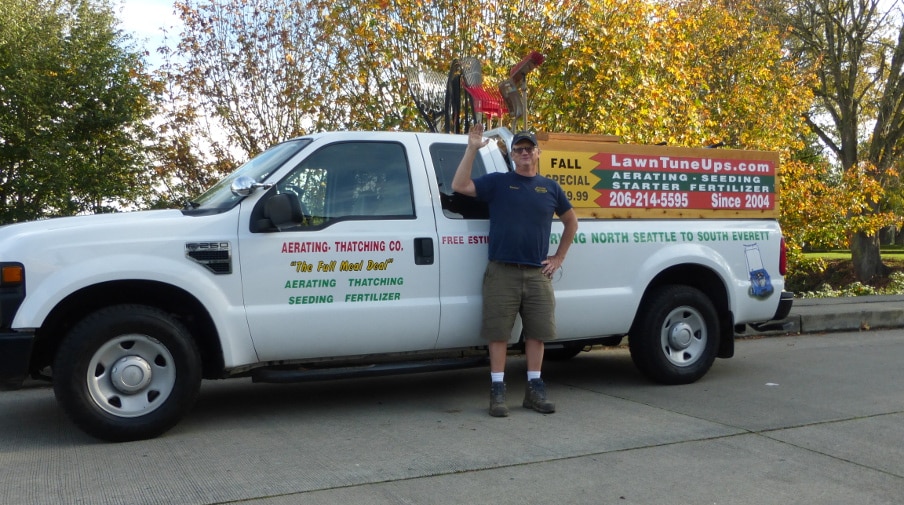
Stewart Armour
Stewart Armour is the owner of Aerating Thatching Co., an owner-operated Seattle-area lawn restoration business established in 2004. He helps homeowners understand Core Aeration, Power Raking (Dethatching), Overseeding, soil conditions, and the aftercare needed for stronger lawns. His background includes turf management study, advanced golf course turf training, and continuing education through Wilbur-Ellis University, State Turf Facilities, Soil First Academy, and Golf Course Applied Turf Physiology. Stewart has personally evaluated thousands of residential lawns throughout the Seattle area and focuses on recommending the work that fits each lawn’s condition.