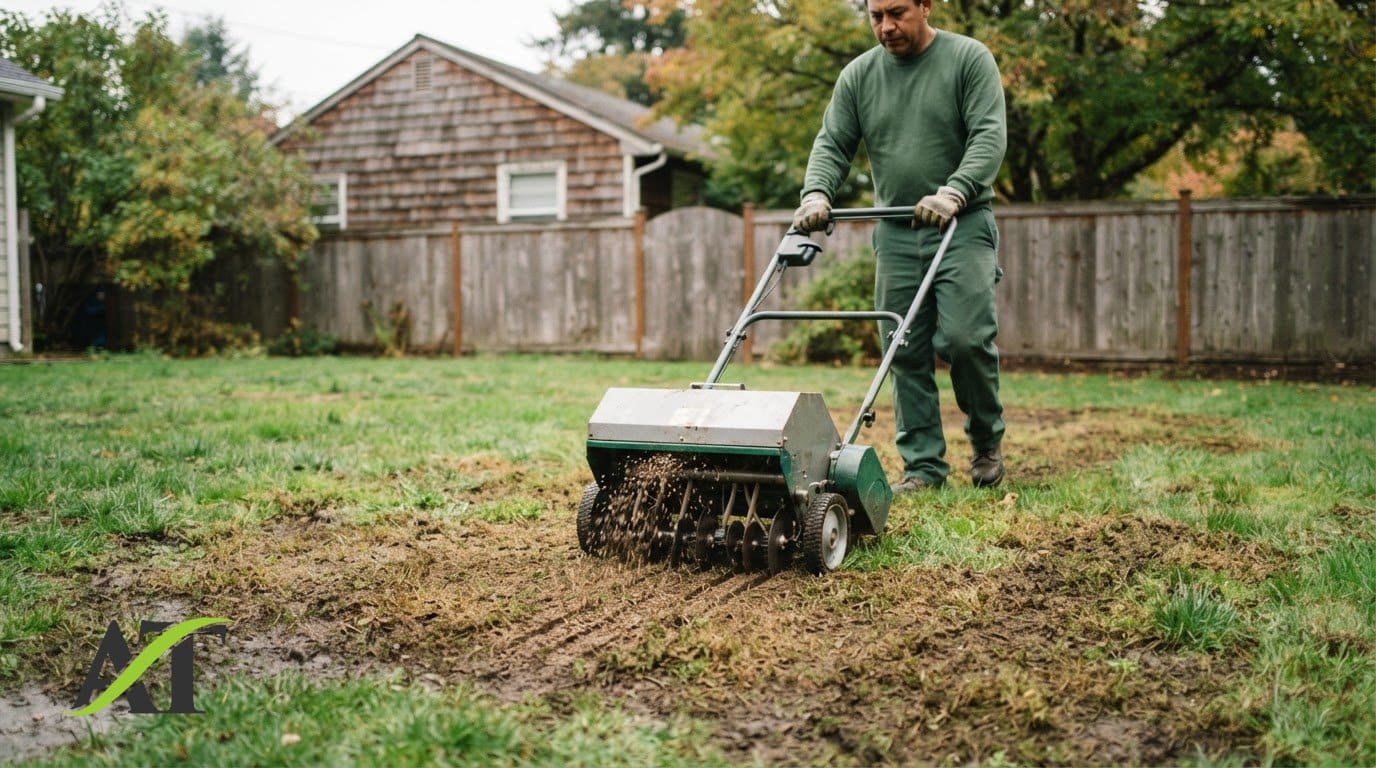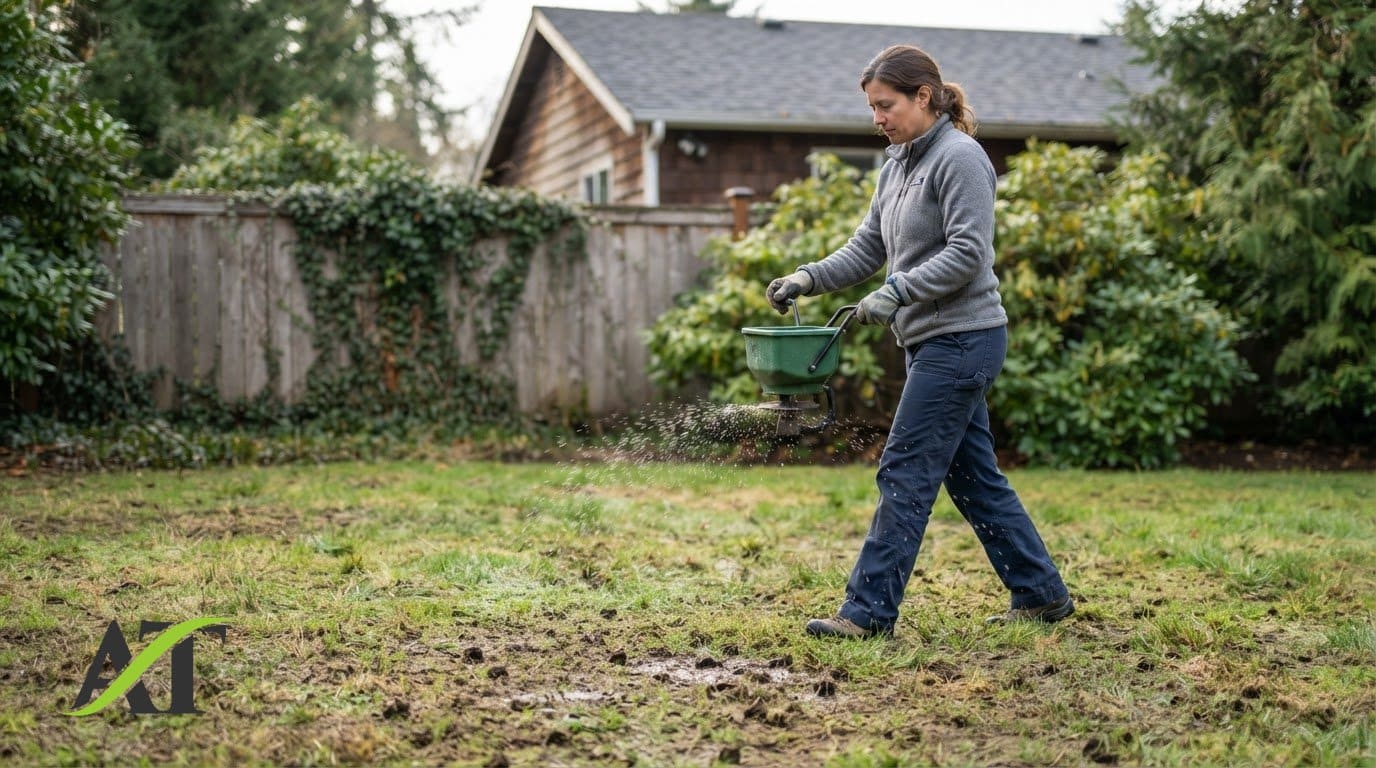
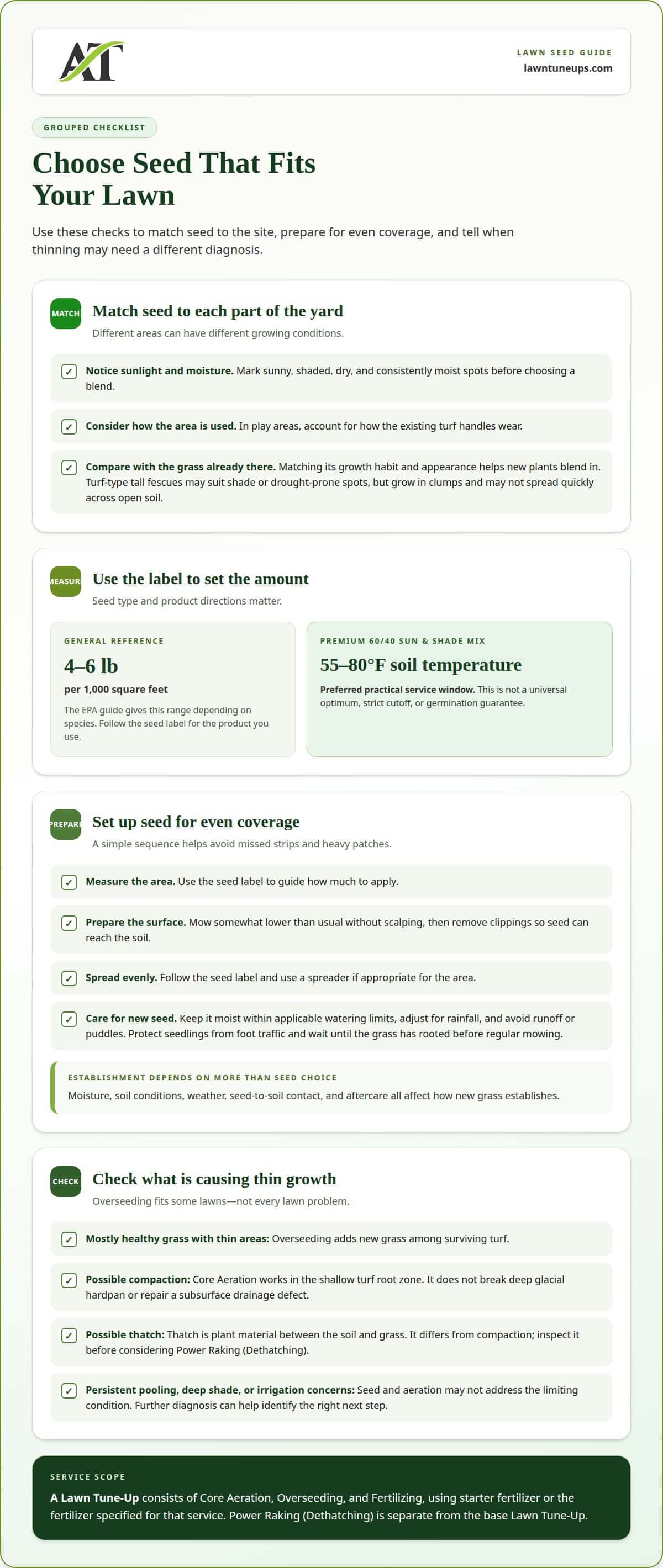
Overseeding adds new grass among existing turf, so it suits a lawn that is mostly healthy but thin in places. Match the seed to the sun, shade, and moisture in each part of the yard. The U.S. Environmental Protection Agency guide says seeding rates are often 4 to 6 pounds per 1,000 square feet, depending on species. Moisture, soil conditions, weather, seed-to-soil contact, and aftercare all affect how new grass establishes.
Key Takeaways
- Choose seed for each area’s sunlight, dryness, and use.
- Use the seed label to set the application rate. The U.S. Environmental Protection Agency guide gives 4 to 6 pounds per 1,000 square feet, depending on species.
- For the Premium 60/40 Sun & Shade Mix, 55–80°F soil temperature is our preferred practical service window. It is not a universal optimum, strict cutoff, or germination guarantee.
- Identify what is thinning the lawn before choosing a treatment. Compaction may call for Core Aeration, while shade, irrigation, drainage, or thatch problems need a different response.
Choosing seed for sun, shade, and drought-prone areas
Match seed to each area’s sunlight and moisture. Keep new seed consistently moist while it establishes.
-
Match Seed to Climate and Lawn Use
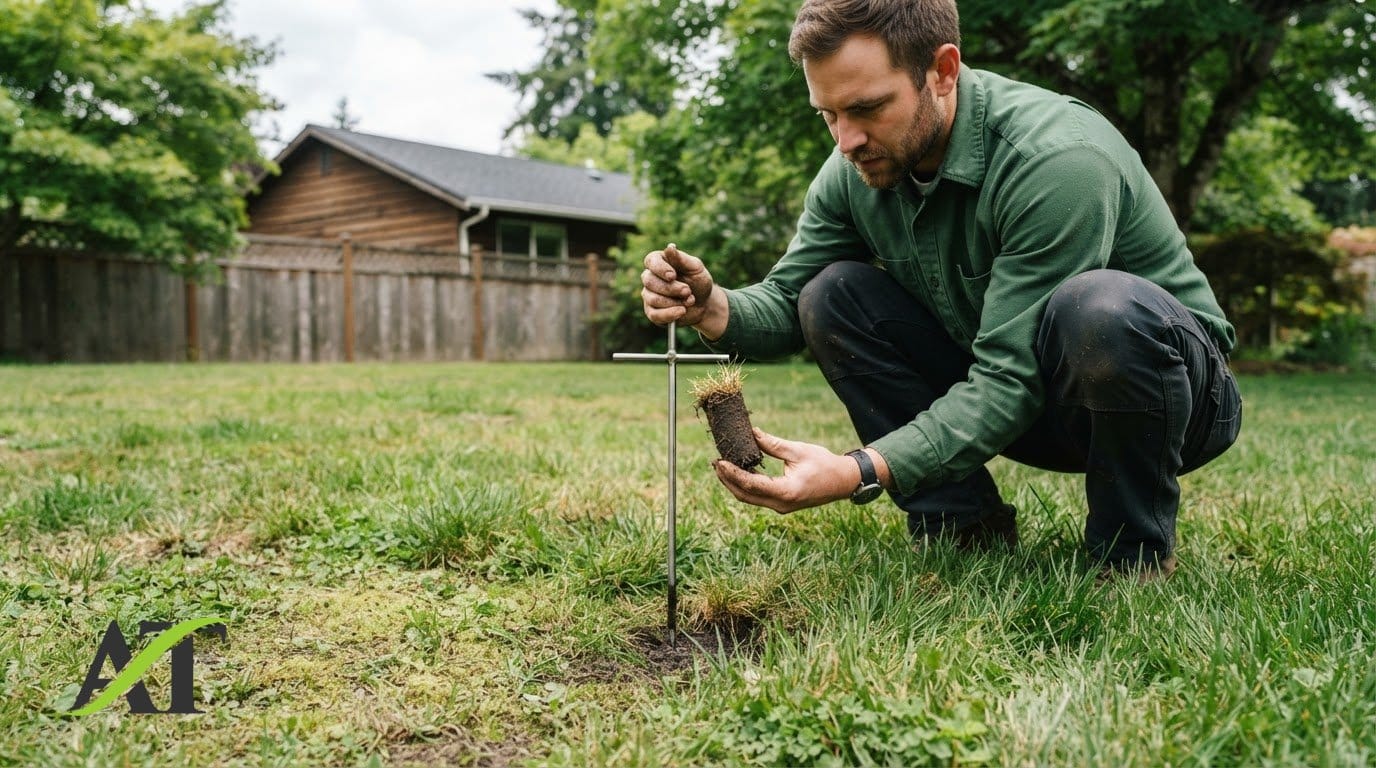
Walk the yard and note full-sun spots, shaded spots, and dry patches. Each area may need a different seed choice. In play areas, consider how the existing turf handles wear. Dry patches may need different seed from areas that stay consistently moist.
-
Match Seed to Existing Grass
Identify the grass already growing before selecting seed. Matching its growth habit and appearance helps new plants blend into the lawn. Tall fescue grows in individual clumps, so it may not spread quickly across open soil. Account for that when planning overseeding.
-
Choose Cool-Season Grass Seed
Select cool-season seed suited to the lawn’s conditions, then follow its label for spreading and care. Spread seed evenly, using the 4 to 6 pounds per 1,000 square feet guidance as a general reference. Our preferred practical service window for the Premium 60/40 Sun & Shade Mix is 55–80°F soil temperature. Moisture, warm soil, seed-to-soil contact, weather, and overseeding aftercare also affect establishment.
Which seed grows best in Mill Creek? Cool-season grasses suit the local climate, and the best choice depends on your existing lawn and the light in each area.
When does professional aeration and overseeding make sense?
These steps help you decide whether to seed yourself or get professional help. DIY overseeding can work when the lawn is accessible and preparation is manageable. Consider a professional when uneven ground, compaction, or widespread thinning makes consistent results difficult. Our DIY vs professional aeration guide compares the options.
- Choose a suitable season. Cool-season lawns are generally overseeded in late summer to early fall, when the soil is still warm. Local weather and soil conditions affect the practical window.
- Prepare the lawn. Mow somewhat lower than usual without scalping, then remove clippings so seed can reach the soil.
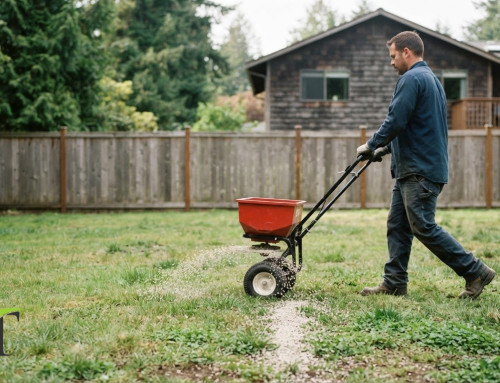
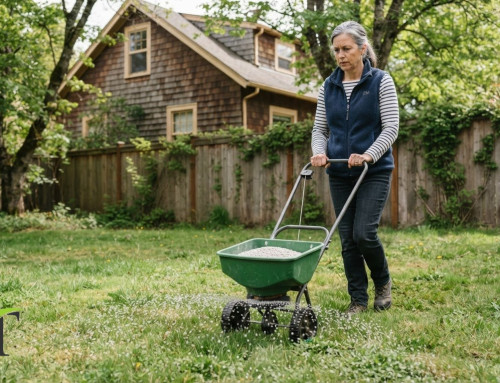
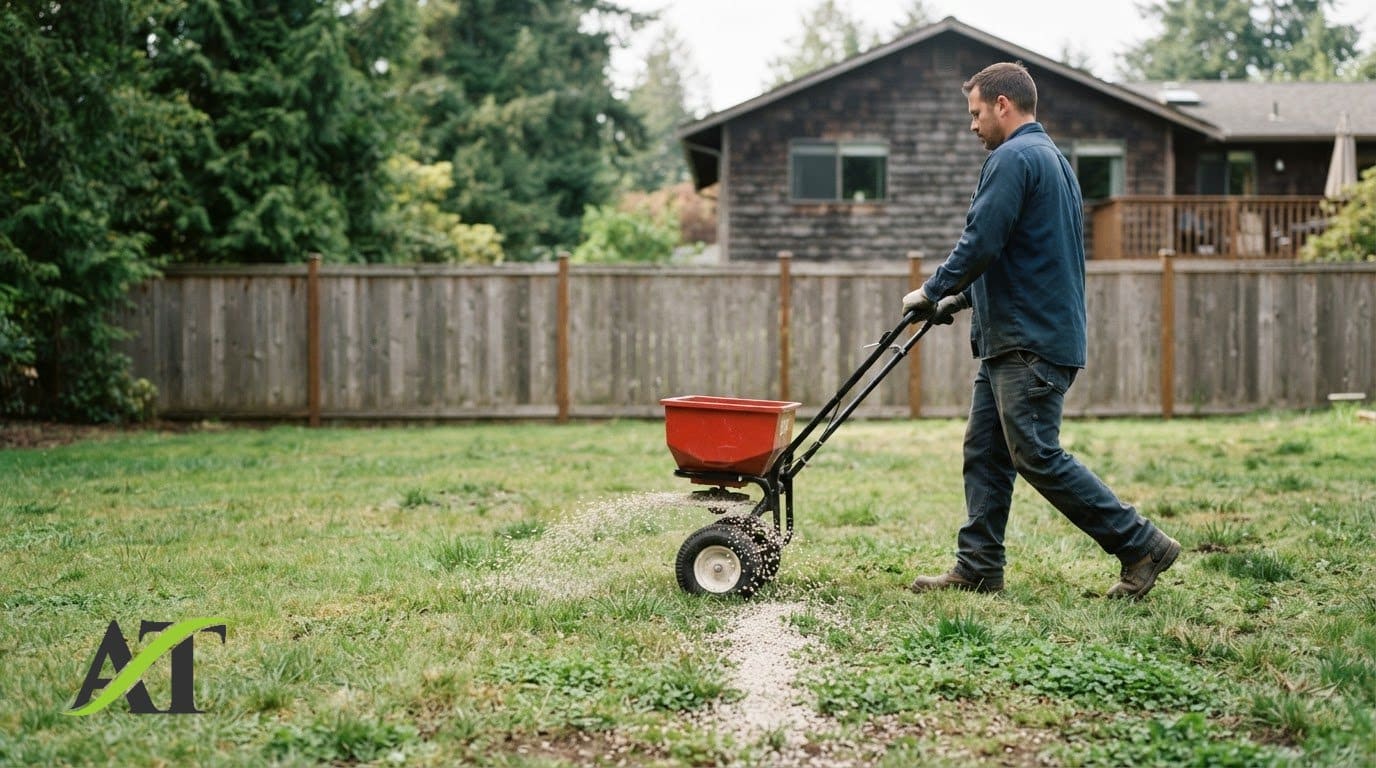
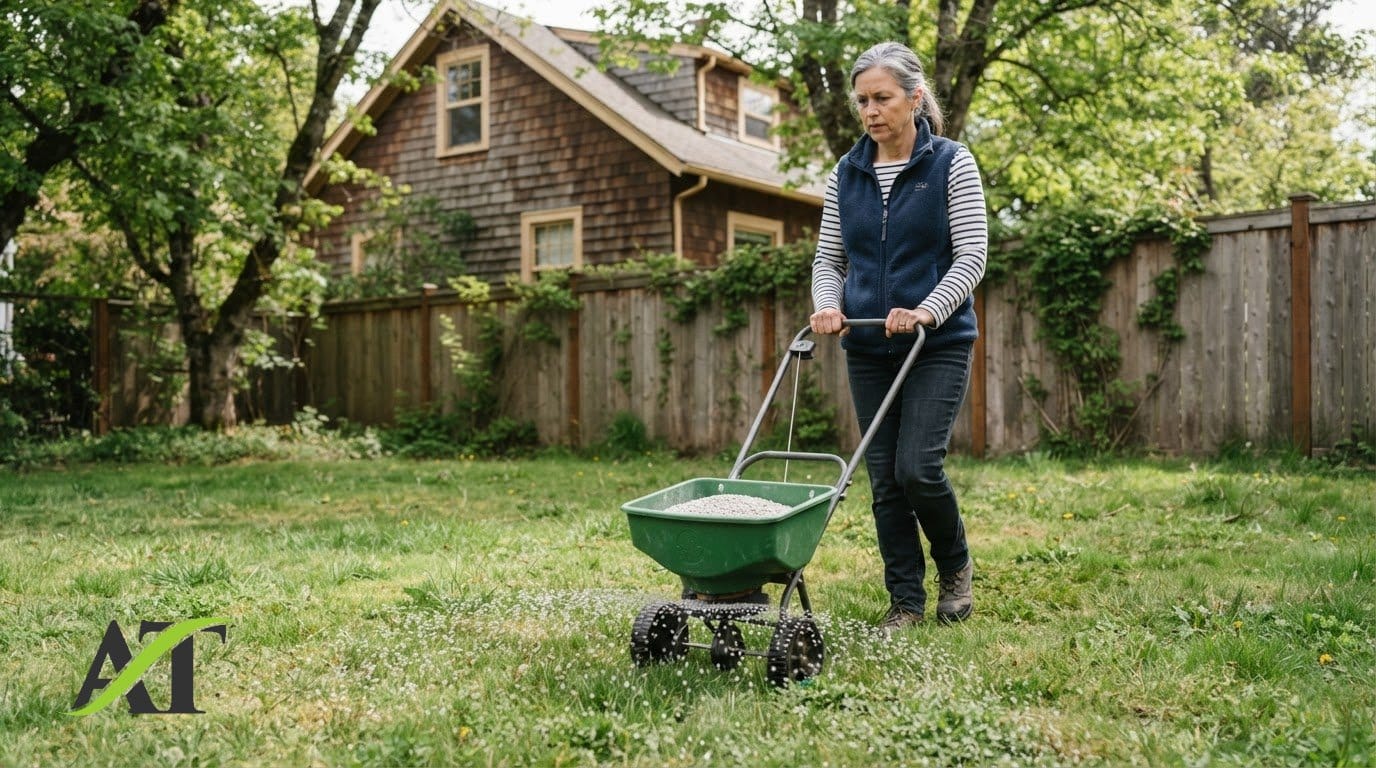
- Spread seed with a spreader. Follow the seed label and spread evenly for good coverage. Measure the area first to avoid heavy patches and missed strips.
- Plan fertilizer and watering. Use starter fertilizer as the label directs. Keep the upper soil layer moist with light watering until seedlings establish, avoiding runoff and puddles. Adjust for rainfall. Do not add extra fertilizer right after a service that already included starter fertilizer.
- Know what to expect. Germination and fill-in time vary with seed type, moisture, soil, and weather, and no result is guaranteed. If the lawn is compacted or earlier attempts failed, a professional assessment can show whether aeration and overseeding fit the problem.
Benefits of overseeding for lawn density and resilience
Overseeding adds new seedlings among surviving grass. Reseeding starts over on bare ground. Overseeding fits thin turf; reseeding fits large bare sections. For a closer comparison, see how to thicken a thin lawn by starting with the cause.
- Check the lawn’s coverage. If grass still covers much of the yard, overseeding can add new plants to worn or thin areas.
- Remove what blocks seed. Clear clippings and debris so seedlings are not smothered.
- Spread seed evenly. Even coverage helps new grass fill gaps instead of piling in one spot.
- Protect seedlings. Keep foot traffic off new areas and follow the aftercare guide for mowing.
- Find the cause of thinning. Shade, standing water, and compaction can undo new seed unless they are addressed.
When to seek professional aeration and overseeding
Professional help is useful when thin growth keeps returning or the cause isn’t clear. Aeration and seed won’t correct every lawn problem, so identify the limiting condition first.
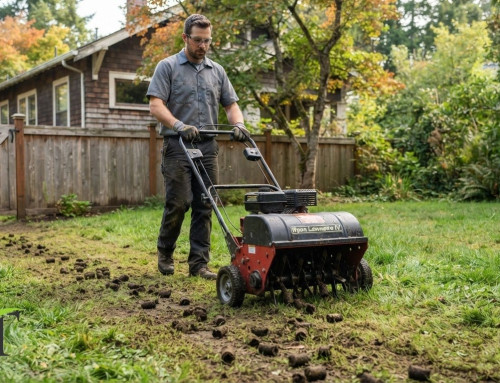
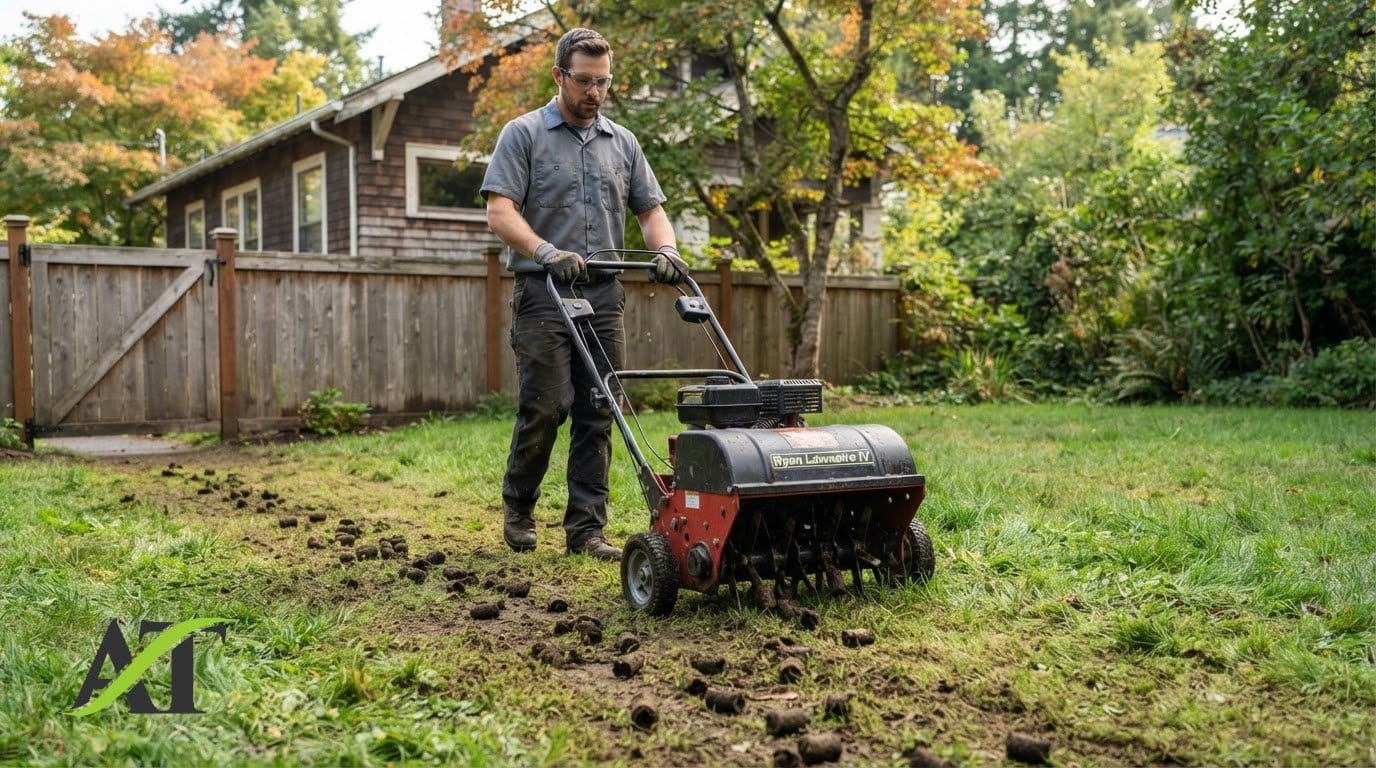
- Look for surface compaction. If soil is hard and water or seed has trouble entering, Core Aeration may help within the shallow turf root zone. It won’t break deep glacial hardpan or repair a subsurface drainage defect. Persistent pooling calls for further diagnosis. For more on core aeration principles, see this overview.
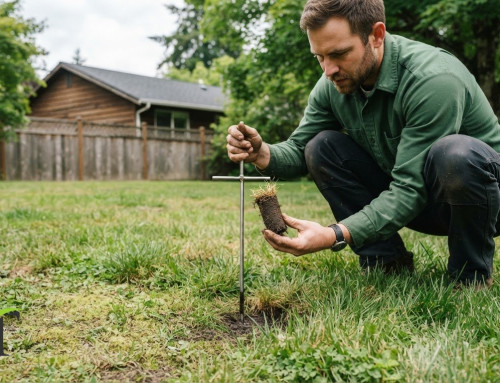
- Distinguish thatch from compaction. Thatch is accumulated plant material between soil and grass; a heavy layer can keep seed from reaching soil. Power Raking (Dethatching) and Core Aeration address different conditions. Inspect the thatch before removing it. You can read about dethatching your lawn for background.
- Check for other barriers. Bare growth under dense tree cover may reflect insufficient sunlight. Failing seedlings in areas with irregular watering or standing water point to irrigation or drainage concerns.
- Get an assessment when the pattern persists. Professional evaluation helps if thin areas remain after suitable seeding, if water keeps pooling, or if several causes overlap. Deep shade, disease, or drainage defects need further diagnosis.
Aerating Thatching Co.: Overseeding
Aerating Thatching Co. provides Overseeding for lawns that have thinned but still have healthy turf. New grass seed fills gaps among established plants without replacing the entire lawn. Stewart, the owner, personally performs the work.
The Lawn Tune-Up consists of Core Aeration, Overseeding, and Fertilizing, using starter fertilizer or the fertilizer specified for that service. Core Aeration can help when compaction in the shallow turf root zone limits seed-to-soil contact. It does not resolve every cause of thinning. An organic-based fertilizer upgrade is available as an option. The Full Meal Deal adds Power Raking (Dethatching) to Core Aeration, Overseeding, and Fertilizing.
Consider overseeding when thin areas are the main concern and the existing grass is basically healthy. If compacted soil is also making establishment difficult, Core Aeration may fit alongside seeding. Deep shade, standing water, and irrigation problems call for a different next step. Seed-to-soil contact, moisture, weather, soil conditions, and aftercare all affect how new grass establishes.
If you’re considering Overseeding or Core Aeration for your Mill Creek lawn, contact Aerating Thatching Co. to talk through the next step.
Frequently Asked Questions
What Is Overseeding?
Overseeding means spreading grass seed into an existing lawn without removing the established turf. It’s useful when grass still covers much of the yard but has become thin. If large sections are bare, adding seed alone may not provide enough coverage.
What overseeding mistakes limit thicker growth?
Common mistakes include spreading seed unevenly, applying more than the label recommends, and letting the seedbed dry out. Keep foot traffic off newly seeded areas. Also identify ongoing causes of thinning, such as persistent shade or standing water, before reseeding the same spots.
Are spring and fall good times to overseed?
Spring and fall are excellent times to seed a lawn in Mill Creek. Spring overseeding supports new growth as temperatures rise, while fall overseeding gives cool-season grass favorable conditions for establishment before winter. Soil and weather conditions still guide the practical timing.
When is the best time to overseed a lawn in Mill Creek, Washington?
Spring and fall are excellent times to overseed a cool-season lawn in Mill Creek. For the Premium 60/40 Sun & Shade Mix, 55–80°F soil temperature is our preferred practical service window. It isn’t a universal optimum, strict cutoff, or germination guarantee.
How much grass seed per 1,000 square feet for overseeding?
The U.S. Environmental Protection Agency guide says rates are often 4 to 6 pounds per 1,000 square feet, depending on species. Treat that as general guidance and follow the seed label. Measure the area and spread evenly.
Should I aerate or dethatch before overseeding in Mill Creek?
Choose based on the problem. Core Aeration relieves soil compaction and can improve seed-to-soil contact. Power Raking (Dethatching) addresses a heavy thatch layer that blocks seed from reaching soil. Neither corrects standing water or deep drainage defects.
Article by
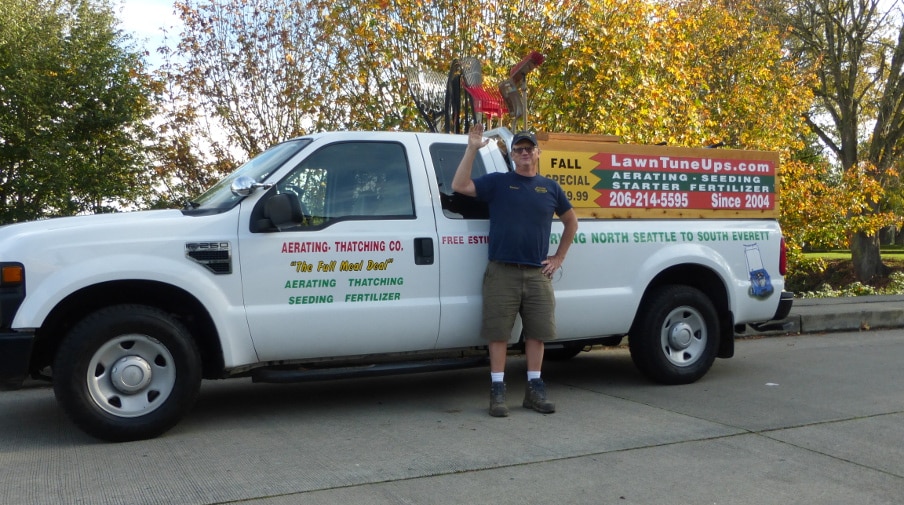
Stewart Armour
Stewart Armour is the owner of Aerating Thatching Co., an owner-operated Seattle-area lawn restoration business established in 2004. He helps homeowners understand Core Aeration, Power Raking (Dethatching), Overseeding, soil conditions, and the aftercare needed for stronger lawns. His background includes turf management study, advanced golf course turf training, and continuing education through Wilbur-Ellis University, State Turf Facilities, Soil First Academy, and Golf Course Applied Turf Physiology. Stewart has personally evaluated thousands of residential lawns throughout the Seattle area and focuses on recommending the work that fits each lawn’s condition.