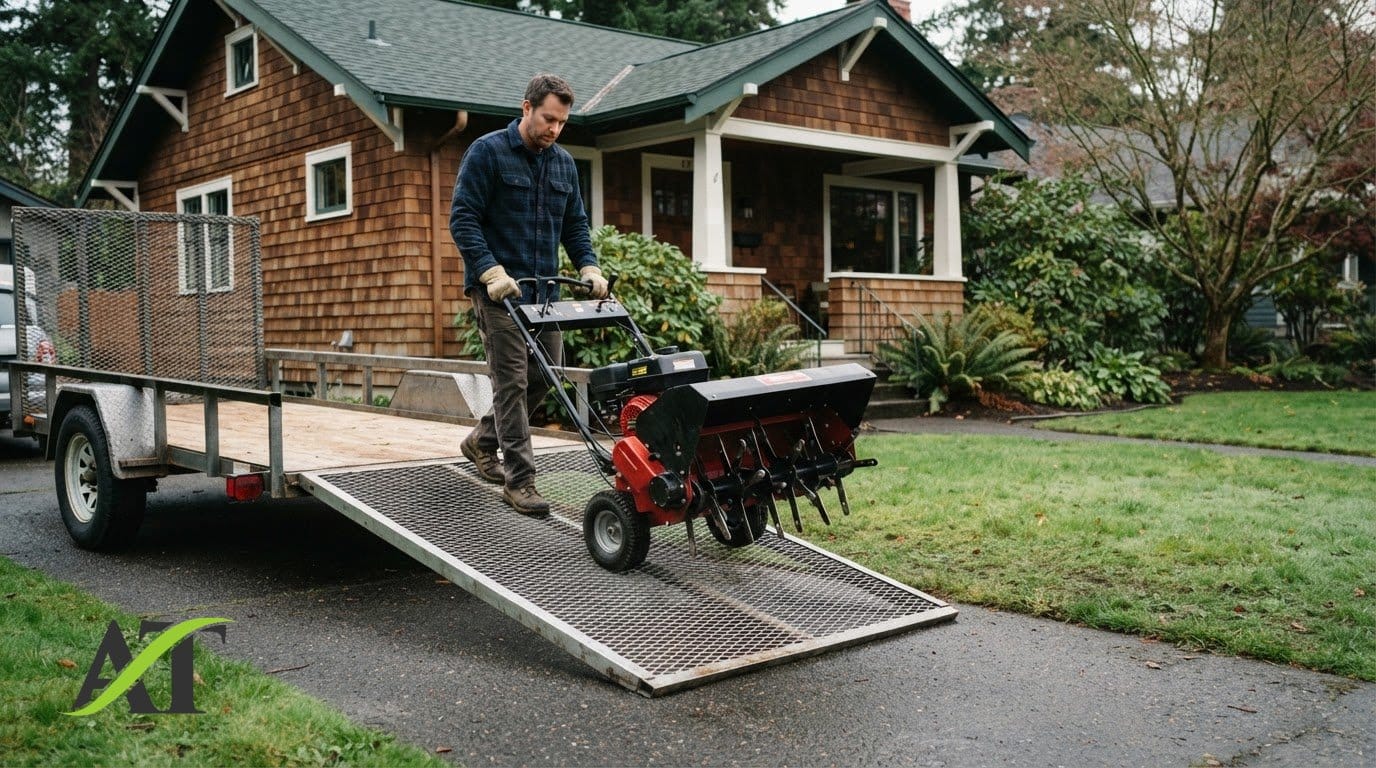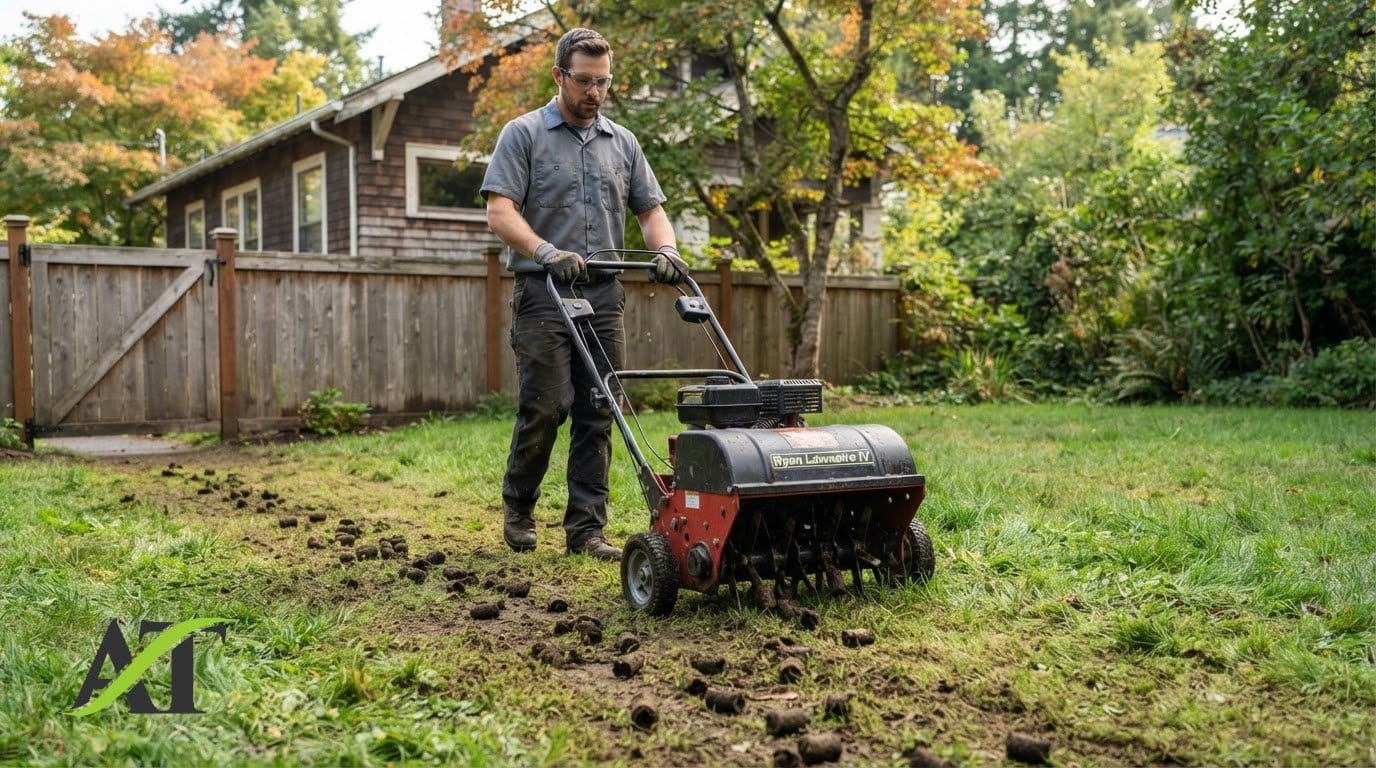
Aeration isn’t an annual chore for every lawn in our service area. Aerating every one to three years is generally sufficient, while compacted soil or heavy foot traffic can call for yearly aeration. Early fall or spring is usually the better window, when the grass is actively growing.
Base the schedule on what’s happening underfoot. Clay-heavy soil and regular traffic increase compaction, while a lawn with few signs of stress may not need yearly treatment. This guide explains how to judge frequency, choose a season, and tell compaction apart from other lawn problems. Let weather and soil conditions guide timing, not a fixed calendar date.
Key Takeaways
- Most lawns in our North Seattle, North King County, and South Snohomish County service area can go one to three years between aeration treatments; compacted soil or heavy foot traffic may call for yearly attention.
- Early fall or spring is generally the better window for cool-season lawns, when soil is moist but not saturated and grass is actively growing.
- Before choosing aeration, distinguish compaction from thatch, shade, irrigation, or drainage problems, since each calls for a different response.
- For the Premium 60/40 Sun & Shade Mix, 55-80°F soil temperature is our preferred practical service window for Overseeding, though establishment also depends on moisture, soil, weather, and aftercare.
When Is the Best Time to Aerate Your Lawn?
For cool-season lawns in North Seattle and nearby communities, early spring or fall is generally the right time to aerate. Choose a period when grass is actively growing and the soil is moist but not saturated.
Best seasons for Washington lawns
Early spring and fall are the main seasons for aerating cool-season lawns in Washington. Active growth gives turf a chance to recover after aeration. Summer dryness alone is not a reason to aerate, and winter dormancy slows recovery.
Soil should be moist enough for equipment to penetrate, but not saturated. Local weather and soil conditions decide the right timing for each lawn.
Cool-season grass aeration timing
Pacific Northwest lawns commonly contain perennial ryegrass or fine fescue. Aerate these grasses during active growth, with fall generally preferred and early spring another suitable window.
Avoid summer heat and winter dormancy, when the grass can’t respond well to the work. If your lawn also needs thicker turf, aeration can be part of a broader renovation plan. The Seattle lawn care calendar gives seasonal context.
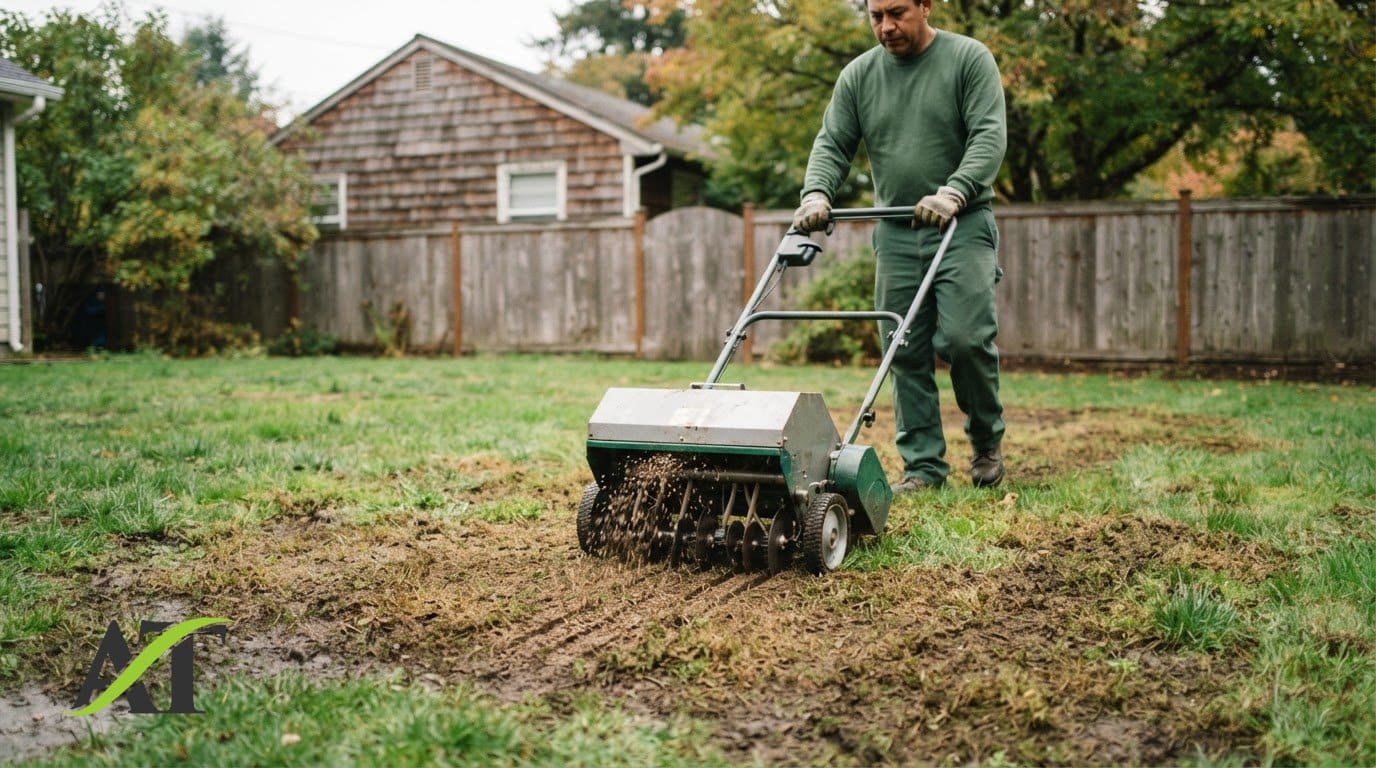
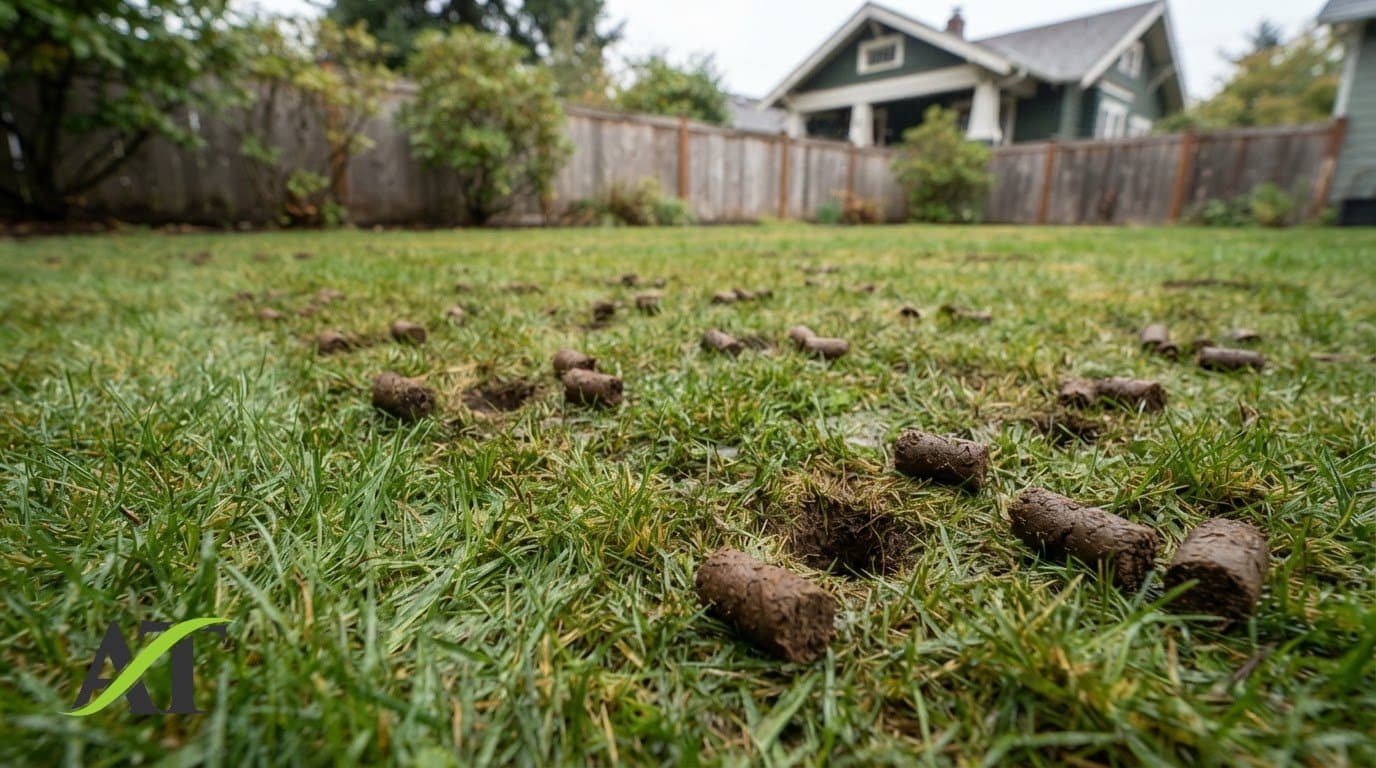
Should I use Core Aeration or spike aeration? Core Aeration removes small soil plugs and is generally preferred for compacted soil. Spike aeration pushes solid tines into the ground and may compact soil around the holes. See these core and spike aeration methods for more detail.
Are there Washington water-use rules or seasonal restrictions? Local restrictions may apply to irrigation, so follow the rules in effect for your address.
When should lawns be aerated in our service area? We serve North Seattle, North King County, and South Snohomish County. In those areas, aerate cool-season lawns during active growth in early spring or fall.
How do I aerate a lawn, and how many passes should I make? If soil is dry, water it beforehand so the tines can penetrate. Make passes in more than one direction, with extra attention to compacted and high-traffic areas. A manual hollow-tine corer can suit a small area.
Aeration frequency for compacted and clay-heavy lawns
Clay-heavy soil, compaction, and regular foot traffic can increase how often a lawn needs aeration. Water that runs off instead of soaking in, or turf that feels spongy, are clues. Sponginess can also point to thatch rather than compaction.
Frequency by soil and lawn use
Clay-heavy soil compacts more readily than sandy soil, and heavy foot traffic presses soil together faster. Clay-heavy or high-traffic lawns in our service area may need aeration once yearly. A lightly used lawn with less compactable soil may need it less often.
Consider where people and pets regularly cross the grass. A worn path or gathering spot may need attention before the rest of the lawn.
Recommended aeration frequency
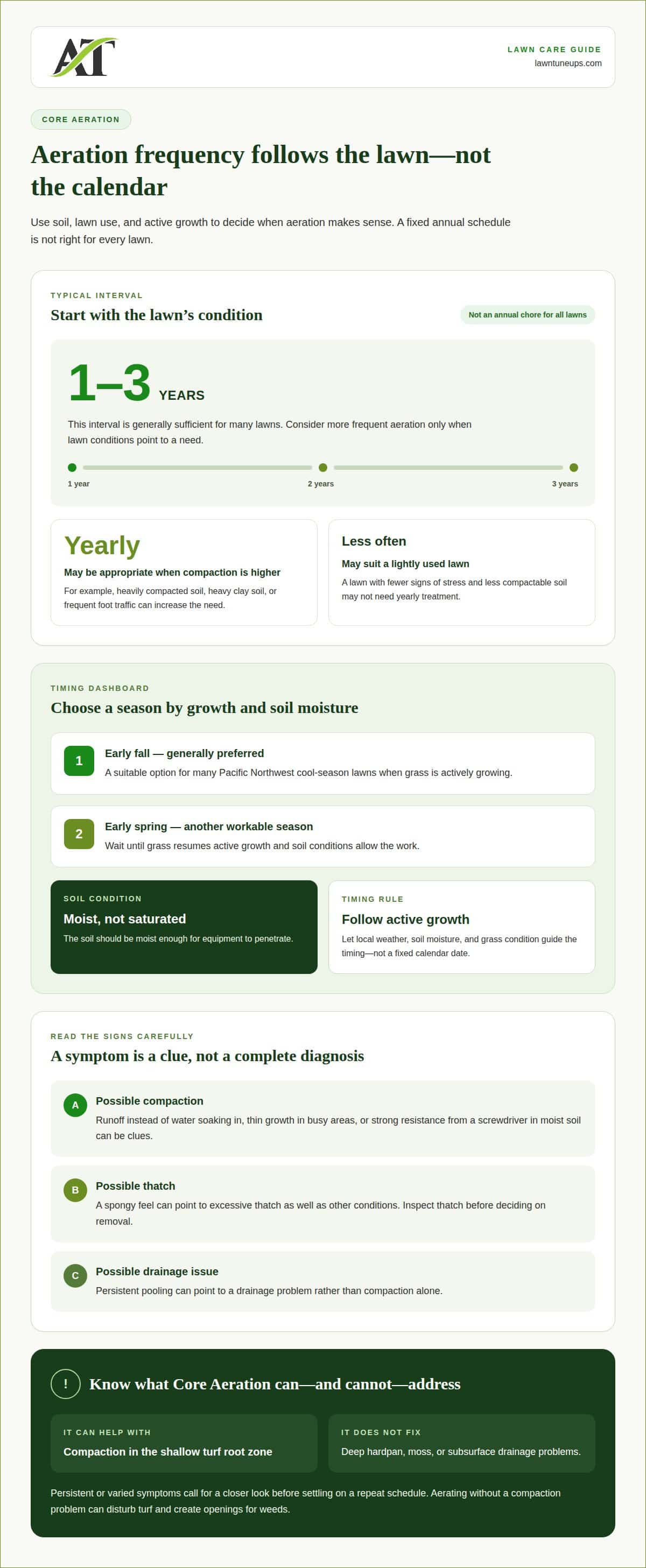
Aerating once every one to three years is generally sufficient. Heavily compacted lawns and lawns with heavy clay soil may need yearly aeration during active growth.
Use the lawn’s condition, soil, and use to guide the interval. Aerating repeatedly without a compaction problem can disturb turf and create openings for weeds. After aeration, allow the grass to recover; weather and soil moisture affect how the lawn responds. For more on clay, see lawn aeration benefits for clay soil.
Signs a lawn needs aeration
How can I tell if my Washington lawn needs aeration? Watch for runoff, slow soaking, or thin growth in busy areas. If a screwdriver meets strong resistance in moist soil, that is a clue to a compacted spot, though not a complete diagnosis.
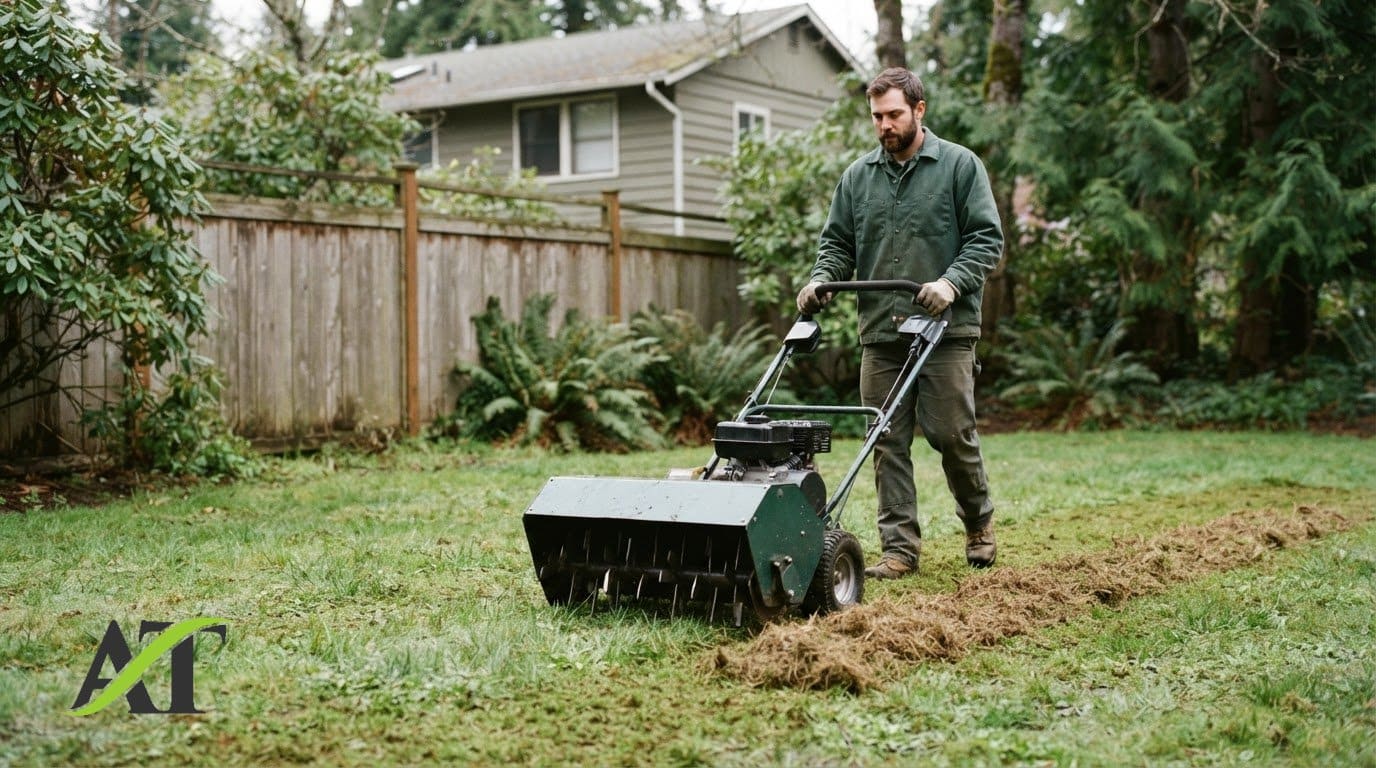
A spongy feel may indicate excessive thatch, while persistent pooling can point to a drainage problem. Core Aeration relieves compaction in the shallow turf root zone; it won’t break deep hardpan, remove moss, or correct subsurface drainage. Inspect thatch before deciding on removal. Our guide to signs of compacted soil helps with the details.
When symptoms persist or vary across the lawn, ask about the lawn’s compaction symptoms before settling on a repeat schedule.
Recommended aeration timing in the Pacific Northwest
For Pacific Northwest cool-season lawns, early fall is generally preferred, with early spring as another workable season. Choose based on active grass growth and soil conditions, not a fixed calendar schedule.
Timing by hardiness zone
USDA Hardiness Zones 6-7 are identified with the Pacific Northwest, where fall is a preferred aeration season. Zones offer regional context, but they don’t replace checking whether the lawn is actively growing.
Grass type matters too. Cool-season grasses such as fescue are generally aerated in fall or early spring. We work with cool-season lawns, so warm-season schedules don’t apply here.
Spring aeration timing
Early spring can suit cool-season lawns once grass resumes active growth and soil conditions allow the work. Spring aeration may help where compaction affects high-traffic areas.
Soil that is saturated or too dry can make aeration less effective. Don’t treat dormant or stressed turf based on the calendar alone.
Fall aeration timing
Early fall is the preferred season for many Pacific Northwest cool-season lawns. Active growth helps turf recover after aeration, while suitable soil moisture lets equipment penetrate the shallow root zone.
Plan around local weather and the grass’s condition rather than a fixed date. Avoid aerating while the lawn is dormant. See the fall lawn care calendar for related tasks.
Aerating before overseeding and fertilizing
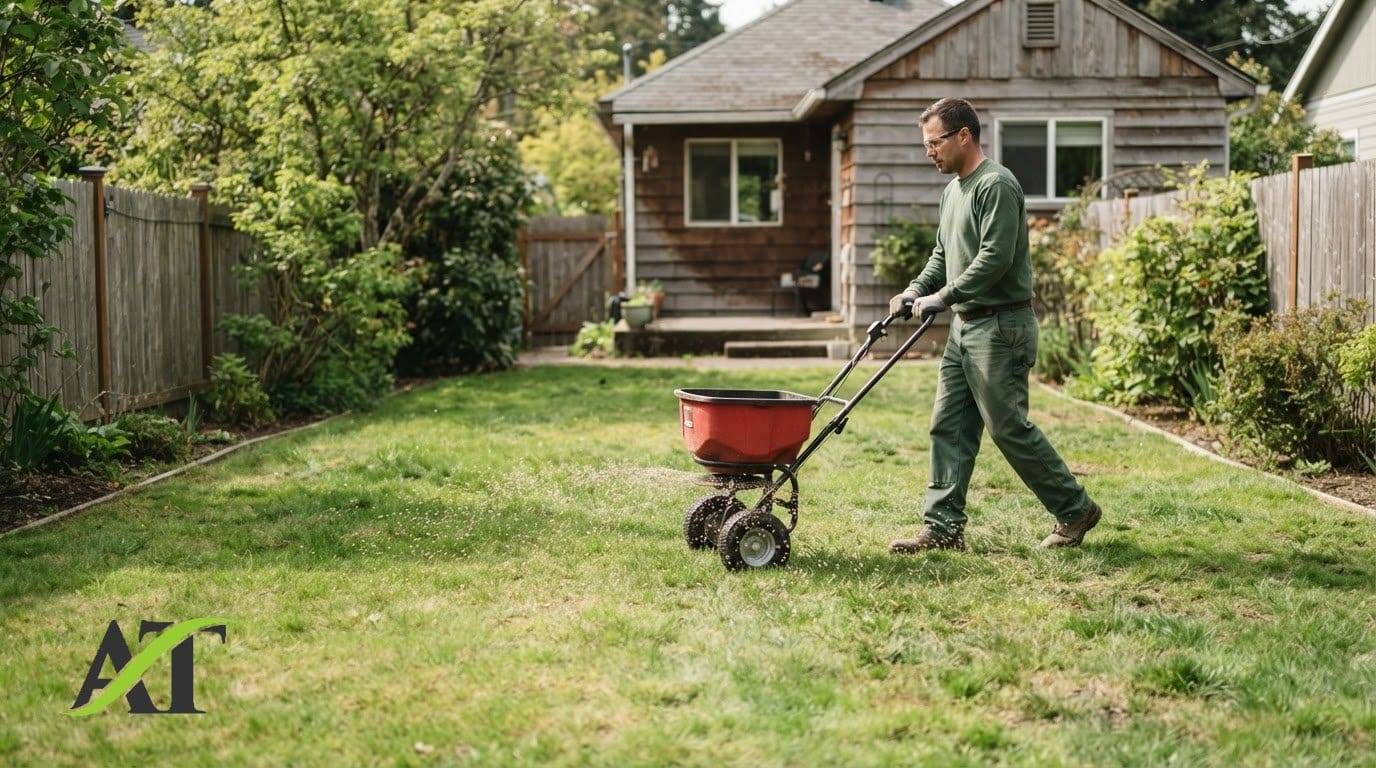
Core Aeration can be scheduled before Overseeding and Fertilizing when a lawn needs renovation. Aeration doesn’t include seed or fertilizer on its own; those are selected separately.
Aeration for lawn renovation
For a compacted lawn that also needs thicker turf, Core Aeration can come before Overseeding. Overseeding is only needed if the lawn is thin or weak. Seed-to-soil contact, moisture, weather, and aftercare all affect establishment.
For the Premium 60/40 Sun & Shade Mix, 55-80°F soil temperature is our preferred practical service window. This is not a universal optimum, strict cutoff, or germination guarantee. Fertilizer supports the plan, but it won’t correct compaction, shade, thatch, or a drainage problem. Learn more in aeration and overseeding timing.
Preparation and follow-up care
What should I do before and after aerating a lawn? Before, make sure soil is moist but not saturated, and mark sprinkler heads and other shallow items. Afterward, follow the aftercare guide for watering, mowing, and traffic.
Core Aeration leaves small soil plugs on the lawn that break down naturally. Don’t add extra fertilizer right after a service that included starter fertilizer. Keep traffic light on newly seeded areas. Managing weeds remains the homeowner’s job, and herbicides shouldn’t go on new seed unless the label permits it.
For more on managing thatch and compaction, see this managing lawn thatch and compaction guide.
Aerating Thatching Co.
Aerating Thatching Co. can help you decide whether your lawn’s symptoms point to compaction or another issue. Core Aeration relieves compaction in the shallow turf root zone, but it won’t correct deep hardpan, drainage defects, shade, or irrigation problems.
When thin turf also needs help, the Lawn Tune-Up combines Core Aeration, Overseeding, and Fertilizing. The right next step depends on the lawn’s condition, and sometimes a smaller service or no treatment fits best. Reach out whenever you’d like advice.
Frequently Asked Questions
How often should lawns be aerated in Washington state?
In our North Seattle, North King County, and South Snohomish County service area, every one to three years is generally sufficient. Yearly treatment suits heavy compaction or frequent foot traffic. Adjust the interval to the lawn’s condition rather than repeating aeration automatically.
When is the best time to aerate cool-season lawns in western Washington?
Early fall is generally preferred, while early spring can also work. Choose a period when grass is actively growing and soil is moist but not saturated. If the lawn is dormant or the ground is saturated, wait.
How often should clay soil lawns be aerated compared with sandy soil lawns?
Clay compacts more readily, so clay-heavy lawns may need aeration once yearly. Sandy soil generally resists compaction better and may need it less often. Treat soil type as a starting point, then consider lawn use and visible compaction.
Can aerating a lawn damage it or worsen weeds?
Aerating more often than the lawn needs can stress turf and create openings where weeds may establish. First consider whether compaction is present. Thatch, shade, irrigation, and drainage issues need different attention.
Should I aerate before overseeding or fertilizing?
When a lawn needs new grass, aerate first, then Overseed so seed can reach the soil. Core Aeration alone doesn’t include seed or fertilizer, so select those separately when needed. For the Premium 60/40 Sun & Shade Mix, 55-80°F soil temperature is our preferred practical service window; moisture, weather, soil, and aftercare also affect establishment.

Article by
Stewart Armour
Stewart Armour is the owner of Aerating Thatching Co., an owner-operated Seattle-area lawn restoration business established in 2004. He helps homeowners understand Core Aeration, Power Raking (Dethatching), Overseeding, soil conditions, and the aftercare needed for stronger lawns. His background includes turf management study, advanced golf course turf training, and continuing education through Wilbur-Ellis University, State Turf Facilities, Soil First Academy, and Golf Course Applied Turf Physiology. Stewart has personally evaluated thousands of residential lawns throughout the Seattle area and focuses on recommending the work that fits each lawn’s condition.