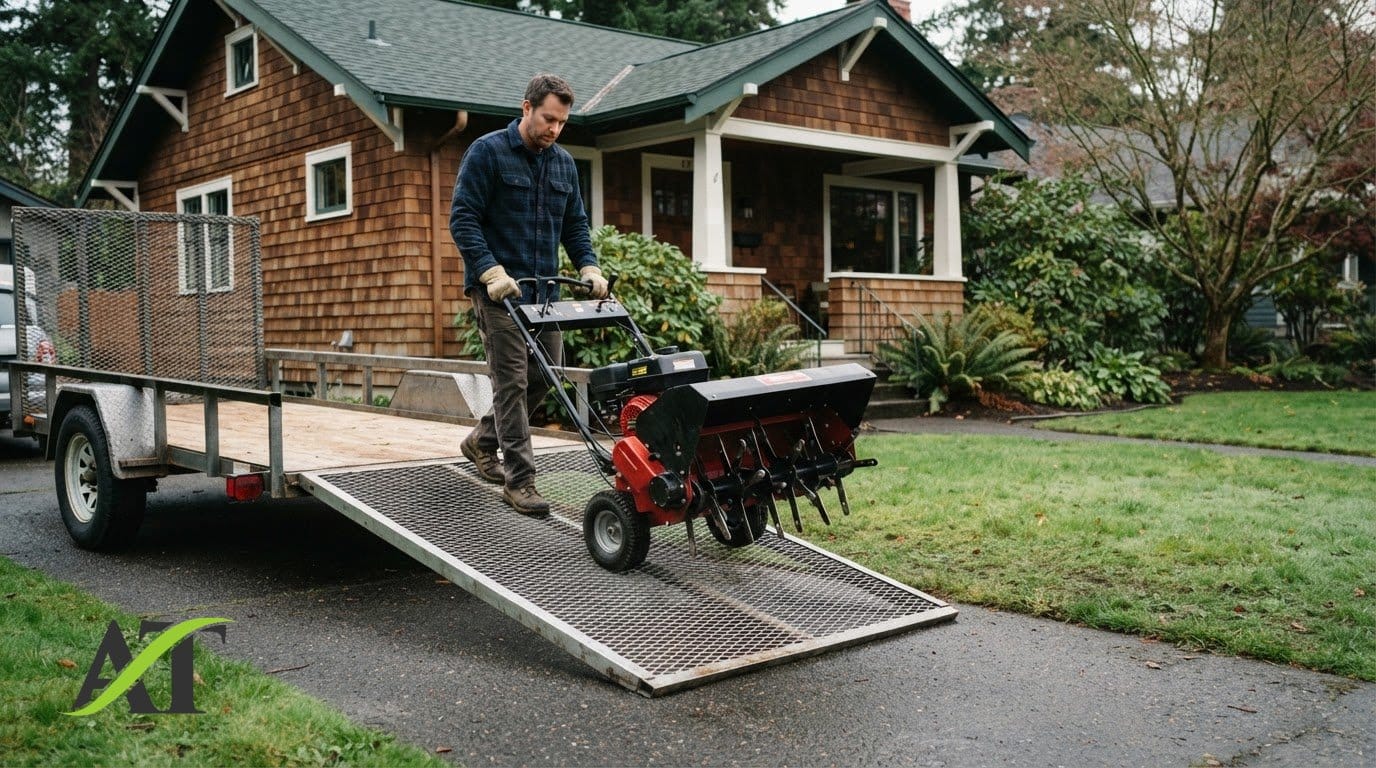
A Seattle lawn is a constant contest with heavy clay and moss, and sometimes it needs a mechanical tune up, not just a haircut. If you’ve spent years spreading fertilizer only to see thin patches, compacted soil may be part of the picture. A lawn tune up service in Seattle can relieve that compaction and help thicken a thin lawn, but the first job is working out what your lawn actually needs.
This guide explains what a Lawn Tune-Up includes, what it doesn’t fix, and how to decide between the Lawn Tune-Up and the Full Meal Deal. It also covers the timing and aftercare that affect results.
Key Takeaways
- A Lawn Tune-Up consists of Core Aeration, Overseeding, and Fertilizing. Power Raking (Dethatching) is not part of it.
- The Full Meal Deal adds Power Raking (Dethatching) to Core Aeration, Overseeding, and Fertilizing.
- Core Aeration does not remove moss, fix drainage, or replace dethatching.
- Moss, sponginess, and yellowing are clues, not a full diagnosis. Light, thatch, irrigation, and drainage all matter.
- Spring and fall are the common service seasons, and aftercare strongly affects results.
What is a Lawn Tune Up Service in Seattle?
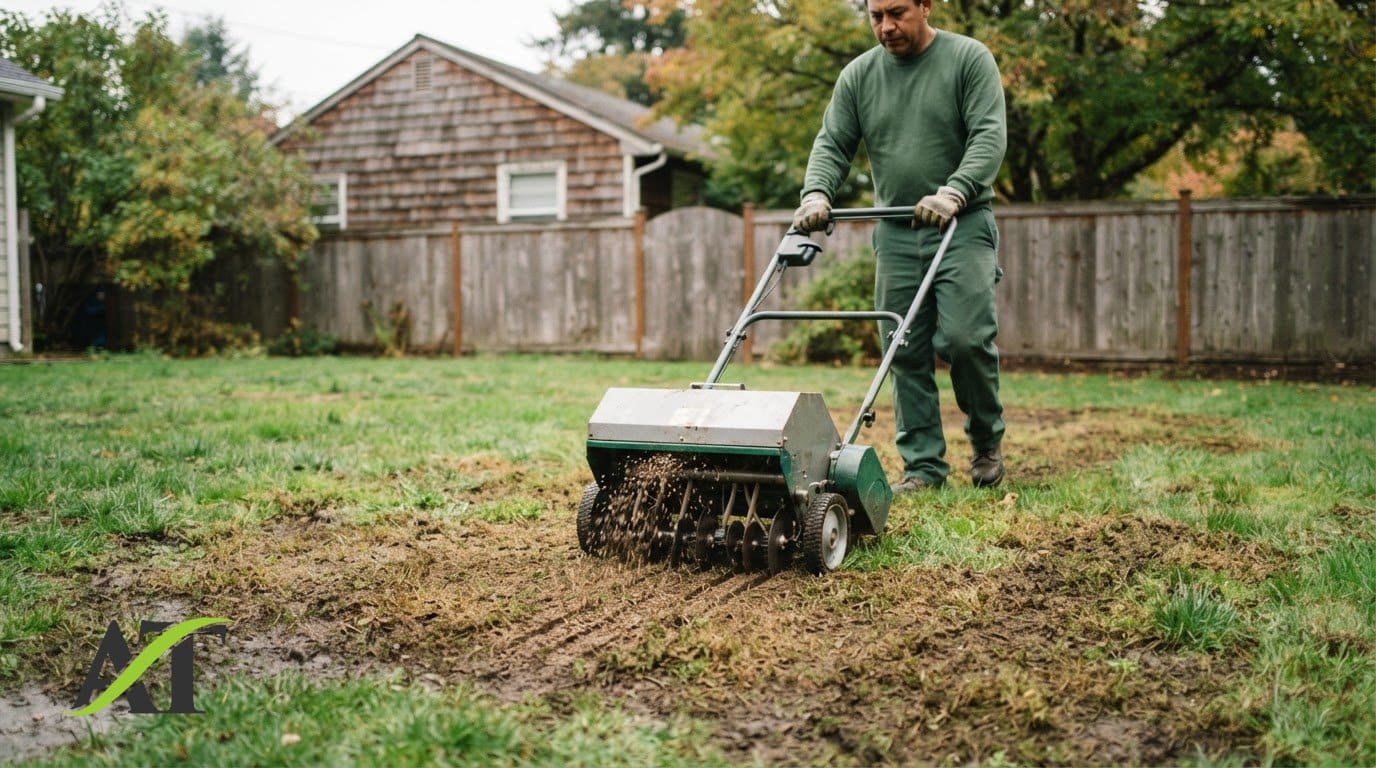
Mowing handles the haircut. A tune up addresses what happens below the surface. The Lawn Tune-Up from Aerating Thatching Co. combines three steps: Core Aeration, Overseeding, and Fertilizing with starter fertilizer or the fertilizer specified for the service.
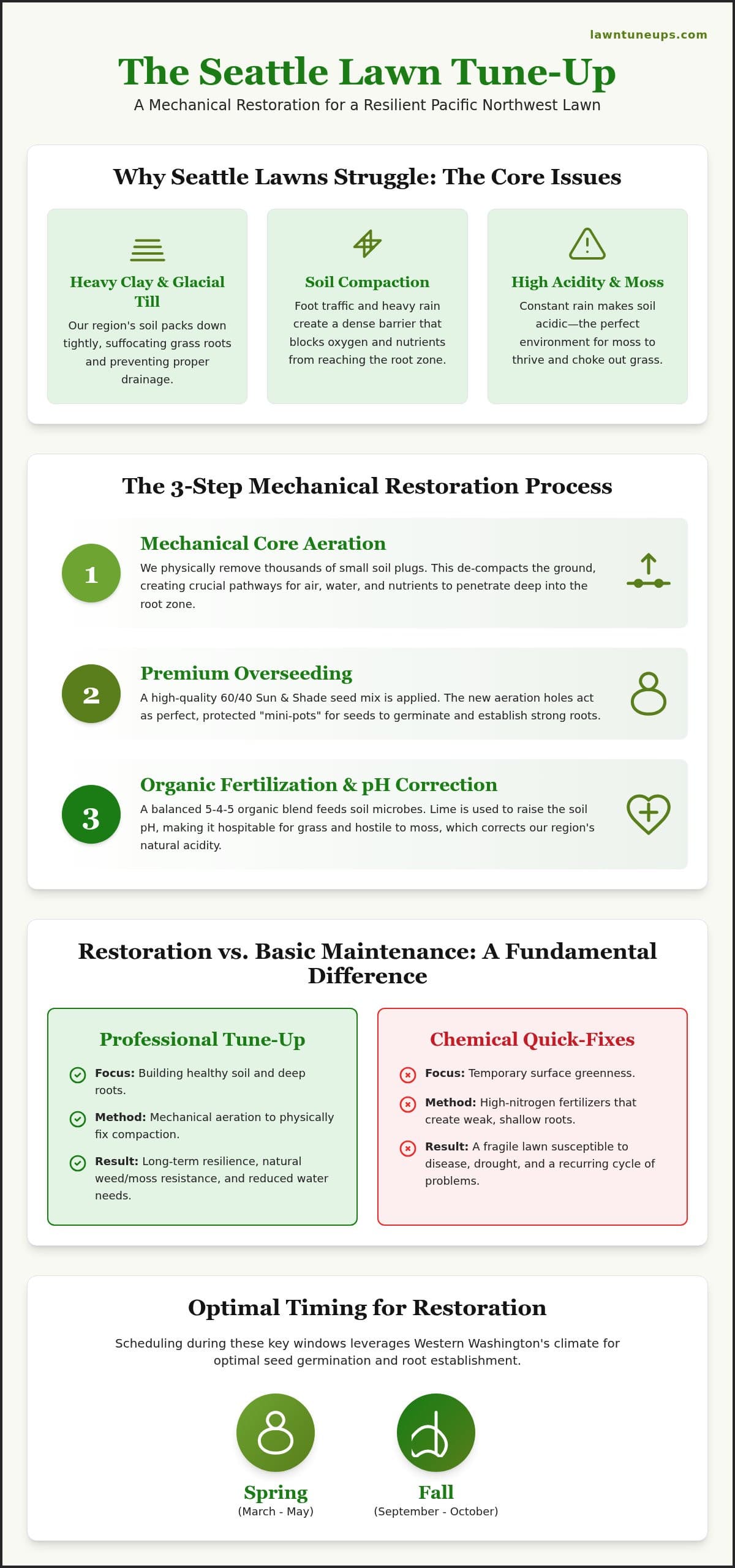
Many Puget Sound yards sit on dense, clay-heavy ground that packs down over time. Compacted soil limits air and water at the roots, and thin grass leaves room for moss and weeds. A tune up opens the soil and adds new seed, but it works best when the lawn’s real problem is thinning turf on compacted soil.
The Core Components of a Professional Tune Up
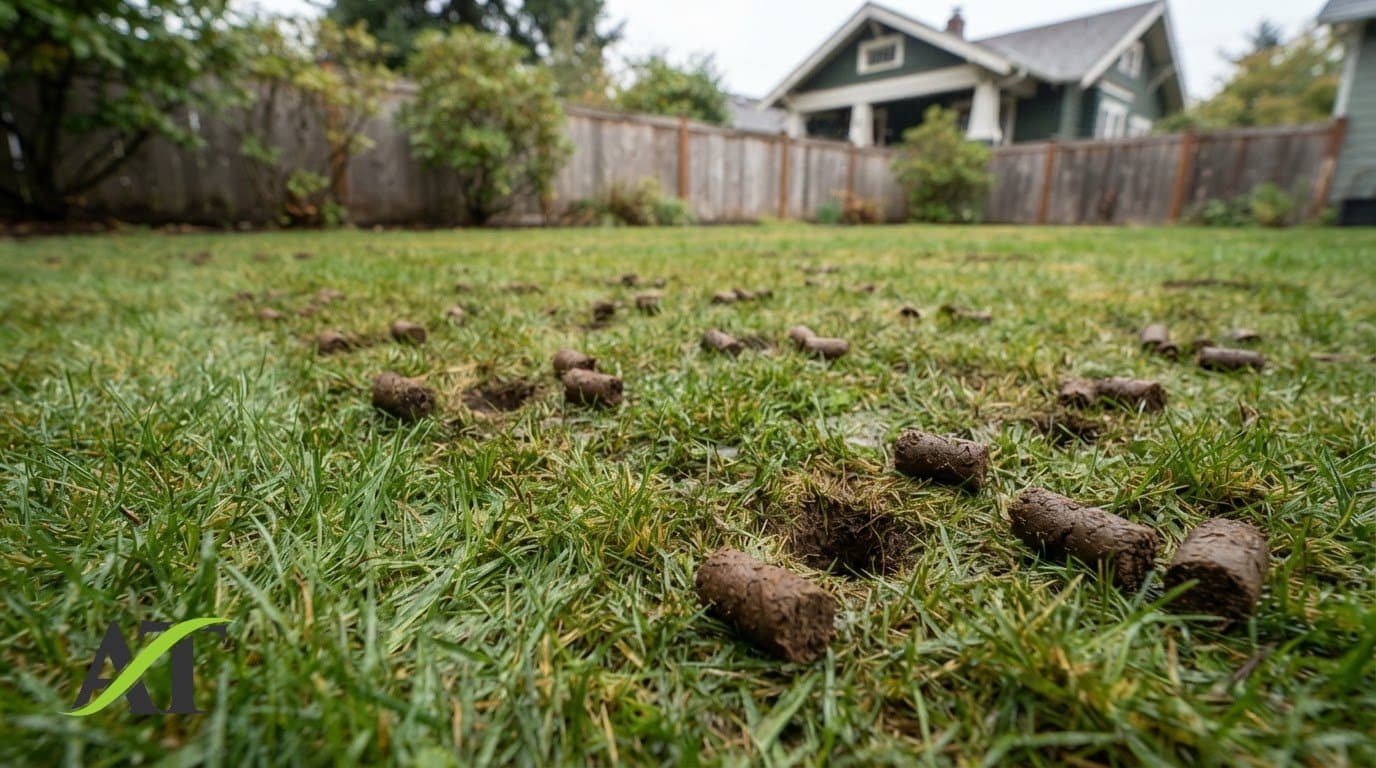
- Core Aeration: Small soil plugs are pulled from the lawn to relieve compaction. It does not fix a subsurface drainage defect.
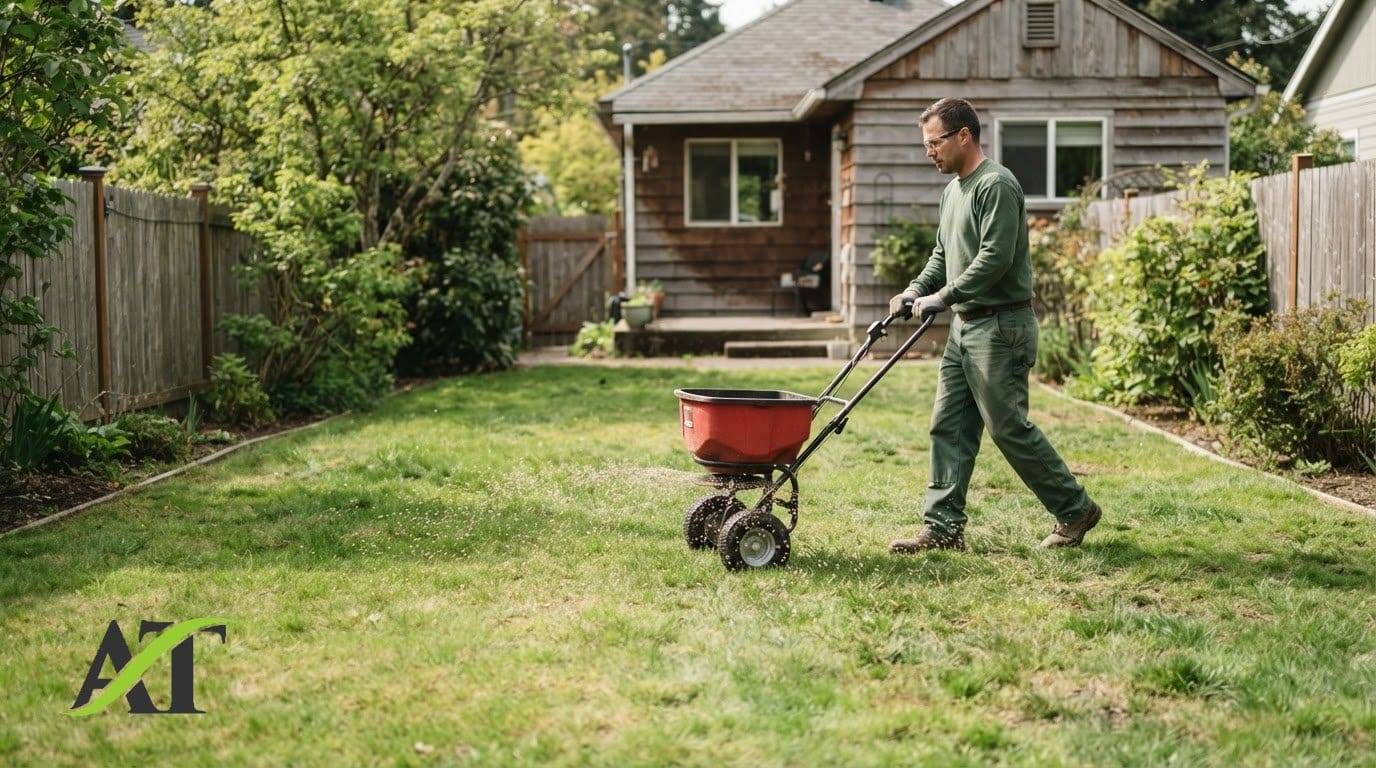
- Overseeding: New seed fills in thin areas. Our Premium 60/40 Sun & Shade Mix is included. A 55–80°F soil temperature is our preferred practical service window for it. That is not a universal optimum, strict cutoff, or germination guarantee, since moisture, seed-to-soil contact, soil conditions, weather, and aftercare also affect establishment.
- Fertilizing: Starter fertilizer is standard. An organic-based fertilizer upgrade is available, and the two options can be compared fairly based on your lawn’s needs.
Signs Your Seattle Yard Needs a Tune Up
Water pooling on the surface, a lawn that resists a screwdriver, thinning grass, and moss in shady spots are common clues. They are not a complete diagnosis. Moss often points to shade, moisture, or poor density, and a spongy feel can mean thatch. Inspect before you decide. Our guide to signs of compacted soil walks through what to look for.
The Anatomy of a Professional Lawn Restoration
Core Aeration creates openings where seed can make better contact with soil, which is why it pairs with Overseeding. It only helps if the lawn is actually compacted, and standalone aeration does not include seed or fertilizer unless you choose a package that does.
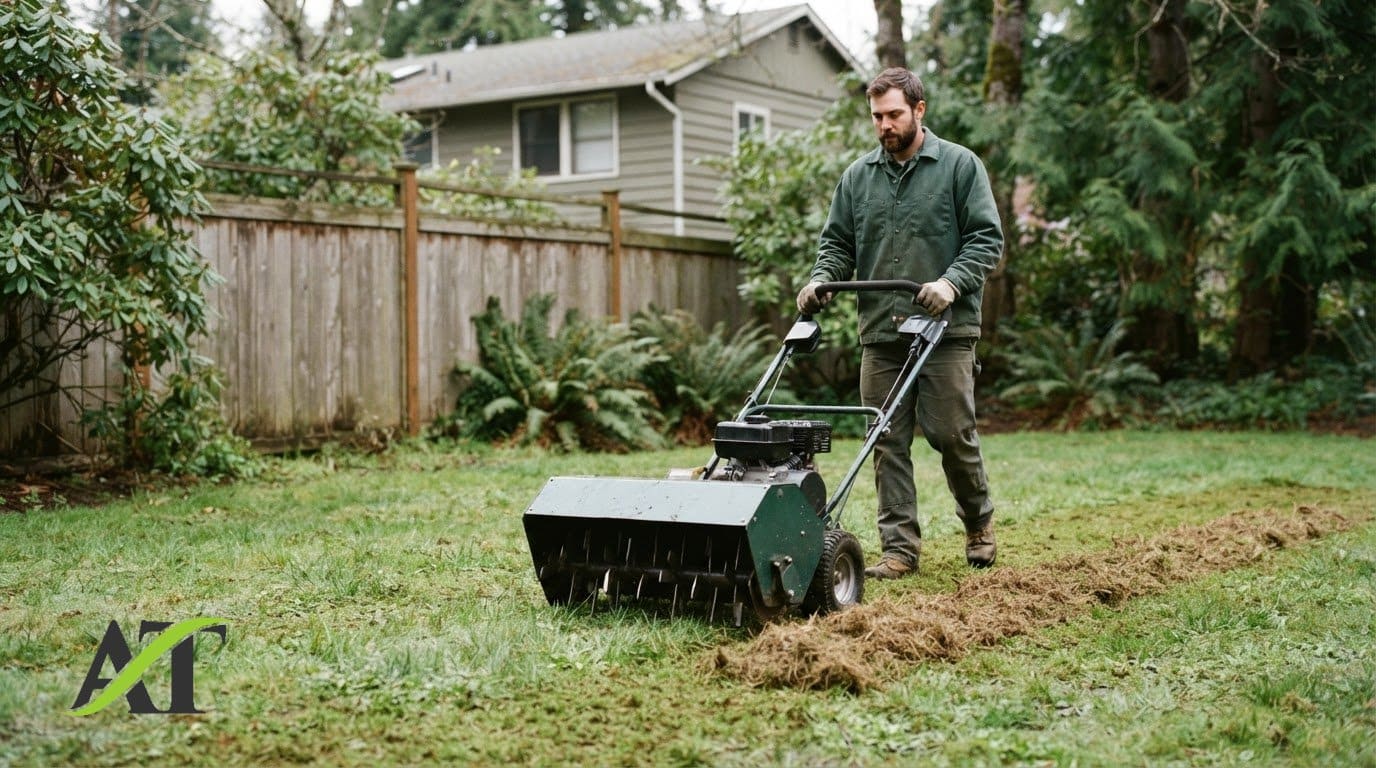
Thatch is a separate problem. Power Raking (Dethatching) pulls up a dense layer of dead material that aeration cannot remove, and it should be recommended only after the thatch has been inspected. Power raking and dethatching are the same service. For background, see this overview of mechanical dethatching and scarification, or our complete guide to lawn dethatching. Our page on when to power rake a lawn in Seattle helps with the timing question.
Soil pH, Lime, and Fertilizer
The ideal soil pH for lawns in Western Washington is 6.5. Lime raises overly acidic soil, but it is not a moss killer and does not cure compaction or drainage. A soil test and the product directions should decide whether lime is needed and how much. A result away from 6.5 is not an automatic instruction to add it. Lime is an optional add-on, not part of either package. See how to test lawn soil pH, and read our guide to balancing soil pH with lime application.
Fertilizer supplies nutrients. It does not replace missing grass or solve shade, thatch, irrigation, or drainage problems. If the fertilizer you’ve used hasn’t helped, look at those causes first.
Choosing Seed for Your Site
Match seed to the light your lawn actually gets. The Premium 60/40 is included mixed light, and a drought-tolerant seed upgrade is also available. Neither is a guarantee of performance in deep shade or dry spells. If a spot gets almost no light, seed alone may not solve it.
Lawn Tune Up vs. Basic Mowing: Why the Difference Matters
Mowing keeps a lawn tidy. It does not relieve compaction or add new grass. A thin lawn on compacted soil needs the mechanical work described above, and a thicker lawn is better positioned to crowd out weeds. Weed management remains the homeowner’s responsibility.
| Service | What it includes | Best fit |
|---|---|---|
| Core Aeration | Core Aeration only | Compacted lawns that are still reasonably dense |
| Lawn Tune-Up | Core Aeration, Overseeding, Fertilizing | Thin or tired lawns with a workable base of grass |
| Full Meal Deal | Power Raking (Dethatching), Core Aeration, Overseeding, Fertilizing | Lawns with a confirmed heavy thatch layer plus thinning |
When Mowing Isn’t Enough
Mowers cannot loosen compacted soil or fill gaps. But a tune up is not always the answer either. A dense lawn may need only aeration, a small area may suit a manual hollow-tine corer, and some problems need further diagnosis first. See DIY vs. professional lawn aeration for a fair comparison.
The Value of Local Expertise
Aerating Thatching Co. has served North King and South Snohomish County since 2004. Stewart Armour is on every job and gives honest, no-pressure advice matched to your lawn. If a yard has heavy thatch, he’ll recommend the Full Meal Deal. If it needs less, he’ll say so.
When to Schedule Your Seattle Lawn Tune Up
Spring and fall are the common service seasons, when soil is moist but not saturated. Actual timing varies with weather, soil conditions, and the work selected. Summer dryness alone is not a reason to aerate. The Seattle Lawn Care Calendar gives broader seasonal context.
Step-by-Step Homeowner Preparation
- Mark sprinkler heads, oil tank caps, shallow utilities, and pet fencing. Unmarked hidden items are not covered.
- Clear the yard of debris, toys, and pet waste.
- Follow any mowing guidance given when you schedule.
Post-Service Care: Ensuring Success
Aftercare matters as much as the service. New seed has different needs than established grass or standalone aeration, so follow the lawn aftercare guide for watering, mowing, and traffic. Don’t add extra fertilizer right after a service that included starter fertilizer. Don’t apply herbicides to newly seeded turf unless the label explicitly permits it. Results are not guaranteed and depend on watering, weather, and soil.
Why Aerating Thatching Co.
We focus on lawn restoration: Core Aeration, Power Raking (Dethatching), Overseeding, and Fertilizing. Stewart personally performs the work. Learn more about us at lawntuneups.com.
Ready for a Healthier Lawn?
Compare the Lawn Tune-Up and the Full Meal Deal, then Ask Stewart About Your Lawn.
Frequently Asked Questions
What is included in a standard Seattle lawn tune up?
Core Aeration, Overseeding, and Fertilizing. Power Raking (Dethatching), lime, soil amendments, and wetting agents are optional extras.
How often should I have my lawn aerated and overseeded in Seattle?
It depends on the lawn. Aeration makes sense when the soil is compacted, and overseeding when the grass is thin. Neither should be done on a fixed schedule just because of the season.
Why is moss such a big problem for Seattle lawns, and can a tune up fix it?
Moss thrives in shade, moisture, and thin turf. Core Aeration does not remove moss. Finding the cause comes first, and thicker grass can help over time. See fixing the cause of moss.
Do I need to be home when the lawn tune up service is performed?
Ask Stewart when you schedule. What matters most is that sprinkler heads, utilities, and other hidden items are marked beforehand.
How soon will I see results after a lawn restoration service?
Timing varies with weather, moisture, soil, and aftercare, and results are not guaranteed. New seed needs consistent care to establish.
Is the organic fertilizer you use safe for my pets and children?
"Organic" does not establish safety. Follow the label and the service-specific instructions for the actual product, including watering and re-entry. For pet health questions, talk to your veterinarian.
Should I choose a ‘Lawn Tune Up’ or the ‘Full Meal Deal’?
Choose the Lawn Tune-Up for thin lawns without a heavy thatch layer. The Full Meal Deal, which includes Power Raking (Dethatching), Core Aeration, Overseeding, and Fertilizing, fits lawns where thatch is confirmed to be the problem.
What happens if it rains right after my lawn service is completed?
Moderate rain can help keep new seed moist, but heavy rain can wash seed around. Follow the aftercare guide and adjust watering to the weather.
Article by
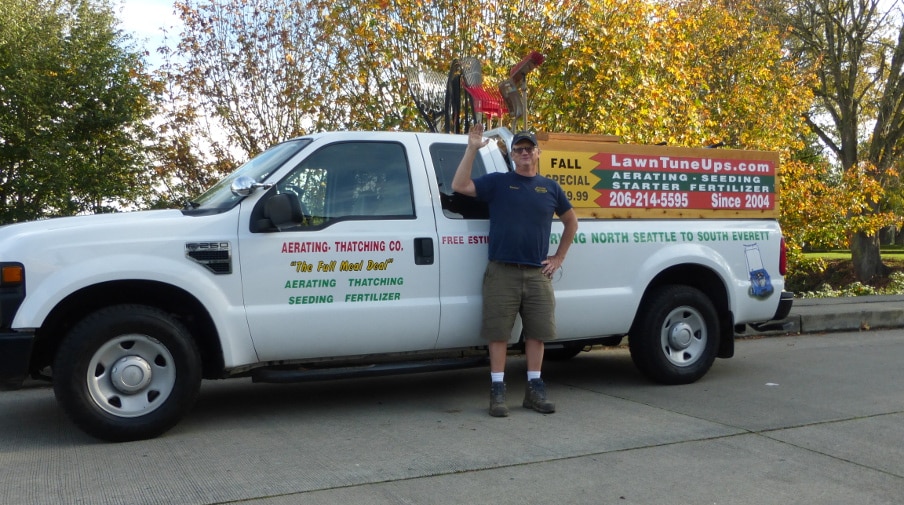
Stewart Armour
Stewart Armour is the owner of Aerating Thatching Co., an owner-operated Seattle-area lawn restoration business established in 2004. He helps homeowners understand Core Aeration, Power Raking (Dethatching), Overseeding, soil conditions, and the aftercare needed for stronger lawns. His background includes turf management study, advanced golf course turf training, and continuing education through Wilbur-Ellis University, State Turf Facilities, Soil First Academy, and Golf Course Applied Turf Physiology. Stewart has personally evaluated thousands of residential lawns throughout the Seattle area and focuses on recommending the work that fits each lawn’s condition.