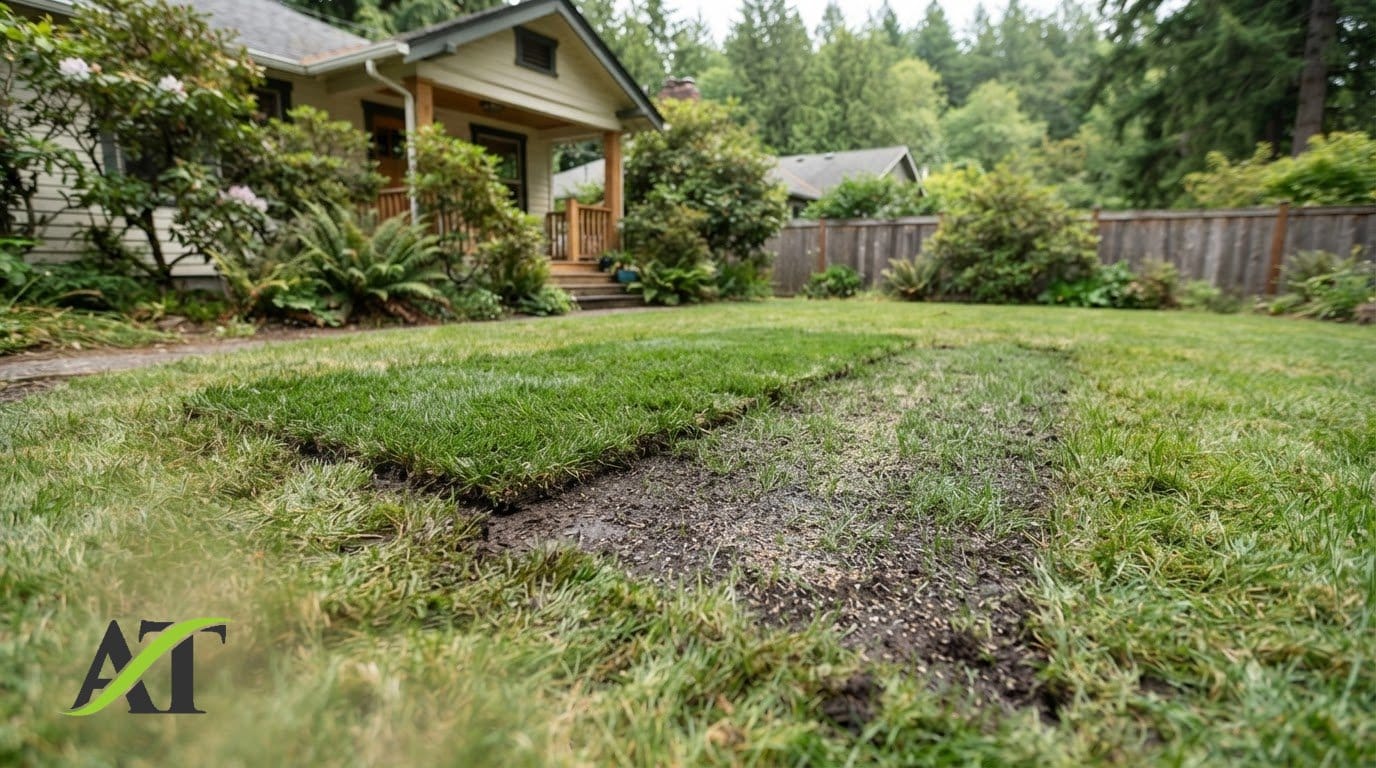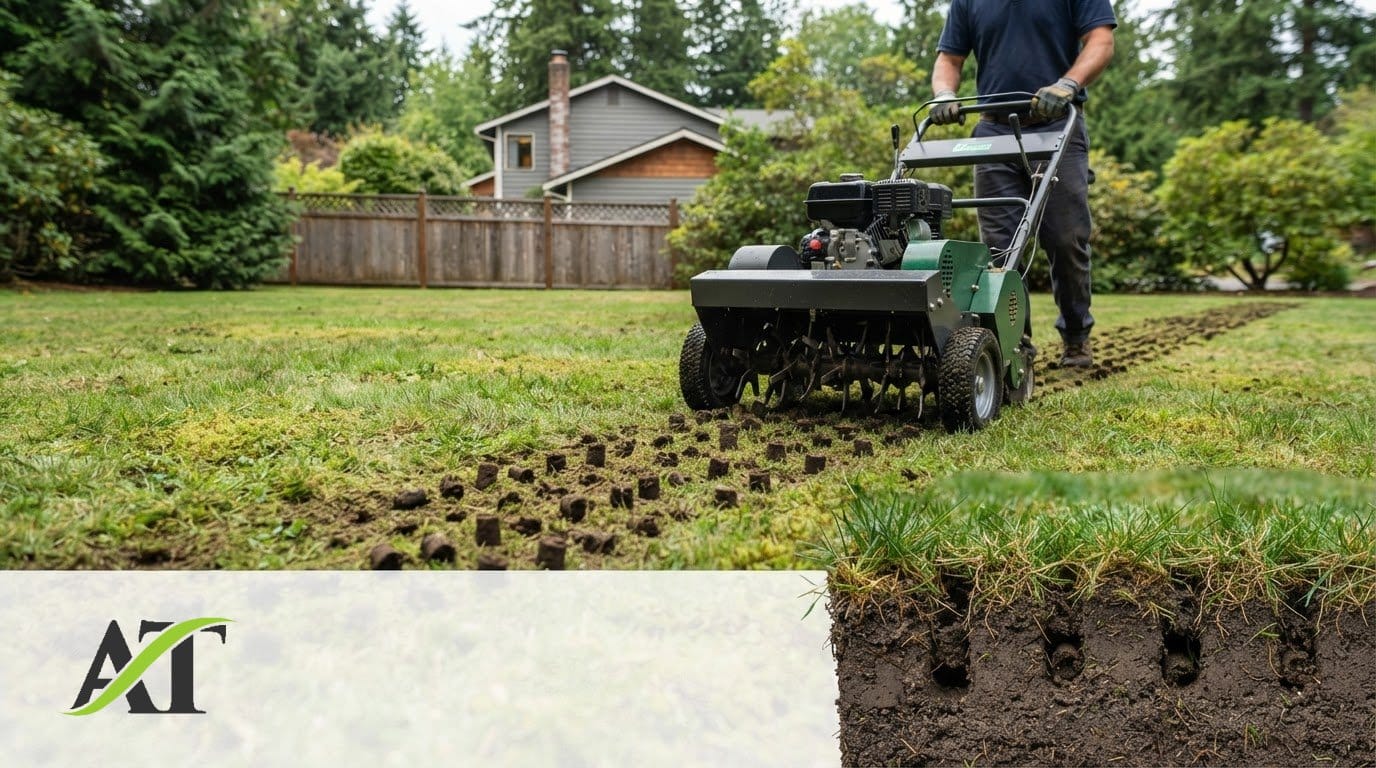
What if the bare or thinning patches in your yard aren’t caused by compacted soil at all? Lawn aeration Edmonds homeowners consider can help when compaction is restricting air and water movement in the shallow turf root zone. But aeration won’t correct every lawn problem.
Hard soil and poor water penetration may point to compaction, while shade, irrigation issues, excess thatch, or deeper drainage problems can call for a different response. These symptoms can overlap, so aeration alone may not produce the change you want.
This guide explains what to look for, what Core Aeration can and can’t address, and when further diagnosis makes sense. You’ll also learn how Core Aeration fits into a Lawn Tune-Up, which includes Overseeding and Fertilizing, and when Power Raking (Dethatching) may be relevant as part of a Full Meal Deal. The aim is to match the service to the lawn’s actual condition.
Key Takeaways
- Look at traffic patterns and how the turf feels underfoot to judge whether compaction may be contributing to weak growth.
- Lawn aeration can address shallow root-zone compaction, but not deep drainage defects or every cause of thinning turf.
- Before choosing a treatment, consider whether shade, thatch, or watering patterns could better explain the lawn’s condition.
- A Lawn Tune-Up combines Core Aeration, Overseeding, and Fertilizing. Choose it when that combination fits the lawn’s needs.
Lawn Aeration in Edmonds: Which Lawn Problems Might Point to Compaction?
Thin grass, bare spots, or turf that feels hard underfoot can make you wonder whether the soil is packed too tightly. Compaction is one possibility, particularly in areas crossed regularly by people or equipment. But these signs aren’t proof. Shade, irrigation patterns, excess thatch, and drainage trouble can also leave grass weak.
How to separate compaction from other lawn problems
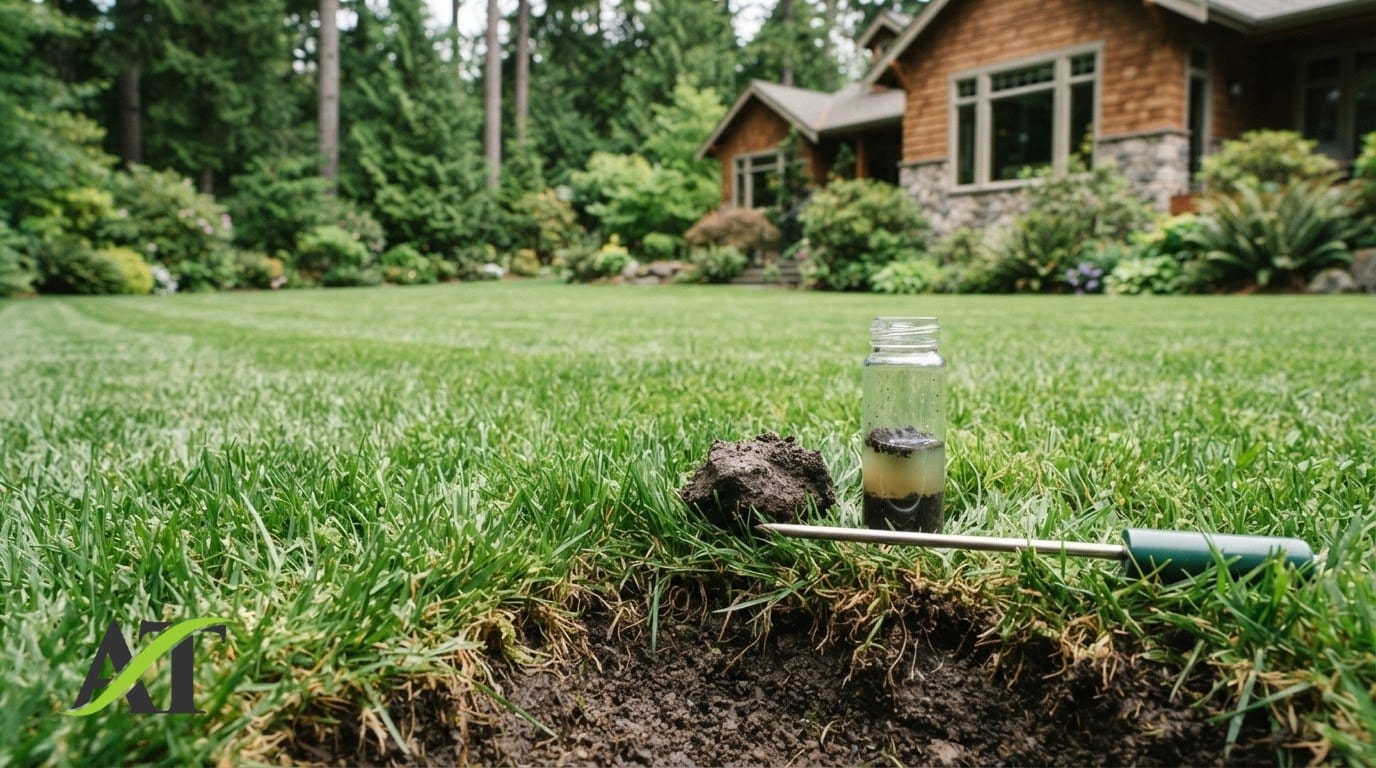
Look for patterns, not just a single symptom. If an area gets regular foot traffic and the soil feels firm, compaction may be contributing. A screwdriver or similar probe may be harder to push into dry, compacted ground, but soil moisture affects this check, so compare areas under similar conditions. The general aeration process creates openings; lawn Core Aeration targets the shallow turf root zone.
Thatch is a layer of dead stems and roots between green grass and the soil surface. Shade-related thinning often follows areas that receive less light. Unevenly dry or persistently wet patches may point to irrigation or drainage issues instead. Each cause calls for a different response. Standing water can signal a deeper drainage problem that Core Aeration won’t fix.
Symptoms can suggest compaction, but they can’t confirm it on their own.
What Edmonds homeowners should not assume
Don’t assume a particular soil type or drainage defect based on your Edmonds neighborhood, or conclude that local weather caused the problem. Conditions can differ from one yard to another. If the pattern doesn’t clearly suggest compaction, or the lawn stays wet despite changes in surface conditions, further diagnosis is sensible before choosing a treatment. The right Core Aeration decision should fit the cause, not just the appearance. For broader decision context, use the lawn-care resource hub alongside your observations.
What Core Aeration Does for an Edmonds Lawn, and What It Cannot Fix
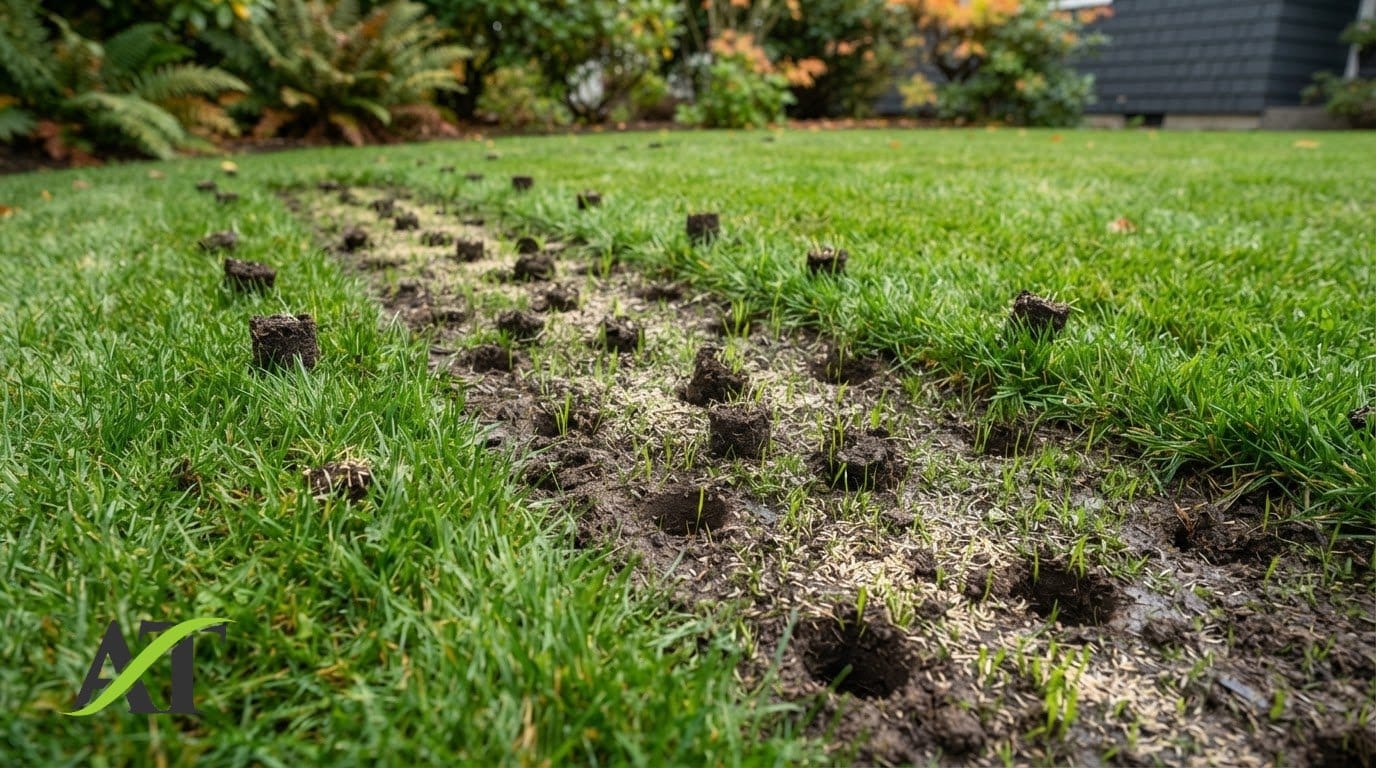
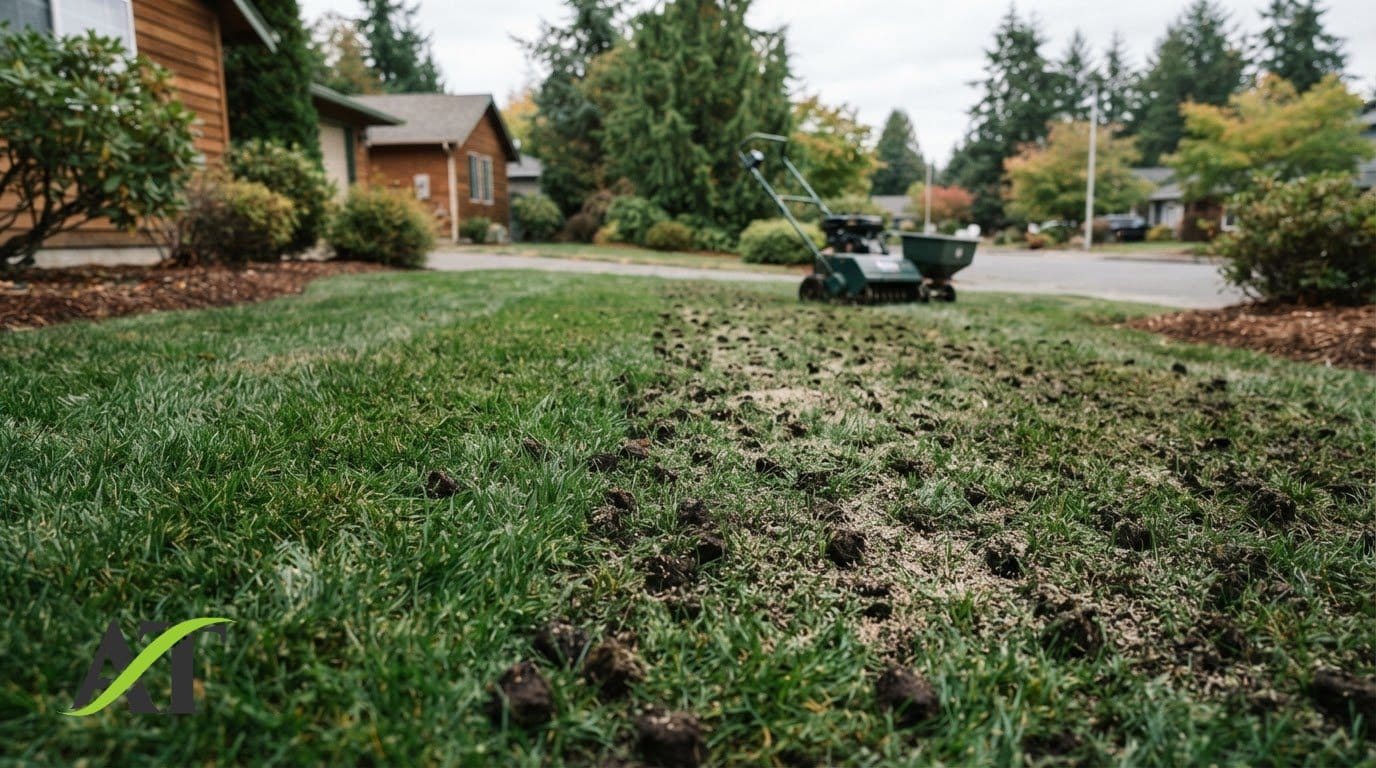
Core Aeration removes small plugs of soil from the lawn. The openings left behind help relieve compaction in the shallow turf root zone, where grass roots need access to air and water. This can be useful when compacted soil is the problem, but it isn’t a cure-all for weak turf.
Core Aeration can ease shallow root-zone compaction, but it cannot remove thatch or fix deep hardpan and subsurface drainage defects. Choosing a treatment based only on bare patches or standing water can miss the underlying cause.
Why Core Aeration is different from dethatching
These treatments address different parts of the lawn. Core Aeration removes soil cores to relieve compaction below the surface. Power Raking (Dethatching) removes excess thatch, the buildup of dead plant material between the grass and soil. One doesn’t replace the other. If the lawn has both problems, account for both when choosing treatment. If it doesn’t, there’s no reason to assume both services are needed.
When a lawn needs more than aeration
Persistent standing water, especially in the same area, may point to a drainage or grading issue rather than shallow compaction. Core Aeration doesn’t break deep glacial hardpan or repair a subsurface drainage defect. If poor growth continues after you’ve considered shade, irrigation, and thatch, seek further diagnosis before selecting a treatment. Match the response to the cause, not just the symptom.
A Lawn Tune-Up combines Core Aeration with Overseeding and Fertilizing. If compaction seems likely, Ask Stewart About Your Lawn.
How to Decide Whether Your Edmonds Lawn Is Ready for Core Aeration
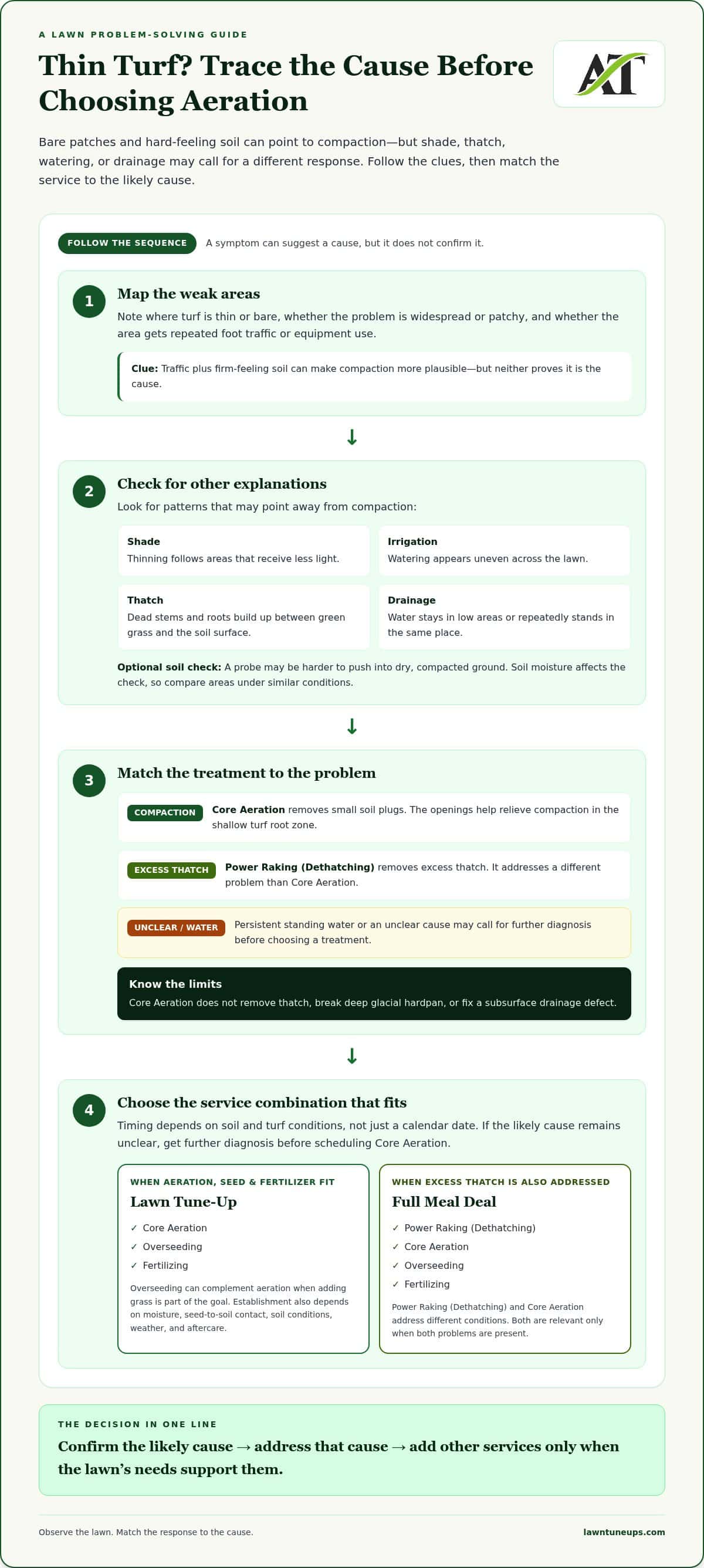
Start with the lawn, not a date on the calendar. Soil and turf conditions both matter, and the same treatment may not suit every yard. Use this sequence to decide whether Core Aeration is a reasonable next step.
- Mark the problem areas. Note where turf is thin or weak, whether symptoms cover the whole lawn or appear in patches, and whether those spots get repeated foot traffic or equipment use. Traffic can make compaction more plausible, but it doesn’t prove that’s the cause.
- Look for another explanation. Check whether the thinning follows shade, watering seems uneven, thatch is building up, or water remains in low areas. If one of these better explains the symptoms, investigate that cause instead of treating the lawn based on appearance alone.
- Check the soil and turf condition. Timing depends on conditions, not just the season. A set date won’t suit every Edmonds yard. If the likely cause remains unclear, get further diagnosis before scheduling Core Aeration.
What to know about Overseeding and establishment
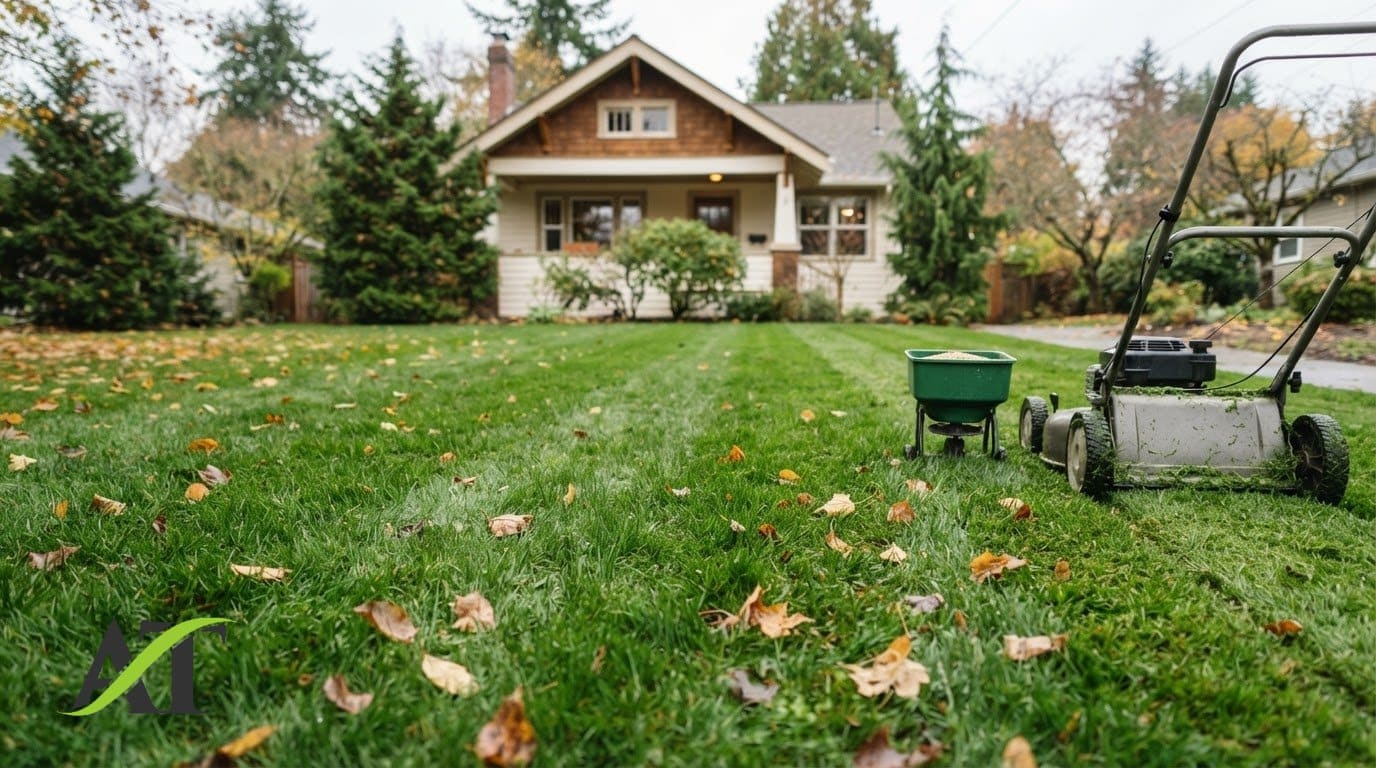
If the lawn is thin and adding grass is part of the goal, Overseeding may complement Core Aeration. Aeration can create openings in the soil, but successful establishment depends on more than the treatment. Moisture, seed-to-soil contact, soil conditions, weather, and homeowner aftercare all play a part. Overseeding isn’t a guaranteed fix for shade, drainage, or another unresolved cause.
After treatment, follow the instructions for the work done on your lawn. The Core Aeration and Overseeding after-care guide explains how to care for the lawn afterward. Make sure the suspected cause, treatment choice, and next steps align.
Choosing Lawn Aeration Service in Edmonds: What the Lawn Tune-Up Includes
Once you have a likely cause, match the treatment to it. If shallow compaction is part of the problem and the lawn would also benefit from added grass and nutrients, a Lawn Tune-Up may fit. It consists only of Core Aeration, Overseeding, and Fertilizing. Overseeding is included, but that doesn’t mean every lawn has the same need for added seed or will establish new grass in the same way.
When the Lawn Tune-Up matches the problem
Each component serves a distinct purpose: Core Aeration addresses compaction in the shallow turf root zone, Overseeding adds seed where increased turf density is a goal, and Fertilizing supplies nutrients. The Seattle Lawn Tune-Up service describes this combination. If excess thatch is also a diagnosed concern, the Full Meal Deal consists of Power Raking (Dethatching), Core Aeration, Overseeding, and Fertilizing. This combination is relevant when thatch needs attention, not simply because a lawn looks thin.
When to ask for a lawn-specific recommendation
Some lawns show overlapping clues. Weak turf may occur alongside standing water, shade, or visible thatch, for example. Don’t choose a package based on one symptom alone. Note which areas are affected, what you’ve noticed, and whether traffic is concentrated there. That gives Stewart useful context for a recommendation based on the lawn’s condition. If the likely cause is still uncertain, further diagnosis may be the sensible next step before choosing a treatment.
For lawn aeration Edmonds homeowners, the key question is whether the lawn’s condition points to compaction and whether the other components of a Lawn Tune-Up fit its needs.
Take the Next Step With a Clear Picture of Your Lawn
Before choosing a treatment, make a simple record of what you see. Note which areas are thin, where people regularly walk, and whether water collects in the same places. A few photos and observations can make a conversation about your lawn more specific and keep the focus on the actual problem.
For lawn aeration Edmonds homeowners, the next step doesn’t have to mean committing to treatment before the cause is clear. Aerating Thatching Co. is an owner-operated local business. Stewart can help you consider whether Core Aeration within a Lawn Tune-Up fits your lawn’s needs, or whether the symptoms suggest another issue deserves attention first. The company serves Edmonds and homeowners in North Seattle, Shoreline, Lynnwood, Mill Creek, Bothell, Kenmore, Lake Forest Park, Mountlake Terrace, Snohomish, Everett, Brier, Woodway, Green Lake, Ballard, and Greenwood.
With a clear diagnosis and a service matched to the lawn, you can move forward with confidence.
Frequently Asked Questions
How often should an Edmonds lawn be aerated?
There’s no universal aeration schedule for Edmonds lawns. The need depends on whether compaction is present, the turf’s condition, how much traffic it gets, and what treatment it has already received. A worn path used regularly, for example, may need a different assessment from an undisturbed area. Recheck the lawn’s condition and likely cause before deciding whether to repeat Core Aeration.
Does Core Aeration remove thatch from a lawn?
No. Core Aeration and Power Raking (Dethatching) address different lawn conditions. Core Aeration removes soil cores to relieve compaction in the shallow turf root zone; it isn’t a thatch-removal treatment. If you’re unsure which issue is present, look at the layer between grass and soil as well as the soil itself. Choose the treatment that matches the identified problem rather than expecting one process to do both jobs.
Should I leave the soil plugs on my lawn after aeration?
Soil cores left on the surface are a normal result of Core Aeration. Their presence doesn’t mean the lawn needs Power Raking (Dethatching). Follow the care guidance for the work performed rather than assuming a particular removal method is needed. The Seattle lawn after-care guide provides practical steps for caring for the lawn after treatment.
Can a newly seeded lawn be core aerated?
It depends on how established the new grass is and why aeration is being considered. Core Aeration can be part of preparing an established lawn for Overseeding, but working over a fresh seedbed or young turf could disturb seed and developing grass. Don’t apply a fixed waiting period to every yard. If you’ve recently seeded, a lawn-specific assessment can help determine whether the turf is ready.
Article by
Stewart Armour
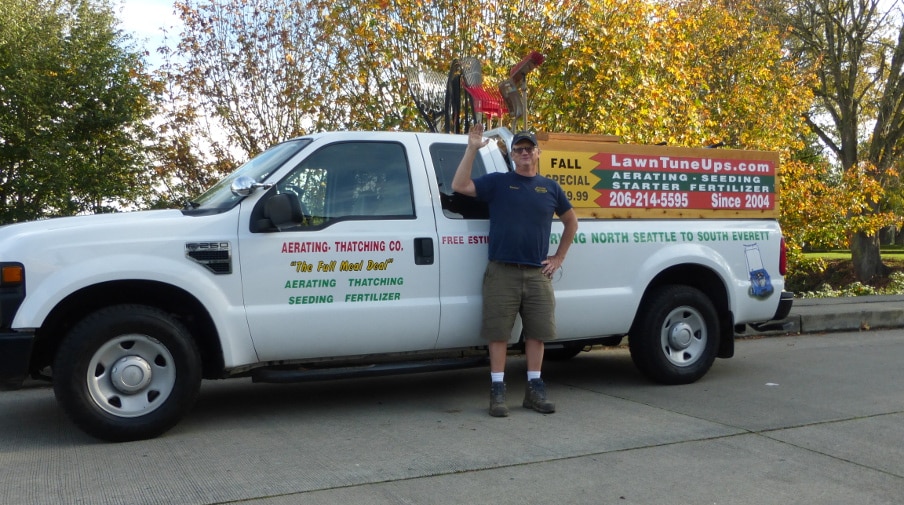
Stewart Armour is the owner of Aerating Thatching Co., an owner-operated Seattle-area lawn restoration business established in 2004. He helps homeowners understand Core Aeration, Power Raking (Dethatching), Overseeding, soil conditions, and the aftercare needed for stronger lawns. His background includes turf management study, advanced golf course turf training, and continuing education through Wilbur-Ellis University, State Turf Facilities, Soil First Academy, and Golf Course Applied Turf Physiology. Stewart has personally evaluated thousands of residential lawns throughout the Seattle area and focuses on recommending the work that fits each lawn’s condition.