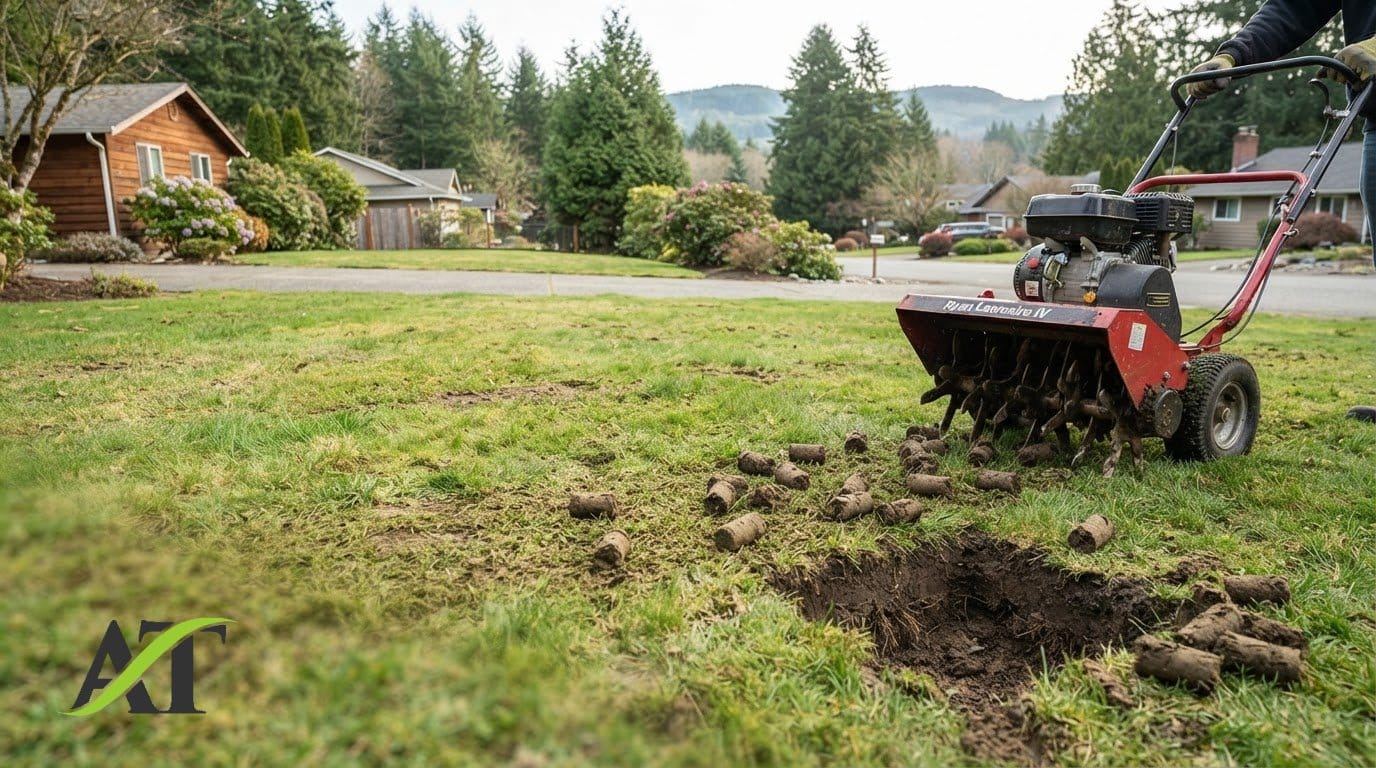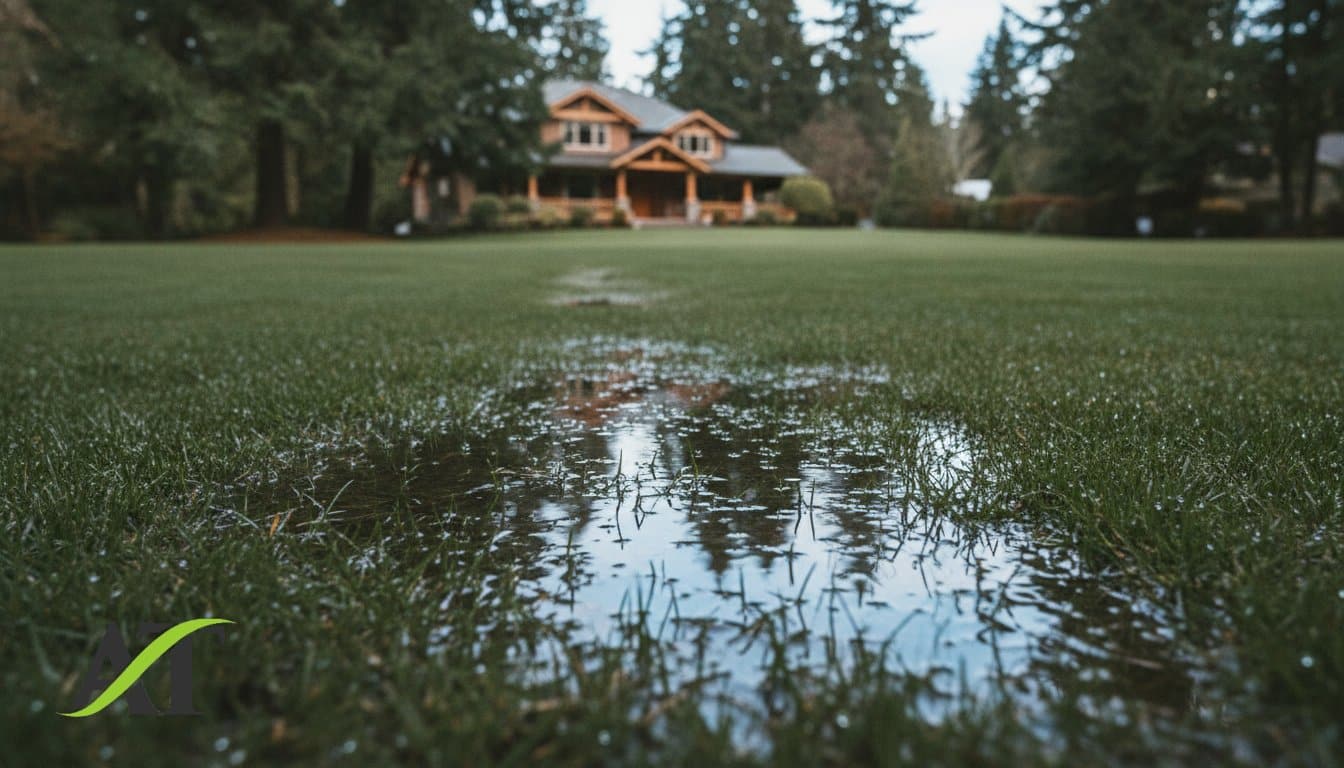
What if your backyard drainage problem isn’t a plumbing issue, but a soil health crisis? You’re likely tired of the muddy paws tracked across your clean floors every time the Shoreline rain settles in. It’s frustrating to watch moss choke out your grass while standing water pools near your home’s foundation. Many homeowners assume they need expensive trenching or French drains. However, professional lawn aeration for compacted soil Shoreline properties often require is frequently the more effective, less invasive fix.
You deserve a backyard that’s actually usable after a storm. This guide will show you how to fix soggy turf and standing water using mechanical restoration and local soil health strategies. We’ll explain how our Core Aeration and signature Lawn Tune Up work together to break up heavy ground. You’ll learn why thicker turf is your best defense against runoff and how to restore your yard’s natural ability to absorb rainfall. We’ll walk through exactly how mechanical restoration turns a swampy mess back into a healthy, functional lawn.
Key Takeaways
- Shoreline’s dense clay soil naturally resists water penetration, leading to the spongy turf and moss issues common in local yards.
- Implementing lawn aeration for compacted soil Shoreline properties creates the necessary pathways for standing water to drain deep into the earth.
- Mechanical restoration like Power Raking removes thick thatch layers that act as a waterproof barrier on your lawn’s surface.
- Learn how to choose between a standard Lawn Tune-Up or a more intensive Full Meal Deal to restore your backyard’s drainage.
Common Lawn Drainage Problems for Shoreline Homeowners
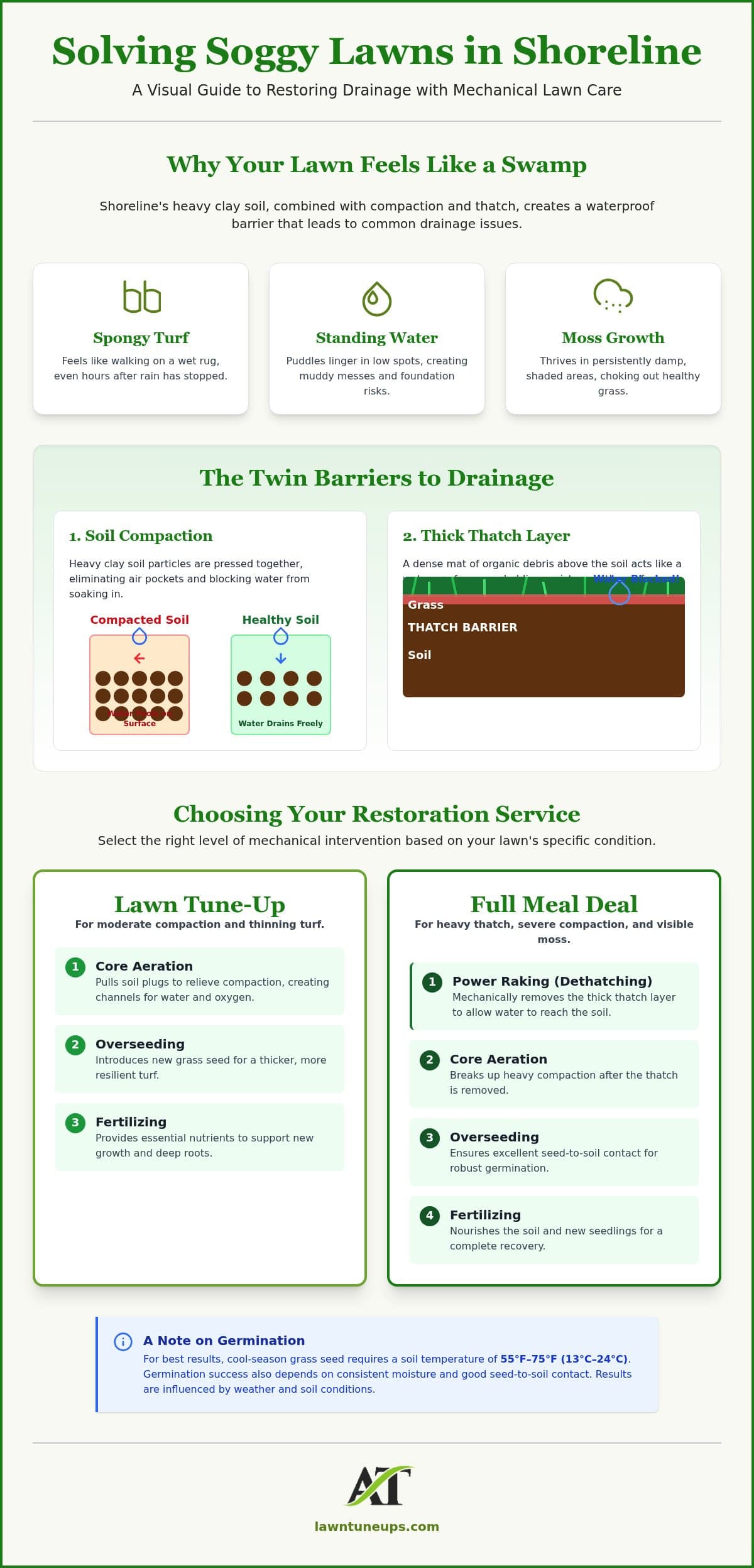
Shoreline properties are notorious for their heavy, clay-based soils. While these soils are nutrient-rich, they naturally resist water penetration. When our heavy coastal rainfall hits, it often has nowhere to go. You can identify poor drainage by looking for these common signs:
- Spongy turf that feels like walking on a wet rug.
- Persistent moss taking over damp, shaded areas.
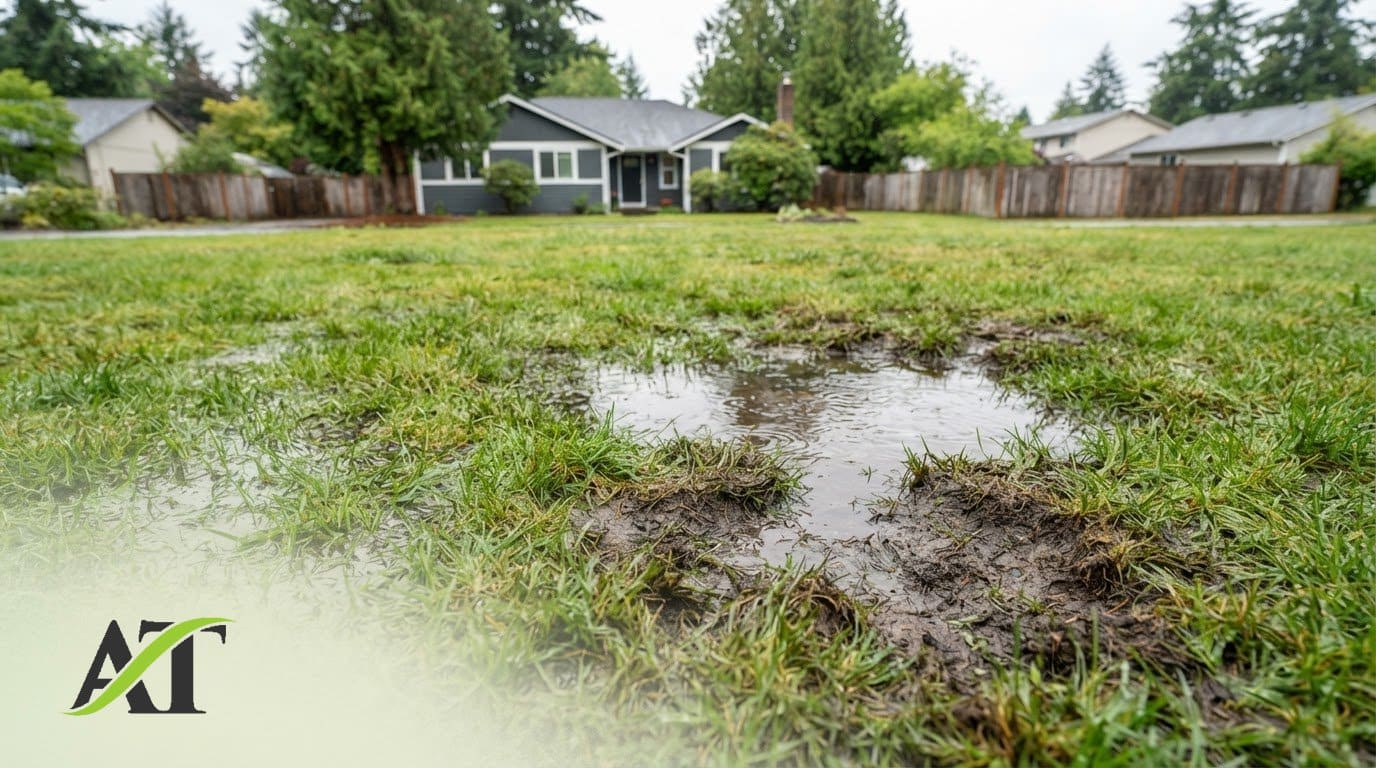
- Standing water that lingers for hours after a light rain.
It’s vital to distinguish between structural drainage problems, like poor grading, and surface-level turf compaction. Most Shoreline yards suffer from the latter. Over time, the soil particles press together so tightly that water cannot seep through. In many cases, lawn aeration for compacted soil Shoreline yards require is the most direct solution to surface pooling. Utilizing a Lawn aerator is the first step in identifying if your issue is a simple soil health fix or a larger landscaping project.
Why Clay Soil and Compaction Lead to Soggy Lawns
Foot traffic, lawn equipment, and even heavy rain pack Shoreline clay into an impenetrable layer. This compaction eliminates the tiny air pockets that usually hold water. Instead of soaking in, rain “sheets” across the surface. This creates muddy runoff and pools in low spots. Professional lawn aeration for compacted soil Shoreline homeowners choose helps punch through this hardpan layer to restore drainage.
The Role of Thatch in Blocking Water Infiltration
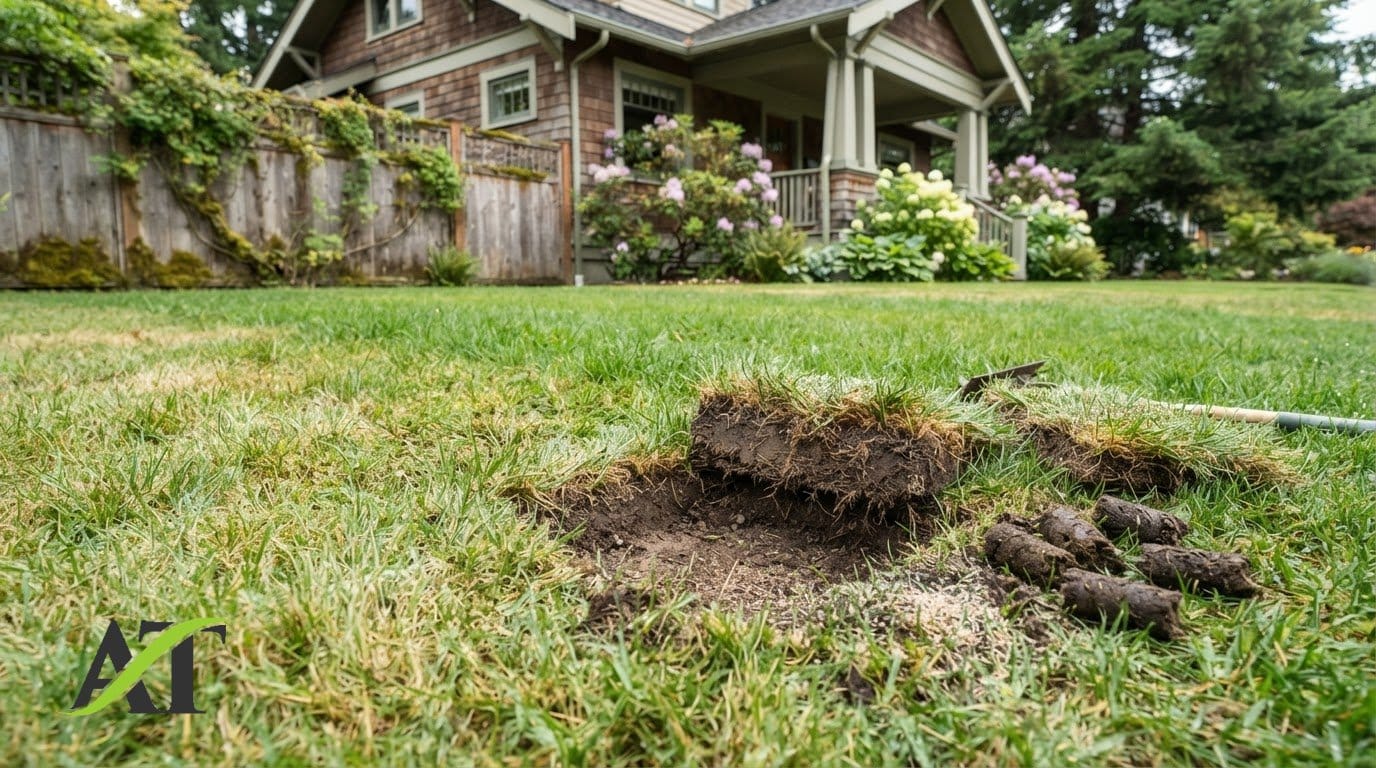
Thatch is the layer of organic debris that sits between your grass blades and the soil. A little thatch is healthy, but too much acts like a waterproof sponge. It holds moisture at the surface, which encourages moss growth and shallow roots. When thatch gets too thick, it prevents water from ever reaching the root zone. This results in a lawn that stays soggy on top but remains bone-dry underneath.
Mechanical Lawn Drainage Solutions: Core Aeration and Power Raking (Dethatching)
Many contractors suggest digging trenches or laying pipes the moment they see standing water. While hardscape drainage has its place, it’s often an expensive overkill for residential yards. Mechanical restoration targets the root of the problem: soil density. These methods are frequently more cost-effective than installing hardscape drainage pipes. A French drain can cost thousands and disrupt your entire landscape. Mechanical restoration works with your existing ecosystem to fix the soil itself, improving the percolation rate of your turf so the ground can do its job.
How Core Aeration Relieves Soil Compaction
While mechanical restoration fixes the soil, keeping the surrounding hardscapes clean is also essential for a well-maintained home. For those looking to see how professionals manage exterior surface care, you can learn more about Warrens Power Washing and their specialized cleaning services.
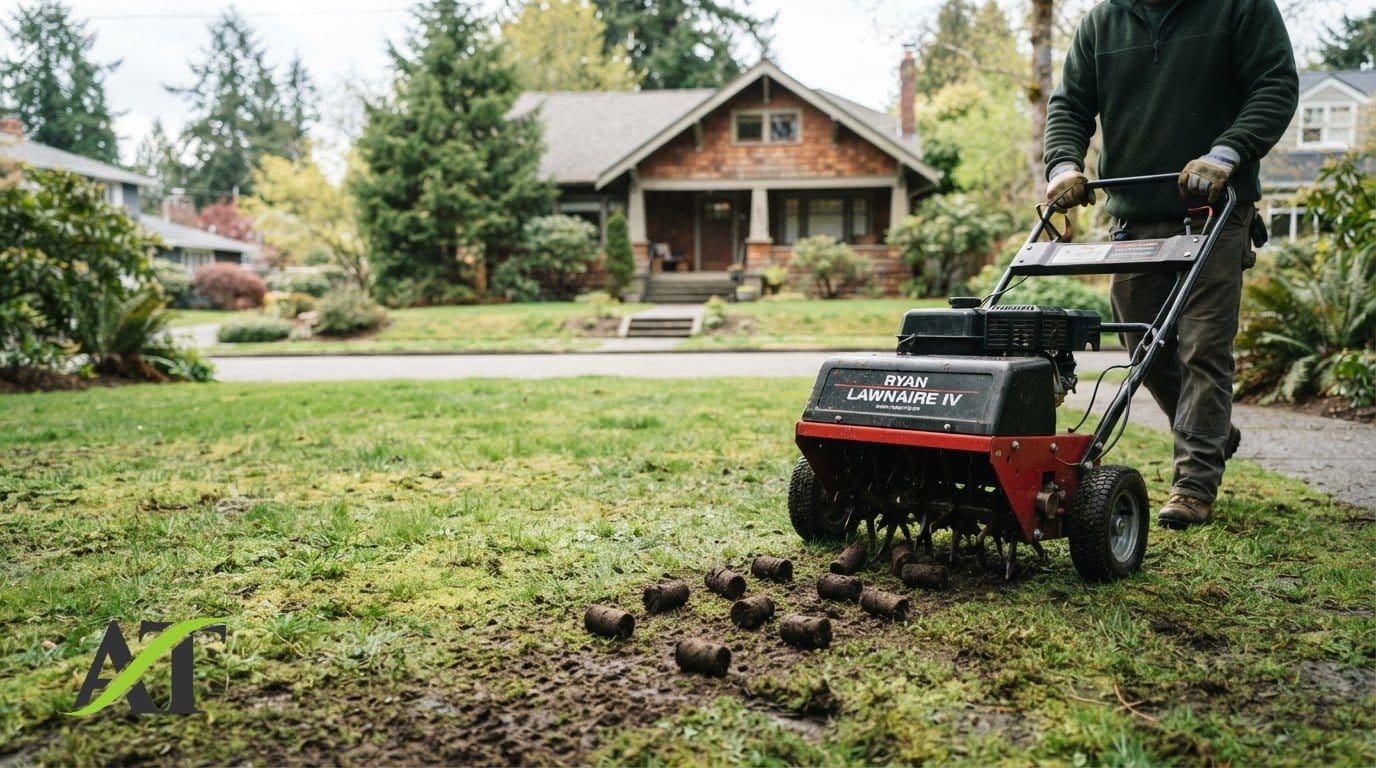
We use professional equipment to pull small soil plugs from the ground. This process, known as Core Aeration, creates immediate channels for surface water to bypass the hardpan. As noted in this K-State Research and Extension guide to lawn aeration, opening these voids reduces soil density and allows oxygen to reach the roots. Deep roots act like natural sponges. When you use lawn aeration for compacted soil Shoreline yards often require, you encourage roots to dive deeper. This significantly increases how much rainfall your yard can handle before pooling occurs.
Power Raking (Dethatching) for Better Surface Flow
If your yard feels like a wet sponge, the culprit is likely a thick layer of organic debris. Power Raking (Dethatching) mechanically lifts this mat of dead grass and moss. Removing this barrier allows water to flow directly into the soil rather than sitting on top. It’s a fast way to stop surface pooling and prevent moss from thriving in damp conditions. If you aren’t sure which method fits your yard, you can get a professional assessment to see which mechanical solution will restore your drainage most effectively.
Using Soil Amendments in Shoreline to Improve Absorption
Shoreline soil is notoriously acidic. This chemical imbalance is a hidden drainage killer. Acidic soil stunts grass roots while allowing moss to flourish. Unlike healthy turf, moss doesn’t have the deep root structure required to pull water into the ground. It simply sits on the surface, keeping your yard in a perpetual state of dampness. Organic Fertilizing builds soil structure over time by feeding the microorganisms that keep the earth porous. This creates a living sponge effect that significantly improves how your yard handles heavy runoff.
Lime Application for Shoreline’s Acidic Soil
Professional Lime Application is the most effective way to correct this. By neutralizing the acidity, we create a hospitable environment for the cool-season grasses that thrive in the Pacific Northwest. Thicker, healthier turf acts as a living sponge that absorbs rainfall before it can pool. When you prioritize soil health alongside lawn aeration for compacted soil Shoreline properties require, you’re building a long-term defense against standing water. It’s about more than just green grass; it’s about functional drainage. A strategic fall lime application is especially effective for resetting your soil chemistry before winter saturation begins, helping neutralize the acidity that invites moss and locks up nutrients. If moss is a recurring problem in your area, the same principles behind lawn aeration Everett homeowners use for moss control apply equally well to Shoreline’s acidic, compacted soils.
The Importance of Soil Temperature for Overseeding
Overseeding is the final step in closing the gaps where water tends to collect. You can’t just throw seed down anytime, though. We follow a critical rule: soil temperature must be between 55°F and 75°F (13°C–24°C) for optimal germination. While germination can occur outside this range, the process will be slower and much less reliable. Proper timing ensures that the new grass establishes a deep root system before the heaviest winter rains arrive. Consistent soil health ensures your yard remains dry and usable throughout the rainy season.
Choosing the Right Restoration: Lawn Tune-Up vs. Full Meal Deal
Fixing a soggy yard in Shoreline isn’t a one-size-fits-all job. Every property has a different history of foot traffic and maintenance. A comprehensive approach is better than a single-treatment quick fix for soggy yards because it addresses the soil from the surface down to the root zone. We don’t just treat the symptoms; we fix the structure. You can request a quote today to determine which restorative path is right for your home’s specific soil conditions.
When to Choose the Lawn Tune-Up
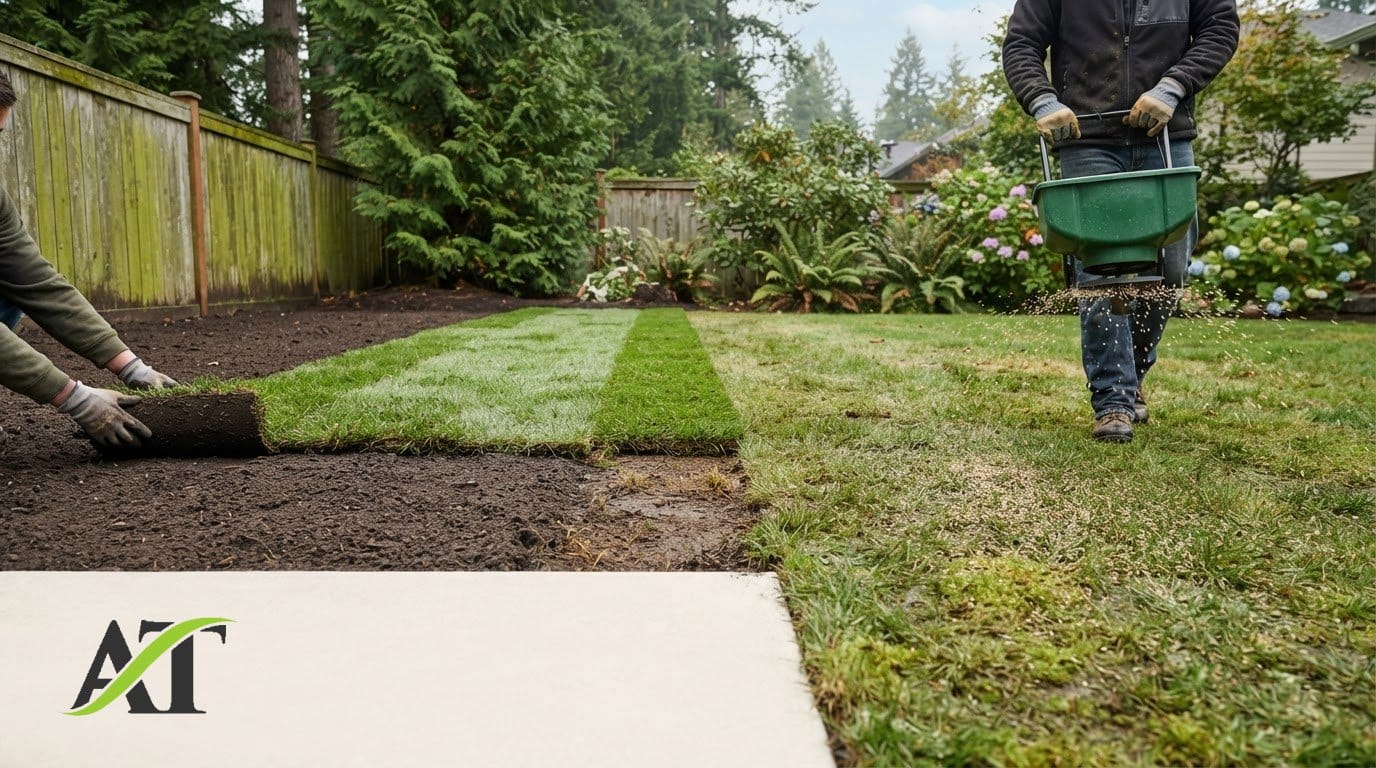
For properties with moderate drainage issues, our Lawn Tune-Up is the standard for essential maintenance. This service is best for lawns that are thin or patchy but do not have a heavy thatch problem. It focuses on soil penetration and density through Core Aeration and Overseeding. By combining these with organic fertilizing, we jumpstart the biological processes that keep soil porous. This package provides the necessary lawn aeration for compacted soil Shoreline yards need to handle typical seasonal rainfall. It’s a pragmatic choice for homeowners who want to maintain a dry, healthy lawn without needing a full-scale overhaul.
When the Full Meal Deal is Necessary
Sometimes, the ground needs a more aggressive intervention to function correctly. The Full Meal Deal is the ultimate Shoreline drainage solution. We recommend this for lawns with over 1/2 inch of thatch or severe surface sponginess. This package combines all mechanical and nutritional treatments, adding Power Raking (Dethatching) to the process. It’s a total lawn reset that clears the surface debris so the lawn aeration for compacted soil Shoreline properties require can work even deeper. If your yard feels like a wet carpet even days after the rain stops, this is the most effective way to restore your property’s natural drainage capacity and stop standing water for good.
Restore Your Shoreline Lawn’s Natural Drainage
You don’t have to settle for a muddy yard every rainy season. By addressing the specific clay conditions and thatch buildup common in our area, you can restore your lawn’s natural drainage. Mechanical restoration is the most direct way to fix surface pooling. Whether you need a standard Lawn Tune-Up or the more intensive Full Meal Deal, the goal is a dry, functional space for your family and pets. Professional lawn aeration for compacted soil Shoreline homeowners depend on provides the relief your turf needs to breathe and absorb water.
Since 2004, we’ve specialized in PNW turf care as an owner-operated local business. We know exactly how to handle Shoreline’s unique soil challenges. Our signature restoration process focuses on long-term health rather than temporary fixes. It’s time to stop worrying about foundation damage and start enjoying a thicker, drier backyard.
We’re ready to help you transform your soggy turf into a healthy, usable landscape that thrives in our coastal climate.
Frequently Asked Questions
Is my Shoreline lawn too wet for Core Aeration?
Core Aeration requires moist soil but cannot be performed on saturated ground. If your yard is a swamp where water squishes under your feet, the aerator will likely sink and churn up the turf. We look for soil that’s soft enough for the tines to pull a deep plug but firm enough to support the machine’s weight. Waiting for a brief dry spell is often necessary for the best results.
How long does it take for grass seed to germinate in Shoreline?
Grass seed typically takes 10 to 21 days to germinate in our local climate. This timing depends heavily on the ground temperature. We only recommend overseeding when the soil temperature is between 55°F and 75°F. While seeds might sprout outside this window, the process is significantly slower and less reliable. We provide the best seed available, though we don’t offer specific germination guarantees due to weather variables.
Will a Lawn Tune-Up fix my standing water issues?
A Lawn Tune-Up is highly effective for surface pooling caused by density. By providing lawn aeration for compacted soil Shoreline yards often develop, we open pathways for water to reach the subsoil. However, if your yard has structural grading issues or a high water table, mechanical restoration alone may not be enough. It’s designed to fix soil health and surface percolation rather than major plumbing failures. For those with septic systems, it is also wise to ensure your drainage issues aren’t caused by a full tank or failing drain field; a professional inspection from Lil’ Stinky Septic Service can help rule out these infrastructure concerns.
Lime Application helps drainage indirectly by improving turf density. Shoreline’s acidic soil encourages moss, which holds water at the surface like a wet carpet. By balancing the pH, we help grass grow thicker and develop deeper roots. These roots act as natural conduits that pull moisture deep into the earth. Thicker grass also absorbs more rainfall, reducing the amount of water that pools on your lawn’s surface.
What is the best time of year for lawn drainage restoration in Shoreline?
The optimal windows for restoration are spring and early fall. Specifically, March through May and late August through October offer the best conditions for recovery. During these months, the soil is moist enough for effective lawn aeration for compacted soil Shoreline properties require, and temperatures are ideal for seed growth. Performing these services during the heat of summer or the freezing winter is generally much less effective. Following a fall lime application checklist for PNW lawns during the late August through October window can help you neutralize soil acidity and prepare your turf for the winter rains ahead.
Article by
Stewart Armour
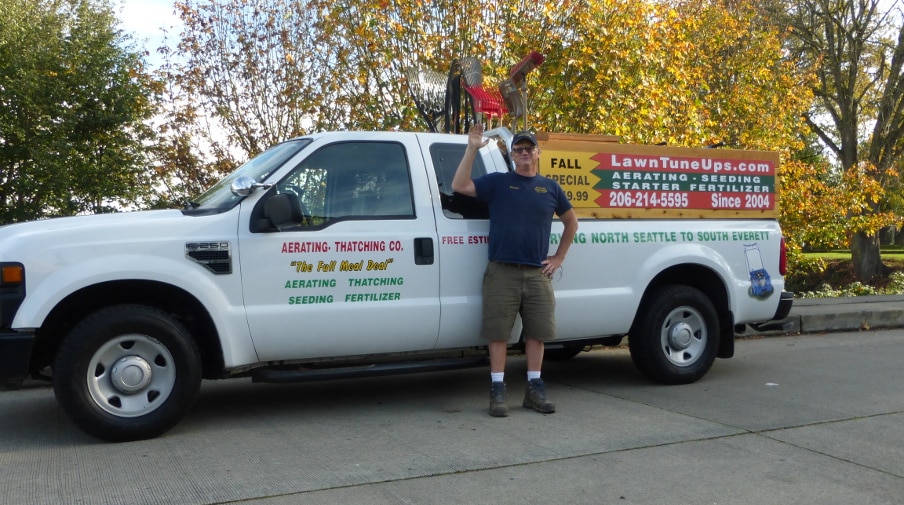
Stewart Armour is an independent lawn restoration expert, educator, and owner of Aerating Thatching Co., serving the greater Seattle area since 2004. With more than two decades of professional experience restoring Western Washington lawns, Stewart specializes in diagnosing lawn problems, improving soil health, and developing long-term lawn renovation strategies. His education includes turf management studies, advanced golf course turf training, and continuing education through Wilbur-Ellis University, State Turf Facilities, Soil First Academy, and Golf Course Applied Turf Physiology. Every article published on LawnTuneUps.com is grounded in practical field experience, current turf science, and a commitment to helping homeowners understand the why behind every recommendation—not just what to do.
Stewart has personally evaluated thousands of residential lawns throughout the Seattle area and remains committed to helping homeowners understand the science behind growing healthier, more resilient lawns.