Why does your grass stay thin and yellow even after you’ve spent a fortune on high-end organic fertilizer? In the Pacific Northwest, our 40 to 65 inches of annual rainfall leaches away alkaline minerals, leaving soil with an acidic pH often between 5.0 and 6.5. This acidity locks up nutrients and practically invites moss to take over your yard. A strategic fall lime application is the most effective way to hit the reset button on your soil chemistry before the winter saturation begins.
We know how frustrating it is to see heavy clay soil turn into a mossy swamp every winter. You want a lawn that actually uses the nutrients you give it rather than letting them go to waste. This guide provides a clear checklist for mastering your lime treatment this season to ensure your turf thrives through the cold months. We’ll walk you through neutralizing acidity, timing your application for the best results, and how this step prepares your lawn for a successful Lawn Tune-Up or Full Meal Deal next spring.
Key Takeaways
- Learn why heavy Pacific Northwest rainfall makes a fall lime application essential for neutralizing acidic soil before winter moss takes over.
- Follow a practical checklist to prepare your turf, starting with a soil pH test and a short mow to ensure direct soil contact.
- Discover how pairing lime with Core Aeration helps treatments reach deeper into the root zone for more effective soil restoration.
- Understand how balancing your soil pH maximizes the results of a Lawn Tune-Up or Full Meal Deal by improving nutrient absorption.
Why Fall is the Critical Window for Lime Application
In the Pacific Northwest, our heavy annual rainfall does more than just keep the landscape green. It actively leaches calcium and magnesium from the earth, leaving behind acidic soil that struggles to support healthy turf. Liming is the process of adding calcium carbonate to neutralize this acidity. While you can apply it any time the ground isn’t frozen, a fall lime application is the most strategic choice. The consistent rain and winter snow act as a natural delivery system. They slowly dissolve the pellets and move them into the root zone by the time spring growth begins.
Moss is the biggest indicator of a pH problem in Western Washington. It thrives in the damp, low-pH environments where grass fails to compete. By raising the pH, you create a habitat that favors robust grass over invasive moss. This isn’t just about aesthetics; it’s about shifting the biological balance of your yard before the long, wet winter sets in.
The Connection Between pH and Nutrient Uptake
If your soil is too acidic, you’re essentially throwing money away every time you fertilize. Low pH levels lock up essential nutrients like nitrogen and phosphorus. This makes them chemically unavailable to the grass roots. Achieving a proper pH balance is the ultimate “unlock” for effective organic fertilizing. It ensures your lawn can actually utilize the nutrients provided during a professional Lawn Tune-Up next season. To dive deeper into local soil science, read our guide on Understanding Lawn Soil pH in Lynnwood.
Signs Your Lawn Needs Lime This Fall
Don’t guess with your soil health. Look for these visual cues that suggest your pH has dropped too low:
- Persistent moss growth that resists typical treatments.
- Yellowing or pale green turf despite regular feeding.
- An uptick in acid-loving weeds like red sorrel.
Always start with a soil test to confirm exactly how much lime is needed. This prevents over-correction and ensures your fall lime application provides the best possible return on your investment.
The Essential Fall Lime Application Checklist
A successful fall lime application requires more than just tossing pellets on the grass. You need a methodical approach to ensure the calcium actually reaches the soil. Follow these four steps for the best results.
- Step 1: Test your soil pH. Never guess the amount of lime your lawn needs. A professional soil test provides the exact application rate, preventing you from over-liming.
- Step 2: Mow the lawn short. Lowering your mower height allows the lime to reach the soil surface quickly. Long grass traps the material, delaying its effectiveness.
- Step 3: Clear debris. Remove fallen leaves and pine needles. These create a “shield” that prevents lime from making direct contact with the ground.
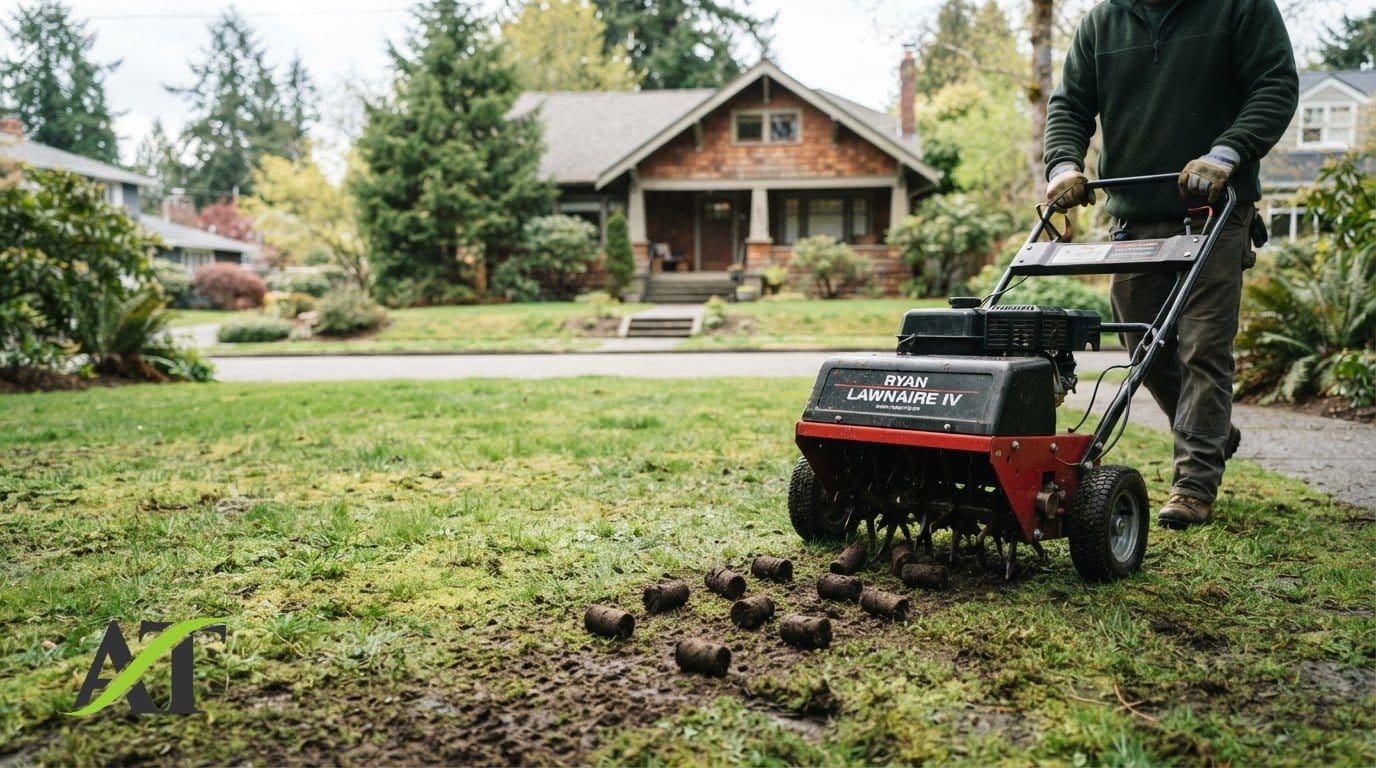
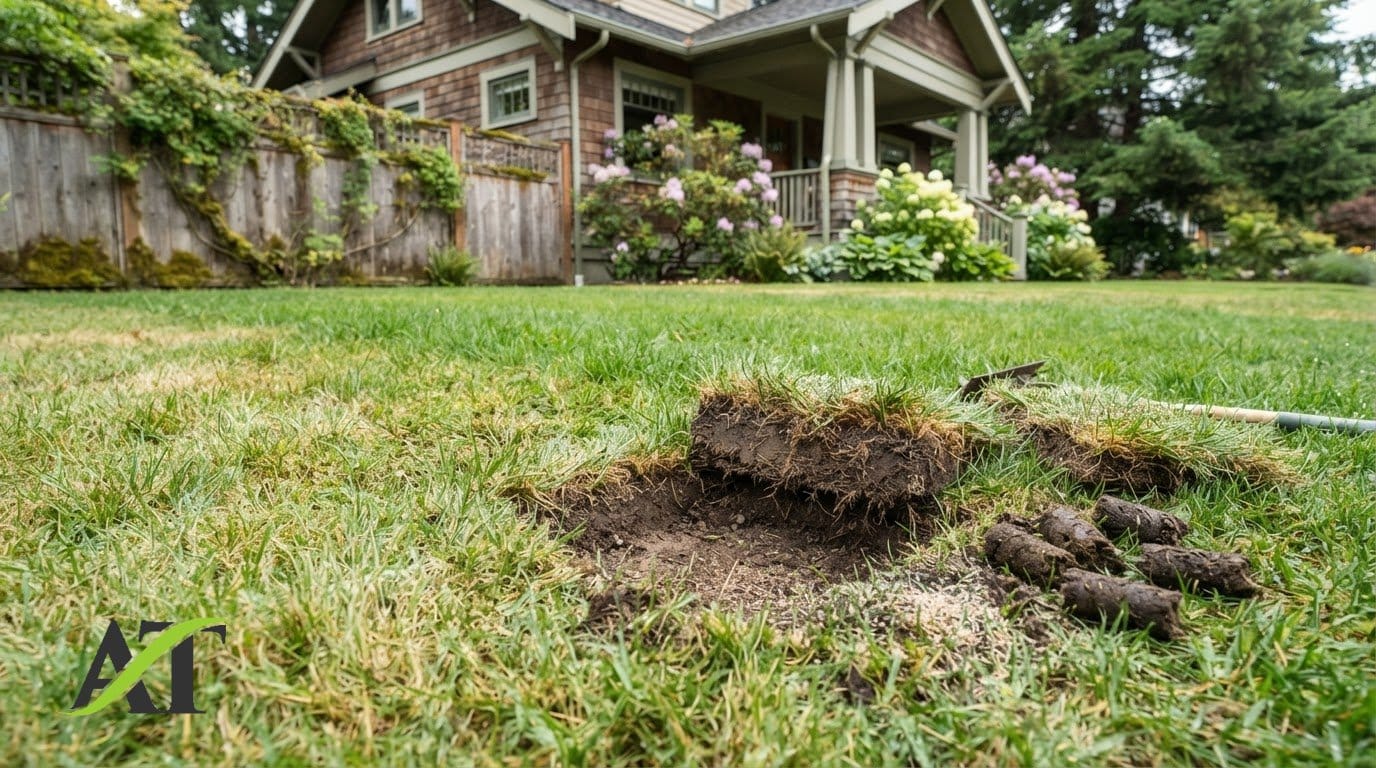
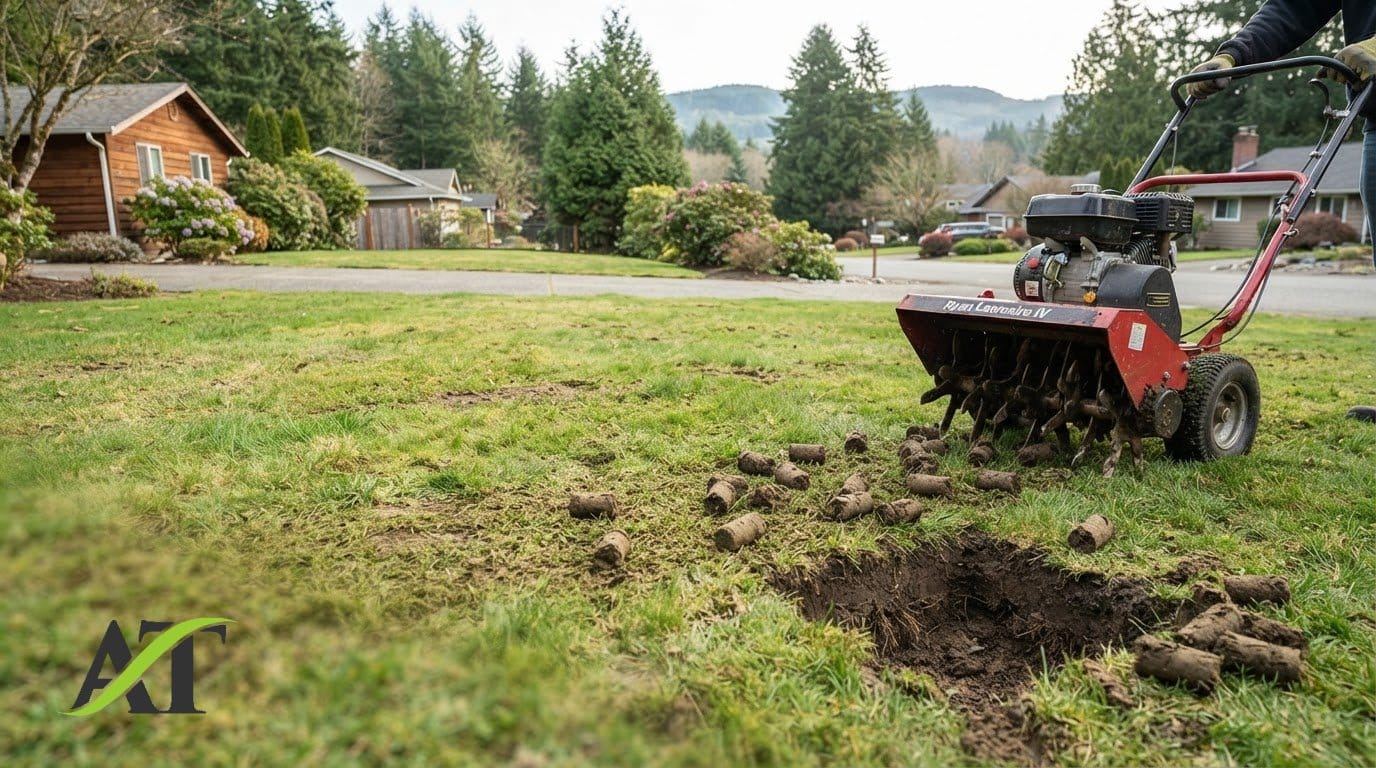
- Step 4: Perform Core Aeration. This is the most critical step. By pulling soil plugs, you create deep pathways that allow lime to penetrate the root zone instead of sitting on the surface.
Choosing the Right Type of Lime
For most residential yards, pelletized lime is the superior choice. It’s easier to handle than dusty powdered versions and flows consistently through a spreader. In our region, dolomitic lime is typically recommended because it contains magnesium, a nutrient often lacking in PNW soils. Researching Lime and the Home Lawn can help you understand how these materials interact with your specific turf type.
Application Best Practices for Shoreline and Edmonds
Timing is everything in Shoreline and Edmonds. You want to apply lime before the heaviest winter rains arrive, but after you’ve completed your fall cleanup. Ensure your spreader is calibrated correctly to avoid “striping,” which occurs when coverage is uneven. If you’re unsure about the process, you can learn more about our Lawn Lime Service in Kenmore. If the DIY route feels like too much heavy lifting, feel free to request a quote for a professional application.
Synergy: Combining Lime with Core Aeration and Overseeding
Applying lime to the surface is a good start, but combining it with mechanical treatments creates a total soil transformation. Core Aeration is the engine for this process. By pulling physical plugs from the ground, it breaks up heavy compaction and creates direct conduits for your fall lime application to reach deep into the root zone. Without these holes, lime can take years to migrate just an inch or two into the soil profile. Aeration speeds up the chemistry by months.
This process also creates the ideal environment for successful Overseeding. Lime neutralizes the “acid burn” often found in PNW topsoil, preparing a balanced seedbed where new grass can actually survive. When you combine Core Aeration, Overseeding, and Fertilizing, you have the official Lawn Tune-Up. This synergy doesn’t just grow grass; it improves soil structure. Better pH levels lead to deeper root growth, which significantly improves lawn drainage in Shoreline yards during our wet winters.
Managing Germination Expectations
Success with Overseeding isn’t just about the seed; it’s about the conditions. Results depend on consistent moisture and excellent seed-to-soil contact. The most critical factor is soil temperature. For optimal germination, soil temperatures must stay between 55°F and 75°F (13°C to 24°C). If temperatures fall outside this range, establishment will be slower and less consistent. While we don’t offer absolute guarantees on germination due to weather and moisture variables, following this checklist ensures your lawn has the best possible chance to thrive.
When to Add Power Raking (Dethatching)
If your lawn has a thick, spongy layer of dead organic matter exceeding 1/2 inch, a standard approach isn’t enough. This is when we recommend the Full Meal Deal. This package adds Power Raking (Dethatching) to the Core Aeration, Overseeding, and Fertilizing process. Removing that heavy thatch layer ensures your fall lime application actually hits the dirt instead of getting tangled in old debris. It’s the difference between a surface fix and a deep-rooted solution.

Professional Fall Restoration: The Lawn Tune-Up Approach
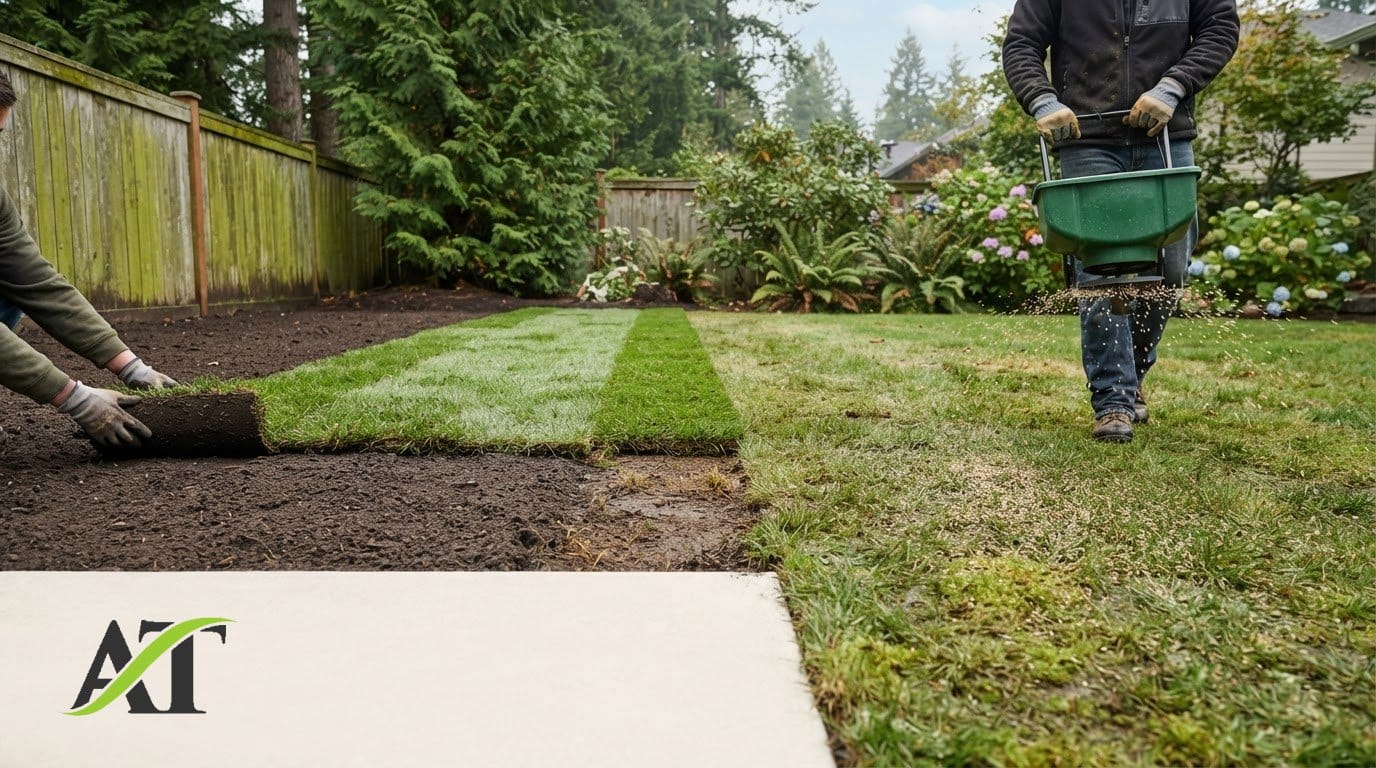
While DIY efforts are a start, a professional fall lime application works best when integrated into a broader restoration strategy. For many Snohomish County homeowners, the most efficient solution is our Lawn Tune-Up. This specific service bundle consists of Core Aeration, Overseeding, and Fertilizing. By adding a lime treatment to this package, you ensure that the mechanical work of opening the soil is immediately followed by the chemical work of balancing the pH. This professional approach guarantees even coverage, preventing the patchy, uneven growth often seen with hand-held spreaders.
A contractor’s expertise is especially valuable when dealing with the heavy clay and high acidity common in our region. We calibrate our equipment to match the specific needs of your soil test, ensuring the right amount of calcium carbonate reaches the root zone. This precision stops the cycle of moss encroachment and prepares your turf to maximize the nutrients provided in the fertilizing stage of the service.
The Full Meal Deal for Total Restoration
In cases where a lawn has been neglected or moss has completely overtaken the grass, we recommend the Full Meal Deal. This comprehensive package includes four specific components: Power Raking (Dethatching), Core Aeration, Overseeding, and Fertilizing. The inclusion of Power Raking (Dethatching) is vital for lawns with a thatch layer exceeding 1/2 inch. By removing this barrier first, your fall lime application and new seed have direct access to the soil. This total restoration approach saves time and money over the long term by establishing a dense, healthy lawn that naturally resists weeds and moss.
Next Steps for Your North Seattle Lawn
Now is the time to inspect your yard for signs of compaction, drainage issues, or thinning grass. If your turf feels spongy or looks yellow despite regular watering, it’s likely struggling with acidity. You can find more details on our specific restoration processes by visiting the Seattle Lawn Tune-Up page. When you’re ready to fix your soil for the 2026 season, request a quote for a professional assessment and custom restoration plan.
Prepare Your Soil for a Moss-Free Spring
A proper fall lime application is the foundation of a healthy PNW lawn. By neutralizing acidic soil now, you stop moss in its tracks and ensure your grass can actually absorb the nutrients it needs. Whether you choose a standard Lawn Tune-Up or the comprehensive Full Meal Deal, addressing your soil’s pH is a prerequisite for long-term success. It’s about working with our local climate rather than fighting against it.
We’ve been owner-operated since 2004, serving neighbors from North Seattle to Everett with specialized restoration work. We aren’t a weekly mowing crew; we are craftsmen focused on the mechanical and chemical health of your turf. Our goal is to provide the expert guidance you need to see tangible results by next spring.
Don’t let another winter pass with acidic soil and thinning grass. Take these practical steps today to enjoy a thicker, greener, and more resilient lawn when the weather finally warms up.
Frequently Asked Questions
Is it too late to apply lime to my lawn in November?
It’s not too late. November is an ideal time for a fall lime application because the consistent winter rains help dissolve the pellets. Since lime takes several months to react with the soil, applying it now ensures the pH is balanced by the spring growing season. As long as the ground isn’t frozen, you can apply it throughout the late fall.
Can I apply lime and fertilizer at the same time in the fall?
You can apply both, but they serve different purposes. Lime neutralizes acidity while fertilizer provides nutrients. In our region, we often recommend lime as a prerequisite to our Lawn Tune-Up. Balancing the pH first ensures your grass can actually absorb the nitrogen in the fertilizer. Without correct pH, much of your fall fertilizer investment simply goes to waste in the soil.
How much lime does a typical lawn in North Seattle need?
Most North Seattle lawns require a significant amount due to our naturally acidic soil, but you should never guess. We recommend starting with a soil test to determine your specific needs. Typically, local soils might need 40 to 50 pounds of lime per 1,000 square feet to move the needle. Precise application ensures you don’t over-correct or waste material.
Will lime kill the moss in my lawn immediately?
Lime won’t kill existing moss instantly. It works by raising the soil pH, making the environment less hospitable for future moss growth and better for grass. To remove current heavy moss, you need the Power Raking (Dethatching) component found in our Full Meal Deal. Once the moss is mechanically removed, a fall lime application helps prevent it from returning next season.
Does lime help with lawn drainage issues during the rainy season?
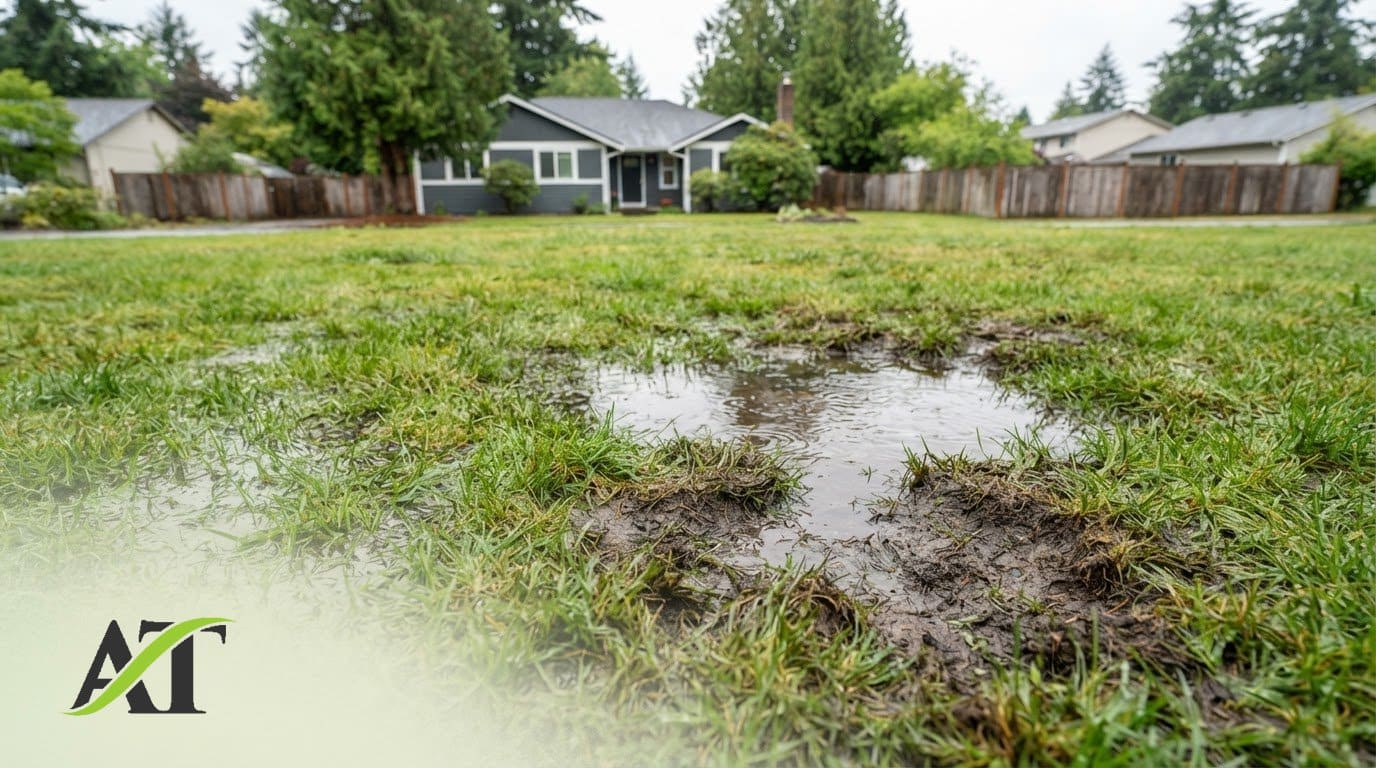
Lime helps drainage indirectly by improving the overall soil structure and root health. When the pH is balanced, grass roots grow deeper and stronger. These deep roots create natural pores in the soil that allow water to move through more efficiently. While it won’t fix a major grading issue, it’s a key part of managing heavy winter saturation in Shoreline. If winter weather causes more severe property issues, TBC Restoration offers professional recovery services to help protect your home’s integrity.
Article by
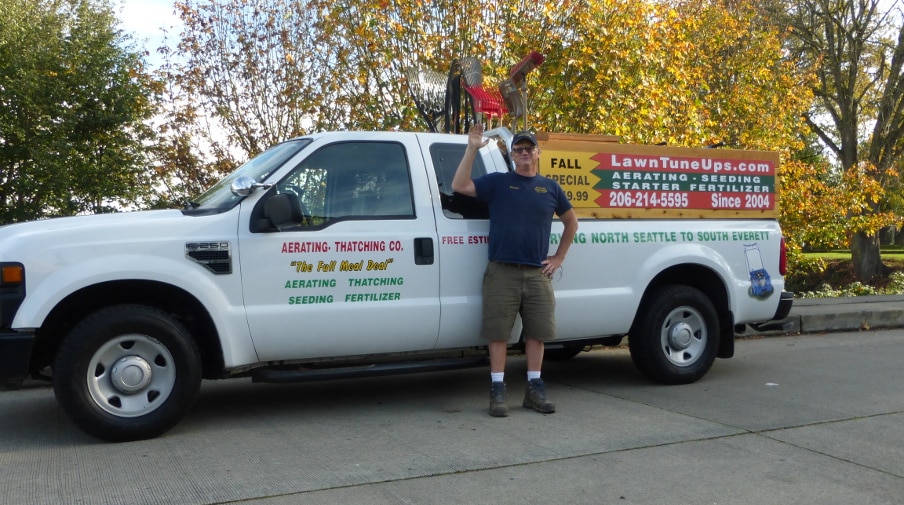
Stewart Armour
Stewart Armour is an independent lawn restoration expert, educator, and owner of Aerating Thatching Co., serving the greater Seattle area since 2004. With more than two decades of professional experience restoring Western Washington lawns, Stewart specializes in diagnosing lawn problems, improving soil health, and developing long-term lawn renovation strategies. His education includes turf management studies, advanced golf course turf training, and continuing education through Wilbur-Ellis University, State Turf Facilities, Soil First Academy, and Golf Course Applied Turf Physiology. Every article published on LawnTuneUps.com is grounded in practical field experience, current turf science, and a commitment to helping homeowners understand the why behind every recommendation—not just what to do.
Stewart has personally evaluated thousands of residential lawns throughout the Seattle area and remains committed to helping homeowners understand the science behind growing healthier, more resilient lawns.