Dog Pee vs. Your Lawn: Why It’s a Problem in Seattle
If you have a dog and a lawn, you’ve probably seen it: yellow or brown circles that show up right where your pup likes to pee. It feels like your dog is slowly “killing” your lawn.
In reality, dog urine is a highly concentrated fertilizer:
-
🧪 High nitrogen & salts – in small, diluted amounts nitrogen feeds lawn; in heavy doses, it burns it.
-
🎯 Concentrated in tiny spots – one small puddle in the same area day after day overloads the grass.
-
🐕 Patterns matter – dogs that squat in one place (often females, but not always) create more damage than dogs that “spritz” around.
Seattle’s cool-season lawns (ryegrass, fescue, bluegrass blends) can be lush and green—but they’re still sensitive to those concentrated “hot spots.”
How to Tell If Dog Urine Is Killing Your Lawn
Dog urine damage usually has a few tell-tale signs:
-
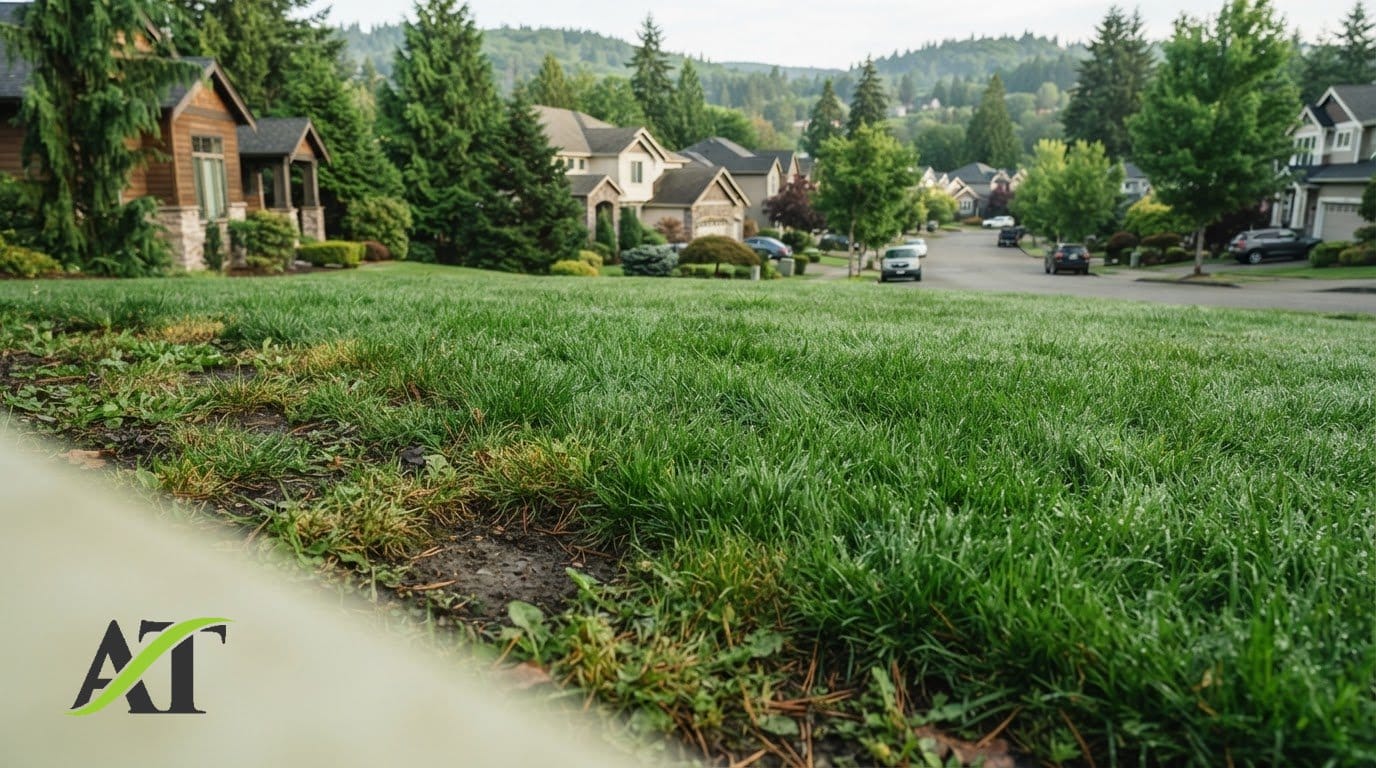
🟡 Yellow or straw-colored circles of dead grass
-
🟢 Sometimes a darker green ring (halo) around the dead spot
-
📍 Near paths, gates, favorite sniffing spots, or where the dog is often let out
-
🔁 New spots keep appearing in the same general areas
Other issues (chafer beetles, fungus, drought, shade) can also thin out a lawn, but urine spots tend to be round, random, and closely tied to where your dog hangs out.
If you’re unsure, Aerating Thatching Co can help you sort out whether you’re dealing with dog pee, insects, disease, or just tired soil.
How to Prevent Dog Urine Spots on Your Lawn
You can’t (and shouldn’t) stop your dog from peeing—but you can reduce the damage.
1. Water it in 💧
Whenever possible:
-
Keep a small watering can or hose handy
-
Give fresh pee spots a quick 10–20 second soak
-
This dilutes the nitrogen and salts and spreads it over a bigger area
Even a quick rinse later in the day helps.
2. Create a “dog potty zone” 🐾
Designate one area that doesn’t need to look perfect:
-
A mulch, pea gravel, or bark area
-
Or a back corner of your lawn you’re okay with being less-than-perfect
-
Consistently lead your dog there on leash until it becomes habit
Over time, you can keep most of the damage in one manageable zone.
3. Mow just a bit higher ✂️
Slightly taller grass:
-
Has deeper roots
-
Handles stress and salts better
-
Hides small imperfections
Aim for the upper end of the recommended mowing height for your lawn type, rather than a tight, short cut.
4. Keep soil healthy and well-aerated 🌱
Healthy soil is more forgiving:
-
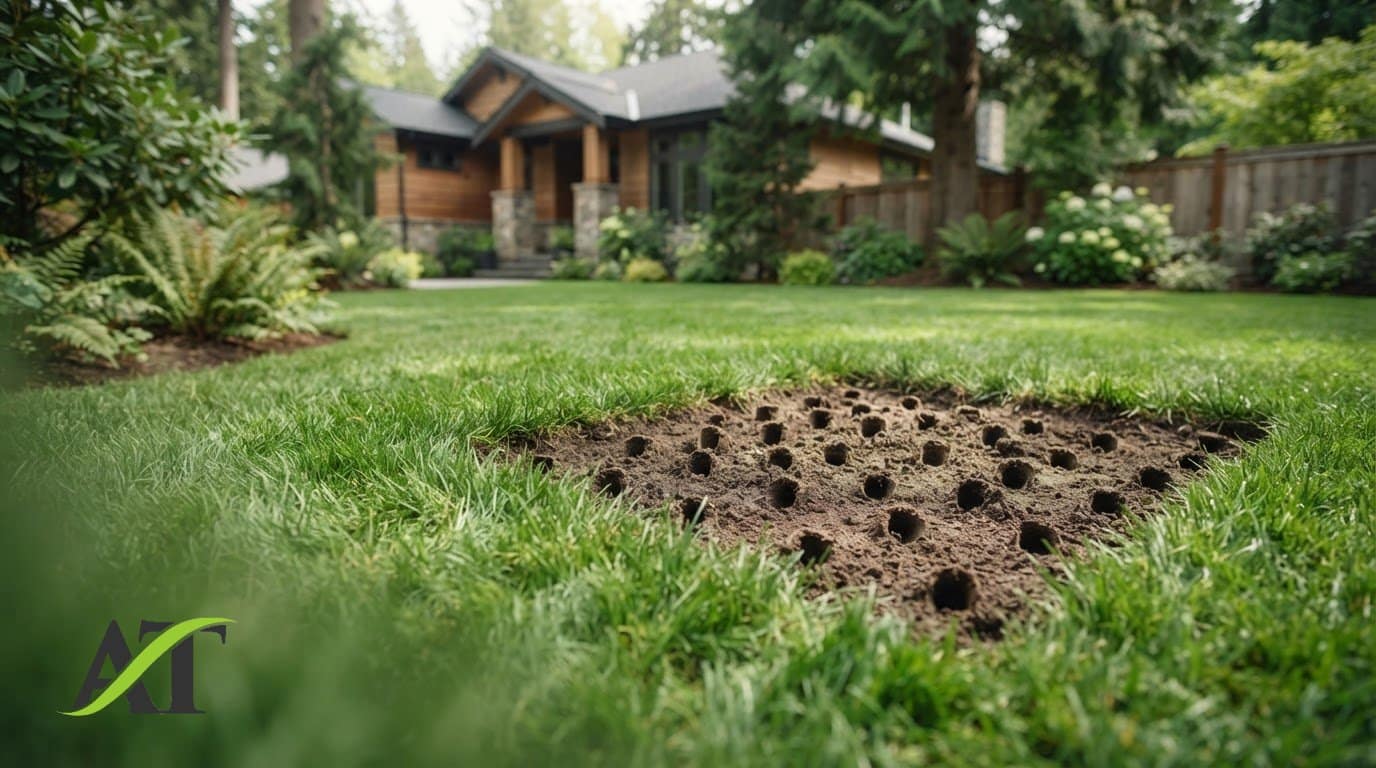
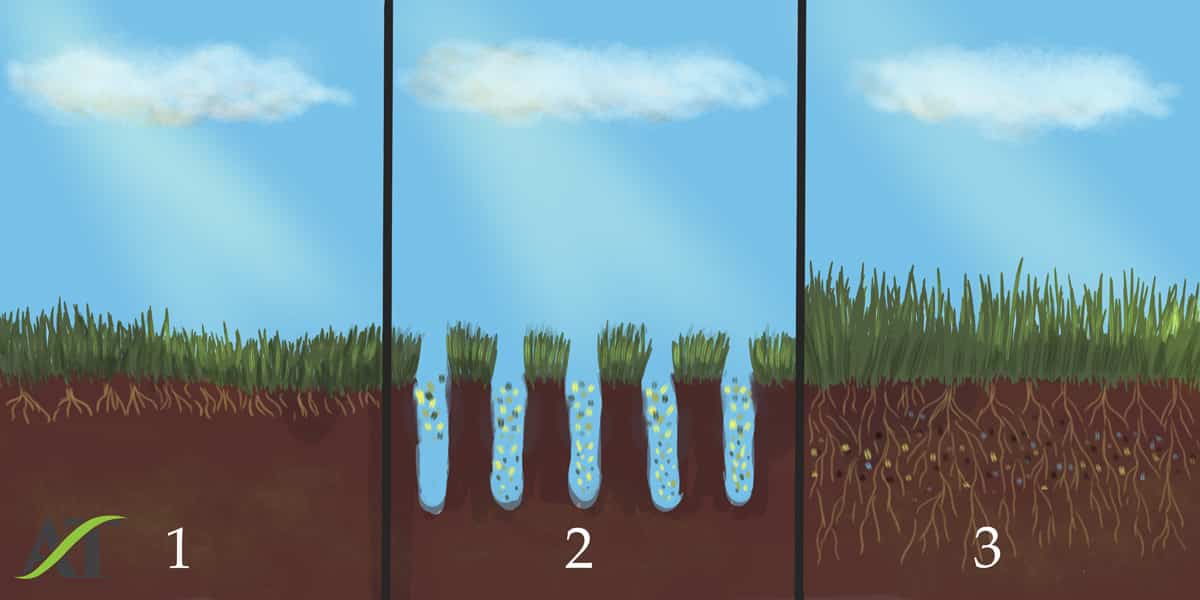
Core aeration improves drainage and allows water to flush salts deeper
-
Organic matter (compost, organic fertilizer) helps soil buffer stress
-
Avoid heavy, fast-release nitrogen fertilizers on dog-heavy lawns
Aerating Thatching Co can help with core aeration, overseeding, soil amendments, and organic lawn upgrades to build a more resilient lawn.
5. Be cautious with “urine neutralizer” supplements ⚠️
You’ll see products that claim to “fix” urine by changing your dog’s pH or digestion. Avoid:
-
Giving any supplement without your vet’s approval
-
Expecting magic cures—most of the real solution is still watering, training, and soil health
Your dog’s health comes first. Focus on safe lawn practices instead of risky quick fixes.
How to Fix Dog Urine Spots on Grass (DIY Repair)
Small spots (up to about a dinner plate) can usually be repaired with some simple steps.
Step 1: Flush and wait
-
Give the area a thorough soak to wash out excess salts
-
Wait 7–10 days to see if any of the grass recovers or if the spot stays completely dead
Step 2: Remove dead material
-
Use a leaf rake or hand rake to pull out dead grass and thatch
-
Scratch the surface so you can see bare soil in the damaged area
Step 3: Loosen and amend the soil
-
Lightly loosen the top 1–2 inches of soil with a rake or hand cultivator
-
Mix in a thin layer of compost or high-quality lawn soil
-
This improves drainage and gives seeds a better home
Step 4: Reseed with a matching grass blend
-
Use a Pacific Northwest-appropriate grass mix similar to the rest of your lawn
-
Spread seed evenly over the bare soil, then gently rake it in
-
Lightly topdress with a thin layer of compost or soil so the seed just disappears from view
Step 5: Keep it moist until established
-
Mist or lightly water 1–2 times per day (depending on weather)
-
Avoid soaking or washing seed away
-
Keep off the area as much as possible until grass is 2–3 inches tall
For a few scattered spots, this works great. But if dog urine spots are everywhere, your lawn may need a more complete reset.
When You Need Professional Lawn Repair (Seattle Dog Owners)
If you’re seeing:
-
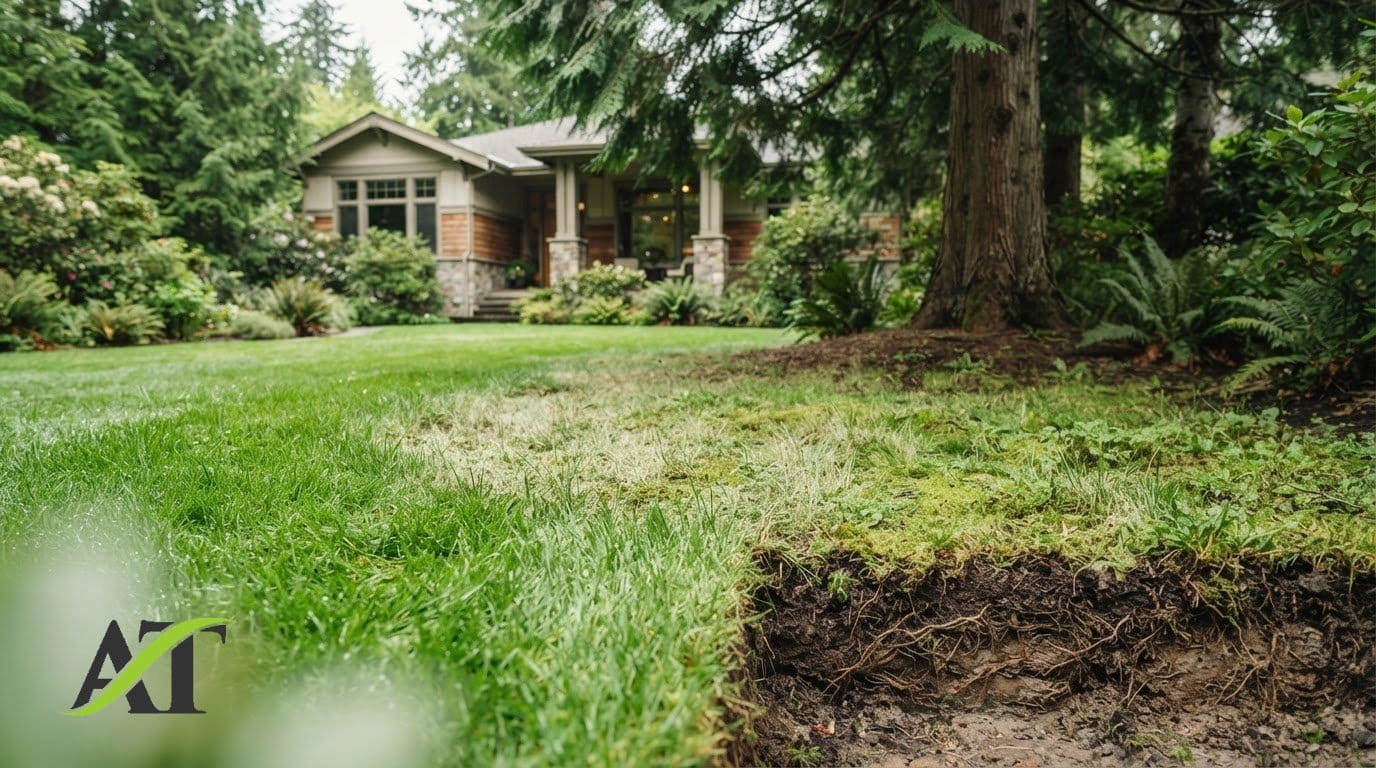
Large areas of thin, patchy lawn
-
Dozens of overlapping urine spots
-
Compacted soil, moss, or weeds in between the spots
…then it’s often more effective to repair the whole lawn area, not just spot-patch.
This is where Aerating Thatching Co comes in. For Seattle-area lawns, a Lawn Tune Up or Lawn Renovation can include:
-
⚙️ Core aeration to relieve compaction and help water flush salts
-
🌱 Overseeding with a thick, durable grass blend
-
🧪 Soil amendments & lime (where appropriate) to support healthy growth
-
🐕 Pet-friendly fertilizer options so your lawn and dog can safely share the space
We don’t treat your dog—we repair your lawn after dog (and life) damage and help it stand up better to daily use.
Pet- & Kid-Safe Lawn Care in Seattle
If you have dogs, kids, or both, safety matters as much as looks. Aerating Thatching Co can:
-
✅ Use pet- & kid-friendly fertilizer programs
-
✅ Time applications so you know when it’s safe to re-enter the lawn
-
✅ Recommend simple habits (watering, mowing height, potty zones) that reduce future damage
You get a lawn that looks better, feels safe, and works with your real life—not against it.
Ready for a Dog-Friendly, Green Lawn Again?
If dog pee has your lawn looking tired or spotty, you don’t have to live with yellow circles forever.
✨ Aerating Thatching Co specializes in lawn repair and Lawn Tune Ups for Seattle dog owners.
👉 Request a Lawn Tune Up or lawn repair quote today, and let’s turn your dog’s favorite bathroom back into a healthy, green lawn.