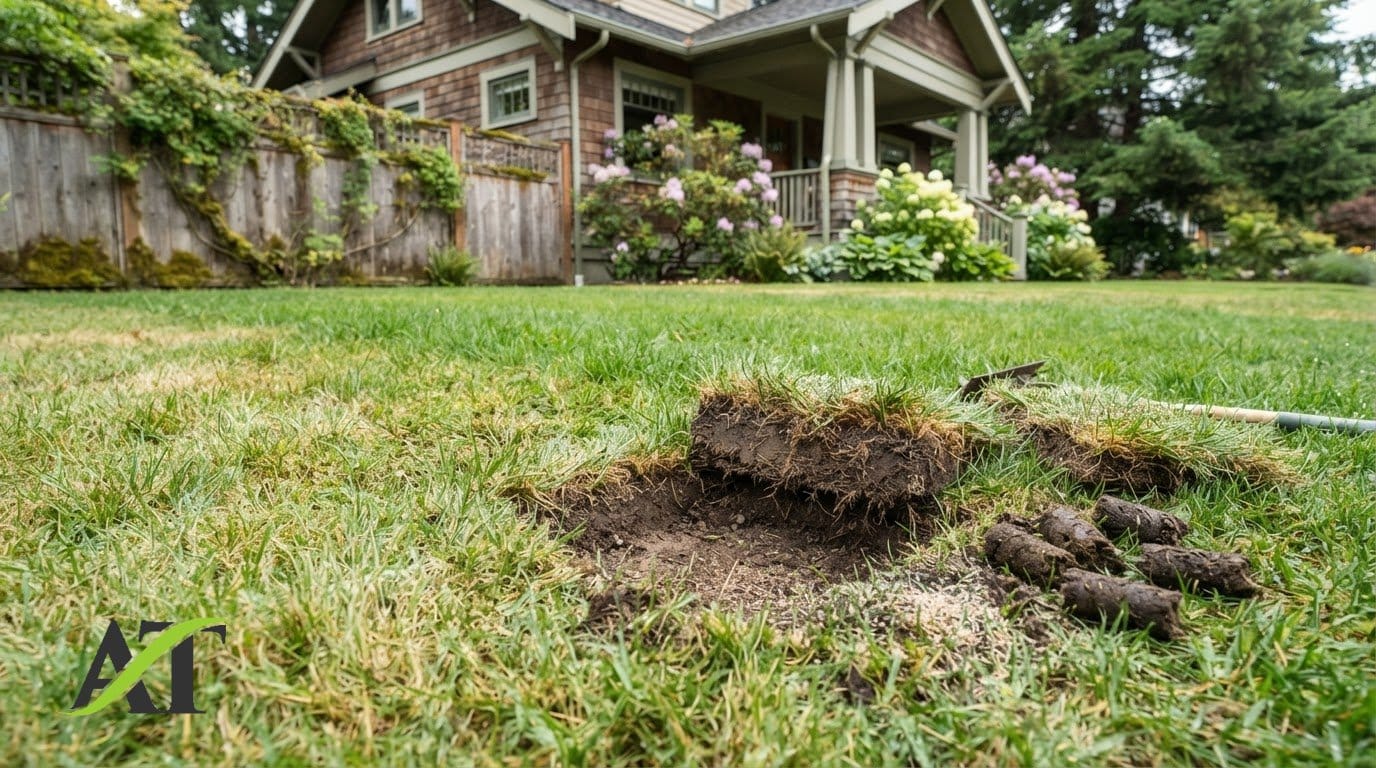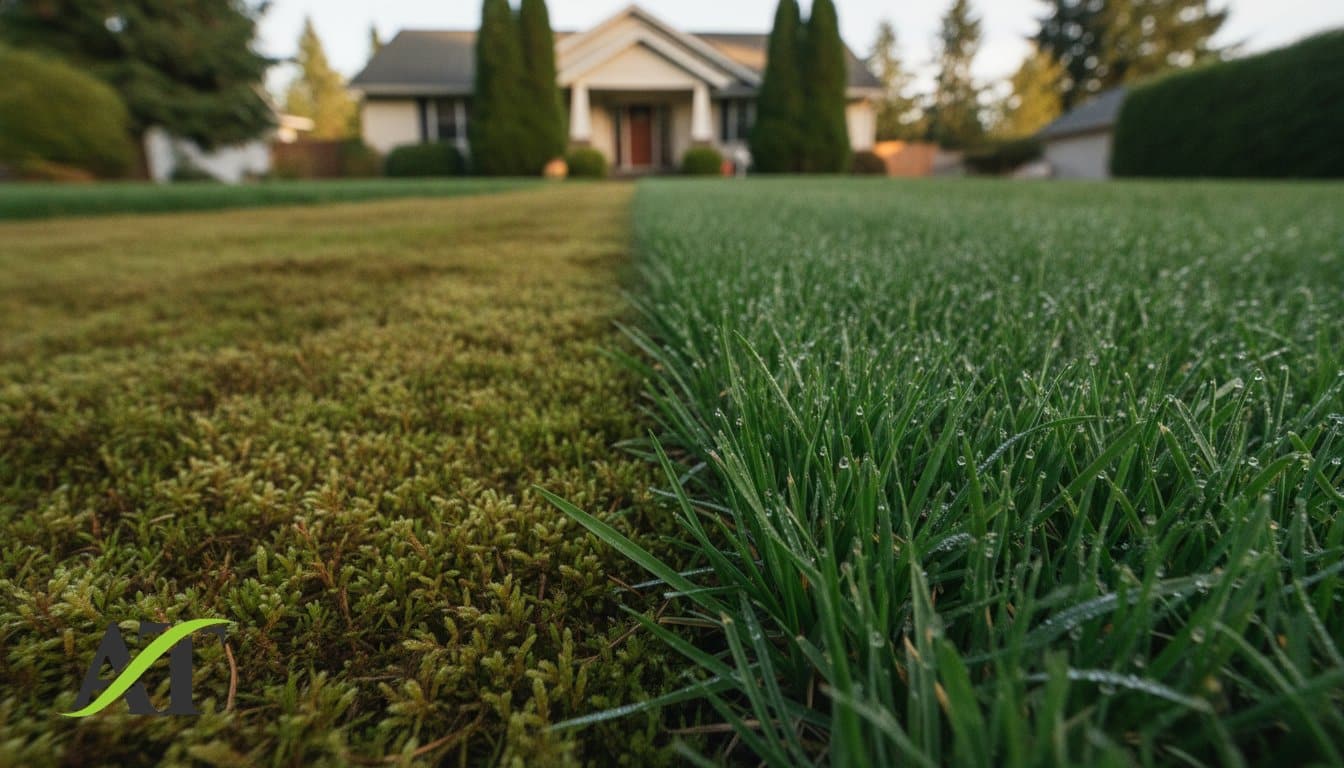
Why does moss keep coming back to your Everett yard even after you’ve spent a fortune on chemical killers? Most homeowners treat moss as the enemy. It’s actually just a symptom of acidic, compacted soil that’s starving for air. If you’re tired of a spongy, wet lawn and thinning grass, you need a strategy that goes deeper than the surface. Professional lawn aeration Everett neighbors trust is the first step. By performing Core Aeration, we open the ground so nutrients and oxygen reach the root zone.
We understand the frustration of wasted money. You want a thick, green lawn that naturally crowds out moss. This article shows you how to restore your turf through mechanical processes like our Lawn Tune-Up, which consists of Core Aeration, Overseeding, and Fertilizing. For severe moss, we’ll discuss the Full Meal Deal, which adds Power Raking (Dethatching) to that list of services. You’ll also learn why we monitor soil temperatures to ensure they’re between 55°F and 75°F for optimal Overseeding results. It’s time to stop chasing temporary fixes and build a healthy foundation.
Key Takeaways
- Understand why moss is a symptom of soil compaction and acidity rather than the primary problem in your Everett yard.
- Learn how a Lawn Tune-Up-consisting of Core Aeration, Overseeding, and Fertilizing-utilizes the lawn aeration Everett homeowners need to restore soil oxygen levels.
- Identify when to choose the Full Meal Deal, which adds Power Raking (Dethatching) to clear heavy moss and allow new grass to take hold.
- Discover why monitoring soil temperatures between 55°F and 75°F is the key to successful Overseeding and a thick, moss-resistant lawn.
Why Moss Dominates Everett Lawns: The Soil Health Connection
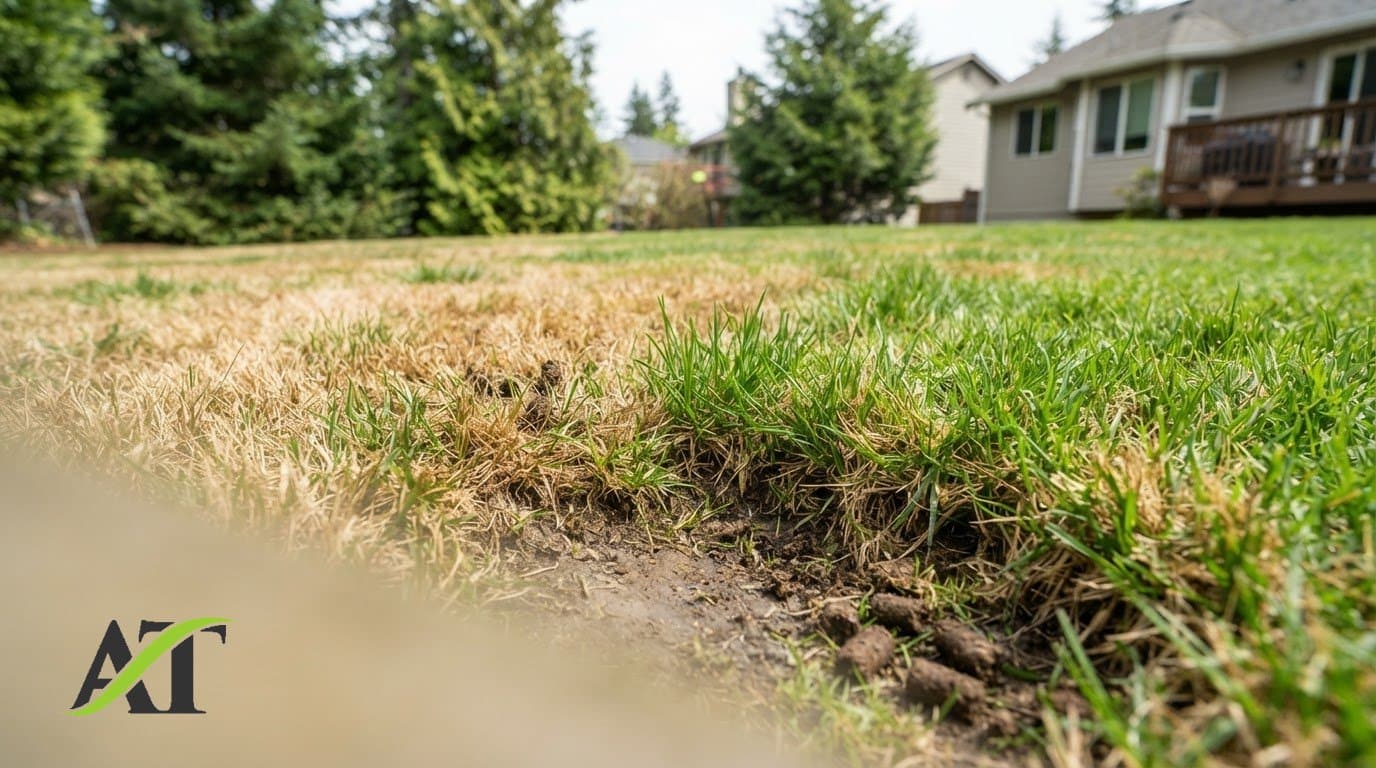
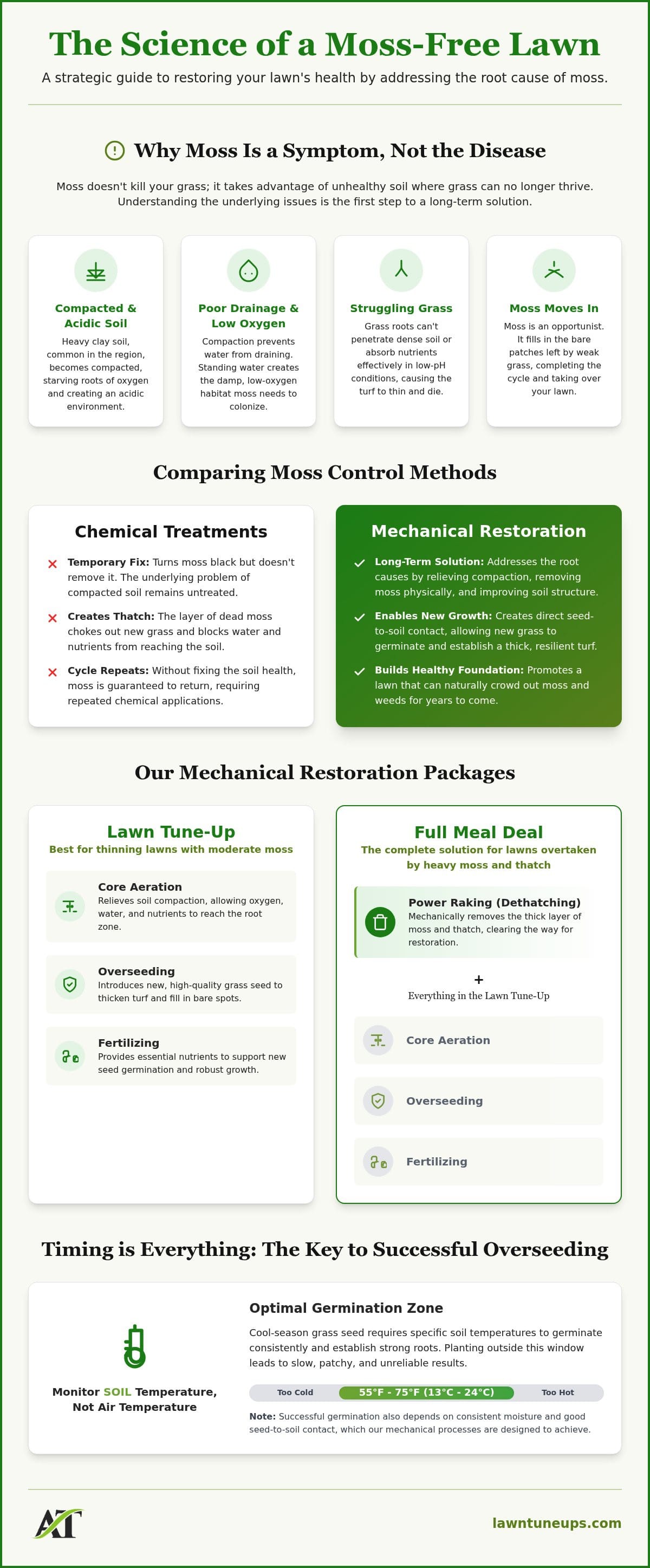
Everett’s climate creates a perfect storm for moss. We get high moisture and low sunlight during the peak growing seasons. This environment favors moss over cool-season grasses. Moss isn’t just a weed; it’s an opportunist that fills gaps left by dying, nutrient-starved grass. When your lawn thins out, moss moves in to take over the real estate. If you are looking for lawn aeration Everett solutions, you are likely dealing with the region’s heavy clay soil that prevents drainage and creates the spongy surface moss loves.
The Role of Soil pH and Lime Application
Our local soil is naturally acidic. Moss thrives in these low-pH conditions where grass struggles to absorb nutrients. Using a professional Lime Application Edmonds service helps balance this pH. By raising the soil pH, we make fertilizers more effective. This is the first step in a long-term strategy to help your turf outcompete the moss by creating a chemical environment where grass can actually feed and grow thick enough to block out invaders. For a complete seasonal approach, our fall lime application checklist for PNW lawns walks you through exactly how to reset your soil chemistry before winter saturation sets in.
Compaction and Poor Drainage
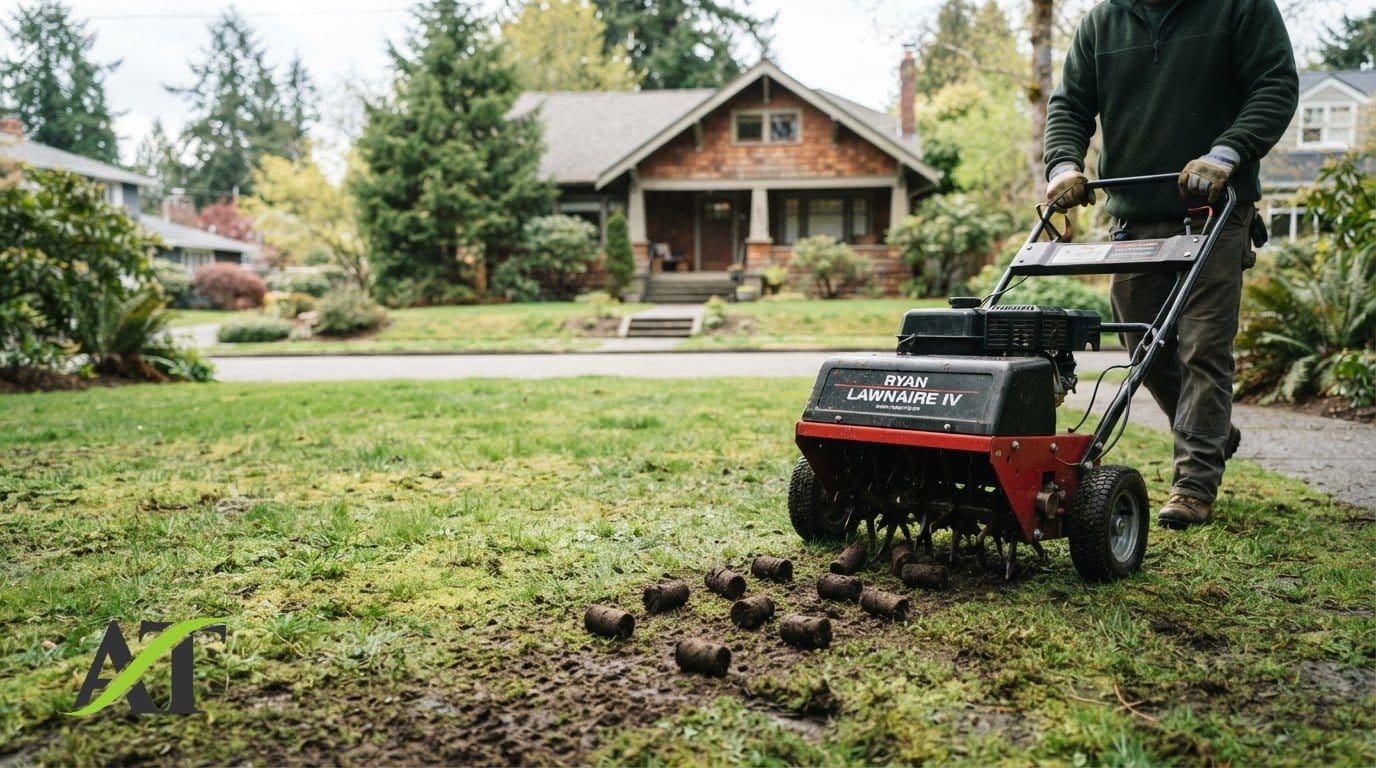
Mechanical compaction is a major problem in Everett neighborhoods. It starves grass roots of oxygen and prevents proper drainage. When water sits on the surface, it creates the wet habitat moss needs to colonize. Effective lawn aeration for compacted soil Shoreline homeowners rely on helps break this cycle. Lawn aeration Everett technicians pull physical cores from the ground, allowing the soil to breathe and drain. Without this mechanical intervention, standing water will continue to favor moss growth over healthy turf development. We see this daily in shaded yards where the ground never truly dries out.
Mechanical Moss Removal vs. Chemical Treatments
Most homeowners reach for iron-based moss killers at the first sign of trouble. These products work fast by turning moss black, but they only provide a temporary aesthetic fix. They don’t remove the physical mass. Dead moss stays on the surface. It creates a thick thatch layer that chokes out new grass. This barrier prevents water and nutrients from reaching the soil. True recovery requires physical removal rather than just chemical suppression.
While lawn aeration Everett services address soil compaction, they work best when the surface is clear. Leaving dead moss behind is like trying to paint over rust. It looks better for a week, but the underlying problem remains. Mechanical restoration ensures that the grass has the space it needs to grow back thick and healthy. It’s the only way to break the cycle of moss returning every spring.
Why Power Raking (Dethatching) is Essential
We define Power Raking (Dethatching) as the mechanical removal of surface debris and moss. This process is critical for establishing seed-to-soil contact. Without it, your new grass seed sits on top of a dead organic mat and never germinates. Clearing this path is a core component of our Full Meal Deal package. It prepares the ground for the next steps of the restoration process by exposing the soil surface.
The Limitations of DIY Moss Control
Store-bought treatments often fail because they don’t address soil health. Over-applying these chemicals can also damage delicate soil biology. Professional-grade equipment pulls moss out without destroying the remaining turf. Investing in mechanical restoration is a better long-term move than buying annual chemical kits. If your lawn is buried in moss, you can request a quote to see if a Full Meal Deal is the right fix for your property.
The Restoration Process: Lawn Tune-Up and Full Meal Deal
We are restoration specialists, not a weekly mowing and edging company. Our focus is on the long-term health of your soil rather than just trimming the surface. When a yard is struggling, we use structured packages to bring it back to life. For standard moss cases, we recommend our Lawn Tune-Up. This service consists of Core Aeration, Overseeding, and Fertilizing. It’s designed to strengthen existing turf and improve the underlying soil structure.
If your lawn is completely overtaken by moss and thatch, the Full Meal Deal is the correct choice. This comprehensive package includes Power Raking (Dethatching), Core Aeration, Overseeding, and Fertilizing. By removing the heavy moss layer first, we ensure the rest of the treatments actually reach the ground. This methodical approach to lawn aeration Everett homeowners trust is what separates a temporary fix from a total turf recovery. When performing the lawn aeration Everett yards need, we focus on deep core penetration to maximize results.
Core Aeration and Overseeding for Thickness
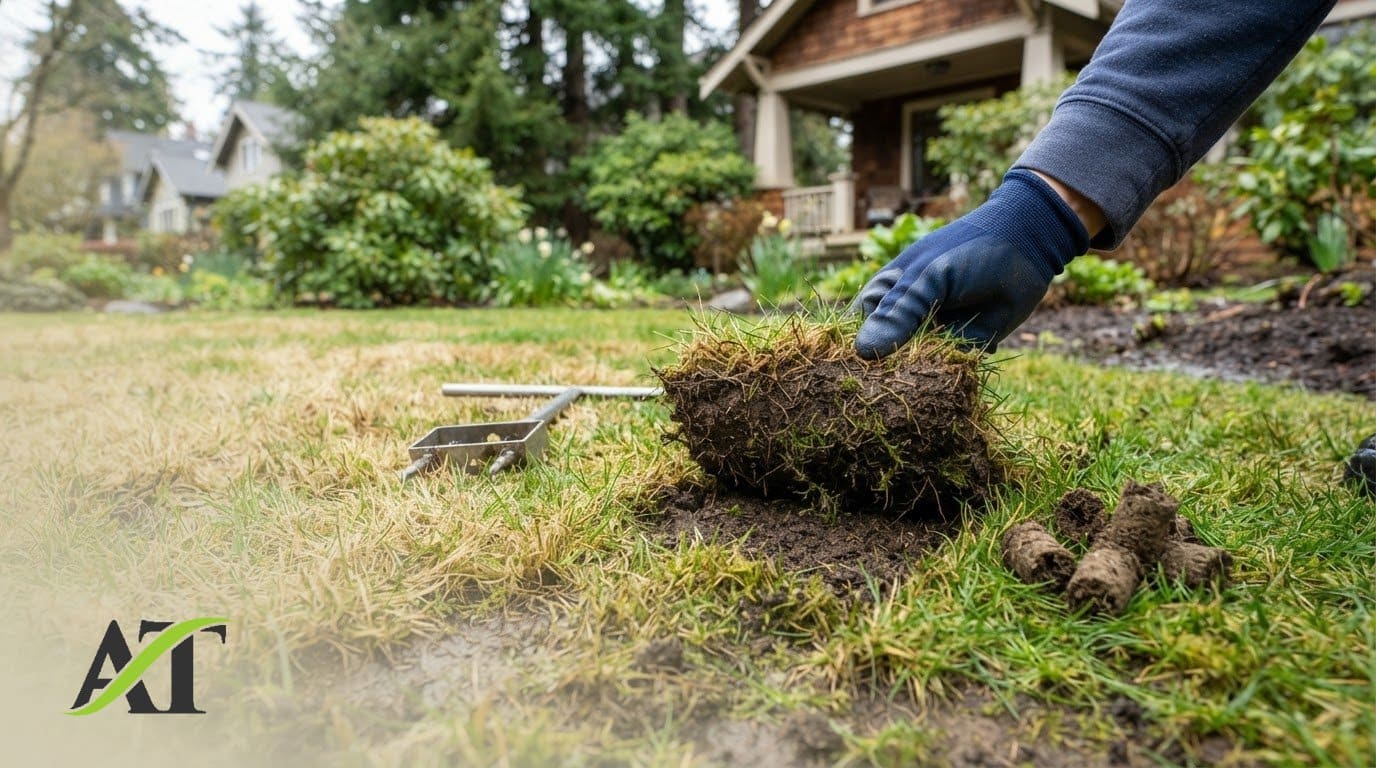
Core Aeration pulls physical soil plugs to allow air, water, and nutrients to reach the roots directly. You can learn more about the specific benefits of a Lawn Tune Up Snohomish project here. Once the soil is open, Overseeding fills in the gaps left by moss. This increased density prevents moss from re-colonizing empty spaces. We use Organic Fertilizing to support this new growth safely without harming the soil biology.
What to Expect During the Restoration
Our restoration process follows a logical path to ensure the best possible start for your new grass. We move quickly but methodically through these steps:
- Step 1: Mechanical removal of moss via Power Raking (Dethatching) to clear the surface.
- Step 2: Core Aeration to address the underlying soil structure and drainage issues.
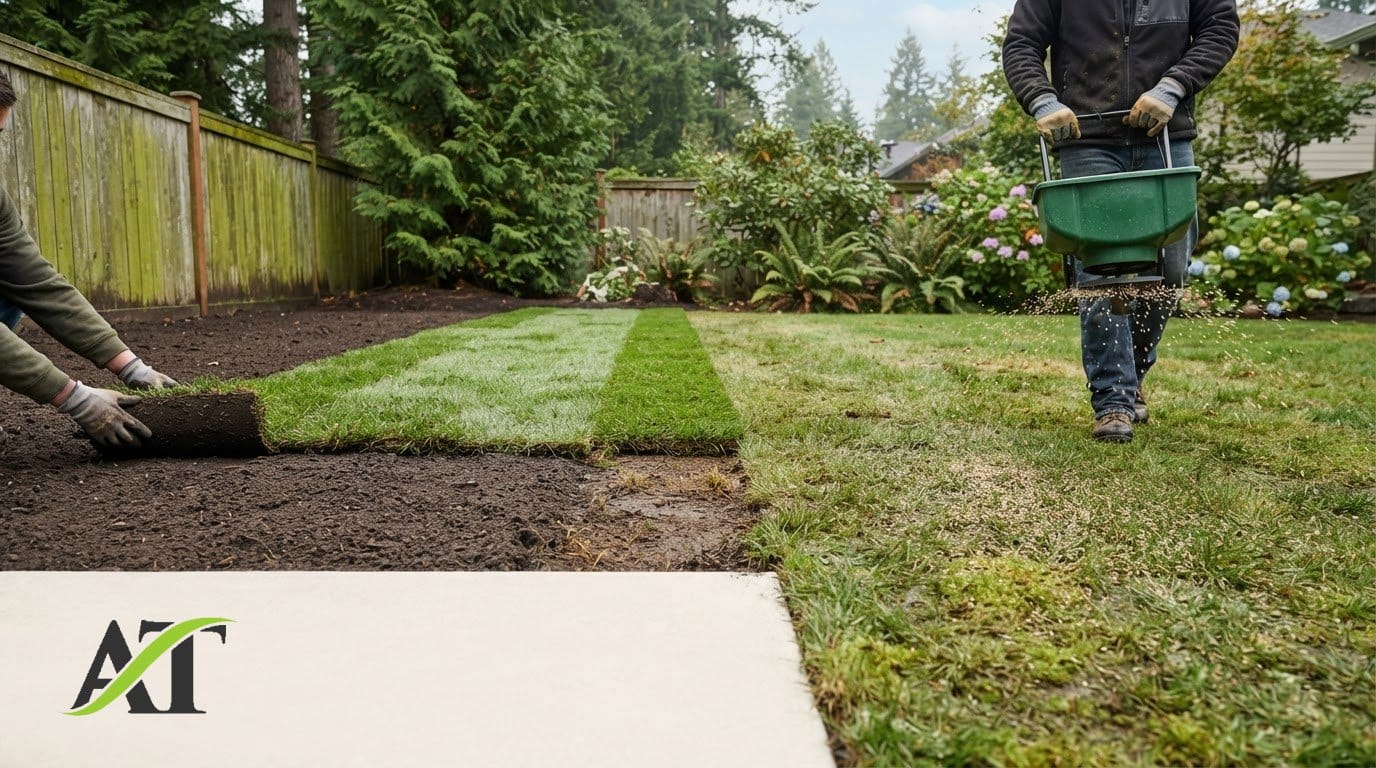
- Step 3: Overseeding and Organic Fertilizing to kickstart new lawn density.
Timing Your Everett Moss Recovery for Success
Everett homeowners often wait too long to act. Timing is critical to ensure new grass grows faster than the moss can return. Many people think air temperature is the primary driver of growth. It’s actually the soil that matters. For professional lawn aeration Everett residents rely on, we schedule work when the biology is on our side. Results aren’t guaranteed by a piece of paper. They are influenced by moisture, seed-to-soil contact, and the weather. We recommend you Request a Quote before the peak spring or fall windows hit.
The 55°F-75°F Soil Temperature Rule
Optimal Overseeding results occur when soil temperatures are between 55°F and 75°F (13°C-24°C). Germination is slower and less consistent outside this specific horticultural range. While grass can grow at other times, it won’t establish as reliably. Late spring and early fall are the golden windows for Everett lawns. During these times, the ground is warm enough for seeds to pop but the air isn’t yet scorching.
Maintenance After Treatment
Consistent moisture management is your most important job after treatment. Newly seeded areas need light, frequent watering to stay damp. Once the lawn fills in, a regular Lawn Tune-Up helps prevent moss from returning. This maintenance cycle of Core Aeration, Overseeding, and Fertilizing keeps the turf dense and competitive. We also recommend higher mowing heights in shaded spots. Taller grass blades capture more sunlight, helping the turf shade out potential moss growth.
Take Control of Your Everett Lawn Restoration
Moss doesn’t have to be a permanent fixture in your yard. By addressing soil acidity and compaction, you create an environment where grass thrives. Our team has specialized in Pacific Northwest soil health and moss recovery since 2004. We focus on mechanical restoration through expert Core Aeration and Power Raking (Dethatching). Whether you need a standard Lawn Tune-Up or the deep cleaning of a Full Meal Deal, we have the tools to rebuild your turf from the roots up.
Timing is everything. Aim for those golden windows when soil temperatures are between 55°F and 75°F to give your new seed the best chance to establish. Professional lawn aeration Everett homeowners trust is just a click away. We help you move past temporary chemical fixes and toward a thick, resilient lawn that crowds out moss naturally. It’s hard work, but the results are worth it. To ensure the rest of your property stays as clean as your new turf, you can learn more about Atlas Exterior Solutions LLC for professional roof and house washing services.
Frequently Asked Questions
Is Lime Application enough to kill moss in my Everett lawn?
Lime Application is not a moss killer; it is a soil amendment used to balance pH levels. While it makes the soil less acidic and more hospitable for grass, it won’t remove existing moss. You need mechanical restoration to pull the moss out. Balancing the pH is just one part of a long-term strategy to ensure your turf remains thick enough to outcompete future moss growth.
What is the difference between a Lawn Tune-Up and the Full Meal Deal?
A Lawn Tune-Up consists of Core Aeration, Overseeding, and Fertilizing, which is ideal for lawns with light moss or compaction. The Full Meal Deal is a more aggressive restoration package. It includes Power Raking (Dethatching), Core Aeration, Overseeding, and Fertilizing. This methodical approach to lawn aeration Everett homeowners rely on is necessary when moss and thatch have completely taken over the surface, requiring physical removal before improving the soil.
When is the best time of year for lawn moss treatment in Everett?
The best time for lawn aeration Everett projects is late spring or early fall when soil temperatures are between 55°F and 75°F (13°C-24°C). This range is optimal for cool-season grass seed germination. Scheduling during these windows ensures that your new grass establishes quickly enough to shade out returning moss. Avoid the heat of mid-summer or the freezing temperatures of winter, as those conditions make restoration much less consistent.
How long does it take for Overseeding to germinate after moss removal?
Germination typically occurs within 7 to 21 days, but it depends heavily on soil temperature. If the soil is within the 55°F to 75°F range, you will see more consistent results. If temperatures are lower, the process will be slower and less reliable. Consistent moisture is also vital during this period. You must keep the seed-to-soil contact area damp to support the young grass as it fills in.
Do you offer a guarantee that the grass will grow after moss treatment?
We don’t offer absolute guarantees regarding germination because growth is influenced by factors beyond our control. Success depends on consistent moisture, proper soil conditions, and local weather patterns after we finish our work. However, we use professional-grade equipment and high-quality seed to give your lawn the best possible start. Following our post-service care instructions is the most effective way to ensure your restoration project results in thick turf.
Article by
Stewart Armour
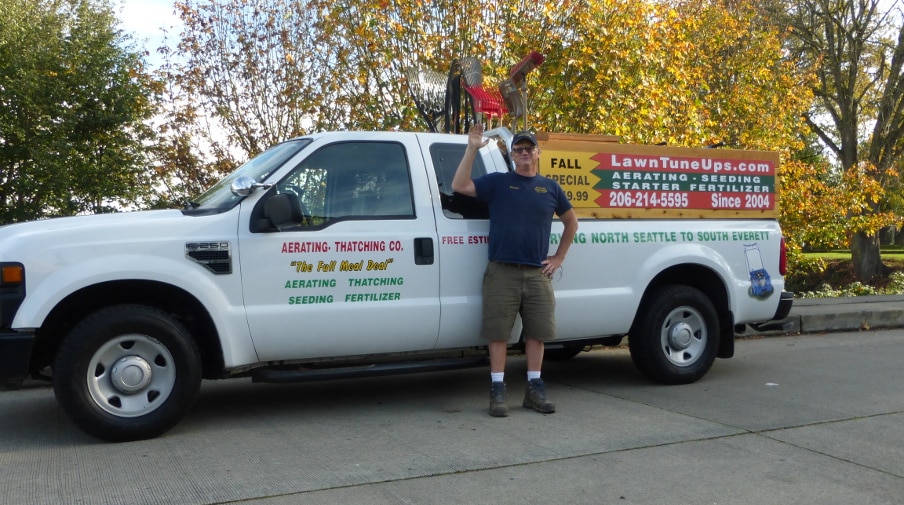
Stewart Armour is an independent lawn restoration expert, educator, and owner of Aerating Thatching Co., serving the greater Seattle area since 2004. With more than two decades of professional experience restoring Western Washington lawns, Stewart specializes in diagnosing lawn problems, improving soil health, and developing long-term lawn renovation strategies. His education includes turf management studies, advanced golf course turf training, and continuing education through Wilbur-Ellis University, State Turf Facilities, Soil First Academy, and Golf Course Applied Turf Physiology. Every article published on LawnTuneUps.com is grounded in practical field experience, current turf science, and a commitment to helping homeowners understand the why behind every recommendation—not just what to do.
Stewart has personally evaluated thousands of residential lawns throughout the Seattle area and remains committed to helping homeowners understand the science behind growing healthier, more resilient lawns.