What if the brown or thin patches in your lawn don’t need the same treatment? A lawn that looks rough after winter may recover as growth resumes, or it may be showing signs of a problem that needs attention. A practical plan for improving lawn health after winter Green Lake homeowners can use starts with assessing the damage, not treating the whole lawn at once.
It’s easy to confuse moss, thatch, compacted soil, shade, and drainage problems, but each points to a different next step. This guide explains what to look for, how to tell temporary wear from damage that may need restoration, and when to consider Core Aeration, Overseeding, or Power Raking (Dethatching). A Lawn Tune-Up includes Core Aeration, Overseeding, and Fertilizing. The Full Meal Deal includes those services plus Power Raking (Dethatching). You’ll learn how to choose a reasonable recovery step and when further diagnosis may be needed.
Key Takeaways
- Improving lawn health after winter Green Lake starts with checking several areas of the lawn, not guessing from one discolored patch.
- Learn how visible clues can point toward thatch, compaction, shade, or drainage issues, and why they don’t prove the cause on their own.
- Use a simple recovery sequence: assess growth, identify likely causes, reduce avoidable stress, then choose a targeted response.
- Decide whether to keep observing, consider targeted restoration, or seek further diagnosis before choosing a treatment.
Improving lawn health after winter in Green Lake starts with a careful assessment
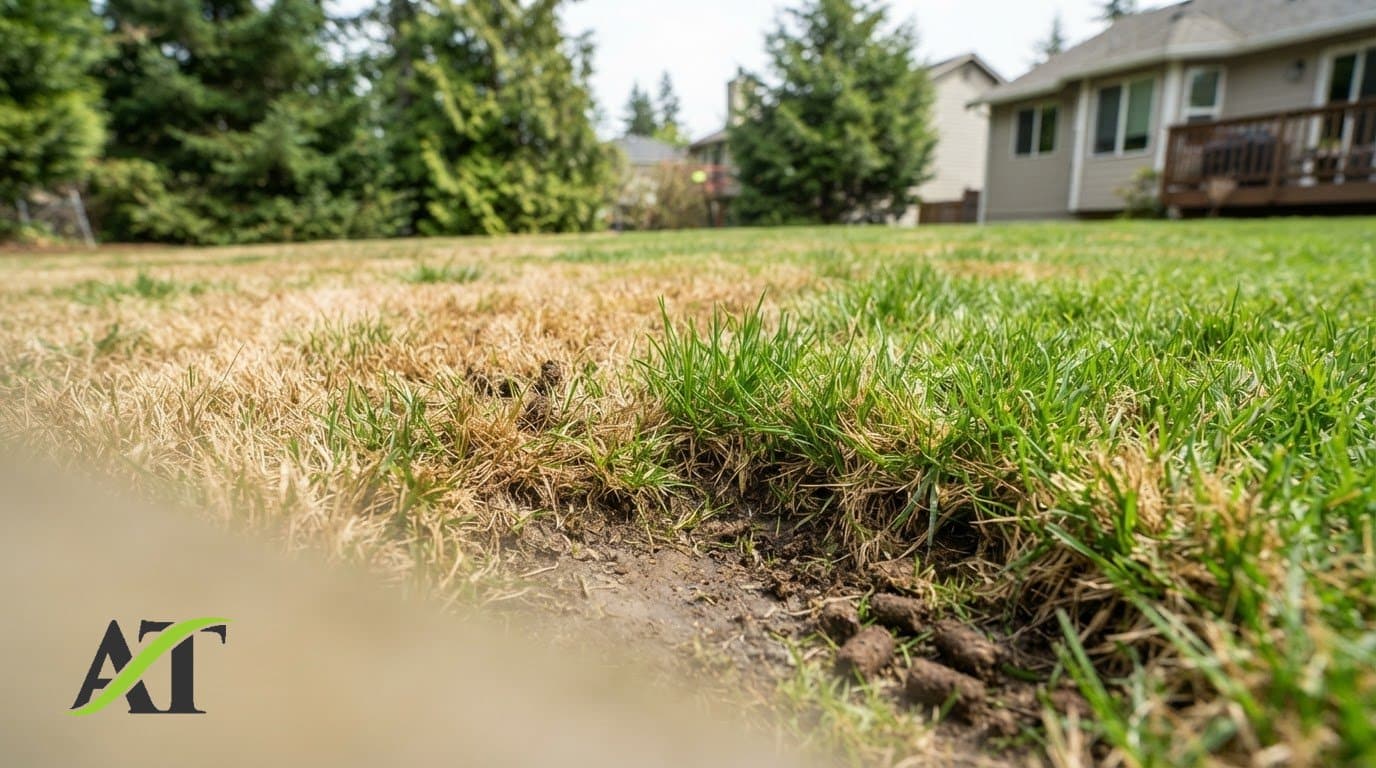
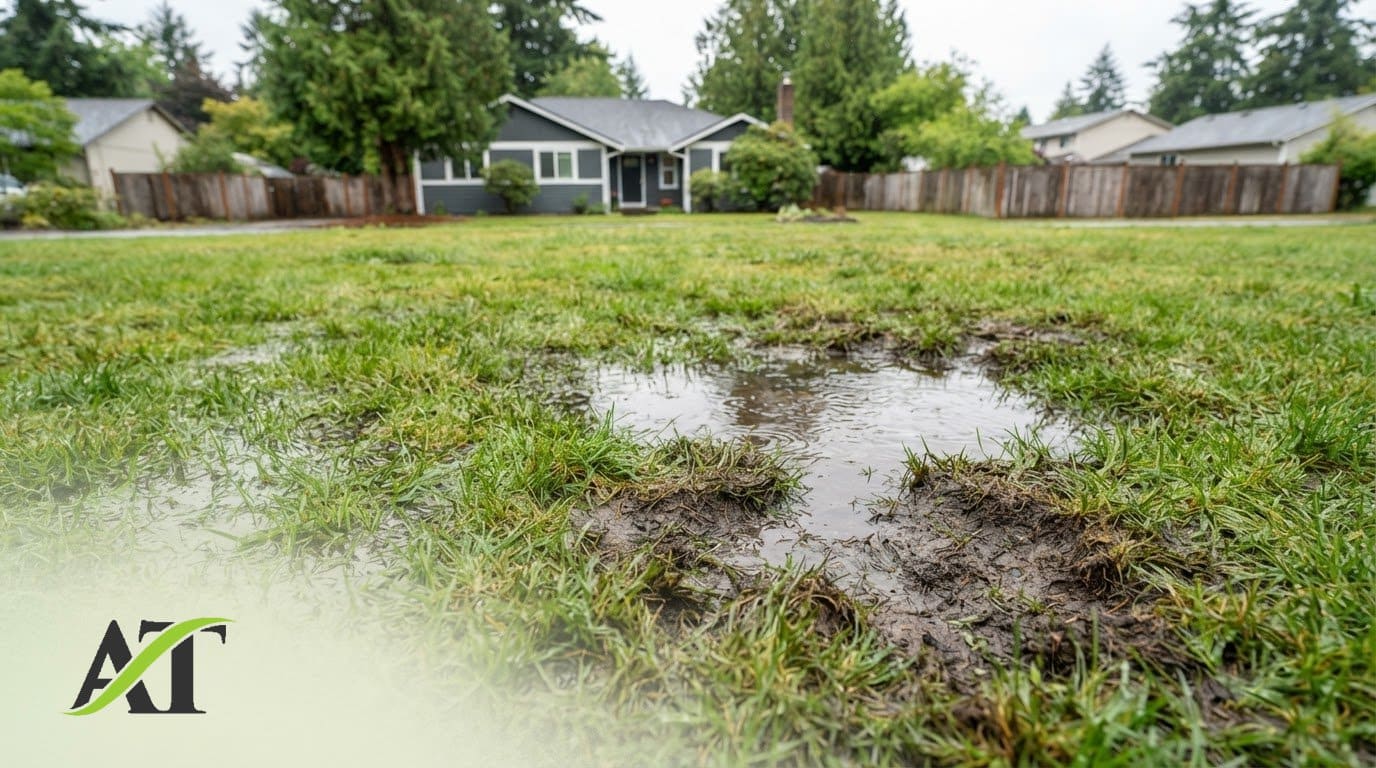
A lawn can look rough after winter without showing exactly what went wrong. Some areas may fill in as grass resumes active growth; others may need attention. Before raking, seeding, or applying a treatment, walk the lawn and compare several spots. Note discoloration, thin growth, bare patches, moss, and places where water stands. Check again as new grass growth becomes visible, rather than judging recovery from color alone.
Visible symptoms are clues, not a diagnosis: the same thin or discolored patch can have more than one cause. For general background on Lawn care practices, remember that lawn condition depends on more than appearance.
Which post-winter lawn symptoms deserve attention?
An isolated worn patch differs from thinning across a broad area or a spot that repeatedly struggles to grow. Moss is worth noting, but it doesn’t prove a specific soil problem; shade, moisture, and other site conditions may also matter. Mark where each symptom appears and whether it remains as growth resumes. A quick sketch or dated photos can help you compare the same areas later.
What should Green Lake homeowners avoid doing too soon?
Hold off on aggressive raking, blanket treatments, and Overseeding until you’ve assessed the lawn and identified a likely need. Working soft, wet ground can cause avoidable disturbance, so limit foot traffic when the surface gives way underfoot. Don’t assume a bare patch needs seed before checking whether the surrounding grass is growing or whether the area stays wet.
Seasonal timing matters, but it doesn’t replace assessment. The Seattle lawn care calendar can help you plan around the season while you observe how your lawn responds. If symptoms persist as growth resumes, use their location and pattern to guide the next step rather than treating every patch the same way.
Tell winter lawn damage apart: thatch, compaction, shade, or drainage
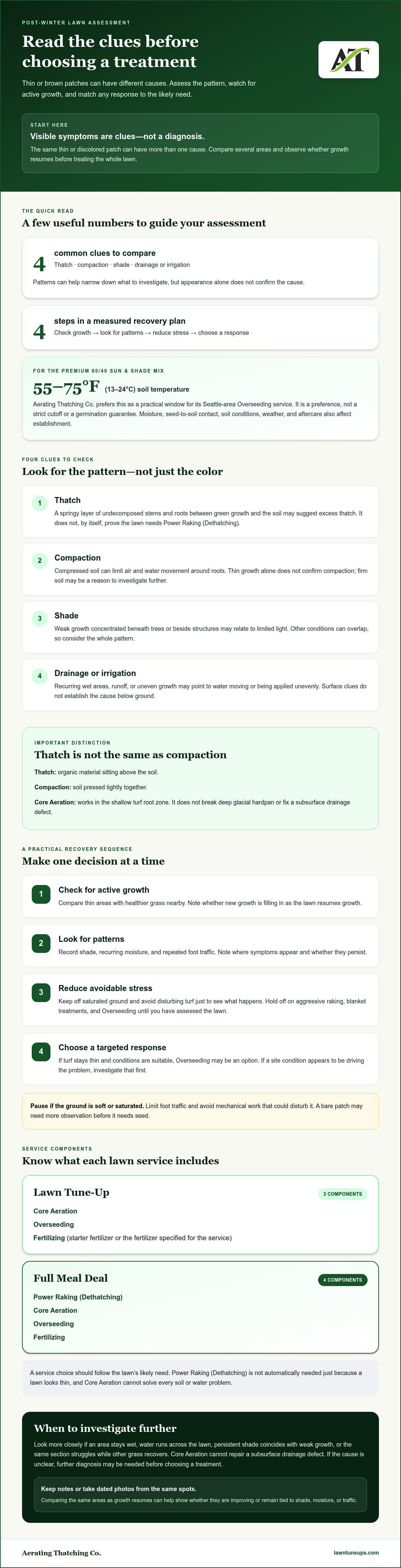
Thin or weak turf can have different causes, and color alone won’t tell you which one is present. Look for patterns: does the problem follow a shaded area, appear where water collects, or affect a broader section? For improving lawn health after winter Green Lake homeowners should match the next step to the likely cause, while treating visual clues as a starting point rather than proof.
- Thatch: A spongy layer of undecomposed stems and roots between green growth and the soil may suggest excess thatch. It doesn’t prove that the lawn needs Power Raking (Dethatching).
- Compaction: Compressed soil may limit air and water movement around roots. Thin growth alone doesn’t confirm compaction.
- Shade: Weak growth concentrated beneath trees or beside structures may relate to limited light, but other conditions can overlap.
- Drainage or irrigation: Recurring wet areas, runoff, or uneven growth may point to water moving or being applied unevenly. A surface clue doesn’t establish the cause below ground.
How can you distinguish thatch from soil compaction?
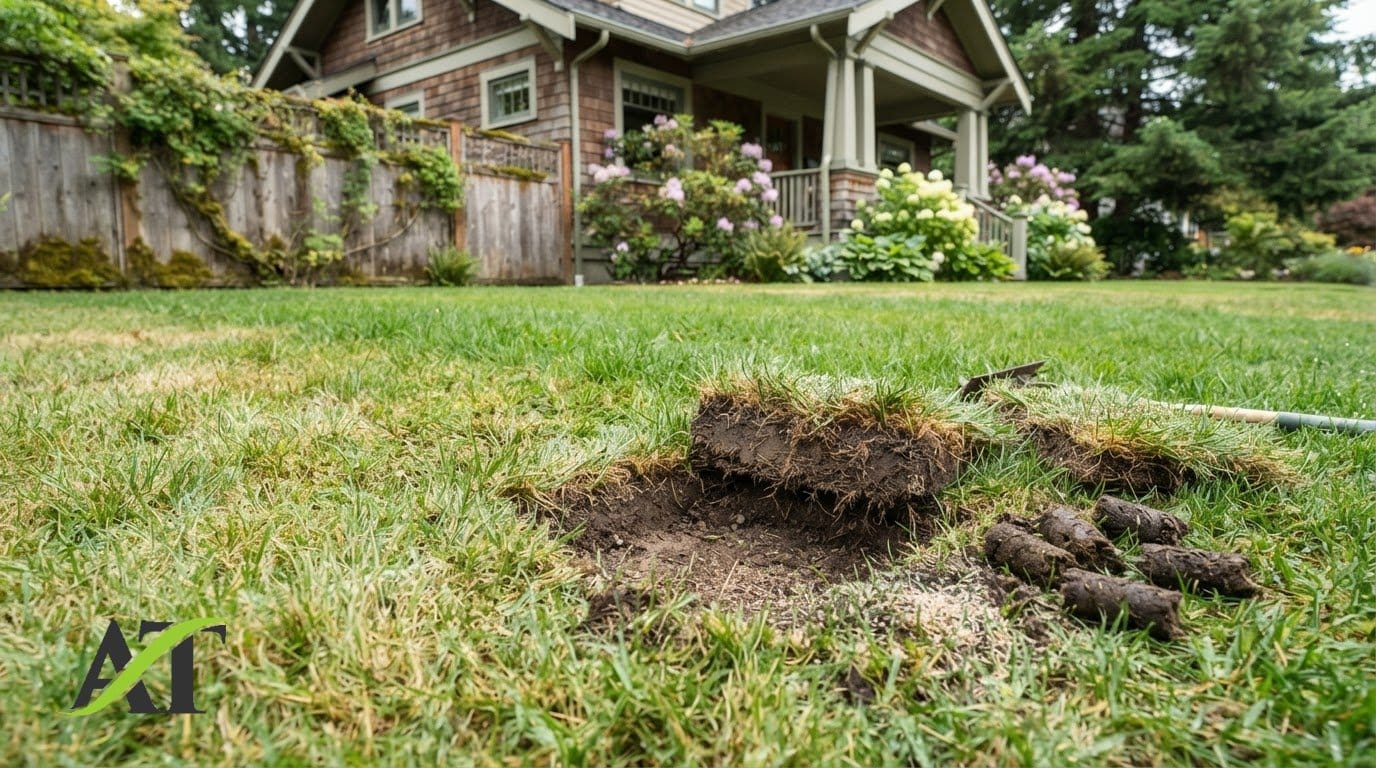
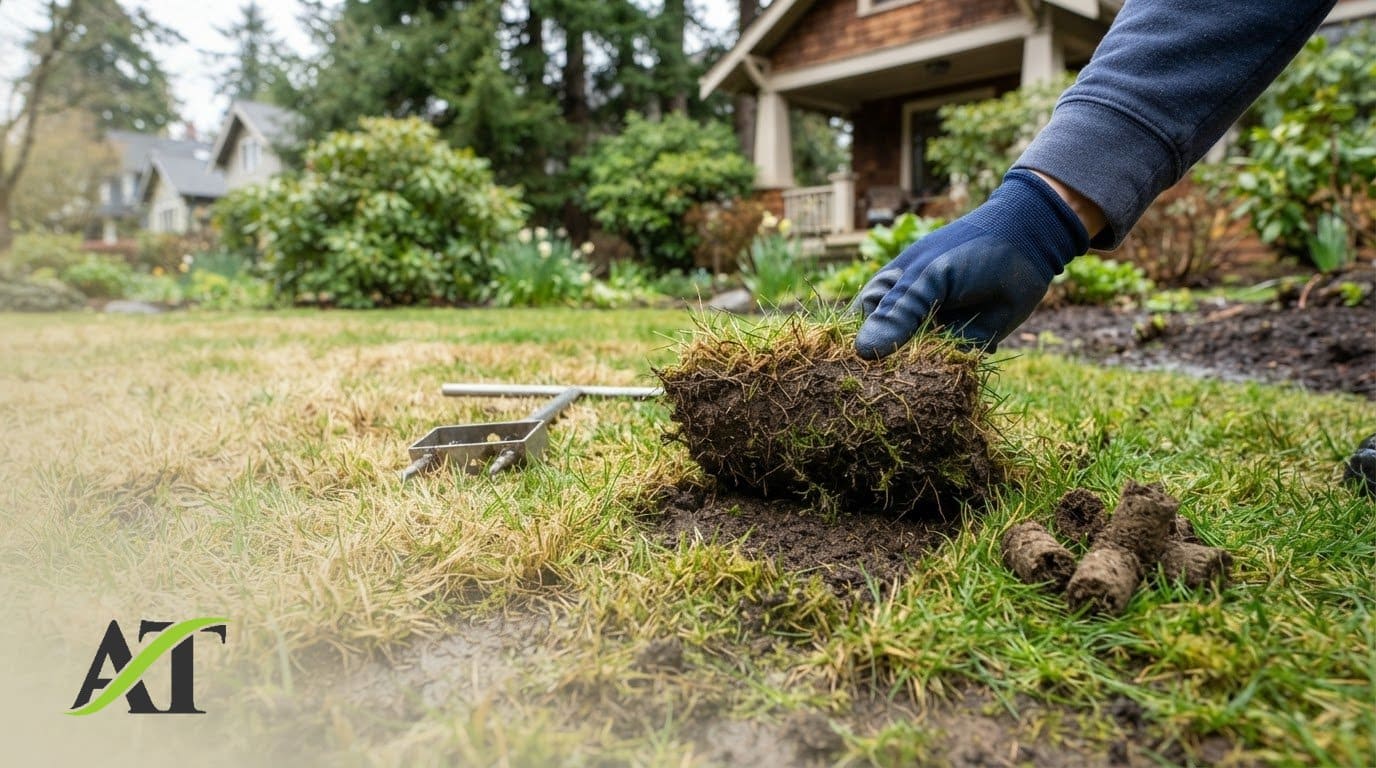
Thatch is a layer of organic material; compaction is soil pressed tightly together. If you gently part the grass, a visible, springy layer above the soil may suggest thatch, while firm soil may warrant checking for compaction. Neither appearance confirms the full diagnosis. Managing lawn thatch and compaction requires distinguishing the two before choosing a treatment.
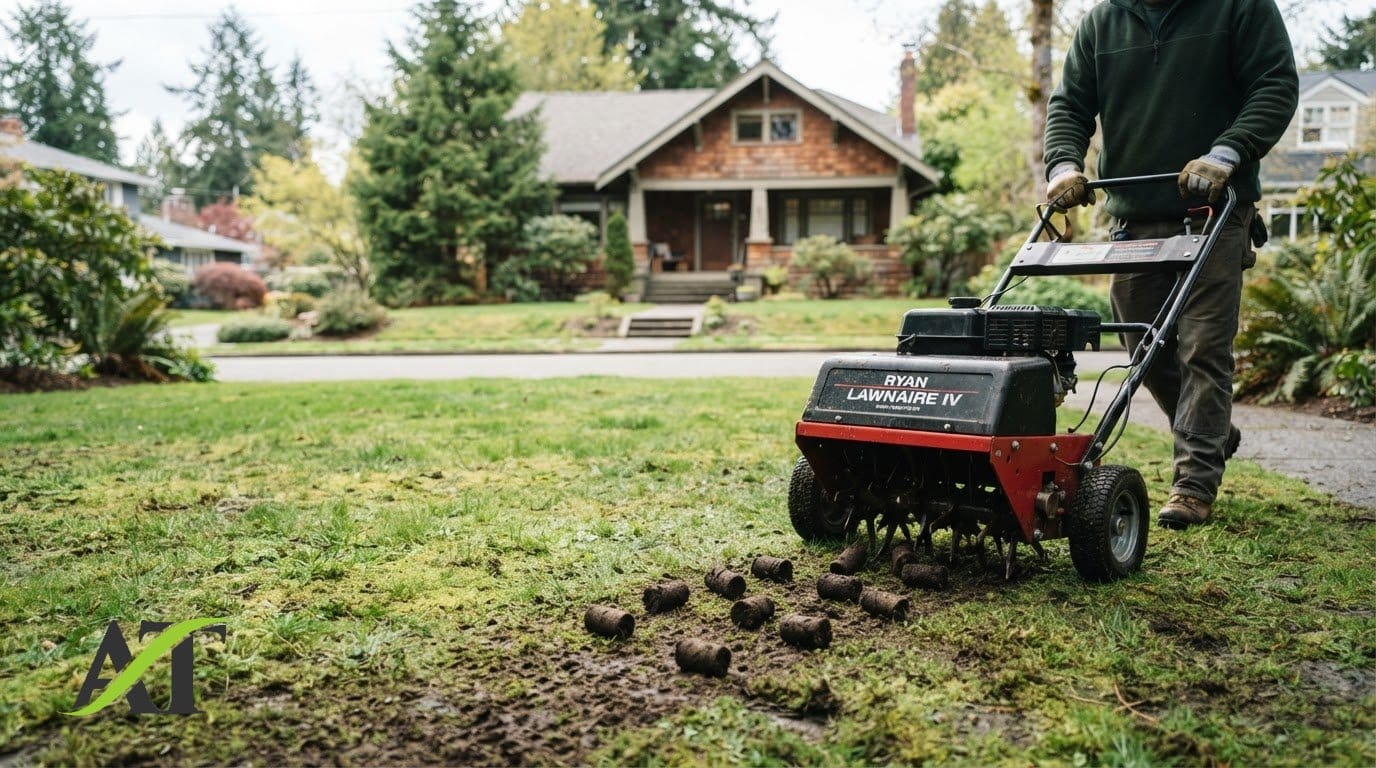
Core Aeration works in the shallow turf root zone; it does not break deep glacial hardpan. It may address shallow compaction, but not every soil limitation. For context on dethatching, see Power Raking (Dethatching).
When might shade or drainage need further diagnosis?
Investigate further if an area stays wet, water runs across the lawn, persistent shade coincides with weak growth, or the same section struggles despite other grass recovering. Core Aeration cannot repair a subsurface drainage defect. It also cannot break deep glacial hardpan. If you’re unsure what the pattern suggests, ask Stewart about your lawn before selecting a restoration treatment.
A practical sequence for helping a Green Lake lawn recover
A practical approach to improving lawn health after winter Green Lake homeowners can follow is to make one decision at a time. Separate observation and basic care from mechanical work. That keeps a treatment from becoming a guess.
- Check for active growth. Compare thin areas with healthier grass nearby and note whether new growth is filling in.
- Look for patterns. Record shade, recurring moisture, and repeated foot traffic. A pattern can help narrow down what needs attention.
- Reduce avoidable stress. Keep off saturated ground and avoid disturbing turf just to see what happens.
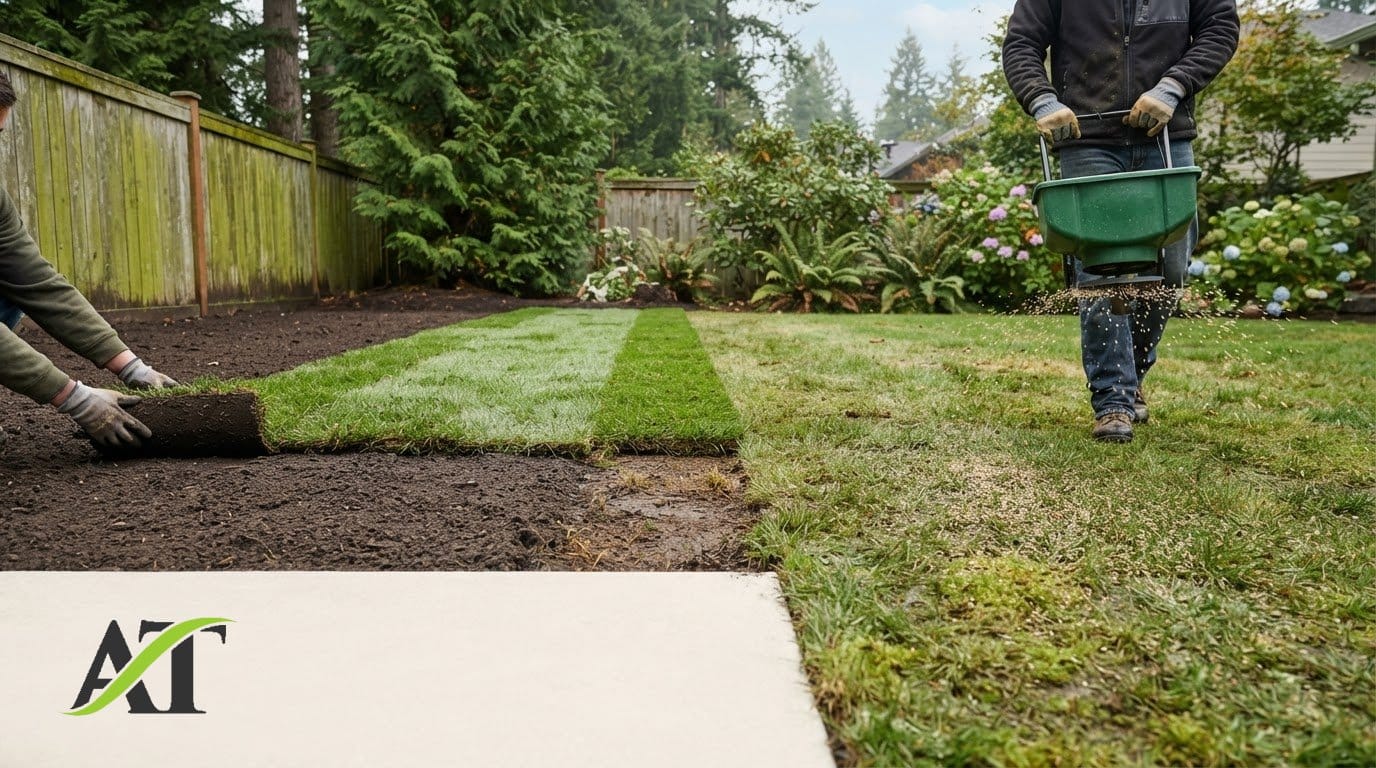
- Choose a response. If turf stays thin and conditions are suitable, Overseeding may be an option. If a site condition appears to be driving the problem, investigate that first.
What can homeowners do before choosing a treatment?
Keep notes or take photos from the same spots as the lawn grows. This can show whether weak areas are improving or remain tied to shade, moisture, or traffic. Don’t treat one symptom in isolation, and don’t work soft, saturated ground. If mechanical work or Overseeding is selected, follow the Seattle lawn after-care guide for practical follow-through.
When does a lawn need Overseeding or further assessment?
Overseeding can be considered where turf remains thin, but establishment depends on suitable soil conditions, seed-to-soil contact, moisture, weather, and aftercare. For the Premium 60/40 Sun & Shade Mix, Aerating Thatching Co. prefers soil temperatures around 55-75°F (13-24°C) as a practical window for its Seattle-area service. That’s a preference, not a strict cutoff, universal optimum, or germination guarantee; other seed types may differ.
If recurring damage, shade, or drainage seems to be the main issue, more seed may not address the cause. Get the underlying condition assessed before choosing mechanical restoration.
Choosing lawn restoration help in Green Lake without over-treating
The right next step depends on what you found, not on how many treatments can be applied. If grass is filling in and there’s no recurring problem, continued observation may be enough. If turf remains thin, targeted restoration may help. If the main clues point to persistent wetness, shade, or another site condition, investigate that cause before selecting lawn work. Improving lawn health after winter Green Lake starts with choosing the response that fits the symptoms.
Which restoration option matches the problem?
A Lawn Tune-Up consists of Core Aeration, Overseeding, and Fertilizing. It may suit a lawn that needs those treatments, but it isn’t a fix for every cause of weak turf. Review the Seattle Lawn Tune-Up details to see what the service includes.
The Full Meal Deal includes Power Raking (Dethatching), Core Aeration, Overseeding, and Fertilizing. Its added Power Raking (Dethatching) makes it relevant when thatch is identified as part of the problem, not simply because the lawn looks rough. If symptoms suggest a drainage defect, deep hardpan, or persistent shade, these treatments may not address the underlying issue. Further diagnosis is the more useful next step.
What should homeowners expect after lawn work?
Plan to follow the relevant aftercare instructions and give treated areas appropriate care. Seed establishment can vary, so avoid expecting a fixed recovery timeline or assuming an early appearance tells the whole story. Watch how the lawn responds and note any areas that remain weak. That information can guide later decisions without adding treatments unnecessarily.
Share what you’re seeing, where it occurs, and whether it persists as growth resumes. Stewart can help you consider suitable next steps for your lawn.
Ask Stewart About Your Lawn
Give your lawn a clear next step
Let the lawn’s response guide what happens next. Keep a simple record of areas that remain thin or show recurring symptoms, then compare them as growth continues. That gives you a clearer basis for deciding whether to keep observing, seek further diagnosis, or consider restoration. A measured approach to improving lawn health after winter Green Lake homeowners can use means treating the cause, not just reacting to the appearance.
Aerating Thatching Co. is an owner-operated local business established in 2004. Its lawn restoration services include Core Aeration, Overseeding, and Fertilizing. The right combination depends on what your lawn needs, and not every property calls for every treatment. Start with the symptoms you’ve observed and the areas where they persist.
A careful assessment is a solid first step toward a healthier lawn. Take it one decision at a time.
Frequently Asked Questions
Can a Green Lake lawn recover on its own after winter?
Sometimes. A lawn with limited winter wear may fill in as active growth resumes, so observe whether thin areas are changing before choosing restoration. Compare a weak patch with nearby turf and note whether bare ground expands, standing water remains, or new growth fills gaps. A measured approach to improving lawn health after winter Green Lake begins with that comparison.
How can I tell whether moss means my lawn needs dethatching?
Moss alone isn’t a reliable reason to choose Power Raking (Dethatching). Note whether it returns in the same place and what conditions surround it, such as persistent shade or dampness. If moss keeps returning, look for evidence of thatch rather than assuming it’s the cause. Identifying the conditions around the affected area can help avoid repeating a treatment that doesn’t address the problem.
When is the right time to overseed a lawn in Seattle?
For the Premium 60/40 Sun & Shade Mix, the practical service preference is soil temperatures around 55-75°F (13-24°C). Check soil temperature rather than relying on a warm afternoon. Before planning Overseeding, consider whether seed can make contact with soil and whether you can provide appropriate aftercare. Weather and site conditions can affect establishment, so the temperature range alone can’t predict the outcome.
Will core aeration fix standing water or deep hardpan?
No. Core Aeration isn’t a fix for deep hardpan or a subsurface drainage defect. If pooling repeatedly occurs in the same area, note where it collects and whether water also runs across nearby turf. That pattern can help identify when the problem needs further diagnosis instead of another treatment aimed at the lawn surface.
Should I power rake my lawn every spring?
No. Choose Power Raking (Dethatching) based on whether thatch is actually part of the problem, not simply because spring has arrived or moss is visible. Check the affected areas and consider whether symptoms point elsewhere. If the cause is uncertain, pause before scheduling mechanical work. A treatment tied to a specific need is a better starting point than an automatic annual routine.
Article by
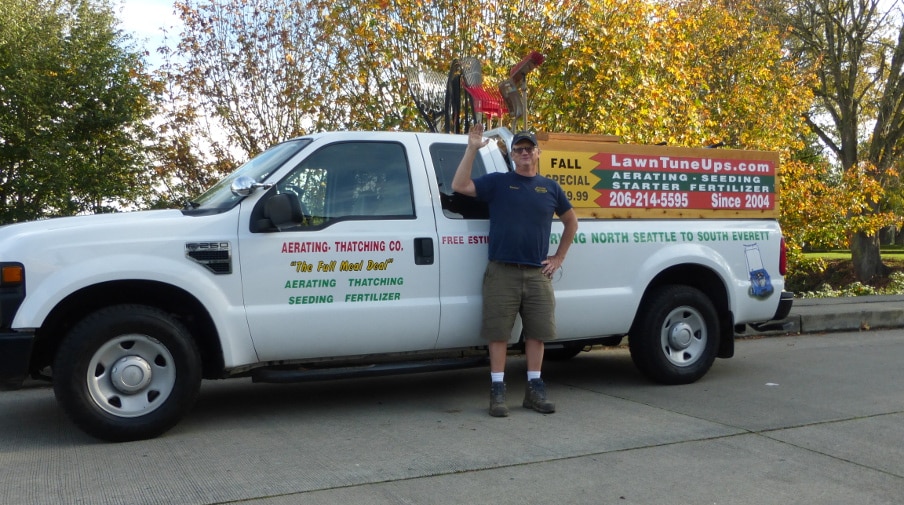
Stewart Armour
Stewart Armour is the owner of Aerating Thatching Co., an owner-operated Seattle-area lawn restoration business established in 2004. He helps homeowners understand Core Aeration, Power Raking (Dethatching), Overseeding, soil conditions, and the aftercare needed for stronger lawns. His background includes turf management study, advanced golf course turf training, and continuing education through Wilbur-Ellis University, State Turf Facilities, Soil First Academy, and Golf Course Applied Turf Physiology. Stewart has personally evaluated thousands of residential lawns throughout the Seattle area and focuses on recommending the work that fits each lawn’s condition.