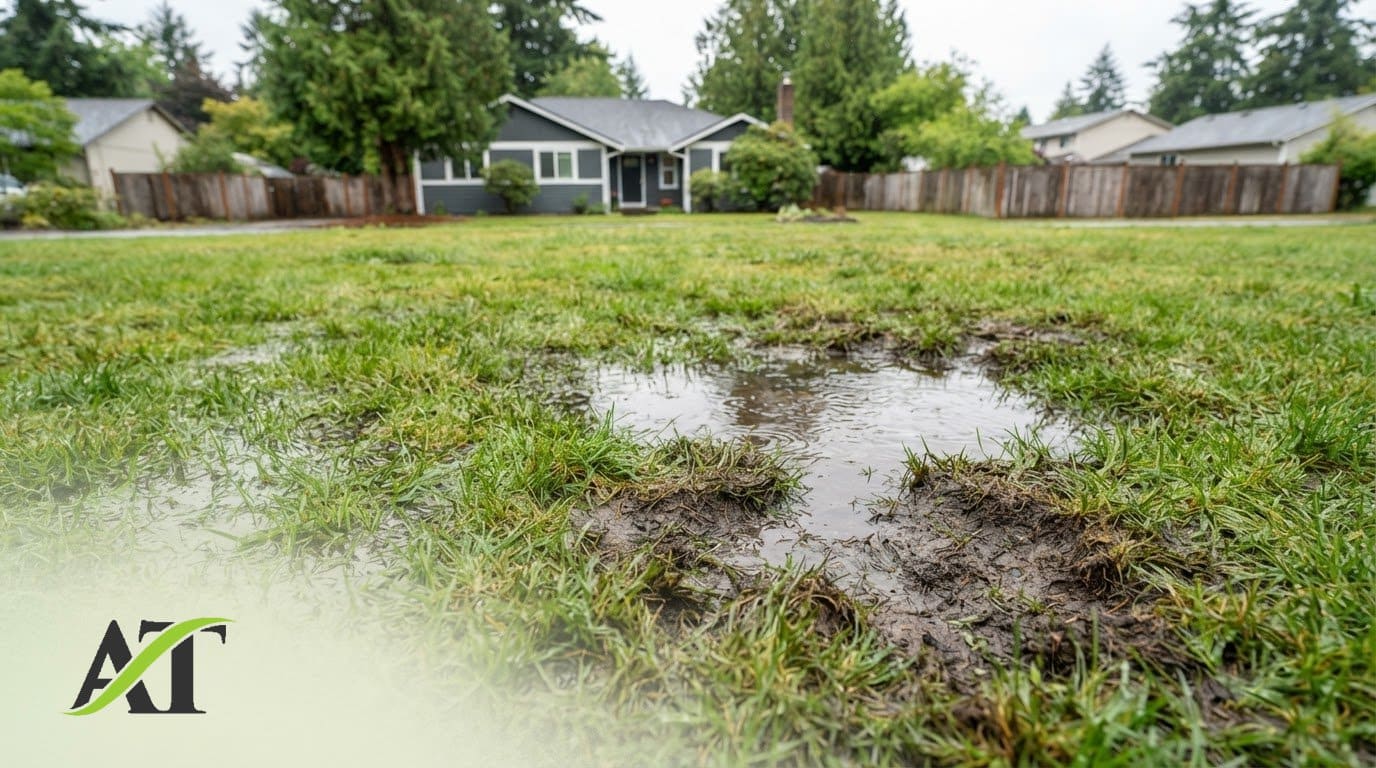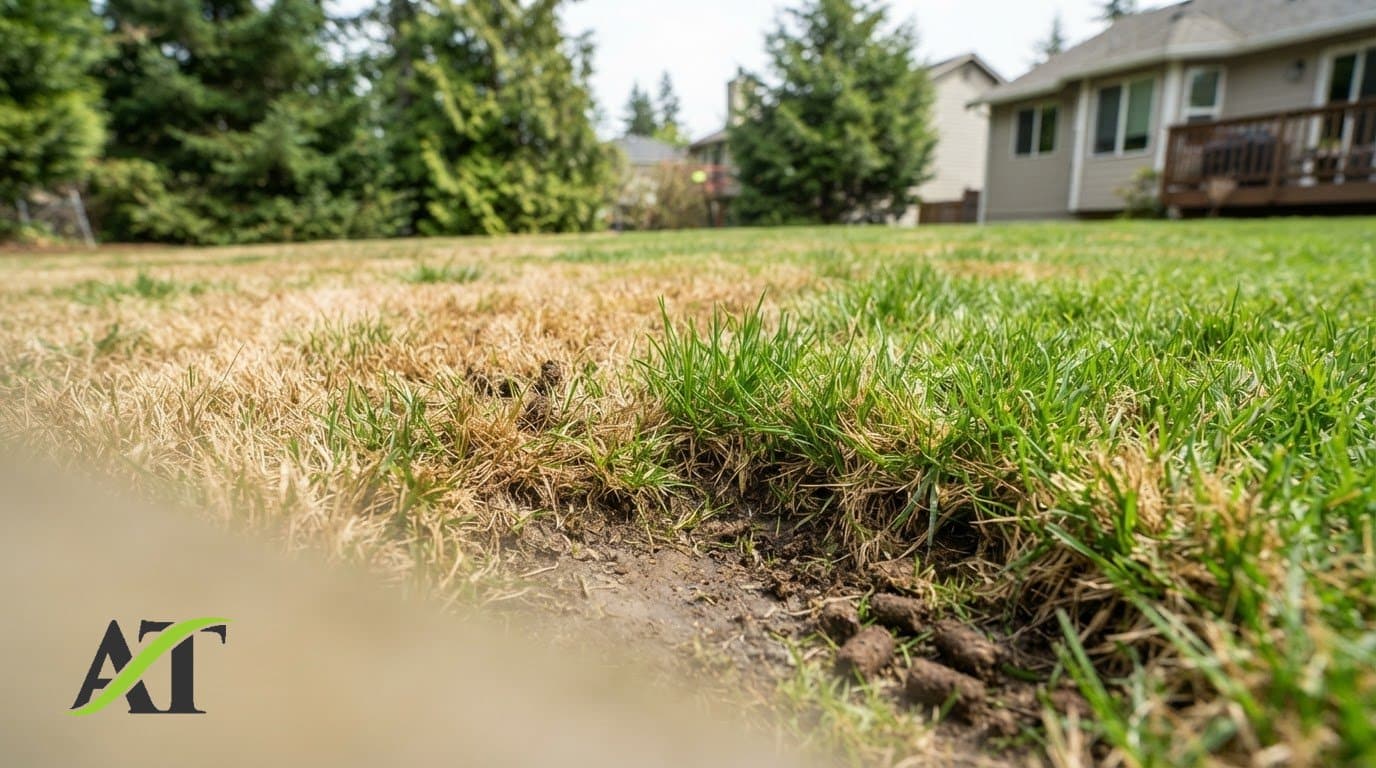
What if the brown grass in your Everett yard isn’t dead? Drought recovery for lawns in Everett starts with checking whether the grass is dormant or has been lost. Turf can turn brown to conserve energy during dry conditions, then begin growing again when moisture returns.
It’s understandable to worry that bare or thinning areas need immediate repair. But watering, Overseeding, or Core Aeration before you know what’s causing the damage can waste effort. Look for living grass plants and watch for new growth as conditions improve. If you’re unsure, compare the affected area with nearby turf and check whether the grass remains rooted in the soil.
This guide explains how to distinguish temporary drought stress from lasting turf loss, what to do as moisture returns, and when targeted restoration may make sense. The right next step depends on what’s actually happening in your lawn.
Key Takeaways
- Start drought recovery by matching your response to the problem, not just the lawn’s color.
- Core Aeration addresses compaction in the shallow turf root zone, but it won’t correct every cause of poor growth.
- Observe moisture and turf condition before deciding whether to wait, Overseed, or choose other restoration work.
- A Lawn Tune-Up includes Core Aeration, Overseeding, and Fertilizing. The Full Meal Deal also includes Power Raking (Dethatching).
Drought Recovery for Everett Lawns: Is Brown Grass Dormant or Damaged?
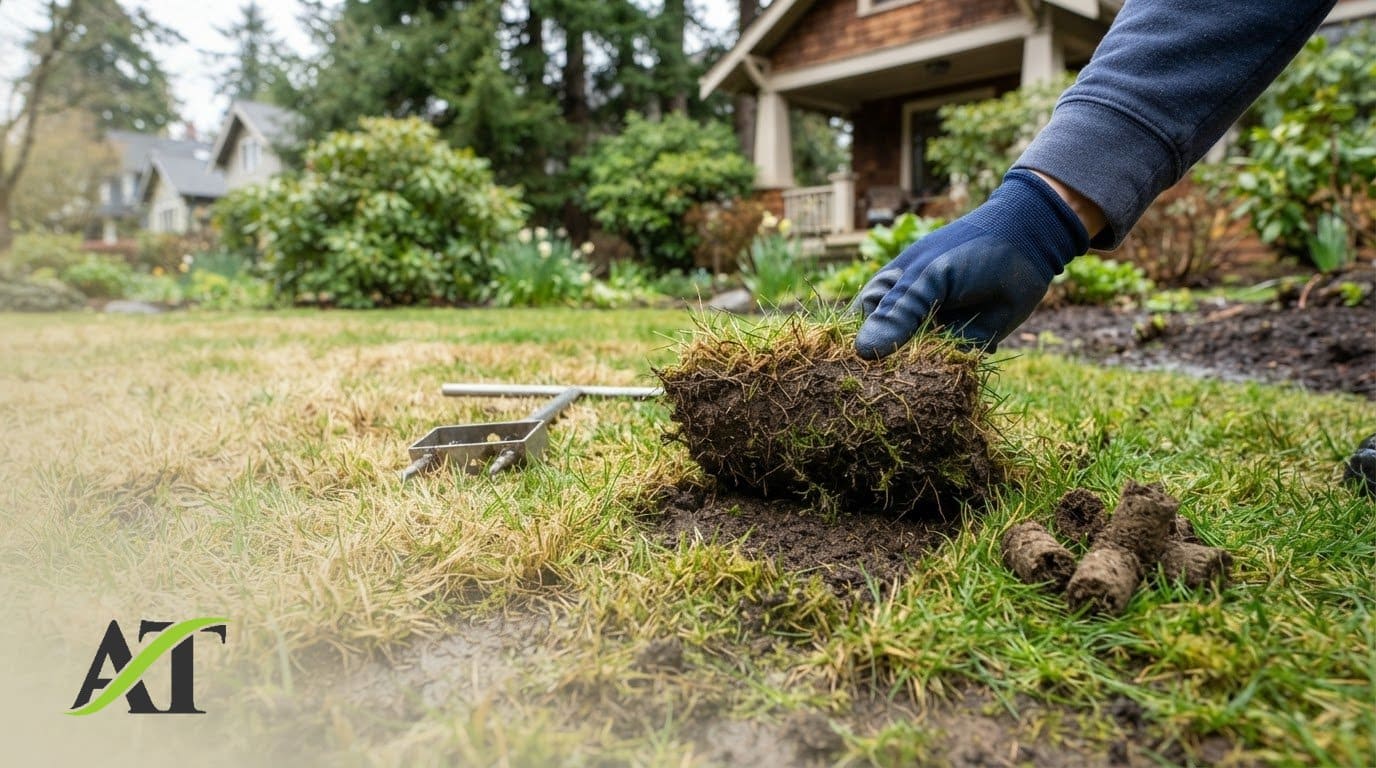
Brown turf can look alarming, but color alone doesn’t tell you whether the grass is dead. Drought reduces available moisture, and the effects of drought can include slower growth and blades losing their green color. A broadly even change, with turf still covering the soil, may point to dormancy. Persistent bare spots or sharply patchy areas deserve a closer look, but neither pattern proves the cause on its own.
What visible signs can help distinguish dormancy from lasting damage?
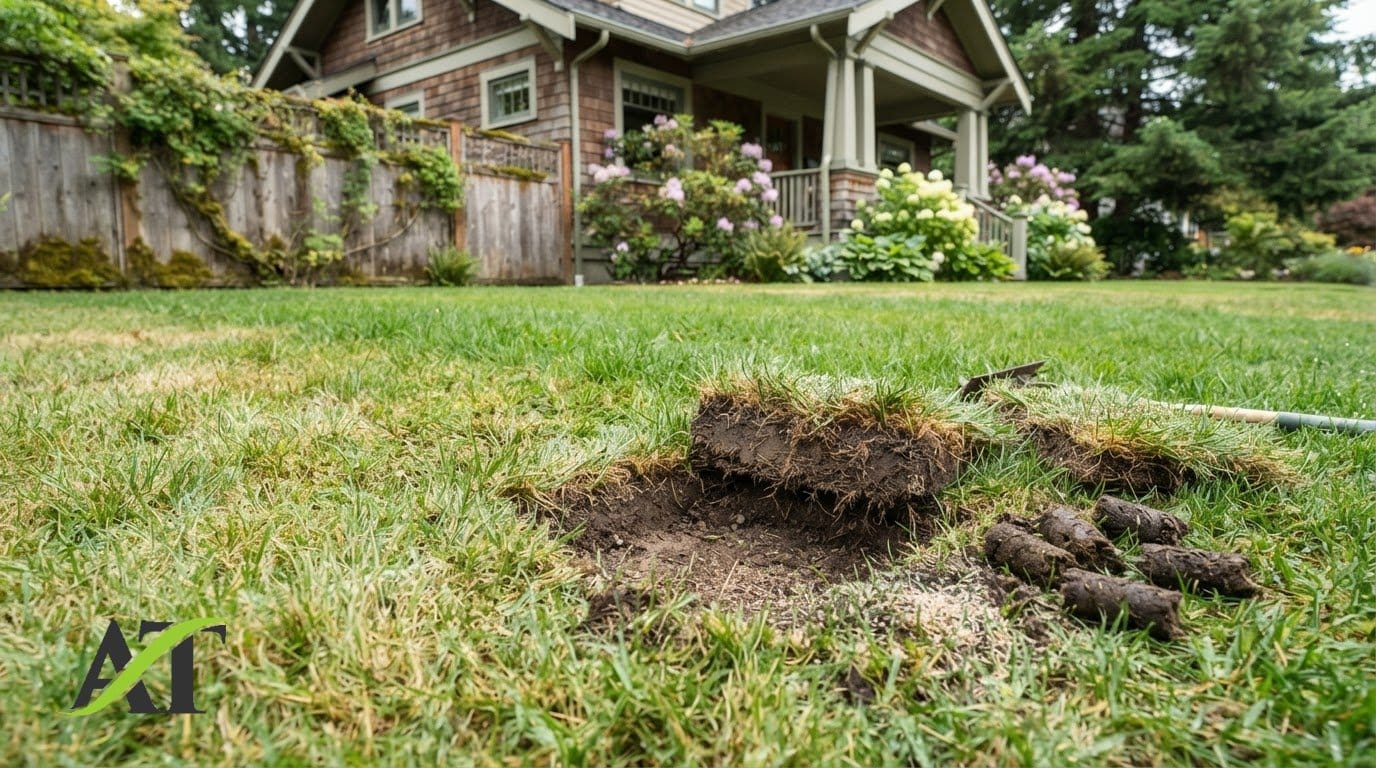
Look beyond color. Is grass still present across the area, and does it remain anchored in the soil? As moisture returns, watch for renewed growth rather than expecting every section to green up at once. Exposed soil, thinning that persists, or areas with no new growth call for closer assessment. These clues help guide your next step, but no single visual sign confirms whether drought caused lasting damage.
Why should Everett homeowners assess before treating?
Dry conditions may be part of the problem, but similar symptoms can have different causes. Shade can limit growth. Compaction can restrict air and water movement through the shallow root zone. Excess thatch can interfere with water reaching the soil, while drainage trouble may leave some areas too wet. Each condition calls for a different response, so treating before identifying the likely cause can waste time and effort.
Give the lawn time to respond as moisture returns. Note which areas resume growth and which remain thin or bare, and avoid aggressive renovation based only on brown color. Temporary dormancy leaves living turf that can resume growth; lasting turf loss leaves areas that remain bare or thin. If the pattern persists or the cause is unclear, further assessment can help match restoration to the problem.
How Drought Stresses Everett Turf, and What Core Aeration Can Actually Do
Drought stress begins when the soil can’t supply enough moisture for grass to maintain active growth. Turf may lose color or thin, but those symptoms don’t identify the cause beneath the surface. The soil may be dry or compacted, the area may be shaded, thatch may be excessive, or drainage may be a problem. Effective drought recovery for lawns in Everett starts by identifying which condition is limiting growth.
How can compaction, thatch, shade, and drainage look similar?
These problems can all leave turf weak or uneven, but their clues differ. Compaction can make the shallow root zone dense and restrict air and water movement. Thatch is a layer of undecomposed stems and roots between green blades and soil; too much can interfere with water reaching the soil. Shade limits sunlight. Drainage problems may leave soil persistently wet, even when nearby areas are dry. If symptoms persist or the cause isn’t clear, assess the lawn before choosing a treatment.
When is Core Aeration relevant to recovery?
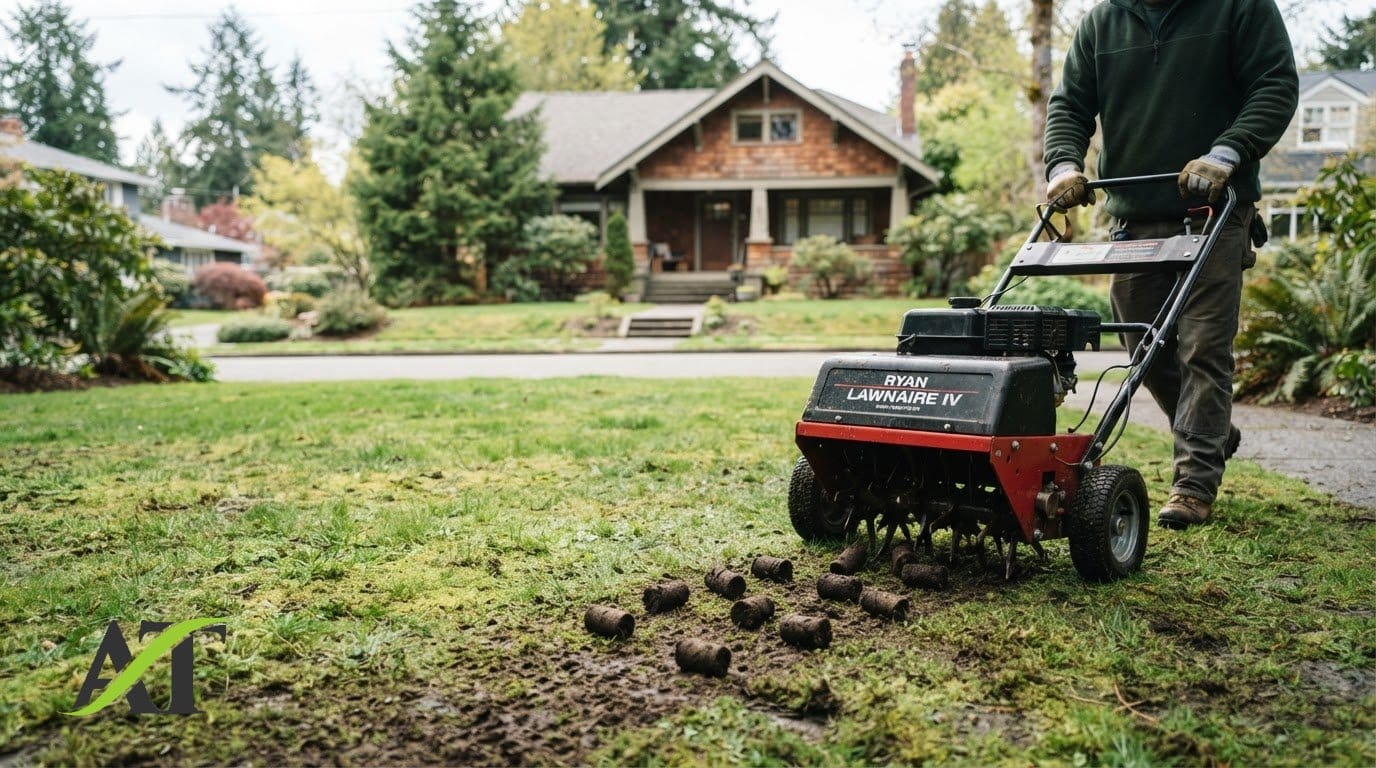
Core Aeration is relevant when compaction in the shallow turf root zone is part of the problem. It removes small soil cores to relieve compaction and help air and water move through that zone. It isn’t a universal drought cure. Core Aeration won’t break through deep glacial hardpan or repair a subsurface drainage defect. Those problems need further diagnosis rather than repeated aeration.
Similar brown patches can have different causes, and the right fix depends on what’s restricting healthy growth. If you’re unsure whether compaction is involved, Ask Stewart About Your Lawn to discuss a proportionate restoration approach.
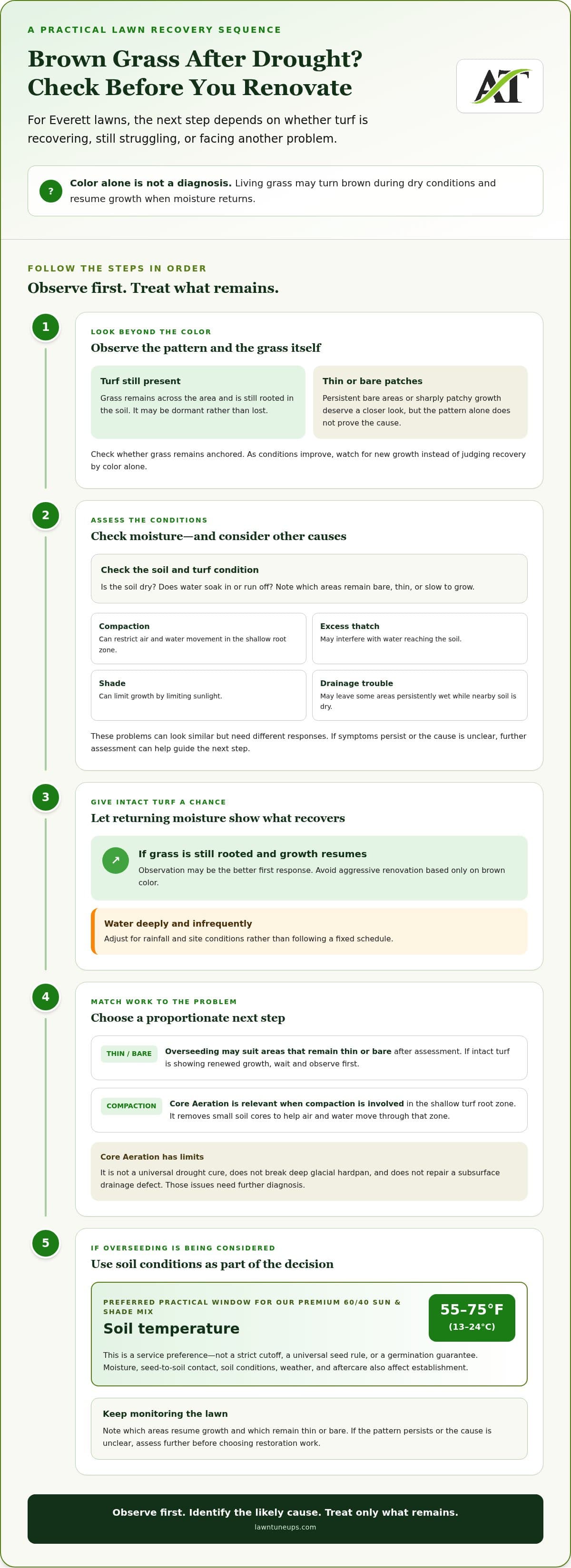
A Practical Recovery Sequence for Drought-Stressed Lawns in Everett
Take recovery one step at a time. A measured response helps you avoid treating grass that may rebound naturally or applying a treatment that doesn’t address the cause.
- Observe the pattern. Note which areas are uniformly discolored and which are thin or bare. Check whether grass remains rooted and whether new growth appears as conditions improve.
- Assess moisture and turf condition. Check whether the soil is dry and whether water soaks in or runs off. Look for persistent bare areas, and consider shade, compaction, thatch, or drainage as possible causes.
- Choose a proportionate response. If the turf remains intact, allow time for it to respond to returning moisture before renovating. Water deeply and infrequently rather than lightly and often. Adjust for rainfall and site conditions instead of following a fixed schedule.
When might overseeding make sense after drought?
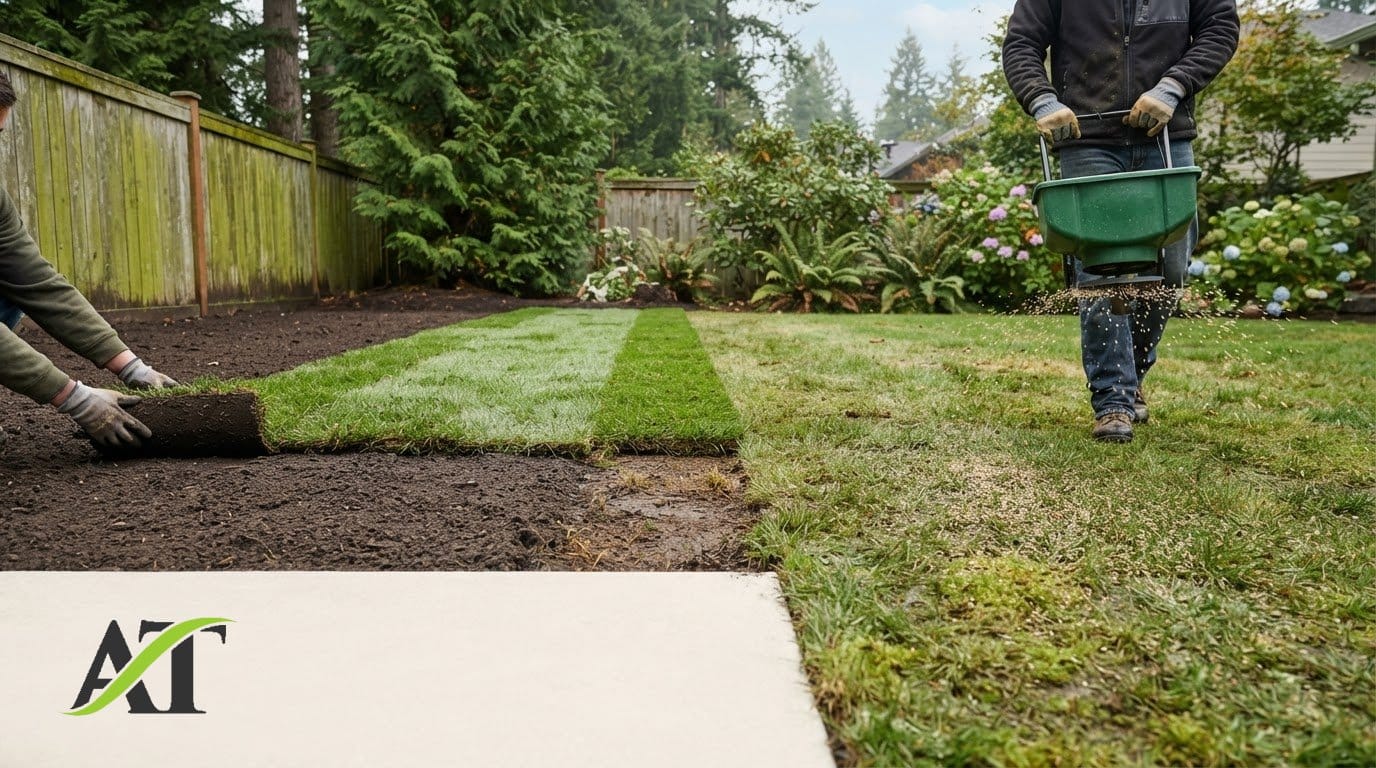
Overseeding may suit areas that remain thin or bare after assessment. If intact turf is showing renewed growth, observation may be the better first step. For our Premium 60/40 Sun & Shade Mix, we prefer soil temperatures around 55-75°F (13-24°C) as a practical window for our service. This is a preference, not a universal rule or a guarantee. Moisture, seed-to-soil contact, soil conditions, weather, and aftercare also affect establishment.
What should homeowners monitor while turf recovers?
Watch for renewed growth and note any patches that remain thin or bare. Don’t judge recovery by color alone, and don’t rush into reseeding while healthy turf may still fill in. Seasonal planning can help you choose a suitable time for follow-up work; the Seattle lawn-care calendar provides guidance for the year. The practical sequence is simple: observe first, then act on what remains.
Choosing Lawn Restoration for Remaining Drought Damage in Everett
A lawn that’s still rooted and beginning to grow as moisture returns may need observation, not restoration work. Wait to see which areas recover and which remain thin or bare. If damage persists, match the work to the condition you’ve identified rather than treating every brown lawn the same way. That’s a practical way to approach drought recovery for lawns in Everett without over-treating.
How do Lawn Tune-Up and Full Meal Deal differ?
A Lawn Tune-Up consists of Core Aeration, Overseeding, and Fertilizing. It may fit when the lawn’s assessed needs call for those three components. A Full Meal Deal includes Power Raking (Dethatching), Core Aeration, Overseeding, and Fertilizing. Power Raking (Dethatching) is the difference: it’s included in the Full Meal Deal, not the Lawn Tune-Up. Dethatching isn’t automatically needed just because a lawn experienced drought. The Seattle Lawn Tune-Up guide explains the service in more detail.
When does persistent damage call for a closer look?
Persistent bare areas, thinning that doesn’t improve, or symptoms that don’t fit simple drought dormancy are reasons to assess further before choosing a service. Core Aeration addresses compaction in the shallow turf root zone. It doesn’t break deep soil barriers or correct subsurface drainage defects. If water remains in one area or soil conditions seem to limit recovery, the cause needs diagnosis beyond aeration alone. Choose restoration based on what remains damaged.
For homeowners in Everett and nearby Snohomish, Lynnwood, Mill Creek, Mountlake Terrace, Brier, Edmonds, Shoreline, North Seattle, Lake Forest Park, Kenmore, Bothell, Woodway, Green Lake, Ballard, and Greenwood, Aerating Thatching Co. provides lawn restoration services, including the Lawn Tune-Up, Core Aeration, Overseeding, and Power Raking (Dethatching).
Give Your Lawn a Measured Next Step
Your lawn doesn’t need a rushed decision. Let its condition guide what happens next, and focus on addressing what remains damaged without disturbing turf that’s recovering. Use what you observe to decide whether to wait or consider targeted restoration, rather than treating the entire yard by default.
Aerating Thatching Co. is an owner-operated local business founded in 2004, offering lawn restoration services in Everett. A conversation about your lawn’s condition can help you consider a proportionate next step.
Whether your next step is continued observation or targeted work, you can move forward with a clearer plan for your yard.
Frequently Asked Questions
How much should I water a lawn recovering from drought?
Most lawns in Western Washington need about 1 inch of water per week during summer, including rainfall. Water deeply and infrequently rather than giving the lawn brief daily sprinkles. Early morning watering can help limit evaporation. Check rainfall and soil moisture before watering, and pause if water starts running off so it has time to soak in.
Can I mow a lawn while it is dormant from drought?
If the grass isn’t growing, mowing usually isn’t necessary. Limit foot traffic and avoid mowing dry, stressed turf, which can add strain. Wait for growth to resume and for the ground to be firm enough to avoid rutting. When mowing becomes necessary, use a higher setting of about 2-3 inches rather than cutting the grass very short.
Does every drought-damaged lawn need Overseeding?
No. If grass remains across the lawn and is filling in, give it a chance to recover before adding seed. Overseeding is more relevant where thin or bare areas persist. Seed needs contact with soil to establish, so scattering it over dense turf may not help. If a patch is caused by shade or drainage, seed alone won’t address that condition.
Can drought stress make weeds more noticeable in a lawn?
Yes. As turf thins, weeds may stand out against the remaining grass, and open soil can give unwanted plants room to grow. Check that a patch is actually a weed before disturbing it; recovering grass can look sparse or discolored. Notice where weeds recur and whether nearby turf is also thin. That pattern can help identify an underlying lawn condition that needs attention.
Ask Stewart About Your Lawn to discuss a measured next step for your lawn.
Article by
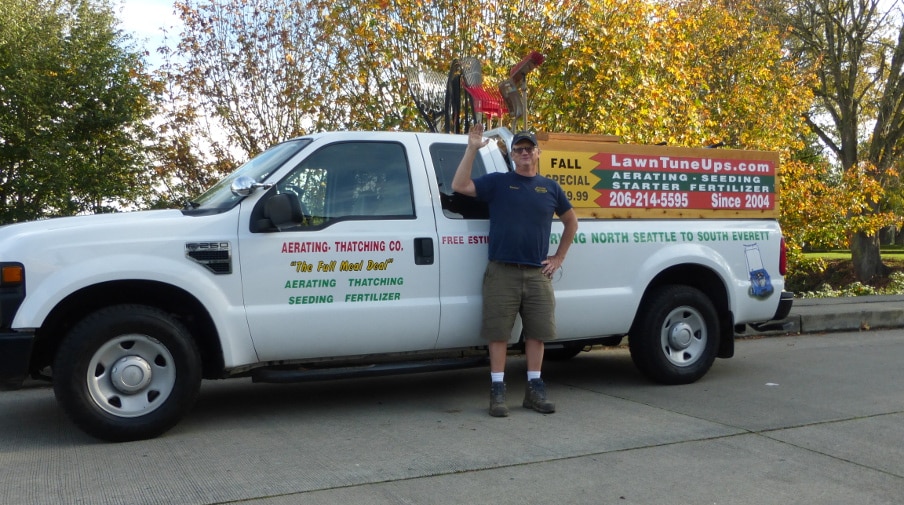
Stewart Armour
Stewart Armour is the owner of Aerating Thatching Co., an owner-operated Seattle-area lawn restoration business established in 2004. He helps homeowners understand Core Aeration, Power Raking (Dethatching), Overseeding, soil conditions, and the aftercare needed for stronger lawns. His background includes turf management study, advanced golf course turf training, and continuing education through Wilbur-Ellis University, State Turf Facilities, Soil First Academy, and Golf Course Applied Turf Physiology. Stewart has personally evaluated thousands of residential lawns throughout the Seattle area and focuses on recommending the work that fits each lawn’s condition.