Sod Installation Cost in Seattle: Before You Replace Your Lawn, See If It Can Be Saved
If your Seattle lawn is thin, compacted, mossy, patchy or simply tired, complete sod replacement may not be the only option. When usable grass remains, improving the existing lawn can often avoid the removal, disposal and replacement work involved in starting over.
What Does Sod Installation Really Cost in Seattle?
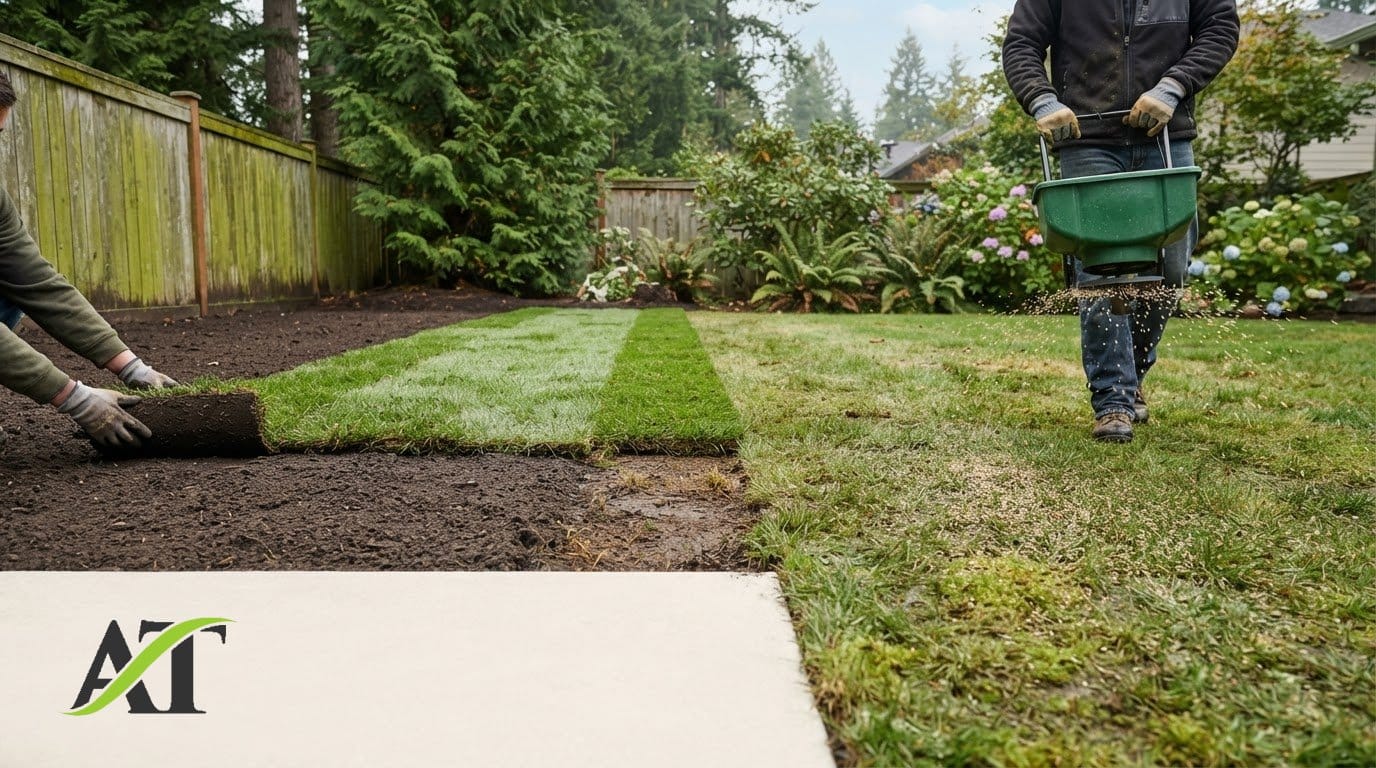
The true cost of installing sod depends on much more than the price of the sod itself. A complete project can involve removing and disposing of the old lawn, preparing or grading the site, addressing drainage concerns, bringing in materials, working around difficult access, installing the sod and keeping it properly watered while it establishes.
That is why the useful comparison is not simply “What does sod cost per square foot?” It is whether your lawn actually needs to be removed and replaced in the first place.
If usable turf remains throughout much of the lawn, professional renovation may allow you to work with what is already there instead of paying for a complete tear-out and replacement.
Can My Existing Seattle Lawn Be Saved?
Not every struggling lawn needs to be replaced. The first question is whether enough desirable grass remains to make renovation worthwhile.
Your Lawn May Be a Good Renovation Candidate If:
- Desirable grass still exists throughout much of the lawn.
- The lawn is thin rather than completely bare.
- Compacted soil is contributing to weak growth.
- Excessive thatch or surface buildup is interfering with the turf.
- Moss has moved into thin or weakened areas.
- Bare and sparse areas can be overseeded.
- You can provide consistent watering while new seed establishes.
Replacement May Make More Sense If:
- Very little usable turf remains.
- The property requires major grading or site reconstruction.
- The lawn area itself is being substantially redesigned.
- A completely finished lawn is needed immediately and establishment time is not practical.
- Other construction work already requires removal of the existing turf.
Lawn Renovation vs. Sod Replacement
Both approaches can have a place. The right choice depends on how much usable turf remains, what is causing the lawn to struggle and how quickly you need a finished appearance.
| Consideration | Lawn Renovation | Sod Replacement |
|---|---|---|
| Best for | Thin, tired, compacted or patchy lawns that still contain usable grass. | Lawns that are essentially gone, sites being rebuilt or situations needing immediate finished turf. |
| Existing lawn | Works with and rebuilds the turf already present. | Existing turf is typically removed before new sod is installed. |
| Compaction | Core aeration can directly address compacted lawn soil. | Compaction still needs proper site preparation before new turf goes down. |
| Establishment | New seed needs time to germinate, establish and fill into the existing lawn. | Provides an immediate green surface, but roots still need time and careful watering to establish. |
| Disruption | Usually avoids complete removal of the existing lawn. | Can involve removal, disposal, soil preparation, delivery and installation. |
| Immediate appearance | Improves over time as existing turf recovers and new grass establishes. | Creates an immediate finished appearance after installation. |
| Long-term consideration | The goal is to improve the existing growing environment while rebuilding turf density. | New sod still grows in the same shade, drainage, soil and site conditions once installed. |
Sod Doesn't Change the Site Conditions
A new lawn still has to grow in the same yard. Before replacing the turf, consider why the previous grass became thin or weak.
Compacted Soil
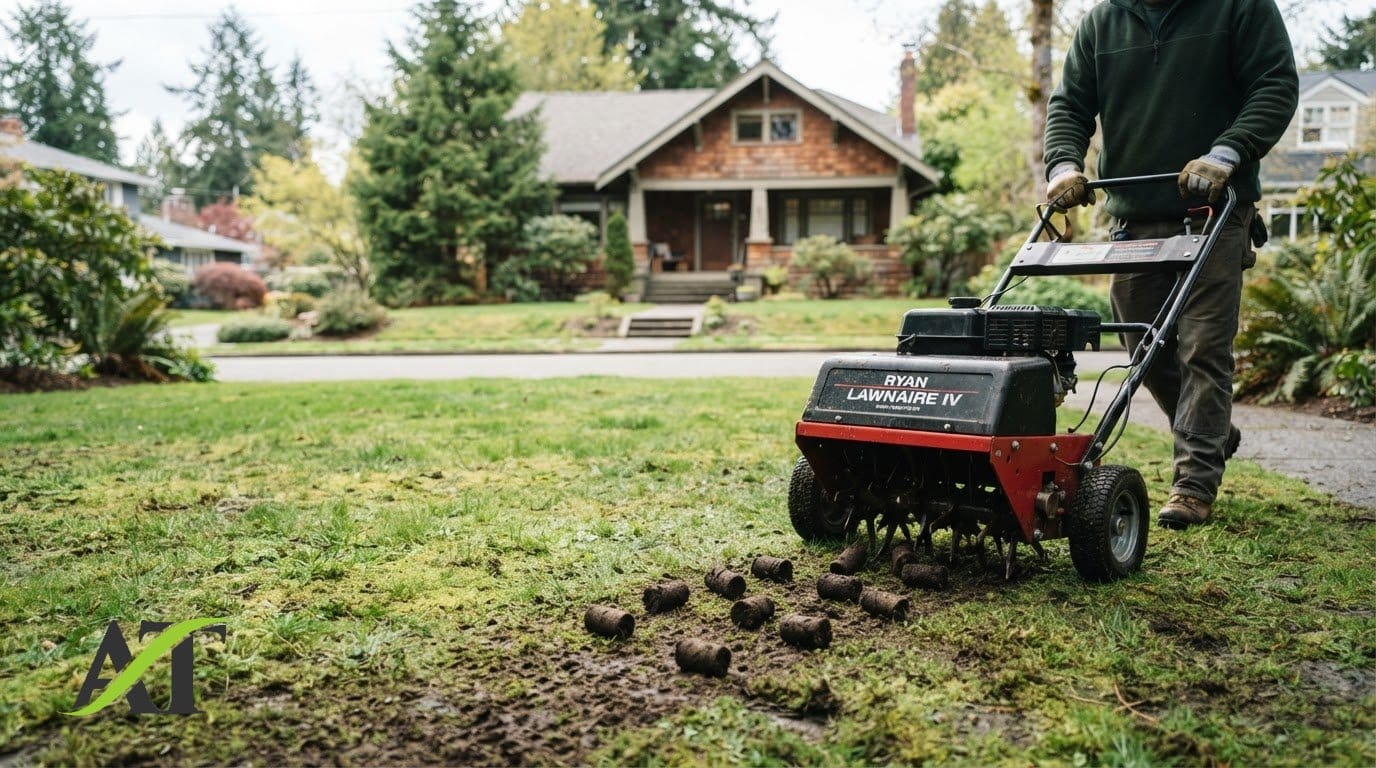
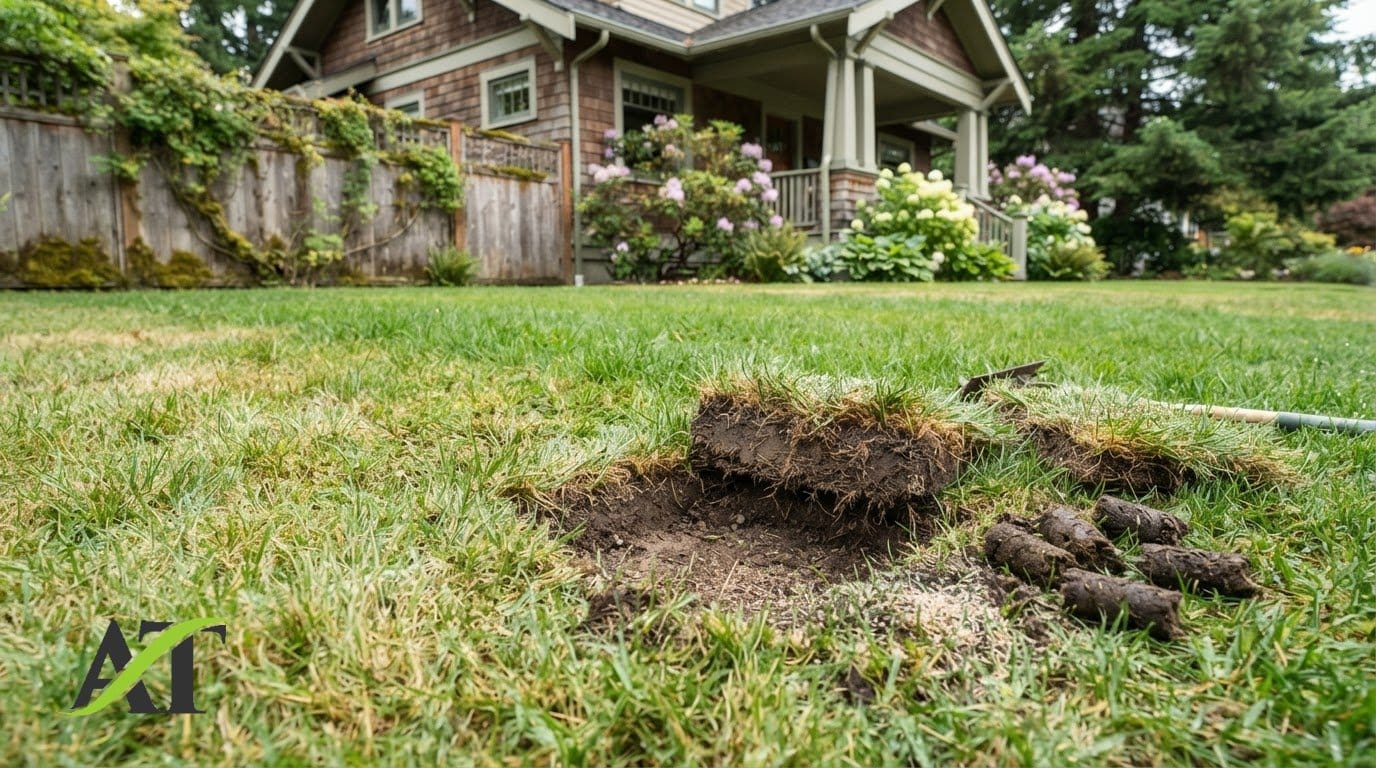
Hard, compacted soil can limit movement of air and water into the root zone. Core aeration is specifically intended to relieve compaction by removing small plugs of soil.
Shade
Installing new turf does not create additional sunlight. If grass has consistently thinned in a heavily shaded location, the amount and duration of usable light still matter after replacement.
Wet or Poorly Drained Areas
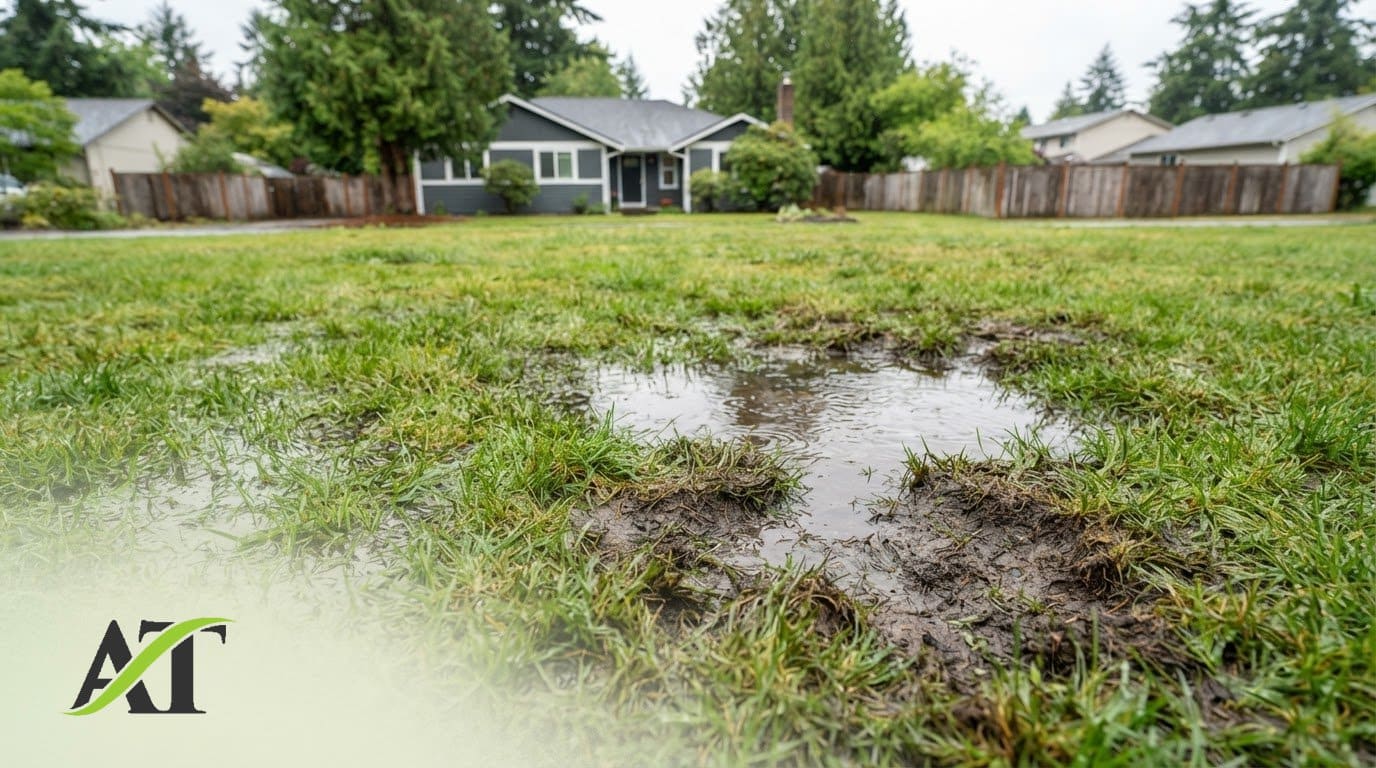
Compaction and true drainage problems are not the same thing. Aeration can help compacted lawn soil, but standing water, low spots, grading problems or significant drainage issues may need to be addressed separately.
Weak Growing Conditions
Irrigation coverage, traffic, seasonal stress, surface buildup and other site conditions can continue affecting a lawn regardless of whether the grass started as seed or sod.
What Actually Determines the Cost of Sod Installation?
Exact sod pricing varies too much by property and project scope for a generic price-per-square-foot figure to tell the whole story. These are the items homeowners should consider when comparing complete replacement with renovating usable existing turf.
- Existing lawn removal
- Debris hauling and disposal
- Site access
- Lawn size and layout
- Soil preparation
- Grading or leveling
- Drainage-related work
- Sod type and availability
- Delivery
- Installation labor
- Establishment watering
- Risk of replacing failed areas
Compare the Whole Project, Not Just the Sod
Renovating a recoverable lawn can avoid many of the removal, disposal, preparation, delivery and replacement steps associated with starting over. That does not mean renovation is automatically right for every lawn, but it is worth evaluating before committing to complete replacement.
When Sod May Be the Better Choice
Sod can make sense when you need an immediate finished lawn, when the existing turf is essentially gone, or when major grading, construction or site work already requires the lawn to be removed.
The point is not that sod is always a poor choice. It is that homeowners with a recoverable lawn should understand what can be improved before paying to remove turf that may still have useful grass worth rebuilding.
A Useful Decision Rule
Usable turf remains? Evaluate renovation first.
Lawn essentially gone or site being reconstructed? Replacement may be the more practical direction.
Rebuilding an Existing Seattle Lawn
Lawn renovation is not one single treatment. The work should match what the lawn actually needs rather than automatically applying every possible service.
Dethatching / Power Raking
Removes excessive thatch, moss and matted surface material when that buildup needs to be cleared before rebuilding the lawn.
Core Aeration
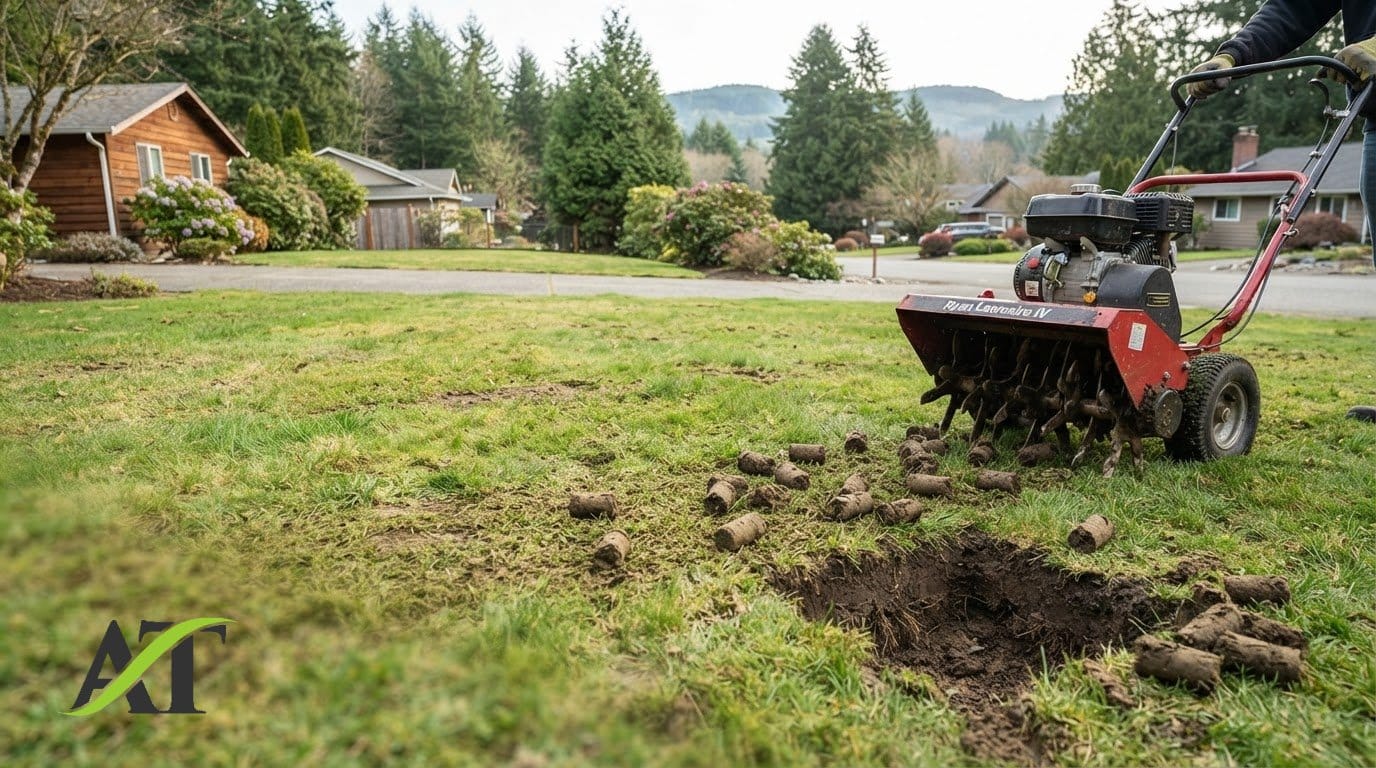
Removes small plugs of soil to relieve compaction and improve movement of air and water into the root zone.
Premium Overseeding
Introduces new grass into thin and bare areas so the lawn can rebuild density instead of relying only on the grass already present.
Starter Fertilizer
Supports new seedlings during establishment when applied as part of the overseeding process.
Additional lawn or soil improvements may be appropriate in some situations, but the goal is to use what fits the actual condition of the lawn rather than automatically adding unnecessary treatments.
Lawn Tune-Up vs. Full Meal Deal
The main difference is whether significant surface buildup needs to be removed before aeration and overseeding.
Lawn Tune-Up
Best for lawns that still have usable turf and need compaction relief plus help rebuilding grass density without aggressive surface removal first.
- Core Aeration
- Premium Overseeding
- Starter Fertilizer
Important: A Lawn Tune-Up does not include Dethatching (Power Raking).
Full Meal Deal Lawn Renovation
Best for lawns where excessive thatch, moss, matting or accumulated surface material needs to be removed before the lawn is rebuilt.
- Dethatching (Power Raking)
- Core Aeration
- Premium Overseeding
- Starter Fertilizer
The larger package is not automatically the better choice. It is intended for lawns that actually need the additional surface-removal step.
Best Time to Renovate a Seattle Lawn
Because renovation includes establishing new grass seed, timing matters. Late summer into early fall is a strong renovation window as extreme summer stress eases and lawns move toward fall growth.
Spring is another useful period when conditions provide enough time for new grass to establish before the driest part of summer.
Unlike sod, renovation does not create an instant finished lawn. Existing turf can improve while new seed germinates and fills in over time.
Renovation Is a Process, Not an Instant Lawn
Results depend on the lawn's starting condition, weather, watering, growing conditions and after-care. Some areas may establish faster than others, so exact timelines and final results should not be treated as guarantees.
Either Way, New Grass Needs Water
Whether new grass begins as seed or sod, establishment still requires attention.
After Overseeding
Newly seeded areas need appropriate, consistent moisture while germination and establishment are underway. Letting the surface repeatedly dry out can make establishment less successful.
After Sod Installation
Sod looks finished immediately, but the newly installed turf still needs careful watering while its roots begin establishing into the underlying soil.
Renovation customers can follow our Seattle Lawn After-Care Guide for watering, mowing and protecting newly seeded areas.
Replacing the Turf Does Not Automatically Remove the Cause
Moss
Moss commonly moves into lawn areas where grass is already struggling. Replacing the turf does not necessarily change the shade, moisture, compaction or other conditions that allowed moss to become established.
Weeds
Building denser turf can improve the overall lawn, but Aerating Thatching Co. does not provide weed removal or weed-control services. Existing weed problems should not be treated as something aeration, dethatching, overseeding or fertilizer automatically eliminates.
Wildlife & Grubs
If animals are tearing, rolling or digging up the lawn while searching for grubs, replacing the turf alone may not address what is attracting them.
Another Reason to Evaluate Renovation First
When an existing lawn is recoverable, renovation can avoid tearing out usable turf and reduce the amount of lawn material that has to be removed, hauled away and replaced. It is a secondary benefit, not a reason to renovate a lawn that truly needs complete replacement.
See What Lawn Renovation Can Do
Before deciding to remove an existing lawn, look at real examples of different levels of lawn improvement and renovation. Results vary by lawn, site conditions, season, watering and after-care.
Lawn Tune-Up Results
See examples of lawns improved with Core Aeration, Premium Overseeding and Starter Fertilizer.
Full Meal Deal Results
See more extensive lawn renovation examples that include Dethatching (Power Raking) before aeration, overseeding and fertilizer.
Before & After Videos
Browse video examples of Seattle-area lawn repairs, Tune-Ups and renovation projects.
Helpful Sod Resources
Some lawns really do need replacement. If your property falls into that category, these existing guides can help you think through timing and maintenance even though Aerating Thatching Co. does not install sod.
Seattle Sod vs. Lawn Renovation FAQ
Is renovating a lawn cheaper than installing sod?
It can be when enough usable turf remains because renovation may avoid many of the removal, disposal, grading, delivery and replacement steps involved with complete sod installation. The correct comparison is the entire project, not simply the material price of sod.
Can a badly damaged Seattle lawn be saved?
Some badly thinned lawns can still be good renovation candidates if desirable grass remains throughout the property and the underlying conditions can support recovery. If the lawn is essentially gone or major site work is required, replacement may make more sense.
When is sod actually the better choice?
Sod can be a practical choice when you need an immediate finished lawn, very little usable turf remains, or construction, grading or other site work already requires the existing lawn to be removed.
Does aeration help before overseeding?
Yes. Core Aeration removes small plugs of soil to relieve compaction and creates openings in the lawn surface. Aeration and overseeding are combined in the Lawn Tune-Up when a lawn needs both compaction relief and greater grass density.
What does dethatching do before lawn renovation?
Dethatching, also called Power Raking, mechanically removes excessive thatch, moss and matted surface material. It is useful when that buildup needs to be cleared before aeration and overseeding, but not every lawn needs it.
How long does a renovated lawn take to fill in?
Lawn renovation is not an instant-lawn process. New seed needs time to germinate and establish while existing turf recovers. The pace of improvement depends on temperature, moisture, existing lawn condition, site conditions and after-care, so an exact completion date cannot be promised for every lawn.
What time of year is best for lawn renovation in Seattle?
Late summer into early fall is a strong renovation window, and spring is another useful period depending on conditions. Because renovation includes overseeding, the best timing should provide suitable growing conditions and dependable watering during establishment.
Can a mossy Seattle lawn be renovated instead of replaced?
Often, yes, when useful grass remains. Moss removal may be part of the work, but it is also important to consider the conditions that allowed grass to weaken, such as shade, compaction, persistent moisture or thin turf. Simply replacing the lawn does not automatically change those conditions.
Before You Replace the Entire Lawn, Find Out What Is Still Worth Saving
If usable grass remains, it may be worth evaluating renovation before paying to remove and replace the entire lawn. If the lawn is essentially gone or major grading, drainage or site reconstruction is required, sod replacement may be the more appropriate path.
The goal is not to force every lawn into the same solution. It is to understand the condition of the lawn first and choose the level of work that actually fits.
See If Your Lawn Can Be Saved Before You Replace It
Tell Stewart what your lawn looks like now. If it is a reasonable candidate for renovation, Aerating Thatching Co. can help determine whether a Lawn Tune-Up, Full Meal Deal or another level of lawn improvement makes sense.