What’s Tearing Up My Seattle Lawn? Raccoons, Crows, Skunks & European Chafer Grubs
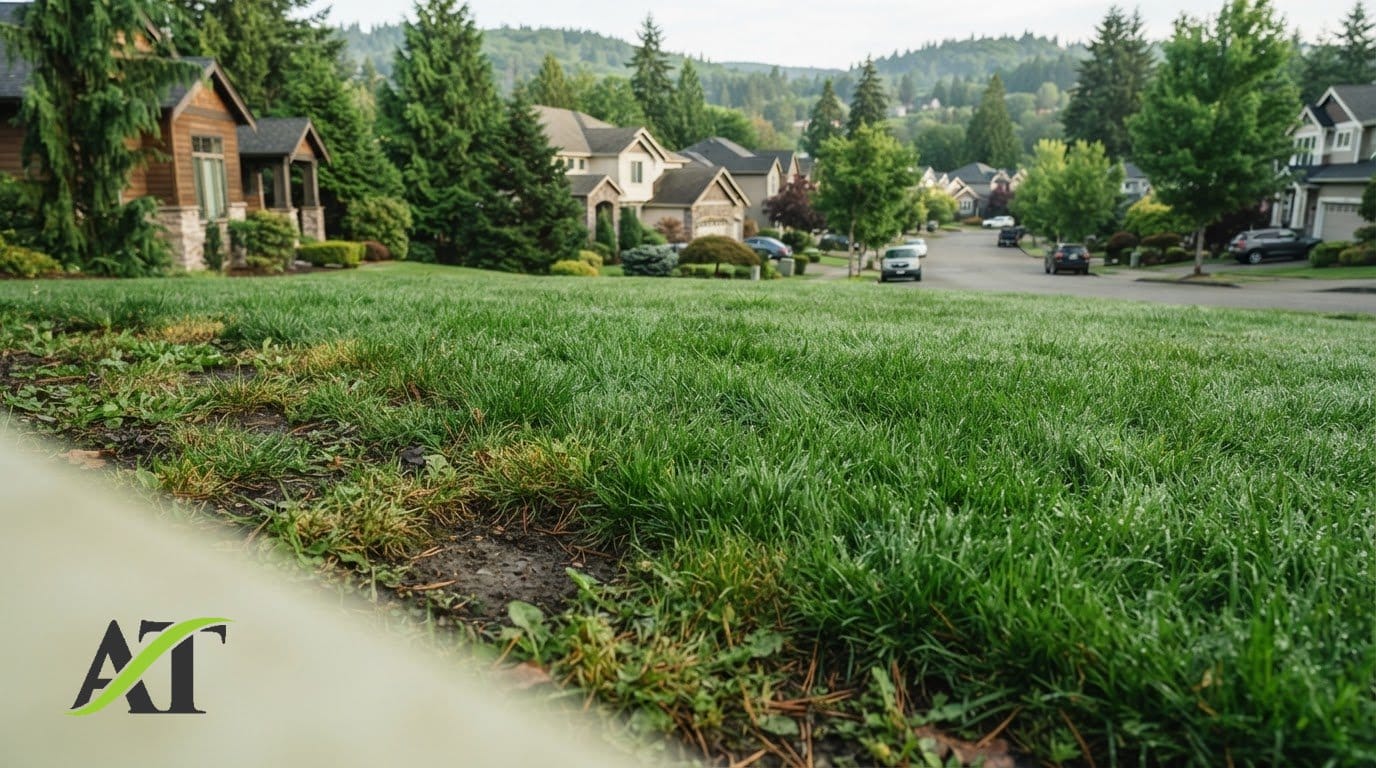
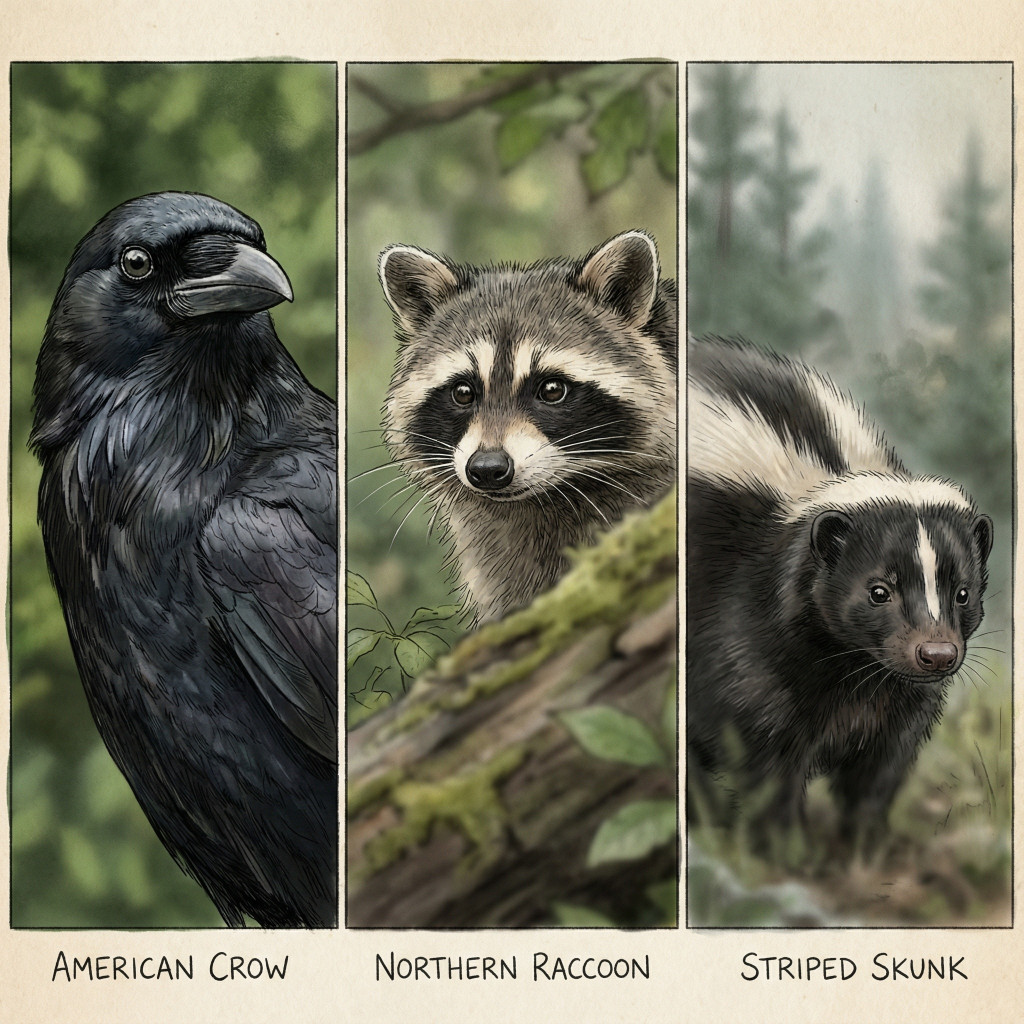
If patches of your lawn are suddenly peeled back, flipped over, pecked apart or dug up, the animal you see may be only part of the story. Raccoons, skunks and crows may be searching for food beneath the turf—and European chafer grubs are one possible food source.
What’s Tearing Up Your Lawn?
Different animals tend to leave different clues. These patterns can help narrow down the visitor, but they do not identify what the animal is eating. You still need to inspect beneath the lawn before deciding that European chafer grubs are responsible.
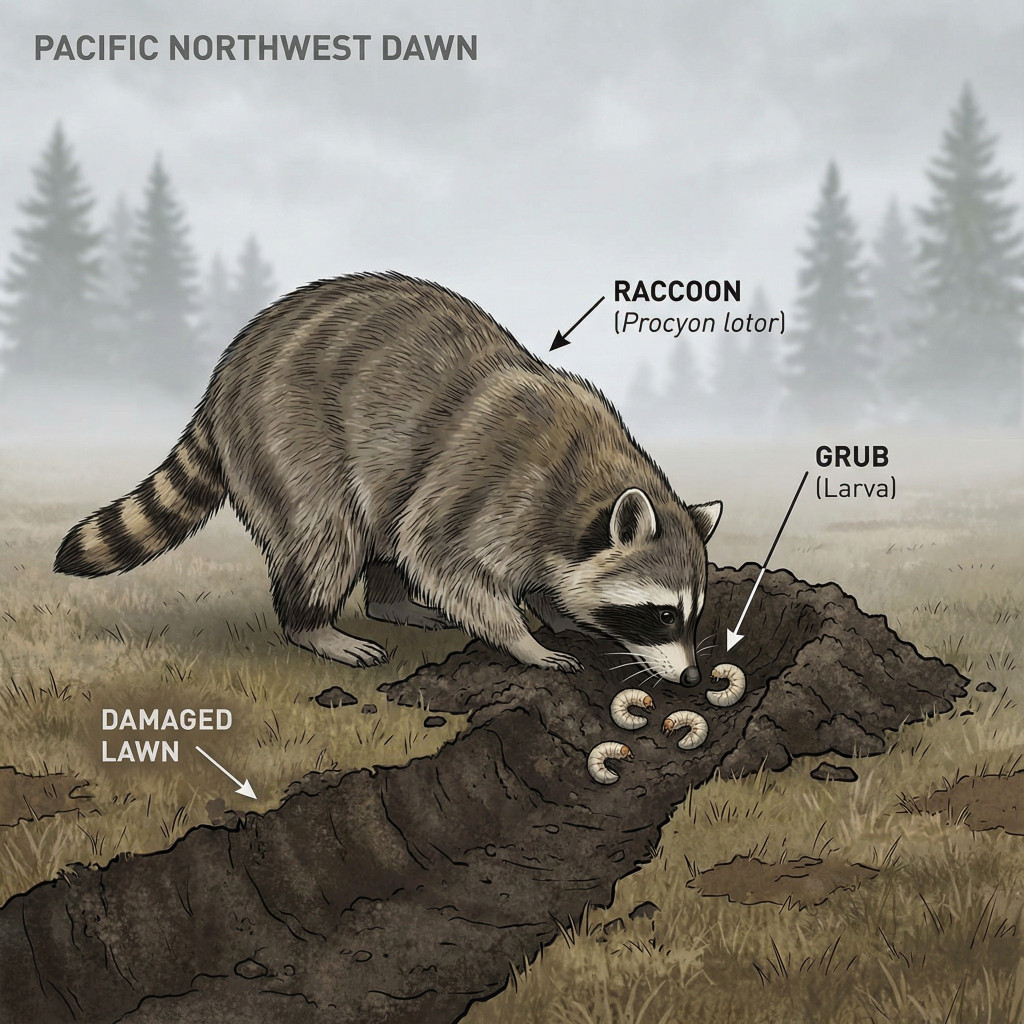
Raccoons
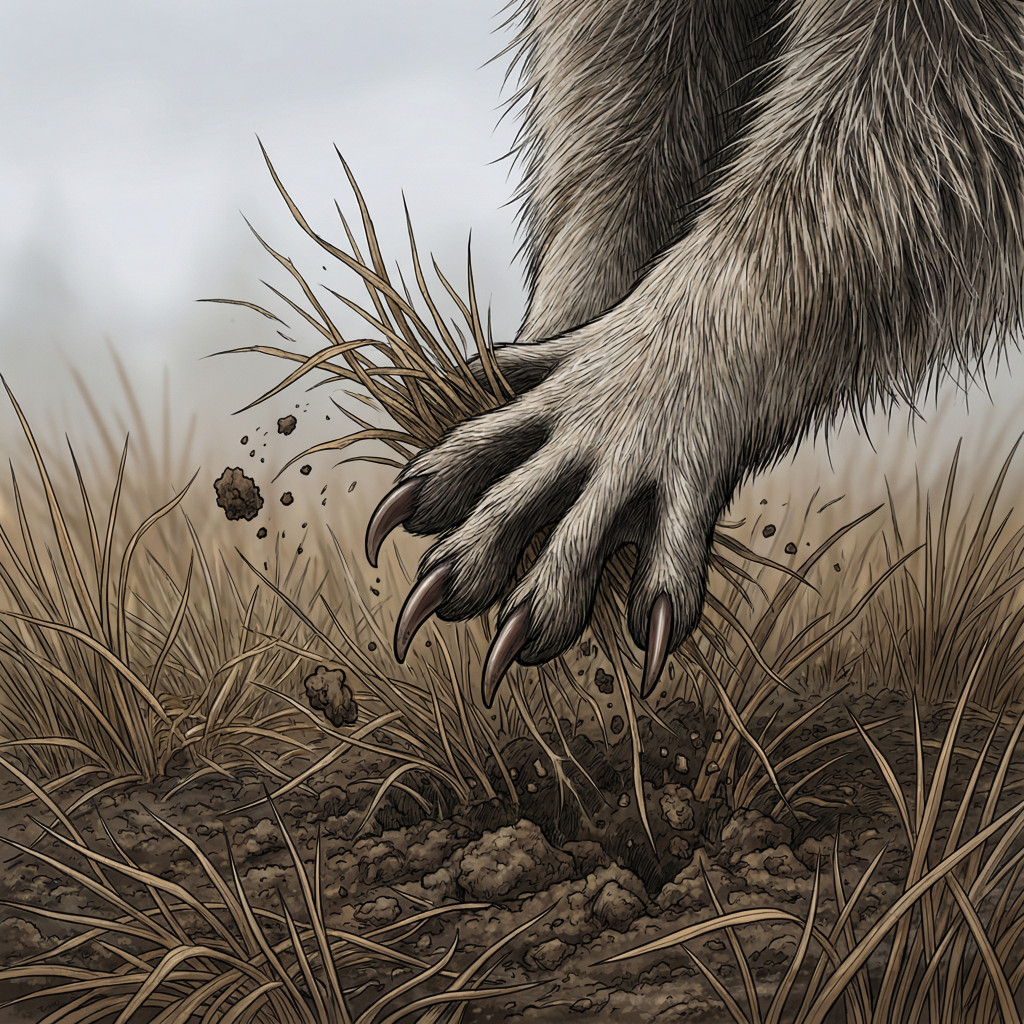
Raccoons can use their paws to pull, roll or flip weakened turf while searching beneath it. The result may look surprisingly dramatic by morning, with loose flaps or irregular strips of lawn disturbed.
Skunks
Skunks commonly probe and dig for soil-dwelling food. Damage may appear as numerous smaller holes or disturbed patches rather than the larger rolled sections commonly associated with raccoon activity.
Crows
Crows can repeatedly peck, pull and work at turf where they find an easy food source. Scattered tufts, small holes and repeated bird activity in the same weak areas are clues worth investigating.
European Chafer Grubs
European chafer larvae are pale, C-shaped grubs that feed around the grass root zone. Heavy populations can weaken turf, while raccoons, skunks, crows and other animals may cause additional damage while searching for the larvae.
Check the Lawn for Grubs
Before buying a grub-control product, confirm that grubs are actually present. Washington State University recommends sampling several locations so one small patch does not determine your diagnosis.
- Look near the edge of damaged or declining turf where some living grass still remains.
- Using a spade or serrated knife, cut a 12-inch square approximately 4–5 inches deep.
- Lift the turf and sift through the loose soil, thatch and root zone for pale, C-shaped grubs.
- Count the grubs in that square-foot sample.
- Repeat the check in at least four locations and compare the results.
How Many Grubs Are Too Many?
WSU Extension gives a general guideline that about 5–10 European chafer grubs per square foot can warrant management, while also noting that the threshold depends on turf health. Healthy, well-maintained turf may tolerate more grub pressure than already-stressed grass.
The important point: a few grubs—or wildlife digging by itself—does not automatically mean the lawn needs a pesticide treatment.
Regional reference: Washington State University Extension — Pest Watch: European Chafer.
Found Grubs?
Use our dedicated European chafer guide for a deeper look at identification, lifecycle, treatment timing, beneficial nematodes, labeled grub-control products and lawn recovery.
Wildlife Damage Can Be the Clue, Not the Diagnosis
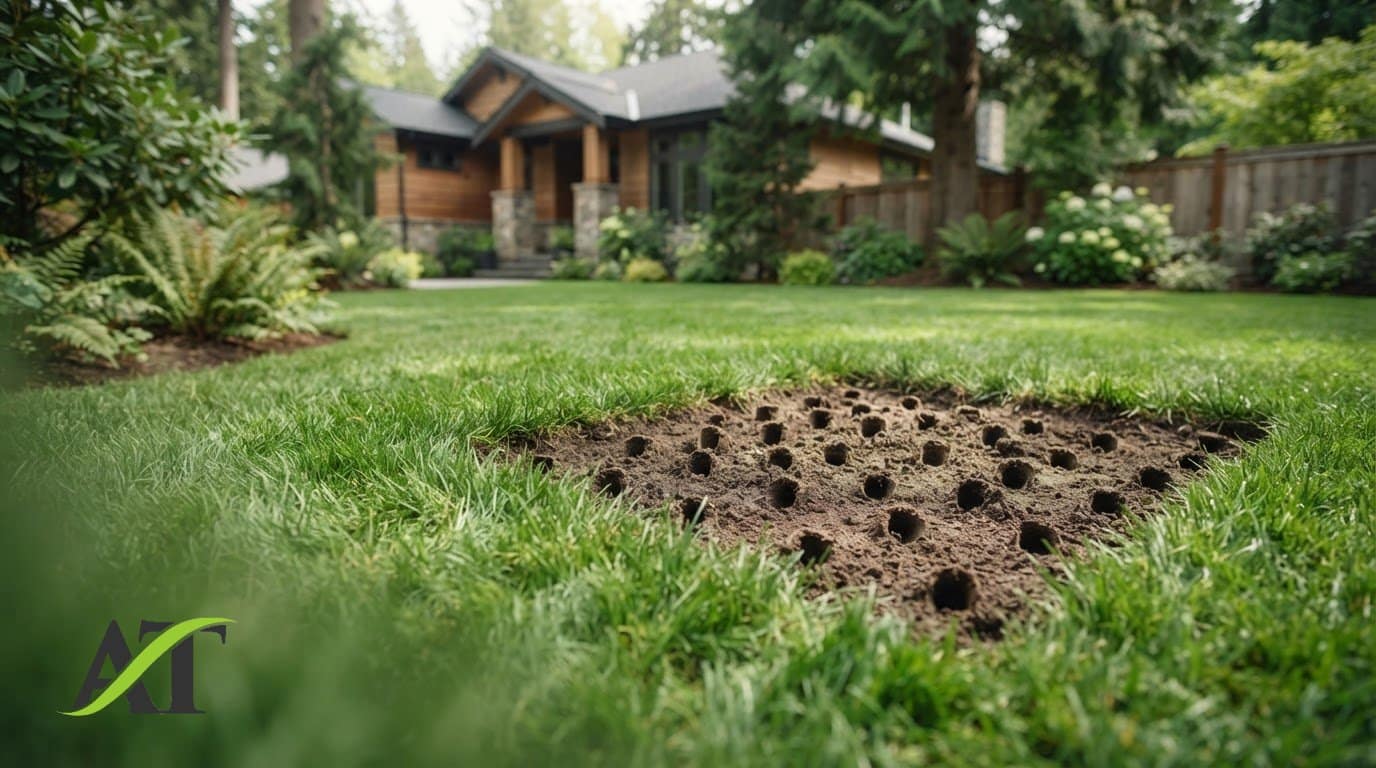
A lawn can look as though it was torn apart overnight when animals discover an easy food source beneath weak turf. Long strips may be lifted, chunks of sod may be flipped and muddy soil may suddenly appear where intact grass stood the day before.
European chafer grubs can contribute to this pattern because the larvae feed around the root zone. When roots are badly weakened, turf can become easier for animals to disturb.
But grubs aren’t the only possibility. Wildlife searches lawns for other soil-dwelling food too. If you do not find European chafer grubs when you sample several areas, investigate other causes rather than treating by assumption.

When European Chafer Activity Shows Up
European chafer has one generation per year. The time when wildlife damage becomes obvious is not necessarily the right treatment window, which is why identification and timing matter.
Adults Emerge
Adult beetles emerge and become active around the beginning of summer. Adults may be noticed flying or swarming around dusk.
Eggs & Young Grubs
Eggs are laid and young larvae begin developing in the soil. Preventative treatment timing is generally aimed at the younger grub stages, depending on the product being used.
Grubs Grow & Feed
Larvae continue feeding and growing. Turf may become increasingly weak, and repeated bird or animal activity can make the problem more noticeable.
Damage May Become Obvious
Grubs can continue feeding before eventually moving toward pupation. Wildlife foraging can expose an infestation by peeling, digging or pecking weakened turf.
Do not treat by calendar alone. Confirm the pest first, then match the chosen control method to its current label and appropriate treatment window. Weather and grub development vary from year to year.
If You Confirm European Chafer Grubs
Grub control and lawn restoration are two different jobs. Deal with the underlying pest problem before spending money rebuilding grass that could be damaged again.
Beneficial Nematodes
Certain beneficial nematodes can be used against chafer grubs. They are living biological controls, so species selection, storage, application timing and soil-moisture conditions matter. Follow the supplier’s current instructions carefully.
Labeled Grub-Control Products
Homeowners may choose a pesticide labeled for grub control in turf. The correct active ingredient and timing depend on the grub stage and current product registration. Read and follow the complete label rather than applying a product simply because animals are digging.
Qualified Pest Treatment
If you are unsure about identification, timing or product selection, an appropriately licensed pest-control or lawn-treatment professional can address the insect problem. Aerating Thatching Co. does not provide pesticide or European chafer treatment.
Important: Reducing the food source may reduce digging pressure, but it does not guarantee raccoons, skunks, crows or other wildlife will immediately stop visiting your property.
Products for Grub Control Research & Post-Damage Cleanup
These products serve different purposes. One is a conventional DIY grub-control product to research after confirming European chafer; the other is a cleanup tool for loose, dead grass and disturbed surface material.

Scotts GrubEx1 Season-Long Grub Killer
For homeowners choosing a conventional DIY preventative treatment, Scotts GrubEx1 is a product Stewart recommends considering after European chafer has been properly identified and the application timing is appropriate.
Always confirm that the current product is registered for your intended lawn/turf use in Washington and follow the complete label for timing, rate, watering, precautions, storage and disposal.
View GrubEx1
The Groundskeeper II Rake
After the grub problem has been addressed, this lightweight steel-tine rake can help pull up loose dead grass and surface debris from smaller damaged areas before reseeding or other repair work.
This is a cleanup tool—not a grub treatment and not a substitute for professional Dethatching (Power Raking) where more extensive surface removal is actually needed.
View the RakeAs an Amazon Associate, I earn from qualifying purchases.
Reduce Additional Wildlife Damage
The practical goal is not to turn this article into a wildlife-control manual. A few simple steps can help protect the lawn while you deal with the underlying problem.
How Much Lawn Repair Do You Actually Need?
Do not automatically jump to a major renovation simply because the lawn had chafer damage. Once the underlying problem is addressed, look at how much healthy grass remains and match the repair to the condition of the lawn.
Healthy Turf Still Remains
Gently return lifted turf where practical, remove loose debris and give surviving grass a chance to recover. If the remaining lawn is reasonably dense and well rooted, an aggressive renovation may not be necessary.
If compaction is a separate issue, Core Aeration may be worth considering.
Rebuild Grass Density
If animal activity and grub damage have left the lawn noticeably thin but substantial viable turf remains, overseeding may be part of the recovery plan.
The Seattle Lawn Tune-Up combines Core Aeration, Premium Overseeding and Starter Fertilizer.
Surface Cleanup & Renovation
If large areas are dead, matted, loose or badly disturbed, more surface preparation may make sense before rebuilding.
The Full Meal Deal Lawn Renovation can include Dethatching (Power Raking), Core Aeration, Premium Overseeding and Starter Fertilizer when those steps fit the lawn’s condition.
Dethatching (Power Raking), Core Aeration, overseeding and fertilizer do not kill European chafer grubs. They are lawn restoration tools. The underlying pest issue should be addressed before rebuilding a heavily damaged lawn.
Could It Be Moles Instead?
Mole damage generally looks different from turf peeled or flipped by raccoons and other surface-foraging animals. Moles create underground tunnel systems that can produce raised ridges and mounds of pushed-up soil.
If you are seeing tunnels and molehills rather than sections of lawn being pulled apart from above, use the dedicated mole guide instead.
Seattle Lawn Digging & European Chafer FAQ
Does a raccoon tearing up my lawn mean I definitely have European chafer grubs?
No. Raccoons may dig for grubs and other soil-dwelling food, so the digging is a clue rather than proof. Inspect several areas beneath the turf and confirm what is present before choosing a grub treatment.
How do I check my Seattle lawn for European chafer grubs?
At the edge of damaged turf, cut a 12-inch-square sample approximately 4–5 inches deep, lift it and search the loose soil, thatch and root zone for C-shaped grubs. Repeat the check in at least four locations so you can compare the number of grubs per square foot across the lawn.
How many European chafer grubs per square foot are a problem?
WSU Extension gives a general guideline of about 5–10 European chafer grubs per square foot as a level that can warrant management, while noting that the threshold depends on turf health. A healthy lawn may tolerate more pressure than an already-stressed lawn.
Will treating the grubs immediately stop raccoons, skunks or crows?
Not necessarily. Reducing the food source may reduce future digging pressure, but wildlife that has learned to visit the property may continue checking it. Grub control should not be presented as a wildlife-repellent treatment.
Will a lawn recover after raccoon or chafer damage?
It depends on how much viable turf and root system remain. Lightly disturbed areas may recover with careful cleanup and normal lawn care. Thin areas may benefit from overseeding, while extensive dead or badly disturbed turf can require more substantial renovation.
Should I repair the lawn before treating European chafer grubs?
For a significant confirmed infestation, address the underlying grub problem first. Rebuilding severely damaged turf before the pest issue is addressed can leave the new lawn vulnerable to additional damage.
Does Aerating Thatching Co. treat European chafer grubs?
No. Aerating Thatching Co. does not apply pesticides or provide European chafer treatment. Stewart’s role is on the lawn-restoration side after the pest problem has been addressed. Depending on what remains, repair may involve Core Aeration, Premium Overseeding, Dethatching (Power Raking) or a combination appropriate for the lawn.
Need Help Repairing the Damage?
If raccoons, skunks, crows or a confirmed European chafer problem have left your lawn thin, loose or badly disturbed—and the underlying pest problem has been addressed—Aerating Thatching Co. can help determine how much restoration the lawn actually needs.
Stewart personally performs the lawn work and can help distinguish between a lawn that needs straightforward Core Aeration, one that needs overseeding and a Lawn Tune-Up, and one where Dethatching (Power Raking) and a more complete renovation make sense.