Save Your Lawn Before You Replace It
Before tearing out a struggling lawn and starting over, find out whether the grass you already have is a good candidate for restoration.
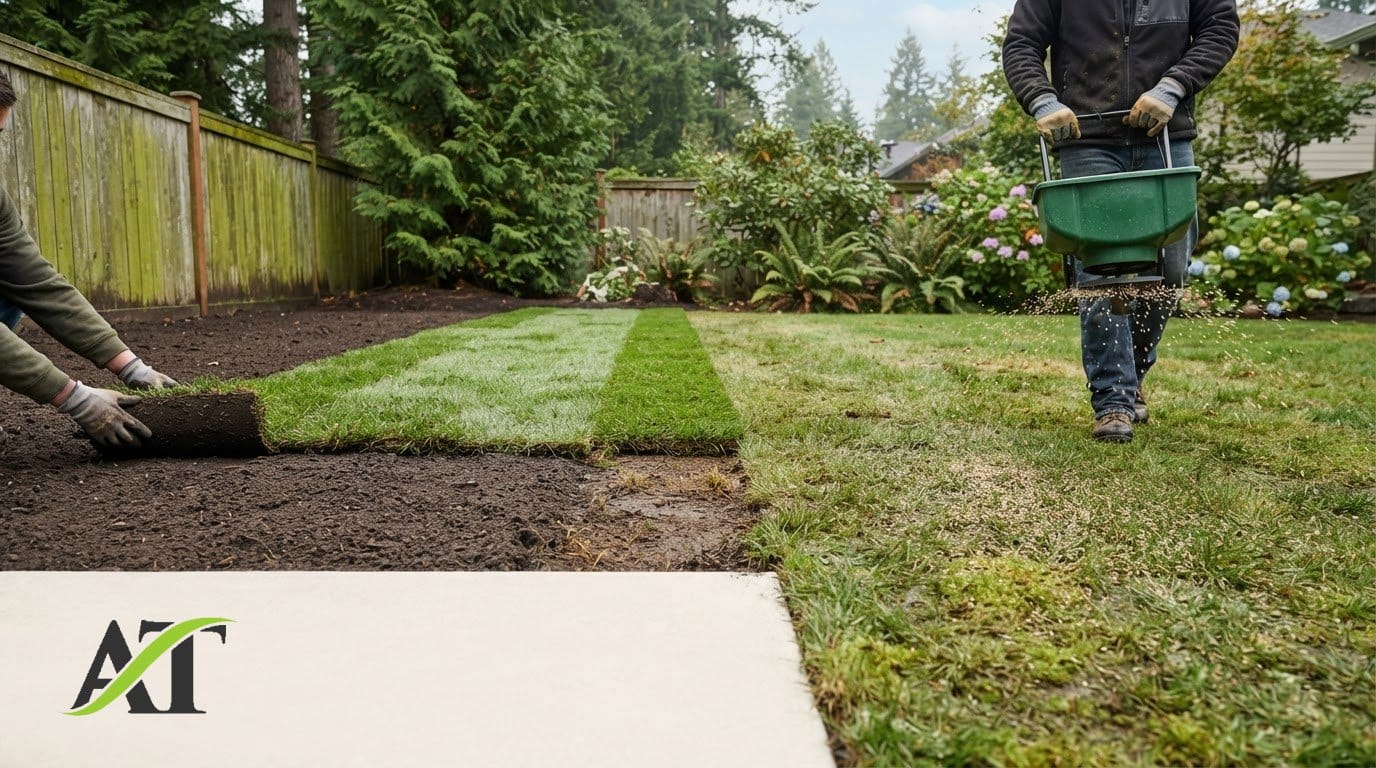
Many thin, tired, compacted, mossy or worn Seattle-area lawns still contain enough usable turf to rebuild with the right combination of Core Aeration, Premium Overseeding, Starter Fertilizer and, when needed, Dethatching (Power Raking).
Can a Struggling Lawn Be Saved?
Often, yes — if enough usable lawn remains and the underlying site does not require major correction.
A lawn that is thin, patchy, compacted, mossy, worn or simply tired does not automatically need to be removed. Restoration can work with the existing lawn by improving access to the soil, relieving compaction and introducing new grass where density has declined.
The appropriate level of work depends on what is actually holding the lawn back. Some lawns need Core Aeration, seed and fertilizer. Others also need Dethatching (Power Raking) before rebuilding.
Restoration is not a substitute for correcting major site problems.
Major grading, drainage, buried debris or severe site damage may need to be corrected before lawn restoration makes sense.
Restore the Existing Lawn or Replace It?
The best decision starts with the condition of the lawn and the property — not with automatically choosing either the least expensive service or the largest renovation package.
Restoration May Be Worth Trying First
- There is still usable grass throughout at least part of the lawn.
- The lawn is thin, patchy, weak or worn rather than completely gone.
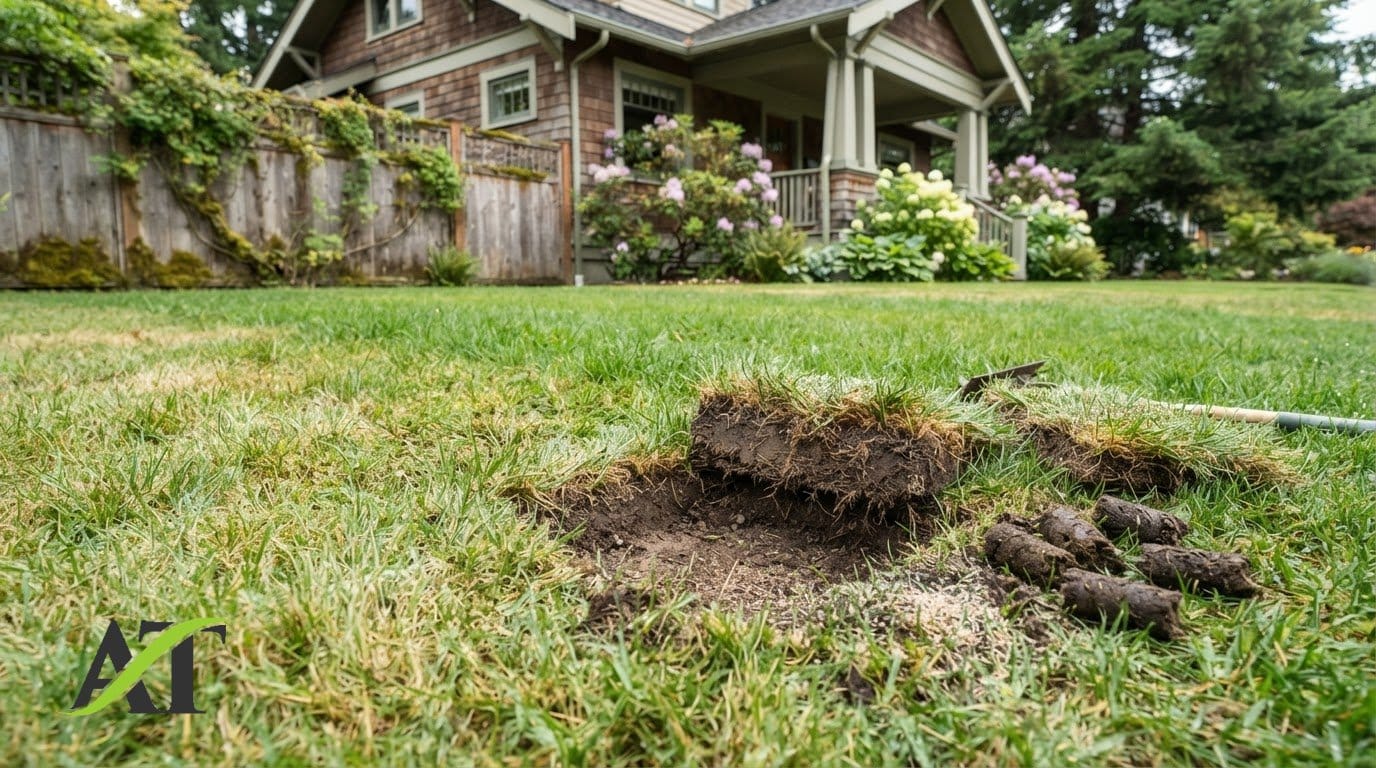
- Compacted soil is contributing to poor growth.
- Thatch, moss or dead surface material may need to be opened or removed.
- Bare or thin areas could benefit from improved seed-to-soil contact.
- You are comfortable allowing new grass time to establish and fill in.
Replacement May Make More Sense
- The property requires substantial grading or leveling.
- Construction activity has left significant buried debris or major soil disturbance.
- Very little viable turf remains and there is little existing lawn worth rebuilding.
- A serious drainage or site problem needs correction before grass can succeed.
- The desired project requires an immediate complete new-lawn installation rather than gradual restoration.
Why Seattle-Area Lawns Can Look Worse Than They Really Are
Western Washington lawns deal with a combination of conditions that can gradually reduce grass density. The visible problem may be a thin or mossy lawn, but several conditions can be contributing at the same time.
How Lawn Restoration Works
Restoring an existing lawn is not simply a matter of spreading seed over the surface. The objective is to improve the growing environment and then rebuild grass density.
Dethatching (Power Raking), When Needed
Dethatching (Power Raking) removes accumulated surface material when thatch, moss or matting needs to be opened up before rebuilding.
Learn about Dethatching (Power Raking)Core Aeration
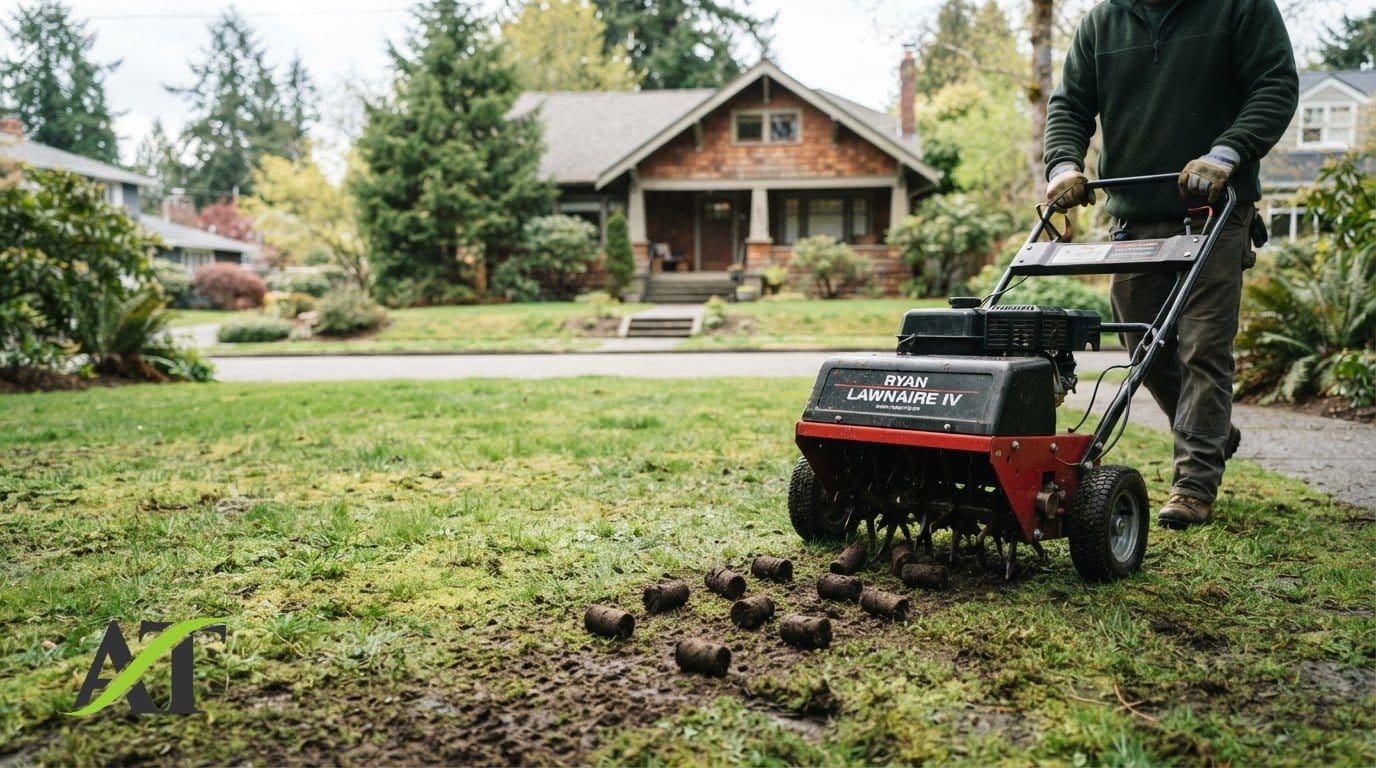
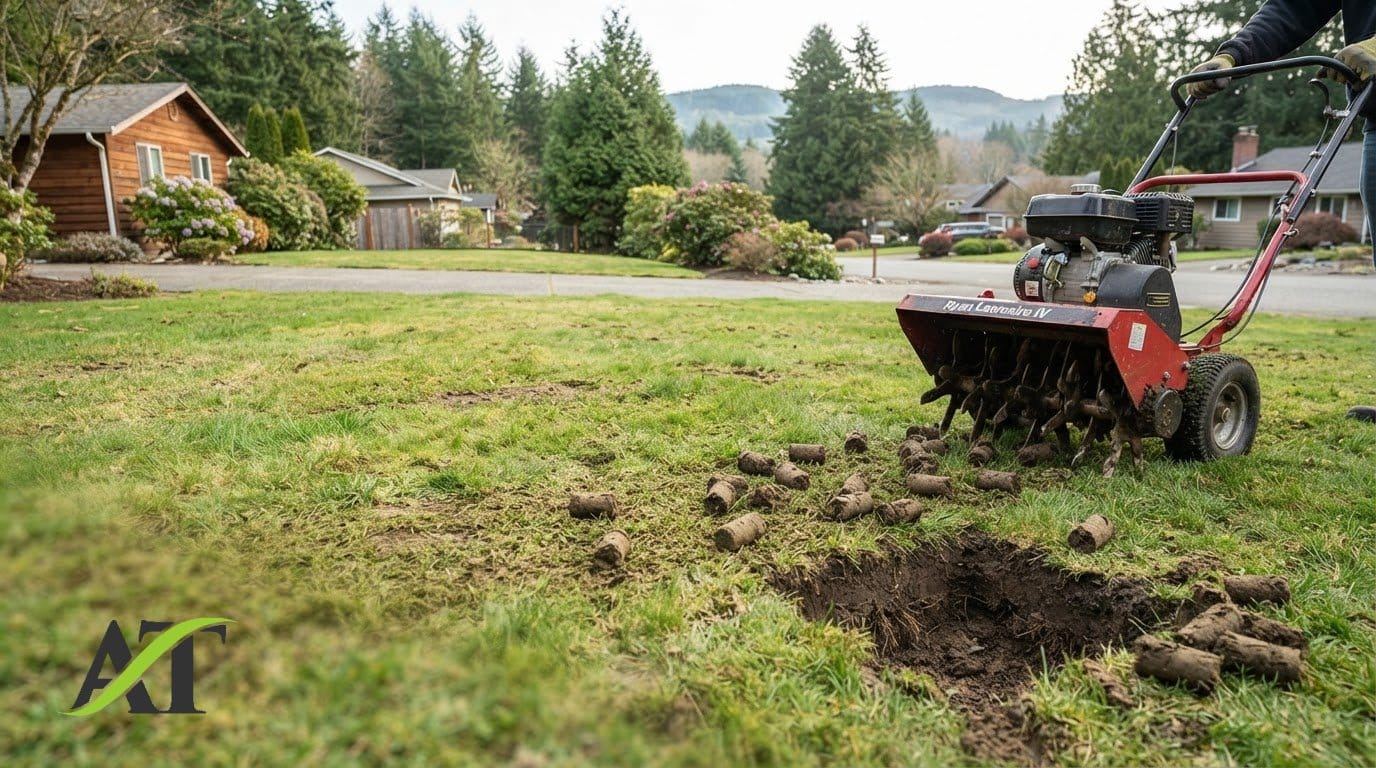
Core Aeration removes small plugs of soil to relieve compaction and create openings through the lawn and root zone.
Learn about Core AerationPremium Overseeding
Fresh grass seed is introduced into the existing lawn to add new plants and help rebuild density in thin and weak areas.
Learn about Premium Grass SeedStarter Fertilizer
Starter fertilizer accompanies the seed to support new seedlings as they begin establishing in the lawn.
Lawn Tune-Up or Full Meal Deal?
Both services are designed to improve an existing lawn. The key distinction is whether significant surface buildup needs to be removed before Core Aeration and overseeding.
Lawn Tune-Up
A strong fit when the lawn still has usable turf and needs greater density plus compaction relief, without significant Dethatching (Power Raking) first.
- Core Aeration
- Premium Overseeding
- Starter Fertilizer
Best fit: thin, tired, patchy or compacted lawns where surface removal is not the main issue.
Explore the Lawn Tune-UpFull Meal Deal Lawn Renovation
A stronger restoration option when thatch, moss, matting or accumulated surface material needs to be removed before rebuilding.
- Dethatching (Power Raking)
- Raking / cleanup process
- Core Aeration
- Premium Overseeding
- Starter Fertilizer
Best fit: lawns that need a more complete surface reset before new grass can be introduced effectively.
Explore the Full Meal DealWhat Lawn Restoration Won’t Fix
Aeration, overseeding, fertilizer and Dethatching (Power Raking) can improve many struggling lawns, but they cannot correct every underlying property condition.
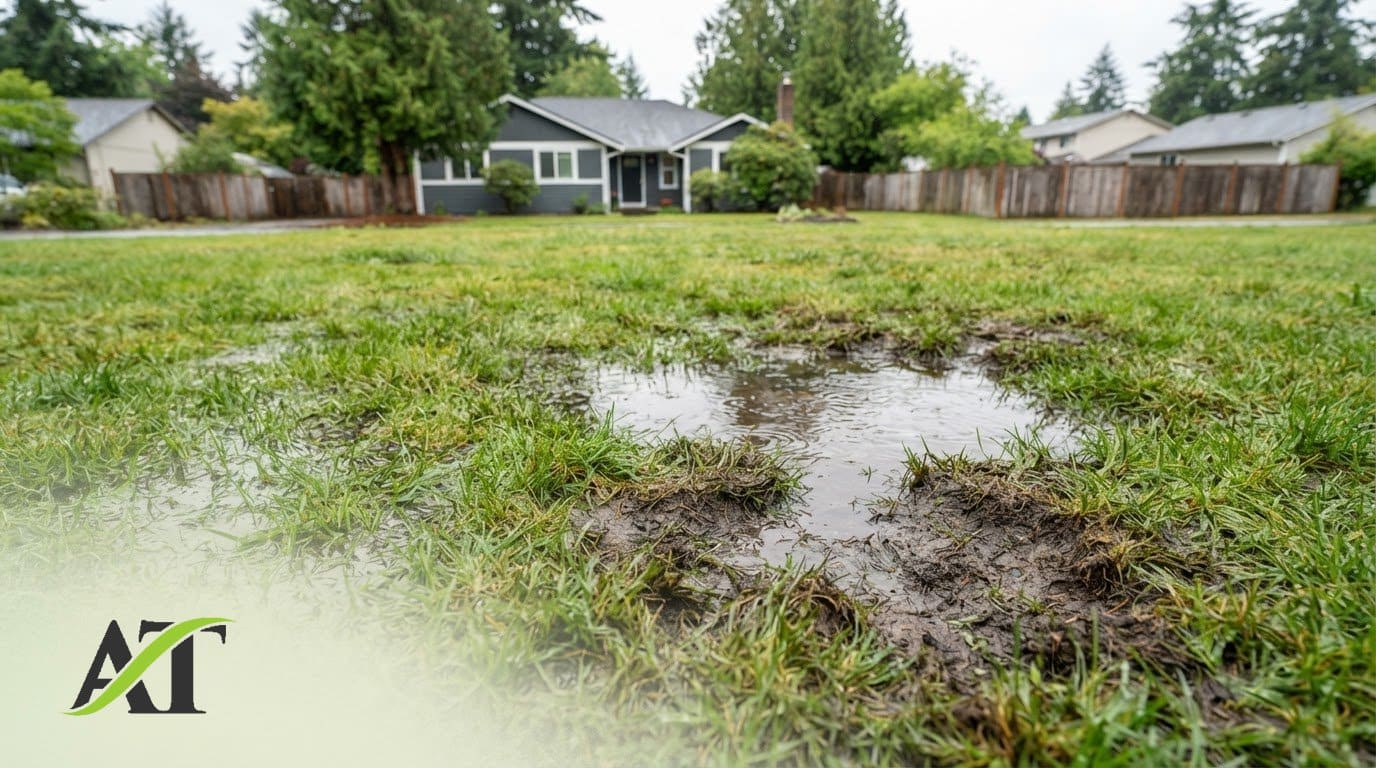
Major Drainage Problems
If water is collecting because the property needs drainage work, that underlying issue may need to be corrected before grass can perform reliably.
Major Grading or Leveling
Restoration services are not a replacement for substantial earthwork where the lawn surface itself needs to be regraded.
Buried Construction Debris
Debris, severe soil disturbance or other construction-related problems may require more extensive site preparation.
Irrigation Problems
New seed still requires appropriate watering. Lawn restoration cannot compensate for an irrigation system that is not delivering suitable coverage.
Extremely Poor Growing Conditions
Areas with severe shade, persistent site problems or other limitations may need changes beyond normal lawn-restoration work.
Instant Complete Replacement
Overseeding rebuilds an existing lawn over time. It is different from choosing a complete new-lawn installation for an immediate replacement project.
Why Try Restoration Before Tearing Everything Out?
When an existing lawn is a reasonable restoration candidate, rebuilding can avoid undertaking a larger replacement project before it is actually necessary.
Restoring the Existing Lawn
- Works with usable grass already on the property.
- Targets compaction, surface buildup and lost lawn density.
- Can avoid unnecessary removal of the entire lawn.
- Allows the level of service to match the actual condition.
- Preserves replacement as an option if the site ultimately requires it.
Complete Lawn Replacement
- May involve removing and disposing of the existing lawn.
- Can require additional soil preparation or grading.
- May involve new sod or another complete establishment method.
- Creates greater disruption to the existing lawn area.
- Makes the most sense when the condition of the property truly calls for starting over.
Restoration Advice From the Person Doing the Work
Aerating Thatching Co. has specialized in renovating and improving Seattle-area lawns since 2004. Stewart personally performs the lawn service, so the person behind the recommendation is also the person doing the work.
That matters on a page like this because not every struggling lawn needs the same treatment. A lawn that only needs Core Aeration and overseeding should not automatically be turned into the largest renovation package.
The objective is to identify a practical restoration path when one exists — and recognize when the underlying site may require something beyond normal lawn-restoration services.
Meet StewartWhat This Means for You
- Direct communication with the owner performing the service.
- A business focused on lawn restoration rather than general weekly mowing.
- Clear Lawn Tune-Up and Full Meal Deal options.
- Pricing available before you request a quote.
- A recommendation based on the level of restoration the lawn appears to need.
See What Lawn Restoration Can Look Like
Before-and-after examples are more useful than generic lawn photographs when you are trying to decide whether an existing lawn is worth rebuilding.
The LawnTuneUps.com Gallery includes real Lawn Tune-Up, Full Meal Deal and Dethatching (Power Raking) projects so you can compare different levels of lawn improvement and renovation.
Browse the Lawn Gallery
Start with the before-and-after sections to see actual lawn transformation examples.
View Before & After ResultsSave Your Lawn Before You Replace It: FAQ
How do I know whether my lawn can be restored instead of replaced?
Restoration is worth considering when usable grass still remains and the main problems involve thinning, compaction, worn areas, moss, thatch or poor lawn density. Replacement may make more sense when the property requires substantial grading, drainage correction, construction-debris removal or other major site work.
Does a thin lawn automatically need Dethatching (Power Raking)?
No. Dethatching (Power Raking) is most appropriate when surface buildup, moss, matting or thatch needs to be removed. If the lawn mainly needs compaction relief and greater grass density, the Lawn Tune-Up may be the more focused option.
What is the difference between a Lawn Tune-Up and the Full Meal Deal?
The Lawn Tune-Up combines Core Aeration, Premium Overseeding and Starter Fertilizer. The Full Meal Deal Lawn Renovation adds Dethatching (Power Raking) and the associated cleanup process for lawns needing a stronger surface reset before rebuilding.
Can restoration fix drainage or grading problems?
No. Core Aeration can help relieve compacted lawn soil, but lawn-restoration services are not a substitute for major drainage correction, grading or leveling work when those site conditions are the underlying problem.
Is lawn restoration always better than sod?
No. The right choice depends on the condition of the existing lawn, the underlying site and the result you want. This page recommends evaluating restoration first when useful turf remains and there is no major site problem that requires starting over.
Will the lawn look finished immediately after overseeding?
No. Overseeding introduces new grass into the existing lawn and requires establishment and after-care. Lawn restoration is a rebuilding process rather than an instant complete replacement.
Can I see pricing before requesting a quote?
Yes. Visit the Aerating Thatching Co. service price list to review current published pricing and see which services are priced by estimate.
What if I do not know whether I need a Lawn Tune-Up or Full Meal Deal?
You do not need to diagnose the lawn yourself. Use the quote request form and describe what you are seeing. The goal is to recommend the restoration level that fits the lawn rather than automatically choosing the largest package.
Find Out Whether Your Existing Lawn Is Worth Restoring
If your lawn is thin, tired, mossy, compacted or worn, complete replacement does not have to be your first move. Request a quote and describe what is happening with the lawn. Aerating Thatching Co. can recommend whether a Lawn Tune-Up, Full Meal Deal Lawn Renovation or another next step makes the most sense.