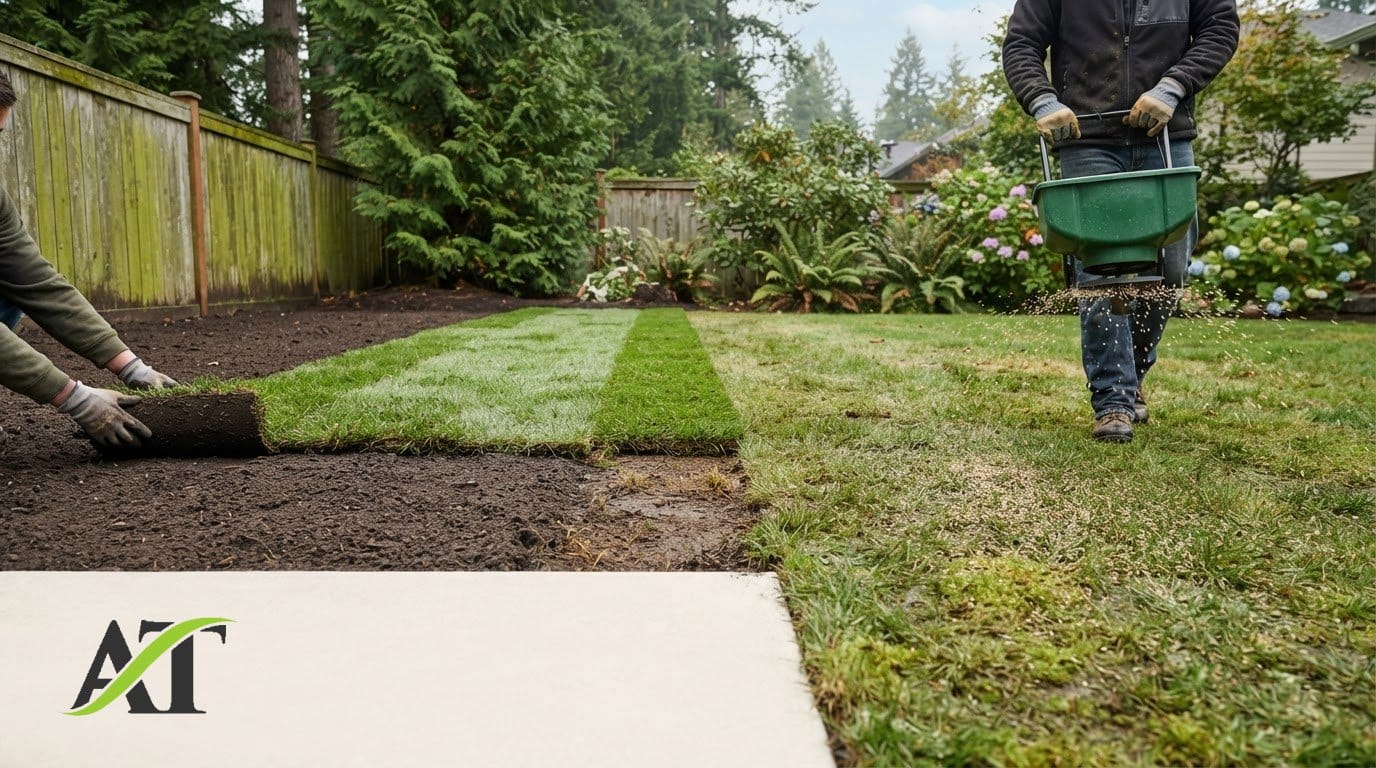
Why does your grass stay thin and mossy even after you’ve spent a fortune on fertilizers and a brand-new mower? In Kenmore, the problem usually isn’t your equipment; it’s the heavy clay soil beneath your feet. You’ve likely noticed your lawn feels like concrete by mid-summer, making it nearly impossible for water or air to reach the roots. It’s a common struggle for our neighbors. Standard watering just doesn’t cut through that compaction. A professional Lawn Tune Up Kenmore service provides the mechanical reboot your soil needs to breathe again.
We understand the frustration of watching moss take over while your grass thins out. This guide shows you how a Lawn Tune-Up, consisting of Core Aeration, Overseeding, and Fertilizing, restores the vitality and thickness of your turf. We’ll explain why timing matters for soil temperatures between 55°F and 75°F and how this specific process tackles the unique challenges of the Pacific Northwest. You’ll discover how to achieve professional-grade results without the headache of renting heavy equipment or guessing at the right techniques.
Key Takeaways
- Understand that a Lawn Tune-Up consists exclusively of Core Aeration, Overseeding, and Fertilizing to mechanically restore your turf.
- Identify how Kenmore’s heavy clay soil causes compaction and how professional equipment breaks this cycle to improve air and water flow.
- Discover the importance of monitoring soil temperatures between 55°F and 75°F to ensure your new grass seed has the best environment for germination.
- Decide if your property needs a standard Lawn Tune Up Kenmore or the Full Meal Deal, which includes Power Raking (Dethatching), Core Aeration, Overseeding, and Fertilizing.
What is a Lawn Tune-Up in Kenmore? (Turf vs. Mower)
The Signature Lawn Tune-Up Composition
This service is a specific three-step process designed to revive tired turf. It includes:
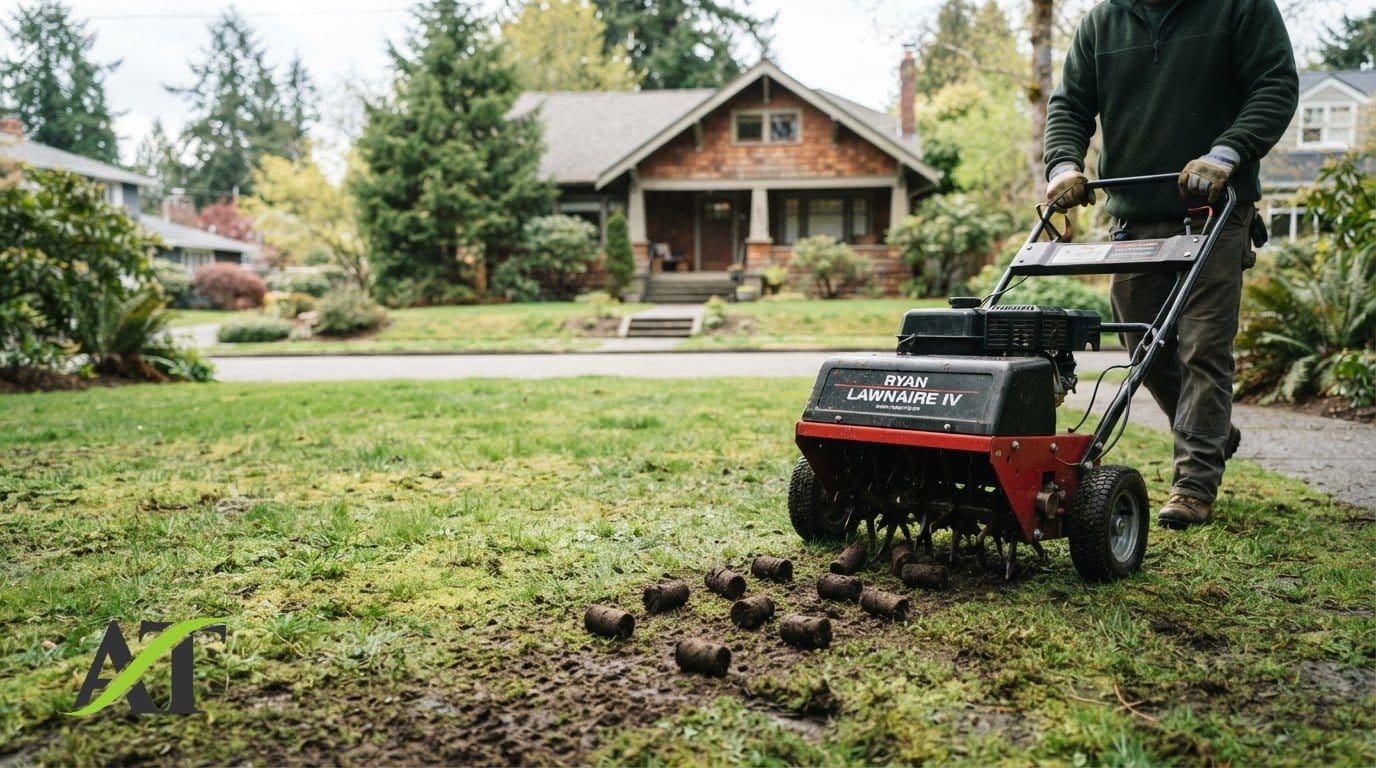
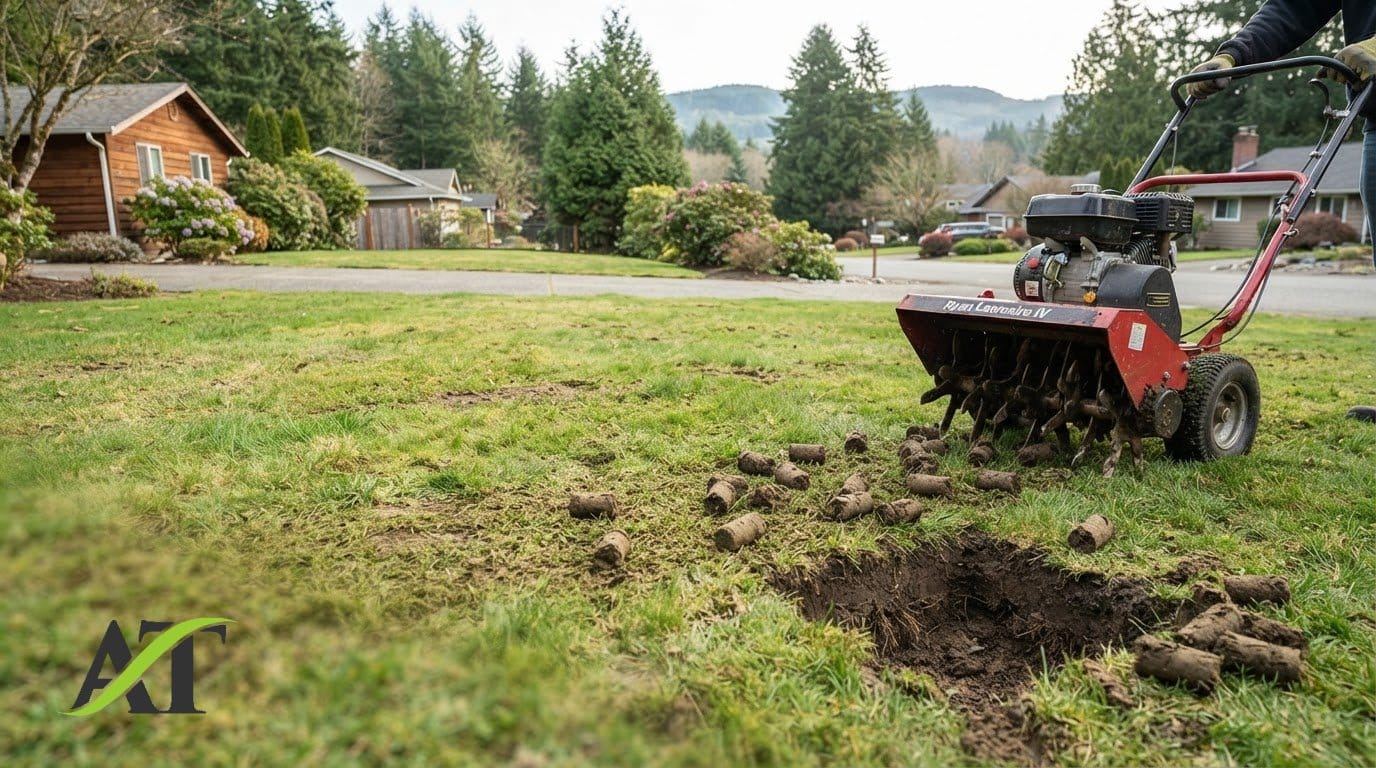
- Core Aeration: We use specialized equipment to pull soil plugs from the ground. This breaks up heavy compaction so oxygen and water can reach the root zone.
- Overseeding: We introduce fresh, high-quality grass seed to thicken the canopy. A denser lawn naturally crowds out weeds and moss.
- Fertilizing: We apply essential nutrients to jumpstart new growth and strengthen existing roots.
Why Kenmore Homeowners Choose Restoration Over Mowing
Kenmore yards often suffer from the “mossy carpet” syndrome. The wet winters and heavy clay soil create a perfect environment for moss, not grass. Following the Principles of turf management, our process addresses these environmental pressures directly. Simply cutting the grass won’t stop the thinning. Professional restoration is necessary to break the cycle of soil compaction. This work is a core part of our Seattle Lawn Tune-Up Service framework, providing the best Lawn Tune Up Kenmore residents can find for heavy clay soil. It’s a pragmatic, no-nonsense approach for homeowners who want results they can see. Results depend on moisture and seed-to-soil contact, so we focus on the mechanics that give your lawn the best chance to recover.
The Science of Soil Health: Why Kenmore Lawns Struggle
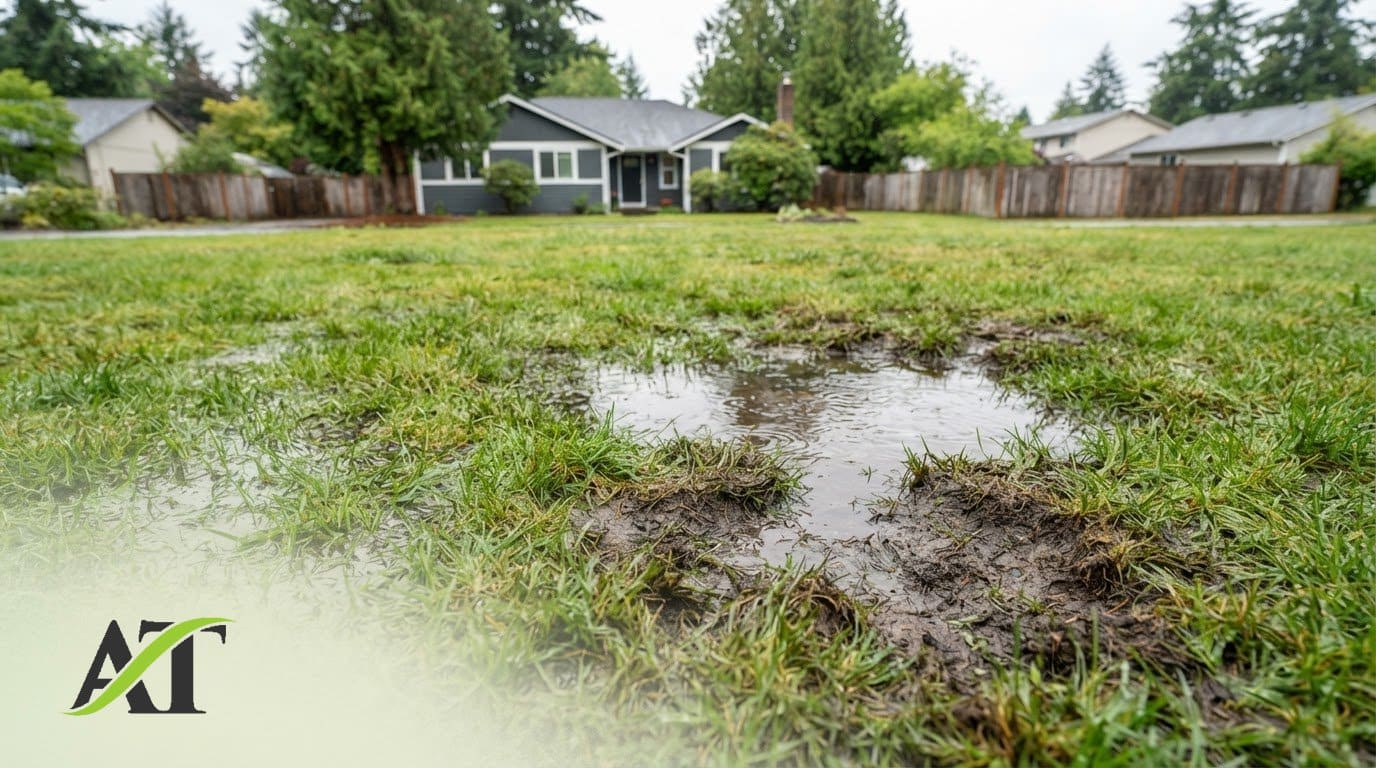
Kenmore is known for its heavy clay soil, a material that presents a significant challenge for residential turf. This dense clay packs down tightly over time, creating a layer that’s nearly impenetrable. When soil is compacted, it chokes out the grass by preventing oxygen, water, and nutrients from reaching the root zone. These damp, oxygen-poor conditions are exactly what moss needs to thrive. A Lawn Tune Up Kenmore is designed to break this cycle by physically opening the soil, but the success of the service also depends on understanding the biological “magic window” of the Pacific Northwest.
Soil Temperature and Germination Reality
Many homeowners use air temperature to decide when to plant, but that’s a misleading metric. Soil holds heat differently than the air does. The optimal soil temperature range for cool-season grass seed germination is 55°F–75°F (13°C–24°C). While seed can sprout outside this specific range, the process will be slower, less consistent, and produce less reliable establishment. Following the scientific mechanics of Core aeration and overseeding during this temperature window is the most pragmatic approach. We don’t offer absolute guarantees on germination because results are heavily influenced by moisture, seed-to-soil contact, and fluctuating weather patterns.
Combating Moss with pH Balance
Even with perfect timing, acidic soil can prevent your grass from utilizing the nutrients in your fertilizer. Soils in North King County are naturally acidic, which creates a barrier to healthy growth. Integrating a Lawn Lime Service in Kenmore as an optional add-on to your restoration helps balance these pH levels. This makes the soil more hospitable for grass and less inviting for moss. If you’re tired of guessing what your soil needs, you can request a quote to get a professional plan for your property.
Core Aeration and Overseeding: The Mechanics of Restoration
The actual work of a Lawn Tune Up Kenmore involves a specific sequence of mechanical steps. We don’t just throw seed on the ground and hope for the best. Effective restoration requires changing the physical structure of your yard so the biology can catch up. This process relies on three specific pillars:
- Core Aeration to break up the dense Kenmore clay.
- Overseeding with premium, PNW-optimized grass blends.
- Fertilizing to jumpstart growth and support existing turf.
How Core Aeration Solves Compaction
The first step is addressing the heavy clay soil. We use mechanical aerators to pull 2-3 inch soil plugs across the entire lawn. This creates thousands of small channels that allow the ground to breathe. In Kenmore, where winter rains can turn a yard into a swamp, these holes significantly improve drainage. By following the technical steps found in our Core Aeration in Snohomish guide, we ensure the roots get the oxygen they’ve been missing.
Overseeding for Density and Resilience
Once the soil is open, we move to Overseeding. This isn’t just about filling bare spots; it’s about increasing the overall density of your grass. The holes created during aeration provide the perfect environment for seed-to-soil contact. This “hole punching” method protects the fresh seed and gives it a clear path to take root. A thick, healthy canopy is your best defense against the invasive weeds and moss common in North King County. While we don’t offer absolute guarantees on germination, this mechanical combination gives your lawn its best chance to thrive. Success depends on maintaining moisture and ensuring the soil temperature remains in that 55°F–75°F sweet spot.

Lawn Tune-Up vs. The Full Meal Deal: Which is Right for You?
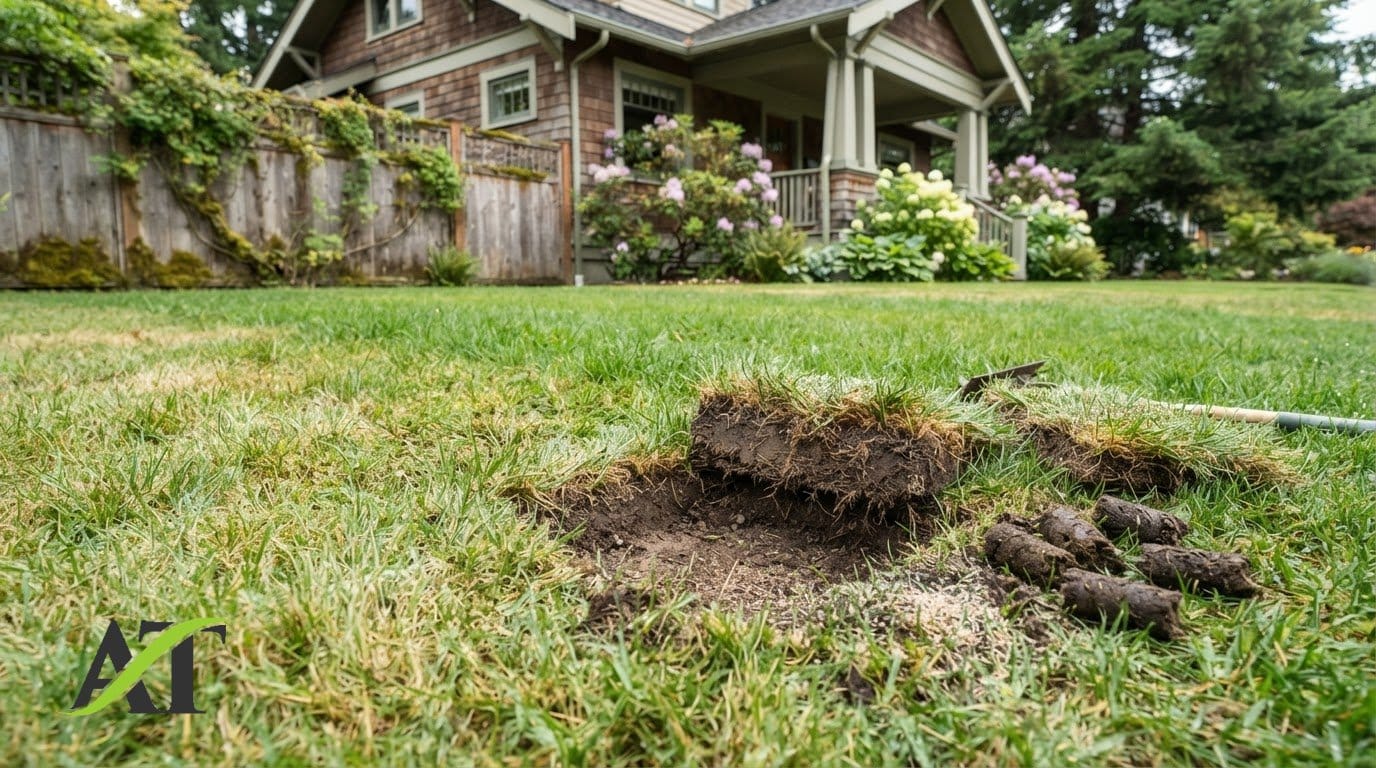
Choosing the right service level depends on the current state of your turf. A standard Lawn Tune Up Kenmore is ideal for annual maintenance on established lawns. It keeps healthy grass thick and resilient by addressing minor compaction. However, if your yard feels spongy underfoot or looks yellow despite regular care, you likely have a thatch problem. Thatch is a layer of dead organic matter that sits between the grass blades and the soil surface. When this layer exceeds half an inch, it acts like a roof, preventing water and nutrients from reaching the roots.
In the damp climate of North King County, heavy thatch buildup often leads to significant moss growth. You can identify this by parting your grass blades. If you see a thick, brown mat instead of soil, your lawn is struggling to breathe. For these properties, we recommend the Full Meal Deal. This service includes Power Raking (Dethatching), Core Aeration, Overseeding, and Fertilizing. It’s a more aggressive restoration for yards that haven’t had professional attention in several years.
Understanding Power Raking (Dethatching)
Power Raking (Dethatching) is a mechanical process that removes the “choke” layer from your lawn. We use specialized equipment to pull up dead debris without damaging the living grass. This step is critical because it ensures the seed and fertilizer used in the rest of the process actually make contact with the soil. For more technical details on this removal process, see our guide on Professional Power Raking in Lynnwood.
Next Steps for Your Kenmore Lawn
Once you’ve selected your service, a little preparation goes a long way. We ask that you mark any sprinkler heads, shallow cables, or invisible fences to prevent equipment damage. This helps us work quickly and safely. Every property has unique needs, so we encourage you to Request a Quote for your specific yard size. Whether you need a base Lawn Tune Up Kenmore or the Full Meal Deal, we’ll provide a pragmatic plan to restore your landscape.
Revitalize Your Yard for the Seasons Ahead
Restoring a healthy lawn in North King County requires more than just water and fertilizer. It starts with breaking up the heavy clay soil through Core Aeration and introducing new growth with Overseeding. Whether you choose a base Lawn Tune Up Kenmore or the Full Meal Deal, which incorporates Power Raking (Dethatching), the goal is to create a thick, resilient canopy that naturally crowds out moss. Remember that timing is everything. Aim for soil temperatures between 55°F and 75°F for the most reliable results since germination is slower outside this range.
Aerating Thatching Co. has been serving the Kenmore community since 2004. We’re an owner-operated local business that uses specialized mechanical equipment specifically designed for the region’s tough soil conditions. We don’t believe in high-gloss sales pitches or corporate jargon. We just believe in physical labor and restorative outcomes that you can see and feel underfoot.
Your yard has the potential to be thick and green again. We look forward to helping you restore its vitality and making your landscape a point of pride for your home.
Frequently Asked Questions
Is a Lawn Tune-Up the same as lawn mower repair?
No, a Lawn Tune Up Kenmore service focuses on the health of your soil and grass, not your equipment. While mower repair shops handle engines and blades, we perform Core Aeration, Overseeding, and Fertilizing to restore your lawn’s vitality. We use specialized mechanical equipment to pull soil plugs, which addresses the heavy clay compaction common in North King County yards. It’s a biological reboot for your turf rather than a mechanical fix for your mower.
When is the best time for a Lawn Tune-Up in Kenmore, WA?
The best time for restoration in Kenmore is during the spring or fall when soil temperatures are ideal. Specifically, we look for soil temperatures between 55°F and 75°F (13°C–24°C) for optimal germination. In the Pacific Northwest, this usually happens in April and May or September and October. These windows provide the consistent moisture and moderate temperatures necessary for new grass seed to establish itself before summer heat or winter frost.
How long does it take for grass seed to germinate after a tune-up?
Grass seed typically begins to sprout within 10 to 21 days, but this timeline depends on several environmental factors. Soil temperature is the most critical driver; germination is fastest and most reliable when the ground is between 55°F and 75°F. While seeds can sprout outside this range, the process will be slower and less consistent. We don’t offer absolute guarantees on germination because results are heavily influenced by your watering habits and local weather patterns.
Do I really need Power Raking (Dethatching) with my aeration?
You only need Power Raking (Dethatching) if your lawn has a thick layer of dead organic matter choking the soil. A standard Lawn Tune-Up includes Core Aeration, Overseeding, and Fertilizing for regular maintenance. If your thatch layer exceeds half an inch, we recommend the Full Meal Deal. This upgraded service adds Power Raking (Dethatching) to the process, ensuring that new seed and nutrients can actually reach the soil surface instead of getting trapped in debris.
What should I do to prepare my lawn before Aerating Thatching Co. arrives?
Preparation is straightforward but essential for a successful service. You should mow your grass slightly shorter than usual and clear any debris like dog toys or fallen branches. For larger projects involving old equipment or heavy debris removal, North Point Junk Removal can help clear the way. Most importantly, you must mark all sprinkler heads, shallow cables, and invisible fence lines. This prevents our heavy mechanical equipment from causing accidental damage to your underground utilities. Clear marking allows us to work efficiently and focus on the physical transformation of your landscape.
Article by
Stewart Armour
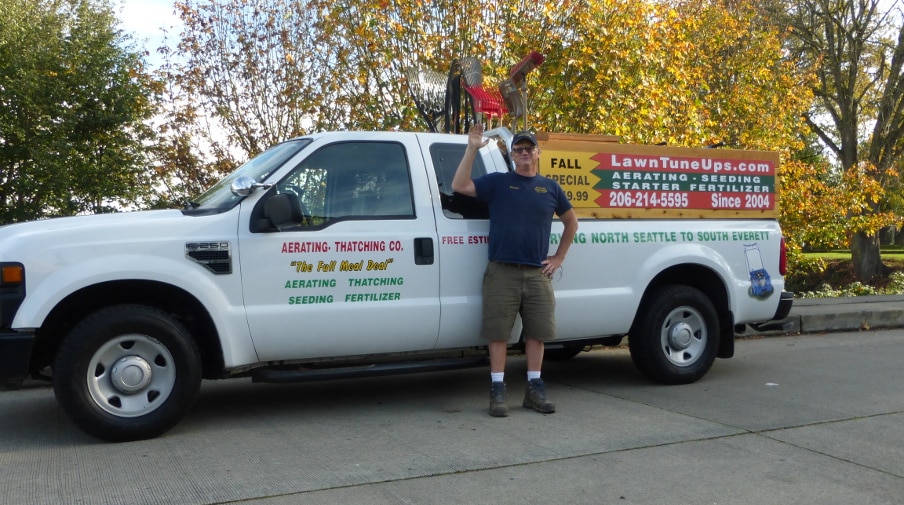
Stewart Armour is an independent lawn restoration expert, educator, and owner of Aerating Thatching Co., serving the greater Seattle area since 2004. With more than two decades of professional experience restoring Western Washington lawns, Stewart specializes in diagnosing lawn problems, improving soil health, and developing long-term lawn renovation strategies. His education includes turf management studies, advanced golf course turf training, and continuing education through Wilbur-Ellis University, State Turf Facilities, Soil First Academy, and Golf Course Applied Turf Physiology. Every article published on LawnTuneUps.com is grounded in practical field experience, current turf science, and a commitment to helping homeowners understand the why behind every recommendation—not just what to do.
Stewart has personally evaluated thousands of residential lawns throughout the Seattle area and remains committed to helping homeowners understand the science behind growing healthier, more resilient lawns.