European Chafer Beetles in North Seattle: How to Identify, Control & Repair Lawn Damage
Is your lawn suddenly loose, thinning, or being torn apart by birds or raccoons? European chafer grubs may be feeding on the grass roots below the surface—but visible damage alone is not enough to confirm the problem.
The right order is simple: identify the problem, confirm the grubs, address the infestation, and then repair the lawn.
What Should You Do If You Suspect European Chafer?
European chafer larvae are white, C-shaped grubs that feed in the root zone of turf. A significant infestation can weaken or kill grass, while crows, raccoons, skunks and other animals can create additional damage while digging for the grubs.
Before applying a grub-control product, confirm that grubs are actually present. Brown grass, loose turf and wildlife activity can have other causes.
If European chafer is confirmed, choose a control approach appropriate for the grub life stage and season. Once the underlying pest problem has been addressed, determine how much viable grass remains before deciding how aggressively to repair the lawn.
How to Tell If European Chafer Grubs Are in Your Lawn
European chafer is an introduced scarab beetle established in parts of the Pacific Northwest. The larval or grub stage is what damages turf by feeding around the grass root zone.
Signs That Deserve a Closer Look
- Grass that becomes unusually thin, weak or brown.
- Turf that feels loose because roots have been damaged.
- Sections of lawn that can be pulled or rolled back unusually easily.
- Crows or other birds repeatedly working the same areas.
- Raccoons, skunks or other animals digging or peeling back turf.
Look Below the Surface
Carefully lift a small section of weakened turf and inspect the soil and root zone. European chafer larvae are typical scarab grubs: pale or whitish, curved into a C shape, with a darker head and legs near the front of the body.
If you are uncertain what you found, use an authoritative identification resource or a qualified pest professional before treating.
Is It Really European Chafer?
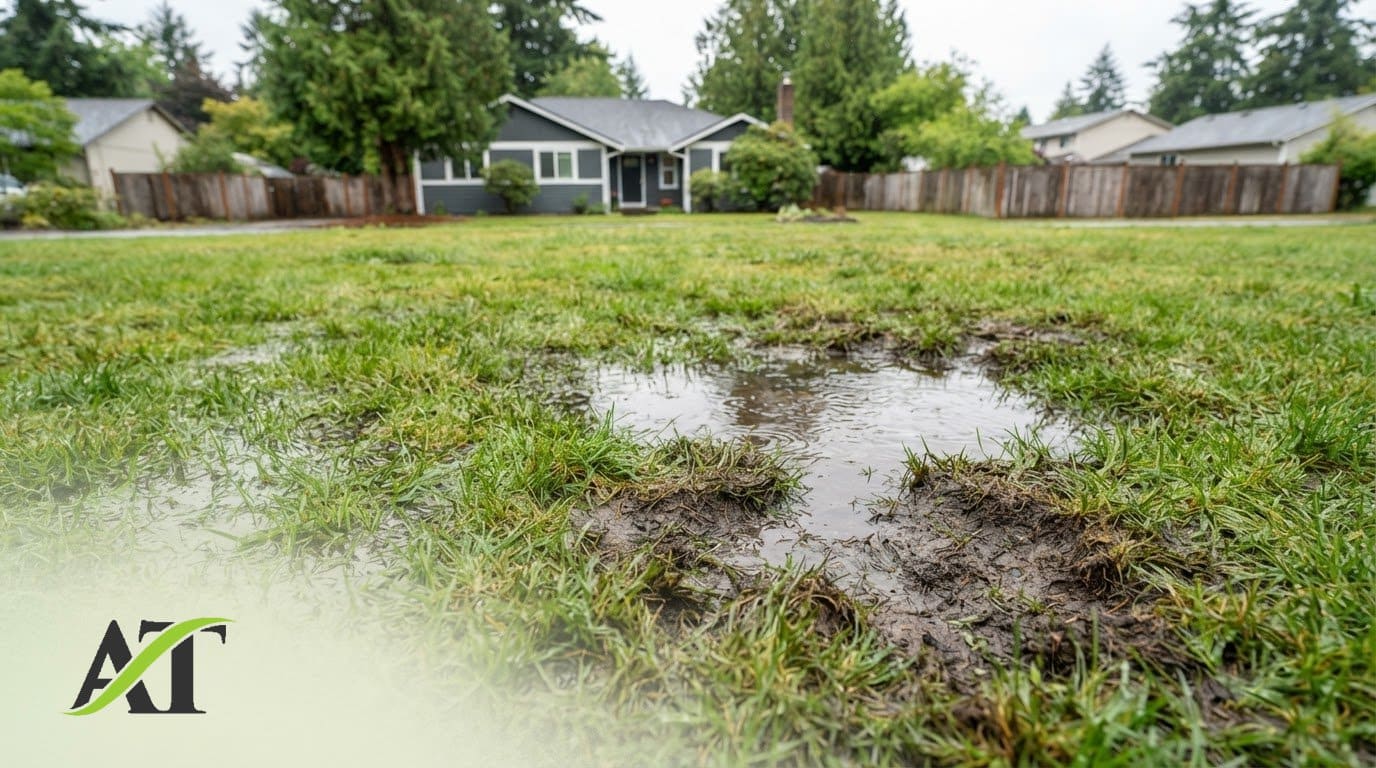
North Seattle lawns can thin or brown for many reasons, including summer drought stress, shade, drainage problems, compaction, disease, moss competition and other lawn stresses. Wildlife can also dig in lawns for food other than European chafer grubs.
Finding the grubs connects the visible symptoms with a likely underlying cause. If you do not find grubs, investigate other lawn problems before buying a grub-control product.
What European Chafer Damage Can Look Like
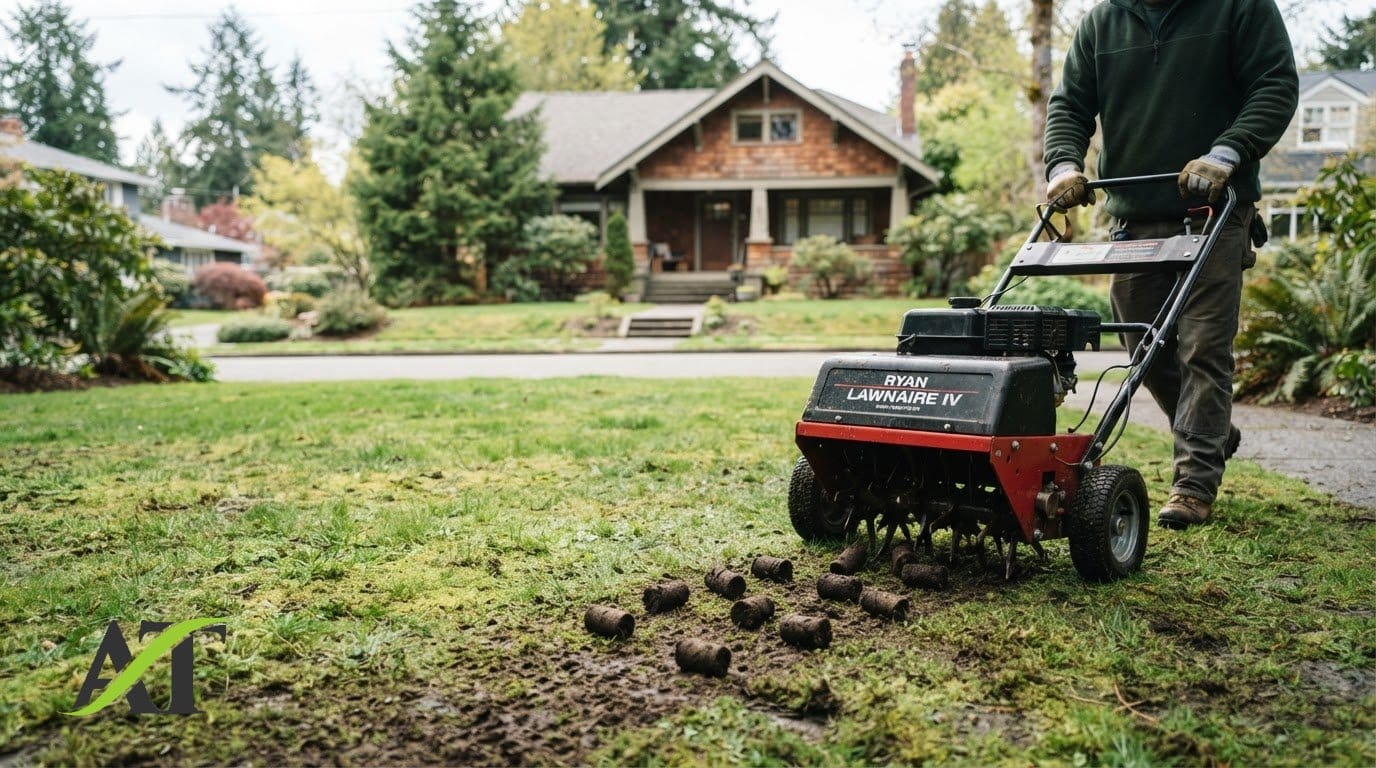
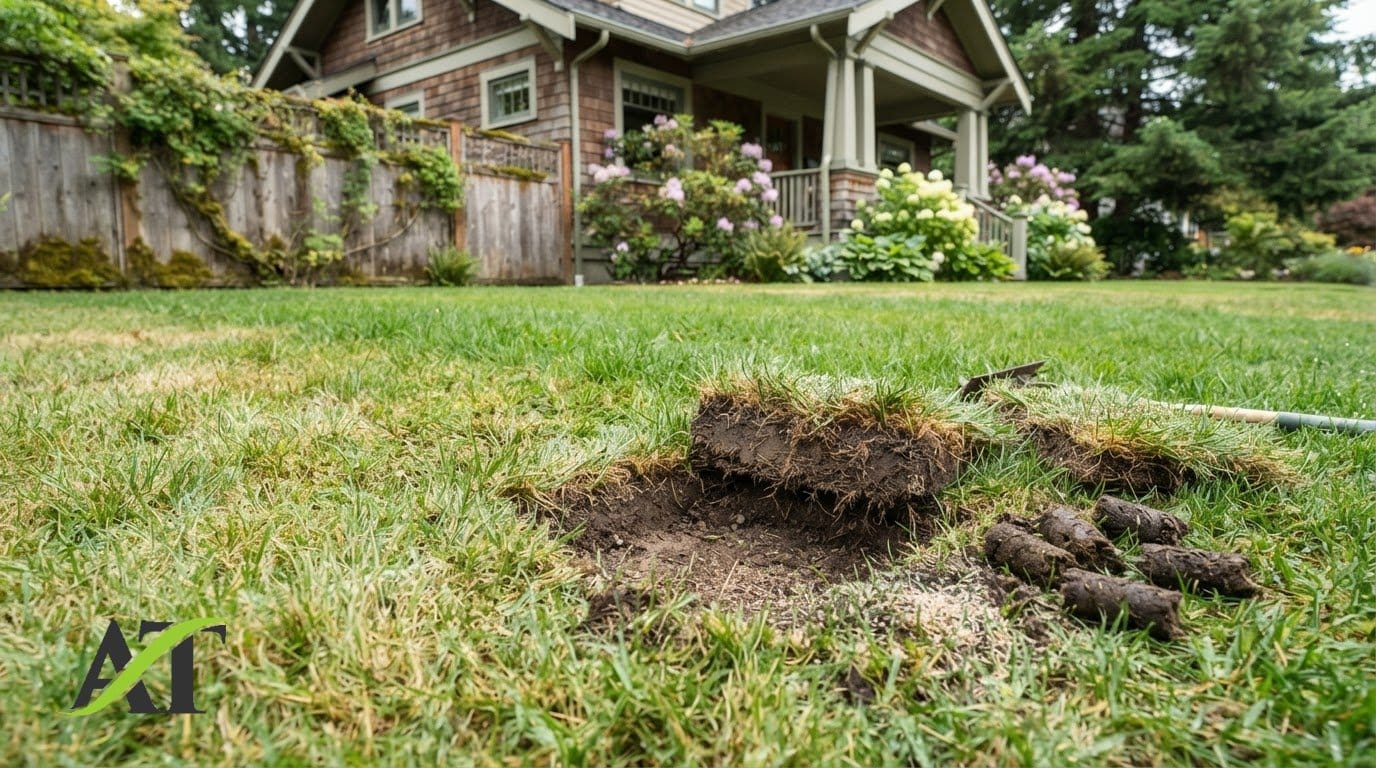
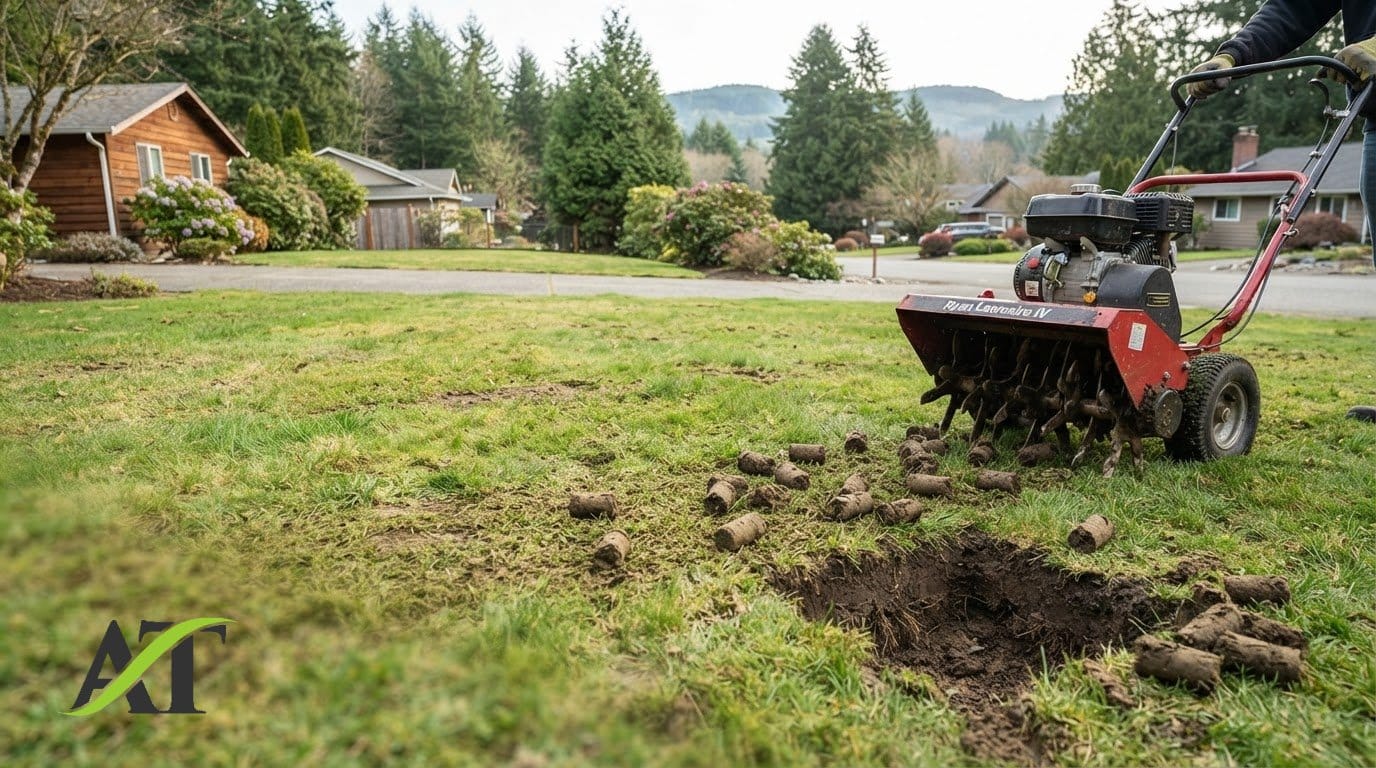
These photographs have been part of LawnTuneUps.com's European chafer documentation since the original article. They show both the grubs themselves and the severe secondary lawn damage that can occur when turf is weakened and animals forage for larvae.


European Chafer Timing Matters
European chafer has one generation per year. The time when homeowners notice severe lawn damage is not necessarily the best time for every treatment. The appropriate timing depends on the control method and the grub's stage of development.
Adults Emerge
Adults typically emerge around June and may form mating swarms around dusk. Seeing adults can provide useful context, but the larvae—not the adult beetles—are the stage responsible for turf-root damage.
Young Grubs Develop
Eggs hatch and young larvae begin developing in the soil. WSU identifies July–August as an important preventative-treatment period after a problem population has previously been identified.
Grubs Grow
Larvae continue feeding and growing. WSU recommends monitoring grub populations around mid-November through December when there is a history of serious infestation.
Feeding & Visible Damage
Larvae can continue feeding through winter before pupating in spring. Wildlife foraging may make an infestation especially obvious by tearing or peeling back weakened turf.
European Chafer Treatment Options
There is no reason to make an insecticide purchase before confirming the pest. Once European chafer is established as the problem, homeowners generally have several paths. The right choice depends on timing, the product or biological control being used, the severity of the problem and whether you are comfortable treating the lawn yourself.
Beneficial Nematodes
Certain beneficial nematodes have been studied for chafer-grub management. Success depends heavily on using an appropriate species and following supplier guidance for storage, application timing and soil moisture.
This is not a “spread it whenever you see damage” treatment. Living biological controls require appropriate handling and conditions.
Labeled Grub-Control Products
WSU lists several active ingredients and homeowner products for preventative European chafer management, including chlorantraniliprole and Scotts GrubEx1.
Use only a product currently registered for the intended lawn/turf use and follow the complete label for timing, application, watering and precautions.
Licensed Pest Treatment
If you do not want to manage the infestation yourself—or are unsure about identification, product choice or timing—contact an appropriately licensed pest-control or lawn-treatment professional.
Aerating Thatching Co. does not perform this treatment.
Scotts GrubEx1 Season-Long Grub Killer
For homeowners choosing a conventional DIY preventative treatment, this is the product Stewart recommends considering after European chafer has been properly identified and the application timing is appropriate.
Its active ingredient is chlorantraniliprole, which is among the preventative active ingredients listed by Washington State University for European chafer management. WSU also specifically lists Scotts GrubEx1 among homeowner products.
As an Amazon Associate, I earn from qualifying purchases.
Why Birds and Raccoons May Tear Up a Chafer-Infested Lawn
European chafer grubs are food for crows, raccoons, skunks and other animals. WSU notes that these predators can reduce grub numbers—but they can also cause extensive lawn damage while feeding.
The Grubs Weaken the Turf
Larvae feed around the grass root zone. With enough feeding pressure, the grass can become brown, thin, weakly rooted or dead.
Animals Can Make the Damage Dramatic
Once wildlife discovers a food source below the lawn, turf may be pecked apart, dug into or peeled back. In some lawns, this secondary damage is what first alerts the homeowner to a possible grub infestation.
Repairing the surface without addressing the underlying infestation can leave the lawn vulnerable to continued damage. Control first; restoration comes afterward.
What Not to Do With Suspected Chafer Damage
- Don't assume every brown or loose patch is European chafer. Look for the grubs.
- Don't apply a grub-control product simply because wildlife visited the lawn.
- Don't assume every grub treatment works the same way or at the same time.
- Don't use Milky Spore as a European chafer recommendation. Products aimed at one grub species are not automatically appropriate for another.
- Don't rebuild a severely damaged lawn while the underlying chafer problem remains unresolved.
- Don't expect Core Aeration, Dethatching (Power Raking), overseeding or fertilizer to kill the grubs. Those are lawn-improvement and restoration tools, not European chafer treatments.
- Don't ignore pesticide labels. Product directions and restrictions must be followed.
How Much Lawn Repair Does Chafer Damage Need?
Don't automatically jump to the largest renovation. Once the chafer problem has been dealt with and conditions are suitable for lawn recovery, look at how much healthy turf remains and match the repair to the actual damage.
Healthy Turf Still Remains
If most of the lawn remains well rooted and reasonably dense, it may need time and normal lawn care rather than an aggressive renovation.
If compaction is the main remaining issue, Core Aeration may be worth considering.
Density Needs Rebuilding
If the infestation or animal activity has left the lawn noticeably thin but substantial viable turf remains, new seed may be part of the recovery plan.
The Seattle Lawn Tune-Up combines Core Aeration, Premium Overseeding and Starter Fertilizer.
Surface Cleanup & Renovation
If large areas are dead, matted, loose or badly disturbed and surface material needs removal before rebuilding, a more substantial renovation may make sense.
The Full Meal Deal Lawn Renovation adds Dethatching (Power Raking) before Core Aeration, Premium Overseeding and Starter Fertilizer.
The presence of chafer damage does not automatically mean Dethatching (Power Raking) is required. The repair service should be chosen based on the condition that remains after the pest problem has been addressed.
If overseeding becomes part of the repair, follow the establishment instructions carefully. See the Seattle Lawn After-Care Guide for watering and post-service guidance.
Reducing Future European Chafer Damage
No lawn-care routine can guarantee that European chafer will never appear. The practical goal is to maintain turf that is better able to tolerate stress, monitor lawns with a known history of infestation, and use any preventative control at the appropriate time.
Maintain Healthy Turf
WSU recommends healthy turf as part of European chafer management. Appropriate mowing, fertilization and watering help support a stronger root system and reduce general grass stress.
Monitor Known Problem Lawns
If your lawn has experienced a serious infestation, don't wait for extensive wildlife damage before thinking about the next season. WSU recommends monitoring grub populations in late fall for lawns with a history of serious problems.
Use Treatment Timing Intentionally
A preventative treatment works differently from reacting after severe damage becomes obvious. Match treatment timing to current extension guidance and the specific product label.
Keep Other Lawn Problems in Perspective
Shade, drainage, summer drought stress, compaction and thin turf can still affect a North Seattle lawn independently of European chafer. Correct the problems that are actually present rather than assuming every weak area has the same cause.
European Chafer FAQ
How do I know if European chafer grubs are damaging my lawn?
Look for a combination of weak, thinning or brown turf, grass that has become unusually loose at the roots, repeated bird or animal activity, and—most importantly—the presence of pale, C-shaped scarab grubs beneath affected turf. Visible lawn damage alone does not confirm European chafer.
Why are crows or raccoons tearing up my lawn?
European chafer grubs can attract crows, raccoons, skunks and other predators. They dig, peck or peel back turf while searching for the larvae. This can create extensive secondary damage, but wildlife activity by itself does not prove European chafer is present.
When should European chafer grubs be treated?
Timing depends on the treatment method and grub life stage. Current WSU guidance identifies July–August as a preventative-treatment period after a problem population has been identified. Always follow the current label for the specific pesticide product being used. Beneficial nematodes have their own timing, handling and soil-moisture requirements.
Does Scotts GrubEx work for European chafer?
Washington State University currently lists Scotts GrubEx1 Season-Long Grub Killer among homeowner products for preventative European chafer management. Its active ingredient is chlorantraniliprole. Confirm current registration and follow the complete product label for lawn use, timing, application and precautions.
Can beneficial nematodes help control European chafer?
Beneficial nematodes are a biological-control option discussed in extension guidance for European chafer. Results depend on factors including nematode species, timing, storage and handling, soil temperature and adequate moisture. Follow current supplier and extension guidance rather than treating them as a guaranteed solution.
Will aeration or Dethatching (Power Raking) get rid of chafer grubs?
No. Core Aeration and Dethatching (Power Raking) are lawn-improvement and renovation services; they are not European chafer treatments. Address the pest problem separately before investing in major lawn restoration.
Will my lawn recover on its own after chafer damage?
It depends on how much viable, well-rooted grass remains. Light damage may recover with appropriate lawn care. Thin areas may need overseeding, while lawns with extensive dead, loose or disturbed turf may need more substantial renovation. Deal with the underlying chafer problem before deciding how much repair is appropriate.
Does Aerating Thatching Co. treat European chafer beetles?
No. Aerating Thatching Co. does not provide pesticide or European chafer grub treatment. Stewart can help with appropriate lawn restoration after the infestation has been addressed, including Core Aeration, Lawn Tune-Up services or more extensive lawn renovation when the remaining lawn condition warrants it.
European Chafer Resources
For pest identification and management recommendations, use current university and pesticide-label information. LawnTuneUps.com provides the North Seattle lawn-repair perspective; Washington State University provides the technical pest-management guidance referenced throughout this article.
Washington State University Hortsense
Current European chafer identification, life-cycle and management guidance for lawns and turf.
Read WSU European Chafer Guidance →WSU Extension European Chafer Publication
Additional Washington State University background on European chafer damage and management.
View the WSU Extension Resource →Pesticide registrations, labels and recommendations can change. Check current Washington registration information and the product label before application.
Need Help Repairing the Lawn After Chafer Damage?
First address the European chafer infestation. Then determine what the lawn actually needs to recover.
Aerating Thatching Co. specializes in lawn improvement and restoration—not pesticide treatment. Stewart has served Seattle-area homeowners since 2004 and personally performs the lawn work.
Depending on what remains after the chafer problem is under control, the right approach may be as simple as allowing healthy turf to recover, or it may involve Core Aeration, a Lawn Tune-Up, or a more complete Full Meal Deal Lawn Renovation.
You do not automatically need the biggest package. The goal is to match the repair to the condition of the lawn.