Your lawn mower doesn’t need a tune-up nearly as much as the soil beneath it does. You might reach for a spark plug and fresh oil when you hear that term, but your grass requires a different kind of mechanical attention. If your yard looks thin or moss is winning the battle in your shaded spots, you’re likely asking: what is a lawn tune up? It’s not about sharpening blades or changing filters. It is a mechanical restoration process designed to fix the foundation of your turf. While a mower service keeps the engine running, a Lawn Tune-Up keeps the ecosystem alive.
It’s frustrating to spend every weekend watering only to see patchy, compacted dirt. You want a thick, green carpet that survives the summer heat, and we’ve seen every issue Northwest lawns can throw at a homeowner. This guide explains how this three-part process revives struggling yards. You’ll discover the roles of Core Aeration, Overseeding, and Fertilizing in restoring soil health. We also explain why soil temperatures between 55°F and 75°F are the key to germination and help you decide if you need the Full Meal Deal, which includes Power Raking (Dethatching), Core Aeration, Overseeding, and Fertilizing.
Key Takeaways
- Learn exactly what is a lawn tune up and why this three-part process of Core Aeration, Overseeding, and Fertilizing is a restoration for your soil, not your mower.
- Identify when a lawn needs the Full Meal Deal, which adds Power Raking (Dethatching) to the standard package to handle heavy moss or debris.
- Discover why monitoring soil temperature is vital, as cool-season grass seed establishes best when the ground is between 55°F and 75°F.
- Understand the factors that influence your results, including moisture and seed-to-soil contact, to ensure your mechanical restoration leads to a thicker lawn.
Lawn Mower vs. Lawn Tune-Up: Understanding the Difference
Most people think of spark plugs and oil changes when they hear the word “tune-up.” While your mower definitely needs that maintenance to cut straight, those mechanical fixes won’t help your grass grow thicker. A professional Lawn Tune-Up isn’t an equipment service. It’s a mechanical restoration of the turf itself. Aerating Thatching Co. leaves the engine repairs to the local shops. We focus exclusively on the ground. A well-oiled machine doesn’t matter if you’re just mowing moss and dirt.
Tuning the Machine vs. Tuning the Soil
Mower maintenance is straightforward. You change the filters, sharpen the blades, and swap the spark plugs. It’s necessary for the tool, but it does nothing for the root system. To understand a comprehensive overview of lawns, you have to look deeper than the surface. A professional Lawn Tune-Up “tunes” the environment where the grass lives. This involves three specific steps: Core Aeration, Overseeding, and Fertilizing. This combination addresses soil compaction and seed density directly. It is a physical reset for your yard.
Why Mechanical Restoration Matters
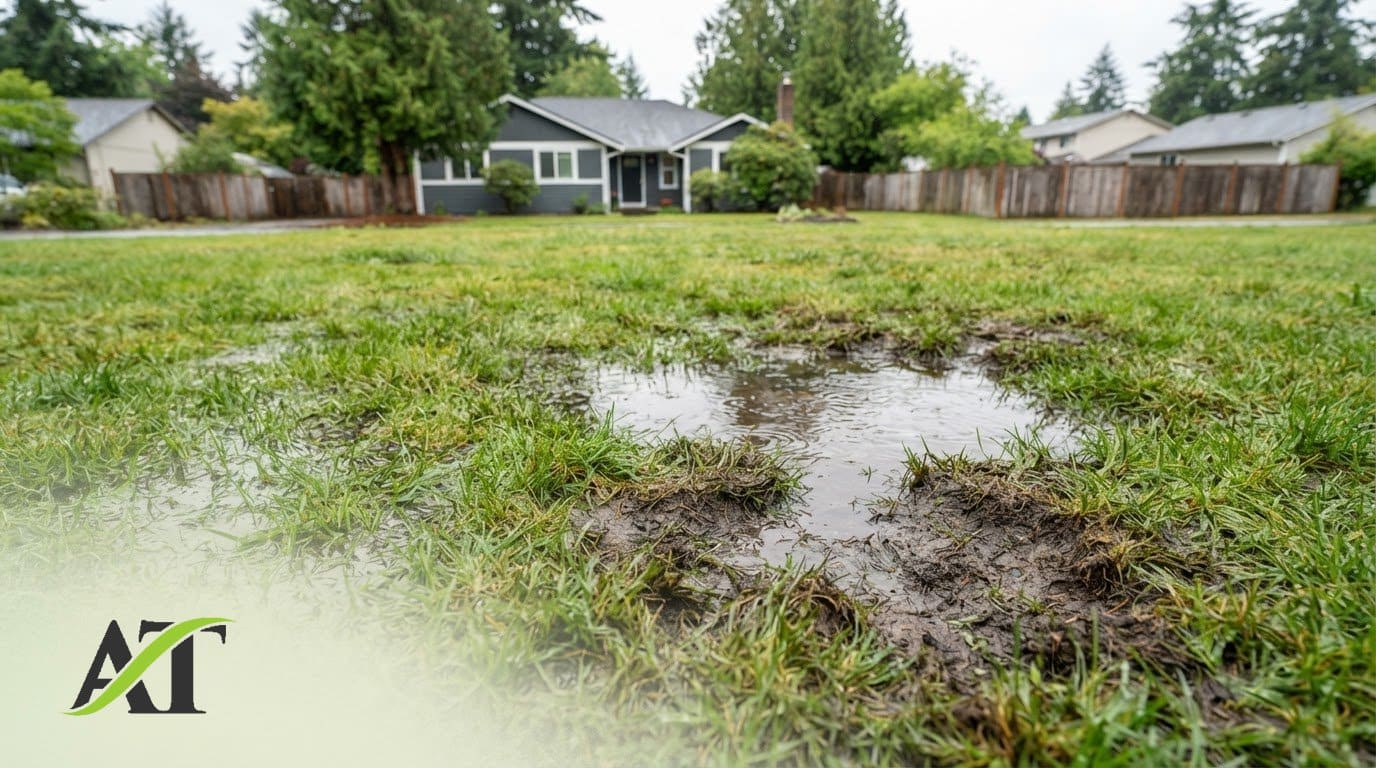
Adding chemicals or “weed and feed” products often masks problems rather than fixing them. If your soil is hard as a rock, water and nutrients just run off. Mechanical restoration solves the root cause. This is what is a lawn tune up at its core. By using Core Aeration to pull soil plugs, we create room for roots to breathe. Our Lawn Tune-Up service Seattle acts as a holistic health plan. It restores the physical structure of the earth. This process ensures that new seed has the space to establish and nutrients have a clear path to the root zone. It’s a practical, labor-heavy approach that delivers visible results where liquid treatments fail.
What is Included in a Professional Lawn Tune-Up?
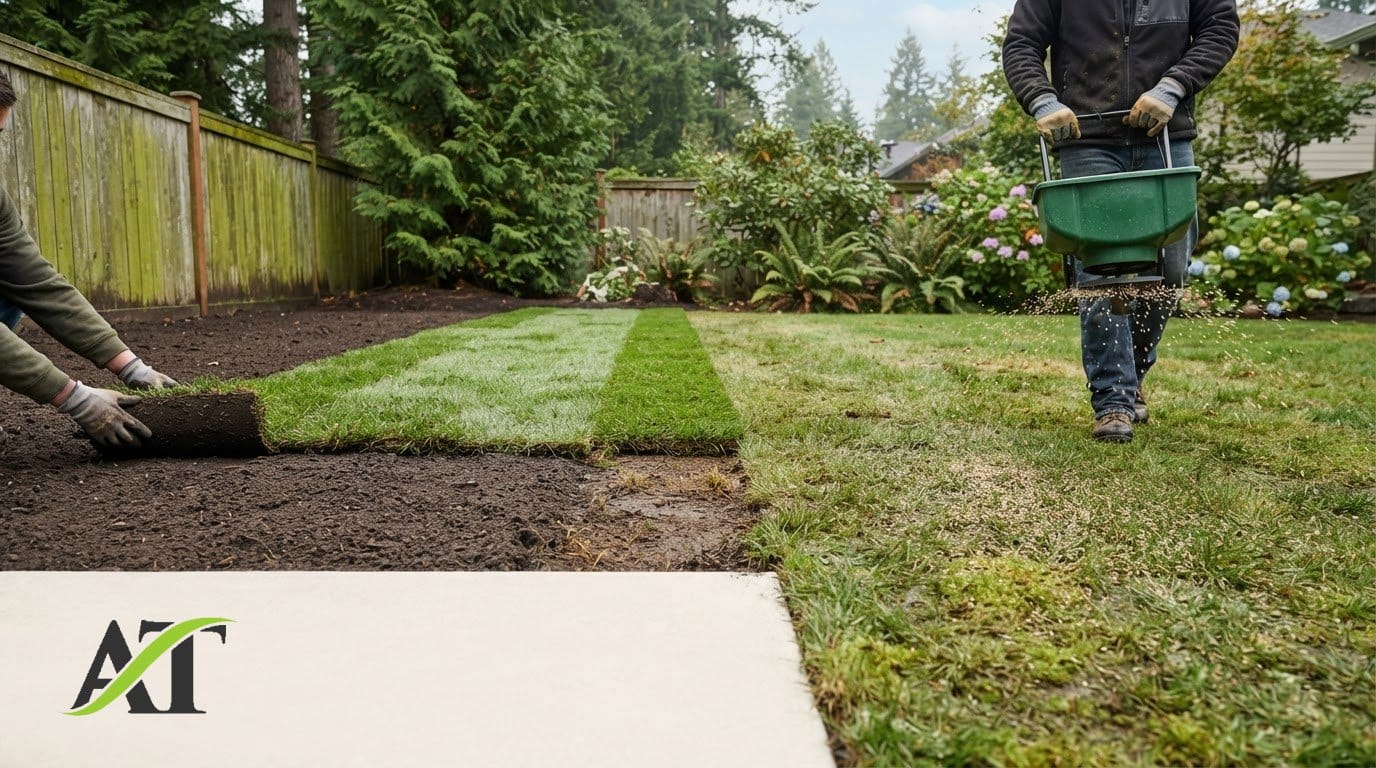
A professional Lawn Tune-Up is a specific three-part process. It is not a vague maintenance package. To answer what is a lawn tune up, you must look at the mechanical and biological restoration of the turf. This service consists exclusively of three pillars: Core Aeration, Overseeding, and Fertilizing. Each step is designed to address a physical limitation of your yard.
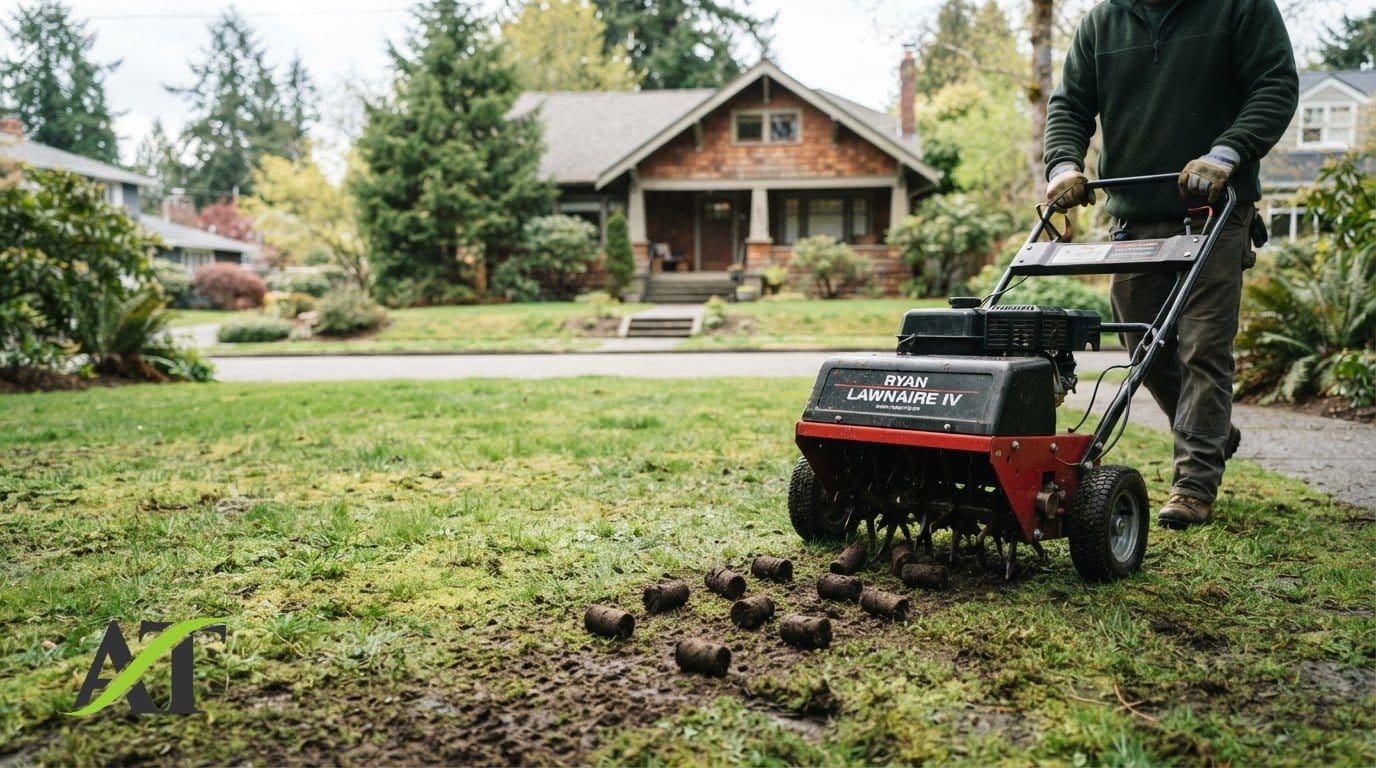
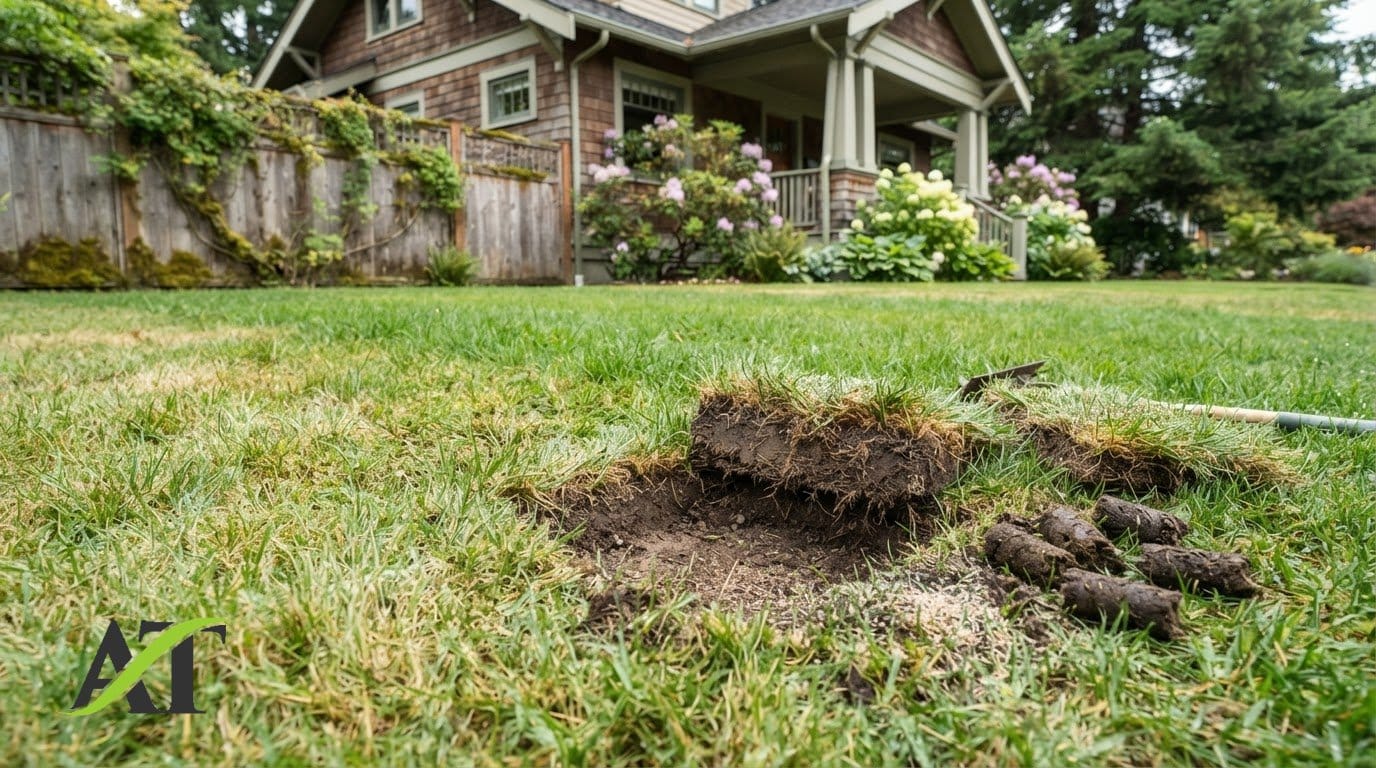
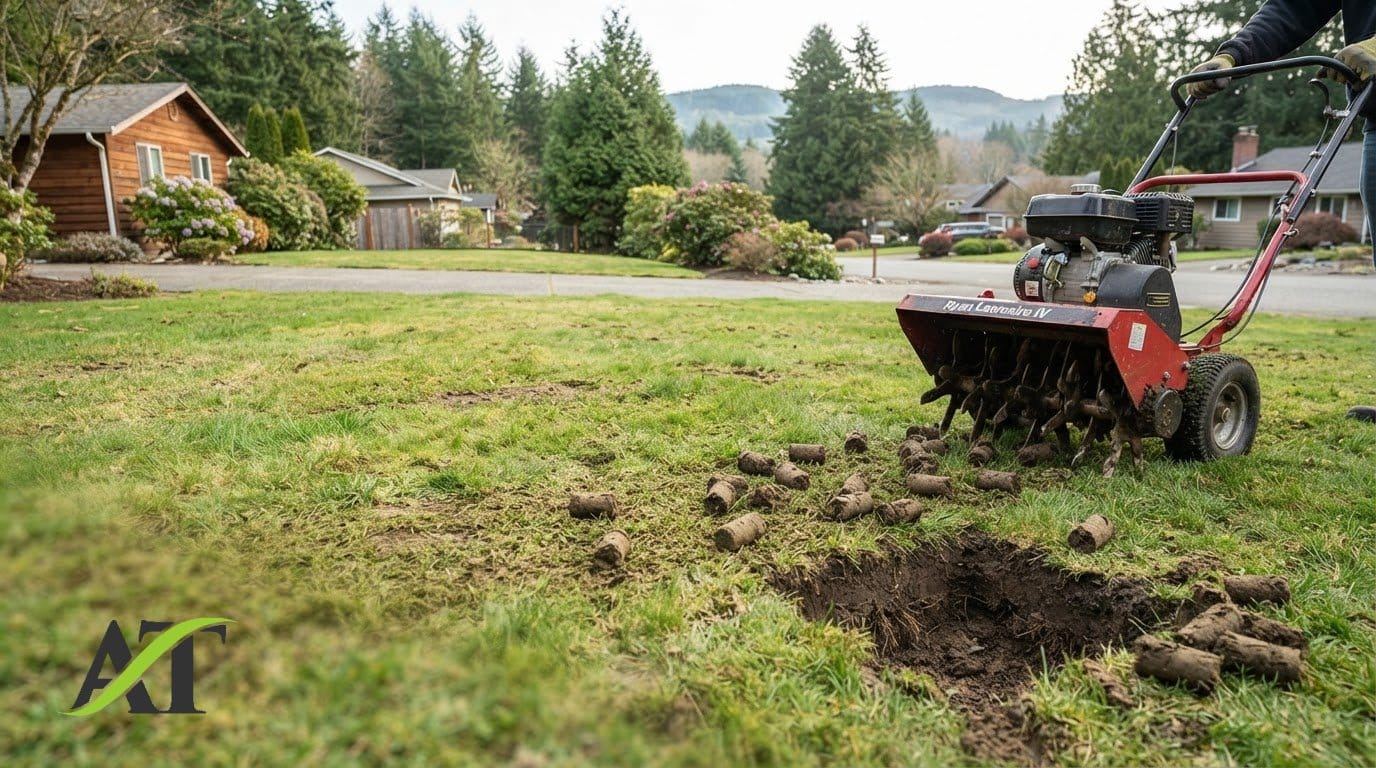
The first pillar is Core Aeration. We use professional equipment to pull small plugs of soil from your yard. This process is essential for compacted ground. It opens up pathways so air, water, and nutrients can reach the root zone. Without these openings, your grass struggles to breathe and absorb moisture. The pulled plugs eventually break down, returning beneficial organic matter to the surface.
Next is Overseeding. We introduce high-quality grass seed into your existing lawn. This increases turf density and fills in patchy areas. A thicker lawn is your best defense against weeds and moss. Finally, we apply Fertilizing treatments. We focus on high-quality nutrients that strengthen existing roots and fuel new growth. Using Organic Fertilizing helps maintain soil health over the long term without the harsh spikes associated with synthetic products.
These three steps work in synergy to rebuild your lawn from the soil up. They follow a season-by-season guide to lawn care to ensure the yard has what it needs at the right time. This methodical approach is why a professional restoration outperforms simple DIY spreading.
Optional Add-ons: Lime and Soil Amendments
Some yards require extra help beyond the standard package. In the Pacific Northwest, acidic soil is a common issue that encourages moss growth. While not part of the base service, a Lime Application is a frequent add-on. It helps balance soil pH and creates an environment where grass thrives. You can learn more about professional lime application in Edmonds if moss is taking over your shaded areas. If you want a tailored plan for your property, feel free to request a quote from our team.
The Full Meal Deal: When a Tune-Up Isn’t Enough
While we’ve discussed what is a lawn tune up, sometimes the standard three-step process isn’t enough for a neglected yard. If your grass is suffocating under years of debris, you need the Full Meal Deal. This premium restoration package includes four specific components: Power Raking (Dethatching), Core Aeration, Overseeding, and Fertilizing. It’s the most intensive service we offer for reviving local landscapes that have fallen behind on maintenance. Once the foundation of your yard is restored, you can begin planning the rest of your outdoor oasis with premium additions from Top Tier Patio Gear.
Power Raking (Dethatching) is the critical first step in this package. It uses mechanical blades to pull up the thick layer of dead organic matter, called thatch, that sits between the green blades and the soil. When thatch gets too thick, it acts like a waterproof tarp. It prevents water and nutrients from reaching the roots. If your yard feels spongy when you walk on it, or if you see water running off instead of soaking in, your lawn is likely choked by thatch and moss.
Effective restoration requires more than just throwing seed on top of debris. A comprehensive guide to lawn maintenance highlights that proper preparation is key to success. Mechanical dethatching clears the way for maximum seed-to-soil contact. By removing the debris first, we create a clean “seed bed” so the new grass can actually take root. You can find more details in our guide to professional power raking in Lynnwood.
Full Meal Deal vs. Standard Lawn Tune-Up
Choosing between these services depends on the current state of your turf. A standard Lawn Tune-Up is great for yearly maintenance or slightly thin yards. However, the Full Meal Deal is the ultimate reset button for lawns with heavy moss or thick thatch. Consider these signs when deciding:
- Lawn Tune-Up: Best for lawns that are generally healthy but need more density or a seasonal boost.
- Full Meal Deal: Essential for lawns with a spongy feel, visible moss takeover, or years of neglected debris.

Timing and Expectations for Seattle Area Lawns
Successful restoration in the Pacific Northwest requires more than just good equipment. It requires timing. When homeowners ask what is a lawn tune up, they often focus on the calendar date. However, the ground dictates the schedule. Germination depends entirely on soil temperature, not the air temperature you see on the morning news. If the ground is too cold or too hot, your new seed won’t establish correctly.
The optimal soil temperature range for cool-season grass seed is 55°F to 75°F (13°C to 24°C). While seeds can sprout outside this window, the process is slower, less consistent, and produces less reliable establishment. In Shoreline and Lake Forest Park, where shade and dampness encourage moss, a properly timed Lawn Tune-Up is your best defense. By increasing turf density when the soil is warm, you give grass a head start over competing moss and weeds.
Manage your expectations carefully. Results are never an absolute guarantee. Multiple factors influence the outcome, including consistent moisture, proper seed-to-soil contact, and unpredictable weather patterns. We provide the mechanical expertise and high-quality materials, but the environment plays its part in how well the grass takes hold.
Best Months for a Tune-Up in the PNW
Spring and Fall are the primary windows for professional restoration. This is the ideal time for Core Aeration in Snohomish because the soil is moist and the temperatures are stable. Summer heat is often too harsh for young plants. It makes germination slower and much less reliable for new seedlings without constant irrigation.
Post-Service Care for Maximum Results
Your work starts once we leave the property. Consistent moisture is the #1 factor in Overseeding success. Follow this checklist to protect your investment:
- Watering: Keep the soil surface moist with light, frequent watering until the new grass is established.
- Mowing: Don’t cut the lawn until the new grass reaches at least three inches in height.
- Traffic: Keep pets and foot traffic off the treated areas for at least three weeks.
Restore Your Turf from the Soil Up
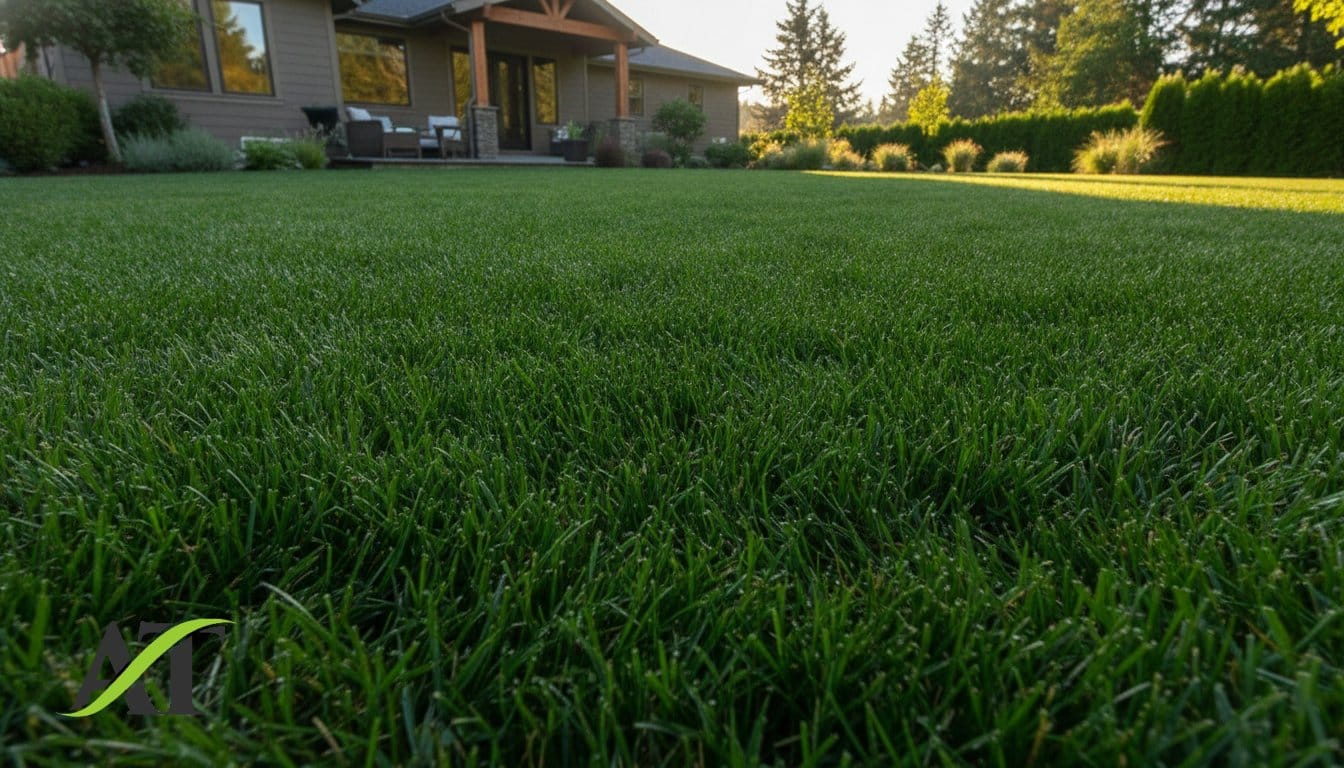
A Lawn Tune-Up is the most effective way to transition from a thin, mossy yard to a resilient landscape. It isn’t a service for your mower; it’s a mechanical restoration for your soil. By combining Core Aeration, Overseeding, and Fertilizing, you address the root causes of thin grass. For more intensive cleaning, the Full Meal Deal resets neglected lawns by adding Power Raking (Dethatching) to the process.
We’ve served North Seattle and Snohomish County since 2004 as an owner-operated local partner. Our specialized equipment ensures your restoration is handled with precision. Now that you know what is a lawn tune up, you can stop guessing and start growing. Remember to watch for those optimal soil temperatures between 55°F and 75°F (13°C to 24°C) for the best results. We’re ready to help you reclaim your outdoor space with a pragmatic, results-driven approach.
Your path to a thicker, greener lawn starts beneath the surface. Let’s get to work on building a yard that lasts.
Frequently Asked Questions
How is a Lawn Tune-Up different from a lawn mower tune-up?
A Lawn Tune-Up focuses on the health of your soil and grass, not your equipment. If you’re wondering what is a lawn tune up, it’s a restoration process targeting the turf’s foundation. It consists of Core Aeration, Overseeding, and Fertilizing. We use professional machinery to pull soil plugs and introduce high-quality seed. This mechanical reset improves lawn density and health rather than just maintaining a machine.
Does a Lawn Tune-Up include mowing or edging?
No, our services don’t include mowing, edging, or general yard maintenance. Aerating Thatching Co. specializes exclusively in mechanical restoration and soil health. By focusing on Core Aeration and Overseeding, we ensure your turf has the best environment to grow thick and green. We leave the weekly cutting and trimming to general maintenance companies so we can provide expert focus on long-term turf vitality. For property owners who need help with other tasks like tree care or cleanout projects, you can learn more about Tree Guy 4 Hire.
The Full Meal Deal is our premium restoration package for lawns with heavy moss or thick debris. It includes four specific steps: Power Raking (Dethatching), Core Aeration, Overseeding, and Fertilizing. You likely need this service if your yard feels spongy or if water runs off the surface instead of soaking in. It’s the ultimate reset button for neglected Seattle landscapes that require more than a standard Lawn Tune-Up.
When is the best time of year to schedule a Lawn Tune-Up in Seattle?
Spring and Fall are the best times to schedule what is a lawn tune up in the Pacific Northwest. These windows offer the most stable soil temperatures for germination. We look for ground temperatures between 55°F and 75°F (13°C to 24°C). Scheduling during these seasons avoids the harsh summer heat, which can make new grass establishment slower and much less consistent for homeowners in North Seattle and Snohomish County.
How long does it take for new grass seed to germinate after a tune-up?
Most cool-season grass seeds germinate within 10 to 21 days, but success depends on several factors. Soil temperature must stay within the 55°F to 75°F range for reliable results. Consistent moisture is also vital. While we provide expert Overseeding, factors like weather and seed-to-soil contact mean results can vary. Germination might be slower or less consistent if temperatures fall outside the optimal range during the establishment phase.
Article by
Stewart Armour
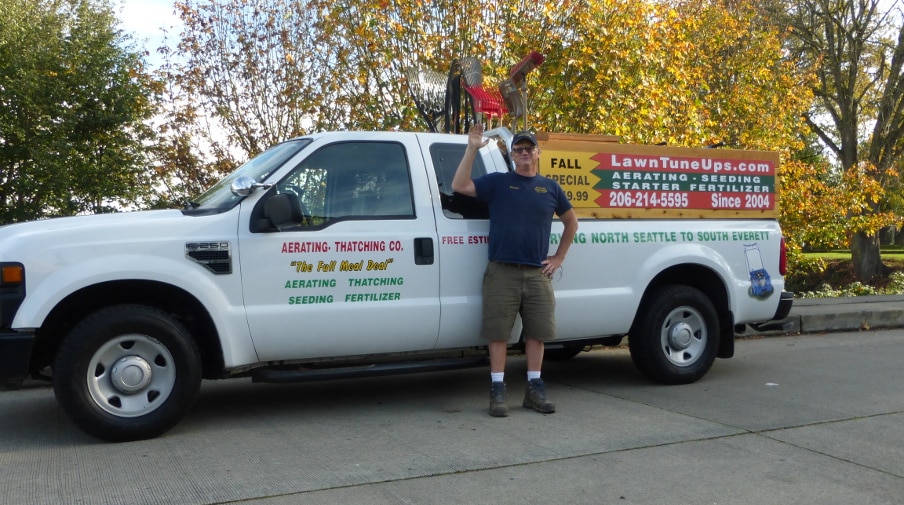
Stewart Armour is an independent lawn restoration expert, educator, and owner of Aerating Thatching Co., serving the greater Seattle area since 2004. With more than two decades of professional experience restoring Western Washington lawns, Stewart specializes in diagnosing lawn problems, improving soil health, and developing long-term lawn renovation strategies. His education includes turf management studies, advanced golf course turf training, and continuing education through Wilbur-Ellis University, State Turf Facilities, Soil First Academy, and Golf Course Applied Turf Physiology. Every article published on LawnTuneUps.com is grounded in practical field experience, current turf science, and a commitment to helping homeowners understand the why behind every recommendation—not just what to do.
Stewart has personally evaluated thousands of residential lawns throughout the Seattle area and remains committed to helping homeowners understand the science behind growing healthier, more resilient lawns.