A greener lawn often comes from well-timed work, not more treatments. An eco-friendly lawn service in Mountlake Terrace should match seasonal care to the lawn’s condition: core aeration is typically done in May or September, while overseeding can be done in March, April, May, June, September, and October. The right approach depends on what’s limiting healthy turf growth.
Want a thicker lawn without applying treatments by habit? If you’re looking for an eco-friendly lawn service in Mountlake Terrace, start by identifying what your lawn needs. Compaction, thatch, shade, and drainage problems call for different responses, and aeration won’t fix every issue. This guide explains how seasonal care, aeration, overseeding, and organic fertilizing can fit into a focused plan.
Key Takeaways
- Match seasonal lawn work to the problem you see; compaction, thatch, shade, and drainage call for different responses.
- Use fertilizer and soil conditioning thoughtfully, and consider how lawn clippings and compost can support soil health.
- Time aeration and overseeding for active growth, while recognizing that seed establishment also depends on soil contact and moisture.
- A Lawn Tune-Up combines Core Aeration, Overseeding, and Fertilizing when your lawn needs help with soil access and turf thickness.
Seasonal landscape and property care
Seasonal care should reflect your lawn’s condition, growth, and water needs. Choose specific tasks instead of applying the same treatments throughout the year. That helps reduce unnecessary inputs and keeps the work focused on what your lawn actually needs.
For Washington State rebates or water-conservation programs, follow the eligibility terms of the specific program. Routine lawn work does not automatically qualify. Plan seasonal care around your property’s needs.
Customized Seasonal Lawn Care Plans
A seasonal plan should change as the lawn’s needs change. During dry weather, account for rainfall and avoid treating brown, dormant grass as automatically damaged. Dormant lawns can turn brown for 4 to 6 weeks; the supplied seasonal guidance recommends ½ inch of water every four weeks during dormancy. For weekly residential lawn care, keep a simple record of watering, visible growth, and problem areas. That record helps distinguish seasonal dormancy from a persistent lawn issue.
Environmentally Friendly Lawn Care
Water use is one practical place to reduce waste. The seasonal guidance sets a ceiling of 1 inch of water per week, including rainfall. Adjust irrigation to actual rain rather than using an unchanged weekly schedule. Organic lawn care can also include native landscape gardening, which uses plants indigenous to the region instead of imported or exotic choices. Consider whether a lawn area needs turf at all; replacing a low-use patch with locally suited plants can support habitat while reducing the area that needs watering.
Local Eco-Friendly Service Options
Compare Mountlake Terrace options by the work performed and its environmental effect. Gas-powered equipment contributes to air pollution, while electric equipment produces zero local emissions during operation. Distinguish mowing from seasonal turf treatments, and consider whether lawn edges or planting areas can provide useful wildlife habitat. A clear service description should name each task and explain its purpose.
Organic fertilization and soil conditioning
Choose fertilizer based on the lawn’s growth and maintenance needs, not the word “organic” alone. Medium- and high-maintenance lawns should be fertilized in late May and again in early to mid-September. Minimal-maintenance lawns should be fertilized in early to mid-September. These are planning windows, not a reason to fertilize every lawn automatically. Consider turf density, recent growth, and whether the lawn has already received fertilizer.
Organic products can supply nutrients, but they still require careful use. Read the product label for its intended application, directions, and handling guidance. Don’t apply more simply because a product is organic. For hose-applied fertilizer, follow the mixing and application directions and keep spray on the intended lawn area. The delivery method doesn’t determine whether fertilizer is organic or suitable for your lawn.
Soil conditioning and fertilizing address different needs. Fertilizer supplies nutrients; a soil amendment is selected to address soil properties. Before applying either, identify the problem and the area affected. Weak growth across a lawn, for instance, calls for a different assessment than a single bare patch. Avoid combining products with overlapping purposes unless there’s a clear reason.
When using pesticides or fertilizer in Mountlake Terrace or Snohomish County, follow each product label and use products only for their stated purpose. An organic product isn’t automatically suitable for every lawn or application. Base treatment choices on the lawn’s condition and the product’s intended use, not a broad “natural” claim.
If you want help considering seasonal nutrient needs, share details about your lawn.
Lawn aeration and overseeding
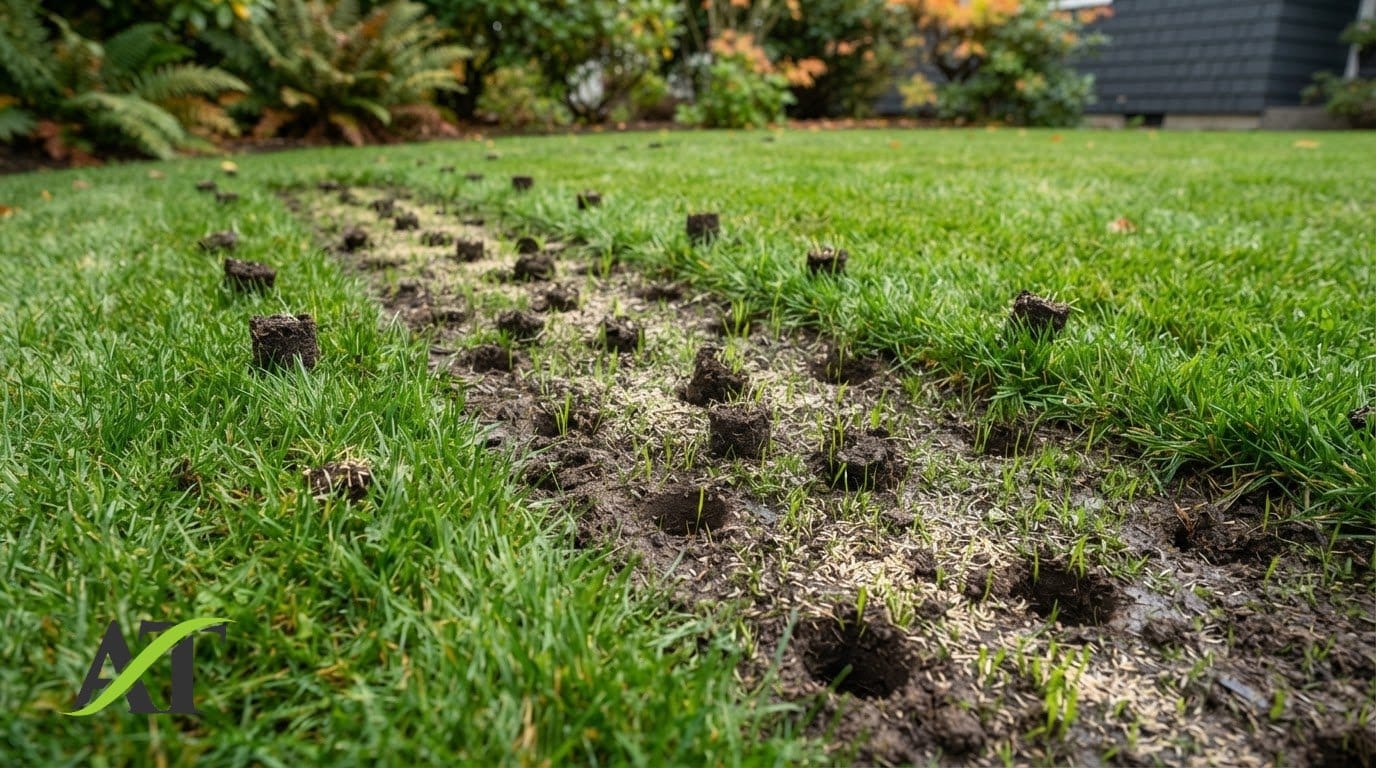
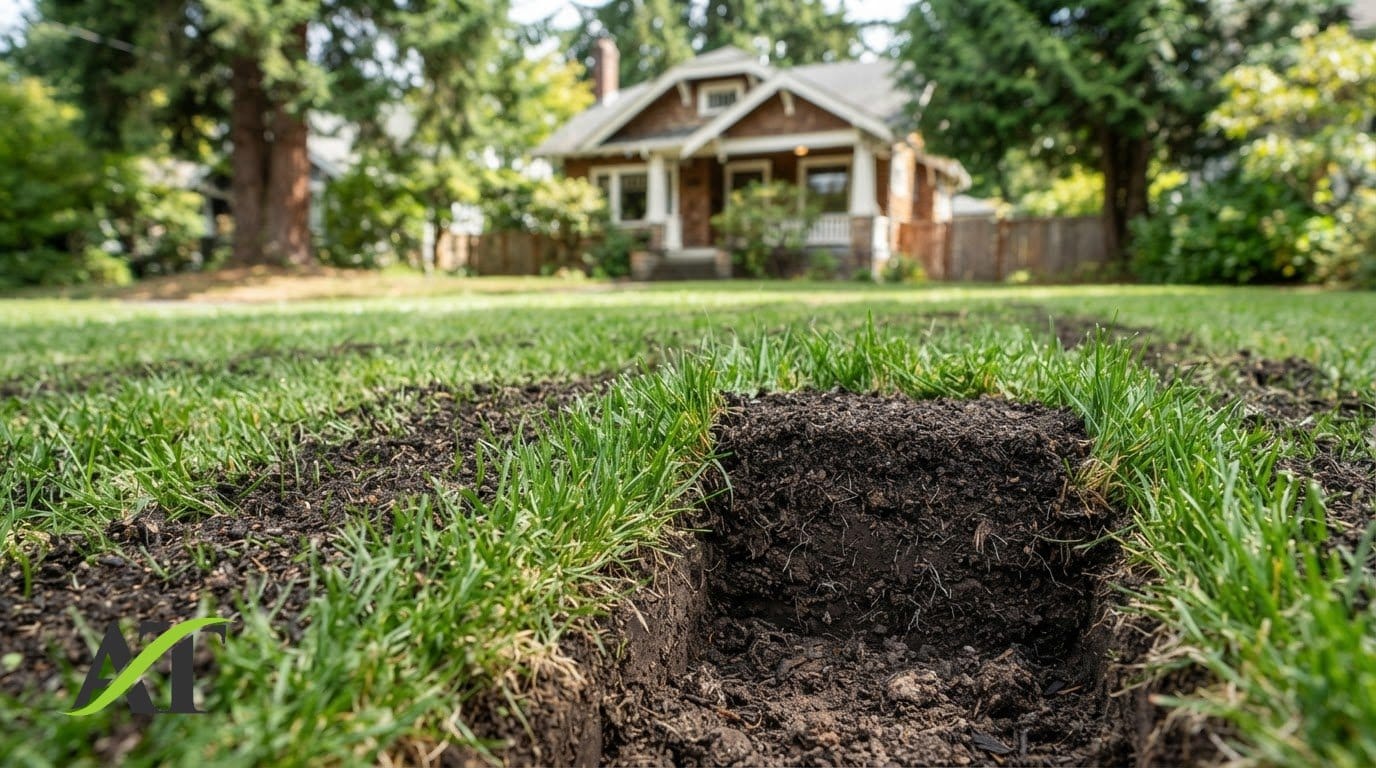
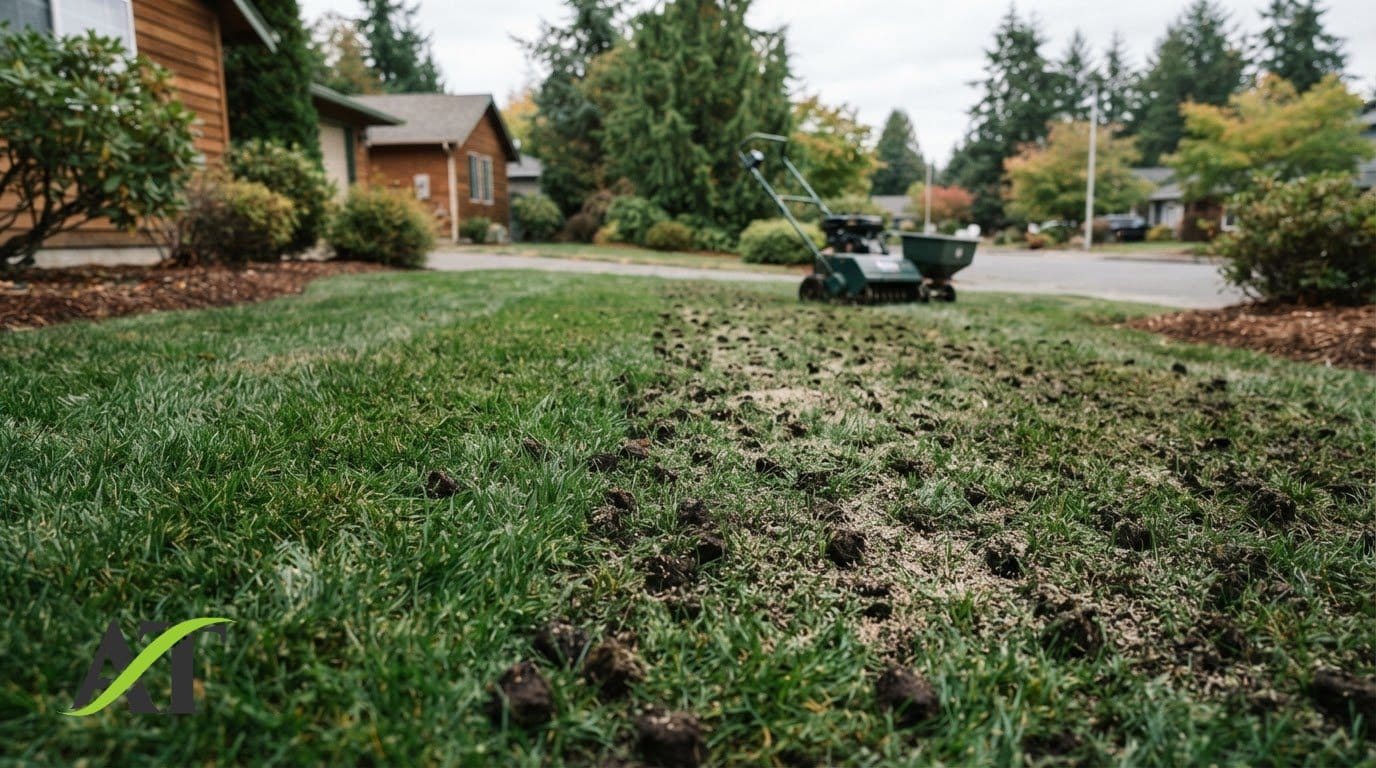
Core Aeration and Overseeding address different but related lawn problems. Core Aeration removes small plugs from the shallow turf root zone, helping relieve surface compaction. It doesn’t break deep glacial hardpan or correct a subsurface drainage defect. Overseeding adds grass seed to thin turf, but seed needs contact with soil and steady moisture to establish.
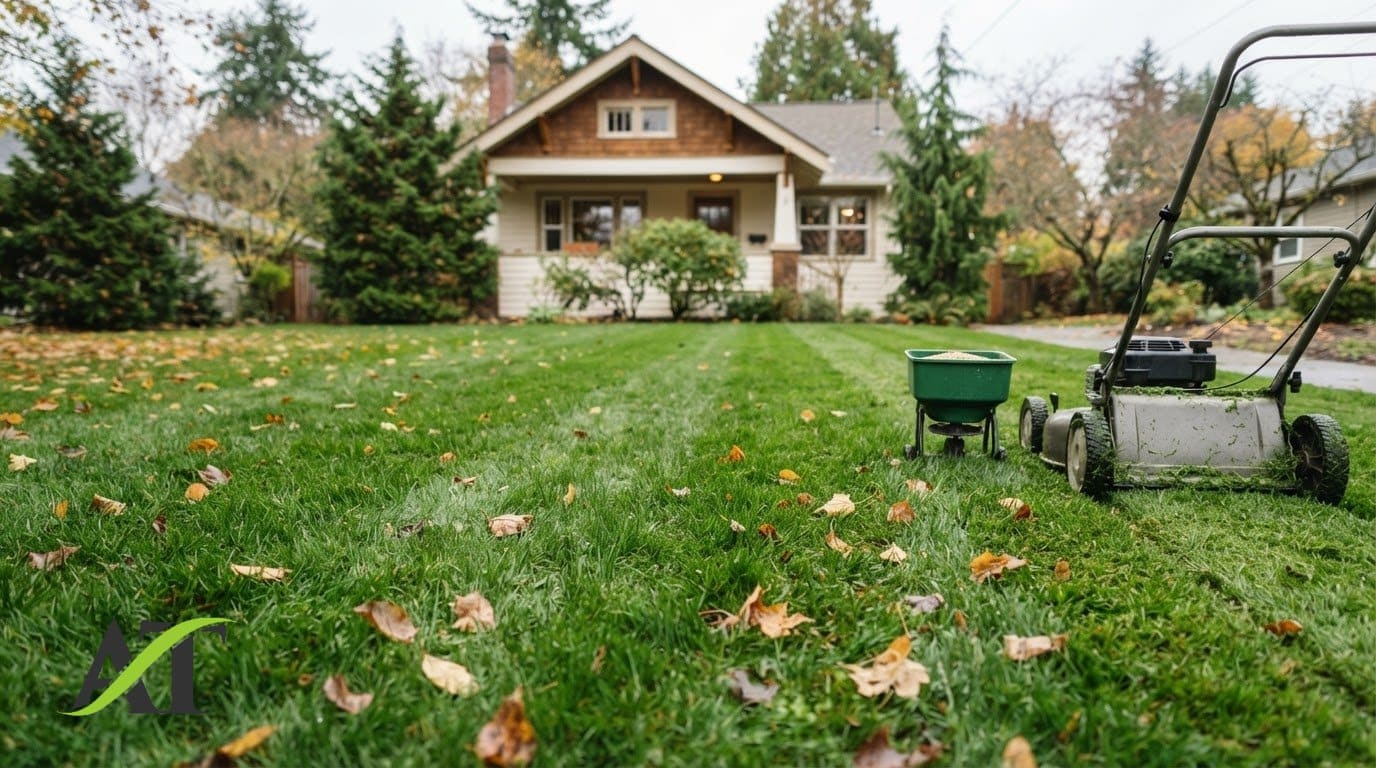
Timing matters. Core Aeration is recommended while grass is actively growing, typically in May or September. Overseeding is recommended in March, April, May, June, September, and October. Choose based on the lawn’s condition and seasonal growth, not just a convenient calendar date. If water pools or drains poorly, investigate the drainage issue rather than expecting aeration to solve it.
For the Premium 60/40 Sun & Shade Mix used in Seattle-area Overseeding, the practical service window is soil temperatures around 55-80°F (13-27°C). This is a preference for this seed and local work, not a strict cutoff or universal optimum. Other grass seed can have different temperature preferences. Soil moisture, seed-to-soil contact, existing soil conditions, weather, and aftercare also affect establishment. Check soil temperature rather than relying only on afternoon air readings.
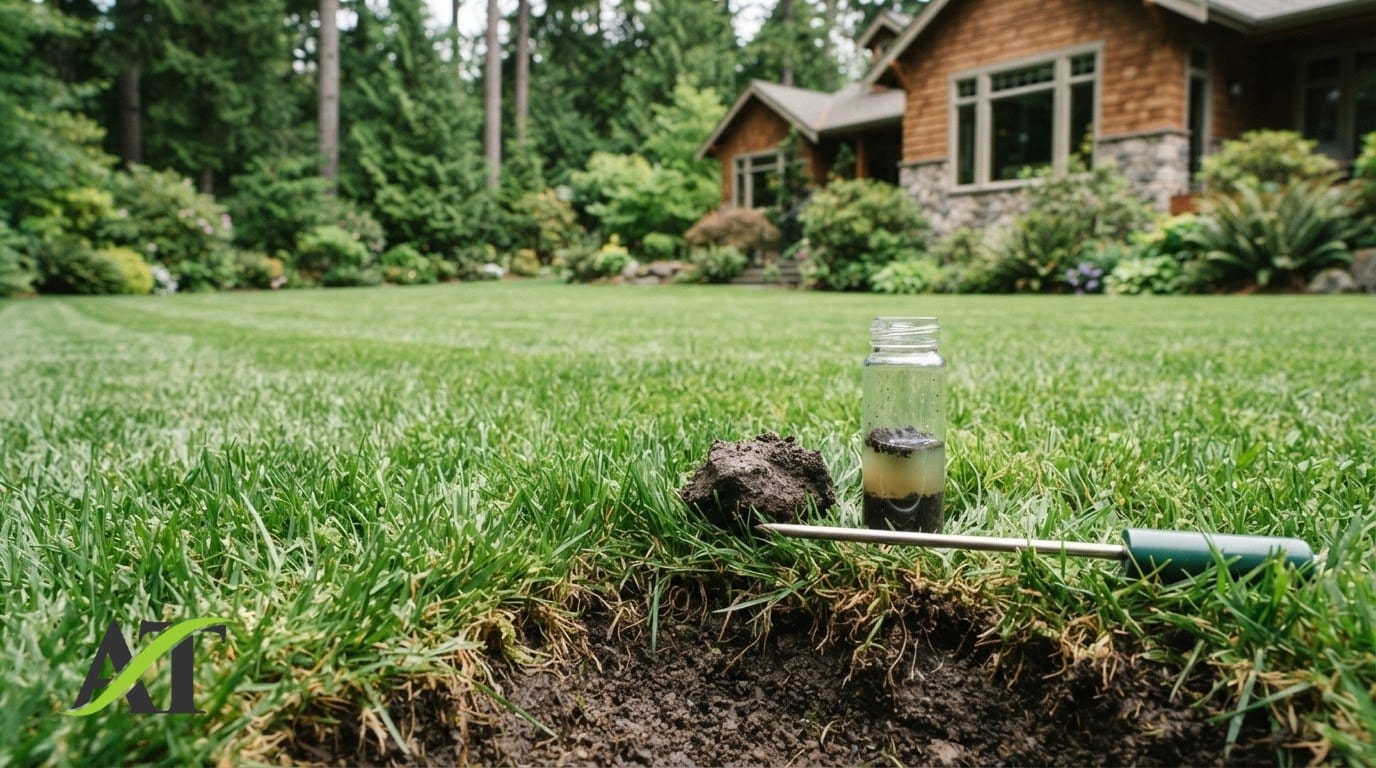
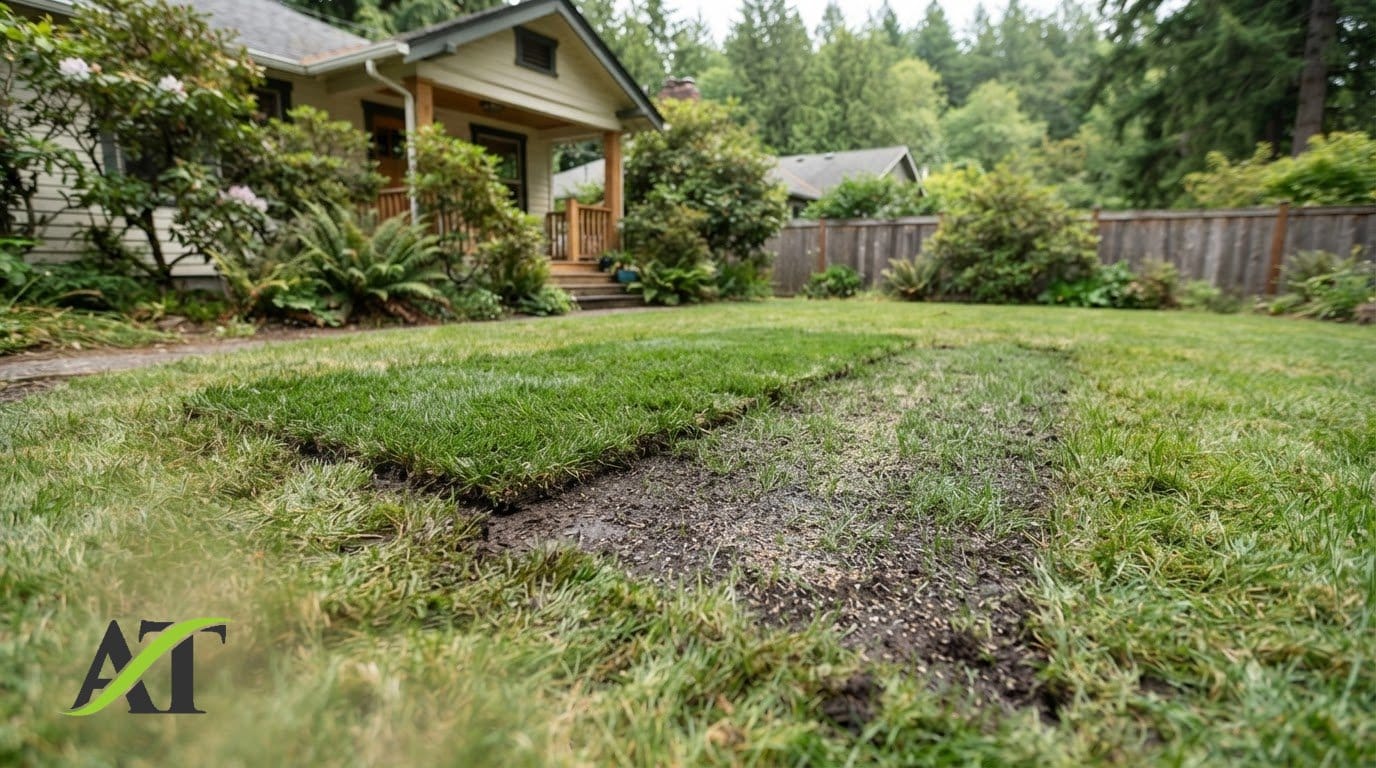
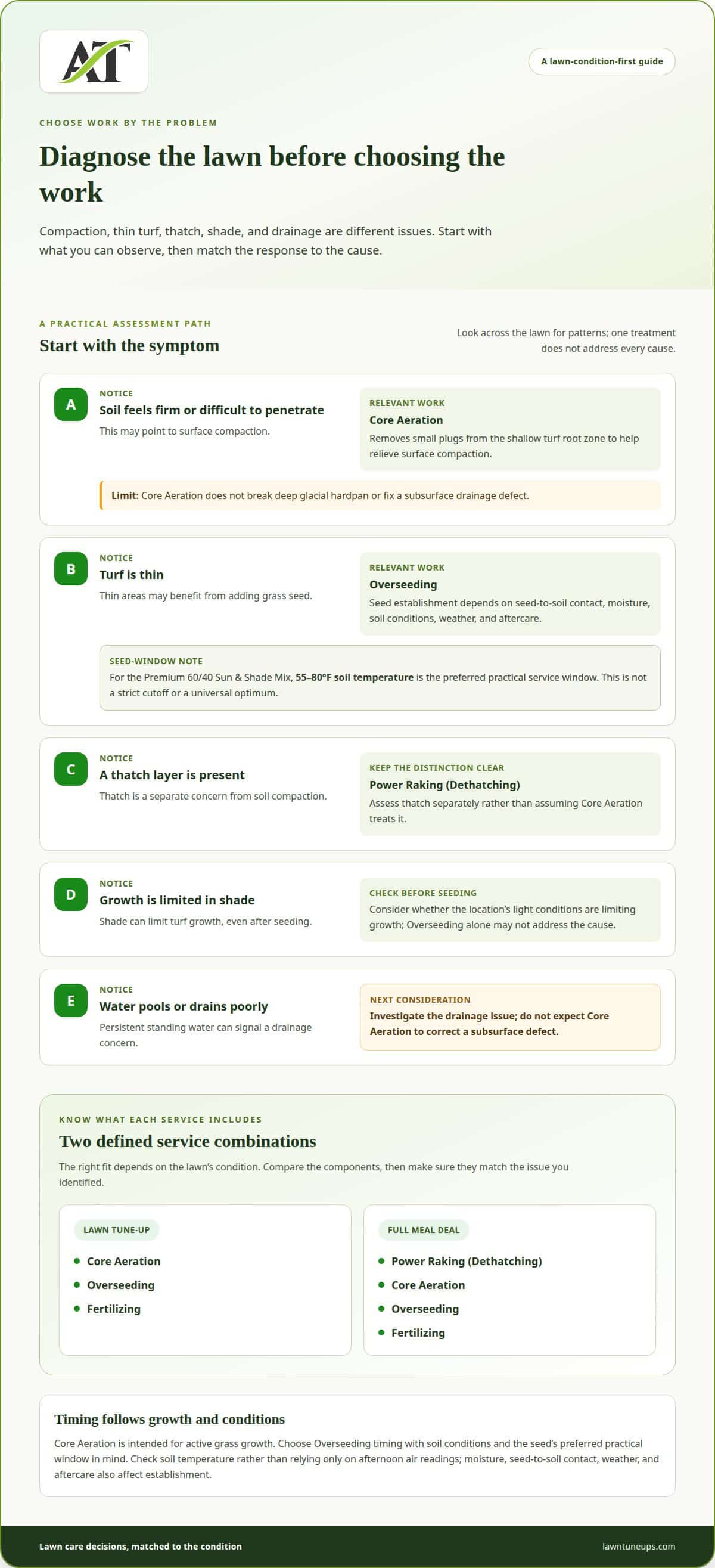
Before choosing work, look closely at the symptom. Compacted soil can be difficult to penetrate; thin areas may need seed. A layer of thatch is a separate issue, while shade can limit growth even after seeding. Core Aeration doesn’t treat any of those causes equally. Note where turf is thin, where the soil feels firm, and whether standing water persists. That information helps distinguish a shallow compaction concern from shade or drainage trouble, which may need further diagnosis before scheduling lawn work.
Which lawn care companies in Mountlake Terrace, WA offer eco-friendly services?
Compare Mountlake Terrace lawn-care options by the work they perform, not by a green label alone. Seasonal soil treatments differ from weekly mowing, and each serves a different purpose. Look for clear descriptions of products, equipment, and application practices. A plan for thinning turf may include seeding and soil work; routine mowing alone won’t relieve compacted soil.
Equipment is one useful comparison point. Electric lawn equipment produces zero local emissions during operation, unlike gas-powered equipment at the property. Consider whether the equipment suits the task, whether that’s mowing or seasonal turf care. The label “eco-friendly” is less useful than a specific, understandable practice.
Product details matter, too. Organic fertilizer is one approach to lawn nutrition, but applications should still match the lawn’s condition and season. A useful service description explains what is applied and its purpose. Weed control, fertilizing, and soil conditioning are distinct tasks, so a broad promise of “green care” doesn’t tell you which one your property needs.
Before settling on a plan, identify the problem you want to address. Thin turf, firm soil, excess thatch, shade, and standing water point to different causes. Note where each issue appears and whether it persists after routine care. Choose work that matches the specific condition instead of adding unrelated treatments. This keeps seasonal care focused and avoids treating different symptoms as though they have the same cause.
For an eco-conscious decision, consider application method, equipment, timing, and purpose together. A clear plan shows which tasks support your lawn and which may be unnecessary. Be specific about your priorities, such as reducing chemical inputs or improving thin turf, so the work can be matched to your property.
Aerating Thatching: Lawn Tune Up
Aerating Thatching Co.’s Lawn Tune-Up is an option when compacted soil and thin turf need seasonal attention. It includes Core Aeration, Premium Overseeding, and Starter Fertilizer. Core Aeration helps relieve compaction; Premium Overseeding adds seed where turf is thin. The package also includes starter fertilizer, with an organic-based option available.
Choose this work when the symptoms fit. It won’t correct deep hardpan, a subsurface drainage defect, or shade that limits grass growth. Those problems need a different diagnosis before treatment. If your lawn’s main issues are compaction or thin areas, the Lawn Tune-Up may suit the work you’re considering.
Choose a practical next step for your lawn
Base your decision on what you observe, not a broad promise on a service page. Note the areas that concern you and what you want your lawn to do, such as grow fuller or require fewer inputs. That gives you a focused starting point.
Choosing an eco-friendly lawn service in Mountlake Terrace is easier when your priorities are clear. Decide what matters most to your household, then use that to guide your choice. A straightforward plan should make sense for your property and the result you want.
Consider what you’ve noticed and what you’d like to change. A specific question is a useful first step toward a care plan that fits.
Start with the concern that matters most. You can build from there at a pace that works for you.
Frequently Asked Questions
What eco-friendly lawn services are available in Mountlake Terrace, such as organic fertilizing and natural weed control?
Seasonal options can include Core Aeration, Overseeding, and Organic Fertilizing. These address soil compaction, sparse turf, and lawn nutrition, respectively. Natural weed control is a separate task: hand-pulling small weeds can work when roots are removed, while dense patches may need a different plan. Aerating Thatching Co.’s Lawn Tune-Up combines Core Aeration, Overseeding, and Fertilizing, but it isn’t a weed-control treatment.
How can homeowners find and verify an environmentally responsible lawn service in Mountlake Terrace?
Compare service descriptions, not just “eco-friendly” labels. Look for the specific work, products, and application purpose, then match those details to your lawn’s needs. A clear description distinguishes seeding from weed management and states whether fertilizer is included. This helps you understand the work and avoid unrelated treatments.
What are the benefits and risks of organic lawn treatments compared with conventional treatments?
Organic treatments can support soil health by adding organic matter or nutrients, but “organic” doesn’t mean risk-free or suitable for every lawn. Applying too much fertilizer of any type can waste product and contribute to runoff. Conventional products also vary in purpose and ingredients. Choose based on the lawn’s condition, follow product-label directions, and avoid combining treatments without a clear reason.
What lawn care practices help conserve water and support pollinators in Mountlake Terrace’s climate?
Count rainfall when watering rather than irrigating by routine. Leaving some clover in the lawn can provide flowers for bees and make nitrogen available in the soil. Keep clover where it suits how you use the lawn, and avoid treating flowering areas unnecessarily. You can also reduce water demand by accepting summer dormancy instead of trying to keep every area green.
What local rules or restrictions apply to lawn pesticides and fertilizers in Mountlake Terrace or Snohomish County?
Follow each product label’s directions and use pesticides and fertilizers only for their stated purpose.
Article by
Stewart Armour
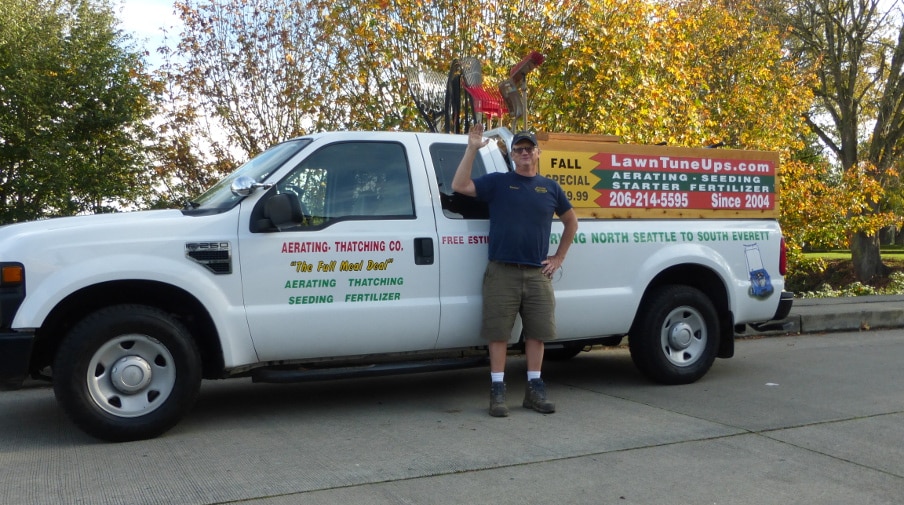
Stewart Armour is the owner of Aerating Thatching Co., an owner-operated Seattle-area lawn restoration business established in 2004. He helps homeowners understand Core Aeration, Power Raking (Dethatching), Overseeding, soil conditions, and the aftercare needed for stronger lawns. His background includes turf management study, advanced golf course turf training, and continuing education through Wilbur-Ellis University, State Turf Facilities, Soil First Academy, and Golf Course Applied Turf Physiology. Stewart has personally evaluated thousands of residential lawns throughout the Seattle area and focuses on recommending the work that fits each lawn’s condition.