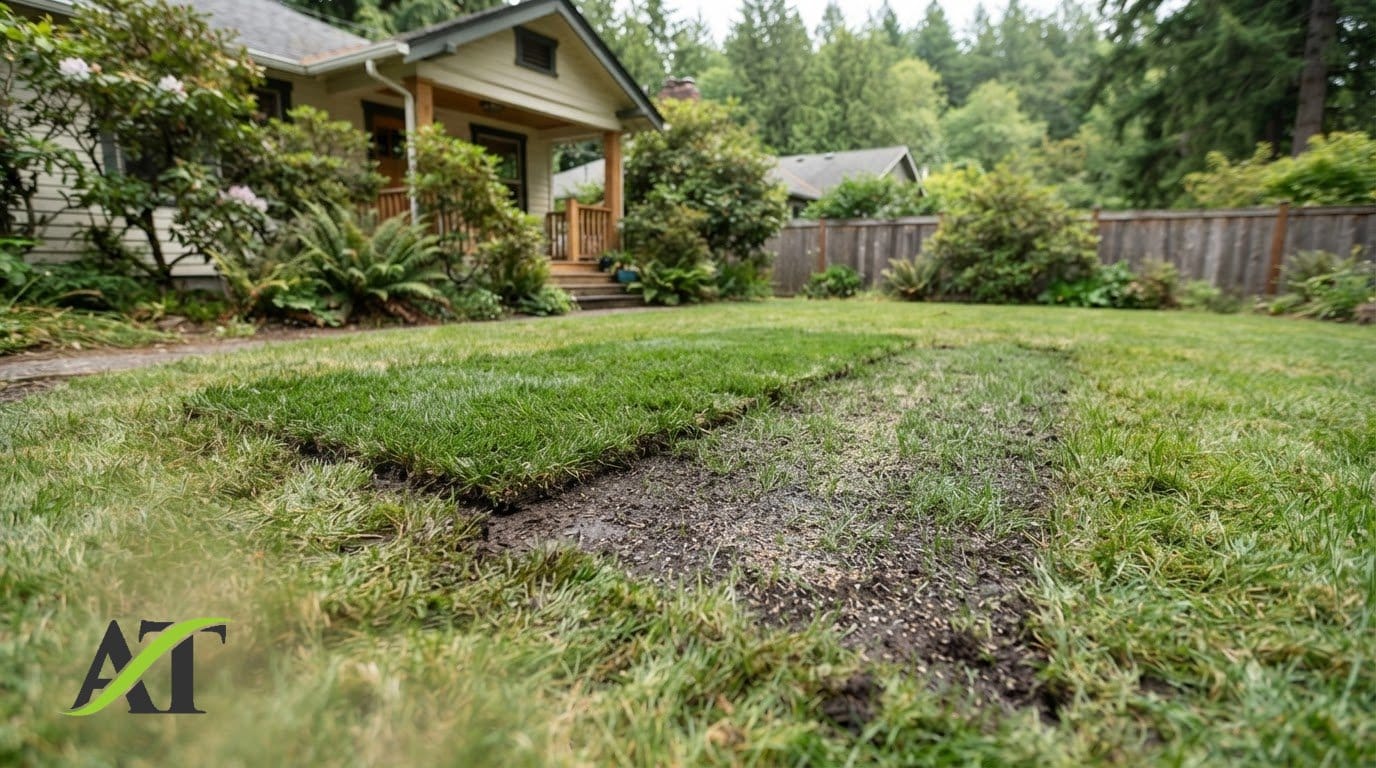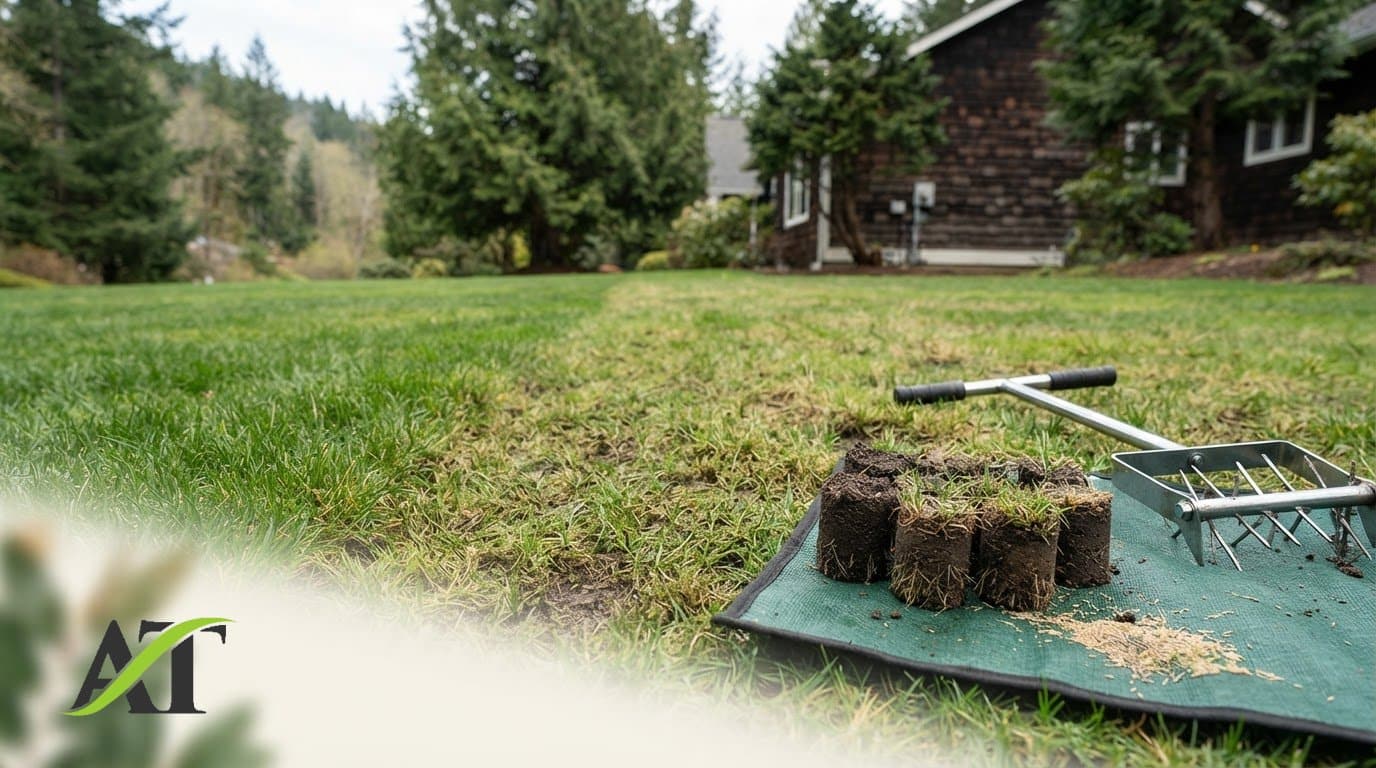
What if the thinnest part of your lawn doesn’t need more fertilizer? A useful plan for natural lawn care in Woodway starts by identifying what’s limiting the grass, not by applying every treatment available. Compaction, shade, thatch, irrigation, and drainage can all leave turf thin, but they call for different responses. If you’re searching for “natural lawn care Woodway,” focus first on the cause of the problem.
It’s reasonable to question a broad treatment package when you’re not sure what your lawn needs. This guide will help you look for clues and understand what organic fertilizing, Core Aeration, and Overseeding do, as well as what they can’t fix.
You’ll also see how the Lawn Tune-Up differs from the Full Meal Deal. Comparing the actual work in each can help you decide what fits your lawn, rather than assuming the larger service is right for every property.
Key Takeaways
- Look at where and how turf is thinning before choosing a treatment. Similar symptoms can have different causes.
- Natural lawn care works best when each treatment addresses an identified need rather than being applied by default.
- Core Aeration targets compaction in the shallow turf root zone. It won’t resolve deep hardpan or a subsurface drainage problem.
- Compare the service components: a Lawn Tune-Up includes Core Aeration, Overseeding, and Fertilizing; the Full Meal Deal also includes Power Raking (Dethatching).
What Natural Lawn Care in Woodway Can, and Cannot, Solve
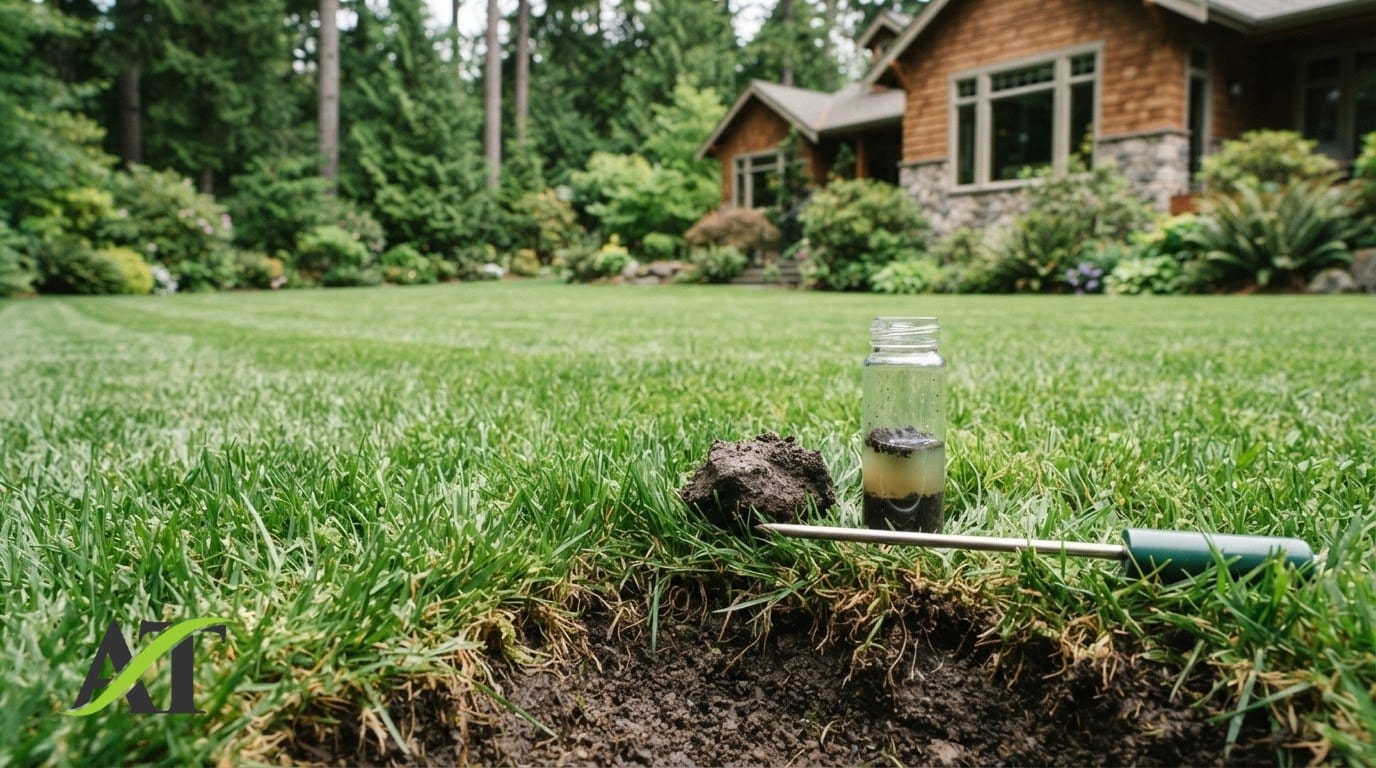
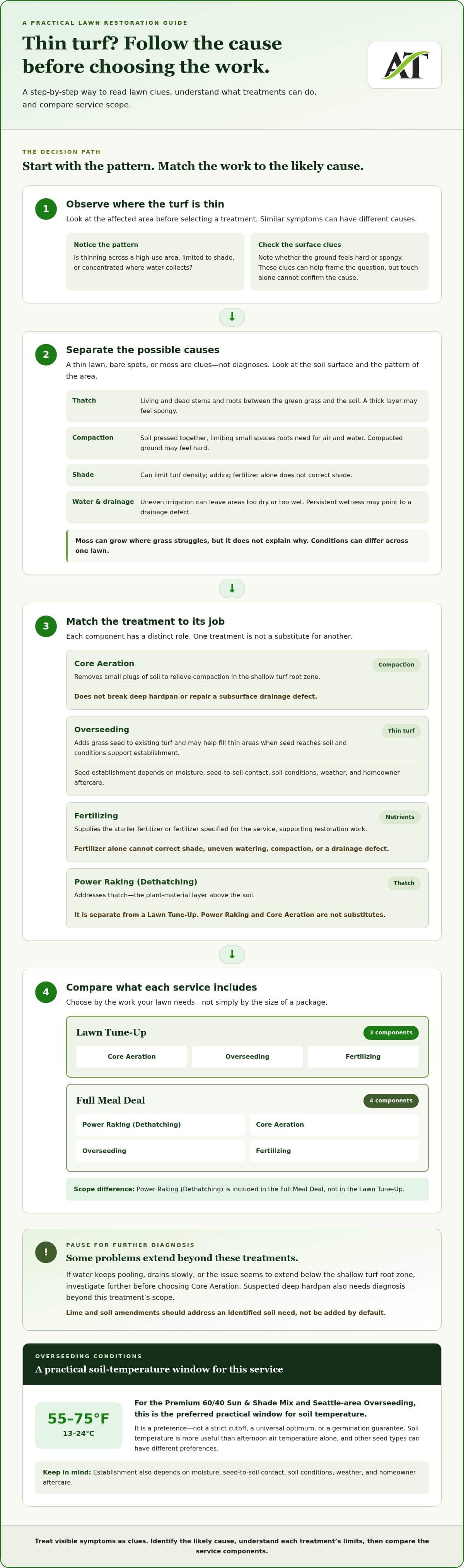
A natural approach to lawn care in Woodway starts with the cause of a problem, not a promise that one treatment will fix every patch. Thin turf, bare spots, and moss are clues, not diagnoses. Check the soil surface and the pattern of the affected area before deciding what work may help.
Which lawn symptoms point to different problems?
Thatch is a layer of living and dead stems and roots between the green grass and the soil. Compaction is different: soil is pressed together, limiting the small spaces roots need for air and water. A thick thatch layer may feel spongy, while compacted ground may feel hard, but touch alone can’t confirm either condition.
Shade can limit turf density. Uneven irrigation can leave areas too dry or too wet, while persistent wetness may point to a drainage defect. Moss can grow where grass struggles, but it doesn’t explain why. Woodway properties can have different conditions, so look at the specific area rather than assuming the same cause across the whole lawn. If water remains on the surface or symptoms seem to extend below the shallow turf root zone, the problem needs further diagnosis.
What does natural lawn care mean in practice?
In practice, natural lawn care means matching soil and turf treatments to the lawn’s needs. Principles of organic lawn management offer broader context, but any treatment still needs to suit the problem. Organic fertilizing can supply nutrients as one part of restoration. It won’t correct shade, uneven watering, compaction, or a drainage defect by itself.
“Natural” isn’t a guarantee of results, a claim that every product is chemical-free, or proof that a treatment is safe for pets. Identify the lawn’s conditions before choosing an input. If the cause is unclear, don’t treat a visible symptom as though it explains the whole problem.
How Natural Lawn Restoration Works in Woodway: Roots, Soil, and Seed
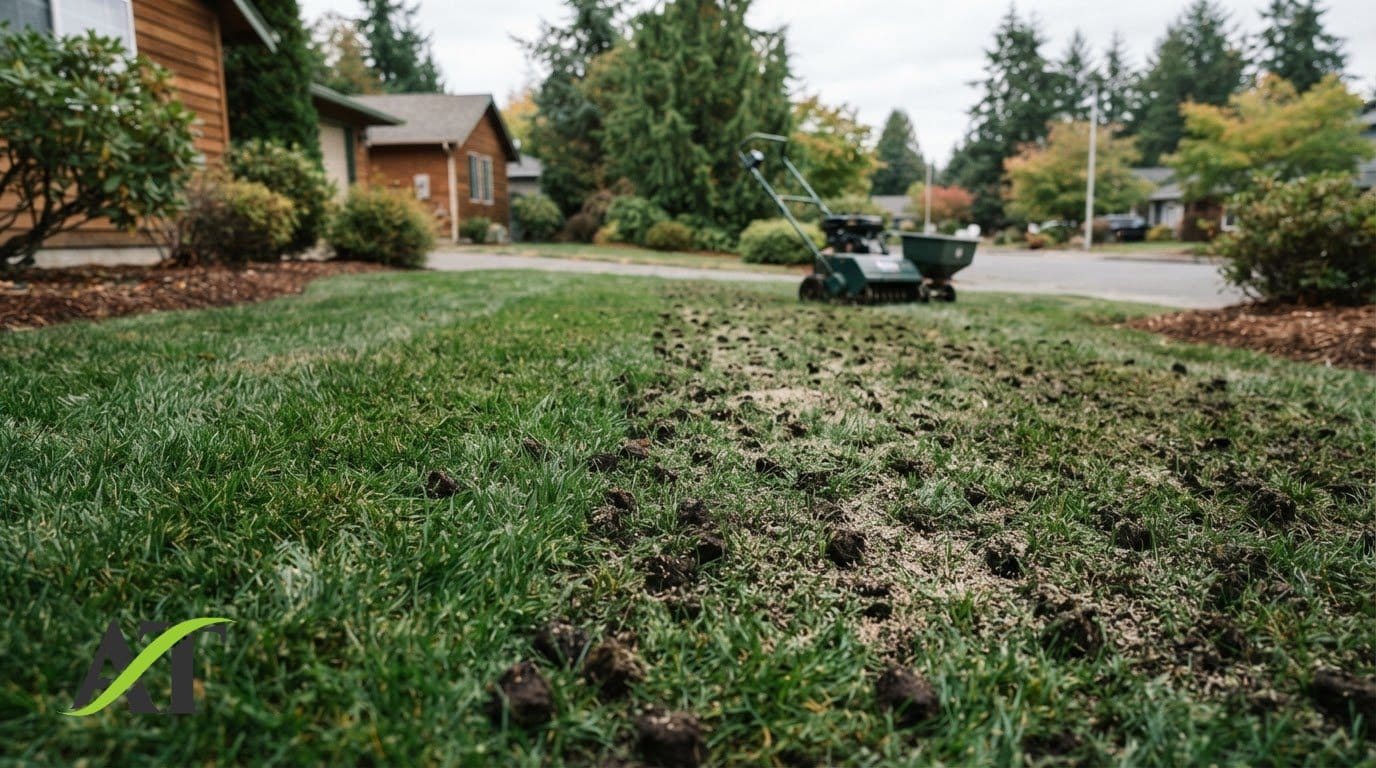
A Lawn Tune-Up consists of Core Aeration, Overseeding, and Fertilizing. Each component has a distinct role, so understanding what it does can help you decide whether the service fits your lawn.
What each Lawn Tune-Up component contributes
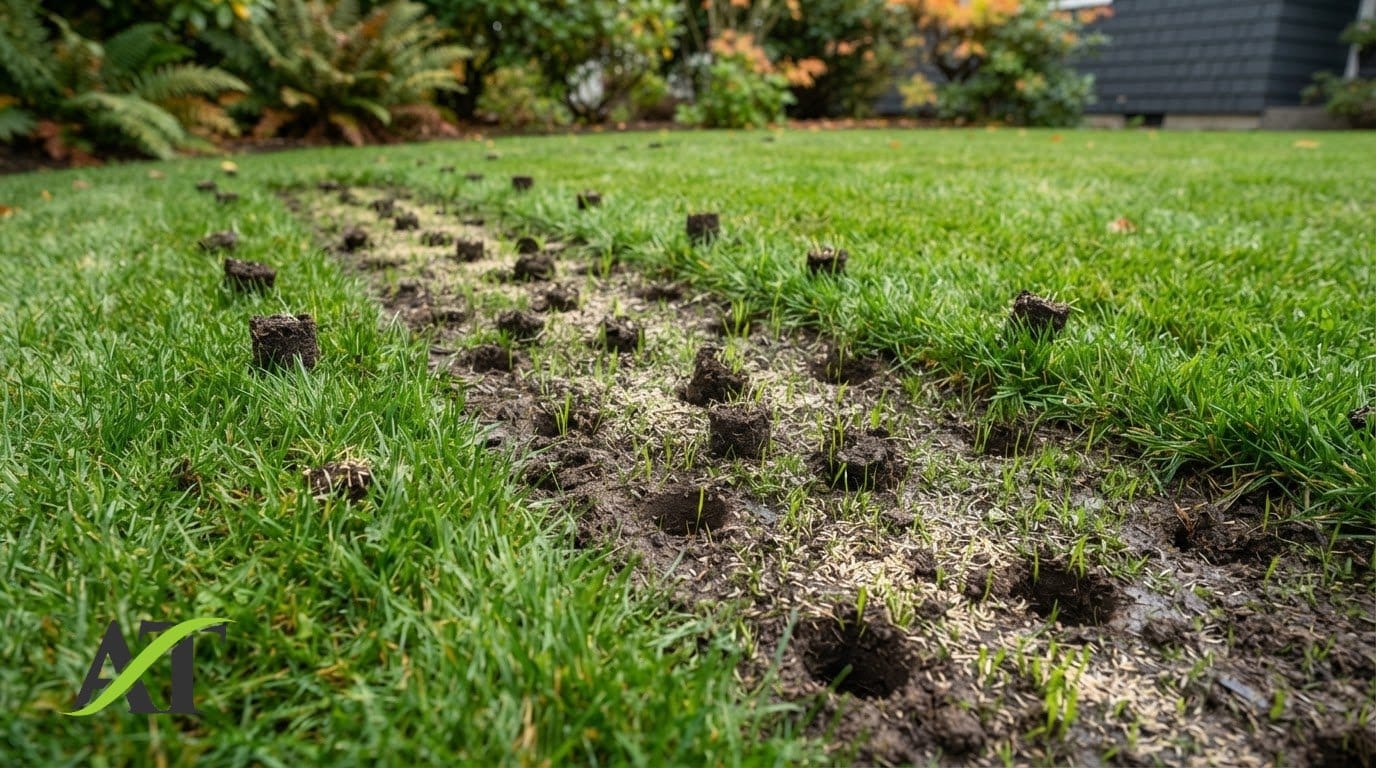
Core Aeration removes small plugs of soil to relieve compaction in the shallow turf root zone. It doesn’t break through deep hardpan or repair a subsurface drainage defect. Overseeding adds grass seed to existing turf and can help fill thin areas when seed reaches soil and conditions support establishment. Fertilizing supplies the starter fertilizer or fertilizer specified for the service. It supports the restoration work but can’t correct every cause of weak turf.
These treatments work together, but they aren’t interchangeable. Adding seed won’t resolve a drainage problem, and fertilizer alone won’t help seed establish where it can’t contact soil. The Lawn Tune-Up service details describe the three components. For broader context on soil-focused practices, see the guidelines for natural lawn care from MU Extension.
When does overseeding have a suitable window?
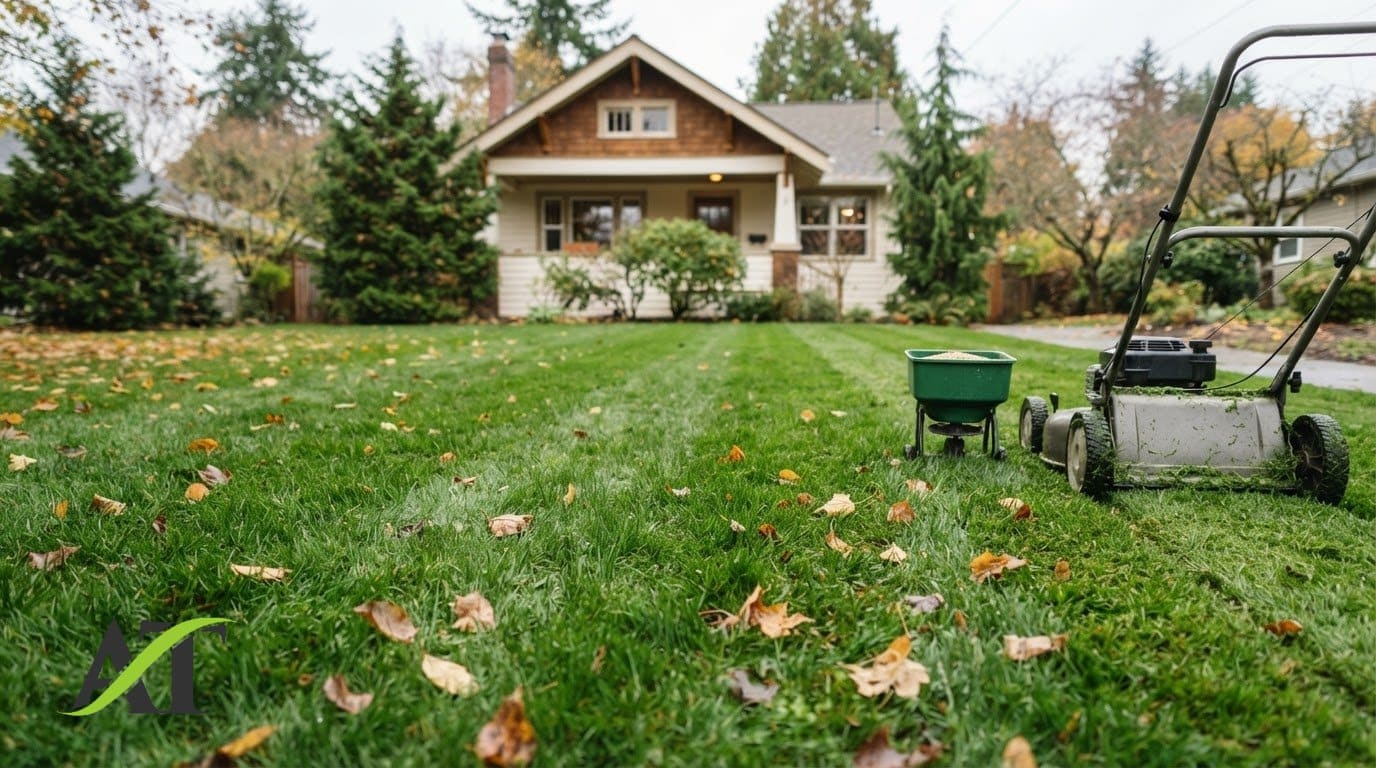
For our Premium 60/40 Sun & Shade Mix and Seattle-area Overseeding, we prefer soil temperatures around 55-75°F (13-24°C) as a practical window. This is a preference for our service, not a strict cutoff, a universal optimum, or a germination guarantee. Soil temperature is more useful than afternoon air temperature alone, and other seed types can have different preferences.
Establishment also depends on moisture, seed-to-soil contact, soil conditions, weather, and homeowner aftercare. To discuss which restoration work may fit your lawn, ask Stewart about your lawn.
How to Choose Natural Lawn Care in Woodway for Your Lawn’s Needs
Choose a treatment by working from the symptom toward its likely cause, not by starting with the broadest package. Note where the turf is thin, whether the ground feels hard or spongy, and where water collects. These observations can help narrow the next step, though they won’t always settle the diagnosis.
A simple symptom-to-treatment decision framework
- Note the pattern. Is turf thin across a high-use area, limited to shade, or concentrated where water collects? Record where symptoms appear and whether the ground feels hard or spongy.
- Consider the likely cause. If compaction in the shallow turf root zone is suspected, Core Aeration may be appropriate. It won’t reach deep hardpan or fix subsurface drainage. For thin turf where conditions support establishment, consider Overseeding as part of restoration.
- Separate thatch from compaction. Thatch is plant material above the soil; compacted soil is pressed together below it. Power Raking (Dethatching) addresses thatch and is a separate treatment, not part of a Lawn Tune-Up. Core Aeration and Power Raking aren’t substitutes.
These clues help frame the decision, but they don’t prove the cause. Compare the available lawn restoration work with the problem you’ve identified instead of assuming every treatment is needed.
When should the lawn problem be diagnosed further?
If water keeps pooling, drains slowly, or the issue appears to extend below the turf’s shallow root zone, investigate further before choosing Core Aeration. Suspected deep hardpan also requires diagnosis beyond this treatment’s scope. Lime and soil amendments should address an identified soil need, not be added by default. Identifying the cause first helps avoid work that won’t address the problem.
A Practical Natural Lawn Care Plan for Woodway Properties
A practical plan for natural lawn care in Woodway should reflect the work your lawn needs, not simply the size of a package. Use this comparison to see exactly what each restoration service includes.
Lawn Tune-Up or Full Meal Deal: which scope fits?
| Service | Included components |
|---|---|
| Lawn Tune-Up | Core Aeration, Overseeding, and Fertilizing |
| Full Meal Deal | Power Raking (Dethatching), Core Aeration, Overseeding, and Fertilizing |
Power Raking (Dethatching) is included in the Full Meal Deal, not the Lawn Tune-Up. Choose based on the identified condition: a lawn that needs the three Lawn Tune-Up components may not need dethatching, while a lawn with a thatch issue may call for the broader set of work. The Lawn aftercare guide can help you prepare for care after these treatments.
Lime, soil amendments, and other treatments are separate, not included components of either service. They should address an identified need rather than be assumed as part of a package. For further context, see the Woodway lawn restoration guide and compare its diagnostic steps with your own turf. The Lawn Tune-Up details also outline that service’s scope.
What to do after selecting a restoration approach
Once you’ve matched the work to the lawn’s needs, follow aftercare guidance for the treatments performed. Seed establishment and recovery depend partly on care after service, so use instructions suited to the actual work rather than relying on a general routine.
Ask Stewart About Your Lawn to discuss a restoration plan for your property.
Take the Next Step Toward a Lawn-Specific Plan
The right plan starts with a useful question: what’s most likely holding this lawn back? Before choosing work, note where the turf is thin, whether the ground feels hard or soft, and where water seems to linger. Those details can help focus the next conversation without assuming every bare patch has the same cause.
Aerating Thatching Co. provides lawn restoration services in Woodway and nearby communities including North Seattle, Shoreline, Edmonds, Lynnwood, Mill Creek, Bothell, Kenmore, Lake Forest Park, Mountlake Terrace, Snohomish, Everett, Brier, Green Lake, Ballard, and Greenwood. Its Lawn Tune-Up and Full Meal Deal have defined components, making it easier to compare the work with your lawn’s needs instead of choosing a package simply because it includes more.
Bring your observations and questions to the next step. A clear starting point can make lawn restoration feel more manageable and help you move forward with a plan suited to your property.
With the cause identified and a practical plan in place, you can focus restoration work on what your turf needs.
Frequently Asked Questions
Does natural lawn care mean using no synthetic products?
Not necessarily. “Natural” has no single universal definition, so the label alone doesn’t tell you which inputs are used or what they do. Aerating Thatching Co. uses organic fertilizing as one treatment option. For a clear comparison, look at the named work, such as Fertilizing, Core Aeration, or Overseeding, and the lawn need each is meant to address rather than assuming a label guarantees a particular product profile.
Can organic fertilizer fix a thin lawn by itself?
No. Fertilizer may support turf, but it won’t correct compaction, shade, excess thatch, or a drainage defect. The Lawn Tune-Up combines Core Aeration, Overseeding, and Fertilizing; it may fit when those components address the conditions affecting the lawn. If thinning follows a shaded edge or the ground stays soggy, identify that factor before expecting fertilizer or a package to solve it.
Does Core Aeration fix poor drainage or deep hardpan?
No. Core Aeration works in the shallow turf root zone; it can’t break deep glacial hardpan or repair a subsurface drainage defect. If puddles persist or soil stays saturated below the turf, investigate further before relying on aeration. A wet patch at the surface doesn’t show how deep the issue extends. Treatment should address the underlying cause, not just the visible symptom.
Does lime remove moss from a Woodway lawn?
No. Lime adjusts soil acidity when a soil need calls for it; it isn’t a direct moss treatment and isn’t part of the Lawn Tune-Up. Moss can grow where grass struggles for different reasons. Determine whether soil acidity needs adjustment before applying lime. Otherwise, it may add an unnecessary input without addressing shade, excess moisture, or another contributing condition.
What should I do after Overseeding?
Follow care instructions suited to the treatment and conditions on your lawn. Seed establishment depends on moisture, seed-to-soil contact, soil conditions, weather, and aftercare, so one watering schedule or timeline won’t fit every situation. Use lawn treatment aftercare guidance for practical steps after Overseeding.
Article by
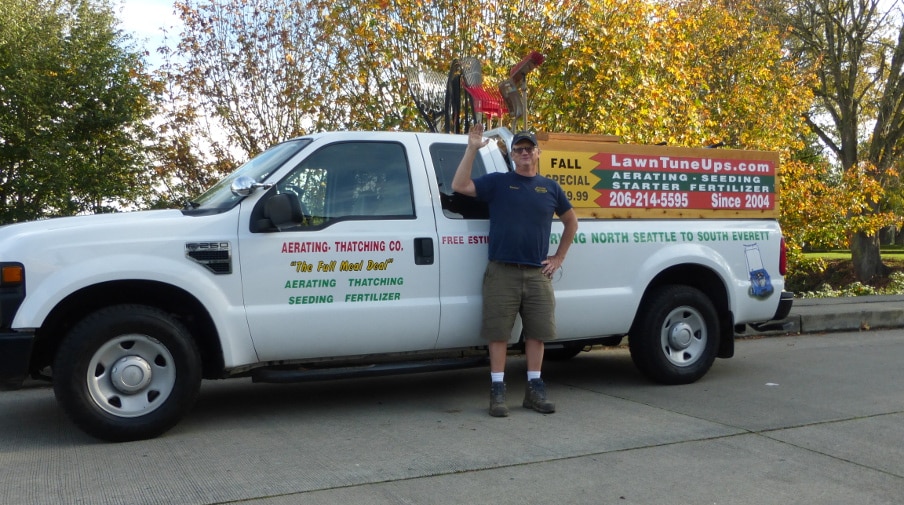
Stewart Armour
Stewart Armour is the owner of Aerating Thatching Co., an owner-operated Seattle-area lawn restoration business established in 2004. He helps homeowners understand Core Aeration, Power Raking (Dethatching), Overseeding, soil conditions, and the aftercare needed for stronger lawns. His background includes turf management study, advanced golf course turf training, and continuing education through Wilbur-Ellis University, State Turf Facilities, Soil First Academy, and Golf Course Applied Turf Physiology. Stewart has personally evaluated thousands of residential lawns throughout the Seattle area and focuses on recommending the work that fits each lawn’s condition.