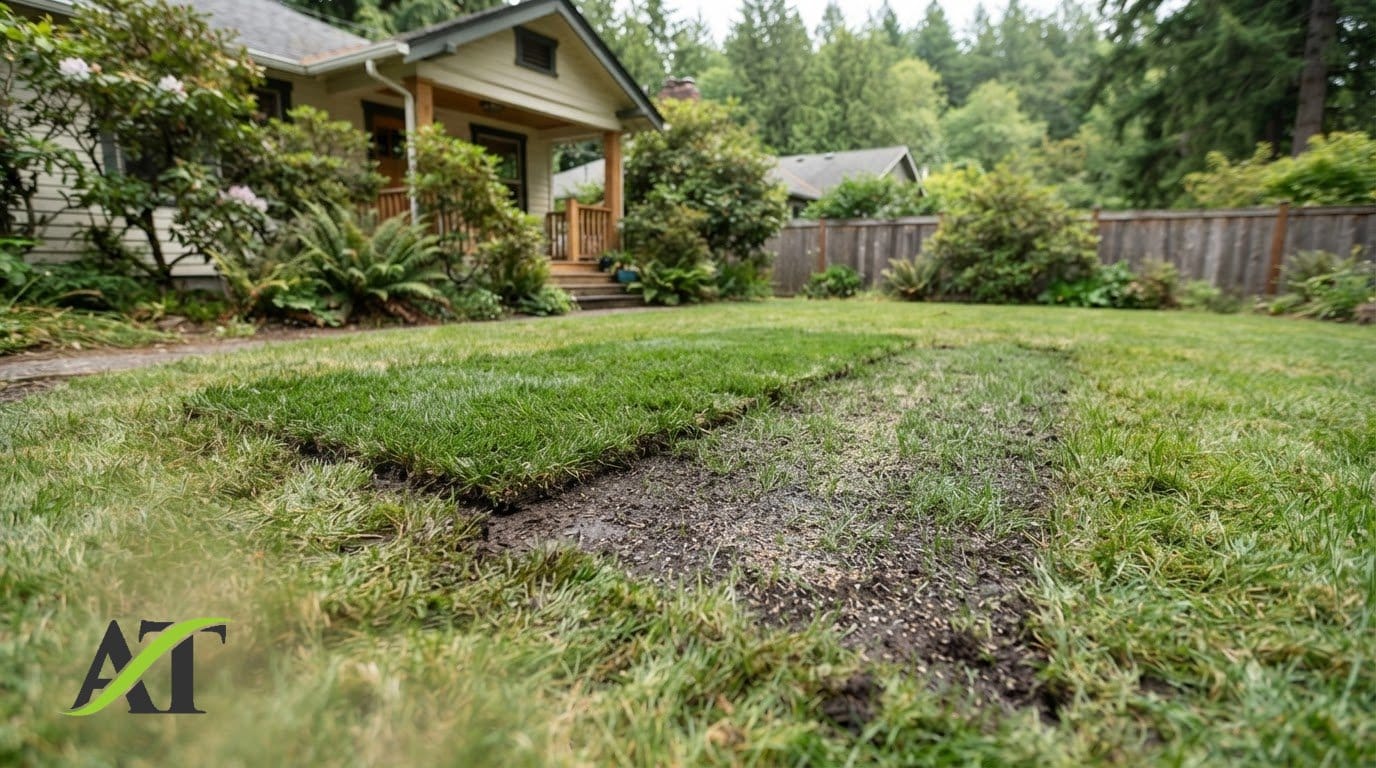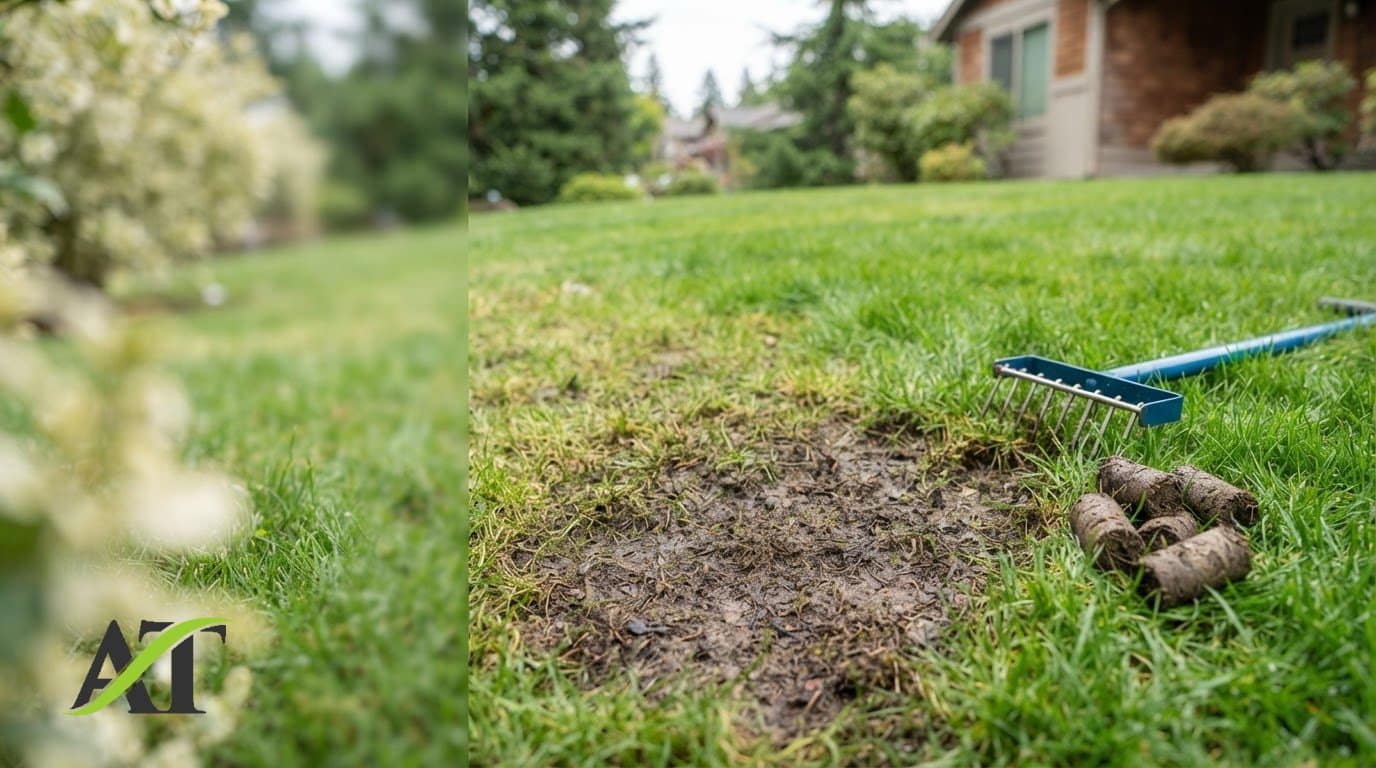
If you’re searching for “how to thicken a thin lawn Edmonds,” start by finding out why the grass is sparse. Shade, compacted soil, excess thatch, watering problems, and drainage issues call for different responses. Treating the wrong cause can waste time and leave new seed struggling to establish.
Before putting in the work, look at where the grass is thin and what conditions are affecting those areas. This guide explains how to distinguish likely causes and choose a practical next step. You’ll learn how Overseeding differs from Core Aeration and Power Raking (Dethatching), when they may be useful together, and when a deeper drainage or site problem needs further diagnosis first.
Key Takeaways
- A practical approach to how to thicken a thin lawn Edmonds starts with identifying the cause, not automatically adding seed or treatments.
- Match the repair to the problem: Overseeding, Core Aeration, and Power Raking (Dethatching) each serve a different purpose.
- Follow a sensible repair sequence: choose suitable seed, prepare for seed-to-soil contact, and support establishment with appropriate conditions and aftercare.
- Compare the Lawn Tune-Up with the Full Meal Deal to decide whether your lawn’s diagnosed needs call for Power Raking (Dethatching).
Why Is Your Edmonds Lawn Thin? Identify the Cause Before Adding Seed
Thin grass is a symptom, not a diagnosis. Before deciding how to thicken a thin lawn, Edmonds homeowners can look for patterns: where the grass is sparse, whether the soil stays wet, and how light and watering differ across the yard. Seed may fill a gap, but it won’t correct a condition that keeps new grass from establishing.
Begin with simple observations. Note whether thinning follows a shaded area, appears in a low spot, or affects ground that feels firm underfoot. These clues can help narrow down possible causes, but they don’t confirm one. A general overview of understanding lawns provides background; next, assess the conditions in the affected area.
What clues distinguish thatch, compaction, shade, and drainage?
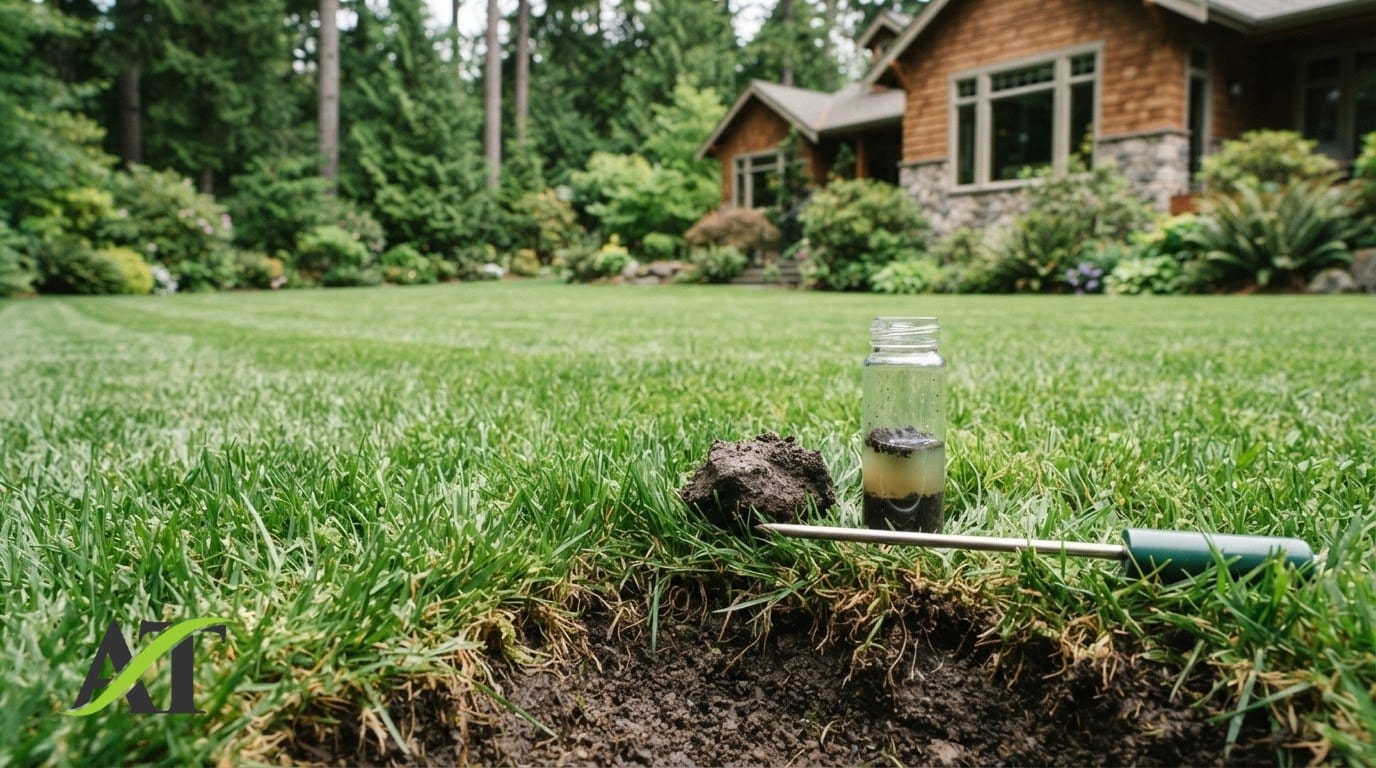
Grass that struggles where sunlight is limited may point to shade, though other factors can contribute. Uneven watering can leave some areas dry while others remain saturated. Compacted soil may feel firm and resist a screwdriver or similar probe. A thick, springy layer between the grass and soil may suggest excess thatch. Persistent puddles or soggy ground point to a drainage concern, not simply a need for seed.
Treat these signs as clues, not a diagnosis. Core Aeration relieves compaction in the shallow turf root zone. It won’t break deep hardpan or repair a subsurface drainage defect.
When is further lawn diagnosis needed?
Look deeper if thin areas keep returning after repair or wet spots persist. These patterns may involve drainage, soil conditions, or another issue that seed and work in the turf root zone won’t address. Don’t choose Power Raking (Dethatching), Core Aeration, or lime based on appearance alone. If a soil test identifies a pH concern, use that information to guide the next step. Matching the repair to evidence helps avoid treatments that don’t address the cause.
Which Lawn-Thickening Approach Fits the Problem?
Once you have a likely cause, choose the simplest approach that addresses it. Overseeding adds grass seed to existing turf. Core Aeration can help when compaction in the shallow turf root zone is part of the problem. Power Raking (Dethatching) is for a diagnosed thatch concern, not a routine step for every thin lawn. The right choice depends on what is limiting the grass, not just how sparse it looks.
When can overseeding address thin turf?
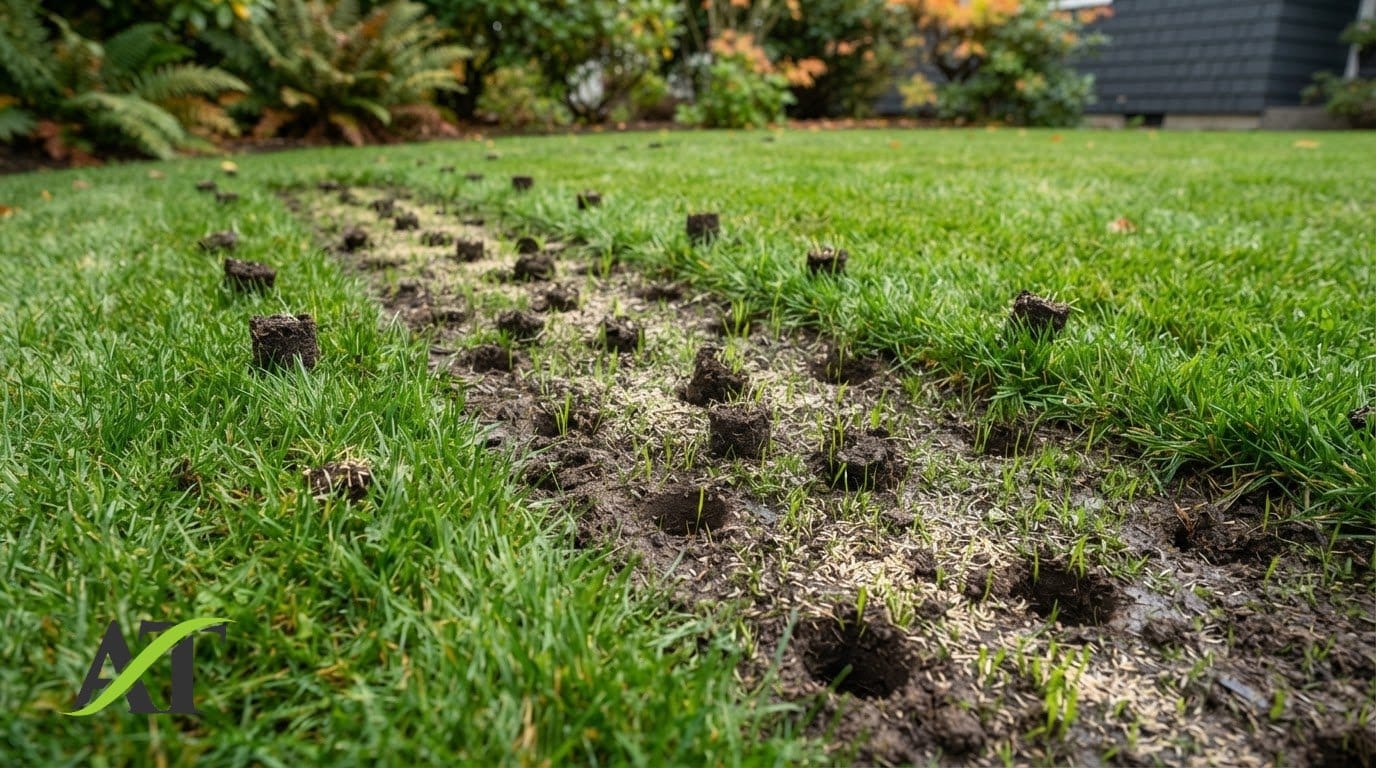
Overseeding can fill thin areas without removing and replacing the existing lawn. For seed to establish, it needs contact with soil rather than resting on dense grass or debris. Suitable conditions and consistent moisture matter, too. If shade, poor watering, or persistent wetness is still working against the turf, adding seed alone may not solve the underlying problem.
When might aeration or dethatching be relevant?
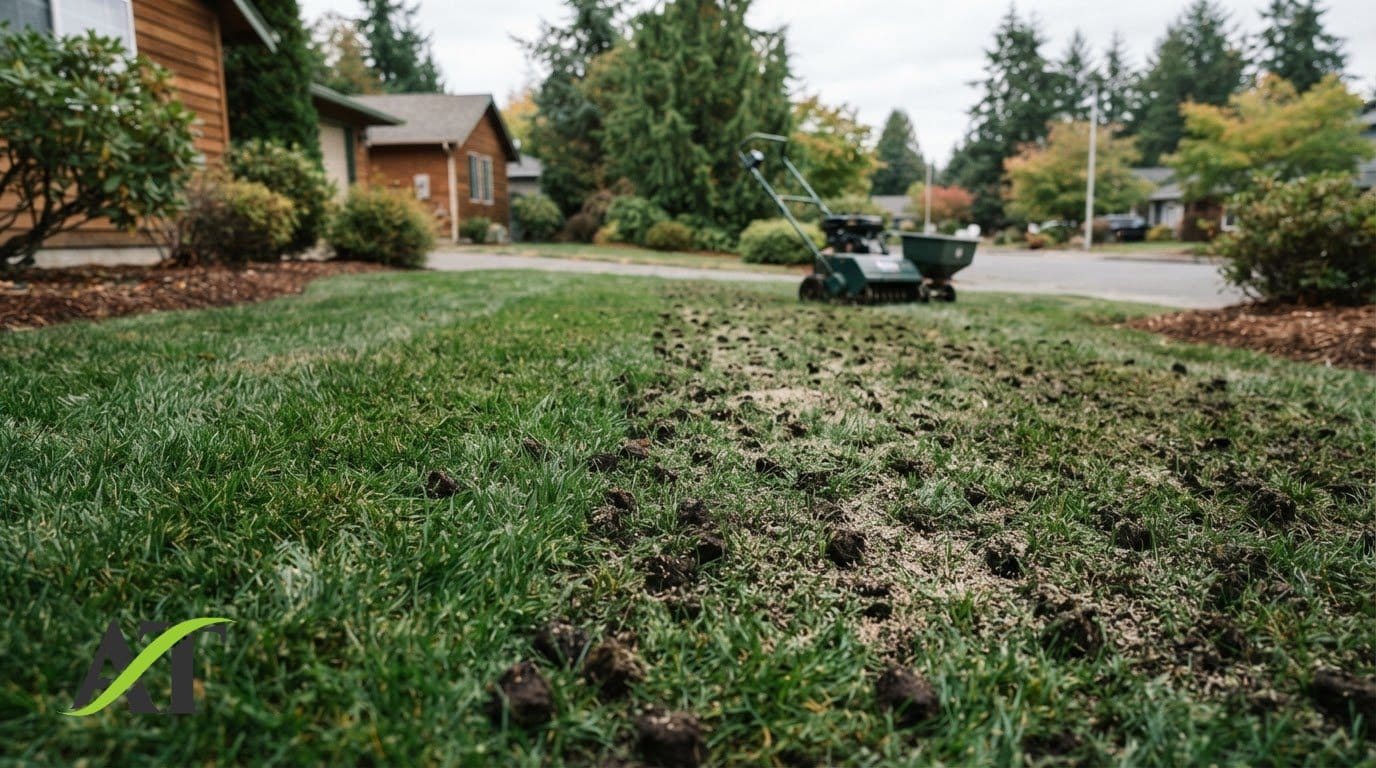
Choose Core Aeration when compaction near the turf’s roots is a concern. It doesn’t correct deep hardpan or a subsurface drainage defect. Choose Power Raking (Dethatching) only when excess thatch is the issue. The Power Raking and dethatching service is distinct from Core Aeration, though both may be part of a broader repair.
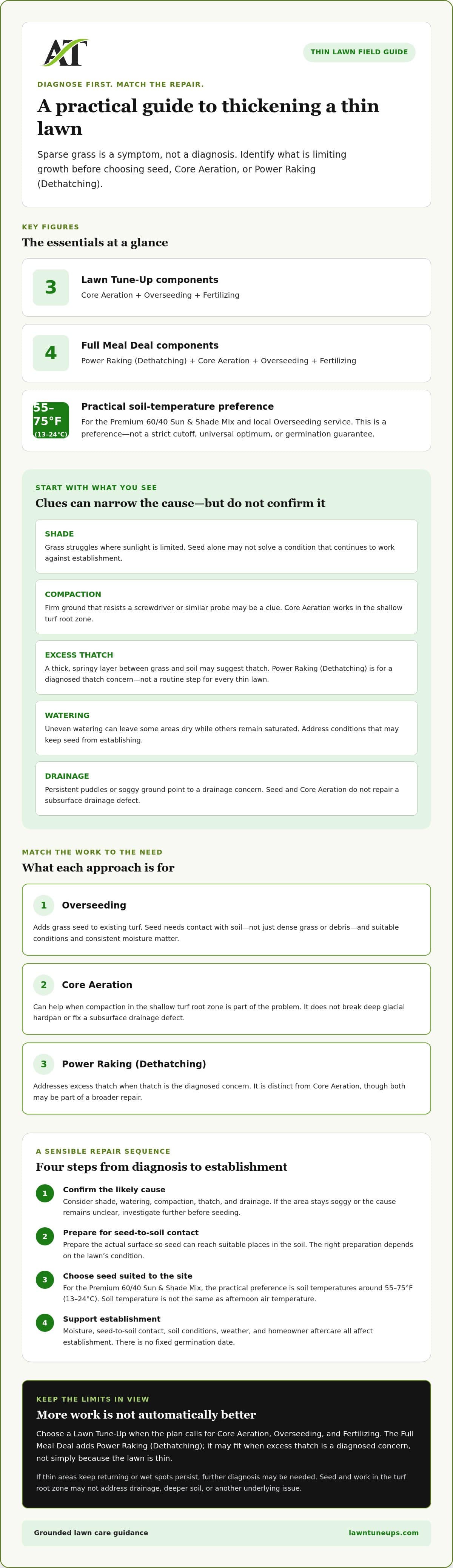
A Lawn Tune-Up includes Core Aeration, Overseeding, and Fertilizing. It does not include Power Raking (Dethatching). The Full Meal Deal includes Power Raking (Dethatching), Core Aeration, Overseeding, and Fertilizing. That distinction matters: the Full Meal Deal may fit when thatch is a diagnosed concern, not simply because a lawn is thin. Start by matching the work to the cause. You can Ask Stewart About Your Lawn once you’ve noted what you’re seeing.
How to Thicken a Thin Lawn in Edmonds: A Practical Repair Sequence
A useful repair follows a clear order: identify what is holding the grass back, prepare the area for seed, select a suitable mix, then support establishment. This keeps you from treating seed as a fix for a problem that still needs attention. Here’s a practical sequence Edmonds homeowners can follow.
- Confirm the likely cause. Consider whether thinness points to shade, watering, compaction, thatch, or drainage. If the area stays soggy or the cause remains unclear, investigate further before seeding.
- Prepare for seed-to-soil contact. Seed needs to reach soil, not sit on top of dense grass or debris. Prepare the surface to expose suitable places for seed while avoiding unnecessary disturbance. The right preparation depends on the lawn’s condition.
- Choose a seed suited to the site. Aerating Thatching Co. uses its Premium 60/40 Sun & Shade Mix for Overseeding. For this seed and local service, the practical preference is soil temperatures around 55-75°F (13-24°C). Soil temperature is different from afternoon air temperature. This is a service preference, not a universal optimum, strict cutoff, or germination guarantee.
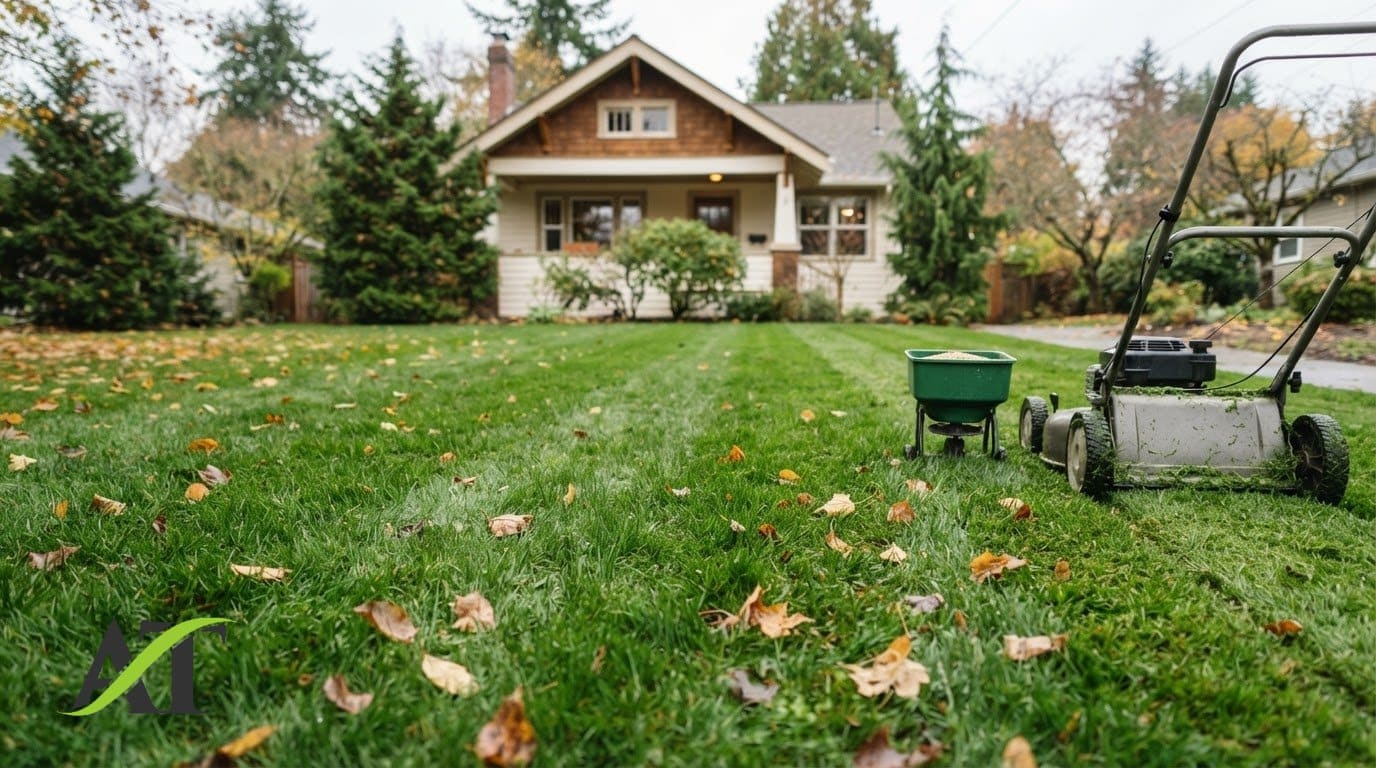
- Support establishment. Moisture, seed-to-soil contact, soil conditions, weather, and homeowner aftercare all affect how seed establishes. Keep the seedbed appropriately moist and follow the lawn after-care guidance after Overseeding.
How should you prepare for Overseeding?
Prepare for the surface you actually have. If seed would land mostly on thatch or thick vegetation, it may not reach soil well. If the lawn is compacted, Core Aeration may be relevant. If excess thatch is the diagnosed concern, Power Raking (Dethatching) may be appropriate. Neither step replaces further diagnosis when drainage or another deeper issue is limiting growth.
What affects seed establishment after application?
Seeding is a process, not an instant result. Maintain suitable moisture and follow aftercare, but don’t expect a fixed germination date. If the underlying cause remains, new grass may struggle even when the seed and preparation are appropriate. For homeowners balancing turf care with other outdoor projects, gardening resources like Michelle In The Meadow offer helpful tips and creative inspiration for tending your yard.
Choosing a Lawn Tune-Up or Full Meal Deal for Your Edmonds Lawn
Choose a package based on the diagnosis, not the assumption that more work is always better. A Lawn Tune-Up fits when the plan calls for Core Aeration, Overseeding, and Fertilizing. The Full Meal Deal adds Power Raking (Dethatching), so it is relevant when thatch is also a diagnosed concern. Neither package addresses every cause of thin turf, including persistent shade or a subsurface drainage problem.
Which service components match your lawn’s needs?
Use the lawn’s condition to guide the decision:
- Consider a Lawn Tune-Up when Core Aeration, Overseeding, and the fertilizer specified for the service suit the repair. It does not include Power Raking (Dethatching).
- Consider the Full Meal Deal when Power Raking (Dethatching) is also appropriate. It includes Power Raking (Dethatching), Core Aeration, Overseeding, and Fertilizing.
Lime and lawn soil amendments are separate treatments, not components of either package. They should address a relevant soil concern, not be added simply because grass looks thin. The aim is to choose work that addresses the diagnosed need rather than defaulting to the larger combination.
What should you share when asking about your lawn?
Describe where the turf is thinning and whether the pattern is spreading, recurring, or staying in the same spots. Mention clues such as persistent wet areas, firm soil, heavy shade, or a surface layer of thatch. It also helps to explain what ordinary care you’ve already tried and whether the lawn’s condition changed. Clear details make it easier to discuss a sensible next step. If the cause may be deeper than the turf itself, say so rather than assuming seed or aeration will solve it.
Ask Stewart About Your Lawn with those observations in hand.
Take the Next Step Toward a Stronger Lawn
A sound plan starts with useful observations, not guesswork. Note where the grass is sparse, what conditions surround those areas, and whether the same spots keep thinning after routine care. That picture can help focus your next decision and avoid work that doesn’t address the real obstacle.
Aerating Thatching Co. provides lawn restoration services in Edmonds and nearby communities, including North Seattle, Shoreline, Lynnwood, Mill Creek, Bothell, Kenmore, Lake Forest Park, Mountlake Terrace, Snohomish, Everett, Brier, Woodway, Green Lake, Ballard, and Greenwood. Share what you’ve noticed to discuss a sensible next step for your lawn.
With the cause guiding the plan, you can move forward with more confidence and give your lawn a better chance to fill in. For homeowners also tackling broader property care and structural repairs around the home, Hughes Termite Control provides pest management and comprehensive home improvement services.
Frequently Asked Questions
Can you thicken a thin lawn without tearing it out and starting over?
Often, yes. If grass is still growing across much of the lawn, Overseeding can add seed into the existing turf instead of replacing it. The key is whether the conditions causing sparse growth can support new grass. Extensive bare areas or a persistent underlying problem may call for closer diagnosis before choosing a repair.
Is overseeding enough to thicken a thin lawn?
It can be enough when the lawn is generally healthy and thinness is the main issue. For example, a lawn with scattered open patches and no obvious ongoing stress may benefit from adding seed. But if new grass repeatedly fails in the same places, seed alone may not address the obstacle. Consider what has changed in those areas before repeating Overseeding.
Does core aeration help every thin lawn?
No. Core Aeration is most relevant when compaction in the shallow turf root zone is contributing to the problem. A lawn thinning beneath a tree or staying soggy after watering points to a different concern. Aeration won’t fix a subsurface drainage defect or deep hardpan, so don’t treat it as a universal step just because the lawn looks sparse.
What soil temperature does Aerating Thatching Co. prefer for its Overseeding service?
For Overseeding with the Premium 60/40 Sun & Shade Mix, Aerating Thatching Co. prefers soil temperatures around 55-75°F (13-24°C) as a practical window. Soil temperature matters, not just a warm afternoon reading. This is a preference for the company’s seed and local service, not a universal optimum, strict cutoff, or germination guarantee. Moisture and seed-to-soil contact also affect establishment.
How long does it take for overseeded grass to fill in?
There’s no reliable fixed timeline for a lawn to fill in after Overseeding. Seed type, soil conditions, moisture, weather, and aftercare all affect establishment, so avoid judging success by a promised number of days. Watch the seeded areas for new growth and whether thin spots gradually become denser. If growth remains poor, reassess the site conditions rather than simply adding more seed.
Article by
Stewart Armour
Stewart Armour is the owner of Aerating Thatching Co., an owner-operated Seattle-area lawn restoration business established in 2004. He helps homeowners understand Core Aeration, Power Raking (Dethatching), Overseeding, soil conditions, and the aftercare needed for stronger lawns. His background includes turf management study, advanced golf course turf training, and continuing education through Wilbur-Ellis University, State Turf Facilities, Soil First Academy, and Golf Course Applied Turf Physiology. Stewart has personally evaluated thousands of residential lawns throughout the Seattle area and focuses on recommending the work that fits each lawn’s condition.