How to Get Rid of Chafer Beetles & Lawn Grubs in Your Seattle Lawn
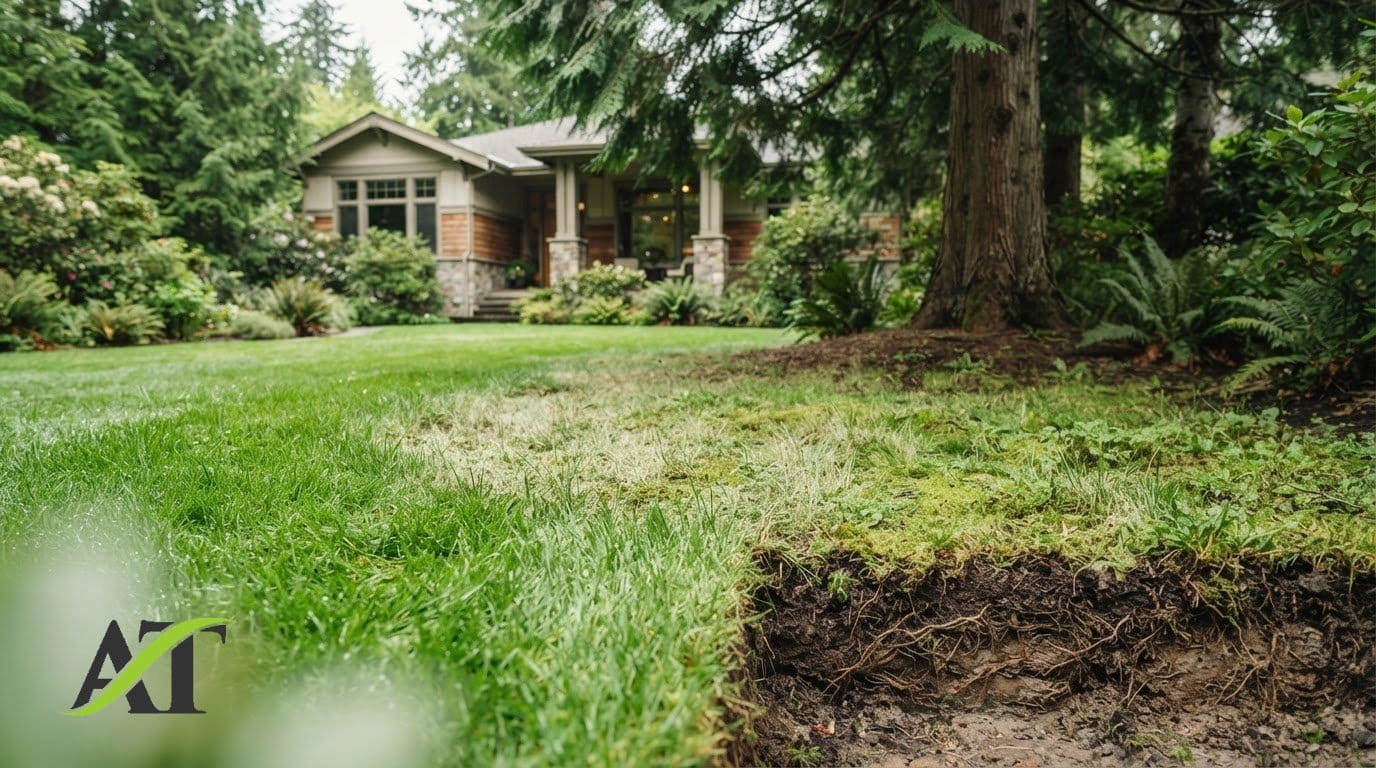
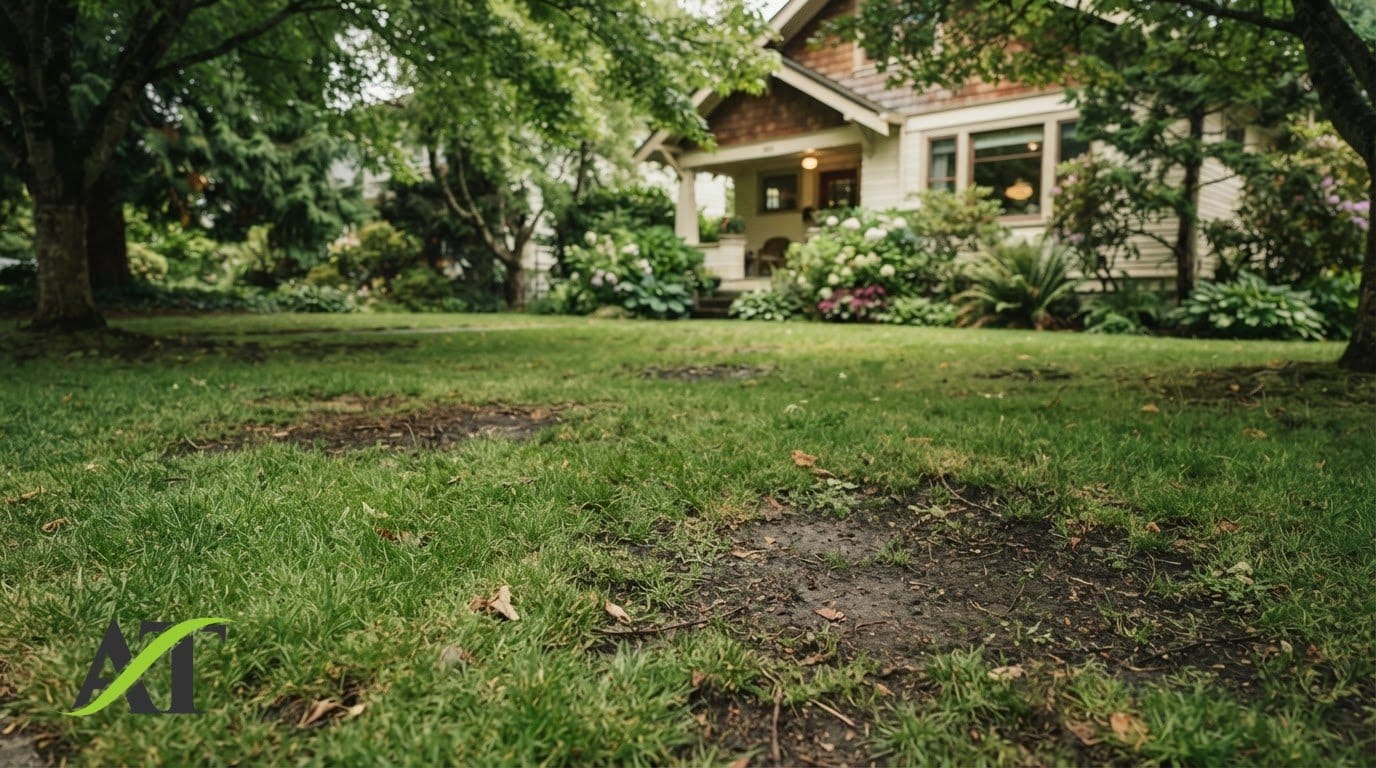
European chafer beetle grubs can damage a lawn from below by feeding on grass roots. The visible problem may then become much worse when raccoons, skunks, crows, or other animals tear into weakened turf looking for food.
The important sequence is simple: confirm the problem, address grub control if needed, let active animal disturbance settle down, then assess and repair the lawn.
Chafer Beetle Grubs and Lawn Damage Are Two Separate Problems
In the Seattle area, European chafer beetle larvae are an important turf-damaging grub. They feed on grass roots and can leave turf thin, brown, weakly rooted, or easy to lift. Animal digging can then add substantial surface damage.
Before treating, look for evidence that grubs are actually responsible. Brown grass, animal digging, or finding one grub is not enough by itself. Once a damaging grub problem is confirmed, control the pest with an appropriate labeled approach. Controlling the grubs does not rebuild the roots or turf that have already been lost.
Aerating Thatching Co. does not apply pesticides or insecticides for chafer beetle control. Our role is lawn repair and restoration after the underlying pest problem has been addressed.
Who Does What?
Control the Grubs
Pest control means identifying whether a damaging grub population is present and, when control is warranted, choosing an appropriate biological, DIY labeled product, or qualified professional treatment.
Repair What the Grubs Left Behind
Lawn repair is different. Once the pest problem and repeated animal disturbance have been addressed, the remaining lawn can be assessed for cleanup, overseeding, Core Aeration, Dethatching (Power Raking), or a more complete renovation when warranted.
Aerating Thatching Co. does not provide chafer beetle or grub pesticide treatments. If you need insect control, consult your preferred qualified pest-control provider or current regional extension guidance. Our work begins with the lawn-recovery side of the problem.
Does My Lawn Actually Have Chafer Grubs?
Before buying a grub-control product, confirm that grubs are actually present and that the pattern of damage makes sense. Seattle lawns can develop brown or thin areas for many other reasons.
Brown or Yellowing Areas
Root feeding can cause irregular areas of stressed, yellow, or brown lawn. Color alone, however, cannot diagnose a grub problem.
Weak Root Attachment
When a large amount of the root system has been lost, sections of lawn may lift much more easily than healthy turf.
C-Shaped Grubs
European chafer larvae are pale or whitish C-shaped grubs with a darker head and visible legs. Finding them in the root zone is an important clue.
Animal Digging
Raccoons, skunks, and crows may tear up weakened turf while searching for grubs. Their activity is a clue, not proof that chafer grubs are present.
Important: Finding one or a few grubs does not automatically mean the lawn needs treatment. Consider the number and distribution of grubs, the condition of the roots, the lawn symptoms, and the amount of animal disturbance together.
How to Check the Lawn
Choose the Edge of the Damage
Look where relatively intact lawn meets a brown, loose, or disturbed area.
Lift a Small Section
Cut three sides of a small square so the turf can be rolled back like a flap without unnecessarily destroying a larger area.
Inspect the Root Zone
Look at the roots and soil for pale, C-shaped grubs with visible legs and a darker head.
Check More Than One Location
One small patch may not represent the entire lawn. Compare several areas before deciding that treatment is warranted.
For a deeper explanation of European chafer beetles, their lifecycle, and how grub feeding damages Seattle lawns, see What Are Chafer Beetles (Lawn Grubs) and How They Damage Seattle Lawns .
Control the Grubs vs. Repair the Lawn
Homeowners often experience these as one problem, but they are really two different jobs.
Control the Grub Problem, If Needed
First confirm that the evidence actually supports a damaging grub problem. If control is warranted, homeowners can research an appropriately labeled DIY product or consult a qualified pest-control professional.
Application timing matters, and pesticide decisions should follow the current product label rather than a generic calendar.
Aerating Thatching Co. does not apply pesticides or insecticides.
Assess and Repair the Lawn
Once the underlying pest problem and repeated animal disturbance have been addressed, determine how much viable lawn remains.
That condition determines whether the lawn needs simple cleanup, overseeding, Core Aeration, Dethatching (Power Raking), or a more complete renovation.
Confirm → Control if needed → Let disturbance subside → Assess → Repair.
When to Treat Lawn Grubs in Seattle
Timing matters because European chafer has a seasonal lifecycle and grub size changes over the year. Current regional guidance emphasizes identifying the problem and targeting control to the appropriate life stage rather than treating simply because lawn damage is visible.
In general, preventive control is aimed at younger grubs during the appropriate seasonal window. Some labeled products may have different directions for established larvae or other stages. The correct timing depends on the specific product, the pest stage, and the current label.
Preventive Treatment
Preventive products are intended to be used before a new generation of grubs becomes large enough to cause major root damage. The application window must come from the current product label and regional guidance.
Visible Damage Is Not a Treatment Calendar
A brown lawn in fall or spring does not automatically mean that applying a grub-control product at that moment will repair the damage. Confirm the pest and understand which stage the product is designed to control.
Always read and follow the complete current product label. Product registrations, application directions, precautions, and timing can change. Follow Washington requirements and all label instructions for the specific product you use.
Choose a Control Approach
Biological Control
Certain beneficial nematodes can be used against chafer grubs. They are living biological controls, so species selection, storage, application timing, and soil-moisture conditions matter. Follow the supplier’s current instructions carefully.
Labeled DIY Products
Homeowners may choose a pesticide labeled for grub control in turf. The appropriate active ingredient and timing depend on the grub stage and current product registration. Do not apply a product simply because animals are digging.
Qualified Professional Treatment
If you are unsure about identification, timing, product selection, or application, an appropriately licensed pest-control or lawn-treatment professional can handle the insect-control side of the problem.
Then Address the Lawn
Once the underlying pest issue has been addressed, the lawn can be evaluated separately for cleanup, reseeding, aeration, Dethatching (Power Raking), or broader restoration.
Grub Damage and Animal Damage Are Two Different Things
Grubs Damage the Roots
Chafer beetle larvae feed on turf roots and root crowns. Enough feeding can weaken the lawn, reduce root mass, and leave sections poorly anchored.
Animals Can Physically Tear It Apart
Raccoons, crows, and skunks may pull, roll, scratch, or shred weakened lawn while searching for grubs. The visible mess can become much worse than the root damage alone.
Wildlife damage does not automatically prove that European chafer grubs are present. Animals can search lawns for other food as well. If you do not find meaningful grub activity when you inspect several areas, investigate other causes instead of treating by assumption.
If your main symptom is a lawn being torn up overnight, see our dedicated guide: What’s Tearing Up My Seattle Lawn? Raccoons, Crows, Skunks & European Chafer Grubs .
Products for Grub Control Research & Post-Damage Cleanup
These products serve different purposes. One is a conventional DIY grub-control product to research after confirming European chafer and the appropriate treatment timing. Another is a hand tool for limited cleanup of loose, dead lawn and surface debris. The third is a broader lawn-care reference.
As an Amazon Associate, we earn from qualifying purchases.

Scotts GrubEx
A conventional DIY grub-control option homeowners may research after confirming that European chafer grubs are actually responsible for the lawn problem.
Important: Treatment timing matters. Confirm the current label, Washington registration, application directions, watering requirements, and precautions before use. Grub control does not repair turf that has already been damaged.
View on Amazon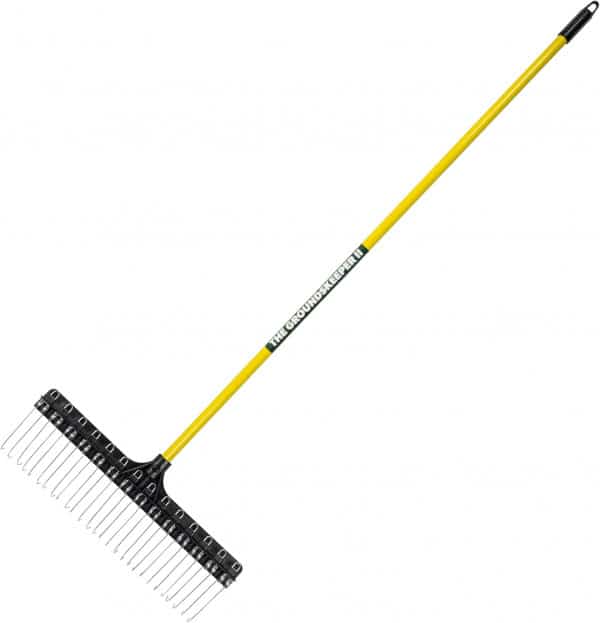
The Groundskeeper II Rake
A useful hand tool for gently pulling up loose, dead lawn and surface debris from smaller damaged areas after the underlying grub problem has been addressed.
Important: Avoid aggressive raking where healthy or weakly rooted lawn remains. Light hand cleanup is not the same thing as professional Dethatching (Power Raking).
View on Amazon
The Lawn Bible
A broader lawn-care reference for homeowners who want to understand mowing, watering, soil, and year-round turf care beyond the immediate chafer beetle problem.
Important: This is a lawn-care reference, not a chafer beetle treatment product.
View on AmazonAfter Treatment: Repairing Grub Damage in Your Lawn
Controlling the grubs stops the pest problem, but it does not automatically rebuild roots or replace grass that has already been lost.
Once the chafer beetle problem has been addressed and repeated animal disturbance has settled down, look at how much viable lawn remains. The repair should match the actual condition of the lawn rather than automatically defaulting to the largest service.
Healthy Turf Still Remains
Gently clean up loose material where appropriate and give surviving turf a chance to recover. If the lawn is still reasonably dense and rooted, an aggressive renovation may not be necessary.
Rebuild Grass Density
If the lawn is noticeably thin but substantial viable turf remains, overseeding may be part of the recovery plan. A Lawn Tune-Up combines Core Aeration, Premium Overseeding, and Starter Fertilizer.
Surface Cleanup & Renovation
If large areas are dead, matted, loose, or heavily disturbed, additional surface preparation may be appropriate before rebuilding. A Full Meal Deal Lawn Renovation can include Dethatching (Power Raking), Core Aeration, Premium Overseeding, and Starter Fertilizer when those steps fit the lawn.
Dethatching (Power Raking), Core Aeration, overseeding, and fertilizer do not kill European chafer grubs. They are lawn-improvement and restoration processes. The underlying pest problem should be addressed before rebuilding a heavily damaged lawn.
Light Cleanup vs. Dethatching (Power Raking)
Picking up or gently raking a small amount of already-loose dead lawn is simple surface cleanup. Professional Dethatching (Power Raking) is a more substantial mechanical process and should only be used when the lawn condition actually calls for it.
Do not assume that every lawn with chafer beetle damage needs Dethatching (Power Raking).
How Aerating Thatching Co. Helps After Chafer Damage
My role starts with the lawn, not pesticide application. Once the chafer beetle problem has been addressed and the lawn is ready for repair, I look at what is still viable and recommend the level of restoration that fits the condition.
Condition-Based Recommendations
A lawn that remains mostly intact may need a different approach than one with heavy dead material or extensive physical damage. The presence of grubs does not automatically determine the service package.
Owner on Every Job
Aerating Thatching Co. is owner-operated and has served Seattle-area homeowners since 2004. The person reviewing the lawn and recommending the work is also the person performing the lawn service.
The focus is North Seattle and surrounding North King County and South Snohomish County communities. Current service availability can be checked through the quote process.
When Should Chafer-Damaged Lawn Be Repaired?
The first requirement is not a calendar date. It is making sure the underlying grub issue and repeated animal disturbance have been addressed enough that new repair work is not immediately disrupted.
Confirm the Problem
Verify that European chafer grubs are actually involved rather than treating every brown or disturbed lawn the same way.
Address Active Grub Pressure
If control is warranted, use an appropriate labeled approach or qualified pest-control service.
Let Repeated Disturbance Settle
If animals are continuing to tear the lawn apart, repairing immediately may simply expose new seed and repaired areas to more disturbance.
Repair During a Suitable Lawn Window
Seattle lawn restoration is strongly influenced by weather, soil condition, grass growth, moisture, and the specific repair being performed. The calendar helps with planning, but lawn condition still matters.
Reseeding a Lawn After Grub Damage
If grub damage leaves the lawn thin or bare, reseeding may be part of the recovery process once the underlying pest problem is under control. The goal is not simply to spread seed; the remaining turf and soil need to provide a reasonable environment for establishment.
Seed-to-Soil Contact
Loose dead material may need to be cleared from small damaged areas so seed can reach the soil. The amount of preparation depends on how much viable lawn remains.
Moisture During Establishment
Newly seeded areas need dependable moisture while new grass establishes. Seattle rainfall may reduce irrigation needs during cool, wet periods, while dry weather requires closer attention.
For detailed after-care following Core Aeration, Dethatching (Power Raking), overseeding, and Starter Fertilizer, see the Seattle Lawn After-Care Guide .
Can a Healthier Lawn Prevent Chafer Beetle Damage?
A healthy lawn is not guaranteed protection against chafer beetles. However, current regional guidance recognizes that healthy, properly maintained turf can tolerate some grub pressure better than stressed turf.
The useful goal is resilience, not claiming that aeration, fertilizer, watering, or overseeding makes a lawn immune to another infestation.
Support Strong Turf
Good mowing, reasonable fertility, appropriate watering, and reducing unnecessary lawn stress help support normal turf health.
Rebuild Thin Areas
Damaged sections may benefit from overseeding when weather, soil conditions, and timing are appropriate.
Watch for Recurring Symptoms
If your property has had serious chafer damage before, stay alert for recurring symptoms instead of waiting until animal damage becomes severe.
Do Not Treat by Assumption
Brown grass or wildlife activity should prompt inspection and observation, not automatic pesticide application.
Chafer Beetle & Lawn Grub FAQ
What are lawn grubs?
“Lawn grubs” is a general homeowner term for beetle larvae living in turf and soil. In the Seattle and Puget Sound area, European chafer larvae are an important turf-damaging grub. They are C-shaped, have a darker head and visible legs, and can feed on grass roots.
Does finding one grub mean I need to treat my lawn?
No. Finding one or a few grubs does not by itself prove that grubs are causing damaging pressure. Look at the number and distribution of grubs, root condition, lawn symptoms, and animal activity together. Sampling several areas gives you a much better picture.
Do raccoons and crows prove I have chafer beetles?
No. Raccoons, crows, and skunks may forage for chafer beetle larvae and can cause significant secondary lawn damage, but their presence alone does not identify what is under the lawn. Inspect the soil and root zone before reaching a conclusion.
How do I check my Seattle lawn for European chafer grubs?
Inspect the edge of a damaged area, lift a small section of turf, and look through the root zone and soil for pale, C-shaped grubs with visible legs and a darker head. Check several areas rather than relying on one small sample.
What is the best treatment for lawn grubs?
There is no single treatment that is best for every lawn. The appropriate approach depends on confirming the pest, grub stage, timing, product labeling, and homeowner preference. Options may include certain biological controls, labeled DIY products, or qualified professional pest control.
Does killing the grubs repair the damaged grass?
No. Grub control addresses the pest problem. It does not replace roots or automatically regrow turf that has already been lost. Once the pest problem and repeated animal disturbance have been addressed, the remaining lawn should be assessed for the appropriate repair.
Are lawn grubs bad for dogs?
The more important concern for a treated lawn is the pesticide product, not simply the presence of a grub. Always read the current product label for pet precautions and follow its re-entry instructions.
Will Core Aeration or Dethatching (Power Raking) kill chafer beetle grubs?
No. Core Aeration and Dethatching (Power Raking) are lawn-improvement and restoration processes. They should not be presented as chafer beetle control.
Should I repair the lawn immediately after treating grubs?
Not necessarily. If raccoons, crows, or other animals are still actively tearing at the lawn, it can make sense to allow that disturbance to settle before investing in repair. Then assess how much viable lawn remains and choose the repair approach accordingly.
Does every chafer-damaged lawn need a Full Meal Deal?
No. A mostly viable lawn that mainly needs more density may be a better candidate for a Lawn Tune-Up. If substantial dead surface material needs removal first, the Full Meal Deal Lawn Renovation may make more sense. Very severely damaged lawns may require a different level of renovation altogether.
Is a hand dethatching rake the same as professional Dethatching (Power Raking)?
No. A hand rake can be useful for limited cleanup of already-loose dead material and surface debris. Professional Dethatching (Power Raking) is a more substantial mechanical process and should only be used when the lawn condition actually warrants it.
Can a grub-damaged lawn recover?
It can, depending on how much viable turf remains and how extensive the root and surface damage is. Some lawns need only limited cleanup and overseeding, while more severely damaged lawns may need a broader restoration approach.
Do you apply GrubEx, pesticides, or insecticides?
No. Aerating Thatching Co. does not apply pesticides or insecticides for chafer beetle control. The business focuses on lawn assessment and repair after the underlying pest problem has been addressed.
Authoritative Chafer Beetle Information
The following resources were used for information in this article. They are provided for further reading and do not imply endorsement of Aerating Thatching Co. or any recommended product.
Not Sure How Much Damage the Grubs Caused?
Once the grub problem and any ongoing animal disturbance have been addressed, the next question is how much viable lawn remains.
Some lawns may be good candidates for a Lawn Tune-Up. More heavily damaged lawns may need additional cleanup and a Full Meal Deal Lawn Renovation. In some cases, neither service may be the right answer.
Aerating Thatching Co. has been owner-operated since 2004, and I personally perform the lawn work. The goal is to match the repair to the lawn rather than automatically recommend the largest package.