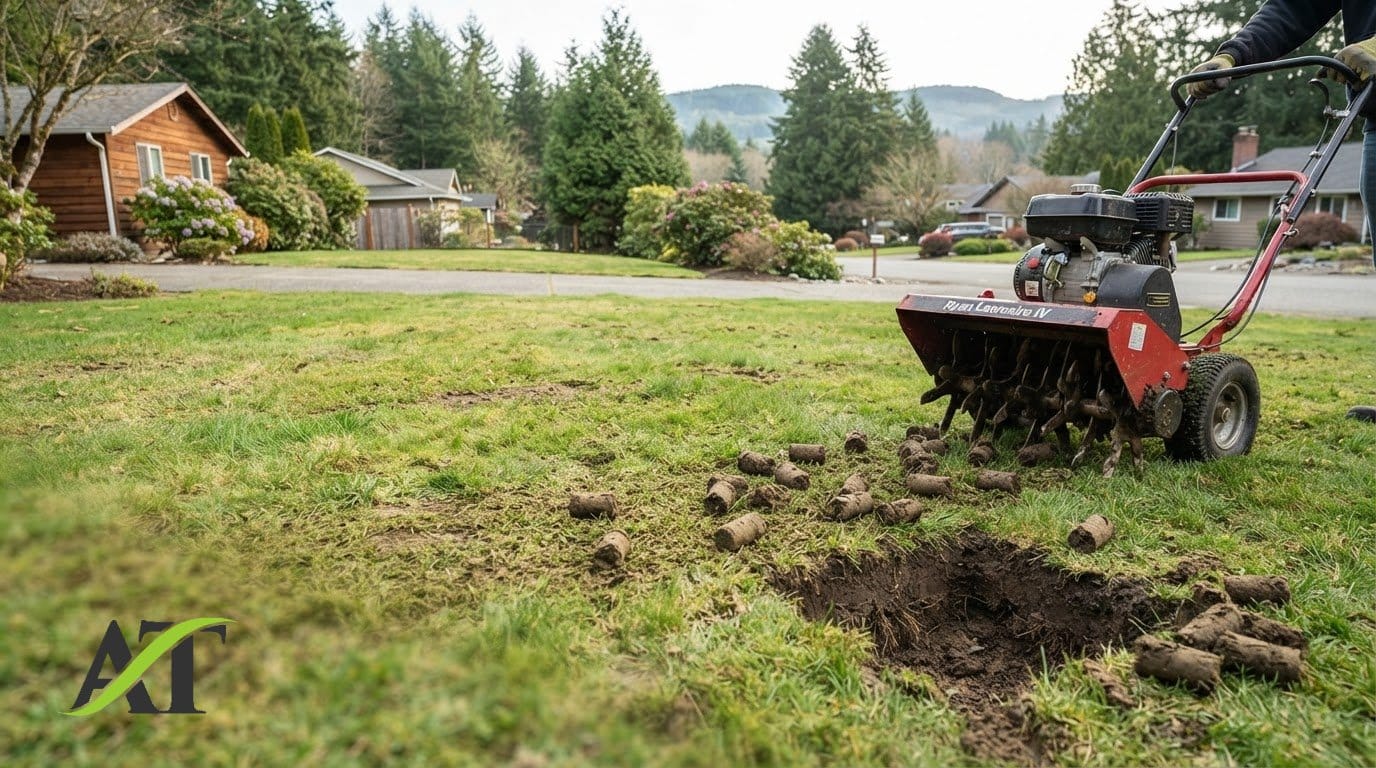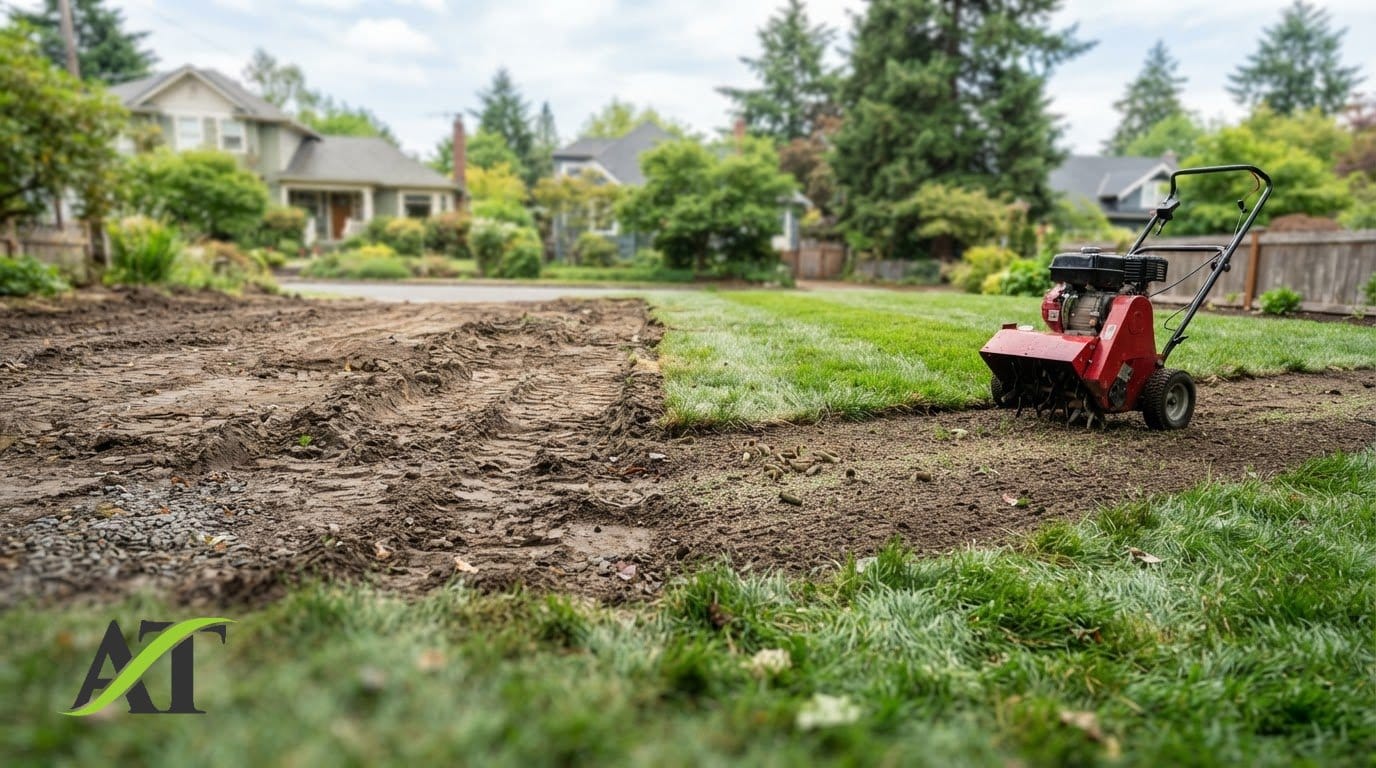
New grass can fail for a reason seed alone can’t solve: construction may leave the soil underneath compacted or uneven. This guide explains how to fix lawn after construction damage Green Lake homeowners may see, starting with the condition of the ground, not the size of the bare patch.
It’s reasonable to hope that aeration and overseeding will bring thin or scraped turf back. They can help when damage is at the surface and the soil can support new growth, but they aren’t a cure-all. Core Aeration works in the shallow turf root zone; it won’t break deep hardpan or correct a subsurface drainage defect. Thatch, compaction, and drainage problems call for different decisions, so choosing a treatment before identifying the cause can waste effort. Here, you’ll learn what signs to look for, when a Lawn Tune-Up may fit, and when the issue needs closer soil or drainage assessment. You’ll also see when Power Raking (Dethatching) belongs in the plan, rather than assuming every damaged lawn needs the largest service.
Key Takeaways
- To fix lawn after construction damage Green Lake homeowners should start by checking for scraped turf, bare patches, tracks, and disturbed soil.
- Match the treatment to the visible need: Core Aeration, Overseeding, and Fertilizing may help turf recover, while Power Raking (Dethatching) is for lawns that also need thatch addressed.
- Prepare a clean seedbed and provide good seed-to-soil contact instead of scattering seed over debris.
- If water continues to collect or the ground remains difficult for roots, turf treatments may not address the underlying soil or drainage problem.
How to Tell What Construction Damage Your Green Lake Lawn Has
Construction can leave scraped turf, bare patches, tracks, exposed soil, or areas where the ground has been disturbed. Those marks show where the surface changed, but they don’t reveal the full cause of weak growth. To fix lawn after construction damage Green Lake homeowners should first compare affected spots with nearby turf and note whether the damage follows visible traffic or appears in a different pattern.
Which signs suggest turf damage or soil compaction?
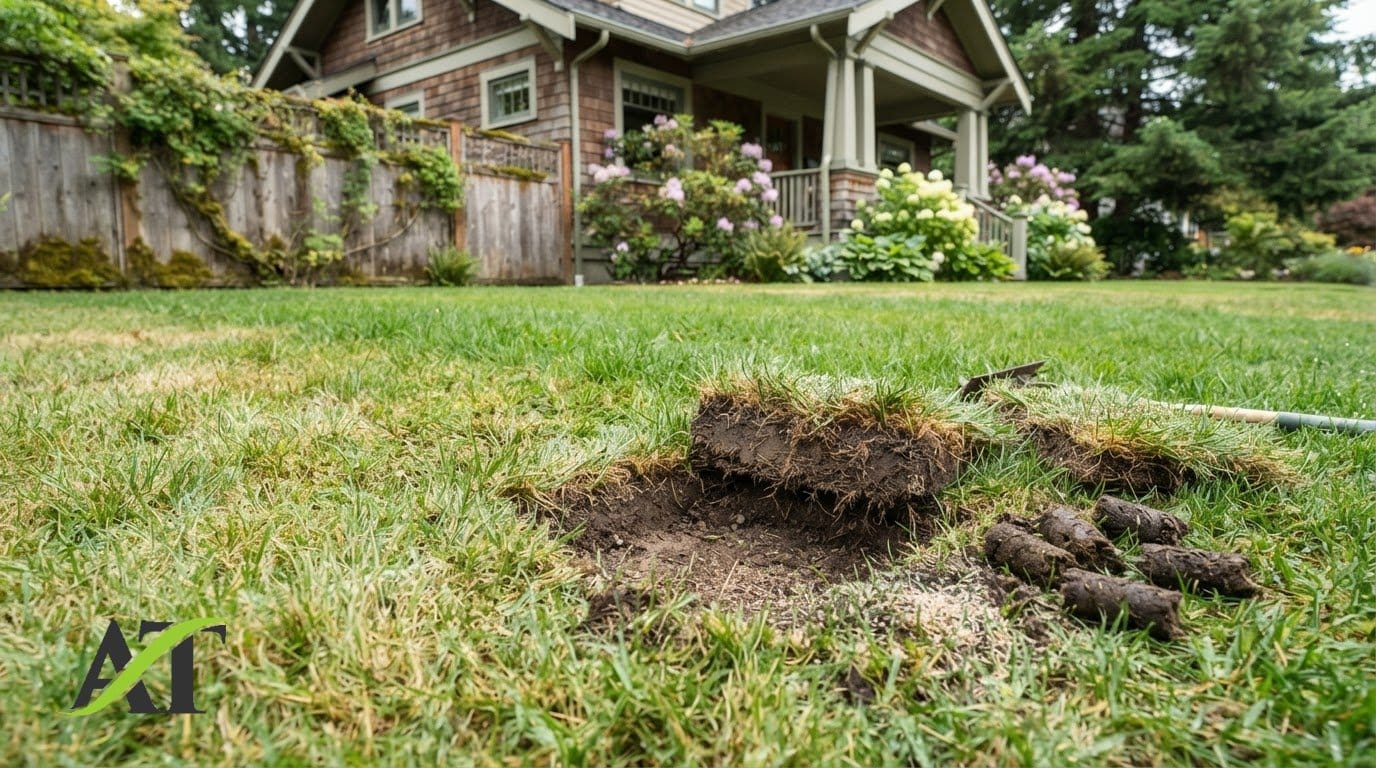
Bare or thin patches, flattened grass, and exposed or uneven soil are useful clues to record. Tracks can point to areas that received repeated traffic, but they don’t prove the soil is compacted. If the ground feels firmer than nearby areas, note that difference too. Soil compaction can limit water movement and root growth, though similar turf symptoms may have other causes.
Look at the lawn as a whole. Thinning under a tree or beside a structure may relate to shade; uneven moisture can also affect growth. Thatch is a layer of dead stems and roots near the surface, so assess it separately rather than treating every bare patch as a thatch problem.
When might the problem be deeper than the lawn surface?
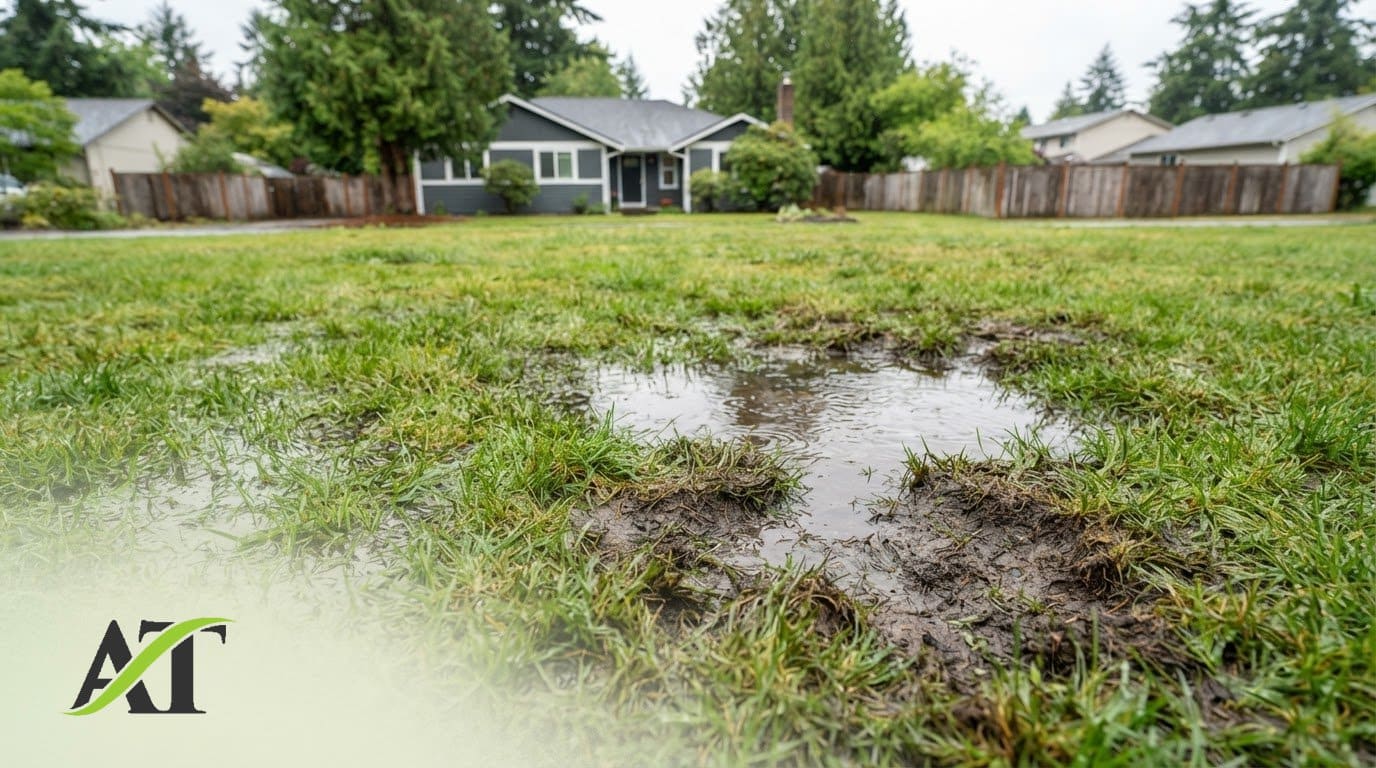
Pay attention to patterns that persist beyond the construction-disturbed area. Water that repeatedly collects in the same place, or turf that remains weak while nearby grass grows normally, may indicate a site condition that needs closer assessment. These signs don’t identify the cause on their own. Shade, irrigation, soil disturbance, and drainage can produce overlapping symptoms.
A lawn treatment may help restore turf where the problem is within the surface layer, but it can’t resolve every condition below it. If symptoms suggest the issue extends beyond the lawn surface, seek further diagnosis before assuming seed or another turf treatment will address the cause.
What Lawn Restoration Treatments Can Repair After Construction
Choose a treatment for the condition it addresses, not just the visible size of the damaged area. Turf restoration can support recovery when the seedbed is suitable, but it won’t repair every construction-related soil or site problem.
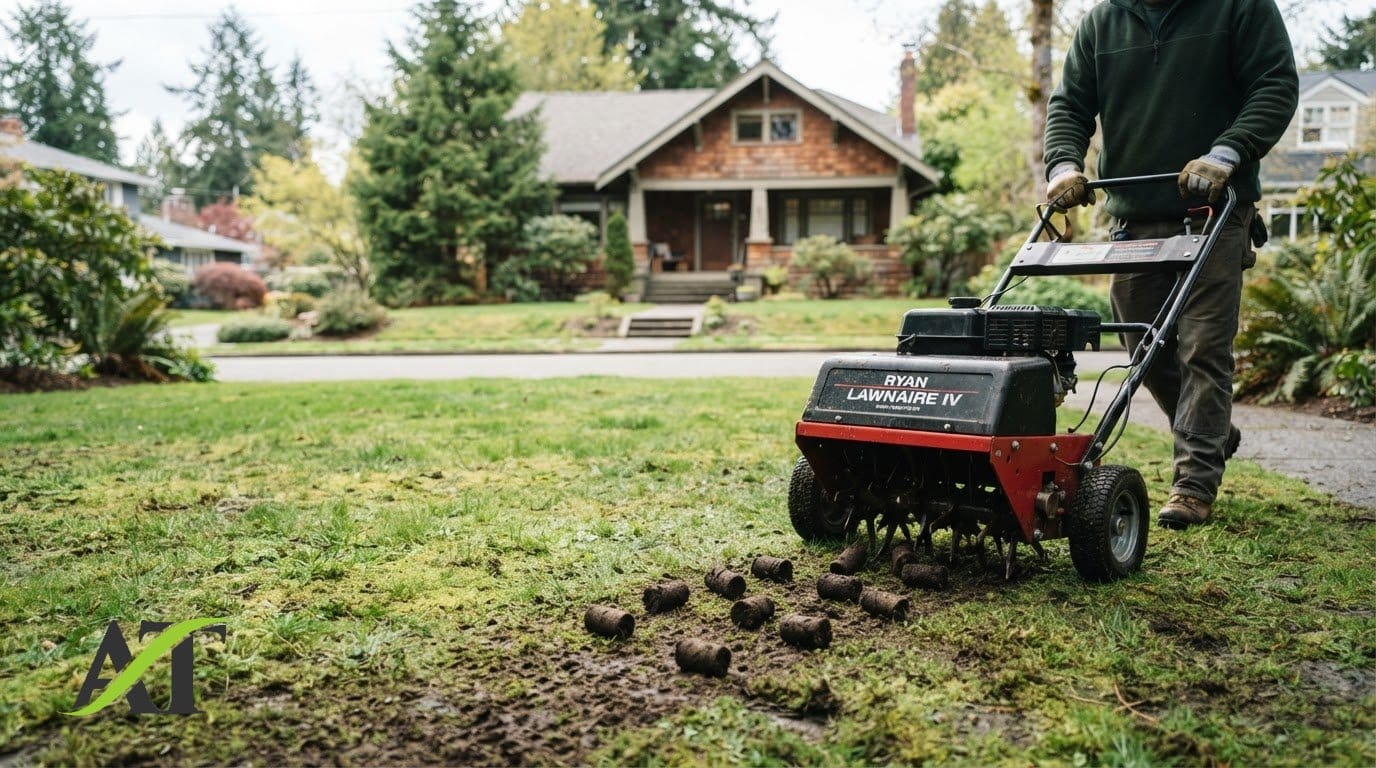
- Core Aeration: Addresses shallow turf-root-zone compaction, as described above.
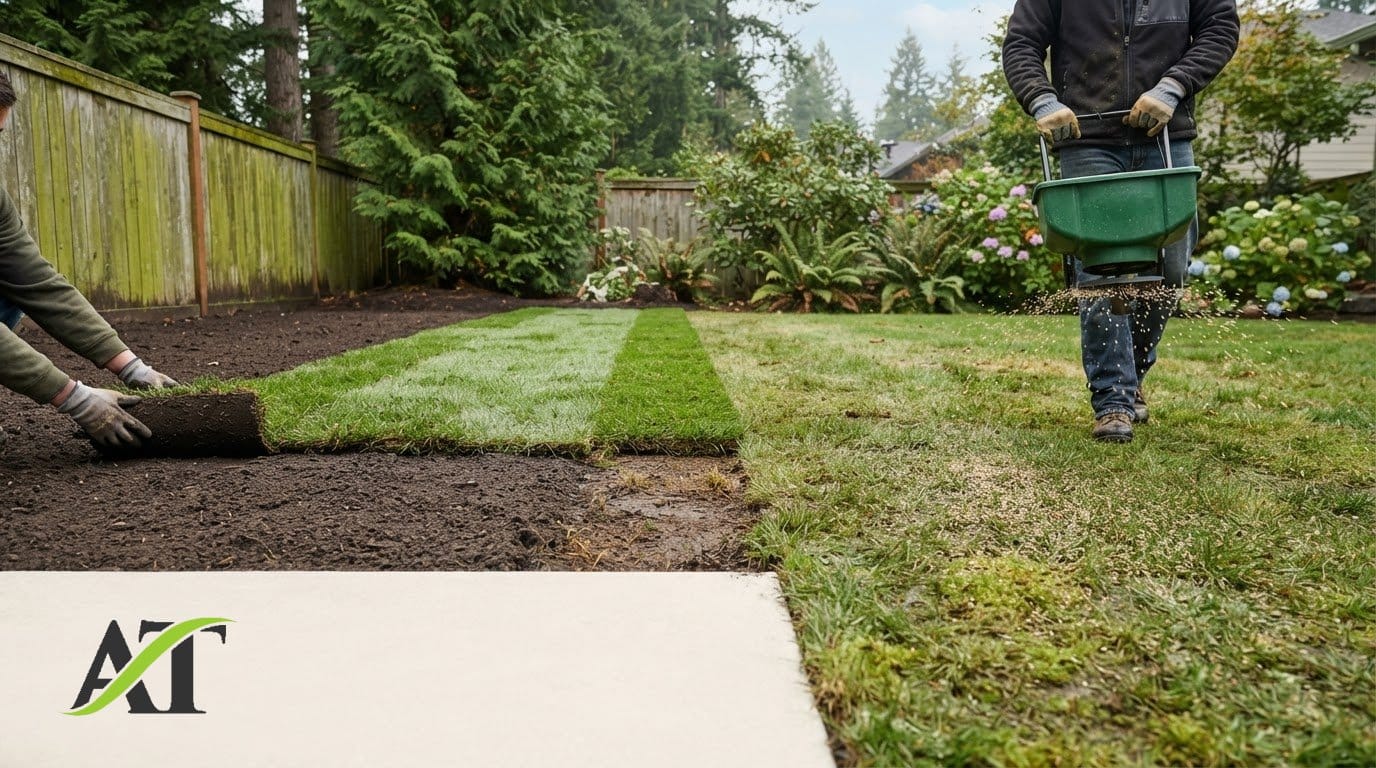
- Overseeding: Adds grass seed to thin or bare areas. Establishment depends on suitable soil conditions, moisture, seed-to-soil contact, weather, and aftercare.
- Fertilizing: Supplies nutrients to support turf growth. It doesn’t replace preparing the seedbed or identifying the cause of poor growth.
- Power Raking (Dethatching): Removes excess thatch near the soil surface. It isn’t a general remedy for bare soil, construction debris, or other damage.
Match the work to the need. A bare patch with no excess thatch may call for Overseeding rather than Power Raking (Dethatching). If debris or an unsuitable surface prevents seed from reaching soil, address the seedbed first instead of scattering seed over it.
When does a Lawn Tune-Up fit the repair need?
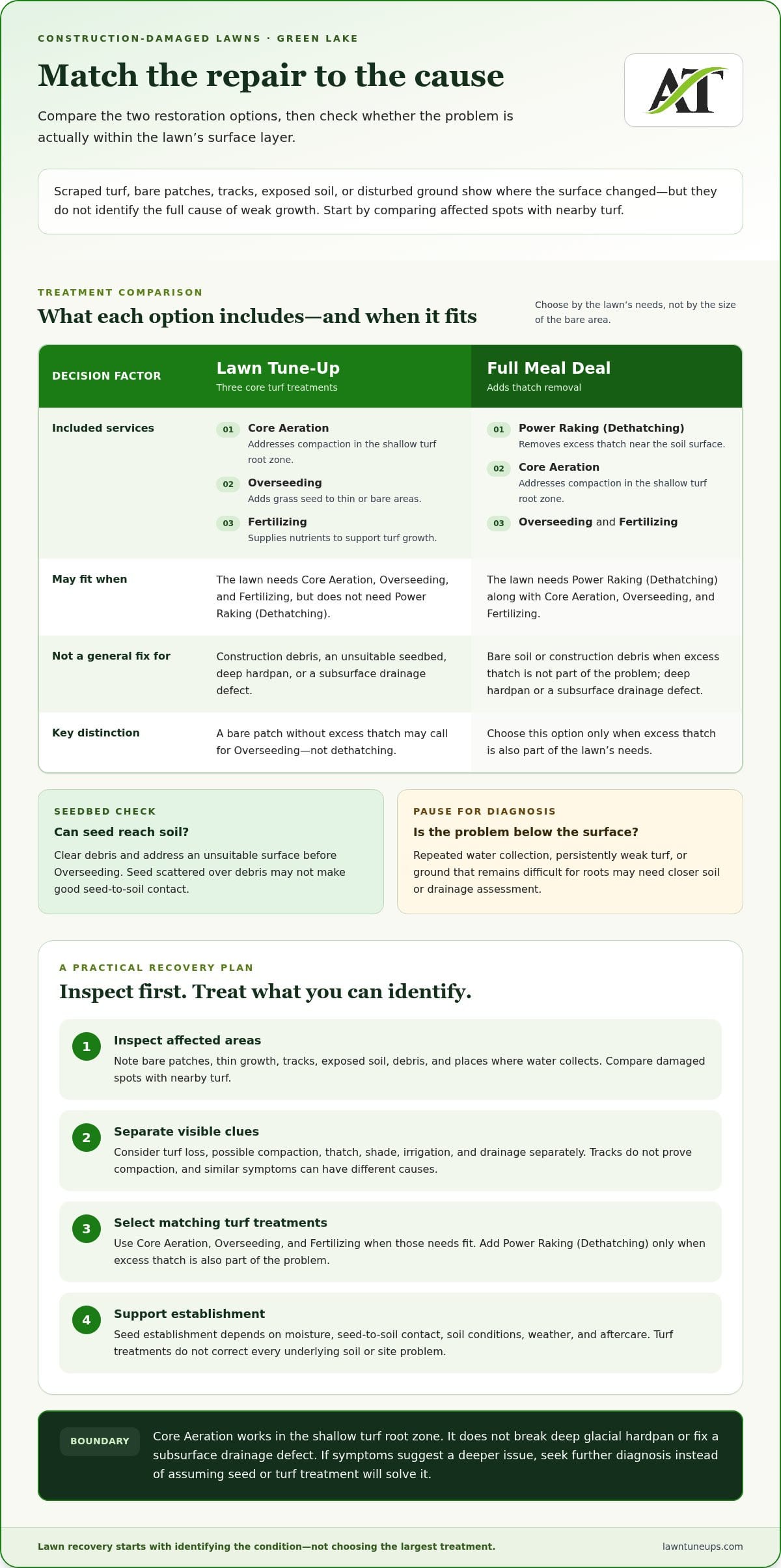
A Lawn Tune-Up consists of Core Aeration, Overseeding, and Fertilizing. It may suit a lawn that needs those treatments but doesn’t need Power Raking (Dethatching). The Seattle Lawn Tune-Up combines those three services; dethatching isn’t part of it.
When is the Full Meal Deal relevant?
The Full Meal Deal fits when the lawn needs Power Raking (Dethatching) along with the other restoration steps. It consists of Power Raking (Dethatching), Core Aeration, Overseeding, and Fertilizing. If excess thatch isn’t part of the problem, that additional treatment may not match the lawn’s needs. You can review the Full Meal Deal components as you consider which approach fits.
A Practical Green Lake Lawn Recovery Plan After Construction
Take the repair in stages. A measured approach helps separate damage that turf treatment can address from problems that need attention below the lawn surface.
- Inspect the affected areas. Walk the lawn and note bare patches, thin growth, tracks, exposed soil, debris, and places where water collects. Compare the damaged spots with nearby turf, and note whether symptoms follow construction traffic or appear more broadly.
- Identify what you can see. Separate surface turf loss from possible compaction, thatch, shade, irrigation, or drainage concerns. These clues help guide the next step, but they don’t confirm a hidden soil or drainage condition.
- Choose a matching turf treatment. Select Core Aeration, Overseeding, and Fertilizing when those needs fit; include Power Raking (Dethatching) only when excess thatch is also part of the problem.
- Support establishment. Follow appropriate aftercare and account for moisture, weather, soil conditions, and seed-to-soil contact. New seed can’t establish well if it rests on debris rather than soil.
What should be addressed before Overseeding?
Check whether the seedbed is reasonably clear and whether seed can reach soil. Loose construction debris, clumps, or a heavily disturbed surface can interfere with contact and establishment. Simply scattering seed over debris won’t correct an unsuitable seedbed. If the ground appears uneven or water repeatedly collects, don’t assume Overseeding alone will solve the underlying issue.
How can homeowners support new grass after treatment?
For our Premium 60/40 Sun & Shade Mix and Seattle-area Overseeding, we prefer soil temperatures around 55-75°F (13-24°C) as a practical service window. It isn’t a strict cutoff, a universal optimum for every seed, or a germination guarantee. Moisture, seed contact, soil conditions, weather, and aftercare also affect establishment. Follow the lawn after-care guide for guidance following aeration and Overseeding.
Choose Lawn Restoration for Your Green Lake Property
The right restoration choice depends on what remains after construction, not simply how much turf is missing. A Lawn Tune-Up may fit when the lawn needs Core Aeration, Overseeding, and Fertilizing. The Full Meal Deal is relevant when Power Raking (Dethatching) is also appropriate. Don’t add dethatching just because a patch is bare; that treatment addresses excess thatch, not construction debris, deep compaction, or drainage.
Turf restoration can help where the seedbed is suitable and the problem is within the lawn’s surface or shallow root zone. It has limits. Core Aeration won’t break deep hardpan or correct a subsurface drainage defect. If water continues to collect or the soil disturbance appears deeper than the turf root zone, the underlying site condition may need further assessment before a lawn treatment can address the symptoms.
For visual context, Seattle lawn renovation before-and-after examples show restoration work involving aeration, dethatching, Overseeding, and Fertilizing. They’re examples of those services, not Green Lake construction-damage case studies.
How to describe the damage when requesting guidance
Note which areas were disturbed, what construction activity affected them, and what symptoms remain, such as bare patches, thin growth, tracks, debris, or standing water. Clear photos from a few angles can help show the pattern and surface condition, but images alone may not reveal compaction below the surface or diagnose a drainage issue.
Ask Stewart About Your Lawn
Share what you’ve noticed and ask which restoration approach may suit the visible damage. If the problem appears to extend below the turf, include that concern too.
Make the Next Step Fit the Lawn
A practical way to fix lawn after construction damage Green Lake homeowners are facing is to base the next step on the condition of the site, not the size of the bare patch. Keep track of what changes after restoration and whether the same areas continue to struggle. That information can help clarify whether the lawn is responding or whether the underlying ground needs a closer look.
There’s no need to treat every construction mark as the same problem. A focused plan can address recoverable turf damage without assuming that a larger treatment will solve a deeper issue. Start with what you can observe, then choose an approach that makes sense for those conditions.
With a clear assessment and realistic next step, your lawn has a better path toward recovery through Aerating Thatching Co.
Frequently Asked Questions
Can Core Aeration fix a lawn compacted by construction?
Sometimes. Core Aeration can help when construction has compacted soil in the shallow turf root zone, but it won’t break deep glacial hardpan or correct a subsurface drainage defect. How to fix lawn after construction damage Green Lake homeowners face depends on which layer is affected. If water repeatedly ponds or turf stays weak after surface conditions improve, don’t assume aeration alone will restore it; the site may need further assessment.
How do I know whether construction damage is caused by compaction or a drainage problem?
Appearance alone can’t reliably distinguish the two. Bare soil or flattened grass may show surface injury, while shallow compaction can affect root growth and water movement. Repeated pooling in one area may raise a drainage concern, but it doesn’t prove the cause. Note where and when water collects and whether the pattern changes; turf treatments can support grass, but they don’t correct every subsurface condition.
Can I Overseed a lawn immediately after construction work?
Overseed once loose debris is cleared and seed can reach suitable soil. Seed scattered over rubble or a crusted surface may not establish well. For the Premium 60/40 Sun & Shade Mix and Seattle-area Overseeding, we prefer soil temperatures around 55-75°F (13-24°C) as a practical window, not a strict cutoff or guarantee. Moisture, soil conditions, weather, seed contact, and aftercare also affect establishment.
Will a Lawn Tune-Up include dethatching after construction?
No. A Lawn Tune-Up consists of Core Aeration, Overseeding, and Fertilizing; it doesn’t include Power Raking (Dethatching). The Full Meal Deal includes Power Raking (Dethatching), Core Aeration, Overseeding, and Fertilizing. Dethatching fits when thatch is part of the problem. It won’t diagnose or correct construction compaction or a deeper site issue, so choose it based on the lawn’s actual condition.
Article by
Stewart Armour
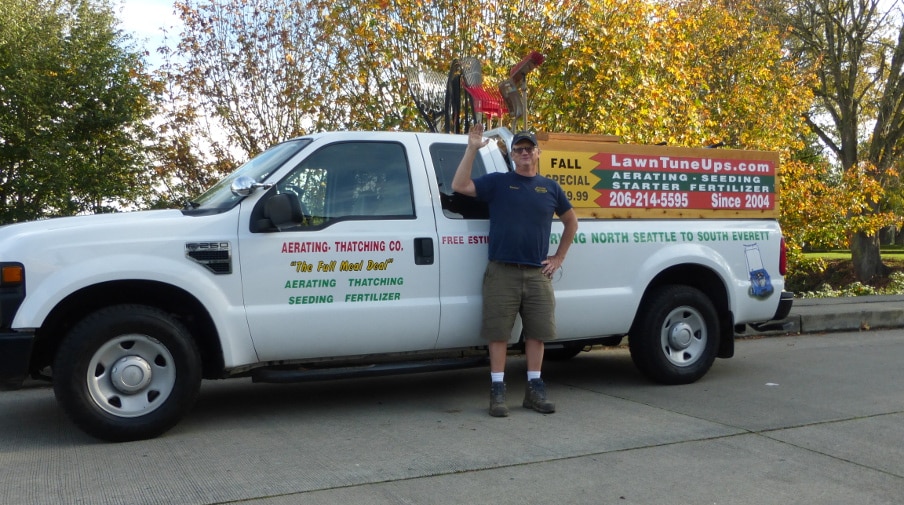
Stewart Armour is the owner of Aerating Thatching Co., an owner-operated Seattle-area lawn restoration business established in 2004. He helps homeowners understand Core Aeration, Power Raking (Dethatching), Overseeding, soil conditions, and the aftercare needed for stronger lawns. His background includes turf management study, advanced golf course turf training, and continuing education through Wilbur-Ellis University, State Turf Facilities, Soil First Academy, and Golf Course Applied Turf Physiology. Stewart has personally evaluated thousands of residential lawns throughout the Seattle area and focuses on recommending the work that fits each lawn’s condition.