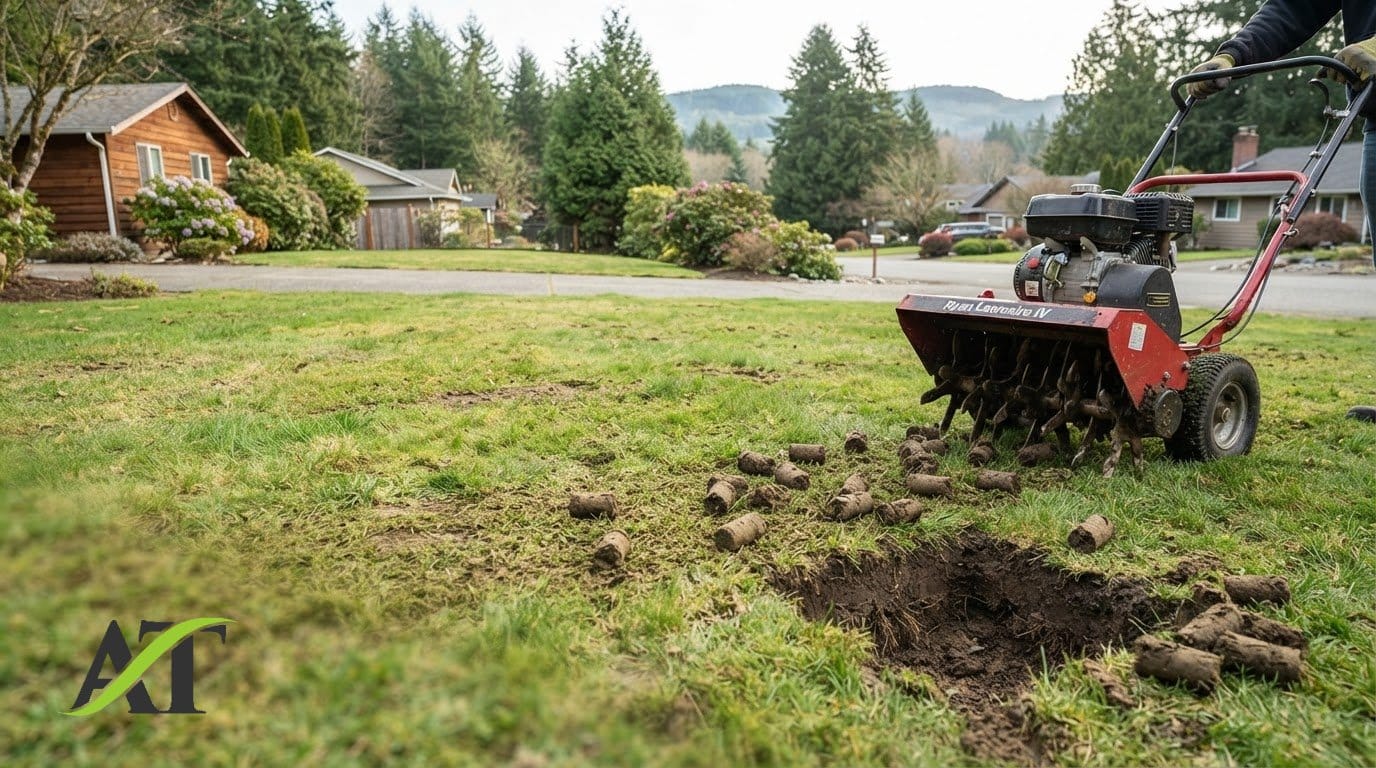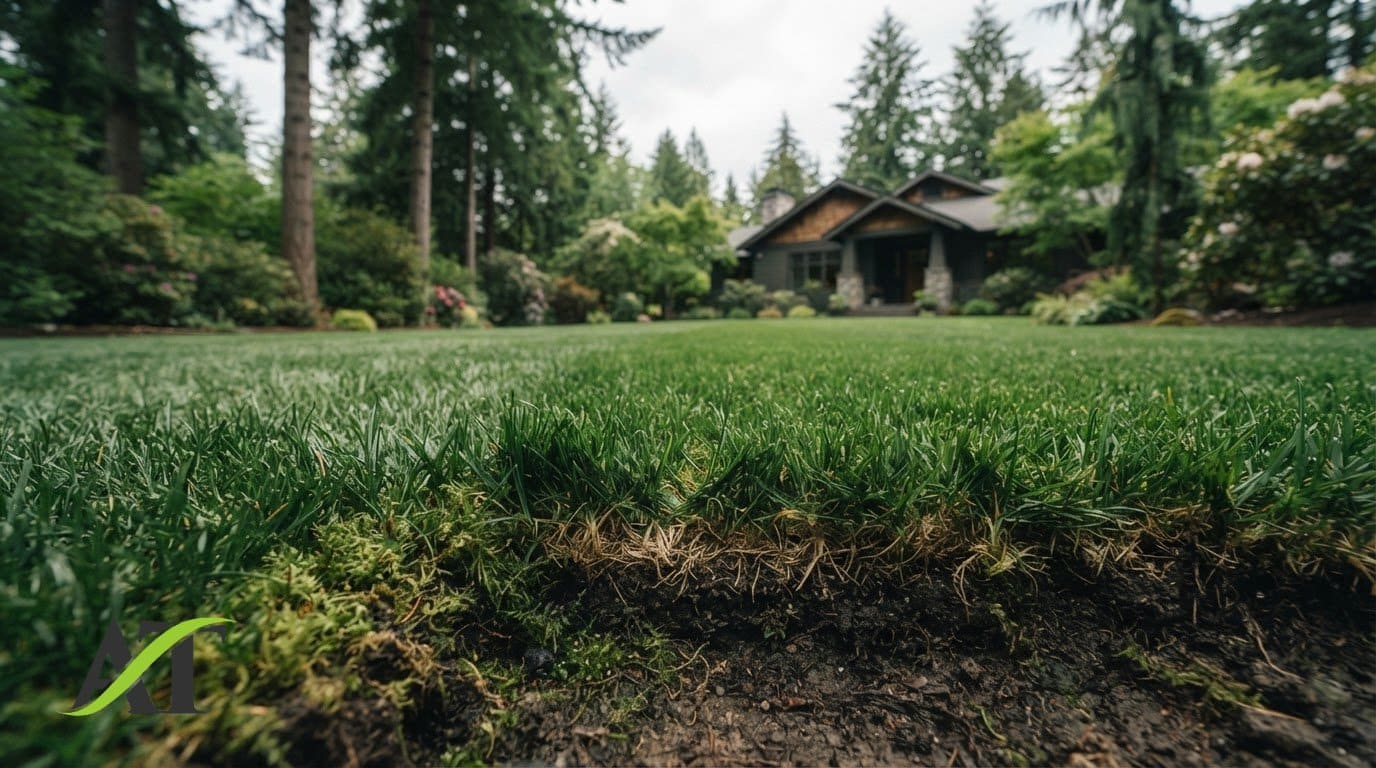
A mossy, thin, or spongy lawn may not need Power Raking (Dethatching) first. These symptoms can have different causes, and appearance alone can’t confirm that excess thatch is the main problem. Removing material that isn’t excessive can stress already-thin turf. If you’re considering a lawn dethatching service North Seattle, start by identifying what you see and what you want to improve.
This guide explains what Power Raking (Dethatching) addresses, how it differs from Core Aeration, and which service package includes each treatment. The Full Meal Deal includes Power Raking (Dethatching), Core Aeration, Overseeding, and Fertilizing. The Lawn Tune-Up includes Core Aeration, Overseeding, and Fertilizing, without Power Raking (Dethatching). Knowing the difference helps you describe your lawn and choose a service that fits your goals.
Key Takeaways
- Moss, thin patches, and spongy turf can have different causes. Visible symptoms alone don’t confirm that your lawn needs Power Raking (Dethatching).
- Power Raking (Dethatching) targets excess surface thatch. It is not a guaranteed moss-control treatment.
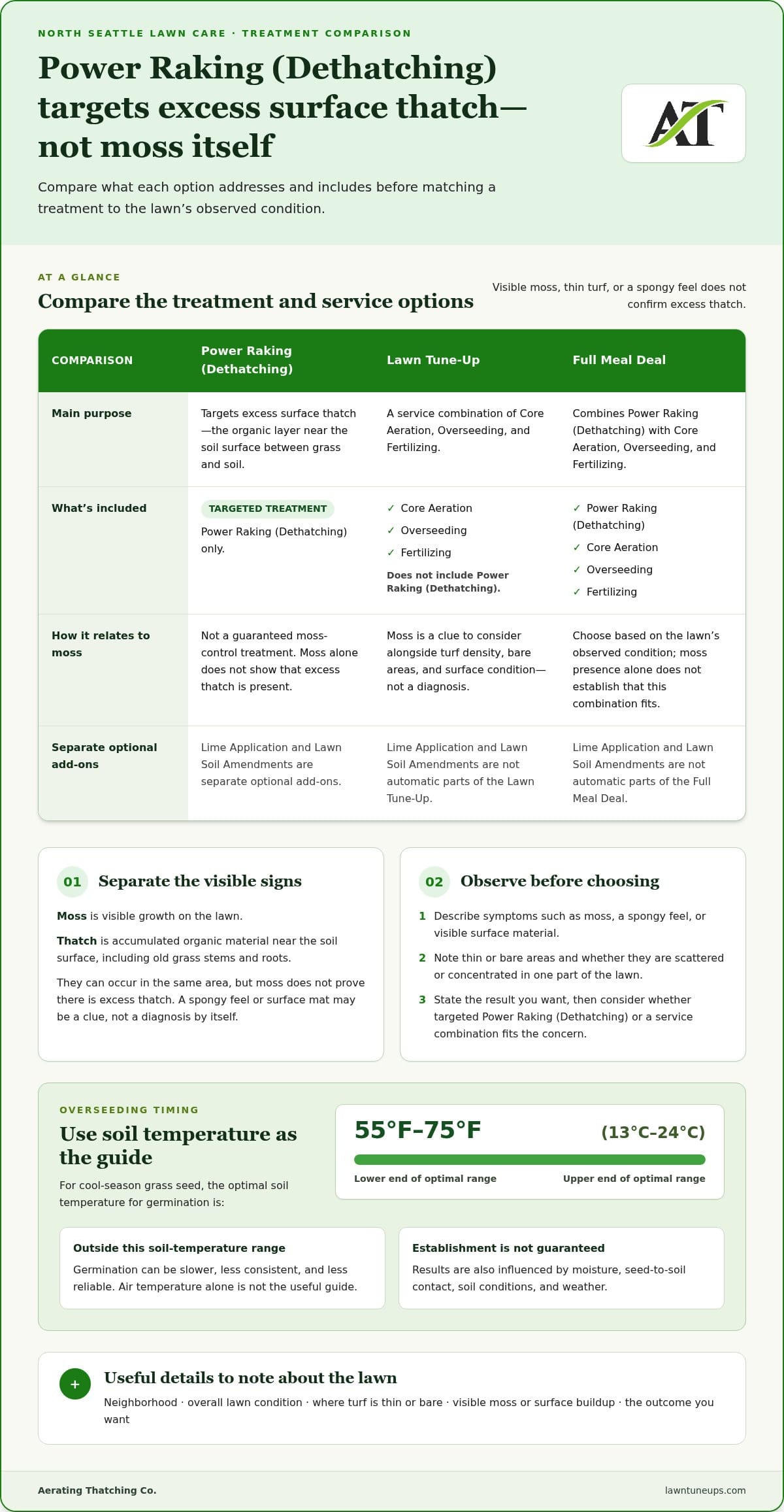
- The Lawn Tune-Up includes Core Aeration, Overseeding, and Fertilizing. The Full Meal Deal includes those three components plus Power Raking (Dethatching).
- For a useful quote request, note your neighborhood, lawn condition, where turf is thin or bare, and the result you want.
Mossy North Seattle Lawn? Understand What Power Raking (Dethatching) Addresses
A mossy, thin, or spongy lawn can leave you wondering what to treat first. In North Seattle, where shaded and damp areas can be part of a yard’s conditions, moss may appear alongside other lawn concerns. A quick look at the surface does not establish that excess thatch is the cause. Before choosing a lawn dethatching service North Seattle homeowners can benefit from distinguishing the material they see from the treatment’s actual target.
What lawn symptoms can suggest excess thatch?
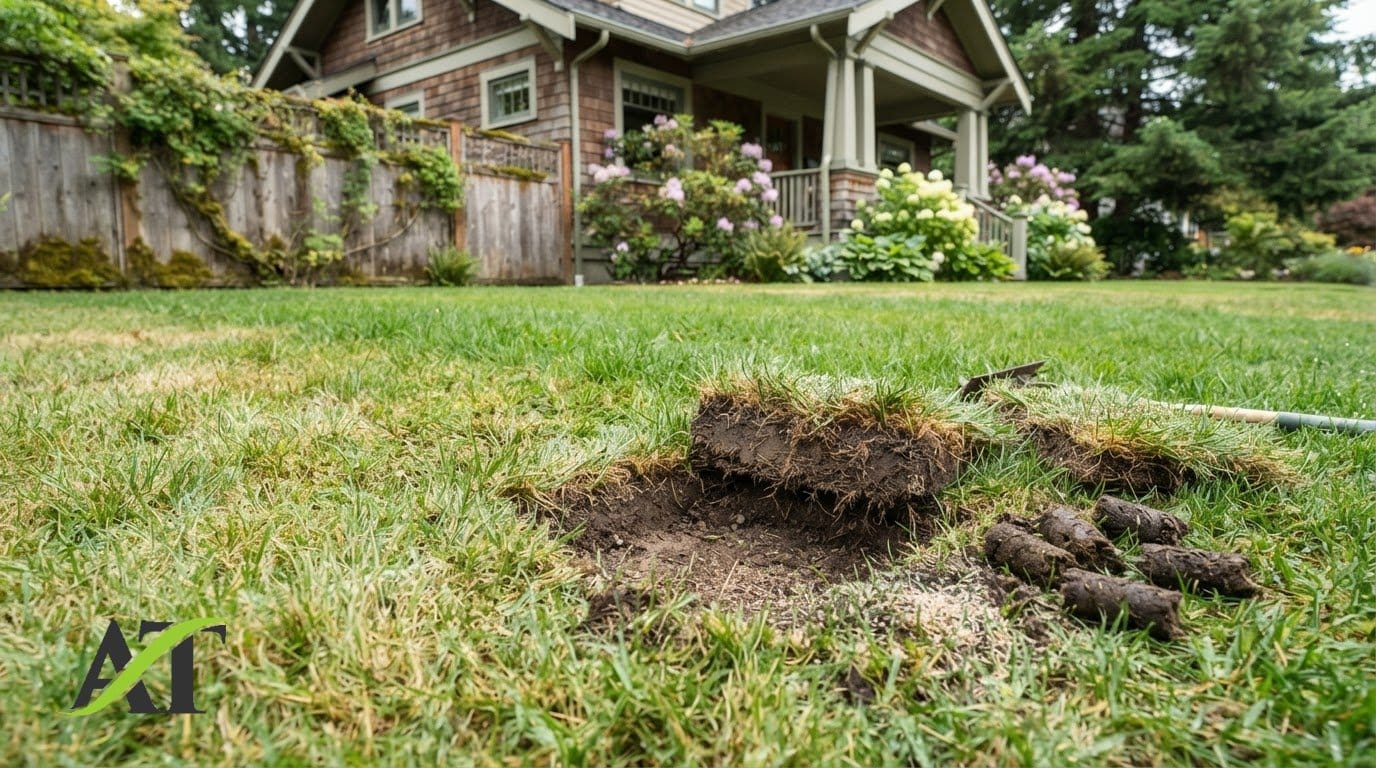
Thatch is a layer of organic material, including old grass stems and roots, that accumulates near the soil surface between green grass and the soil. A spongy feel underfoot or a noticeable mat of material at the surface may be a clue that thatch has built up. Neither sign is a diagnosis on its own. Check several parts of the lawn and note turf density, bare areas, visible moss, and whether the surface feels different from one spot to another.
Power Raking (Dethatching) removes excess surface thatch to help clear the layer between living grass and soil. A dethatcher is designed to work through that surface layer. The treatment targets thatch, not every condition that can leave grass weak or sparse.
Is moss the same thing as thatch?
No. Moss is visible growth on the lawn; thatch is accumulated organic material near the soil surface. They can occur in the same area, but moss does not prove that there is excess thatch. Likewise, removing thatch does not guarantee that moss will disappear. Treating one as proof of the other can lead to choosing work that misses the lawn’s main concern.
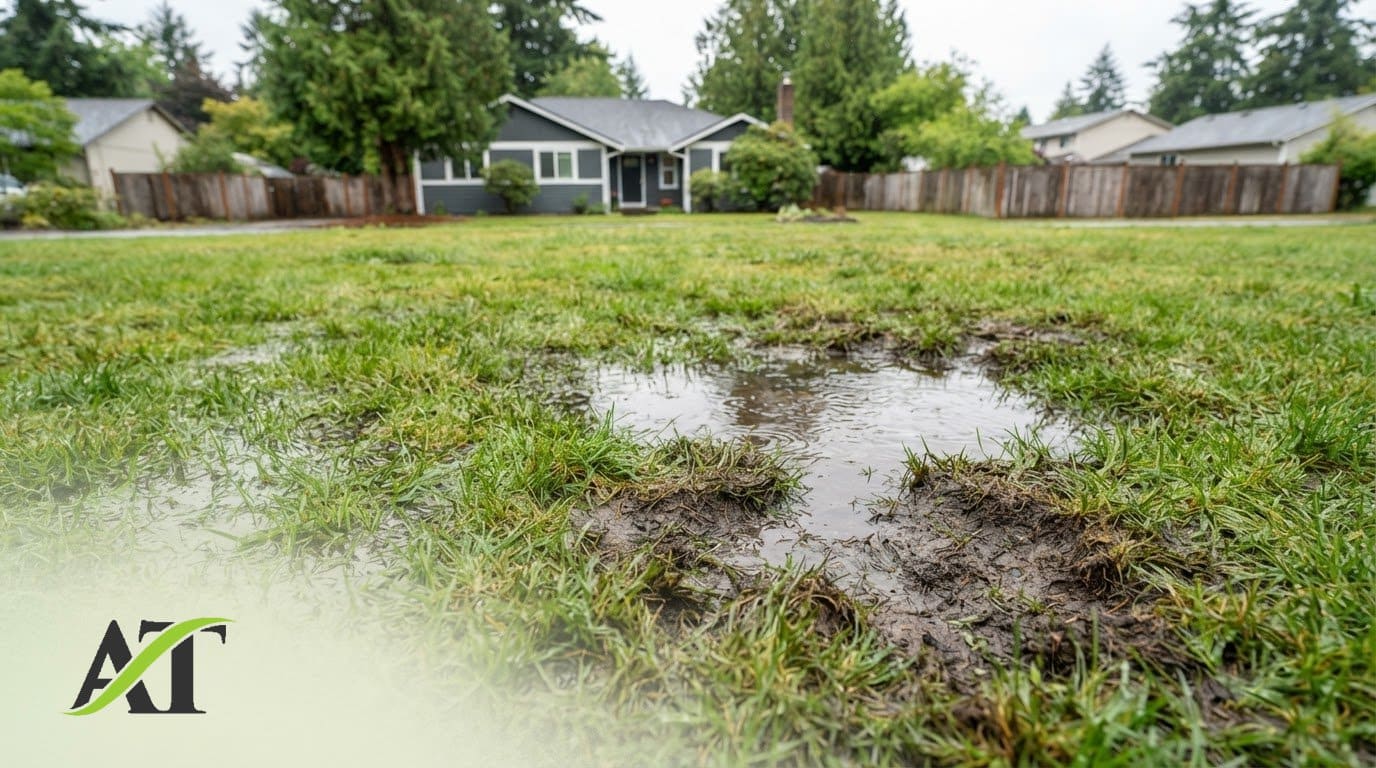
If moss persists, look at the overall lawn rather than assuming a single cause. Note where the grass is dense or sparse, where bare patches appear, and whether the ground stays damp or feels compacted. These observations help clarify whether Power Raking (Dethatching) fits the concern or whether the lawn may benefit from a broader treatment plan.
Power Raking (Dethatching) vs. Moss Control: What Treatment Fits Your North Seattle Lawn?
A lawn dethatching service North Seattle homeowners choose should match the condition they want to address. Power Raking (Dethatching) targets excess thatch. It is not a guaranteed standalone moss-control solution, so moss alone is not enough reason to select it. Compare the lawn’s density, bare areas, and surface condition before choosing a treatment.
| Option | What it addresses or includes |
|---|---|
| Moss as a symptom | A visible clue to consider alongside turf density and bare areas, not a treatment diagnosis. |
| Power Raking (Dethatching) | A targeted treatment for excess surface thatch, not a guaranteed way to eliminate moss. |
| Lawn Tune-Up | Core Aeration, Overseeding, and Fertilizing. It does not include Power Raking (Dethatching). |
| Full Meal Deal | Power Raking (Dethatching), Core Aeration, Overseeding, and Fertilizing. |
What is included in each service?
The Lawn Tune-Up consists of Core Aeration, Overseeding, and Fertilizing. The Full Meal Deal includes those three components plus Power Raking (Dethatching). Lime Application and Lawn Soil Amendments are separate optional add-ons, not automatic parts of either package. When comparing options, start with whether excess thatch is one of the concerns you want addressed.
When might a combined treatment make sense?
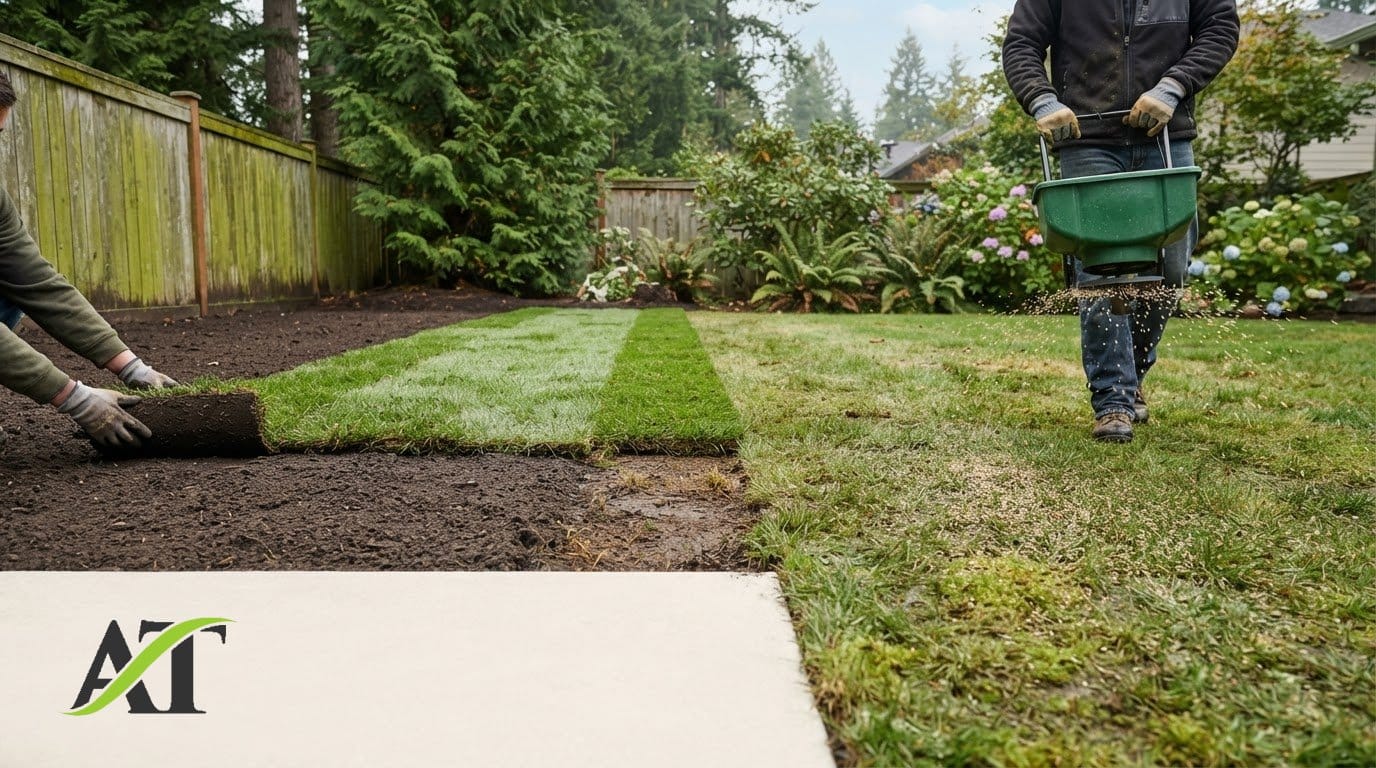
If the lawn has thin turf or bare areas as well as excess thatch, Overseeding may be relevant alongside Power Raking (Dethatching). Core Aeration and Fertilizing are included in both packages, while Power Raking (Dethatching) is included only in the Full Meal Deal. The right fit depends on the lawn’s observed condition, not moss presence alone. Seed establishment is not guaranteed: moisture, seed-to-soil contact, soil conditions, and weather all affect results. Describe the symptoms and desired outcome in a North Seattle lawn quote request.
How to Choose a North Seattle Lawn Dethatching Service
A clear request starts with what you can observe, not a guess about the cause. Before requesting a lawn dethatching service North Seattle homeowners can note the surface condition and where the turf is struggling. This makes it easier to connect the concern to the work instead of treating every mossy lawn the same way.
- Describe the symptoms, such as moss, a spongy feel, or visible surface material.
- Mark thin or bare areas and note whether they are scattered or concentrated in one part of the lawn.
- State the result you want, then consider whether targeted Power Raking (Dethatching) or a service combination better fits the lawn.
What should homeowners expect after Overseeding?
For cool-season grass seed, the optimal soil temperature for germination is 55°F-75°F (13°C-24°C). Outside that range, germination can be slower, less consistent, and less reliable. Soil temperature, rather than air temperature alone, is the useful guide for timing. Overseeding can support thin or bare turf, but establishment is not guaranteed. Moisture, seed-to-soil contact, soil conditions, and weather also influence results.
What information helps tailor the service to your lawn?
Include your neighborhood, a short description of the lawn, where grass is thin or bare, and any surface buildup or moss you see. Add the outcome you want, such as addressing excess thatch or supporting thinner areas. If Overseeding is part of your goal, soil temperature can help you think about timing. The Seattle Lawn Tune-Up details explain the combination of Core Aeration, Overseeding, and Fertilizing.
These details make your request specific and give it a practical focus.
Request a North Seattle Quote for Power Raking (Dethatching)
If excess thatch is your concern, request Power Raking (Dethatching) to address that surface layer. It is not a guaranteed moss cure. A clear quote request connects the work to what you are seeing, whether the concern is surface buildup, thin turf, or bare patches across your North Seattle lawn.
What should you include in a quote request?
You do not need to diagnose the cause. Describe the lawn as it appears and the result you want. Include:
- Your neighborhood or North Seattle location.
- Whether you see moss, surface buildup, or both.
- How thick or thin the turf looks, and where bare patches appear.
- The outcome you are hoping for, such as addressing thatch or supporting thinner areas.
These details give your request useful context. A lawn dethatching service North Seattle homeowners request should be considered against the symptoms and desired result, not just the presence of moss.
How does the Seattle service relate to a lawn restoration plan?
The Seattle Lawn Tune-Up includes Core Aeration, Overseeding, and Fertilizing. The Full Meal Deal includes Power Raking (Dethatching), Core Aeration, Overseeding, and Fertilizing. Power Raking (Dethatching) is part of the Full Meal Deal, but not the Lawn Tune-Up. Lime Application and Lawn Soil Amendments are optional add-ons, not assumed package components.
When requesting a quote, share your location, lawn symptoms, and preferred outcome. Focus on what you observe so the service can be matched to the lawn’s needs.
Take the Next Step Toward a Lawn Treatment Plan
Your lawn needs a clear starting point, not a guess. Decide what you want to address, then describe what you see and the result you hope to achieve. That gives your quote request a practical focus and keeps the conversation centered on your property rather than a one-size-fits-all fix.
If you’re considering a lawn dethatching service North Seattle, note where the lawn feels spongy, where surface buildup appears, and which areas are thin or bare. Aerating Thatching Co. is an owner-operated local business providing lawn restoration services in North Seattle and nearby communities, including Shoreline and Lake Forest Park.
A thoughtful treatment choice starts with the lawn’s visible condition. Share your observations and goals to request a quote.
Frequently Asked Questions
Does Power Raking (Dethatching) remove moss?
Not reliably. Power Raking (Dethatching) targets excess thatch, not moss, so it is not a guaranteed moss-control treatment. Moss and thatch are different concerns. In North Seattle and nearby Shoreline, Edmonds, Lynnwood, Mill Creek, Bothell, Kenmore, Lake Forest Park, Mountlake Terrace, Snohomish, Everett, Brier, Woodway, Green Lake, Ballard, and Greenwood, visible moss alone does not establish that dethatching is the right fix. Describe the lawn’s condition when requesting a quote.
Is Power Raking the same as dethatching?
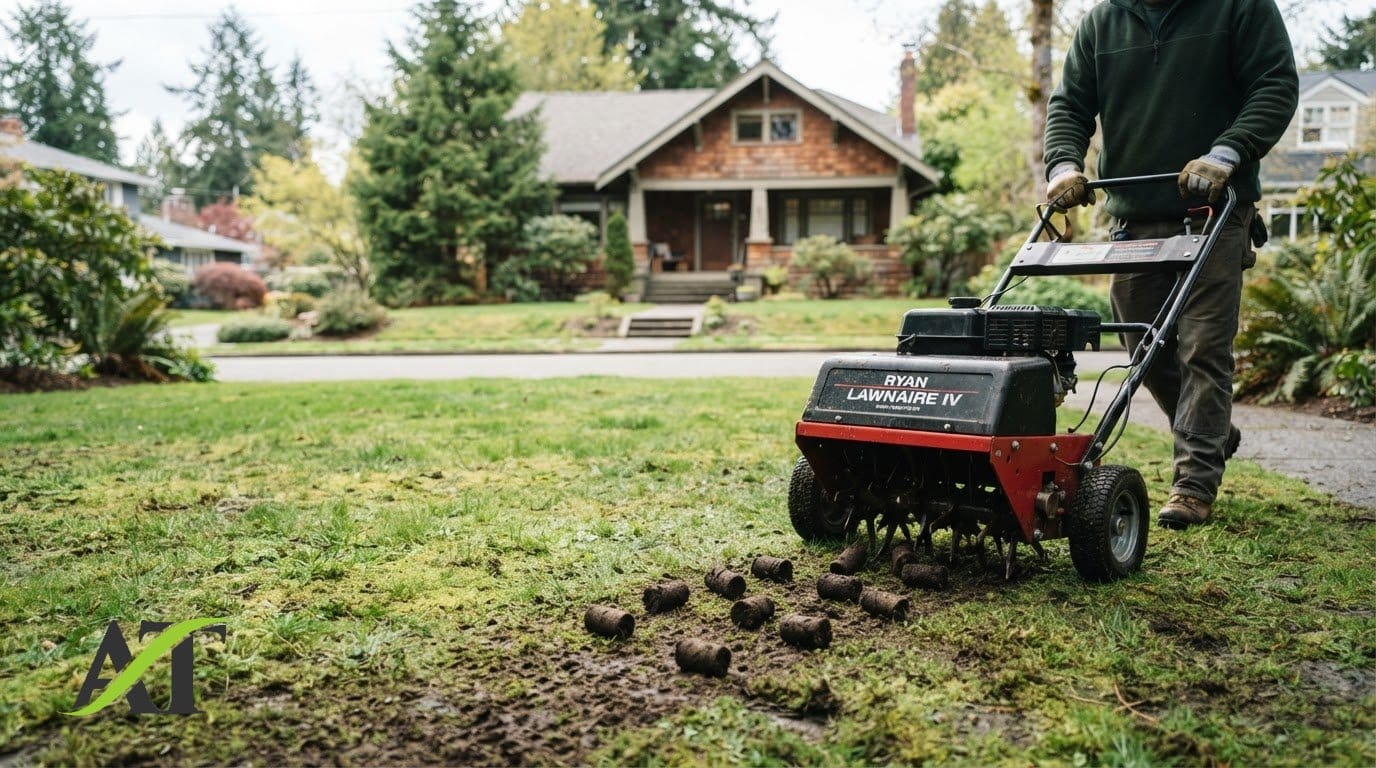
Here, Power Raking (Dethatching) means surface-focused work intended to remove excess organic buildup. Core Aeration serves a different purpose by addressing soil compaction. Surface buildup points to a different concern than firm, compacted ground, and one treatment should not be treated as a substitute for the other. Share both surface and soil observations when discussing a lawn dethatching service North Seattle.
Can Power Raking (Dethatching) damage a lawn?
It can stress turf if the treatment does not suit the lawn’s condition, so no approach should promise zero impact. Thin grass and bare patches are important details to flag when planning the work. Note whether weak turf is widespread or limited to one area. That context helps match the treatment to the lawn rather than assuming every part will respond alike.
When is the best time to Overseed after Power Raking (Dethatching)?
Use the soil-temperature guidance in the Overseeding section to help choose timing after Power Raking (Dethatching). Soil conditions are a better guide than choosing a date from the calendar alone. When requesting work, mention whether Overseeding is part of your goal and describe any thin or bare areas. Moisture, seed-to-soil contact, soil conditions, and weather affect establishment, so results are not guaranteed.
Does the Lawn Tune-Up include Power Raking (Dethatching)?
No. The Lawn Tune-Up includes Core Aeration, Overseeding, and Fertilizing; it does not include Power Raking (Dethatching). The Full Meal Deal includes all four components: Power Raking (Dethatching), Core Aeration, Overseeding, and Fertilizing. Lime Application and Lawn Soil Amendments are optional add-ons, not automatic package components.
Ready to describe your lawn and request a quote? Request a North Seattle lawn quote from Aerating Thatching Co.
Article by
Stewart Armour
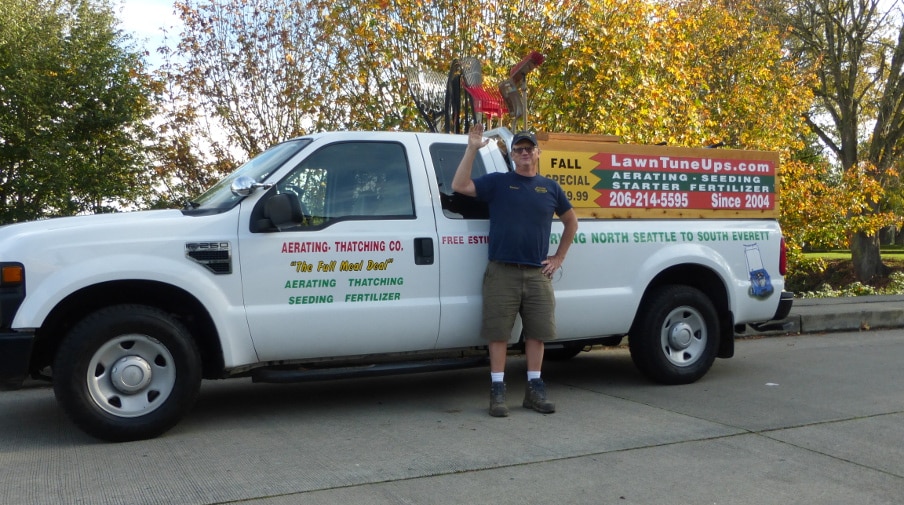
Stewart Armour is an independent lawn restoration expert, educator, and owner of Aerating Thatching Co., serving the greater Seattle area since 2004. With more than two decades of professional experience restoring Western Washington lawns, Stewart specializes in diagnosing lawn problems, improving soil health, and developing long-term lawn renovation strategies. His education includes turf management studies, advanced golf course turf training, and continuing education through Wilbur-Ellis University, State Turf Facilities, Soil First Academy, and Golf Course Applied Turf Physiology. Every article published on LawnTuneUps.com is grounded in practical field experience, current turf science, and a commitment to helping homeowners understand the why behind every recommendation—not just what to do.
Stewart has personally evaluated thousands of residential lawns throughout the Seattle area and remains committed to helping homeowners understand the science behind growing healthier, more resilient lawns.