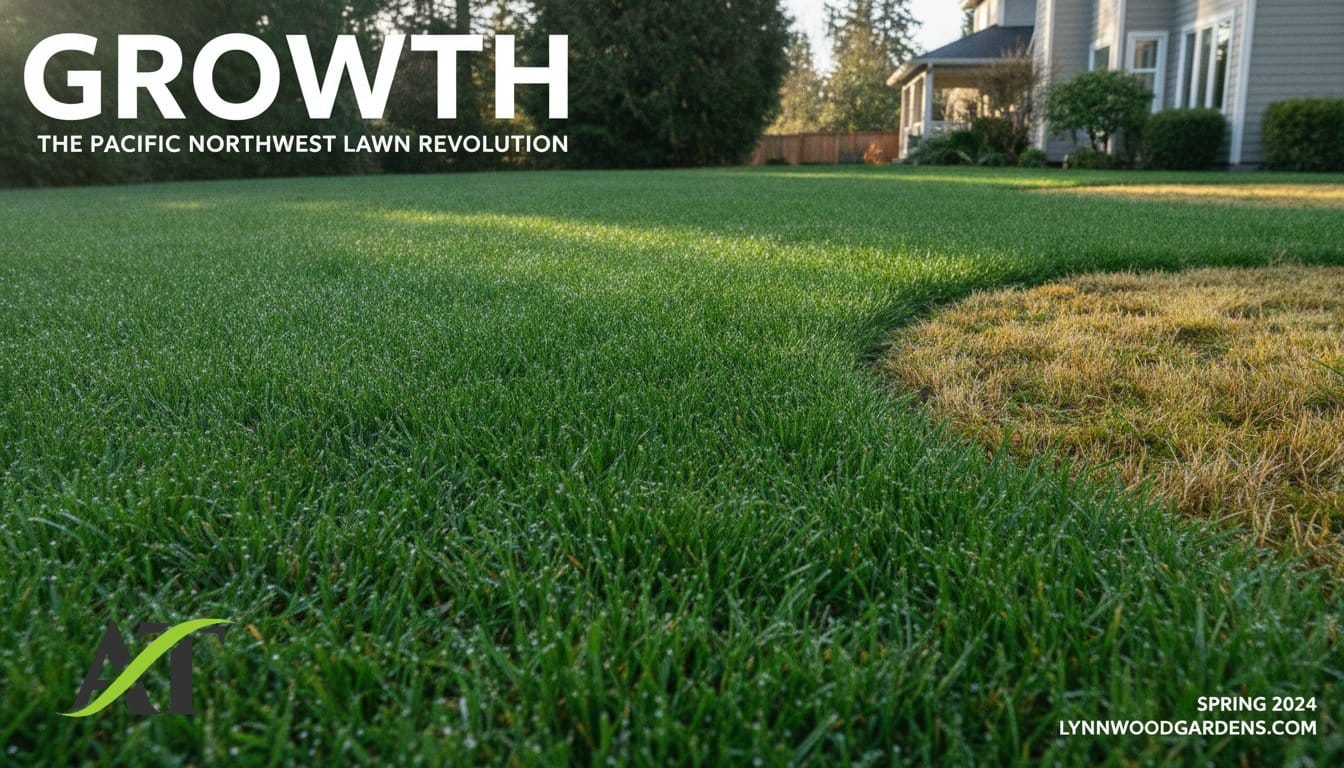
Why does your grass stay thin and yellow even after you spend a fortune on high-end treatments? In Lynnwood, the truth is that your soil might be working against you. Most Snohomish County lawns sit at a pH between 5.0 and 6.5, which is far too acidic for healthy turf. This acidity acts like a lock on your lawn’s roots. If you are investing in organic lawn fertilizing Lynnwood homeowners often find that the nutrients just sit there, unreachable by the grass. Without the right balance, you are essentially pouring money into a lawn that cannot digest its food.
It is frustrating to watch moss take over while your grass remains patchy in damp areas. We understand the struggle of managing local glacial outwash soil. This guide explains why our dirt is so difficult and why balancing pH is the essential first step for any restoration. You’ll learn how a professional Lime Application creates the foundation for success. We will also outline a clear plan for soil restoration using a Lawn Tune-Up or the Full Meal Deal to help you achieve a thick, green lawn that naturally resists moss.
Key Takeaways
- Lynnwood soil is naturally acidic due to heavy rainfall, which frequently drops pH levels below 6.0 and prevents grass from absorbing nutrients.
- If you notice persistent moss or a lack of results from organic lawn fertilizing Lynnwood, your soil’s pH level is likely the primary culprit.
- A professional Lime Application using high-quality pelletized lime is the most efficient way to neutralize soil acidity and improve turf health.
- Pairing an optional Lime Application with a Lawn Tune-Up allows the Core Aeration process to move the lime deeper into the root zone.
The Science of Lynnwood Soil: Why pH is the Foundation of Your Lawn
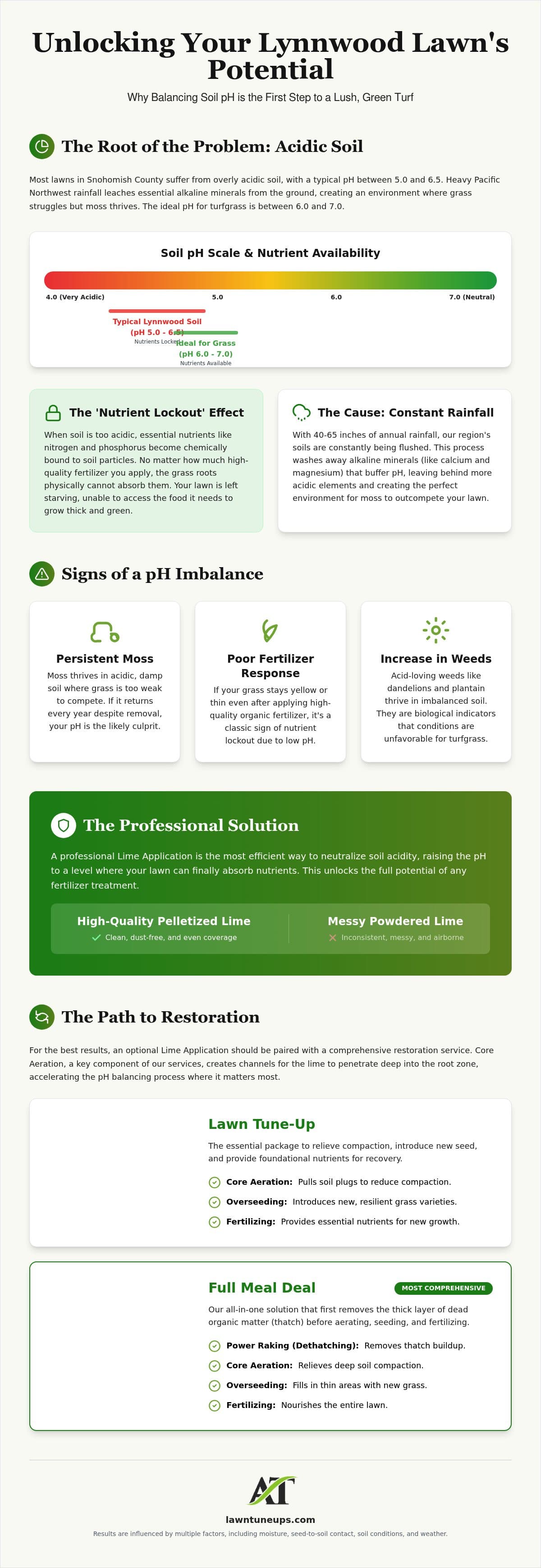
Soil pH is a measurement of how acidic or alkaline your yard is on a scale of 0 to 14. For most homeowners in Snohomish County, this number is the primary difference between a lush yard and a mossy mess. The Science of Soil pH shows that even slight shifts in this value can completely change how plants grow. In Lynnwood, our soil is naturally acidic. A typical profile of local soil shows a topsoil pH of around 5.2. This happens because our heavy Pacific Northwest rainfall, which averages 40 to 65 inches annually, leaches alkaline minerals like calcium and magnesium out of the ground.
While native conifers thrive in these conditions, cool-season grasses like fescue and ryegrass have a different sweet spot. They perform best when the pH is between 6.0 and 7.0. When the soil stays acidic and damp, it creates the perfect habitat for moss. Moss does not just grow because it’s wet; it grows because the grass is too weak to fight back in low-pH environments. Without intervention, the moss will eventually outcompete your lawn entirely.
Understanding ‘Nutrient Lockout’ in Acidic Soil
When your soil pH drops too low, a chemical reaction called nutrient lockout occurs. Essential elements like nitrogen and phosphorus become physically bound to the soil particles. This means the grass roots cannot absorb them, regardless of how much product you apply. If you’re investing in Organic Fertilizing, those nutrients will simply sit in the dirt unused if the pH is not corrected first. Correcting the acidity is the essential first step for organic lawn fertilizing Lynnwood homeowners use to rebuild their turf.
This is a common issue we see when providing organic lawn fertilizing Lynnwood residents need for restoration. Without balancing the soil first, your lawn stays hungry. Raising the pH turns the dirt back into a functional growing medium where your grass can finally thrive. By addressing this foundation, you ensure that every other treatment you apply actually produces the thick, green results you want to see.
Signs Your Lynnwood Lawn Has a pH Imbalance
Your lawn sends clear signals when its chemistry is off. One of the most obvious indicators is persistent moss growth. If you find yourself raking out thick mats of moss every spring only for it to return by winter, your pH is likely the culprit. Moss thrives in the acidic, damp conditions common in Snohomish County, easily outcompeting grass when the soil stays below 6.0.
Another red flag is a poor response to nutrients. You might invest in high-quality organic lawn fertilizing Lynnwood professionals suggest, yet your grass remains pale or yellow. This lack of vigor happens because the roots cannot access the food you’re providing. You may also notice acid-loving weeds like dandelions and plantain moving into thin patches. These plants aren’t just a nuisance; they’re biological indicators that your soil is out of balance. Even after focused Lawn Restoration efforts, a lawn with a pH imbalance will continue to look thin and patchy.
The Importance of Local Soil Awareness
Lynnwood sits on a specific type of sandy glacial outwash. While this soil drains well, it’s naturally prone to high acidity. Many homeowners try to diagnose this with cheap DIY probe tests, but these tools are often unreliable for measuring deep soil health. A professional lime application requires an accurate understanding of your specific soil profile to be effective. Relying on local expertise ensures you aren’t just guessing at the solution. If your yard shows these symptoms, it’s time to stop the cycle of frustration. You can get a professional assessment to see if a pH adjustment is the missing piece for your organic lawn fertilizing Lynnwood plan.
Correcting Acidic Soil with Professional Lime Application
A professional Lime Application is the most effective way to shift your soil’s chemistry from acidic to balanced. It works by neutralizing hydrogen ions, which effectively raises the pH level. This process is what finally allows your grass to access the nutrients provided, greatly improving the effectiveness of organic lawn fertilizing in Lynnwood. Without this adjustment, those essential minerals remain locked away; your turf stays hungry despite regular feeding. Balancing the pH acts as the key that unlocks the soil’s potential.
We exclusively use high-quality pelletized lime rather than the messy, powdered alternatives found at big-box stores. Pelletized lime provides even coverage and is virtually dust-free. This ensures the product stays exactly where we put it, rather than blowing into your garden beds or onto your siding. In the North Seattle region, the optimal windows for this treatment are Spring and Fall. The consistent rainfall during these seasons helps the lime react with the soil and move deeper into the root zone where it is needed most.
It is vital to manage expectations regarding speed. Correcting soil pH is a slow biological transition, not an instant chemical “kill” like a synthetic moss control product. It takes several months for the chemistry to shift and for the grass to show a visible response. Consistency is the secret to a healthy lawn in our climate.
Lime as a Moss Management Tool
Many homeowners mistake lime for a herbicide. In reality, lime does not kill moss directly. Instead, it changes the environmental conditions that allow moss to thrive. By raising the pH, you create a habitat where grass can grow thick enough to crowd out invaders naturally. For more on how this works across our region, see our guide on Lawn Lime Service in Kenmore. This long-term approach is the cornerstone of sustainable organic lawn fertilizing practices in Lynnwood. It addresses the root cause of the problem rather than just treating the surface symptoms.
The Restorative Path: Integrating pH Balance with a Lawn Tune-Up
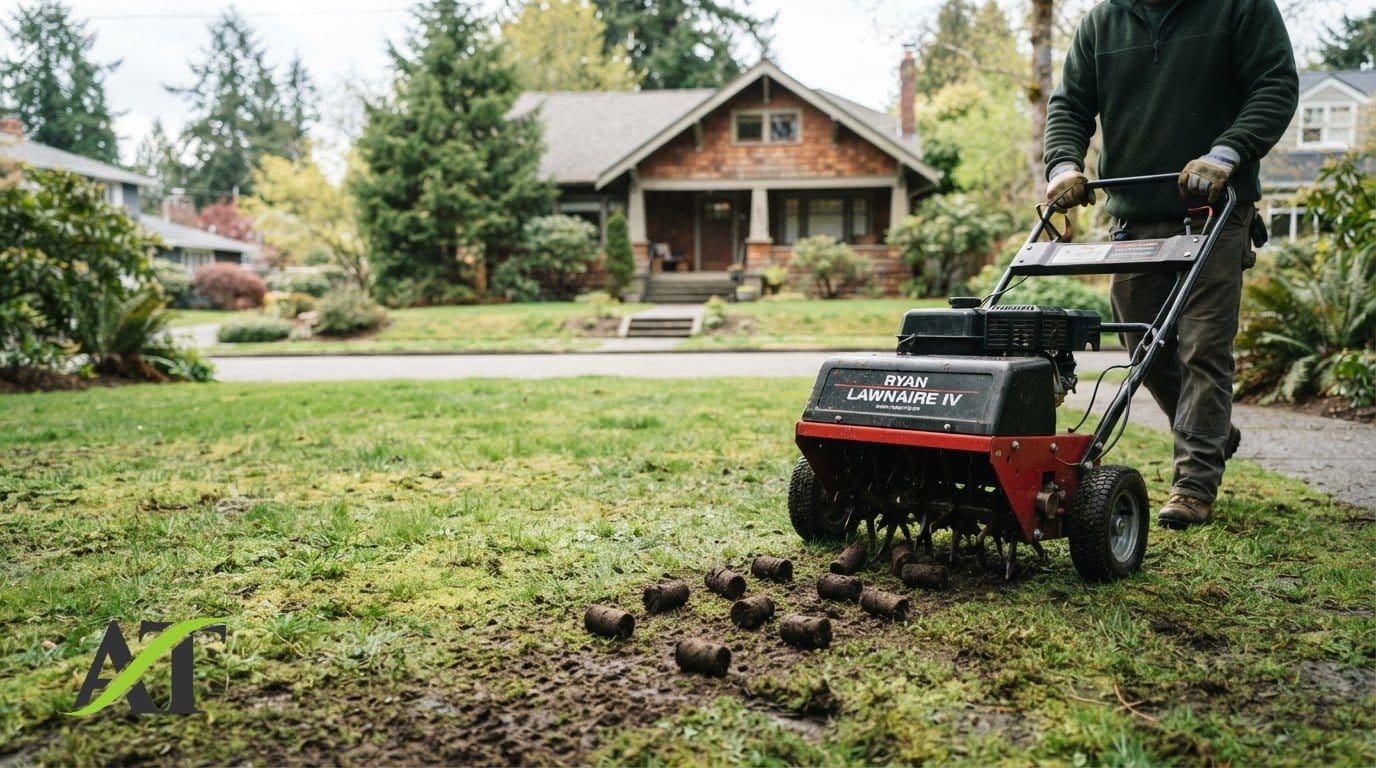
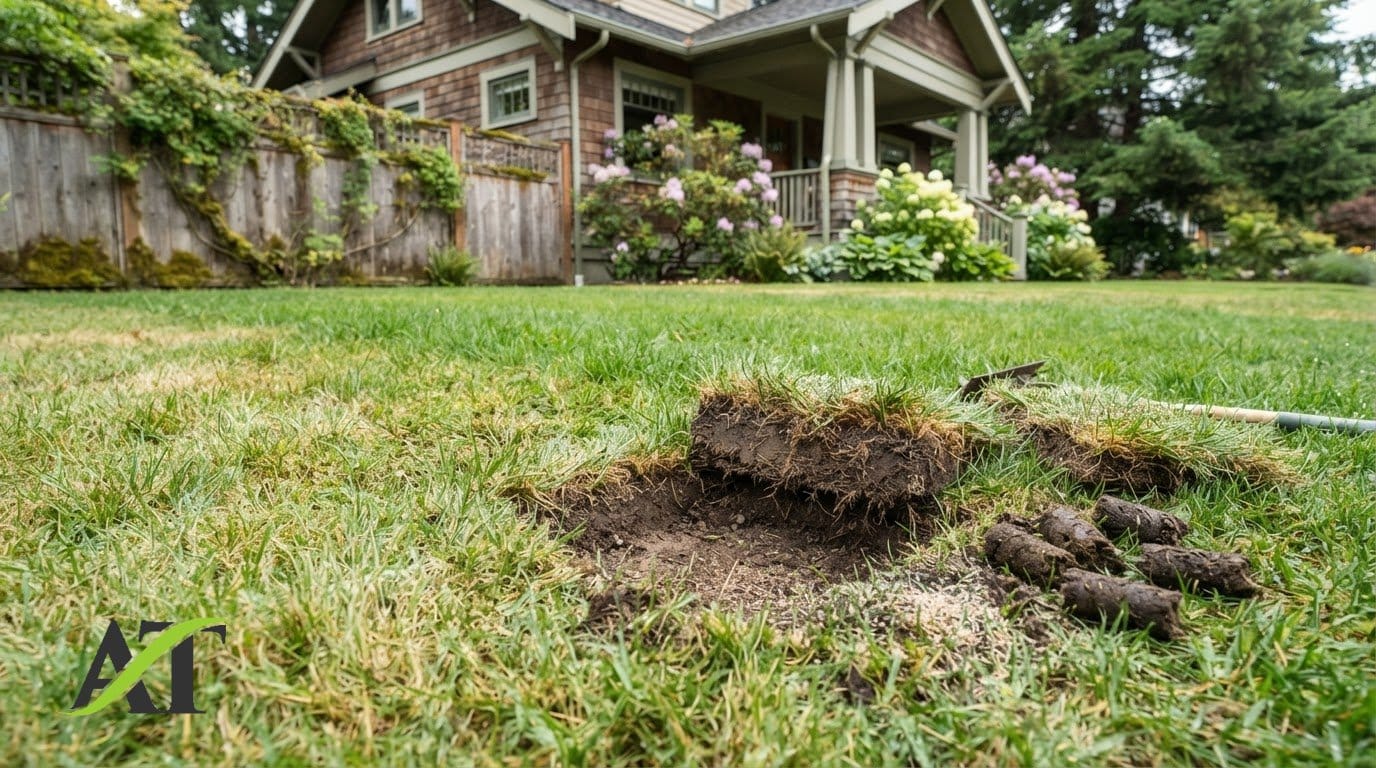
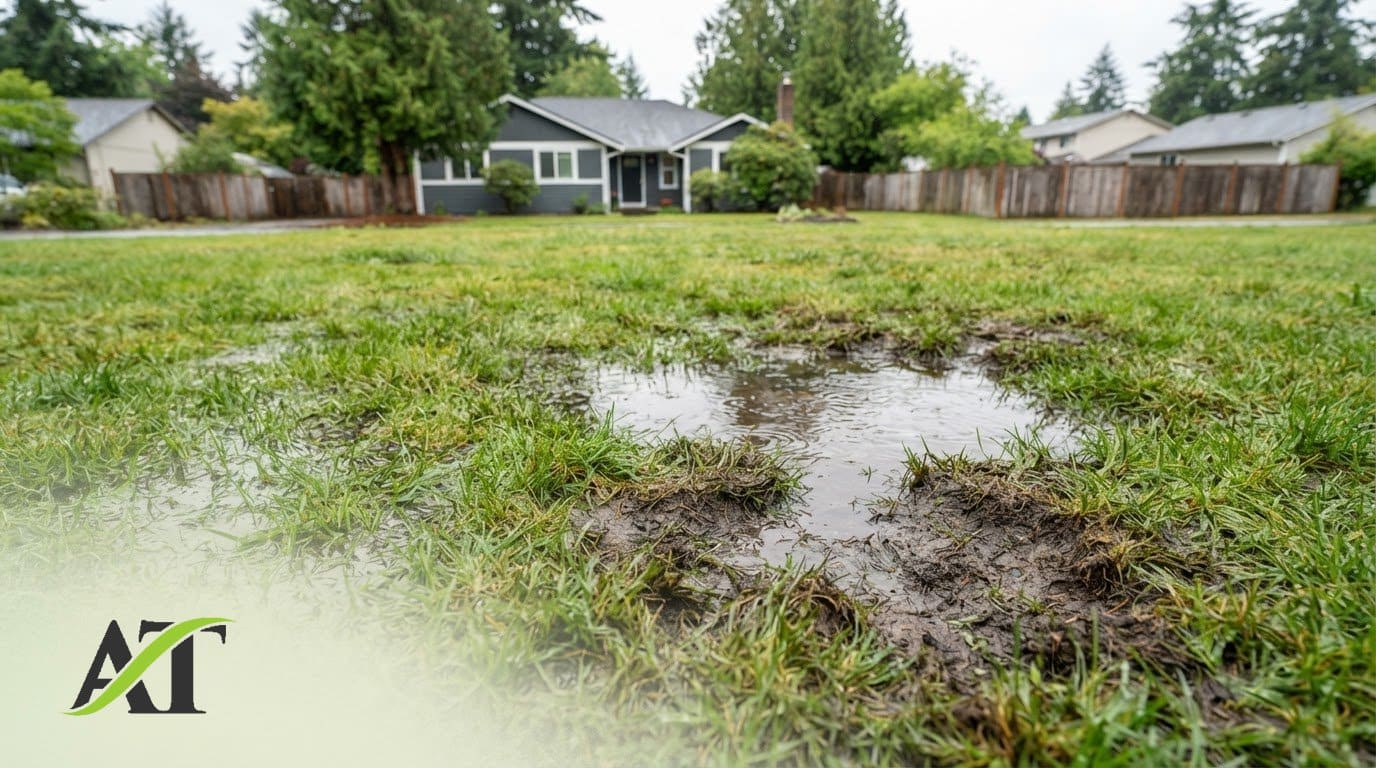
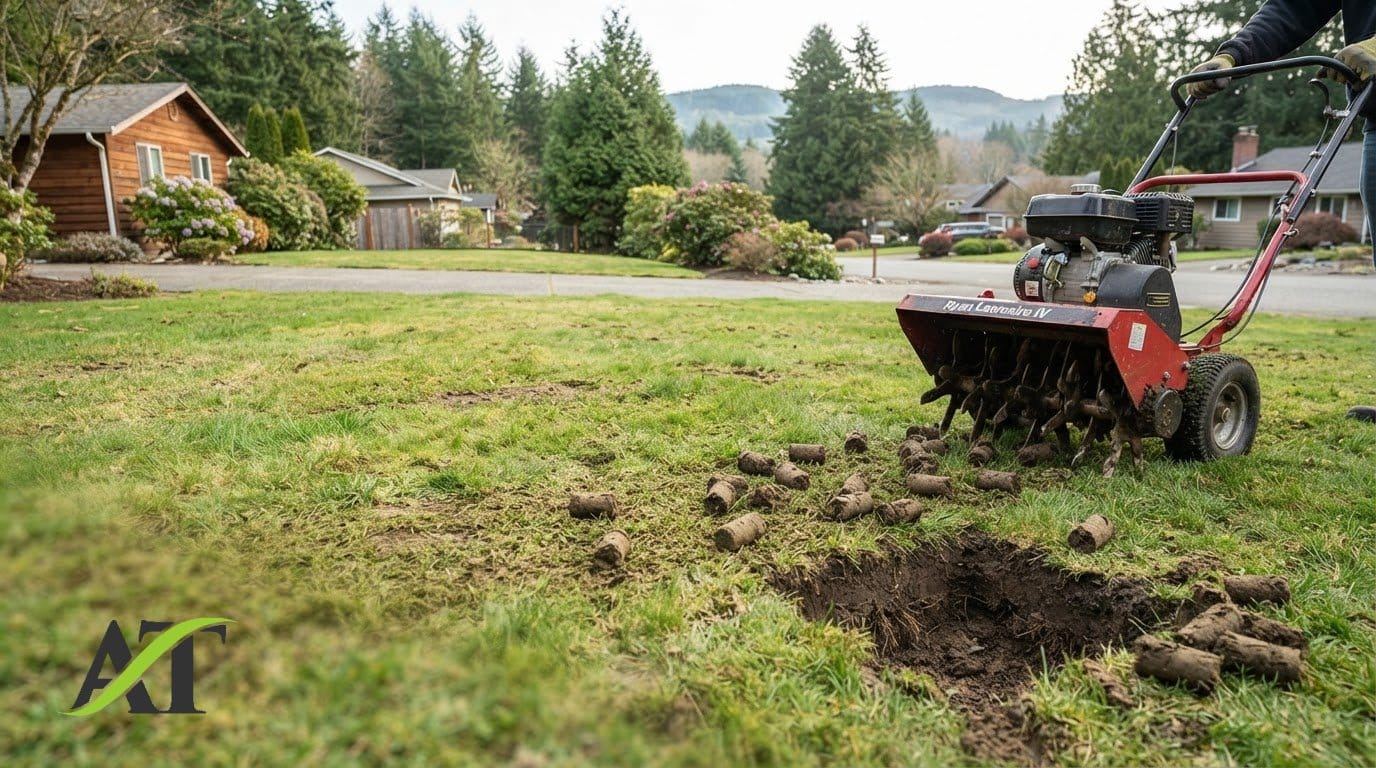
Correcting soil pH is most effective when lime can reach the roots directly. Spreading it on top of a thick layer of thatch is a slow process. We recommend pairing your treatment with Core Aeration. By pulling soil plugs, we create thousands of channels for the lime to penetrate the ground. This addresses both compaction and acidity at once, setting the stage for the successful organic lawn fertilizing Lynnwood homeowners expect. If you are also dealing with standing water or soggy turf after heavy rain, lawn aeration for compacted soil in nearby Shoreline demonstrates how the same mechanical approach can dramatically improve your yard’s drainage and overall soil health.
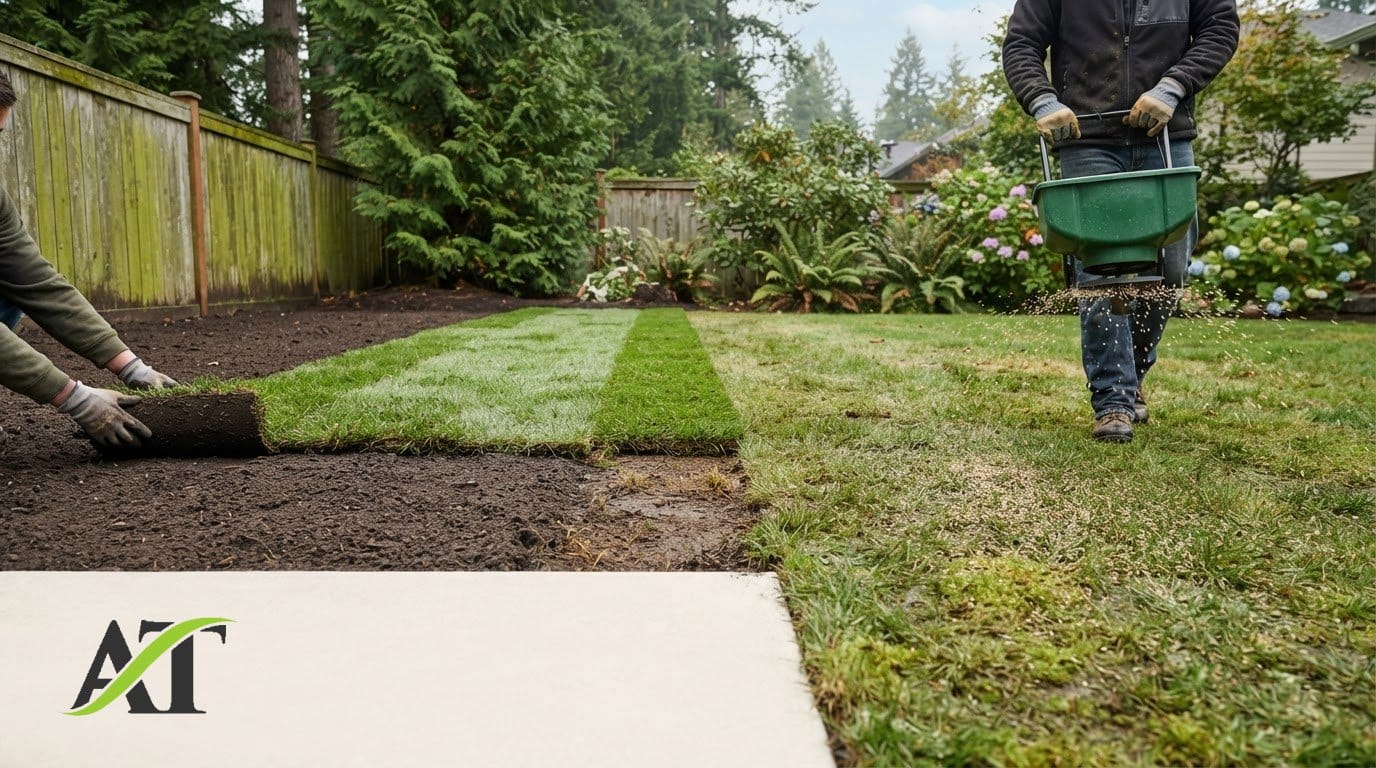
Our standard restoration service is the Lawn Tune-Up, which consists of Core Aeration, Overseeding, and Fertilizing. For lawns with heavy moss or thatch buildup, we offer the Full Meal Deal. This comprehensive package includes Power Raking (Dethatching), Core Aeration, Overseeding, and Fertilizing. Adding an optional Lime Application to these services ensures your new grass has the balanced environment needed to establish a deep, resilient root system.
Timing is critical for new growth. For successful Overseeding, soil temperatures should be between 55°F and 75°F (13°C to 24°C). Germination is typically slower and less reliable outside this range. We don’t offer absolute guarantees on germination because moisture and weather play significant roles, but we ensure the mechanical work is done right to give your lawn its best chance.
Your Lynnwood Restoration Timeline
A logical sequence ensures every treatment works to its full potential. We clear the surface before fixing the soil and finally introducing new seed. This methodical approach is the most reliable way to maximize your investment in organic lawn fertilizing Lynnwood and transform a thin, mossy yard into healthy, green turf.
- Step 1: Power Raking (Dethatching) to clear debris and moss.
- Step 2: Core Aeration and Lime Application to fix the soil foundation and compaction.
- Step 3: Overseeding and Organic Fertilizing to rebuild turf density and health.
Build a Foundation for a Better Lawn
Achieving a thick, green yard in the Pacific Northwest requires more than just regular maintenance. You must address the high acidity that naturally occurs in our local Lynnwood soil. By balancing your pH, you unlock the soil’s ability to process nutrients and create an environment where grass can finally outcompete moss. This is the essential first step for any successful plan involving organic lawn fertilizing Lynnwood homeowners choose for their property. Without this chemical balance, even the best fertilizer cannot reach the roots effectively.
Since 2004, our owner-operated team has specialized in these exact Snohomish County conditions. We know how to combine a professional Lime Application with a Lawn Tune-Up or a Full Meal Deal to get your turf back on track. Whether you are dealing with persistent moss or thin patches in damp areas, we have the mechanical expertise and local knowledge to restore your lawn’s health. Homeowners throughout the region face the same challenges, and our approach to lawn aeration Everett residents rely on for moss treatment and turf restoration shows how these same soil health principles apply across Snohomish County.
Your lawn has the potential to be the best on the block. It just needs the right foundation to thrive throughout the year.
Frequently Asked Questions
How often should I apply lime to my Lynnwood lawn?
Most Lynnwood lawns require a Lime Application once every year to combat the constant leaching caused by our 40 to 65 inches of annual rainfall. Because the soil is naturally acidic, skipping a year often allows the pH to drop back into the danger zone. Regular applications ensure that your investment in organic lawn fertilizing Lynnwood remains effective by keeping the soil chemistry balanced for long term turf health.
Will lime kill the moss in my yard immediately?
No, lime is not a herbicide and won’t kill moss on contact. It works by raising the soil pH to create an environment where grass can thrive and eventually outcompete the moss. If you have heavy moss buildup, we recommend the Full Meal Deal. This service includes Power Raking (Dethatching) to mechanically remove the moss, followed by Core Aeration, Overseeding, and Fertilizing to fill in those thin areas.
Can I apply lime and organic fertilizer at the same time?
Yes, you can apply both at the same time, and it’s actually highly effective to do so. Applying lime alongside your organic lawn fertilizing Lynnwood helps ensure that the nutrients in the fertilizer are immediately available to the grass roots. When these treatments are paired with Core Aeration, the pelletized lime and organic nutrients can move deeper into the soil, providing a much stronger foundation for your lawn’s restoration.
How do I know if my soil pH is too low without a test?
Look for biological indicators like persistent moss, thinning turf, or the presence of acid-loving weeds like dandelions. If your grass remains pale or yellow despite regular feeding, it’s a strong sign of nutrient lockout caused by low pH. While a professional assessment is best, these visible symptoms in Snohomish County almost always point to acidic soil conditions that require a corrective Lime Application to fix.
Is professional lime application safe for my pets and children?
Yes, the professional-grade pelletized lime we use is a naturally occurring mineral that’s safe for children and pets to be around. Unlike some harsh chemical treatments, there’s no mandatory stay-off period after the application is complete. We still suggest watering the lawn after the treatment to help the pellets break down and begin working into the soil, but you don’t have to worry about toxic residues in your yard.
Article by
Stewart Armour
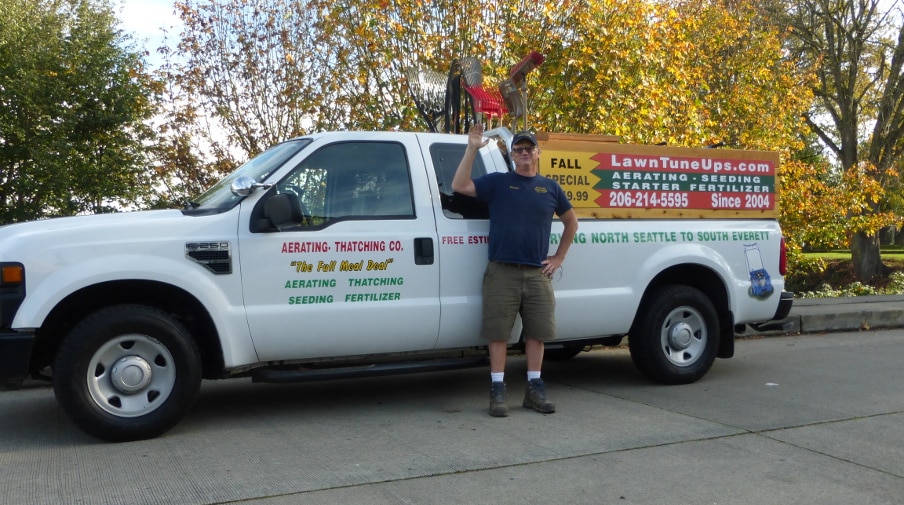
Stewart Armour is an independent lawn restoration expert, educator, and owner of Aerating Thatching Co., serving the greater Seattle area since 2004. With more than two decades of professional experience restoring Western Washington lawns, Stewart specializes in diagnosing lawn problems, improving soil health, and developing long-term lawn renovation strategies. His education includes turf management studies, advanced golf course turf training, and continuing education through Wilbur-Ellis University, State Turf Facilities, Soil First Academy, and Golf Course Applied Turf Physiology. Every article published on LawnTuneUps.com is grounded in practical field experience, current turf science, and a commitment to helping homeowners understand the why behind every recommendation—not just what to do.
Stewart has personally evaluated thousands of residential lawns throughout the Seattle area and remains committed to helping homeowners understand the science behind growing healthier, more resilient lawns.