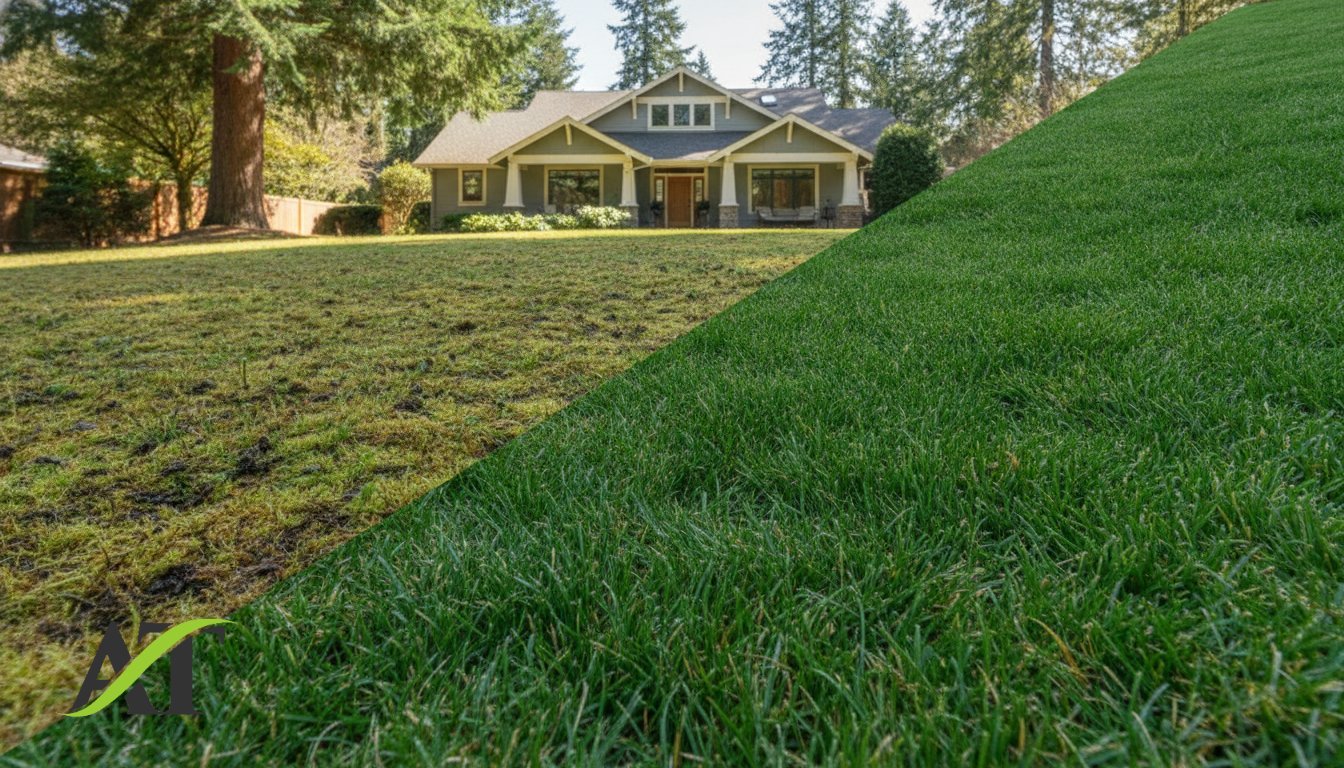
Why does your lawn look like a mossy carpet even after you’ve spent a lot of money on fertilizer? In Kenmore, the problem usually isn’t the grass; it’s the chemistry of the soil beneath it. Most Western Washington soil is naturally acidic, which is why a professional lawn lime service Kenmore residents use is so critical. It’s frustrating to watch your turf stay thin and spongy while moss takes over. You’ve probably tried every quick fix available, but if the soil is too sour, those nutrients stay locked away where the roots can’t reach them.
This article explains how professional lime applications correct acidic soil to unlock nutrients and stop moss from dominating. We’ll cover how balancing your pH makes treatments like a Lawn Tune-Up or the Full Meal Deal significantly more effective. You’ll discover the practical steps to build a dense, green lawn that naturally resists moss and stays resilient all year long. By the end, you’ll know exactly how to fix your soil health for a thicker, healthier turf that makes the most of every nutrient you provide.
Key Takeaways
- Kenmore’s acidic soil often causes “nutrient lockout,” which prevents your grass from absorbing fertilizer and gives moss a competitive advantage.
- Using Calcitic Lime provides a faster pH correction than standard dolomitic lime, helping your lawn recover its health and color more quickly.
- Scheduling a lawn lime service Kenmore residents rely on is most effective during the spring or fall when paired with Core Aeration to help the lime reach the root zone.
- Balancing soil pH ensures that restorative services like a Lawn Tune-Up or a Full Meal Deal produce the thickest, most resilient turf possible.
Why Kenmore Lawns Struggle with Acidity and Moss
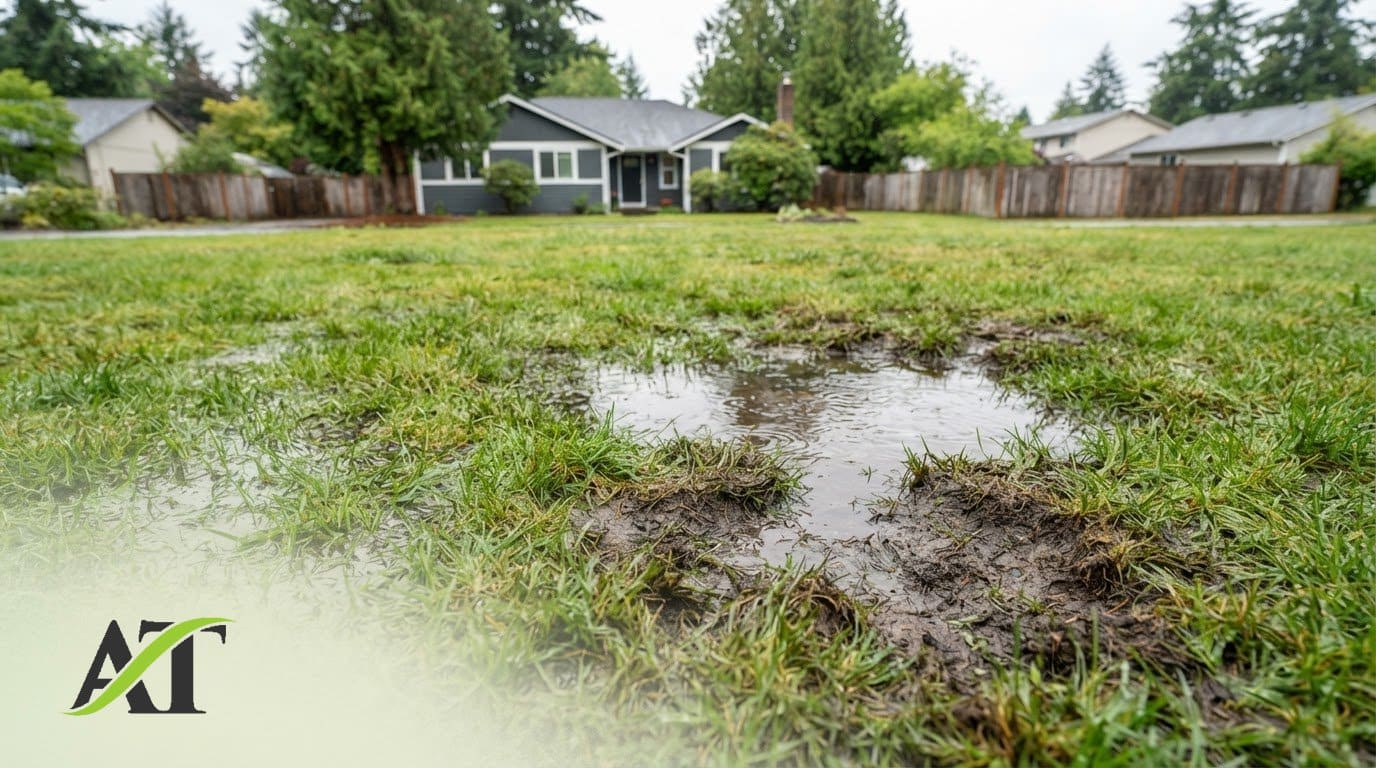
Kenmore sits right between the northern tip of Lake Washington and the Sammamish River. This proximity to major waterways means our local soil stays saturated for much of the year. Frequent rainfall in the Pacific Northwest naturally leaches essential minerals like calcium and magnesium deep into the earth. This process leaves behind acidic soil that makes it difficult for cool-season grasses to survive. Most lawns in our neighborhood test well below a 6.0 pH level; however, healthy turf thrives in the 6.5 to 7.0 “sweet spot.” When the balance is off, your grass roots wither and simply cannot compete with local weeds.
Many homeowners apply heavy doses of fertilizer and don’t understand why the grass stays thin and yellow. This happens because of “nutrient lockout.” Even if the ground is full of nitrogen and phosphorus, high acidity prevents roots from physically absorbing them. Soil pH acts like a master gatekeeper for plant health. If the soil is too sour, the gate stays locked. Investing in a professional lawn lime service Kenmore provides is the only way to unlock those nutrients. It ensures that every pound of fertilizer you apply actually reaches the plant instead of washing away into the river.
The Moss Connection in King County
Moss is a survivalist. It thrives in the exact conditions that kill grass: high moisture, low light, and acidic soil. In King County, moss is a symptom of a deeper problem rather than just a shade issue. You can use Power Raking (Dethatching) to rip the moss out, but that is only half the battle. Without a professional lawn lime service Kenmore application, the soil remains acidic and welcoming to invaders. The moss will return within a single season because the environment still favors it over your grass. Real restoration requires changing the soil chemistry so your turf has the upper hand. When you fix the pH, you take away the moss’s home field advantage.
The Benefits of Calcitic Lime Application
Standard dolomitic lime is what you usually find at big-box stores, but it often takes months or even years to break down. We prefer using Calcitic Lime for our lawn lime service Kenmore projects because it offers much faster results. Calcitic Lime is a highly concentrated calcium source that reacts quickly with soil acids. This rapid reaction means your soil pH starts moving toward the neutral range almost immediately after application. It’s the most efficient way to prepare your lawn for the growing season.
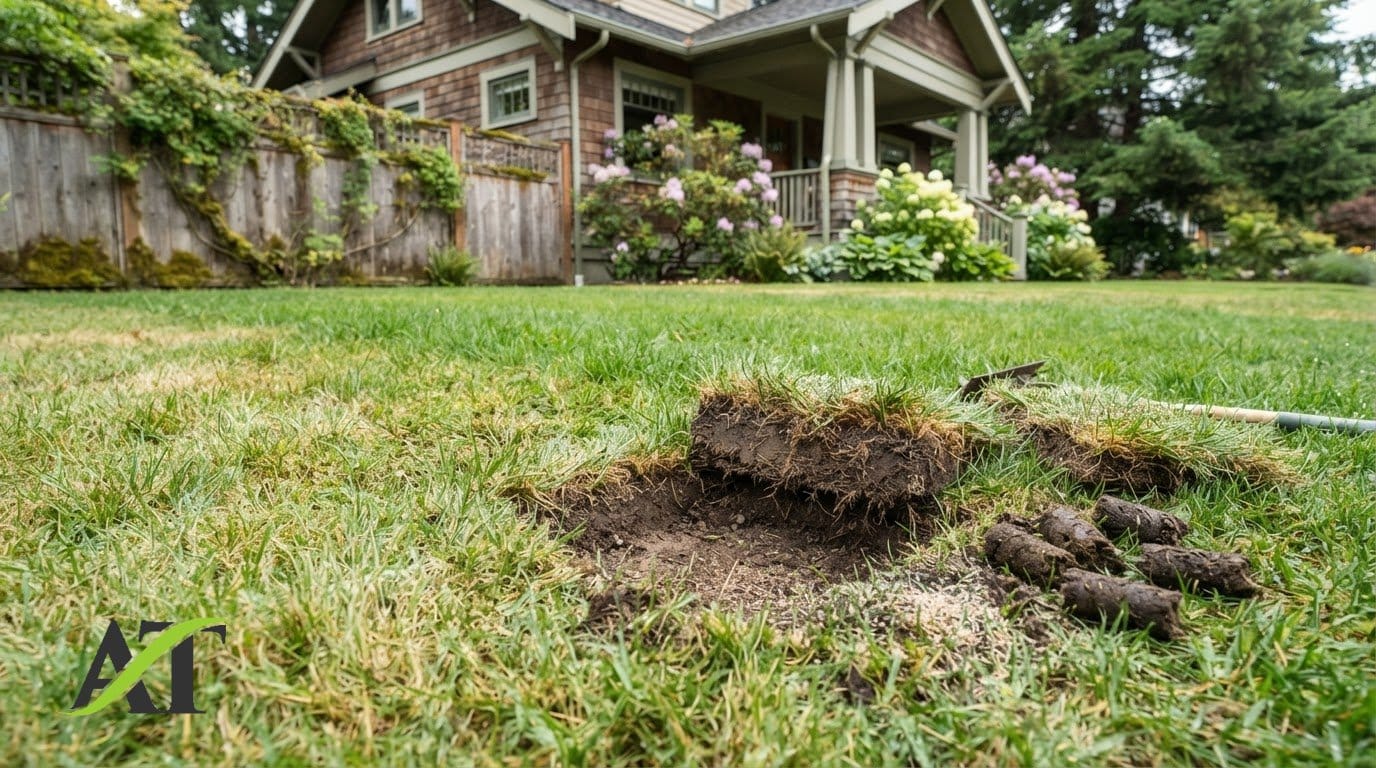
Correcting the pH does more than just stop moss. It makes every pound of nitrogen in your fertilizer count. When the soil is balanced, your grass can finally access the nutrients it needs to build deep roots and thick blades. Research on Liming Turfgrass Areas shows that proper application also improves soil structure. In Kenmore, we deal with a lot of heavy clay. Lime helps clump these tiny clay particles together. This creates better drainage and allows more oxygen to reach the root zone. Homeowners dealing with standing water alongside poor soil chemistry may also benefit from understanding how lawn aeration for compacted soil Shoreline properties require can resolve soggy turf and drainage issues without expensive excavation.
Signs Your Lawn Needs a pH Adjustment
You don’t always need a laboratory test to know your soil is too acidic. Look for these common red flags on your property:
- Persistent Moss: If moss is taking over even the sunny parts of your yard, the acidity is likely the culprit.
- Yellowing Grass: Turf that stays pale or yellow after you’ve applied fertilizer is a classic sign of nutrient lockout.
- Thin Patches: Slow growth and spongy turf that doesn’t survive the summer usually indicate poor root development due to low pH.
If these issues sound familiar, it’s time to stop guessing. You can request a quote to see how a professional lawn lime service Kenmore application can get your yard back on track.
When to Schedule Lime Application in Kenmore
Timing is everything for a lawn lime service Kenmore residents want to get right. The best windows for application are spring (March through May) and fall (September through November). During these months, the ground is soft and receptive to amendments. Soil testing is the best first step to determine exactly how much lime your property needs. While you can technically spread lime any time the ground isn’t frozen, applying it during active growing seasons ensures your grass is ready to absorb the newly available nutrients immediately. This proactive approach prevents moss from gaining a foothold during our wet winter months. If you want to understand how soil chemistry affects the entire region, our guide on understanding lawn soil pH in Lynnwood explains why acidic conditions are a widespread challenge across Western Washington.
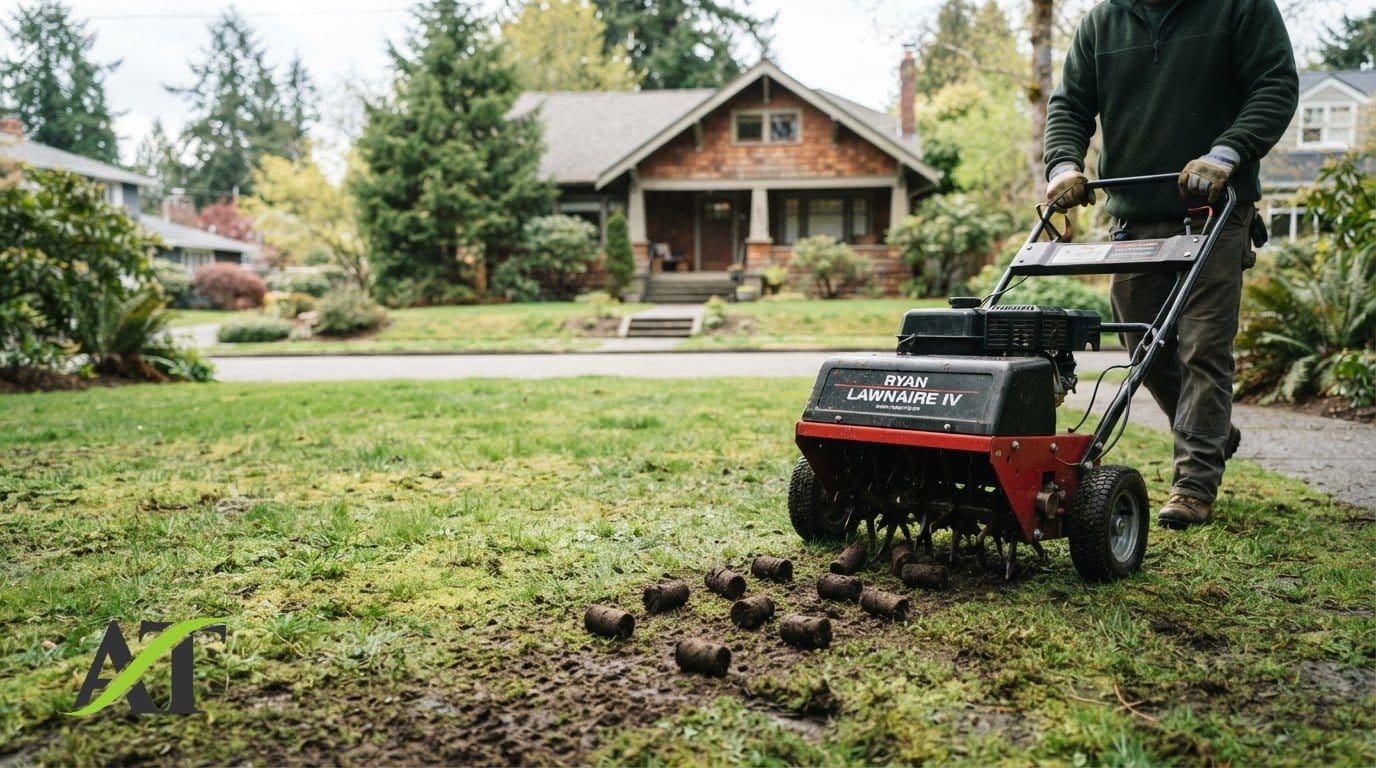
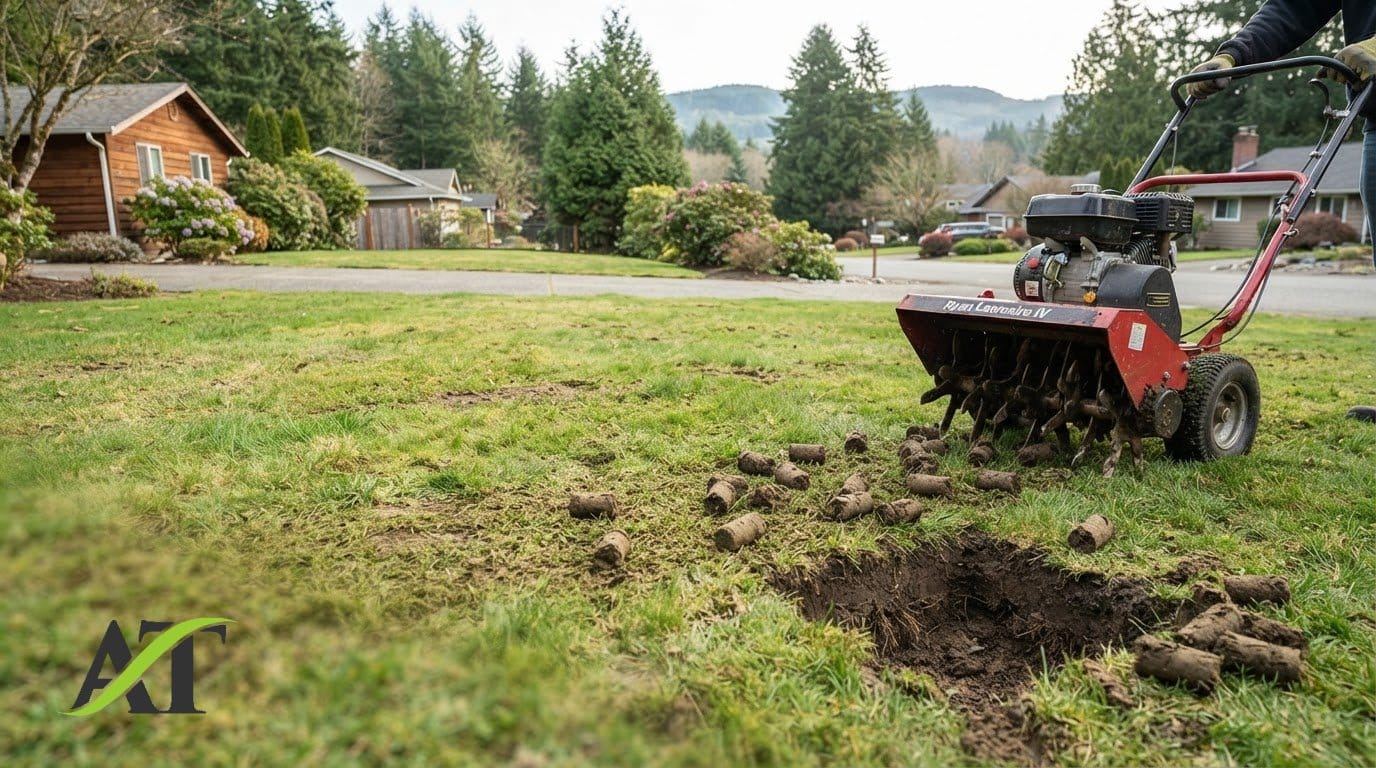
We always recommend pairing lime with our Core Aeration process. Aeration creates thousands of small channels that lead directly into the root zone. When we apply lime over these holes, the granules move deep into the soil profile rather than sitting on top of the thatch. This mechanical advantage maximizes seed-to-soil contact for any new grass while neutralizing acids where they do the most damage. It’s a pragmatic way to ensure your soil chemistry and physical structure are both improving at the same time. If your lawn also struggles with pooling water after heavy rain, our overview of effective lawn drainage solutions for compacted soil in the greater Shoreline area shows how aeration addresses both drainage and soil health simultaneously.
Preparing for Germination
Soil temperature is the real driver for lawn success. For cool-season grass seed, the optimal soil temperature range for germination is 55°F to 75°F (13°C to 24°C). If you try to overseed when the soil is colder or hotter than this, the process becomes much slower and less consistent. This leads to weaker establishment and patchy results. We don’t offer absolute guarantees on germination. Results depend on many variables like moisture levels, local weather patterns, and consistent watering habits. Using lime during the right temperature window simply gives your new seed the best possible environment to establish itself and survive the coming seasons.

Maximizing Results: The Lawn Tune-Up and Full Meal Deal
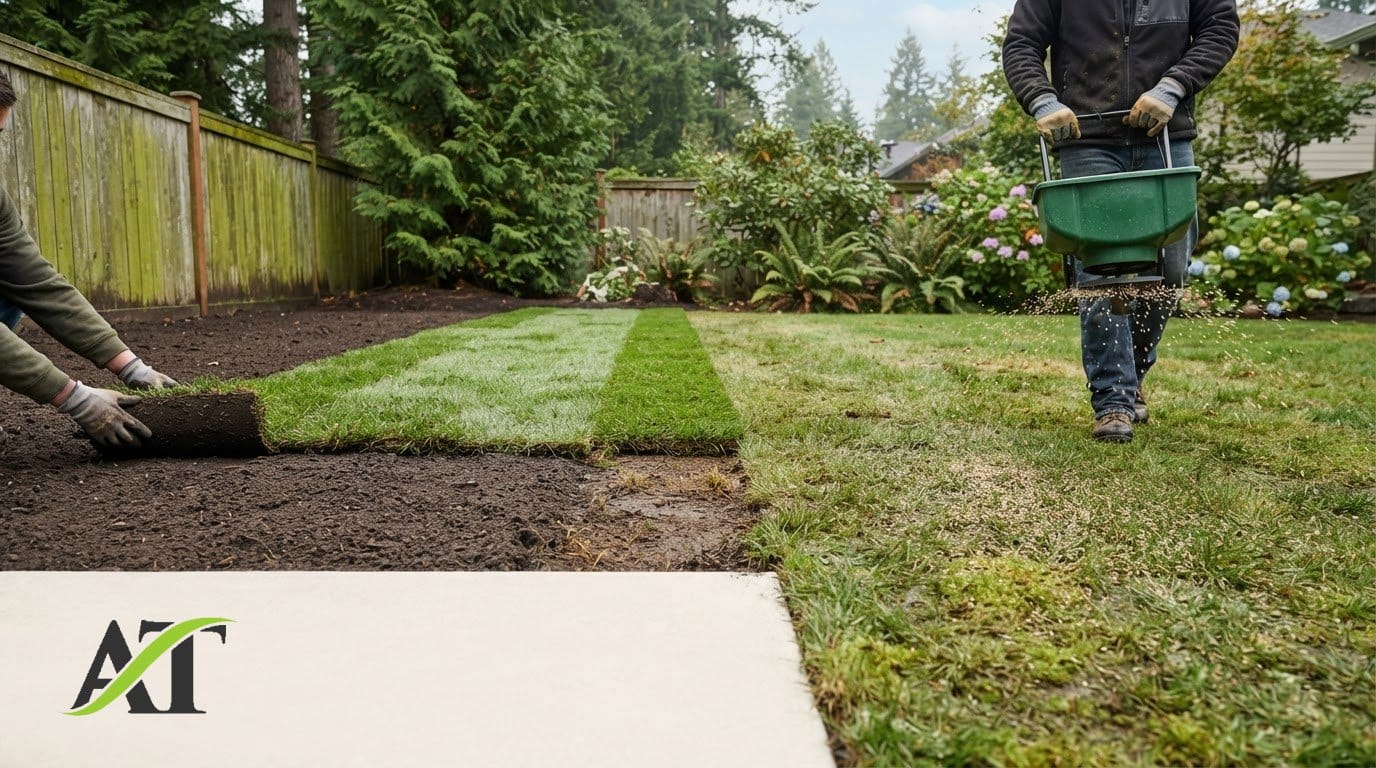
A stand-alone lime application provides a necessary chemical boost, but it works best when integrated into a comprehensive mechanical restoration. In the acidic environment of North King County, lime acts as the essential optional add-on that ensures your property’s investment doesn’t go to waste. We offer two primary packages designed to revitalize struggling turf. The Lawn Tune-Up consists of Core Aeration, Overseeding, and Fertilizing. This service is ideal for annual maintenance. For lawns heavily impacted by moss and debris, we recommend the Full Meal Deal. This comprehensive package features Power Raking (Dethatching), Core Aeration, Overseeding, and Fertilizing.
When you add a lawn lime service Kenmore treatment to these packages, you address both the physical and chemical barriers to growth. Power Raking (Dethatching) removes the mossy surface layer so the lime can actually reach the dirt. Core Aeration then creates the pathways for those minerals to penetrate the root zone. This combined approach creates the best possible environment for new seed to establish during the 55°F to 75°F soil temperature window. We don’t offer absolute guarantees on germination because moisture and weather are always factors, but we do provide the expert application needed for success.
Why Choose Aerating Thatching Co. in Kenmore?
We’ve been owner-operated since 2004. We understand the specific soil challenges families face from Shoreline to Kenmore. You won’t deal with a rotating cast of technicians. You get direct contractor communication with a pro who knows your neighborhood’s turf history. This local expertise ensures your lawn lime service Kenmore application is handled with the correct dosage for our specific PNW conditions. You can request a Kenmore lawn quote today to see which package fits your soil restoration needs.
Restore Your Soil Health and Stop Moss Growth
A thick, green lawn starts beneath the surface. Correcting your soil’s acidity is the most effective way to stop moss from taking over and ensure your fertilizer actually works. Our specialized lawn lime service Kenmore residents trust uses high-grade Calcitic Lime for faster pH correction. Whether you choose the annual maintenance of a Lawn Tune-Up or the deep restoration of the Full Meal Deal, adding lime is the key to unlocking your turf’s full potential. We focus on the pragmatic steps that lead to tangible results for your property.
We’ve been owner-operated and serving the local community since 2004. We take pride in delivering professional results that stand up to the unique soil challenges of the Pacific Northwest. It’s time to stop guessing and start treating the root cause of your lawn’s struggles. Let’s get your yard back on track with a practical, results-driven approach to soil health. Your lawn can be the densest and greenest on the block.
Frequently Asked Questions
Does lime application kill moss in my Kenmore lawn?
Lime doesn’t kill moss directly; instead, it changes the environment so grass can outcompete it. Moss thrives in acidic, wet soil. By using a lawn lime service Kenmore homeowners can raise the pH, making the soil less hospitable to moss and more nutritious for grass. To remove existing moss, you’ll need mechanical intervention like Power Raking (Dethatching) before the lime can effectively reach the soil.
When is the best time of year to apply lime in the Pacific Northwest?
Spring and fall are the ideal windows for lime application in our region. March through May or September through November provide the moisture needed to break down the lime granules. Applying lime during these windows prepares the soil for optimal grass growth. It’s particularly effective when paired with Core Aeration, as the holes allow the lime to penetrate deep into the root zone instead of sitting on the surface.
Is lime safe for my children and pets to walk on?
Pelletized Calcitic Lime is safe for children and pets once it has been watered into the soil. Unlike some chemical treatments, lime is a natural mineral used to balance soil chemistry. We recommend waiting until the granules have fully dissolved after a light watering before letting pets play on the grass. This prevents them from tracking dust into the house or getting granules on their paws. It’s a clean solution for soil health.
How often should I have my soil pH tested and lime applied?
You should test your soil pH every two to three years to monitor acidity levels. In Kenmore, our heavy rainfall naturally leaches minerals away, so most lawns need a lawn lime service Kenmore application at least once every two years. Regular testing ensures you aren’t over-applying lime. Keeping your pH between 6.5 and 7.0 is the best way to maintain thick, resilient turf that resists moss naturally.
Can I apply lime at the same time as my Lawn Tune-Up?
We frequently apply lime as an optional add-on during a Lawn Tune-Up. Since a Lawn Tune-Up includes Core Aeration, Overseeding, and Fertilizing, adding lime at this stage is highly efficient. The Core Aeration process opens up the soil, allowing the lime to reach the root zone immediately. This creates the perfect chemical environment for your new seeds to establish as they germinate in the 55°F to 75°F soil temperature range.
Article by
Stewart Armour
Stewart Armour is an independent lawn restoration expert, educator, and owner of Aerating Thatching Co., serving the greater Seattle area since 2004. With more than two decades of professional experience restoring Western Washington lawns, Stewart specializes in diagnosing lawn problems, improving soil health, and developing long-term lawn renovation strategies. His education includes turf management studies, advanced golf course turf training, and continuing education through Wilbur-Ellis University, State Turf Facilities, Soil First Academy, and Golf Course Applied Turf Physiology. Every article published on LawnTuneUps.com is grounded in practical field experience, current turf science, and a commitment to helping homeowners understand the why behind every recommendation—not just what to do.
Stewart has personally evaluated thousands of residential lawns throughout the Seattle area and remains committed to helping homeowners understand the science behind growing healthier, more resilient lawns.