Why does your Woodway lawn look like a mossy sponge while your neighbor’s turf stays thick and barefoot-soft? You’ve likely tried spreading seed yourself, only to see it struggle against heavy clay and poor drainage. It’s frustrating to watch moss move in while your grass thins out. Professional overseeding Woodway lawns requires more than just a bag of seed and a spreader. It takes a mechanical approach to get results that last.
We understand these local soil challenges because we’ve worked them for decades as a local, owner-operated business. This guide explains how professional Overseeding, paired with Core Aeration, fixes the root cause of thinning turf to create a lush, moss-resistant landscape. We’ll walk through our proven restoration process, from managing heavy clay to hitting the critical 55°F to 75°F germination window. You’ll learn exactly how we turn struggling yards into barefoot-soft lawns that stand up to the PNW climate. We’ll show you why professional execution beats DIY every time.
Key Takeaways
- Learn why Woodway’s heavy clay soil and damp conditions make mechanical restoration necessary to prevent moss from choking out your grass.
- Discover the specific 55°F to 75°F soil temperature range required for successful Overseeding Woodway lawns during the spring and fall seasons.
- Understand the difference between a foundational Lawn Tune-Up and a Full Meal Deal to determine which restoration process fits your turf’s thatch levels.
- Master the 21-day watering rule and pre-service mowing heights to ensure your new grass has the environment it needs to establish deep roots.
Why Overseeding Woodway Lawns is Essential for Turf Health
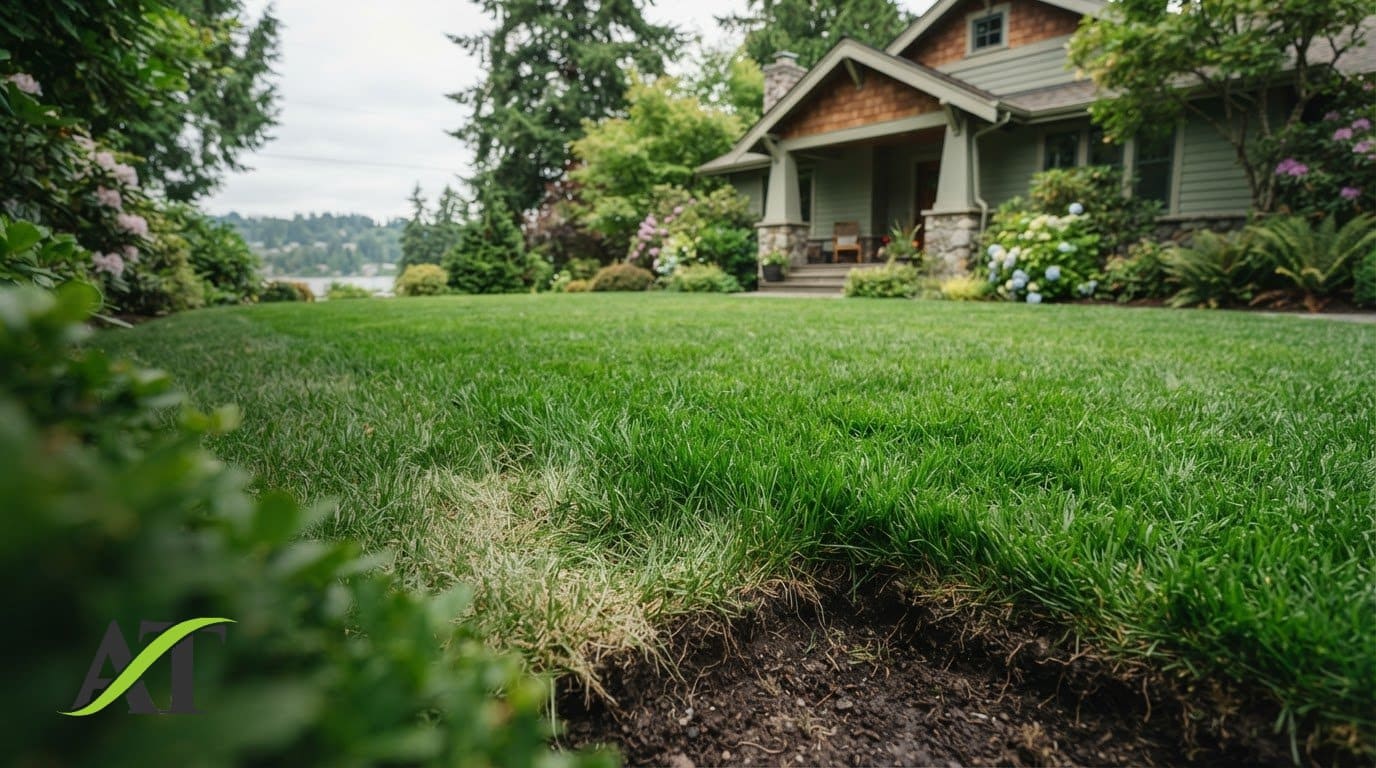
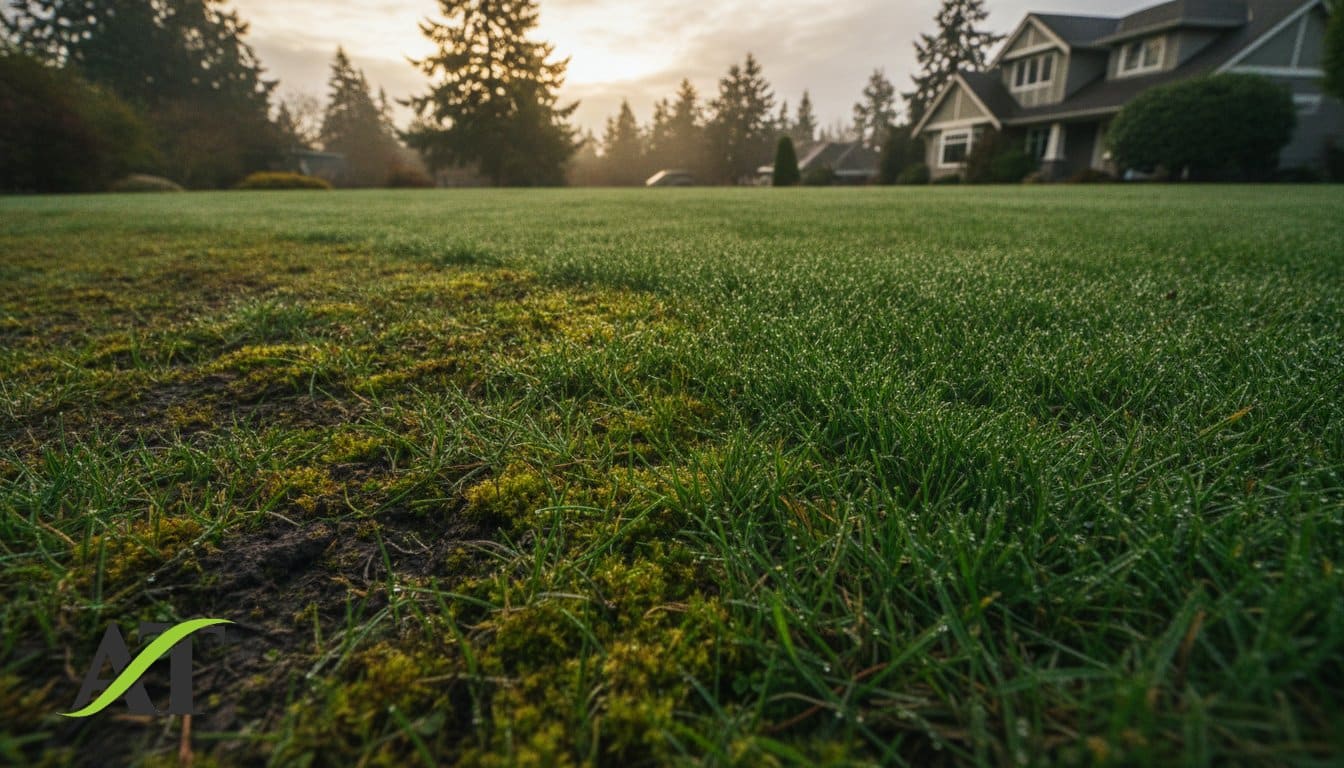
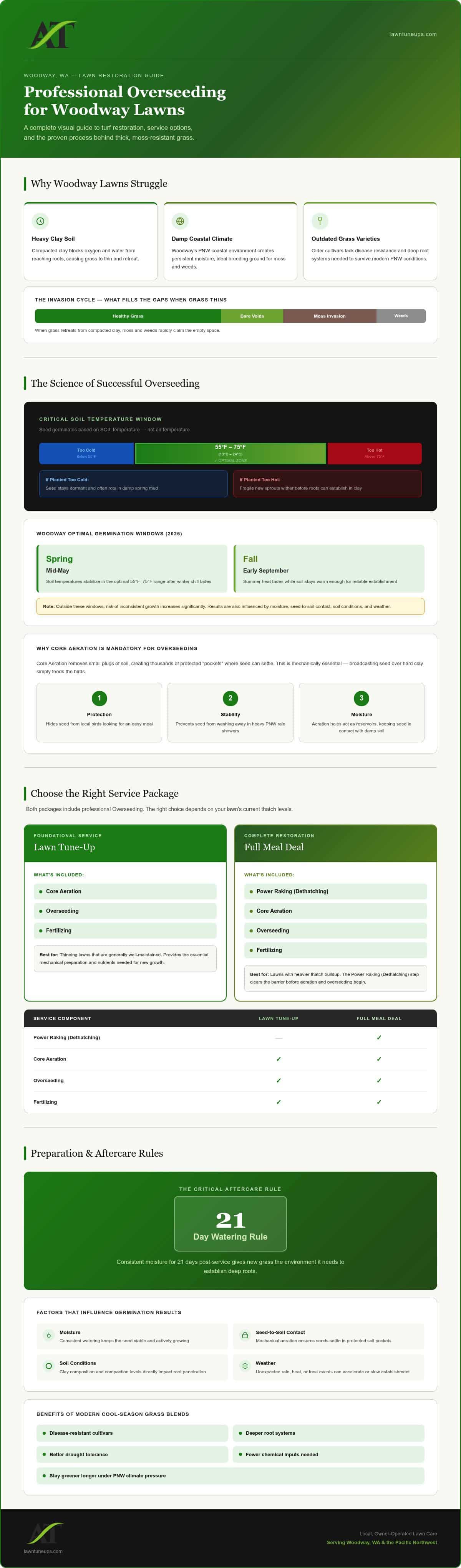
Woodway’s coastal climate and heavy clay soils create a challenging environment for residential turf. Over time, even a well-maintained lawn begins to thin out due to poor drainage and natural aging. When grass plants die off, they leave behind small voids in the soil. In our damp PNW environment, these gaps don’t stay empty for long. Moss and weeds quickly move in to claim the space. For local homeowners, overseeding Woodway properties is the most effective way to reclaim that territory and build a resilient landscape.
Simply throwing seed over your existing grass, known as broadcasting, rarely yields results here. The seed often gets trapped in the thatch layer or fails to penetrate the hard clay surface. Without proper mechanical preparation, you’re essentially feeding the local birds rather than growing a lawn. Success depends on creating a dense carpet of grass that naturally crowds out invaders and improves the overall health of the soil profile.
Combating Moss and Compaction in Woodway
Shaded yards and heavy soil are magnets for moss. When your soil becomes compacted, oxygen and water can’t reach the roots, causing the grass to retreat. This creates a vacuum that moss is happy to fill. We solve this by pairing Overseeding with Core Aeration. This process removes small plugs of soil to relieve pressure and create the necessary seed-to-soil contact. Understanding the mechanics of lawn aeration and overseeding is vital for anyone dealing with the stubborn clay found in Woodway neighborhoods.
The Benefits of Modern Grass Blends
Many older lawns in our area consist of outdated grass varieties that struggle with modern pests and changing weather patterns. By Overseeding, we introduce improved, disease-resistant cultivars into your existing turf. These modern cool-season blends are specifically bred for deeper root systems and better drought tolerance. They stay greener longer and require fewer chemical inputs to remain healthy. This upgrade transforms your lawn into a more durable, low-maintenance asset that can handle the specific pressures of the Woodway environment.
The Science of Success: Soil Temperature and Seed-to-Soil Contact
Grass seed reacts to specific environmental triggers, which is why overseeding Woodway lawns requires a data-driven approach. Many homeowners make the mistake of watching the air temperature, but the soil tells the real story. For successful overseeding Woodway properties, the soil temperature must sit consistently between 55°F and 75°F. If you plant when the ground is colder, the seed remains dormant and often rots in our damp spring mud. If it’s too hot, the fragile new sprouts wither before their roots can reach deep into the clay.
Why Core Aeration is Mandatory for Overseeding
Seed needs a secure environment to germinate. Simply broadcasting it over a hard lawn leaves it exposed to the elements. Core Aeration is the mechanical solution that makes restoration possible. By removing small plugs of soil, we create thousands of protected “pockets” where the seed can settle. This placement is critical for three reasons:
- Protection: It hides the seed from local birds looking for an easy meal.
- Stability: It prevents the seed from washing away during heavy PNW rain showers.
- Moisture: The hole acts as a reservoir, keeping the seed in direct contact with damp soil to prevent it from drying out.
Timing Your Woodway Lawn Restoration
The window for success in the Pacific Northwest is narrower than most realize. We track local conditions to ensure your investment doesn’t go to waste. Based on local 2026 climate trends, the most reliable germination window for Woodway occurs when soil temperatures stabilize in mid-May or early September. Outside of these periods, the risk of inconsistent growth increases significantly. If you want to ensure your timing is perfect for a thicker lawn, you can request a quote for a professional assessment of your soil’s current state.
Choosing the Right Service: Lawn Tune-Up vs. Full Meal Deal
Getting the best results from overseeding Woodway lawns requires a structured approach. We’ve bundled our most effective treatments into specific service packages to take the guesswork out of restoration. Our foundational service is the Lawn Tune-Up. This package includes Core Aeration, Overseeding, and Fertilizing. It’s designed for lawns that are thinning but generally well-maintained, providing the essential mechanical preparation and nutrients needed for new growth.
For properties that have been neglected or are struggling with severe moss and drainage issues, we offer the Full Meal Deal. This is our most comprehensive restoration package. It builds on the standard tune-up by adding Power Raking (Dethatching) to the beginning of the process. This extra step ensures that the seed actually reaches the soil instead of getting tangled in a layer of dead organic matter.
When to Choose the Full Meal Deal
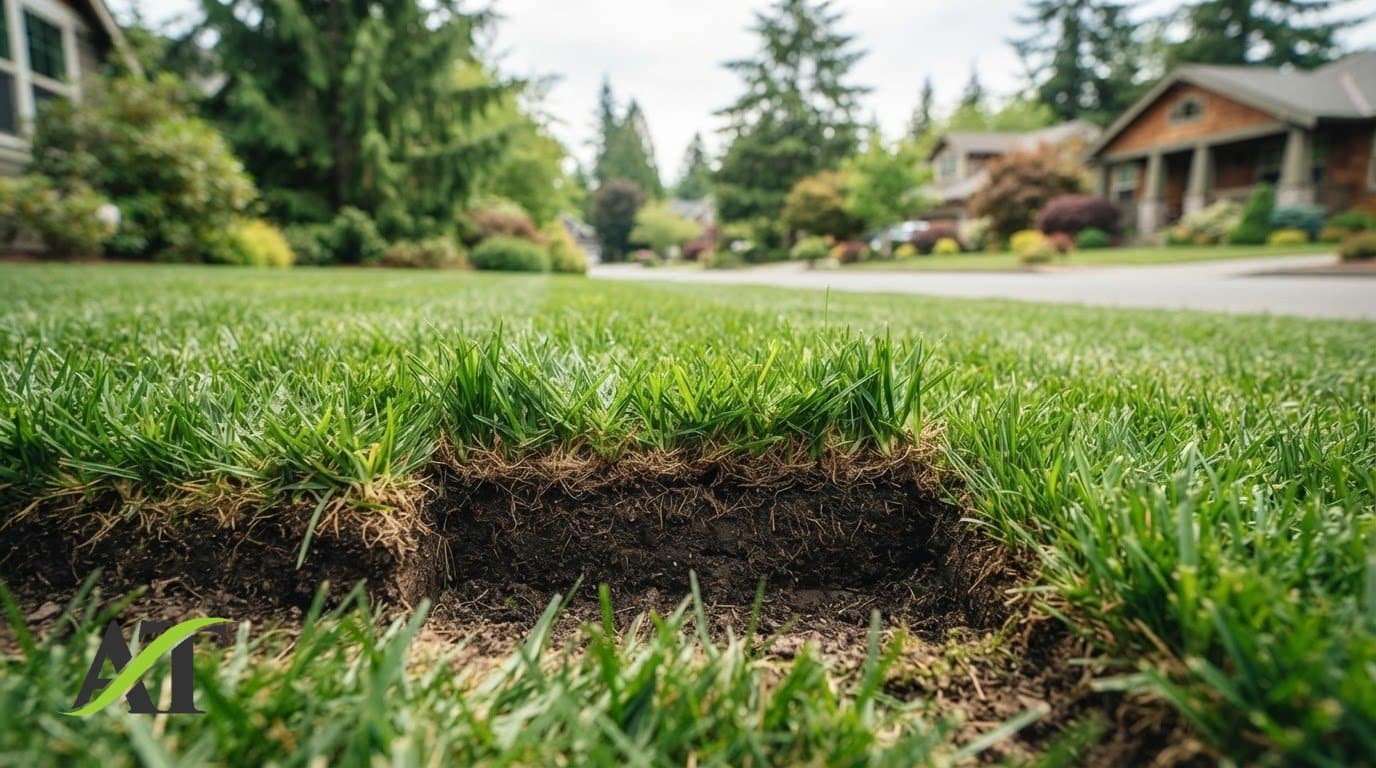
Thatch is a layer of organic debris that sits between the grass blades and the soil surface. You can check your own lawn by cutting out a small wedge of turf. If that brown, spongy layer is thicker than 1/2 inch, a standard tune-up won’t be enough. Power Raking (Dethatching) is mandatory in these cases. It physically pulls up the excess thatch and moss, clearing the way for the Core Aeration and overseeding Woodway process to follow.
The Role of Organic Fertilizing
Every restoration includes a boost of nutrients to help the new seedlings establish. We use a high-quality organic fertilizer because it provides a slow-release feed that won’t burn tender young grass. This focus on Organic Fertilizing supports long-term soil health and microbial activity, which is essential for breaking down future thatch naturally. It creates a sustainable environment where your new grass can thrive for years.
How to Prepare and Maintain Your Lawn for Overseeding Success
Preparation begins before our crew arrives. Set your mower lower than usual, aiming for about two inches. This shorter height prevents existing grass from shading out new seedlings and ensures our equipment achieves maximum seed-to-soil contact. Once the overseeding Woodway service is complete, your primary focus shifts to moisture management.
It’s vital to manage expectations during this phase. Because we’re dealing with living organisms and unpredictable PNW weather, there are no absolute guarantees on germination. However, following a strict maintenance schedule significantly tips the scales in your favor. Success depends on your commitment to the post-service care routine.
The Critical First 3 Weeks
New seeds require a damp environment to crack their shells and sprout. For the first 21 days, follow the “keep it moist” rule. This involves light, frequent watering rather than one deep soaking. Aim for two to three short sessions per day to keep the top layer of soil from drying out. If the clay surface cracks, the new roots will die. You should also keep all foot traffic, including children and pets, off the lawn during this time. Young grass is extremely tender and easily crushed. Hold off on mowing until the new blades reach a height of at least three inches.
Long-Term Woodway Lawn Maintenance
Successful overseeding Woodway is just the start of a healthy landscape. Our local soils are naturally acidic, a condition that favors moss over grass. We recommend regular Lime Application and Lawn Soil Amendments to balance the pH levels over time. This keeps the environment hospitable for grass and hostile for moss, ensuring your results last through the rainy season.
Ready for a thicker lawn? Request a quote for your Woodway Overseeding service today.
Reclaim Your Woodway Landscape
Reclaiming your yard from moss and thinning grass starts with a professional plan. Successful overseeding Woodway lawns requires the right mechanical tools and precise timing to ensure every seed has the best chance to thrive. We’ve spent over two decades mastering Woodway’s specific soil challenges. Since 2004, our specialized equipment and organic-first approach have provided the foundation your turf needs to stay healthy and resilient against the PNW climate.
Whether you need a standard Lawn Tune-Up or the deep restoration of a Full Meal Deal, the path to a thicker lawn is clear. Our team understands that a great lawn is a partnership between professional execution and consistent homeowner care. Commit to the 21-day watering routine and let our local expertise do the heavy lifting. You’ll soon have the barefoot-soft lawn your property deserves. It’s time to stop fighting the clay and start growing a landscape you’re proud to show off.
Frequently Asked Questions
When is the best time for Overseeding in Woodway?
The best time for this service is when soil temperatures stay between 55°F and 75°F. In Woodway, this typically happens in mid-May or early September. We avoid the heat of July and the cold of winter because the seed won’t germinate properly. Timing your restoration during these windows ensures the new grass has enough warmth and moisture to establish deep roots.
How long does it take for grass seed to germinate in Woodway?
You can expect to see new growth within 7 to 21 days. The exact timing depends on the specific grass blend used and the consistency of your watering routine. Because our local soil is often heavy clay, it stays cool longer than sandy soils. Be patient and keep the area moist. Germination is a biological process that can’t be rushed by adding extra seed.
Do I need Core Aeration if I am already Overseeding?
Yes, Core Aeration is a mandatory step for successful overseeding Woodway properties. Simply throwing seed on the ground doesn’t work because the seed can’t penetrate our local clay or thatch. Aeration pulls out soil plugs to create thousands of small pockets. These holes provide the necessary seed-to-soil contact and protect the new seeds from drying out or washing away during rain.
What is the difference between a Lawn Tune-Up and a Full Meal Deal?
Our Lawn Tune-Up is a three step process including Core Aeration, Overseeding, and Fertilizing. It’s great for maintaining healthy turf. The Full Meal Deal is a more aggressive restoration that adds Power Raking (Dethatching) as the first step. We recommend the Full Meal Deal if your lawn has a thatch layer thicker than 1/2 inch or significant moss buildup that needs physical removal.
Can I walk on my lawn after it has been Overseeded?
You must stay off the lawn for at least 21 days after the service. New seedlings are extremely delicate and can be crushed by a single footprint. This includes keeping pets and children away from the seeded areas. Wait until the new grass is at least three inches tall before walking on it or performing your first mow to ensure the roots are set.
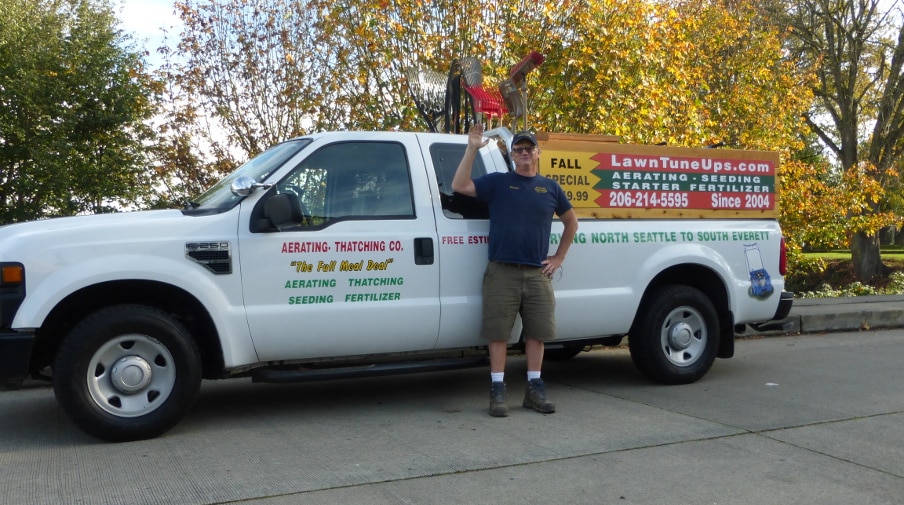
Article by
Stewart Armour
Stewart Armour is an independent lawn restoration expert, educator, and owner of Aerating Thatching Co., serving the greater Seattle area since 2004. With more than two decades of professional experience restoring Western Washington lawns, Stewart specializes in diagnosing lawn problems, improving soil health, and developing long-term lawn renovation strategies. His education includes turf management studies, advanced golf course turf training, and continuing education through Wilbur-Ellis University, State Turf Facilities, Soil First Academy, and Golf Course Applied Turf Physiology. Every article published on LawnTuneUps.com is grounded in practical field experience, current turf science, and a commitment to helping homeowners understand the why behind every recommendation—not just what to do.
Stewart has personally evaluated thousands of residential lawns throughout the Seattle area and remains committed to helping homeowners understand the science behind growing healthier, more resilient lawns.