You might think ripping out your mossy yard and laying down fresh sod is the fastest way to a perfect lawn, but for most homeowners, that quick fix often fails within two seasons. You want a lush, green space, but instead, you’re looking at a thin, mossy carpet that barely survives the summer. We understand the frustration of dealing with heavy clay soil and poor drainage while trying to manage lawn overseeding North Seattle on your own.
This guide compares the costs and long-term health of professional restoration versus installing grass sod. You’ll learn why a Lawn Tune-Up, which includes Core Aeration, Overseeding, and Fertilizing, or a Full Meal Deal consisting of Power Raking (Dethatching), Core Aeration, Overseeding, and Fertilizing, often produces more resilient turf. We’ll cover why timing matters, focusing on reaching that critical soil temperature range of 55°F to 75°F for successful germination. By the end, you’ll know which method will give your property the durable lawn it deserves.
Key Takeaways
- Professional lawn overseeding North Seattle is a cost-effective alternative to sod that builds the deep root systems needed to survive dry PNW summers.
- Germination success is driven by soil temperature, not air temperature; the 55°F to 75°F range is critical for the most reliable grass establishment.
- Mechanical restoration using Core Aeration addresses the root cause of moss by relieving soil compaction and improving drainage in heavy local clay.
- Identify if your yard needs a standard Lawn Tune-Up or the Full Meal Deal, which incorporates Power Raking (Dethatching) for complete restoration.
Overseeding vs. Grass Sod: The Best Path for North Seattle Turf
Homeowners often believe sod is the only way to fix a failing yard. It’s a common misconception. While sod provides “instant green,” it’s often a temporary fix for a deeper problem. Professional lawn overseeding North Seattle via a Lawn Tune-Up or a Full Meal Deal offers a more sustainable path for established properties. Both services focus on mechanical restoration rather than just covering up poor soil.
While sod provides immediate satisfaction, Overseeding requires patience. You’ll typically see germination within a 14 to 21 day window. The initial investment for sod is also significantly higher. You’re paying for the labor of cutting, transport, and installation. Beyond the price, sod can struggle to knit with the heavy clay soil common in our region. If the roots don’t penetrate the native soil, the grass remains shallow and vulnerable during dry spells.
Overseeding works differently. By using lawn aeration and overseeding, we ensure the seed makes direct contact with the ground. This allows roots to grow deep into your existing soil structure. Sod can also trap moisture against the clay, which often encourages moss to grow underneath the new layer, eventually pushing the new grass out.
When Grass Sod Makes Sense
Sod is the right choice for new construction or completely bare dirt lots where no turf exists. If there’s no existing biological foundation to save, sod provides immediate erosion control on sloped North Seattle properties. It’s a heavy-duty solution for a site that needs a lawn established from scratch today.
The Long-Term Advantages of Overseeding
For thinning lawns, lawn overseeding North Seattle is the superior choice. It’s a cost-effective way to restore an established lawn that is thinning but not dead. It allows for the integration of premium cool-season grass blends tailored for Western Washington. When soil temperatures reach the 55°F to 75°F (13°C to 24°C) range, these seeds begin to establish. This results in a thick, resilient lawn that handles summer heat better than sod. Explore our Seattle lawn tune-up options to see how we restore existing turf.
The Science of Success: Why Soil Temperature Matters for Overseeding
Many homeowners start lawn overseeding North Seattle as soon as the first warm spring weekend hits. This is usually a mistake. While the air might feel like t-shirt weather, the ground is often still holding onto winter’s chill. Soil temperature, not air temperature, dictates when grass seed actually wakes up and starts to grow. Watching the local weather report for highs in the 60s doesn’t tell the whole story of what’s happening underground.
For the cool-season grass blends we use in Western Washington, the optimal soil temperature range is 55°F to 75°F (13°C to 24°C). If you plant when the soil is colder than 55°F, germination will be significantly slower and less consistent. This produces a less reliable establishment that might not survive the first frost or summer heat. North Seattle soil, which is often composed of heavy clay, holds moisture and takes much longer to warm up in the spring compared to lighter, sandy soils found further south.
Managing Expectations for Germination
Even with perfect temperatures, success isn’t automatic. Consistent moisture and excellent seed-to-soil contact are just as critical as the thermometer reading. This is why we prioritize mechanical preparation through our professional services. We avoid offering absolute guarantees on germination. Results are heavily influenced by multiple factors, including fluctuating weather, existing soil conditions, and how well the yard is watered after we finish our work.
A successful restoration requires patience and the right environmental window. If you’re planning your lawn overseeding North Seattle for 2026, it’s best to wait until the ground is truly ready to support new growth. If you want to ensure your property is on our list for the prime growing window, you can request a quote to get started.
North Seattle Lawn Restoration: Addressing Moss and Compaction
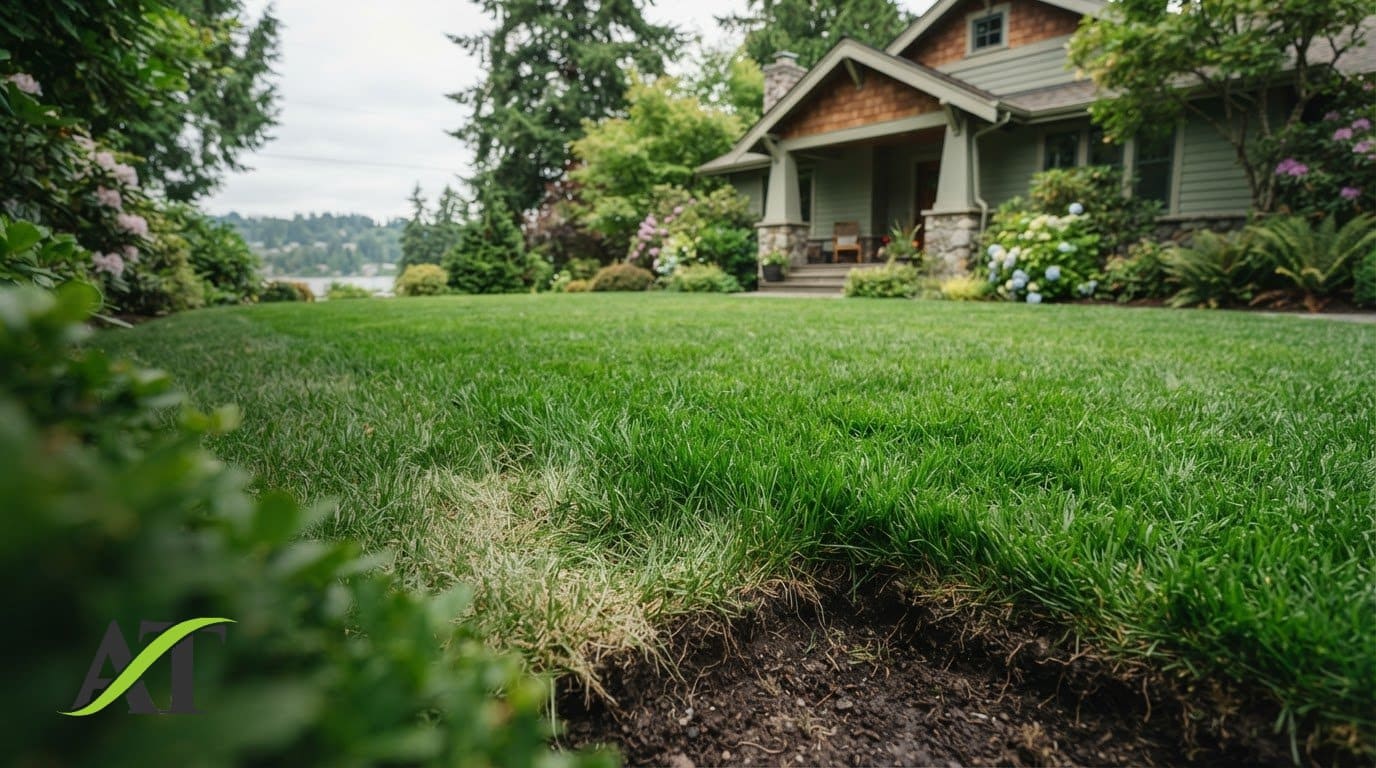
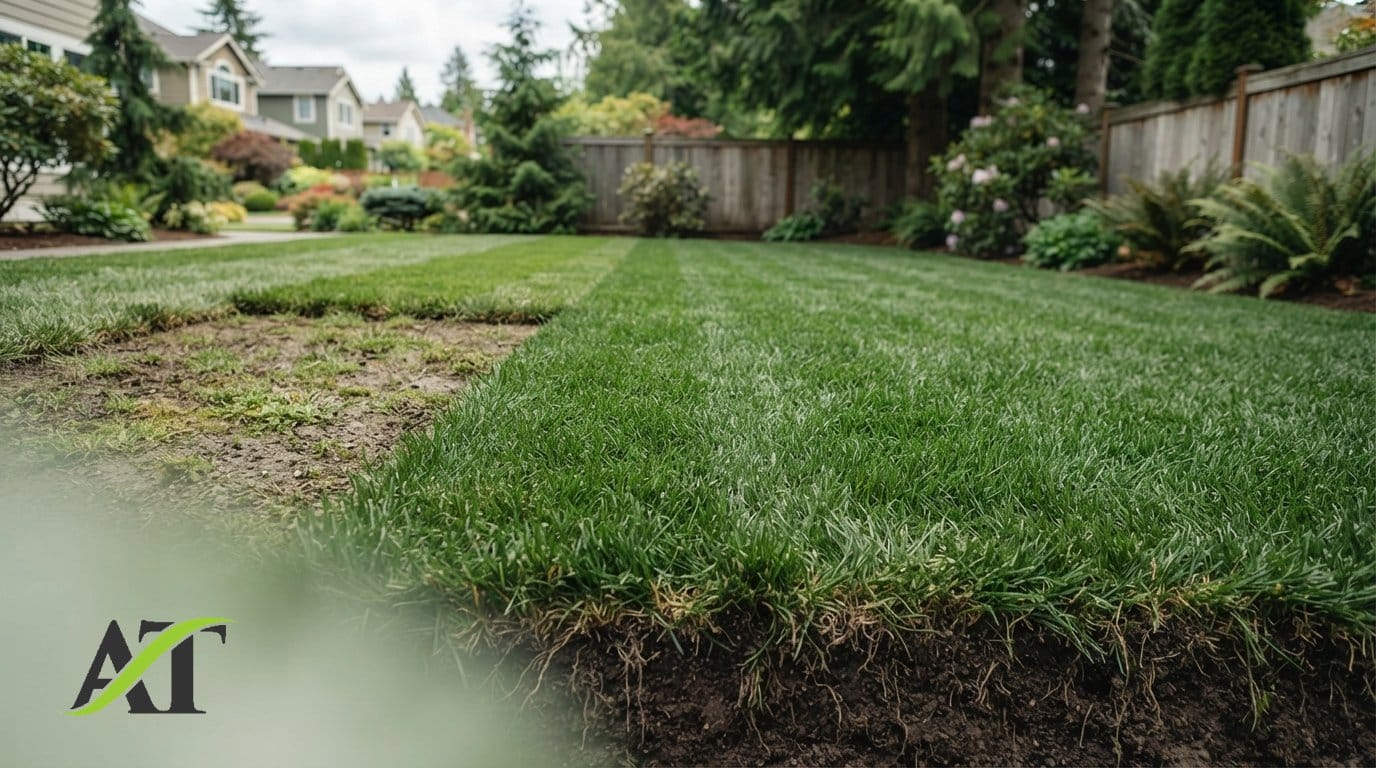
Many homeowners tell us their yard is too mossy for lawn overseeding North Seattle. Moss isn’t the primary enemy; it’s a symptom of compacted clay soil. In neighborhoods like Ballard and Green Lake, the heavy earth prevents roots from breathing and water from draining. Core Aeration pulls small plugs from the ground to relieve this pressure. This is a vital component of our Lawn Tune-Up, which consists of Core Aeration, Overseeding, and Fertilizing. If the moss and thatch layer is thick, we recommend the Full Meal Deal. This comprehensive package includes Power Raking (Dethatching), Core Aeration, Overseeding, and Fertilizing to physically clear the path for new growth.
Once the ground is prepared, we apply Fertilizing using organic-based products. PNW soils are naturally acidic and often lack the microbial activity needed for a healthy lawn. This boost provides the right nutrients to help the new seed establish quickly and crowd out future moss growth.
The Power of Seed-to-Soil Contact
Throwing seed on top of a mossy carpet or thick thatch is a waste of time and money. Mechanical restoration creates the deep pockets necessary for seed to take root. These holes protect the seed from birds and heat while ensuring it stays moist. Without this direct contact, the seed won’t get the moisture or nutrients it needs to survive. It just sits on the surface and eventually dies.
Optional Upgrades for Local Soil
To help your lawn thrive, we offer optional upgrades tailored to our local environment. Lime Application is essential for balancing soil pH, especially for Mountlake Terrace and Edmonds lawns where acidity is common. You can Learn more about Lime Application in Edmonds. We also suggest Lawn Soil Amendments to improve water retention during our increasingly dry Seattle summers. These additions help your yard stay green even when the rain stops.
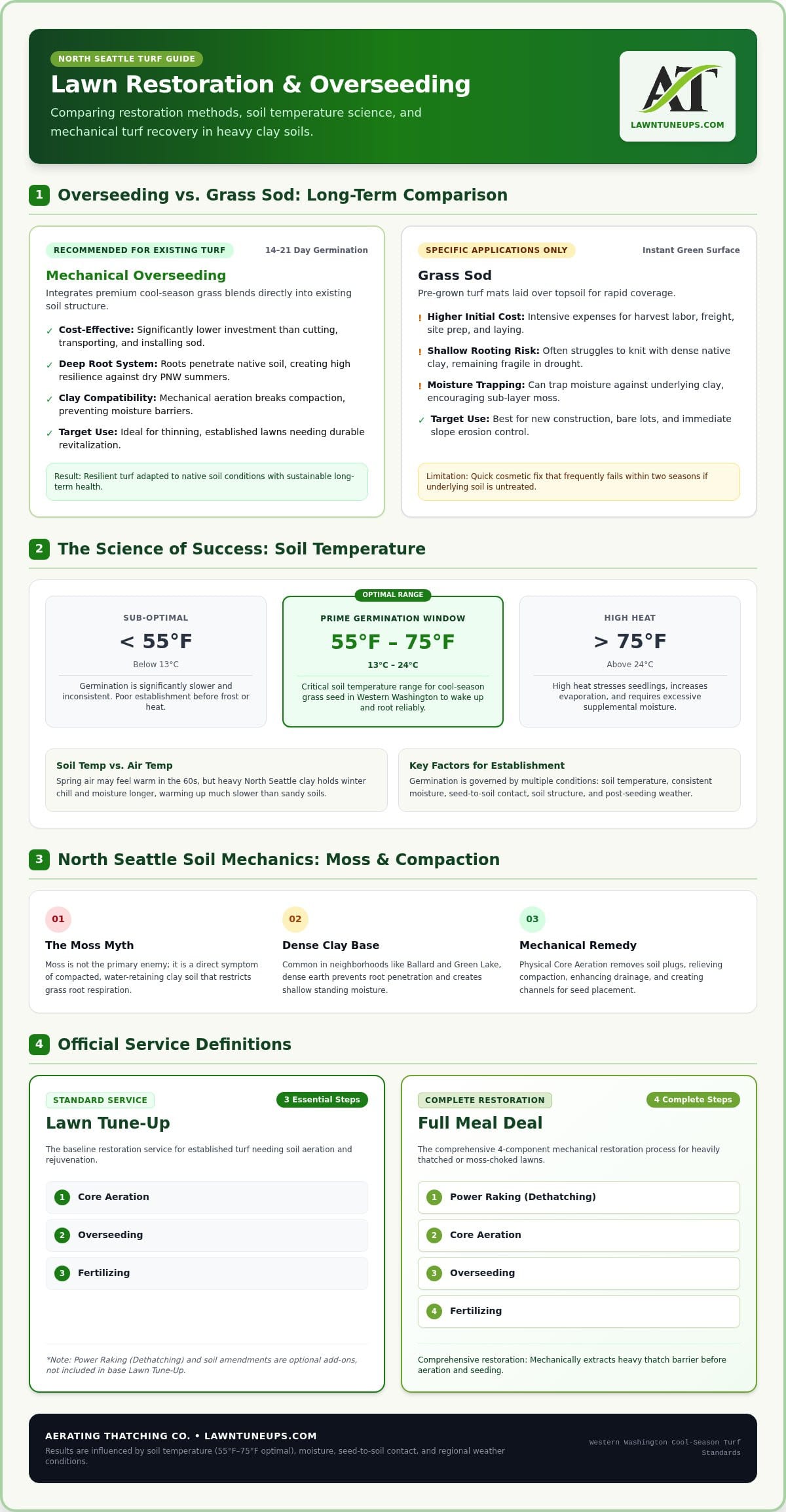
Professional Seeding Solutions: Lawn Tune-Up vs. Full Meal Deal
Standard landscaping companies focus on visual maintenance through weekly mowing and edging. We take a different approach. Our work is about the biological health of your soil and the structural integrity of your turf. We don’t offer mowing services because we’re specialists in mechanical restoration. For homeowners considering lawn overseeding North Seattle, we provide two specific service packages designed to handle the heavy clay and moss common in our region.
The Lawn Tune-Up is our signature annual maintenance service. It consists of Core Aeration, Overseeding, and Fertilizing. This package is ideal for lawns that are healthy but starting to thin out. By pulling cores and opening up the soil, we create the perfect environment for new seed to establish. If your yard has deeper issues, we offer the Full Meal Deal. This is our most comprehensive restoration package, including Power Raking (Dethatching), Core Aeration, Overseeding, and Fertilizing. It’s built to strip away the barriers that prevent a lawn from thriving.
Which Service Does Your Lawn Need?
Choosing between these two depends on the current state of your thatch and moss. Use the Lawn Tune-Up for regular maintenance and moderate thinning. It keeps the grass thick enough to naturally resist weed invasion. Choose the Full Meal Deal for lawns with heavy thatch buildup or significant moss issues. The Power Raking (Dethatching) component is essential when a thick layer of dead organic matter is blocking seed-to-soil contact.
We perform these services when soil temperatures are in the optimal 55°F to 75°F (13°C to 24°C) range. While we don’t offer absolute guarantees on germination due to weather and moisture variables, our mechanical process gives your property in Shoreline, Lynnwood, or Mill Creek the best possible foundation. To see which restoration path fits your yard, you can Request a Quote for your North Seattle Lawn and get on our 2026 schedule.
Build a Durable Lawn for the Long Haul
Choosing between sod and restoration is a decision about the future of your property. While sod offers an immediate change, professional lawn overseeding North Seattle creates a deeper root system that survives our dry summers. By focusing on mechanical restoration and the critical soil temperature window of 55°F to 75°F, you’re fixing the compaction issues that plague Ballard and Green Lake yards.
Since 2004, we’ve used specialized equipment and premium 60/40 Sun & Shade seed blends to help local homeowners reclaim their spaces. Whether you need a standard Lawn Tune-Up or a Full Meal Deal, our owner-operated team provides the expertise your turf needs to thrive. We build the foundation for a healthy lawn that lasts.
Your yard doesn’t have to be a mossy carpet. We look forward to helping you transform your lawn into a lush, green space you’ll love.
Common Questions About North Seattle Lawn Restoration
Is it better to overseed or lay sod in North Seattle?
For most established yards, lawn overseeding North Seattle is the superior choice because it allows roots to integrate with the native soil. Sod often fails to knit with our heavy clay, leading to shallow roots and moss issues. We recommend a Lawn Tune-Up for moderate thinning or the Full Meal Deal if your yard has heavy thatch. These mechanical restoration services provide a more durable result than laying sod.
What is the best month for lawn overseeding in Seattle?
The best timing depends on soil temperature rather than the calendar month. Most homeowners find success in late spring or early fall when the ground reaches the 55°F to 75°F range. Planting too early in the spring when the soil is cold results in slow, inconsistent germination. We monitor local conditions to ensure your Overseeding happens during the most reliable window, typically between April and June or September and October.
Do I need to aerate before overseeding my lawn?
Yes, Core Aeration is essential for successful lawn overseeding North Seattle. Without it, seed often sits on top of compacted soil or thatch and fails to take root. Our Lawn Tune-Up includes Core Aeration, Overseeding, and Fertilizing to ensure the seed has deep pockets for growth. This mechanical preparation provides the necessary seed-to-soil contact and improves drainage in the heavy clay soils common in Ballard and Shoreline.
What soil temperature is needed for grass seed to grow in Washington?
The optimal soil temperature range for cool-season grass seed germination is 55°F to 75°F (13°C to 24°C). While seeds can germinate outside this range, the process will be slower and produce less reliable results. We focus on this specific window to help the new grass establish a strong root system. Factors like moisture and seed-to-soil contact also influence success, which is why we don’t offer absolute guarantees on germination.
How much does a professional Lawn Tune-Up cost in North Seattle?
Pricing varies based on the size of your property and the specific needs of your soil. Since we focus on customized mechanical restoration, we provide individual estimates rather than flat rates. A standard Lawn Tune-Up always consists of Core Aeration, Overseeding, and Fertilizing. To get an accurate price for your yard in Edmonds or Lynnwood, the best step is to request a quote so we can assess your lawn’s current condition.
Article by
Stewart Armour
Stewart Armour is an independent lawn restoration expert, educator, and owner of Aerating Thatching Co., serving the greater Seattle area since 2004. With more than two decades of professional experience restoring Western Washington lawns, Stewart specializes in diagnosing lawn problems, improving soil health, and developing long-term lawn renovation strategies. His education includes turf management studies, advanced golf course turf training, and continuing education through Wilbur-Ellis University, State Turf Facilities, Soil First Academy, and Golf Course Applied Turf Physiology. Every article published on LawnTuneUps.com is grounded in practical field experience, current turf science, and a commitment to helping homeowners understand the why behind every recommendation—not just what to do.
Stewart has personally evaluated thousands of residential lawns throughout the Seattle area and remains committed to helping homeowners understand the science behind growing healthier, more resilient lawns.