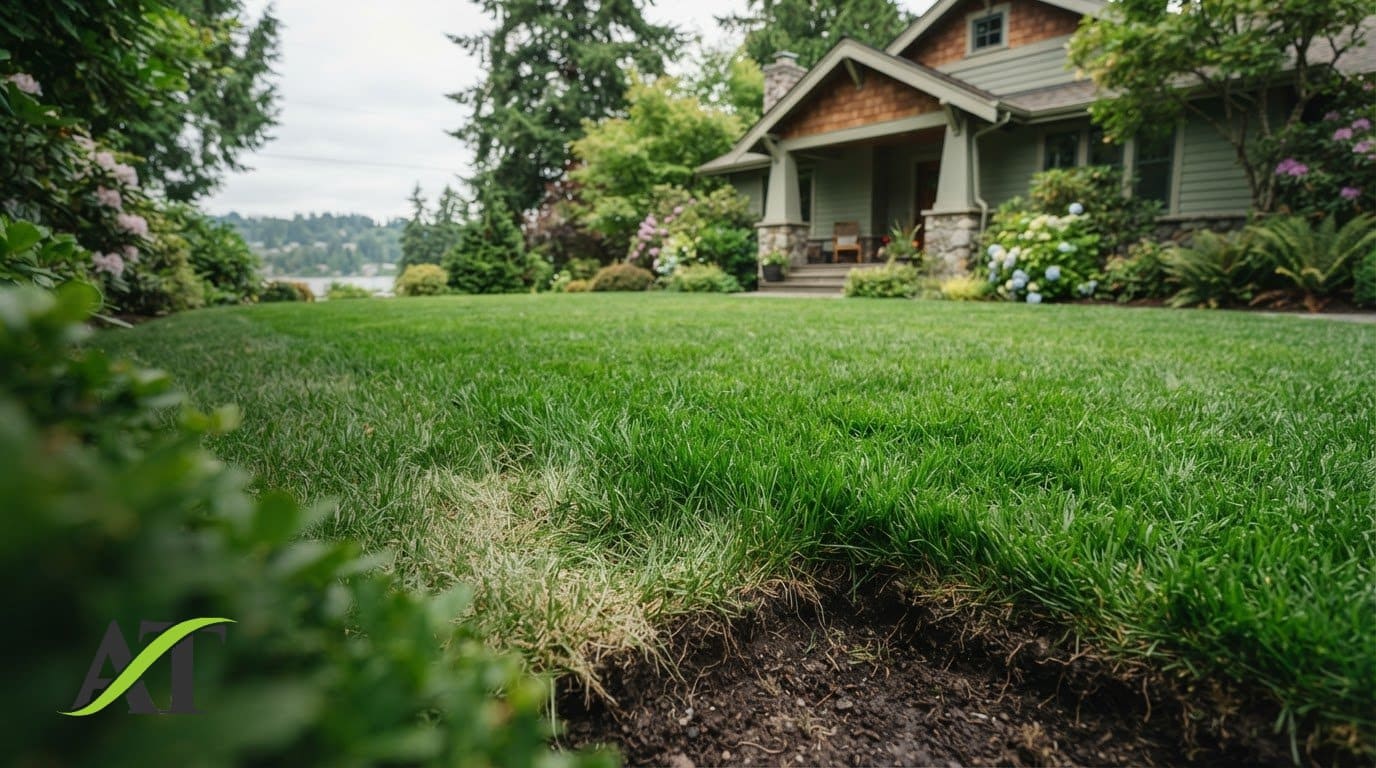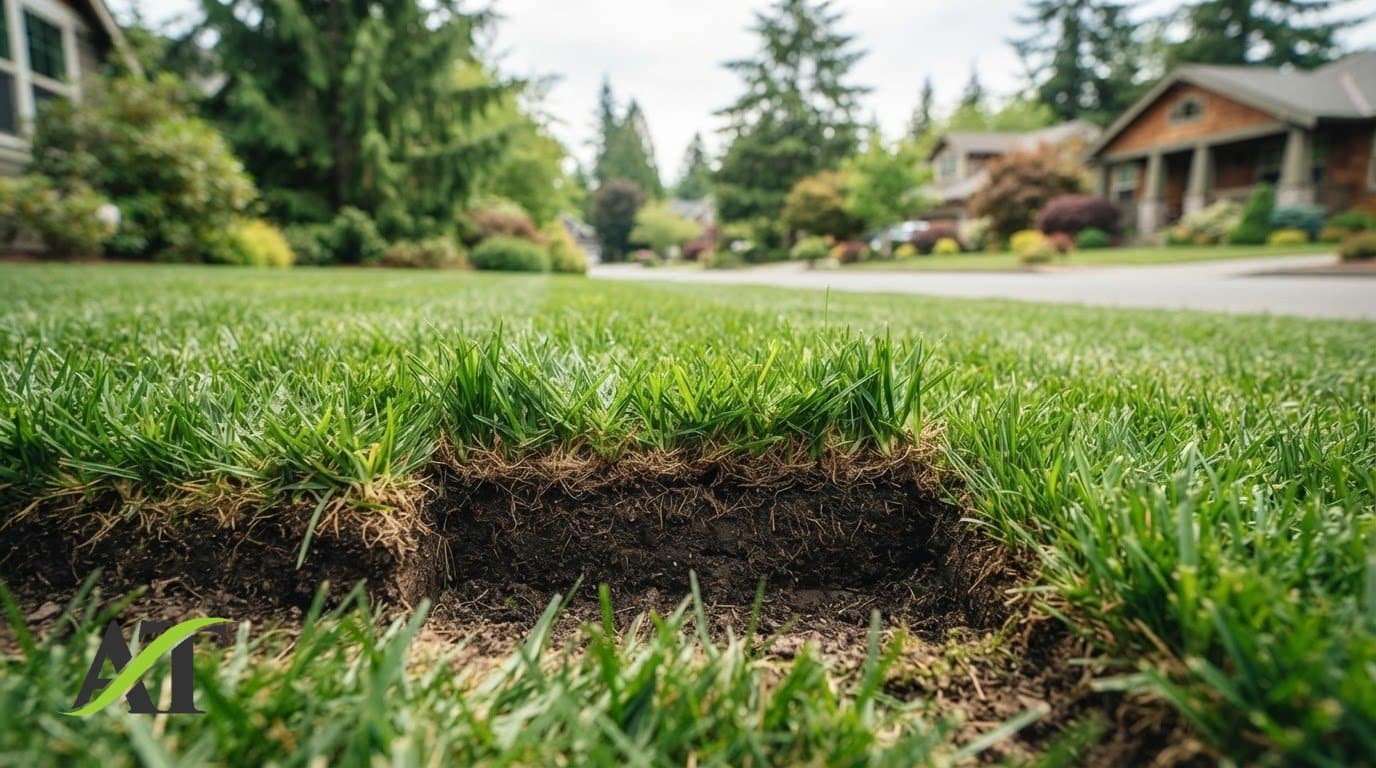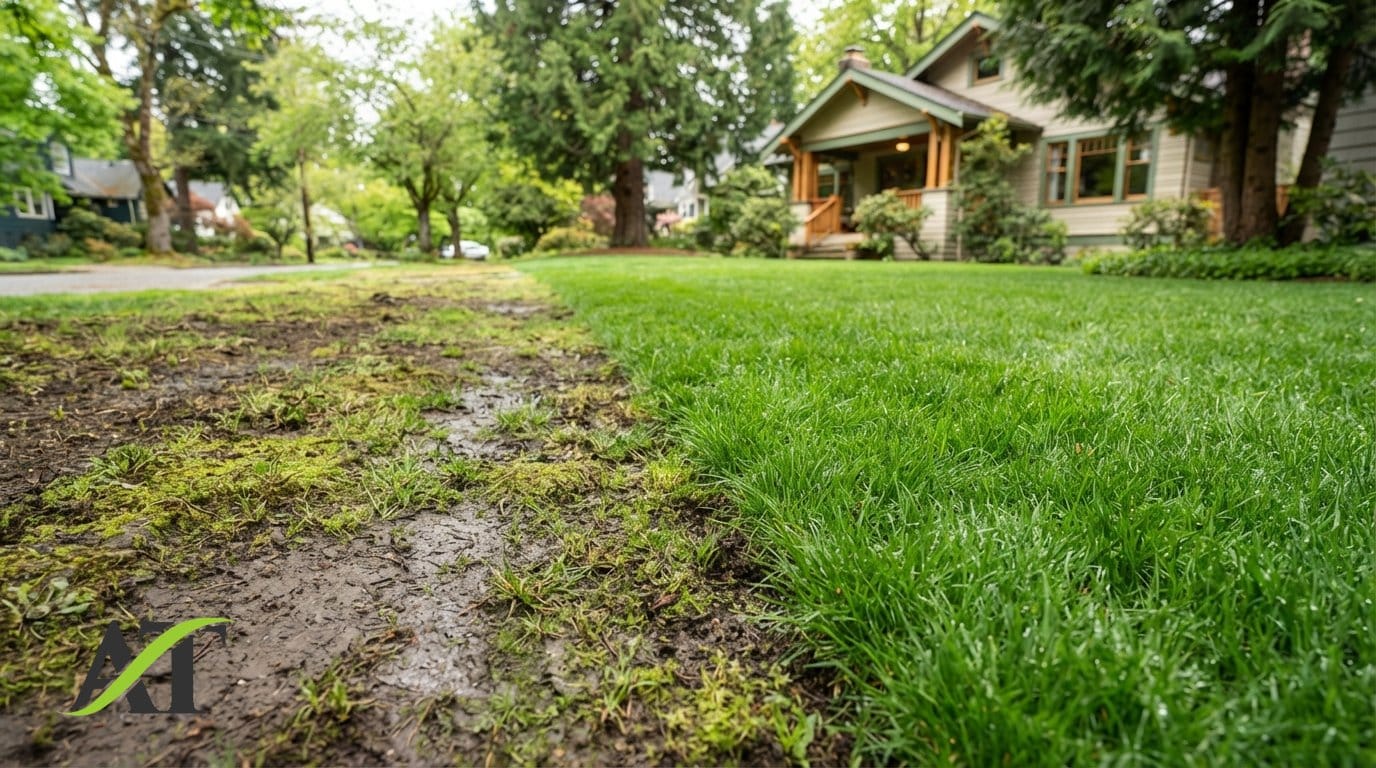
Why does it feel like your Green Lake backyard is being swallowed by moss and bare dirt despite all the water you throw at it? You aren’t alone. North Seattle’s heavy clay soil and the constant foot traffic near the lake make it difficult to maintain a lush lawn. It’s frustrating to watch your curb appeal vanish under muddy patches. This guide shows you how to fight back using professional mechanical methods and the specific soil timing secrets required for successful lawn repair Green Lake homeowners can actually maintain.
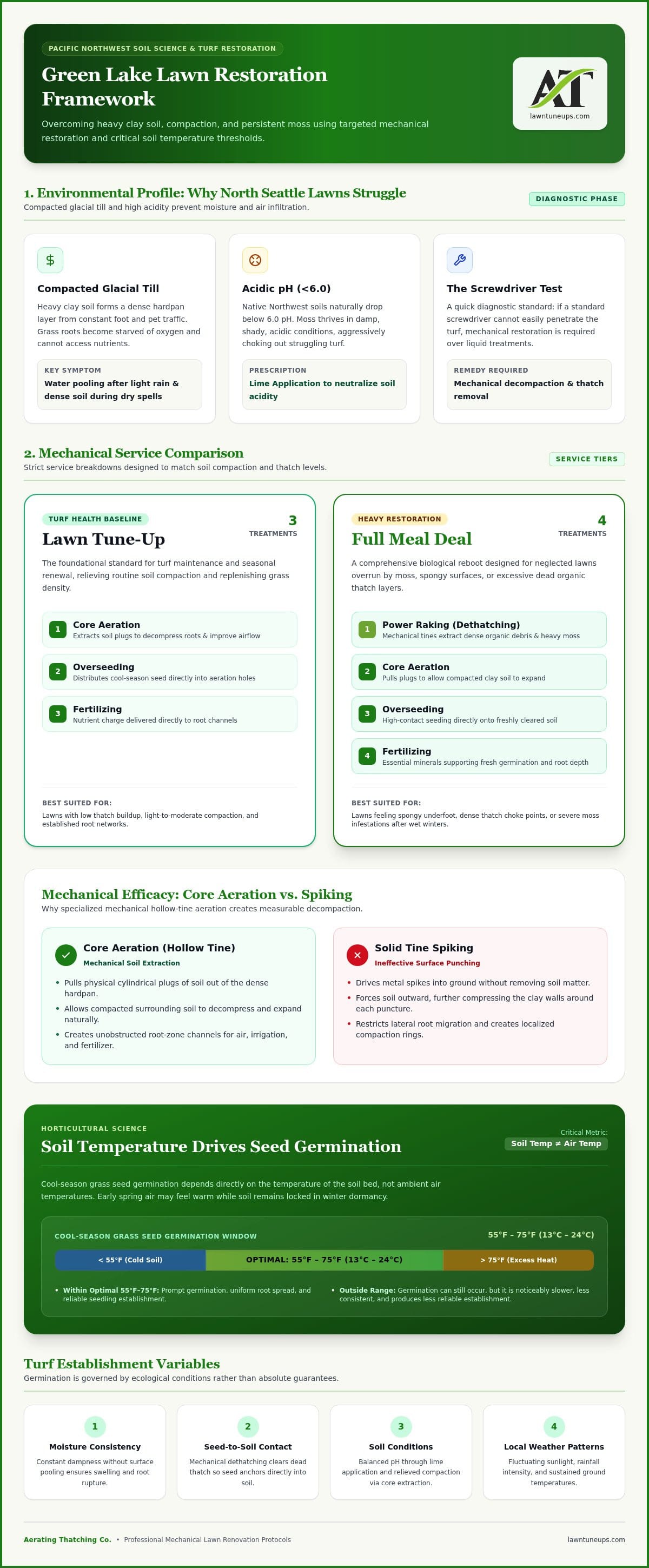
We’ll explain the difference between a Lawn Tune-Up, consisting of Core Aeration, Overseeding, and Fertilizing, and the Full Meal Deal, which includes Power Raking (Dethatching), Core Aeration, Overseeding, and Fertilizing. You will also learn why monitoring soil temperature, specifically aiming for the 55°F to 75°F range, is the key to lasting turf restoration. We are moving past quick fixes to provide a clear, seasonal plan for a lawn that finally crowds out the weeds and stands up to the local elements.
Key Takeaways
- Identify the soil compaction and moss growth challenges unique to North Seattle to plan the effective lawn repair Green Lake properties need for long-term health.
- Learn the exact components of a Lawn Tune-Up and the Full Meal Deal so you can choose the right mechanical service for your lawn’s thatch level.
- Focus on soil temperature rather than air temperature; aiming for the 55°F–75°F range is the secret to reliable seed germination in the Pacific Northwest.
- Compare the results of professional-grade machinery against heavy rental units to see how specialized Core Aeration improves nutrient delivery and turf thickness.
Common Lawn Challenges in the Green Lake Neighborhood
Green Lake properties face a unique set of environmental pressures. Older residential lots near the water often sit on compacted glacial till. This creates a hardpan layer that prevents water from draining properly. For effective lawn repair Green Lake residents need to look past liquid fertilizers. Real restoration requires a mechanical approach to fix the soil foundation rather than just chasing a temporary green-up. It’s the difference between masking a problem and solving it at the root.
The Problem with Clay Soil and Compaction
North Seattle is known for heavy clay soil. This dense material packs down tightly under foot traffic and pet activity near the lake. When soil is compacted, grass roots can’t breathe or reach the nutrients they need to survive. You can spot these issues by looking for specific signs:
- Water pooling on the surface after a light rain
- Thinning grass in high-traffic areas or near sidewalks
- Soil that feels hard as a brick during dry spells
If a standard screwdriver won’t slide into the ground easily, your soil is too dense for healthy growth. This compaction is the primary reason grass dies off and moss moves in.
Moss vs. Grass: The Battle for Your Backyard
Moss loves the damp, shady, and acidic conditions common in our neighborhood. Native soils here often drop below a 6.0 pH, while grass prefers a neutral range. We use Lime Application to balance that acidity and give turf a fighting chance. However, manual raking isn’t enough for deep moss removal. True restoration requires mechanical dethatching to clear the surface. This process ensures your new seed makes direct contact with the soil. Our Lawn Tune-Up addresses these foundational needs, creating a thick turf that naturally crowds out moss over time.
Mechanical Solutions: The Lawn Tune-Up and Full Meal Deal
Most homeowners think they need more water or seed to fix a failing yard. They actually need mechanical intervention. For lawn repair Green Lake properties, we offer two primary restorative paths. The Lawn Tune-Up consists of Core Aeration, Overseeding, and Fertilizing. It’s the standard for maintaining turf health. For lawns that have been neglected or overrun by moss, the Full Meal Deal is the answer. This service includes Power Raking (Dethatching), Core Aeration, Overseeding, and Fertilizing. These are not simple maintenance visits. They are physical transformations designed to restart your lawn’s biological clock.
When to Choose Power Raking (Dethatching)
Thatch is a layer of organic debris that sits between the grass and the soil. If it’s too thick, it chokes out new seed and blocks water. You’ll know you need the Full Meal Deal if your lawn feels spongy or if moss has taken over large patches. We follow Penn State Extension lawn renovation protocols to ensure we remove enough debris to allow for proper seed-to-soil contact. Unlike standard hand raking, Power Raking (Dethatching) uses mechanical tines to pull up years of buildup that a rake simply can’t reach. This is the most effective way to handle lawn repair Green Lake homeowners encounter after a long, wet winter.
Core Aeration: The Secret to Soil Health
This process pulls small plugs of soil out of the ground to allow the earth to expand. It reduces compaction immediately. Mechanical aeration is far superior to “spiking,” which actually compresses the soil further around the hole. By opening these channels, water, air, and fertilizer reach the root zone. If you’re curious about the technical details, read our Core Aeration in Snohomish guide. These mechanical solutions provide the foundation for a healthy lawn. If you’re ready to see a physical transformation, request a quote today to get started.
Optimizing Results: Soil Temperature and Timing
Many homeowners wait for a warm sunny day to start their lawn repair Green Lake projects. That’s a mistake. Air temperature is a poor indicator of success. Soil temperature is the real driver for germination. Cool-season grass seed needs a soil temperature range between 55°F and 75°F (13°C to 24°C) to thrive. Planting in early spring often leads to disappointment because the ground remains too cold from the winter months. While seed might sprout outside this window, it’ll be slower, less consistent, and produce less reliable establishment.
The Science of Overseeding
Successful growth depends on seed-to-soil contact. If seed just sits on top of dead grass or thatch, it won’t take root. By performing Overseeding into holes created during Core Aeration, we place the seed directly into the earth. These holes act as protected nurseries. They shield new sprouts from birds and drying winds while holding moisture close to the seed. We don’t offer absolute guarantees on germination because results are a process. Success depends on your watering habits, existing soil structure, and unpredictable weather shifts. Consistent moisture is non-negotiable for the first 14 days.
Best Times for Lawn Repair in Green Lake
In North Seattle, the window from late August through mid-October is the ideal time for restoration. The soil is warm from the summer sun, yet the arrival of autumn rains provides natural irrigation. We often refer to this as the “second spring.” It’s the most effective time for a Lawn Tune-Up. To see how these principles apply to similar coastal soil conditions, read our Lawn Tune Up Woodway guide. Timing your restoration correctly ensures your turf is established before the first hard freeze hits.
Professional Lawn Restoration vs. DIY
Rental shops often pitch a weekend aerator rental as a simple afternoon project. However, those machines often weigh over 200 pounds and lack the down-force of commercial-grade equipment. Professional machinery pulls deeper, more consistent cores that actually relieve the compaction typical of North Seattle. When you combine this with expert Organic Fertilizing and Lime Application, you get a foundation that DIY efforts can’t match. A single, correctly timed Lawn Tune-Up often costs less than multiple failed attempts with low-quality rental tools and wasted seed. Professional lawn repair Green Lake homeowners trust ensures the job is done once, and done right.
Why Local Expertise Matters
We’ve been owner-operated since 2004, focusing specifically on the unique soil needs of Green Lake and Ballard. We understand that every yard has its own microclimate and compaction level. To get the best results, clear your lawn of toys, pet waste, and large debris before our crew arrives. This allows our specialized equipment to cover every square inch of your turf. If you’re ready to stop the guesswork, Request a Quote for your property today.
Long-Term Maintenance After Repair
Once your restoration is complete, maintenance is about protecting your investment. Keep your mowing height at three inches or higher to shade the soil and encourage deep roots. Water frequently but lightly for the first two weeks to keep the seedbed damp. This annual investment in your property value prevents moss from reclaiming the space. For more tips on keeping your yard healthy year-round, check out our Lawn Tune Up Service Seattle guide. Consistent care turns a one-time repair into a lifetime of thick, green turf.
Take the Next Step Toward Healthy Green Lake Turf
Restoring your yard shouldn’t be a guessing game. By focusing on mechanical solutions like the Lawn Tune-Up or the Full Meal Deal, you address the compaction and thatch that hold your grass back. Success depends on timing. You must wait for soil temperatures to hit the 55°F to 75°F range for consistent results. We’ve been serving the community since 2004. Our team uses specialized mechanical restoration equipment and a focus on organic soil health to deliver tangible outcomes that last.
Effective lawn repair Green Lake homeowners can rely on requires a partner who understands North Seattle’s specific soil challenges. While we don’t offer absolute guarantees on germination due to moisture and weather variables, our methodical process provides the best possible foundation for thick, resilient turf. We’re ready to put in the physical labor so you can enjoy a backyard that adds real value to your home.
It’s time to stop fighting the moss and start growing the healthy grass your family deserves. We look forward to helping you restore your lawn to its full potential.
Frequently Asked Questions
What is the difference between a Lawn Tune-Up and a Full Meal Deal?
A Lawn Tune-Up consists of Core Aeration, Overseeding, and Fertilizing, while the Full Meal Deal adds Power Raking (Dethatching) to that list. The Tune-Up is an essential annual service for healthy turf. If your yard has heavy thatch or moss buildup, the Full Meal Deal provides the aggressive mechanical cleaning needed before we apply seed and fertilizer to the soil.
When is the best time to perform lawn repair in Green Lake?
The best times for lawn repair Green Lake homeowners should schedule are late spring and early fall. We target soil temperatures between 55°F and 75°F (13°C to 24°C) for the best results. Fall is particularly effective in North Seattle because the ground is still warm from summer, and the returning rains provide the consistent moisture required for new seed to thrive.
Why is my grass seed not germinating?
Grass seed typically fails to germinate during a lawn repair Green Lake project because the soil temperature is outside the optimal 55°F to 75°F (13°C to 24°C) range. Moisture is the second most common issue. If the seedbed dries out even once during the first 14 days, the sprouts may die. We don’t offer absolute guarantees because success depends on your local soil conditions.
Do I need to be home when the crew performs the service?
No, you don’t need to be home during the service as long as our crew has full access to your yard. Just make sure your gates are unlocked and pets are kept inside. We also ask that you clear any toys or debris from the grass. As an owner-operated business since 2004, we’ll handle the physical labor and leave your property tidy.
Does a Lawn Tune-Up include moss removal?
A standard Lawn Tune-Up focuses on soil health and does not include mechanical moss removal. This service consists of Core Aeration, Overseeding, and Fertilizing. If you have thick moss, the Full Meal Deal is the better choice. It adds Power Raking (Dethatching) to mechanically pull moss from the ground so your new grass seed can actually reach the soil for growth.
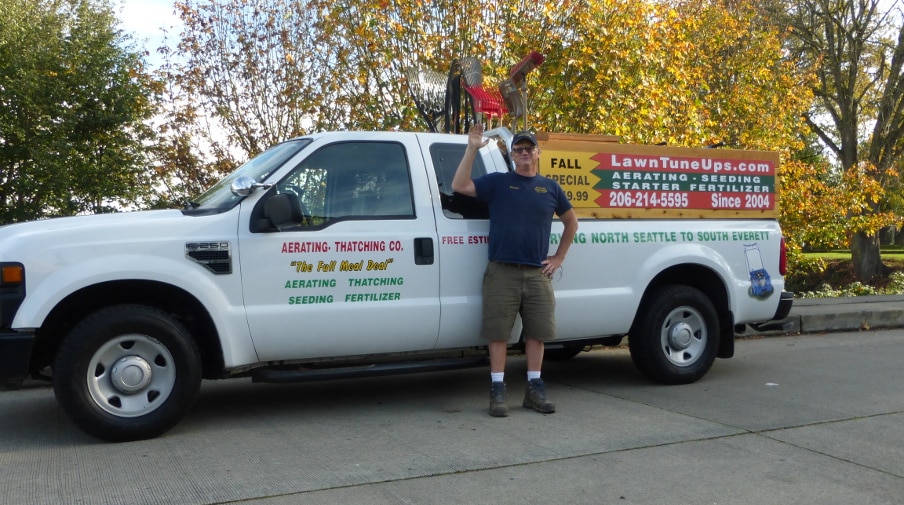
Article by
Stewart Armour
Stewart Armour is an independent lawn restoration expert, educator, and owner of Aerating Thatching Co., serving the greater Seattle area since 2004. With more than two decades of professional experience restoring Western Washington lawns, Stewart specializes in diagnosing lawn problems, improving soil health, and developing long-term lawn renovation strategies. His education includes turf management studies, advanced golf course turf training, and continuing education through Wilbur-Ellis University, State Turf Facilities, Soil First Academy, and Golf Course Applied Turf Physiology. Every article published on LawnTuneUps.com is grounded in practical field experience, current turf science, and a commitment to helping homeowners understand the why behind every recommendation—not just what to do.
Stewart has personally evaluated thousands of residential lawns throughout the Seattle area and remains committed to helping homeowners understand the science behind growing healthier, more resilient lawns.